A&P Module 1 Review
 Call Kai
 Learn
Learn Practice Test
 Spaced Repetition
 Match
Match Flashcards
 Knowt Play
1/139

There's no tags or description
Looks like no tags are added yet.
Name | Mastery | Learn | Test | Matching | Spaced | Call with Kai | Chat |
|---|
No analytics yet
Send a link to your students to track their progress
140 Terms
Anatomy
The study of the structure of the human body
Physiology
Refers to the study of how the body and its parts function
Homeostasis
The body’s ability to maintain a stable internal environment
Pathophysiology
The study of the disease process or what happens when a system fails
Sagittal Plane
Divides the body into equal left and right halves
Superior
A structure described located toward the head
Cranial Cavity
Contains the brain
Thoracic Cavity
Separated from the abdominal cavity by the diaphragm
Negative Feedback Loop
The body’s response reverses a stimulus to return to a set point in a ______.
Anterior
refers to the front of the body
Proximal or Superior
The knee is ______ to the ankle because it is closer to the point of attachment.
Atomic
The ____ level of organization is the simplest level in the human body.
Tissue
A group of similar cells working together for a common function
Skeletal System
Provides support, protection, and a framework for movement.
Respiratory System
Responsible for the exchange of gases between the blood and air
Transverse Plane
Divides the body into upper and lower portions
Thoracic
The heart is located in the _______ cavity.
Lateral
The term _____ means away from the midline of the body.
Integumentary
The _______ system includes the skin and its accessory structures.
Endocrine
The _______ system consists of glands that secrete hormones into the blood.
Atom
The smallest unit of an element that retains its chemical properties
Proton
Subatomic particle that carries a positive charge
Electron
Subatomic particle involved in chemical bonding
Covalent Bond
A bond formed when atoms share electrons
Acid
A substance that releases hydrogen ions (H+) in water
Neutral
On the pH scale, the value of 7.0 is considered _______.
Electrolytes
Substances that conduct an electrical current when dissolved in water.
Glucose
The primary source of short-term energy for cells.
Amino Acids
The building blocks of proteins
Enzymes
Biological catalysts that speed up chemical reactions.
Strong
A substance with a 3.0 is a ____ acid.
Ionic Bond
A bond formed by the transfer of electrons from one atom to another
ATP
The “energy currency” of the cell
Water
The universal solvent in the human body.
Inorganic
Compounds that do not contain both carbon and hydrogen are generally ______.
Nucleic
High molecular weight molecules such as DNA and RNA are ______ acids.
Buffer
A chemical that prevents radical changes in pH is a _____.
Oils
Lipids that are liquid at room temperature are usually called _______.
Protein
The most abundant organic compound in the body
Base
A substance that releases hydroxyl (OH-) ions in water.
Cell
Basic unit of structure and function in the human body.
Cell Membrane
The semi-permeable outer boundary of the cell
Mitochondria
The “powerhouse” of the cell where ATP is produced
Nucleus
The control center of the cell containing DNA.
Organelles
Tiny structures that perform specialized functions within a cell.
Ribosomes
The specific sites of protein synthesis
Diffusion
The movement of molecules from an area of high concentration to low concentration
Osmosis
The diffusion of water across a semi-permeable membrane
Active
_____ transport requires energy (ATP) to move substances against a concentration gradient.
Lysosome
The organelle that contains digestive enzymes to break down waste
Mitosis
The process by which a cell divides into 2 identical daughter cells
Cilia
Hair-like projections that move substances across the cell surface.
Golgi Apparatus
Modifies and packages proteins for secretion
Cytosol
The fluid-like substance between the nucleus and the cell membrane
Endocytosis
The process of bringing large particles into the cell via a vesicle
Rough
The ______ endoplasmic reticulum is studded with ribosomes.
Filtration
A passive process that uses a pressure gradient to move water and solutes.
Flagellum
The “tail” of a sperm cell used for movement
Metaphase
Chromosomes align in the center of the cell during the ______ stage of mitosis.
Hypertonic
A solution with a higher solute concentration than the cell
Metabolism
The sum of all chemical reactions in the body.
Anabolism
The phase of metabolism that builds larger molecules from smaller ones
Catabolism
The phase of metabolism that breaks down large molecules into smaller ones
Glycolysis
1st stage of glucose breakdown, occurring in the cytoplasm.
Aerobic
Metabolism that occurs in the presence of oxygen is ______ metabolism.
Lactic Acid
The byproduct of anaerobic metabolism in muscles cells
Citric Acid
The _____ cycle occurs in the mitochondria to produce electrons for the transport chain.
Enzyme
A protein that acts as a catalyst for metabolic reactions
Substrate
The substance an enzyme acts upon
More
Aerobic metabolism produces significantly ____ ATP than anaerobic metabolism.
ATP
The final products of aerobic glucose metabolism are CO2, water, and _____.
Glycogen
The storage form of glucose in the liver and muscles
Lipolysis
The breakdown of fats into glycerol and fatty acids
Gluconeogenesis
Process of creating glucose from non-carbohydrate sources like amino acids
Urea
Excess nitrogen from protein metabolism is converted into ____ by the liver.
ATP
The universal energy-carrying molecule in the cell
Anaerobic
Glycolysis is an _____ process because it does not require oxygen.
Electron Transport
The most efficient way for the body to produce ATP is through the ________ chain.
Glucose
The primary fuel source for most body cells.
Denatured
When an enzyme’s shape is permanently changed by heat, it is said to be _______.
Anatomy
Comes from the Greek word “to dissect”.
Physiology
The study of how the body functions
Superior
A part is above another part or is closer to the head
Inferior
A part is located below another part or is closer to the feet
Anterior/Venteral
Toward the front surface (the belly surface).
Dorsal
Means toward the back surface
Midline
A lie drawn in the middle of the body, dividing it into left and right halves
Medial
Towards the midline of the body
Lateral
Means away from the midline of the body
Proximal
The structure is nearer to the point of attachment , often the trunk.
Distal
means that a part is farther away from the point of attachment than another part.
Superficial
Means that a part is located on or near the surface of the body.
Deep
Means that the body part is away from the surface of the body.
Central
Means that the part is located in the center
Peripheral
Means away from the center
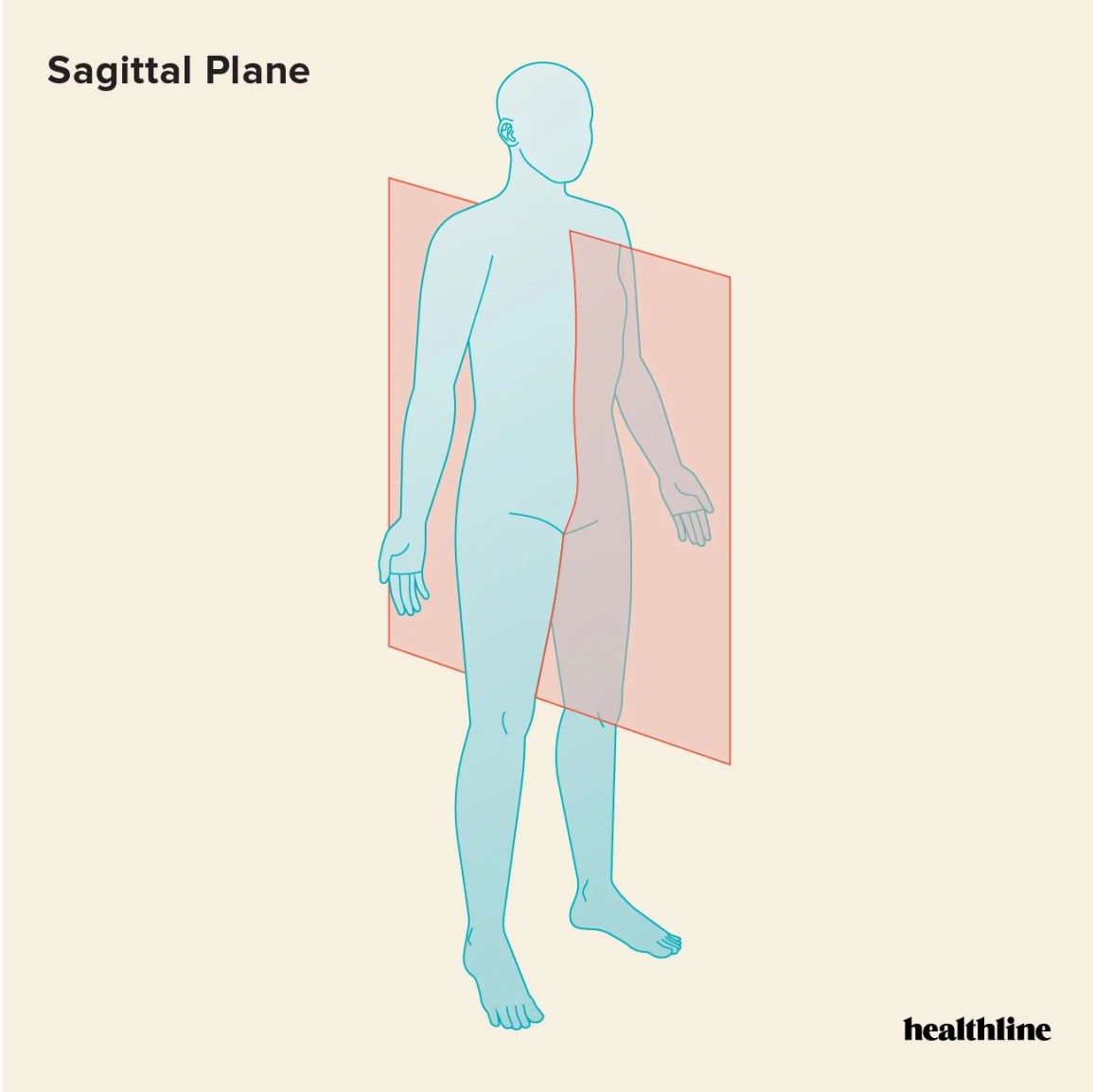
Sagittal Plane
Divides the body lengthwise into right and left portions.
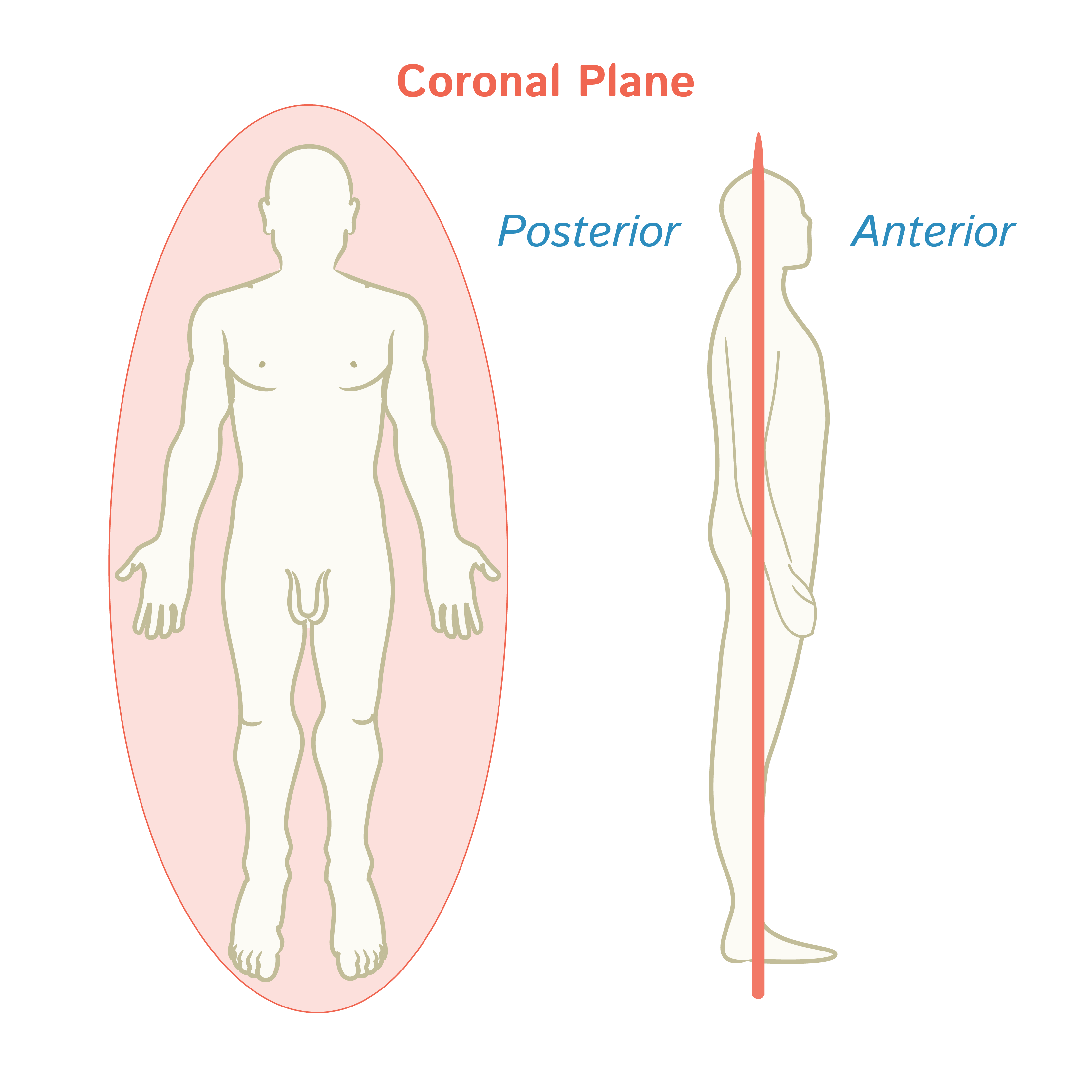
Frontal Plane
Divides the body into anterior (ventral) and posterial (dorsal) portions.
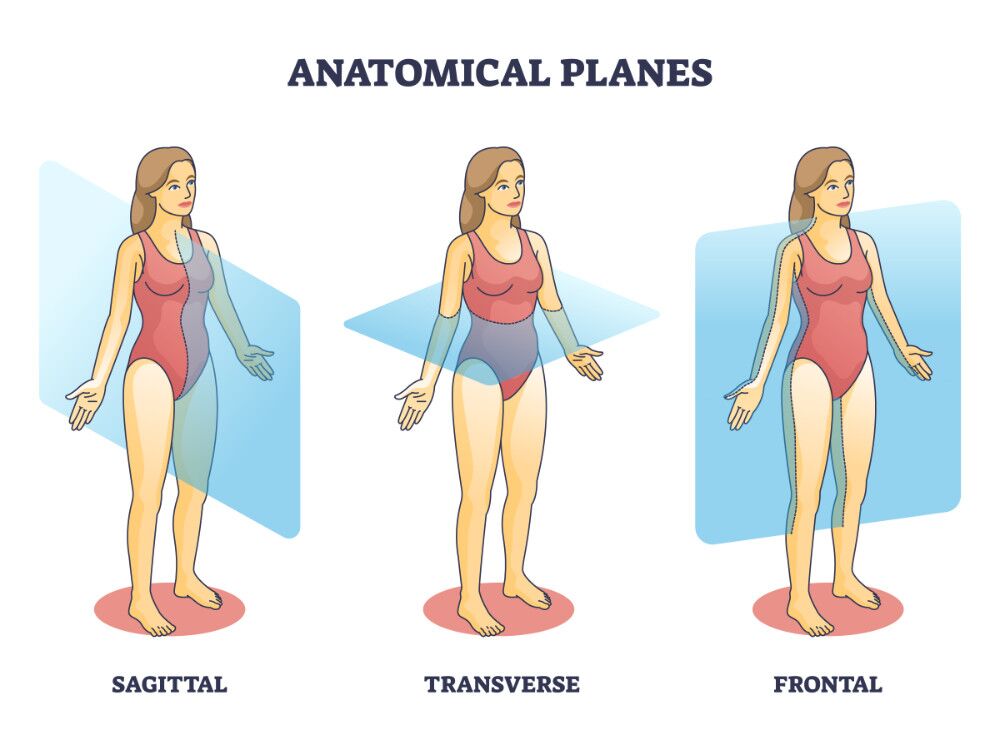
Transverse Plane
Divides the body horizontally, creating an upper (superior) and a lower (inferior) body.
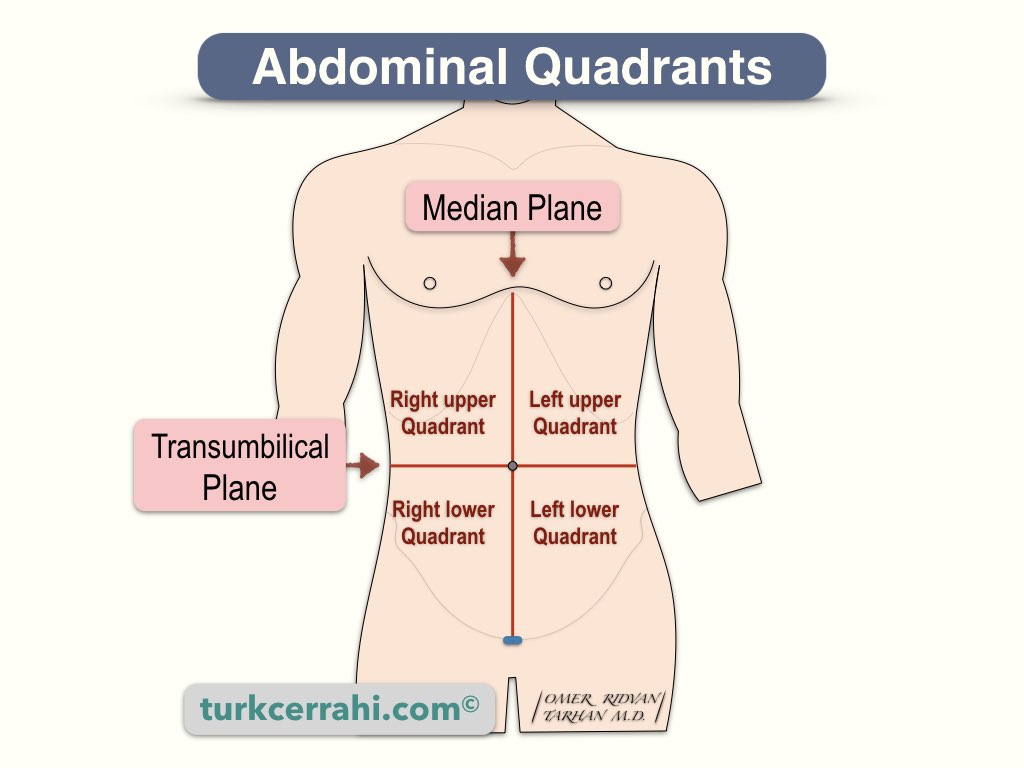
Abdominal
anterior trunk just below the ribs
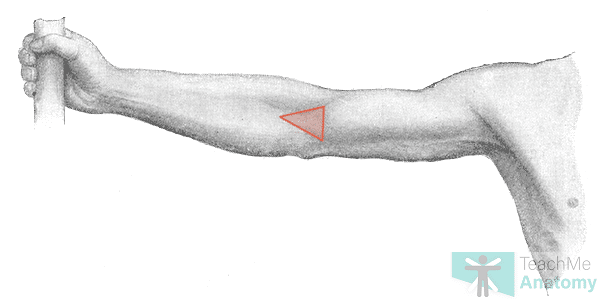
Antecubital (AC)
Area in front of elbow