Lecture 1: Intro
 Call Kai
 Learn
Learn Practice Test
 Spaced Repetition
 Match
Match Flashcards
 Knowt Play
1/44

There's no tags or description
Looks like no tags are added yet.
Name | Mastery | Learn | Test | Matching | Spaced | Call with Kai | Chat |
|---|
No analytics yet
Send a link to your students to track their progress
45 Terms
*****Lecture Outcomes: Knowledge of the history of food microbiology will be assessed as part of Midterm 1
Grade A: Students know the names of the first food microbiologists and their contribution to the discipline. Students understand that foodborne pathogens co-evolved with humans.
Students are able to discuss whether it is possible to produce / procure ultraprocessed, safe, convenient, affordable and health beneficial foods.
Students are able to discuss why the economics and the safety of the food supply change with shifts in the society.
Students are able to name some of the early food microbiologists and their contribution to the discipline
Students are aware of the concept that humans, food fermenting microbes and foodborne pathogens co-existed long enough to support co-evolution of humans and microbes.
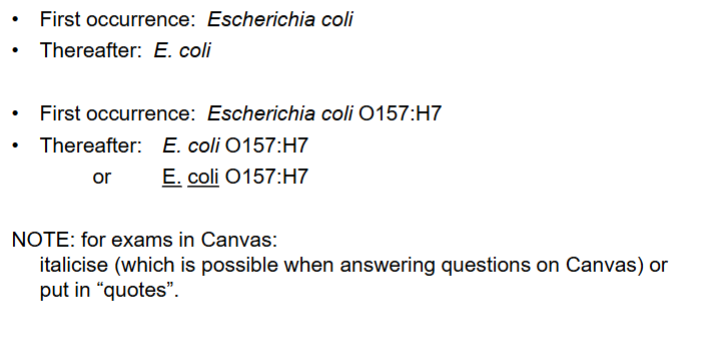
Students are able to use correct microbial nomenclature.
***What are the 5 steps/processes in the food supply chain
hint: from farm to consumer
Farm (start/ ORIGIN)
Manufacture
Distribution
Retail
Consumer

What are some things that matter when a food gets into the market place
Food safety (farm to fork)
Food quality and Shelf life
nutritional value
Innovation and product development
sustainability and food security
***What are some things that affect the Food supply (5)
Economics
Convenience
Nutrition and health
Consumer acceptance
Safety
How are economics affecting food accessibility globally and in Canada
Global = 42% (3.1B) unable to afford healthy diet
Canada = 25% (1/4) Canadians experience household food insecurity
***** Why does the ECONOMICS of the food supply change with shifts in the society.
3 reasons economics of a country negatively affects food supply in developing nations
Supply barriers: severe constraints on food availability and inflated purchase costs
80% income spent: Major portion of household income is spent strictly on basic food
>8 hrs a day: Exhaustive time burden required just to obtain and prepare food
**** Why is CONVENIENCE one of the bigger drivers of change in the food supply
What changes in society that resulted in more convenience in the food supply
demographic and lifestyle changes
Changing household structures (lower number of kids in house), dual income families and urban time constrains = increased demand for instant effortless meal solutions
*****What changes in the food supply occurred to reflect the increased demand for the convenience aspect?
Retail revolution + meal kits
increase in ready to eat products, pre-portioned meal kits and direct door to door delivery apps redefining trad. grocery retail
Food tech + shelf life extension
advanced packaging, modified atmosphere tech and cold chain logistics allow fresh foods to stay shelf ready for days or weeks
*****What is an emerging challenge that comes with increased convenience in the food supply?
Food SAFETY risks
Are processed foods bad for you
No
it is sometimes needed to get SAFE, EDIBLE and NUTRITIOUS foods onto the shelves
Processing =/= automatically unhealthy

IS processing itself when it comes to making something unhealthy? what makes a food ultraprocessed
It is the addition of ingredients such as fats, salt and sugars during the processing steps

a lot of PULSES + GRAIN is too fibrous for us to chew consume and digest
****What are 3 steps/components that can be part of Processing
fractionation
Formulation
Structure
Define: FRACTIONATION, FORMULATION and STRUCTURE
Fractionation = Taking components AWAY from a whole food (part of processing)
Formulation = ADDING sugars, fats salts and additives etc.
Structure = CHANGING physical structure (eg. milling mashing cooking baking etc.)
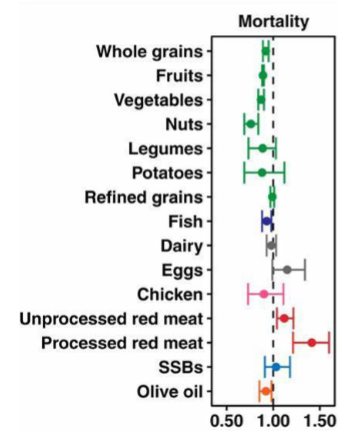
*****What FOODS are HEALTH BENEFICIAL in relation to the nutrition and health of a food?
Whole grains, fruits and vegetables with minimal use of refined ingredients

****TRUE OR FALSE: Whole grains fruits and vegetables are no longer health beneficial after high levels of processing
FALSE
They are Health beneficial IRRESPECTIVE of the level of processing
*****What FOODS are HEALTH ADVERSE in relation to the nutrition and health of a food?
Foods that are formulated with refined ingredients
refined grains, starch or protein isolates, sugar, salt and fat
*****How does CONSUMER ACCEPTANCE affect the food supply?
Regardless of how beneficial a product or technology is it can still FAIL in the market place if the CONSUMER SAYS NO
consumer gets the final vote

***What are 4 examples of new innovative technology that “failed” in the market place due to low consumer demand
Irradiation
Antibiotics?
Plant based (expensive and not as good tasting as reg. meat. Small target demographic)
GMO free
*******why does the SAFETY of the food supply change with shifts in the society.
Increased safety/ reduced risk
Consumers expect food to be safe when they buy it now
Well developed systems reduce levels of hazards in the food supply
Local, national, international organizations involved in setting standards to help reduce risks
Decreased safety
Food borne disease outbreaks still occur due to NEW CHALLENGES with the changing society (Eg. increased convenience)
****What are some causes of Foodborne disease outbreaks?
New challenges are acknowledged too late
Food processors/ distributors/ service + customers make mistakes
the whole farm to consumer process passes through multiple steps and hands where the foods safety can be compromised. and these processes only INCREASE with increased food processing
eating is dangerous but not eating is certainly worse
True or false: the food supply is a moving target?
True
******What factors makes the Food supply a MOVING TARGET (5)
Changes in customer DEMOGRAPHICS (age, chronic disease, ethnicity)
Consumer EXPECTATIONS (kitchen friendly ingredients, gluten free, 100 mile diet, minimally processed foods)
TECHNOLOGY (high pressure, pulsed electrical fields, cold plasma)
AGRICULTURAL PRODUCTION + CLIMATE CHANGE
EVOLUTION Of BACTERIA (ab resistance, tolerance to environmental stress)
******What are 6 Hazards in the food supply?
Microbial (bacterial, mold, parasites and viruses)
Nutritional concern (loss of nutrients during processing, excessive salt sugar and fat + chronic disease, CVD + diabetes)
Environmental contamination (heavy metals eg. lead and mercury + industrial chemicals)
Natural toxins (toxic compounds found naturally in foods + the proper preparations to reduce risks)
Pesticide residues (agricultural chemicals on crops + strict safety limits)
Foods Additives (preservatives, coloring and flavor enhancers)
*********History of food Microbiology
The history of FERMENTATION + PRESERVATION
What was the first substrate fermented?
list methods of fermentation from oldest to youngest
GRAIN
Beer prod and bread prod = 12000 BCE (unsure which comes first but prof predicts BEER)
Wine + cheese = 7000-2500 BCE
Salting and Drying = 3000 BCE
smoking = 1000 BCE
*****TRUE OR FALSE: the initial aim of fermentation was NOT preservation
TRUE
it was simply to make grains TASTY
***Did humans brew beer because they happened to have grains or did humans start to grow grains because they wanted to brew beer? WHY
J archaeol method theory
Answer is likely… → Start to grow grain bc they wanted a drink for festivities
The movement from hunter gatherers → farmers

*******WHERE did food fermentation START?
image shows bread baking oven
Early NATUFIAN
analogous location to modern Levant region of the Middle East. (near turkey?)
an era in the Levant region of West Asia when hunter-gatherers first began living in permanent villages before the invention of agriculture

*****What are 5 pieces of evidence for early brewing + fermentation (before bread?)?
Brewing tech was available
Suitable technological infrastructure
Suitable ingredients for Alcohol production
Cereals in Natufian subsistence (definition = basic needs to stay alive)
Social context
*****What was the BREWING TECHNOLOGY present that supports early brewing?
germination of grains heating mashing and fermenting
Single containers that were available in pre potting societies would allow beer production
Fermentation with yeast and lactic acid bacteria
*****What was the TECHNOLOGICAL INFRASTRUCTURE present that supports early brewing?
grain storage
Mortars and containers
Boiling technology
*****What were the 3 CEREALS that were domesticated first and were SUITABLE INGREDIENTS for alcohol production that supports early brewing? and WHY
Wild rye = HIGH AMYLASE activity without malting
Wheat = einkorn
Barley = use husks for filtrations
all suitable for beer production
****When was the earliest possible domestication of cereals?
Late NATUFIAN
****TRUE OR FALSE: Cereals made up the MAJORITY of the Late Natufian diet. WHY?
FALSE
Cereals only made up 5-20% of the diet (it played no role for daily subsistence)
Brewing beer only occurred for special occasions
Why?: Collecting cereals is INEFFECTIVE → farming is HIGH RISK + low reward
lots of work and risk transferring from hunting gathering to agriculture
****What was the SOCIAL CONTEXT for the late NATUFIAN for BEER and Brewing?
Hunter gatherers appeared to have FEASTS for which surplus demanding and labor intensive BEVERAGES were needed (beer)
pot = image of archaeological evidence

******Summary of Evidence that support why grain domestication may have intially aimed to supply grains for Brewing (and not brewing bc they had grains)
raw materials and tech infrastructures were available
Domesticated grains were present but not grown in large scale for sustenance b/c cultivation = high risk for survival
Feasts where brewed beverages may have been highly valued

******What does this Tree show? and what does it implicate
hint in relation to Yersinia pestis
It shows the EVOLUTION of Yersinia pestis (genome sequences)
comparable case can be made for salmonella
foodborne pathogens co-evolved with humans.

******How does this tree show that foodborne pathogens co-evolved with humans.
The branching of more diverse strains of Y pestis correlates to times when people started to settle and pivot to AGRICULTURE + lots of people started living in CLOSER QUATERS = increased spread of the disease
humans, food fermenting microbes and foodborne pathogens co-existed long enough to support co-evolution of humans and microbes.
CHANGES IN HUMAN SOCIETY RESULTED IN THE COEVOLUTION OF PATHOGENS
****How was Y Pestis able to transmit so much and evolve so much
Hint: think about the animal reservoir for Y pestis
Yersinia transmits from RODENT → HUMAN
Rodents came into close quarters with humans due to the storage of grain as they moved to a more agricultural life
HUMANS → HUMANS
due to high population density
*********Info dump the names of the first food microbiologists and their contribution to the discipline
hint: 5
Antonie Van Leeuwenhoek: 1st see bacteria with MICROSCOPE
Nicholas Appert: during napoleon wars = need supply army with shelf stable foods (packaged in TIN CANS)
Louis Pasteur: Identified that SOUR MILK was due to bacteria + alcoholic YEAST fermentation + 1st baker yeast factory = 1ST description of YEAST + BACTERIA
Robert Koch: LINKED Bacteria to Disease (cholera outbreaks in Egypt + India) = introduced H2O sanitation
Lister: LACTIC ACID BACTERIA = Ferment MILK + concept of ANTICEPTIC(prevent death by infection during SUGERY → breakthrough in med)
Theodore Escherich: E.coli
Modern Micrb History
More and more identifications of food micrbs
Advancements and new tech in food supply chain = MAJOR CONTRIBUTOR to food borne disease

***Micrb NOMENCLATURE

***Micrb NOMENCLATURE