chemistry history
 Call Kai
 Learn
Learn Practice Test
 Spaced Repetition
 Match
Match Flashcards
 Knowt Play
1/42

There's no tags or description
Looks like no tags are added yet.
Name | Mastery | Learn | Test | Matching | Spaced | Call with Kai | Chat |
|---|
No analytics yet
Send a link to your students to track their progress
43 Terms
democritus
matter is made of tiny, invisible indescructible particles called atoms
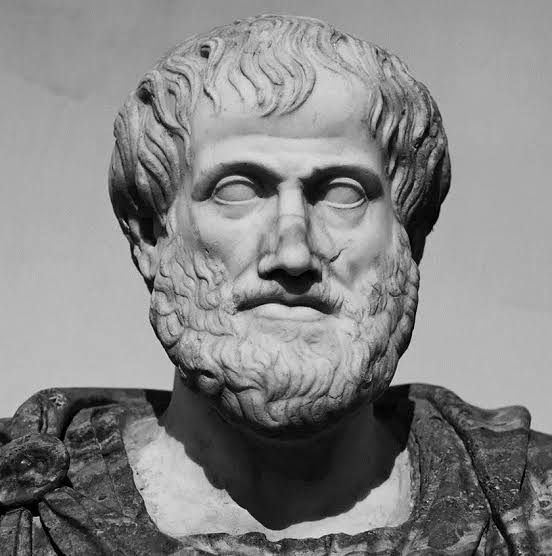
aristotle
matter if made of four elements: fire, water, earth, and air
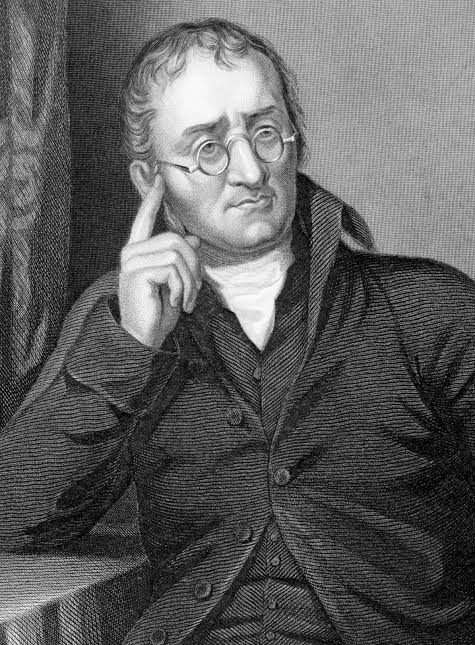
john dalton
published first atomic theory in 1803
daltons atomic theory
matter is composed of tiny fundamental and invisible particles called atoms
daltons atomic theory
atoms of the same elements are identical (isotopes)
daltons atomic theory
atoms of different elements are obviously different
daltons atomic theory
a compound is formed when 2 o rmore atoms combine in simple , whole number ratios
daltons atomic theory
atoms separate, rearrange, and recombine during a chemical reaction
JJ thomspon
conducted cathode ray tube experiments
JJ thomspon
a wheel inside the cathode ray tube spins, so cathode rays are made of particles not energy
JJ thomspon
cathode ray deflects away from the negative pole of a magnet, so particles that make up cathode ray are negative
JJ thomspon
calculated the mass of the cathode ray particles and found that they are about 2000 times smaller than the smallest known element, hydrogen
JJ thomspon
discovered the electron
JJ thomspon
concluded that since atoms are neutral there must be a positive charge in the atom tool.
JJ thomspon
came up with new model of the atom, called the palm pudding model: the atom is a positive solid with negative electrons scattered randomly throughout
ernest rutherford
conducted gold foil experiment
ernest rutherford
a beam of positive alpha particles is aimed at a thin sheet of gold fould, and a screen around the foil detects the path of the alpha particles
ernest rutherford
the expected result was if the plum pudding model is correct, all of the alpha particles would pass straight through the foil
ernest rutherford
result was most of the alpha particles passed straight through the gold foil. a few passed through with a slightly bent path, and about 1 in 20,000 particles bounded back towards the source of the particles
ernest rutherford
conclusion was that atom was mostly an empty space with a small, dense, positively charged area in the center, called the nucleus
neils bohr
proposed planetary model of the atom: electrons orbit the nucleus in circular energy levels like plants orbit around the sun
neils bohr

werner heisenberg
proposed the uncertainty principle in 1926
werner heisenberg
principle says the exact position of electrons cannot be known, so the best model for the location of the electrons is the electron cloud
erwin schrodinger
electrons have properties of both waves an d particles
erwin schrodinger
there are regions in the atom where there is high probability of finding electrons called orbitals
quantum mechanical model of the atom
the works of bohr, Heisenberg, Schrodinger, Einstein, and other physicists developed into this
james chadwick
discovered the neutron
modern atomic theory
matter is composed of tiny fundamental particles called atoms
modern atomic theory
an atom has two areas: a nucleus and an electron cloud
modern atomic theory
the nucleus is dense and positive, its made of positive protons and neutral neutrons
modern atomic theory
the electron cloud is a diffuse area outside other nucleus where negative electrons can be found
modern atomic theory
electrons exist in energy levels in the electron cloud aremos tlilely found in regions called orbitals
daltons atomic theory

democritus

aristotle
john dalton
jj tompson

ernest rutherford

niels bohr
werner heisenburg

erwin schrodinger

james chadwick