Chapter 6: Cell Signals and Responses
 Call Kai
 Learn
Learn Practice Test
 Spaced Repetition
 Match
Match Flashcards
 Knowt Play
1/61

Name | Mastery | Learn | Test | Matching | Spaced | Call with Kai | Chat |
|---|
No analytics yet
Send a link to your students to track their progress
62 Terms
Environmental variables
These signals were the first to be detected by individual cells, responding in order to maintain homeostasis
Involves changes in the tertiary structure of a sensory receptor’s protein for a response

Cell-to-cell signalling
Signals that originate from a cell and convey specific information to another cell, enabling multicellularity
Requires that a receptor be present
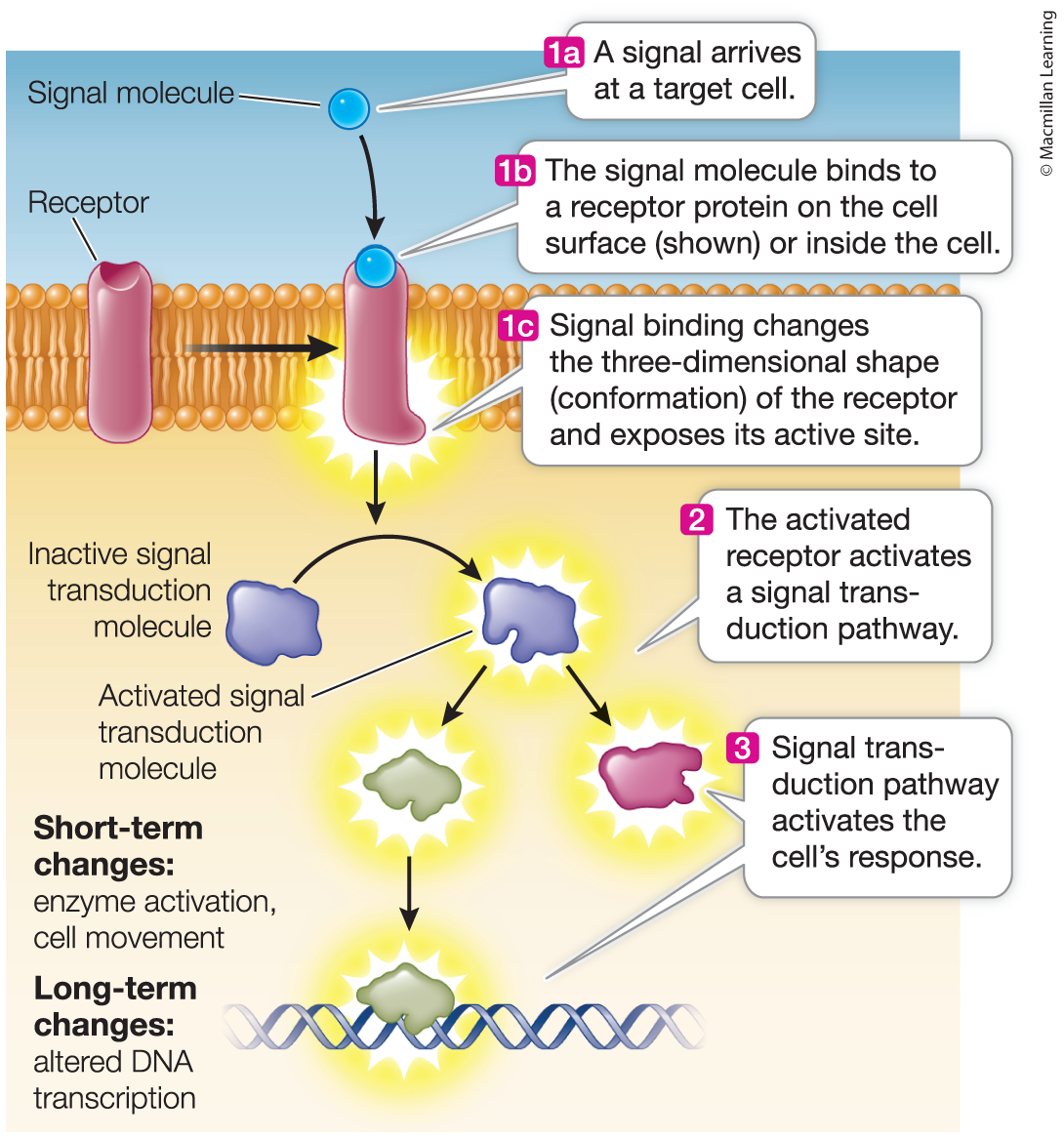
Receptor
One of these are required to ensure a cell can properly receive and respond to a signal
Only expressed in cells that require it
Conformational change
A change in the shape of a protein
Occurs in receptors when bound to a signal
Signal transduction
The amplified pathway that is followed after a signal binds to a receptor
Typically occurs through an allosterically-regulated molecule activated via phosphorylation
Phosphorylation
The binding of phosphate groups, often to proteins for activation
Ligand
A molecule that binds to a specific receptor protein, such as proteins, lipids, or other molecules
May be interpreted differently across different function cells
Short-term changes
Responses to signals in a cell including enzyme activation or ion channel openings
Long-term changes
Responses to signals in a cell including gene expression regulatory protein modification

Juxtacrine signaling
Cell-to-cell signaling involving direct contact, either through gap junctions, plasmodesmata, or signal and receptor molecules
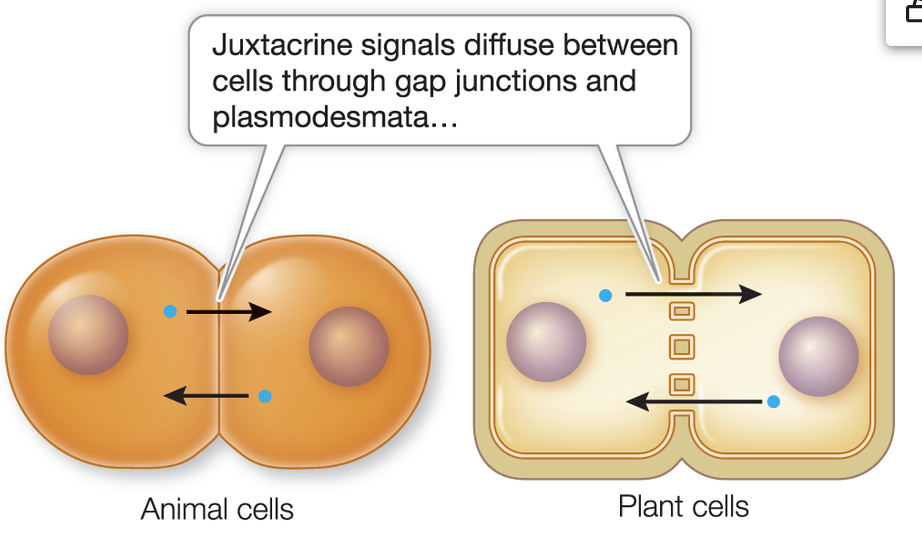
Gap junctions
Junctions that link cells together to allow for the passage of material directly into the cytoplasm for juxtracrine signaling

Plasmodesmata
Pores in plant cells that serve a similar function to gap junctions in animal cells

Paracrine signaling
The diffusion of signals to nearby cells that possess the required receptors

Autocrine signaling
Self-cell signaling, as a type of paracrine signaling
Seen widely in tumors, resulting in uncontrolled growth
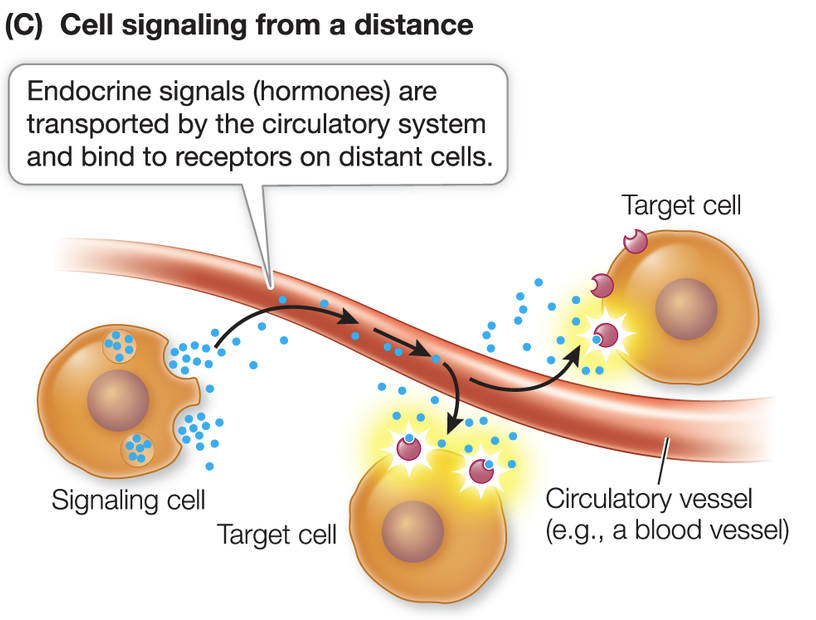
Endocrine signaling
Signalling that uses tissue-specific molecules called hormones transported through a circulatory system across long distances
Hormones
Chemical signals transported to a distant receiving cell such as through a circulatory or vascular system

Signal receptors
Proteins that bind to specific ligands, grouped by location (inside or outside) and behavior
Ligands
Chemical signals that bind to specific receptors reversibly and reliably, grouped based on their ability to diffuse through membranes

Intracellular receptors
Receptors inside the cell for easily-diffusing molecules like steroids, found in the cytosol or nucleus
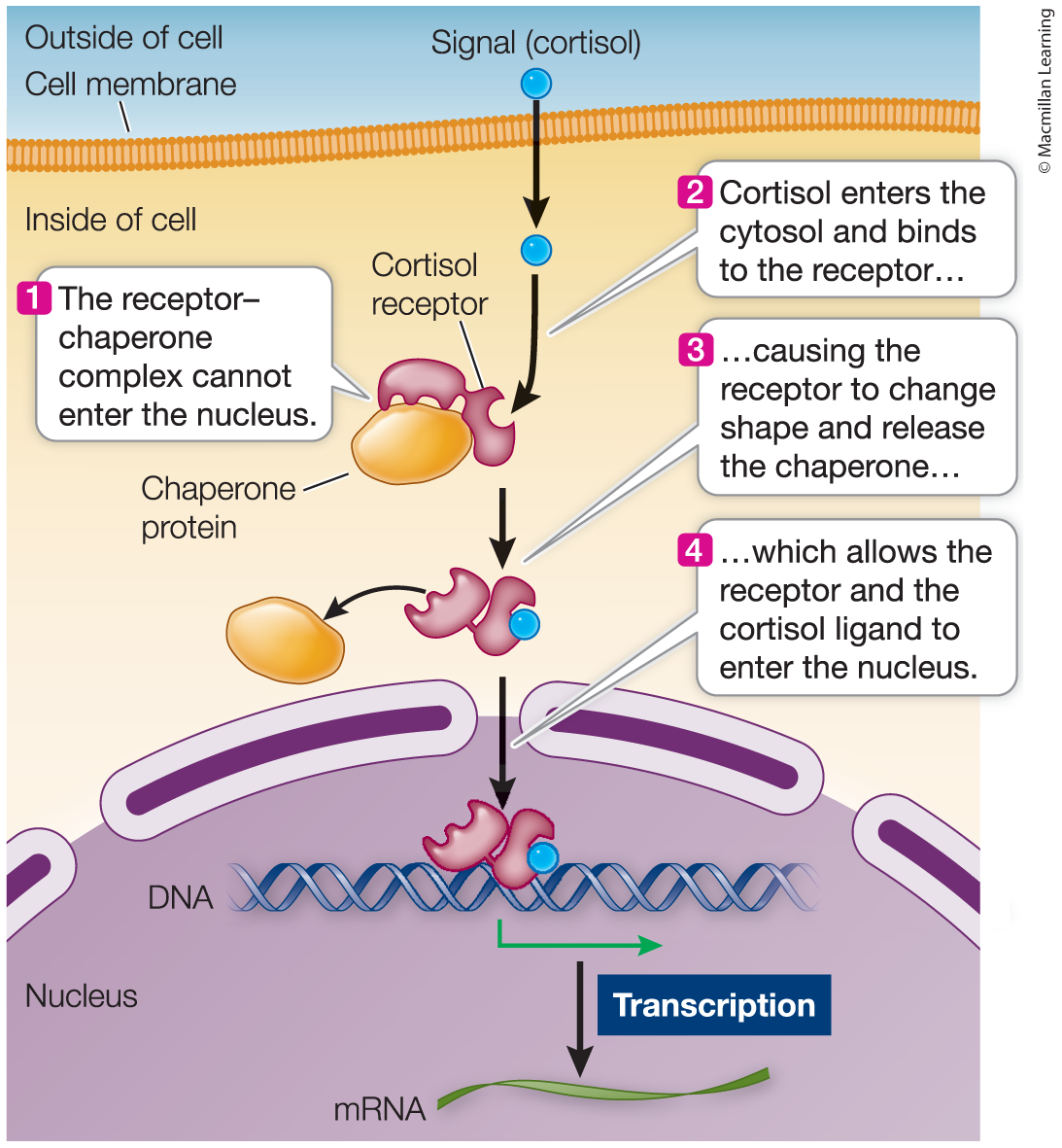
Chaperone protein
A protein accompanying a receptor that can prevent physical passthrough or chemical binding
Can be removed upon ligand binding

Membrane receptors
Receptors located on the membrane for extracellular binding to polar or large substances to initiate change in the cytosol
Ligands can stay outside the cell while action occurs inside
Glycoproteins
Proteins with a carbohydrate attached to specific amino acids, affecting their bindings, foldings, and membrane responses

Signal inhibition
Inhibition of a receptor through substances that prevent the binding of a ligand
Seen with caffeine blocking a drowsiness recptor

Ligand-gated ion channels
Channels that allow ions to pass through when activated by a ligand
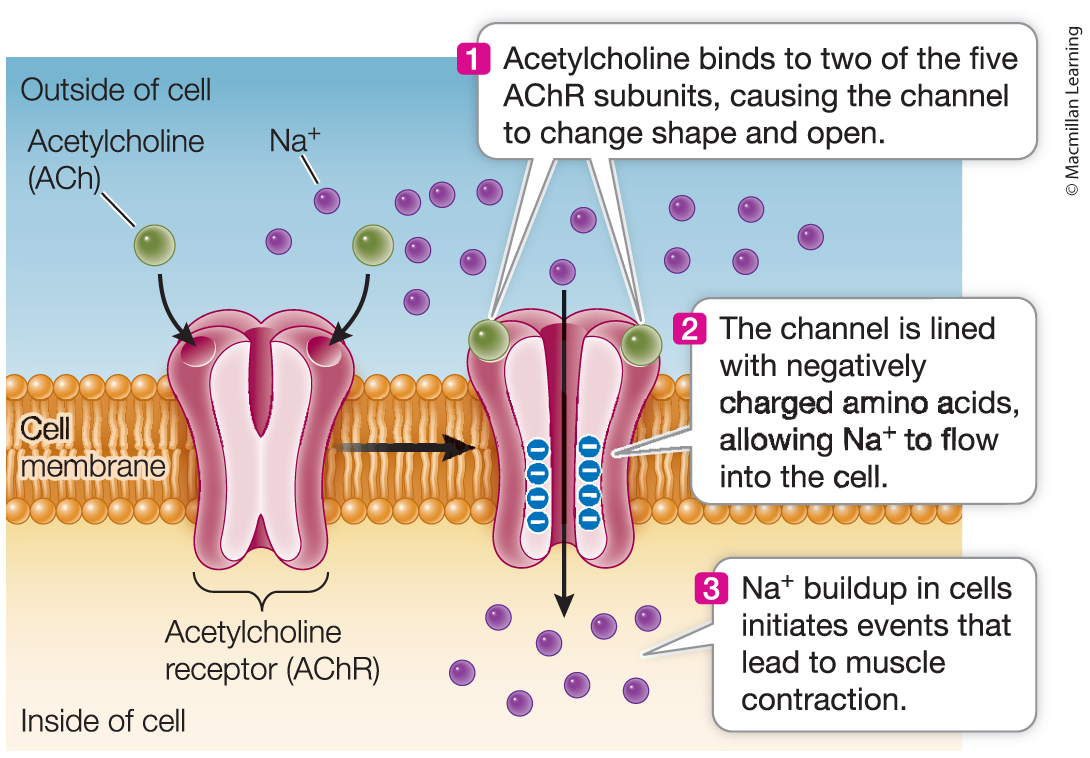
Seen with the acetylcholine receptor (AChR) requiring ACh to allow Na+ through
Acetylcholine (ACh)
A neurotransmitter released from nerve cells that binds to AChR, opening a sodium channel to allow for diffusion and eventual muscle contraction

G protein-coupled receptors (GPCRs)
Membrane receptors that activate G proteins inside a cell upon being activated by a ligand
Guanosine triphosphate (GTP)
A molecule that contains chemical energy in phosphate bonds, much like ATP, that is hydrolyzed into GDP

G proteins
Membrane proteins inside the cell that can bind to GTP and GDP; heterotrimers are one example of these

Heterotrimers
The type of G proteins that interact with GPCRs, named for their 3 different peptide monomers, with an alpha subunit that can bind GTP or GDP
Holds a GDP molecule when inactive, and undergoes a conformational change when active for an exchange into GTP
Alpha subunit
The subunit of the heterotrimer G protein that can bind GTP and GDP; this is inactive and holds GDP until activated to exchange for a GTP molecule
After activation, it activates an effector protein for further changes in the cell
Effector protein
An enzyme that causes further changes in the cell, sometimes after the reception of an alpha subunit of a G protein for further signaling

Protein kinase receptors
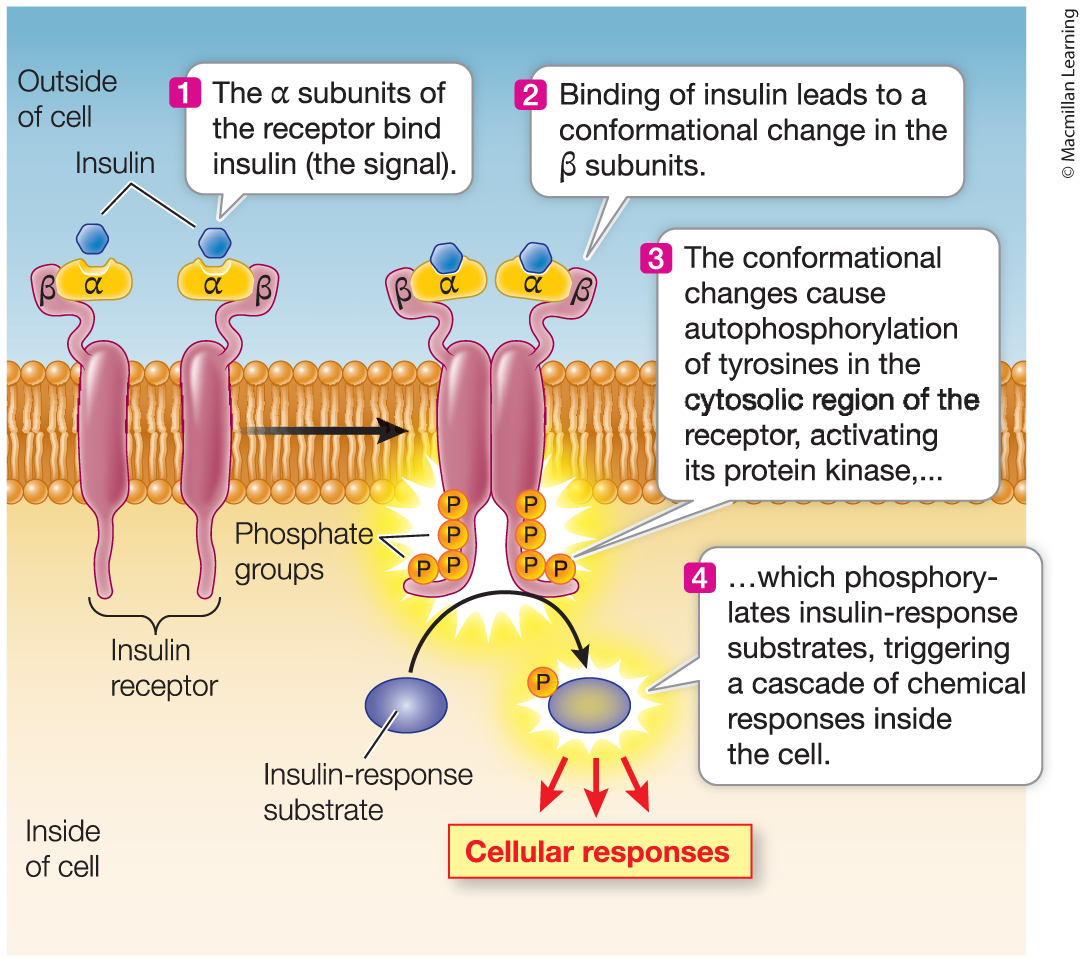
Receptors that undergo conformational changes upon binding to add a phosphate group to proteins

Insulin
A hormone that binds to a specific protein kinase receptor for the insertion of phosphorylated glucose transport proteins
Autophosphorylation
The phosphorylation of a receptor’s own residues for modified behavior
Signal transduction
The amplified (via enzymes) pathway of events after signal reception
Ion channel opening
One shorter-term cell response, this is required to change the balance of ion concentrations for new voltage potentials in muscles
Enzyme alteration
One shorter-term cell response, resulting in a change to cell metabolic rates
Epinephrine
A hormone that alters enzyme activities, which can be interpreted differently across cells
In the heart, it binds to a receptor for enzyme mobilization needed for energy mobilization
In the digestive tract, it inhibits an enzyme for wall relaxation needed for nutrients
Additionally, it activates a G protein for the activation of adenylyl cyclase to go through a chain to release glucose into the bloodstream
Gene regulation
One long-term cell response, resulting in genes being switched on (up) or off (down-regulated), often resulting in protein and cell function changes
Chaperone proteins
Proteins that bind other proteins for three-dimensional structure stability; some receptors may directly release these once activated

Mitogen-actived protein kinases (MAPKs)
Receptors activated by division-stimulating mitogens for the phosphorylation of target proteins that increase cell division expression rates
RAS
A G protein involved in activating cell division that phosphorylates the initial MAPKs in a pathway

Second messengers
Non-protein molecules that serve as allosteric signals after the initial ligand binding that can be hydrophilic, hydrophobic, or gases, distributing the initial signal

Hydrophilic second messengers
These act on proteins inside the cytosol, and include:
Cyclic AMP (cAMP)
Inositol trisphosphate (IP3)
Ca2+ ions

Hydrophobic second messengers
These interact with proteins associated with the membrane, and include:
Diacylglycerol (DAG)
Phosphatidylinositol trisphosphate (IP3)
Gaseous second messengers
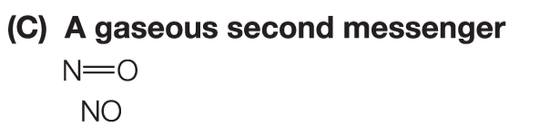
These are nonpolar and diffuse easily into neighboring cells, and include nitric oxide (NO)

Adenylyl cyclase
This is stimulated by a G protein sent by epinephrine, catalyzing the production of cyclic AMP from ATP to activate enzyme protein kinase A for further phosphorylation

Glycogen synthase
This is one of two phosphorylated proteins of protein kinase A; when done, glucose-storing glycogen synthesis is stopped

Phosphorylase kinase
This is one of two phosphorylated proteins of protein kinase A; when done, glycogen phosphorylase is activated to catalyze the breakdown of glycogen to release glucose
Signal termination
The end of signal transduction where pathways are reset and allow the cell to respond again; done through receptor recycling, chemical reversion, or molecule loss
Rates can vary due to adjustable rates of synthesis and stoppage
Receptor recycling
One method of signal termination where receptors are degraded in lysosomes or turned over

Chemical reversion
One method of signal termination where signal transduction molecules are converted back to their inactive precursors, seen often with phosphate group removal

Protein phosphatase
A protein that removes a phosphate group from another protein, reversing effects in transduction
Similar to GTPase, which removes a phosphate group for conversion to GDP

Phosphodiesterase
A protein that converts cyclic AMP back to AMP, ending the activation of any cAMP-dependent enzymes
Signal molecule loss
One method of signal termination where the molecule is simply lost, like with NO diffusing out of the cell
Glucose
A carbohydrate molecule used in energy metabolism, with levels affected by epinephrine, glucagon, and insulin
Epinephrine
A hormone that signals the breakdown of glycogen and triglycerides, decrease of fatty acid synthesis, and increase in gluconeogenesis (glucose production from non-carbohydrate sources)

Glucagon
A hormone produced by the pancreas that activates adenylyl cyclase to break down glycogen via a pathway

Insulin
A hormone that activates a protein kinase receptor to trigger the inhibition of rising blood glucose levels through decreased production and increased uptake, countering the changes made by glucagon and epinephrine

Mathematical models
These are required to fully understand how different pathways will likely affect a cell’s substances
Diabetes
A disorder affecting more than 30 million people in the United States, resulting in abnormally high blood glucose levels from the immune system destroying insulin-producing cells (type 1) or greater insulin resistance (type 2)
Can lead to leakier blood vessels with lowered oxygen and nutrient delivery due to a change in metabolism and surface proteins, potentially causing eye and extremity damage
Can be treated with insulin injections or treatments to inhibit some of the pathways’ effects
Cancer
A disorder stemming from an issue with cell cycle regulation; this can be triggered by continually-activating RAS leading to uncontrolled division