Bio Exam 1
 Call Kai
 Learn
Learn Practice Test
 Spaced Repetition
 Match
Match Flashcards
 Knowt Play
1/95

Earn XP
Description and Tags
fill in the blanks
Name | Mastery | Learn | Test | Matching | Spaced | Call with Kai | Chat |
|---|
No analytics yet
Send a link to your students to track their progress
96 Terms
lipids
large class of biological molecules that do not form polymers
Taxonomy
branch of biology that names and classifies species into groups
organize diversity of life
domain,kingdom,phylum, class, order, family, genus, species.
Domain Bacteria ( one of the three domain systems)
comprise prokaryotes
Domain Archaea (one of the three domain systems)
comprise the prokaryotes
Domain Eukarya ( one of the three domain systems )
includes all eukaryotic organisms
Protista
Other eukaryotic organisms were formerly grouped into a kingdom called Protista, though these are now often grouped into many separate kingdoms
Unity (common traits)
underlies the diversity of life
Charles Darwin
published On the Origin of Species by Means of Natural Selection
selection (natural)
the mechanism behind “ descent with modification”
population
Over time, more individuals in a population will have the advantageous traits
diversity
Darwin’s theory explained both unity and diversity (i.e. why organisms have common traits, yet are also distinct)
descendant species
Darwin proposed that natural selection could cause an ancestral species to give rise to two or more

dendrogram
Evolutionary relationships are often illustrated with tree-like diagrams (dendrograms) that show ancestors and their descendants
inquiry
is a search for information and explanation
data (plural)
are recorded observations or items of information
Qualitative
descriptions rather than measurements (seeing something)
Quantitative
recorded measurements, which are sometimes organized into tables and graphs
hypothesis
Hypothesis-based science centers around a hypothesis,
which is a tentative answer to a well-framed question that is
also falsifiable
falsifiable
can test the hypothesis
tested
A scientific hypothesis leads to a prediction that can be
tested by observation or experimentation
inductive
reasoning draws broad conclusions based on specific events/observation (general from specific)
Deductive
reasoning draws specific conclusions based on broad events/observations (specific from general)
theory
• Broader in scope than a hypothesis
• General, and can lead to new
testable hypotheses
• Supported by a large body of
evidence in comparison to a
hypothesis
examples
• Darwin’s theory of natural selection
• Einstein’s theory of relativity
matter
anything that takes up space and has mass
element
a substance that cannot be broken down to other substances by chemical reactions
compound
a substance consisting of two or more elements in a fixed ratio
96%
carbon, hydrogen, oxygen, and nitrogen make up —- of living matter
subatomic
Atoms are composed of three subatomic particles
Neutrons
one of the three subatomic particles and no charge
Protons
one of the three subatomic particles positive charge
electrons
one of the three subatomic particles negative charge
(atomic) number
is the number of protons in its nucleus
(atomic ) mass
the atoms total mass, can be approximated by the mass number (total of protons and neutrons in an atom)

Isotopes
two atoms of an element that differ in the number of neutrons
Radioactive
isotopes decay spontaneously, giving off particles and energy

Potential
is the energy that matter has because of its location or structure
level
An electron’s state of potential energy is called its energy level, which relates to its electron shell
Valence
electrons are those in the outermost shell, and they prefer to exist in pairs
Inert
Elements with a full valence shell are chemical example Argon

covalent
bond is the sharing of a pair of valence electrons by two atoms
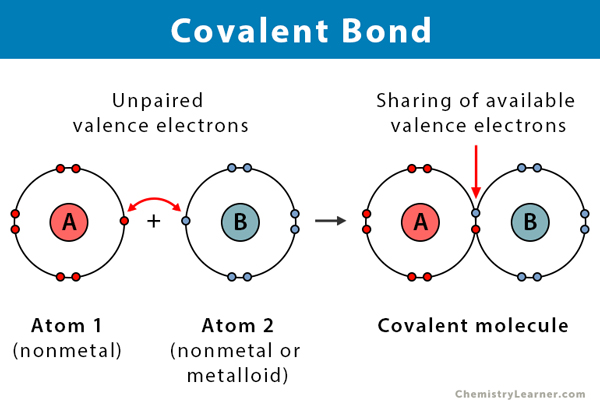
molecule
consists of two or more atoms held together by covalent bonds
single (bond)
A single covalent bond, or single bond, is the sharing of one pair of valence electrons
double (bond)
A double covalent bond, or double bond, is the sharing of two pairs of valence electrons
nonpolar (bond)
the atoms share the elections equally example H2
polar (bond)
In a polar covalent bond, one atom is more electronegative, and the atoms do not share the electron equally example H2O
partial (positive/negative)
Unequal sharing of electrons causes a partial positive or negative charge for each atom or molecule (e.g. water )
ion
A charged atom (or molecule) is called an ion
cation
a positively charged ion
anion
a negatively charged ion
ionic (bond)
An ionic bond is an attraction between an anion and a cation
ionic (compound)
Compounds formed by ionic bonds are called ionic compounds, and are often found as crystals example salt
hydrogen (bonds)
Weak chemical bonds, such as ionic bonds and hydrogen bonds, are also important
Chemical (reactions)
are the making and breaking of chemical bonds
reactants
The starting molecules of a chemical reaction are called
products
The final molecules of a chemical reaction are called products
polar (properties of water)
The opposite ends have opposite charges
Polarity
allows water molecules to form hydrogen bonds with each other
cohesion
Collectively, hydrogen bonds hold water molecules together, a phenomenon called cohesion
adhesion
is an attraction between different substance ( a water droplet on glass)
tension
Surface tension (related to cohesion) is a measure of how hard it is to break the surface of a liquid (example running on water lizard)
specific (heat)
heat of a substance is the amount of heat that must be absorbed or lost
solution
A solution is a liquid that is a homogeneous mixture of substances
solvent
A —— is the dissolving agent
solute
The substance that is dissolved
hydration (shell)
When an ionic compound is dissolved in water, each ion is surrounded by a sphere of water molecules called a hydration shell
hydrophilic
A substance (e.g. ethanol) is one that has an affinity for water
hydrophobic
A hydrophobic substance is one that does not have an affinity for water
proton
A hydrogen atom leaves its electron behind and is transferred as a proton
pH
scale to describe whether a solution is acidic (scale rich in H+ ) or basic (rich in OH-to describe whether a solution is acidic
acid
is any substance that increases the H+ concentration of a solution
base
is any substance that reduces the H+ concentration of a solution
hydrocarbons
are organic molecules consisting of only carbon and hydrogen
Isomers
are compounds with the same molecular formula but different structures and properties:
• Structural isomers have different covalent
arrangements of their atoms
• Cis-trans isomers have the same covalent
arrangements but differ in spatial arrangements
• Enantiomers are isomers that are mirror images of
each other (non-superimposable)
functional groups
groups are the components of organic molecules that are most commonly involved in chemical reactions
dehydration
reaction occurs when two monomers bond together through the loss of a water molecule
Enzymes
are macromolecules that speed up the dehydration process
hydrolysis
Polymers are disassembled to monomers by hydrolysis, a reaction that is the reverse of the dehydration reaction
monosaccharides
The simplest carbohydrates are monosaccharides, or single sugars
• Monosaccharides have molecular
formulas that are usually multiples of
CH2 O (e.g. glucose, C6 H12 O 6 )
disaccharide
formed when a dehydration reaction joins two monosaccharides
Polysaccharides
the polymers of sugars, have storage and structural roles
Lipids
are the one class of large biological molecules that do not form polymers
Saturated (fat)
fatty acids have the maximum number of hydrogen atoms possible and no double bonds
Unsaturated (fats)
fatty acids have one or more double bonds
phospholipid
two fatty acids and a phosphate group are attached to glycerol
Steroids
are lipids characterized by a carbon skeleton consisting of four fused rings
Cholesterol
an important steroid, is a component in animal cell membranes
enzymes
are a type of protein that acts as a catalyst to speed up chemical reactions
polypeptides
small proteins are often called
peptide (bonds)
amino acids are linked by peptide bonds
primary
structure of a protein is its unique sequence of amino acids
Secondary
structure, found in most proteins, consists of coils and folds in the polypeptide chain
Tertiary
structure is determined by interactions among various side chains (R groups) that give a 3D shape
Quaternary
structure results when a protein consists of multiple polypeptide chains (more than one protein)
disulfide
Strong covalent bonds called disulfide bridges may reinforce the protein’s structure
polynucleotides
Nucleic acids are polymers called polynucleotides