A&P LAP 1 Test Study Guide
 Call Kai
 Learn
Learn Practice Test
 Spaced Repetition
 Match
Match Flashcards
 Knowt Play
1/48

There's no tags or description
Looks like no tags are added yet.
Name | Mastery | Learn | Test | Matching | Spaced | Call with Kai | Chat |
|---|
No analytics yet
Send a link to your students to track their progress
49 Terms
Anatomy
is the oldest medical science (1600 B.C.)
describes the structures of the body
Physiology
is the study of:
functions of anatomical structures (biochemistry, biology, chemistry, genetics)
individual and cooperative functions
Organizational hierarchy from cell to organism
cells
tissue
organ
organ system
organism
Integumentary System
Functions:
protects against environmental hazards
helps regulate body temp
provides sensory info
Include: skin, hair, sweat galnds, nails
Skeletal System
Functions:
provides support + protection for other tissues
stores calcium + other minerals
forms blood cells
Include: bones, cartilage, associated ligaments, bone marrow
Muscular System
Functions:
provides movement
provides protection + support for other tissues
generates heat that maintains body temp
Include: skeletal muscles + associated tendons
Nervous System
Functions:
directs immediate responses to stimuli
coordinates or moderates activities of other organ systems
provides + interprets sensory info about external conditions
Include: brain, spinal cord, peripheral nerves, sense organs
Endocrine System
Functions:
directs long-term changes in the activities of other organ systems
adjusts metabolic activity + energy use by the body
controls many structural + functional changes during development
Include: pancreas, gonads, thyroid gland, adrenal glands
Cardiovascular System
Functions:
distributes blood cells, water + dissolved materials, such as nutrients, waste products, O2, and CO2
distributes heat + assists in control of body temp
Include: heart, blood, blood vessels
Lymphatic System
Functions:
defends against infection + disease
returns tissue fluids to the bloodstream
Include: spleen, thymus, lymphatic vessels + nodes, tonsils
Respiratory System
Functions:
delivers air to alveoli
provides oxygen to bloodstream
removes CO2 from bloodstream
produces sounds for communication
Include: nasal cavities, larynx, trachea, bronchi, lungs
Digestive System
Functions:
processes + digests food
absorbs + conserves food
absorbs nutrients
stores energy reserves
Include: teeth, pharynx, stomach, large + small intestine, liver, gallbladder, pancreas
Urinary System
Functions:
excretes waste products from blood
controls water balance by regulating volume of urine produced
stores urine prior to voluntary elimination
regulates blood ion concentrations + pH
Include: kidneys, ureters, urinary bladder, urethra
Male Reproductive System
Functions:
produces male sex cells (sperm) suspending fluids + hormones
sexual intercourse
Include: testes, penis, scrotum, prostate gland
Female Reproductive System
Functions:
produces female sex cells + hormones
supports developing embryo from conception to delivery
provides milk to nourish newborn infant
sexual intercourse
Include: ovaries, uterus, vagina, mammary glands, uterine tubes
Negative Feedback loop
1) the response of the effector negates the stimulus
2) the body is brought back into homeostasis
Positive Feedback loop
1) the response of the effector increases change of the stimulus
2) body is moved away from homeostasis
Abdominopelvic Regions
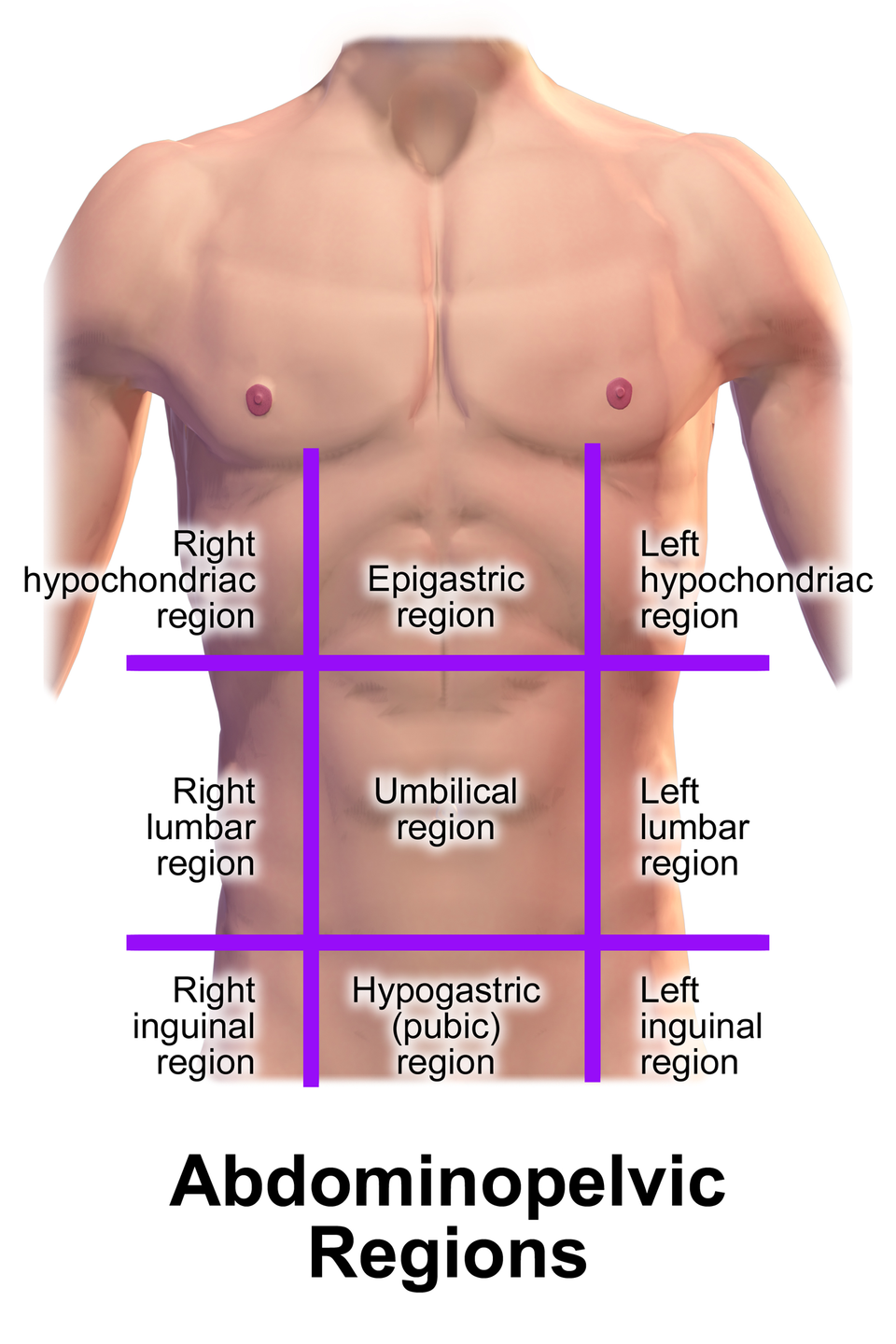
Abdominopelvic Quadrants
Right Upper Quadrant (RUQ)
Right Lower Quadrant (RLQ)
Left Upper Quadrant (LUQ)
Left Lower Quadrant (LLQ)

What is the anatomical position?
standing, hands at sides, palms forward
Supine: lying down, face up
Prone: lying down, face down
superior
upper/above
inferior
lower/below
anterior
to the front of
ventral
posterior
to the back of
dorsal
medial
toward the midline of the body
lateral
toward the side of the body
proximal
toward an attached base
distal
away from an attached base
superficial
closer to the surface of the body
deep
further from the surface of the body
What are the different planes?
frontal
sagital
transverse

Ventral Body Cavity
thoracic + abdominopelvic cavity separated by the diaphragm
Thoracic Body Cavity
Mediastinum- contains the trachea, esophagus, thymus, glands
Pericardial cavity- houses heart
Left Pleural Cavity- houses left lung
Right Pleural Cavity- houses right lung
Abdominopelvic Cavity
Abdominal cavity- liver, stomach, pancreas, spleen, gallbladder, intestines, kidneys
Pelvic cavity- bladder, reproductive organs, large intestine
Serous Membranes
Line body cavity and cover organs
Parietal layer: lines cavity
Visceral layer: covers organ
Cephalic
Cervical
neck
Trunk
thoracic/thorax- chest
mammary- breast
abdominal
navel- umbilical
axillary- armpit
brachial- arm
antecubital- front of elbow
Upper Limb
acromial- shoulder
dorsal- back
olecranal- back of elbow
loin- lumbar
Lower Limb
gluteal- buttock
popliteal- back of knee
sural- calf
calcaneal- heel of foot
plantar- sole of foot
Facilitated diffusion + when is it used?
Ordinary diffusion + when is it used?
Endocytosis
endo-inside
is active transport using ATP
Exocytosis
exo-outside
Cell Parts + Functions
composition and function of the cell membrane
What: A watery medium that surrounds a cell
What it does: separates cytoplasm from the extracellular fluid
What are the two main categories that cells fall into in the body?
somatic cells
sex cells
Why is it important to maintain concentration gradients in the body, and what would occur if one were unbalanced?
Concentration gradients are important because they help substances like water, oxygen, and nutrients move into and out of cells. If a concentration gradient becomes unbalanced, substances may not move where they are needed, may not function properly, or may become damaged.
Why is homeostasis important to living things?
Homeostasis is important because it keeps the body's internal conditions stable and balanced, such as temperature, water levels, and blood sugar. Without homeostasis, cells and organs wouldn’t work properly, which could cause diseases.