12. C1.2 Cell Respiration
 Call Kai
 Learn
Learn Practice Test
 Spaced Repetition
 Match
Match Flashcards
 Knowt Play
1/26

There's no tags or description
Looks like no tags are added yet.
Name | Mastery | Learn | Test | Matching | Spaced | Call with Kai | Chat |
|---|
No analytics yet
Send a link to your students to track their progress
27 Terms
Describe the structure of ATP
is a nucleotide consisting of
adenine (base)
5 carbon sugar ribose
3 phosphate groups
small, soluble molecule, so it can move easily through the cell (reject: ATP moves between cells)
ATP is negatively charged, it cannot diffuse through membranes so it is not lost from cells.
ATP is stable within cells so it does not release energy prematurely.

Outline properties of ATP that make it suitable for the use as an energy currency within cells
highly reactive and able to deliver energy immediately (also why it is not used as storage molecules)
The third phosphate group (Pi) can be easily removed and reattached by hydrolysis and condensation reactions respectively.
energy is released by hydrolysis of ATP to ADP and phosphate
Describe the ATP-ADP cycle, including the roles of hydrolysis and phosphorylation
ATP is formed from ADP and phosphate ions (Pi) using energy from aerobic/anaerobic respiration.
ATP is then hydrolysed to ADP and Pi to generate free energy
ATP reacts with other metabolites (e.g. glucose) to form phosphorylated intermediates that are more reactive. (like the 6 carbon compound in glycolysis)
State why heat is generated during the ATP-ADP cycle
When the bonds between phosphate groups in ATP are broken to release energy, a significant portion of the released energy is lost as heat as the process it not completely efficient. This energy release acts as an exothermic reaction.
Outline example cellular processes that require use of ATP.
ATP is used for the following energy-requiring reactions:
Synthesis of macromolecules (anabolism, via condensation reactions): DNA replication, transcription (RNA synthesis) & translation (protein synthesis).
Active transport of ions & polar substances through changes in 3D conformation of membrane pump proteins as a result of phosphorylation by ATP.
Movement within cells, e.g. movement of chromosomes in cell division (eg. mitosis & meiosis), endocytosis (eg. phagocytosis) & exocytosis, transport of membrane-bound vesicles (transport vesicles from RER to Golgi apparatus, and secretory vesicles from GA to plasma membrane).
Contraction of muscle cells (using actin & myosin filaments – HL only)
List common substrates of cellular respiration
glucose and fatty acids are the principal substrates for cell respiration
and a wide range of carbon/organic compounds can be used.
Carbohydrates
preferred respiratory substrate because they can be easily oxidized (highly beneficial in glycolysis first step in cell respiration).
although the energy yield is lower compared to lipids
Fats
need to be broken down into fatty acids, and further broken down before entering respiratory pathways.
Proteins
only mobilized when glucose and fats are used up in an organism, i.e. during starvation.
Proteins need to be hydrolyzed into amino acids, then deaminated (amino group, NH2, is removed) before entering respiratory pathways. These processes require ATP.
Preference for respiratory substrate: carbohydrates (most preferred) → fats → protein
Define cell respiration.
Cellular respiration is the gradual and controlled release of energy by breaking down organic compounds to produce ATP.
Distinguish between cellular respiration and gas exchange.
| Gas Exchange | Cell Respiration |
Level of organization | Organism | Cells |
Specific locations | Lung alveoli | Cytoplasm & mitochondria |
Purpose | Obtain oxygen for respiration & remove CO2 produced | Generates ATP to power cellular activities |
Without gas exchange, there is a lack of oxygen and a harmful excess of CO2.
Without cell respiration, the concentration gradients of both gases will not exist, thus gas exchange could not continue.
List reasons why cellular respiration must be continuously performed by all cells.
Cells must continuously perform cellular respiration to generate a constant supply of ATP. Because ATP is unstable and cannot be stored or transferred between cells, it must be continuously resynthesized to drive essential metabolic functions.
And list all the cellular processes that depend on ATP.
Compare and contrast anaerobic and aerobic respiration
| Aerobic | Anaerobic |
Substrates | Glucose/fatty acids/amino acids | Glucose |
Oxygen | Yes | No |
Oxidation | Complete | Incomplete |
Energy yield | High (38 ATP per molecule of glucose) | Low (2 ATP per molecule of glucose) |
Waste products | CO2, water | Lactic acid |
Location | Cytoplasm, mitochondria | Cytoplasm |
Stages of Respiration (HL only) | Glycolysis, Link reaction, Krebs Cycle, Electron Transport Chain | Glycolysis |
Write simple word equations for both types of respiration
Aerobic respiration
Glucose + Oxygen —→ Carbon dioxide + Water + Energy (38 ATP)
Anaerobic respiration
Glucose —→ Lactic Acid + Energy (2 ATP)
What are the factors that affect the rate of cell respiration
Metabolic rate of the cell – muscle cells & neurons need more ATP.
Size of the organism - smaller organisms have a larger surface area, thus higher respiratory rate to allow for heat loss.
Supply of oxygen – for maximum release of ATP energy from glucose.
Types of respiratory substrates – glucose, fatty acids or amino acids.
Temperatures – rate is slowed down at low temp, increasing up to an optimum temp.
pH – release of CO2 lowers the pH of surrounding medium, affects the activity of enzymes controlling respiration.
Identify the manipulated (independent), responding (dependent) and controlled variation in experiments of variables affecting the rate of cell respiration.
Independent variables:
Organisms
Temperature
Respiratory substrates
Dependent variables:
Oxygen uptake: Usually measured in mm3 using a respirometer (gas volume).
Carbon dioxide production: Measured by observing changes in pH or by using a CO2 gas sensor.
Rate of glucose consumption: Measured by tracking the depletion of the sugar source over time.
Heat production: Measured using a calorimeter to gauge thermal energy release.
Controlled variables:
Temperature
Pressure
Describe investigative techniques for measuring the effect of a variable on the rate of cellular respiration.
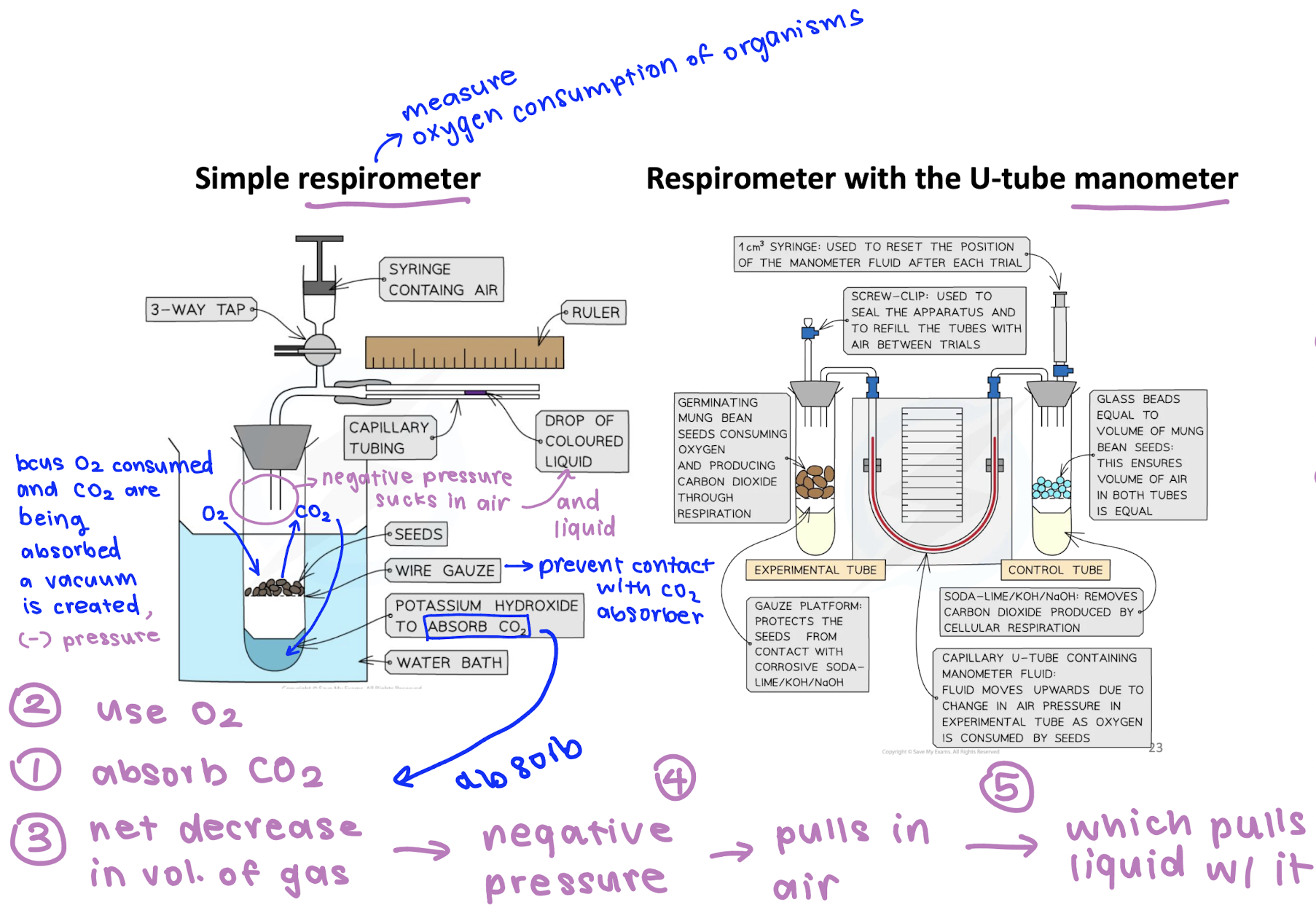
• The manometer detects change in the volume of a gas.
• Soda lime removes the CO2 produced by the respiring organisms.
• During aerobic respiration, O2 is taken up and used – volume of air decreases pressure decrease, which in turn leads to movement of the coloured liquid.
• Hence, the coloured liquid in the capillary tube moves towards the respiring organism as oxygen is taken up by it.
• The volume of O2 consumption can then be calculated.
How can the rate of respiration be calculated?
Measure the distance travelled by the fluid in the manometer in 10 minutes
The volume of oxygen is calculated using the radius of the capillary tube, r (mm), and the distance moved by the manometer fluid, d(mm) using the formula πr2d
The average rate of oxygen consumption = volume of oxygen / ten minutes
Repeat min. 5 times to obtain reliable data

Outline oxidation and reduction reactions in terms of movement of hydrogen and electrons.
oxidation is a process of electron loss, so when hydrogen with an electron is removed from a substrate (dehydrogenation) the substrate has been oxidized.
redox reactions involve both oxidation and reduction, and NAD is reduced when it accepts hydrogen.
Glucose undergoes enzyme-catalysed oxidation and decarboxylation reactions, which are grouped into:
Glycolysis – glucose is converted to pyruvate
Link reaction – pyruvate is converted to acetyl coenzyme A, releasing CO2.
Krebs cycle – acetyl-coenzyme A is converted to CO2.
Electron transport chain (ETC) – hydrogen removed in the oxidation reactions of glycolysis and the Krebs cycle is converted to water. Electrons are transferred from reduced coenzymes and generate a proton gradient to synthesize the bulk of the ATP.
Redox reactions
Redox reactions: a series of reduction and oxidation involving transfer of electrons.
What is Oxidation? | What is Reduction? |
Loss of electrons to a reducing agent | Gain of electrons from an oxidizing agent |
Oxygen is added to a compound | Hydrogen is added to a compound |
Hydrogen is removed from a compound | Oxygen is removed from a compound |
Energy is absorbed (an endergonic reaction) | Energy is released (an exergonic reaction) |
In respiration, glucose (C6H12O6) is oxidized to carbon dioxide (CO2) and oxygen (O2) is reduced to water (H2O) at the same time!
Define coenzymes
Coenzymes are hydrogen acceptors (electron carriers). Upon receiving hydrogen atoms, they are reduced.
Nicotinamide adenine dinucleotide (NAD) and Flavin adenine dinucleotide (FAD) are the electron carriers linking oxidation and reduction in cells.
NAD+ + 2H + + 2e- → NADH + H+
Reduced NAD can pass hydrogen ions (H+) and electrons to other molecules and becomes oxidized back to NAD.
Outline the stages of glycolysis.
Phosphorylation of glucose with 2 molecules of ATP to form fructose 1,6-biphosphate, which is more energetically reactive.
Splitting of fructose 1,6-biphosphate to form 2 molecules of triose phosphate.
Oxidation of each triose phosphate molecule by NAD, a coenzyme.
Oxidised means losing electrons
NAD (oxidised ver.) gets reduced as it gains electrons from the 3 carbon compound
To oxidise something, something else must be reduced
Since there are 2 × 3 carbon compounds, molecules are doubled
4 molecules of ATP formation by substrate level when each triose phosphate molecule is converted to pyruvate.
The 4 phosphate groups attached to the 2× 3 carbon compounds are used to synthesise ATP from ADP
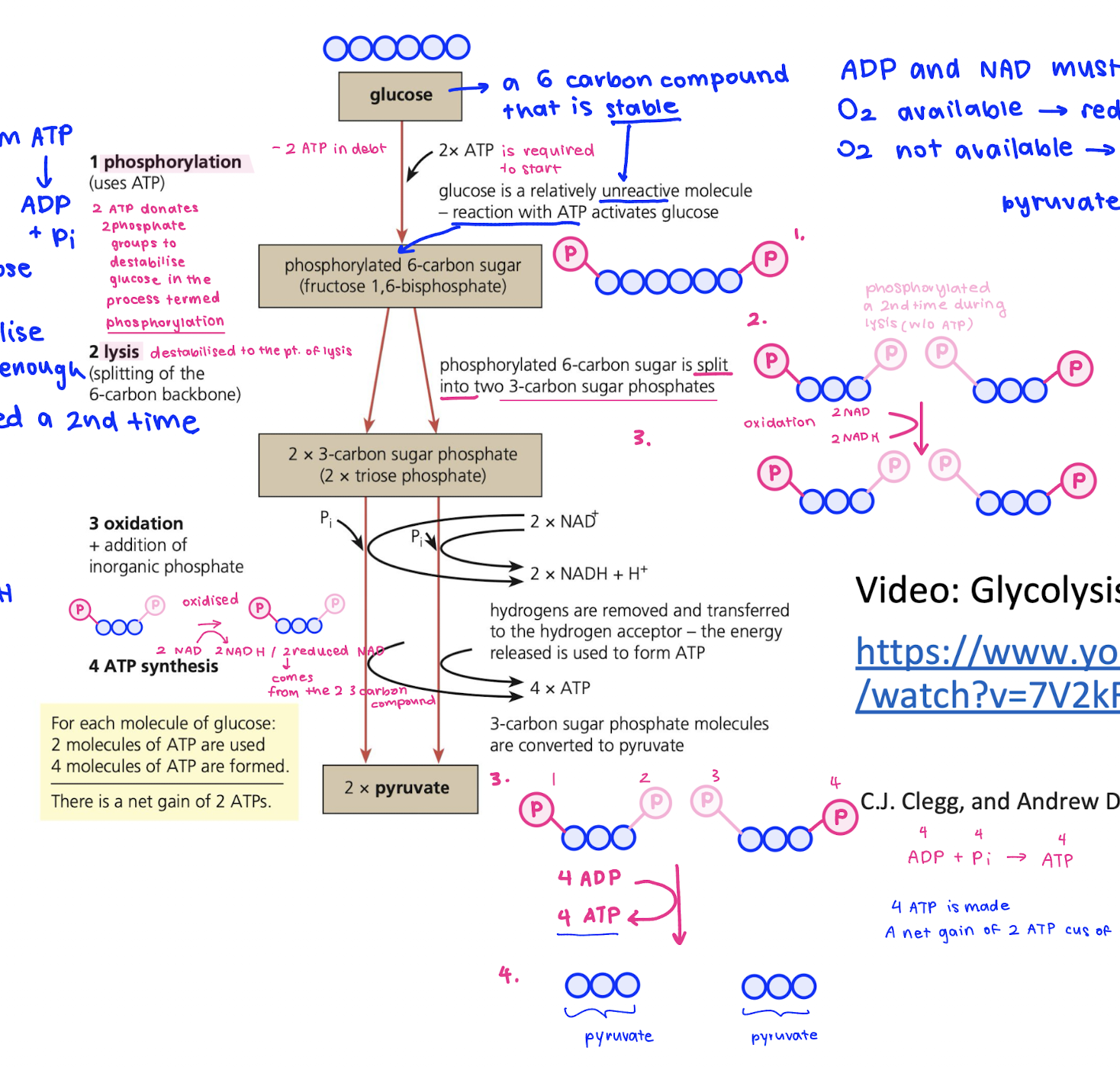
* A net gain of two ATP in glycolysis of one glucose molecule.
For glycolysis to happen there must be ADP and NAD
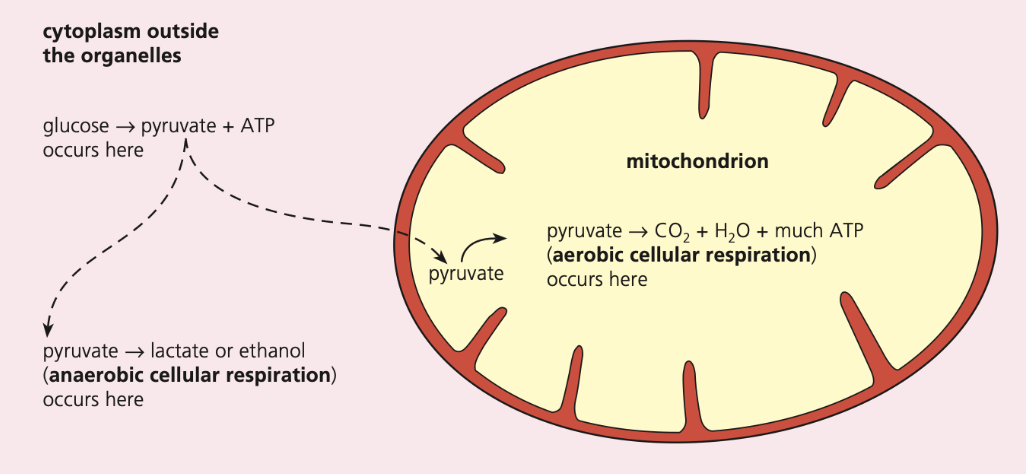
In the presence of oxygen
reduced NAD (NADH) is oxidised into NAD
pyruvate passes into mitochondria by facilitated diffusion for aerobic respiration.
In the absence of oxygen
Pyruvate is converted to lactate (in animal cells) or ethanol (in plant cells) in the absence of oxygen.
Outline how pyruvate oxidized
Pyruvate is completely oxidized by:
The removal of hydrogen atoms by hydrogen acceptors (oxidizing agents, NAD)
The addition of oxygen to the carbon atoms to form CO2

The hydrogen carried by the reduced NAD reacts with oxygen to form water (in the oxidative phosphorylation stage of ETC). NAD is available again for reuse in glycolysis to produce more pyruvate.
Large amounts of ATP are formed in mitochondria before diffusing to other parts of the cell.
Explain the conversion of pyruvate to lactate
Purpose: Regeneration of NAD by fermentation allows glycolysis to continue, with a net yield of two ATP molecules per molecule of glucose.
Pyruvate is converted to lactate when oxygen is not available in human skeletal tissue.
This process is called lactic acid fermentation.
Reduced NAD formed in glycolysis donate hydrogen atoms to pyruvate to form lactate, thus they are reoxidised and are available for use in glycolysis.
The products of fermentation differ between animals and plants or yeast:
In animals, pyruvate is converted into lactic acid (lactate) – this reaction is reversible (pyruvate can be reformed when oxygen is present)
In plants or yeast, pyruvate is converted into ethanol and carbon dioxide – this reaction is irreversible (the pyruvate cannot be reformed)
Outline the uses of anerobic respiration in yeast and compare the pathway of anaerobic respiration between Humans and yeast.
In yeasts, fermentation results in the production of ethanol and carbon dioxide – which can be used in food processing:
Bread – Release of carbon dioxide causes dough to rise via leavening (the ethanol evaporates during the baking process)
Alcohol – Ethanol is the intoxicating agent in alcoholic beverages (concentrations above ~15% kill the yeast)
The pathways of anaerobic respiration are the same in humans and yeast, except the following differences:

Outline the stages of link reaction
The first stage of aerobic respiration is the link reaction, which transports pyruvate into the mitochondria in the MATRIX
Aerobic respiration uses available oxygen to further oxidise the sugar molecule for a greater yield of ATP
The link reaction is named thus because it links the products of glycolysis with the aerobic processes of the mitochondria
Pyruvate in mitochondrial matrix is decarboxylated (by removal of CO2) and oxidized (by removal of hydrogen).
The product of this oxidative decarboxylation reaction is an acetyl group (2C), which is then combined with coenzyme A to form acetyl coenzyme A (acetyl-CoA).
Both lipids and carbohydrates are metabolized to acetyl-CoA, which is an intermediate that connects glycolysis into Krebs cycle reactions.
Reduced NAD is also formed.

Outline the stages of the Kreb cycle
The second stage of aerobic respiration is the Krebs cycle, which occurs within the matrix of the mitochondria
The Krebs cycle is also commonly referred to as the citric acid cycle
In the Krebs cycle, acetyl CoA transfers its acetyl group to a 4C compound (oxaloacetate) to make a 6C compound (citrate)
Coenzyme A is released and can return to the link reaction to become loaded with another acetyl group
Over a series of reactions, the 6C compound is broken down to reform the original 4C compound (hence, a cycle)
Two carbon atoms are released via decarboxylation to form two molecules of carbon dioxide (CO2)
Four oxidation reactions (look out for the word reduced in the pic) result in the reduction of hydrogen carriers (3 × NADH ; 1 × FADH2)
One molecule of ATP is produced directly via substrate level phosphorylation
As the link reaction produces two molecules of acetyl CoA (one per each pyruvate), the Krebs cycle occurs twice
Per glucose molecule, the Krebs cycle produces
ATP (×2)
CO2 (×4)
and a large yield of hydrogen carriers (×8)
6 molecules of reduced NAD
2 molecules of reduced FAD

Electron transport chain
The final stage of aerobic respiration is the electron transport chain, which is located on the inner mitochondrial membrane
The inner membrane is arranged into folds (cristae), which increases the surface area available for the transport chain
Reduced NAD and FAD generated in glycolysis, link reaction and Krebs cycle pass to the ETC comprising a series of carrier proteins in the inner mitochondrial membrane (cristae).
Energy is transferred when a pair of electrons is passed to the first carrier, regenerating NAD.
(reduced NAD / FAD loses an electron to the electron carrier, it oxidises into NAD/FAD)
The electron transport chain releases the energy stored within the reduced hydrogen carriers in order to synthesise ATP
This is called oxidative phosphorylation, as the energy to synthesise ATP is derived from the oxidation of hydrogen carriers
Oxidative phosphorylation occurs over a number of distinct steps:
Proton pumps create an electrochemical gradient (proton motive force)
The flow of electrons along the ETC releases energy, which is used to pump hydrogen ions / protons from the mitochondrial matrix into the intermembrane space.
As the inner membrane is impermeable to ions, a hydrogen ion concentration gradient builds up, generating a potential difference across the membrane and thus a store of potential energy.
ATP synthase uses the subsequent diffusion of protons (chemiosmosis) to synthesise ATP
The protons that accumulate in the intermembrane space flow back into the mitochondrial matrix through ATP synthase enzyme (ATPase).
As the protons flow down their electrochemical gradient, the kinetic energy released from the rotation of ATP synthase is coupled to phosphorylation of ADP into ATP.
This movement of protons from a higher concentration to a lower concentration is facilitated by the transmembrane enzyme ATP synthase in a process termed chemiosmosis

Oxygen accepts electrons and protons to form water

For the oxidation of every reduced NAD, about 2.5 ATP molecules are formed whereas for that of every reduced FAD, about 1.5 ATP molecules are formed.
What is the role of oxygen as terminal electron acceptor in aerobic cell respiration
Oxygen accepts electrons from the electron transport chain and protons from the matrix of the mitochondrion, producing metabolic water and allowing continued flow of electrons along the chain.
removing matrix protons maintains the hydrogen+ ion /proton gradient
Electrons passed along the ETC have to be removed to enable the continued flow of electrons.
Similarly, protons used to create the electrochemical gradient across the inner mitochondrial membrane need to be removed.
Without O2, there is nothing to accept the electron
All electron carriers will stop accepting electrons
Reduced NAD / FAD cannot donate electrons, so they remain reduced
FAD and NAD are not regenerated as a result
Without NAD, anaerobic respiration must take place to regenerate NAD, which yields less ATP
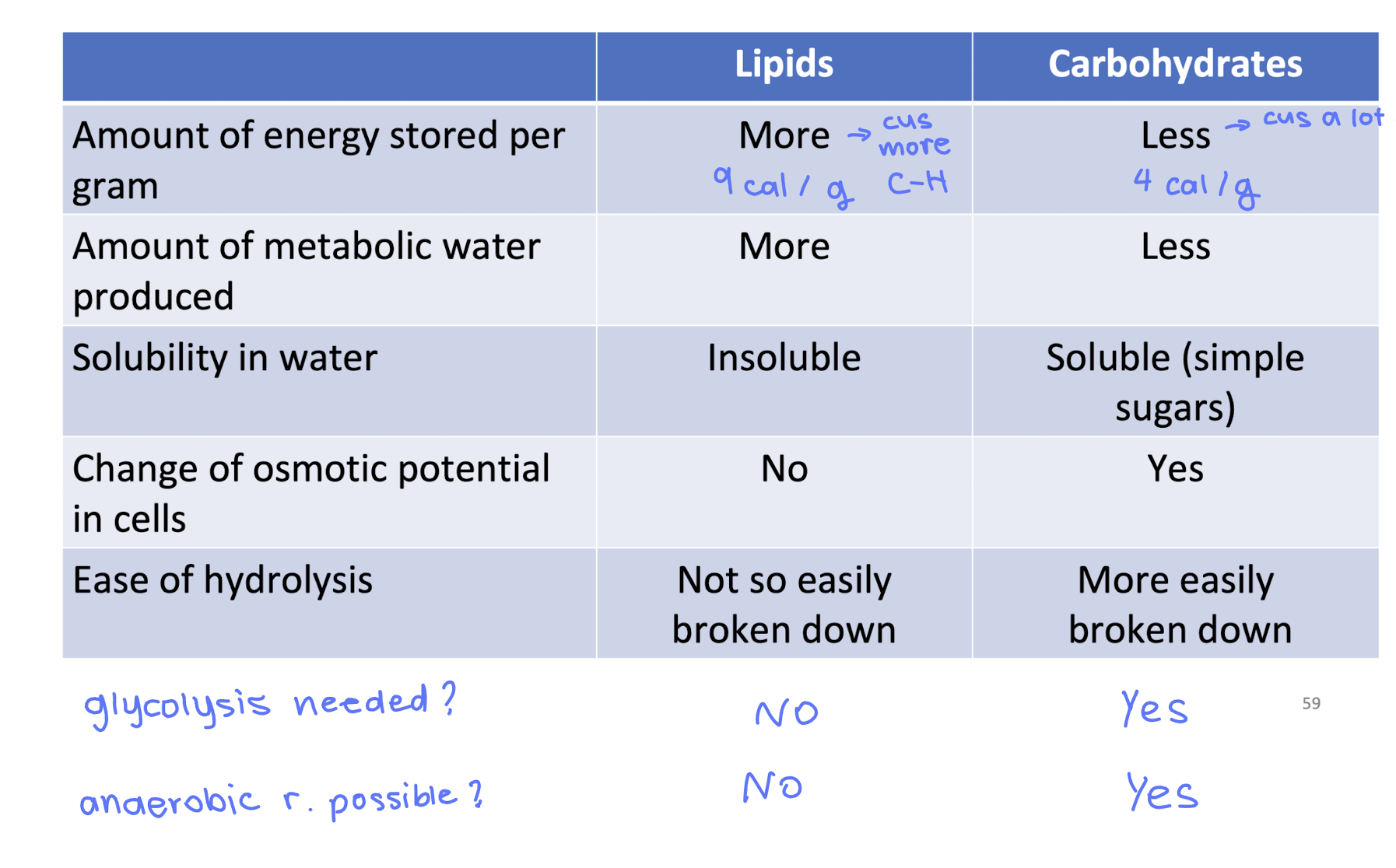
Compare and contrast lipids vs carbohydrates as respiratory substrates
Both lipids and carbohydrates are energy storage molecules, which can also be oxidized in aerobic respiration.
Fats (lipids) are first broken down into fatty acids and glycerol.
Fats are also comparatively low in oxygen atoms, which means oxygen needed in respiration is derived mostly from the atmosphere.