Unit 9 made by myself
 Call Kai
 Learn
Learn Practice Test
 Spaced Repetition
 Match
Match Flashcards
 Knowt Play
1/68

There's no tags or description
Looks like no tags are added yet.
Name | Mastery | Learn | Test | Matching | Spaced | Call with Kai | Chat |
|---|
No analytics yet
Send a link to your students to track their progress
69 Terms
Circulatory System
System of blood vessels with a pump and valves to ensure one way flow of blood
Circulatory System of a Fish
2 chambered heart and a single circulation
Every one circuit of the body, the blood passes through the heart once
Circulatory System in mammals
4 chambered heart and a double circulation
Every one circuit of the body the blood passes through the heart twice
The right side of the heart receives de oxygenated blood and pumps it to the lungs (pulmonary circulation)
The left side of the heart receives oxygenated blood from the lungs and pumps it to the body (Systematic Circulation)
Advantages of double circulation
Blood travelling through the small capillaries in the lungs losses a lot of pressure that was given to it by the pumping of the heart, meaning it can not travel as fast
By returning the blood of the heart after going through the lungs its pressure can be raised again before sending it to the body, meaning cells can be supplied with the oxygen and glucose they need for respiration faster and more frequently
How is blood pumped away from the heart?
Arteries
How is blood pumped to the heart
Veins
How may the activity of the heart be monitored?
ECG
Pulse rate
Listening to sounds of valves closing
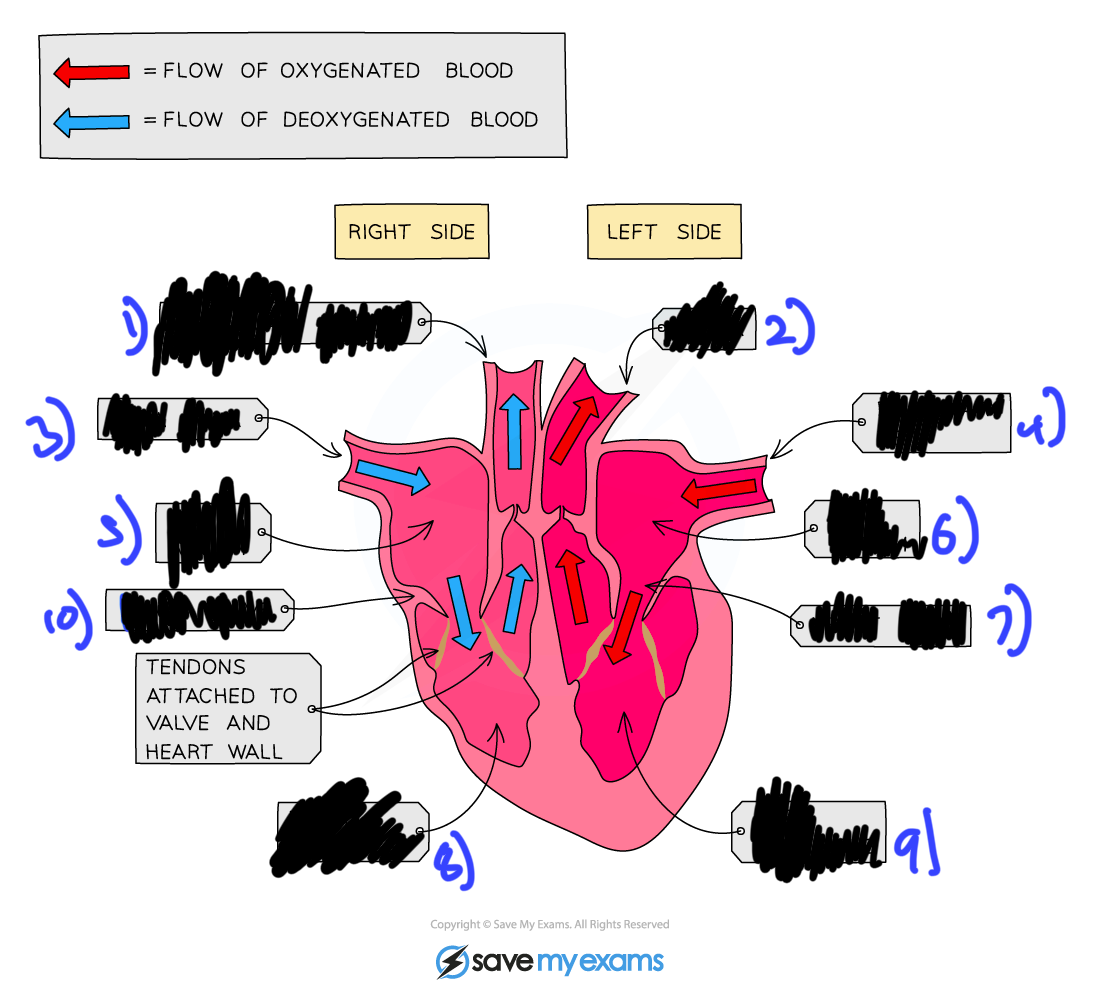
What is 9?
Left Ventricle
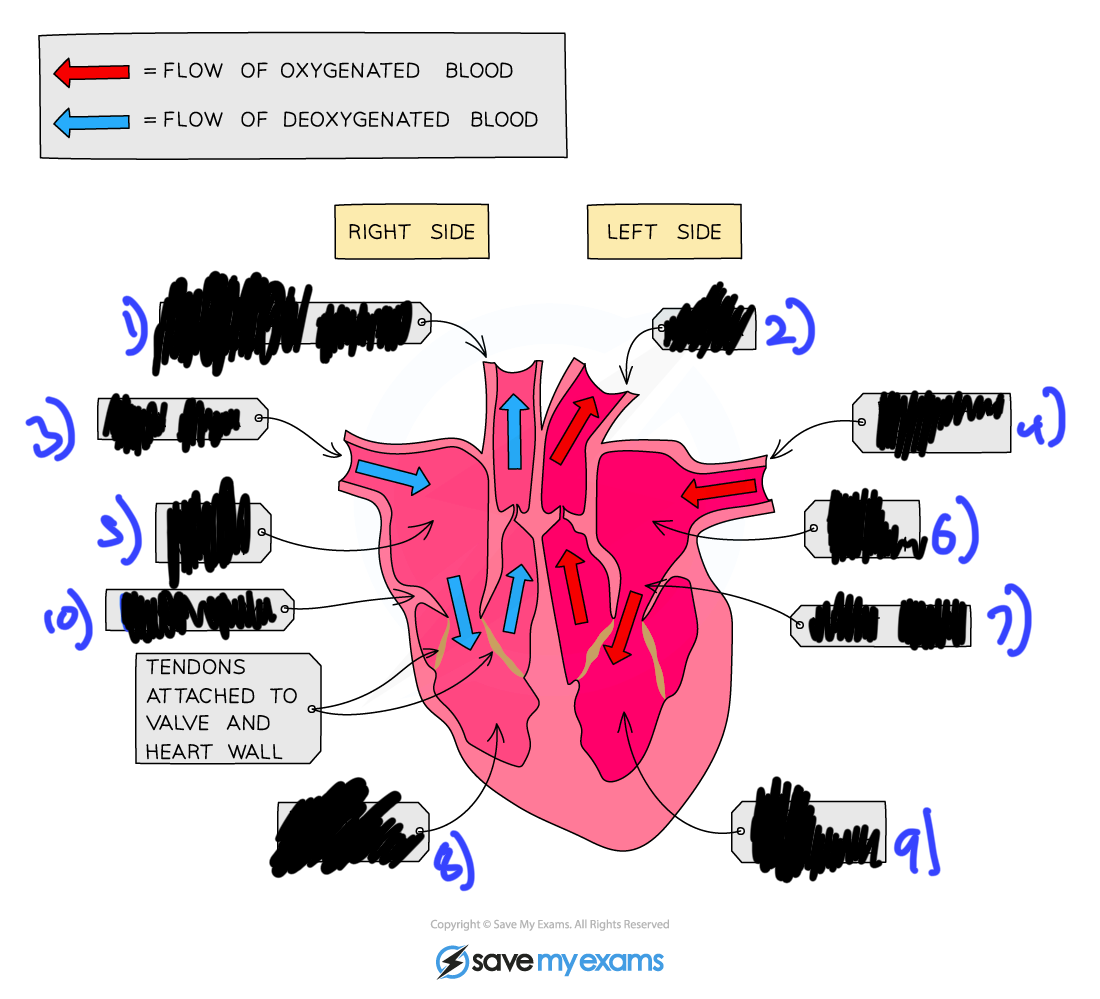
What is 8?
Right Ventricle
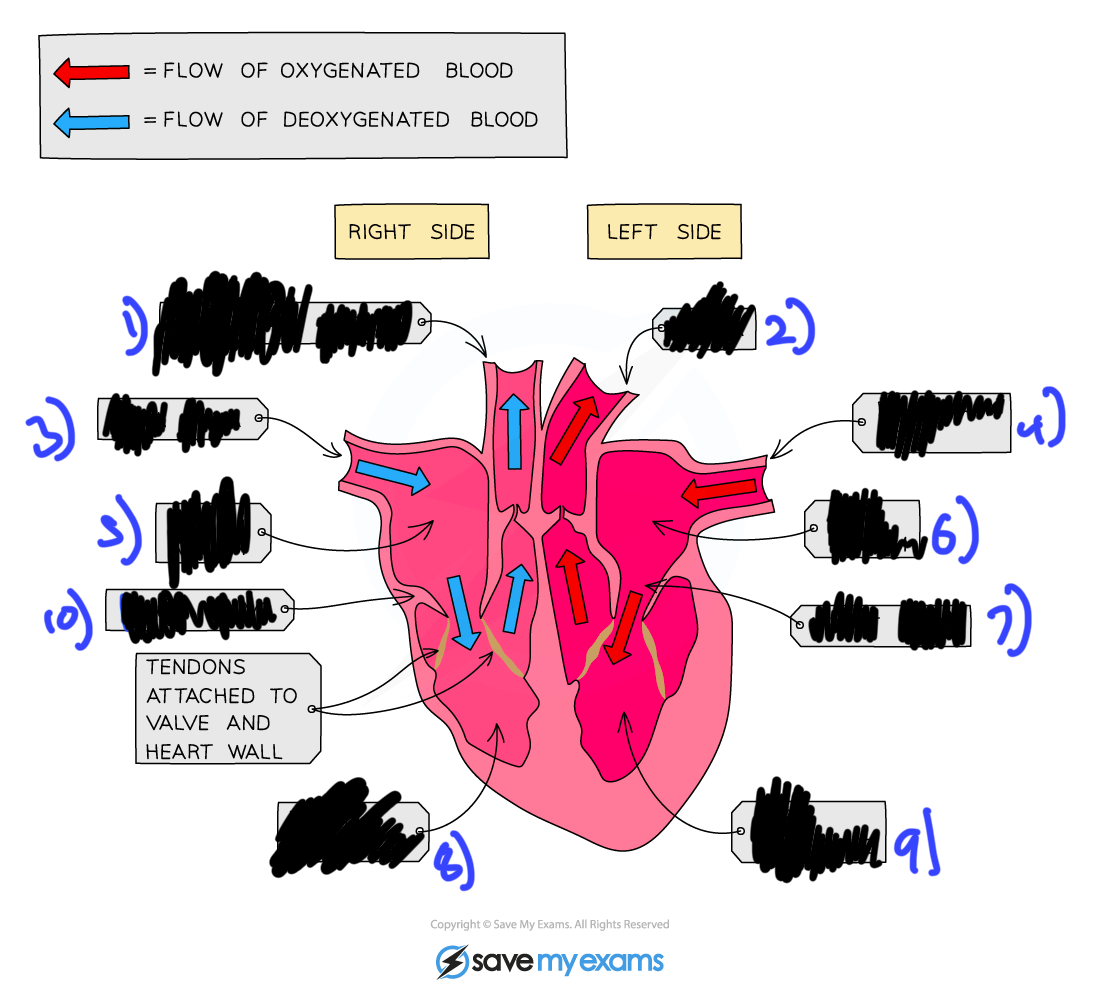
What is 7 and 10?
Heart Valve
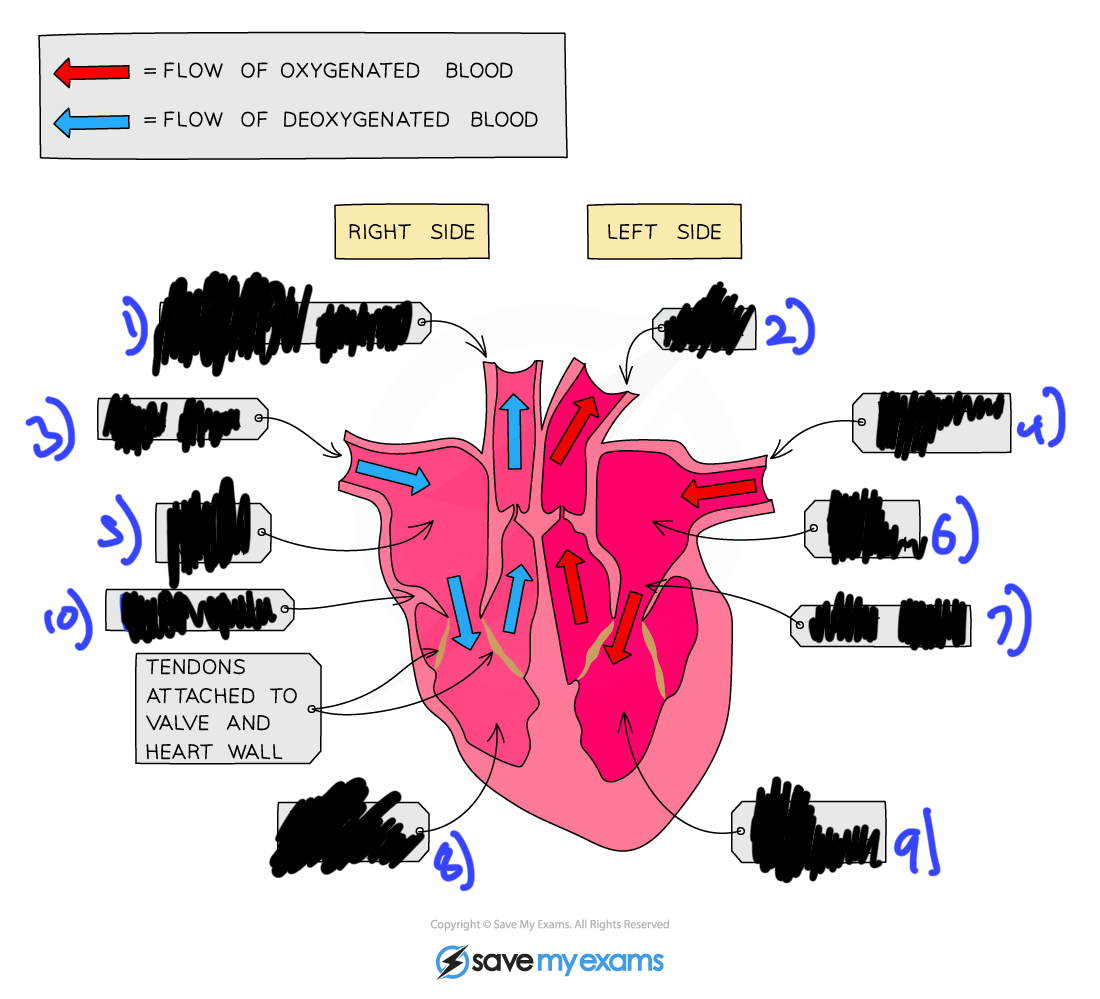
What is 6?
Left Atrium

What is 5?
Right Atrium
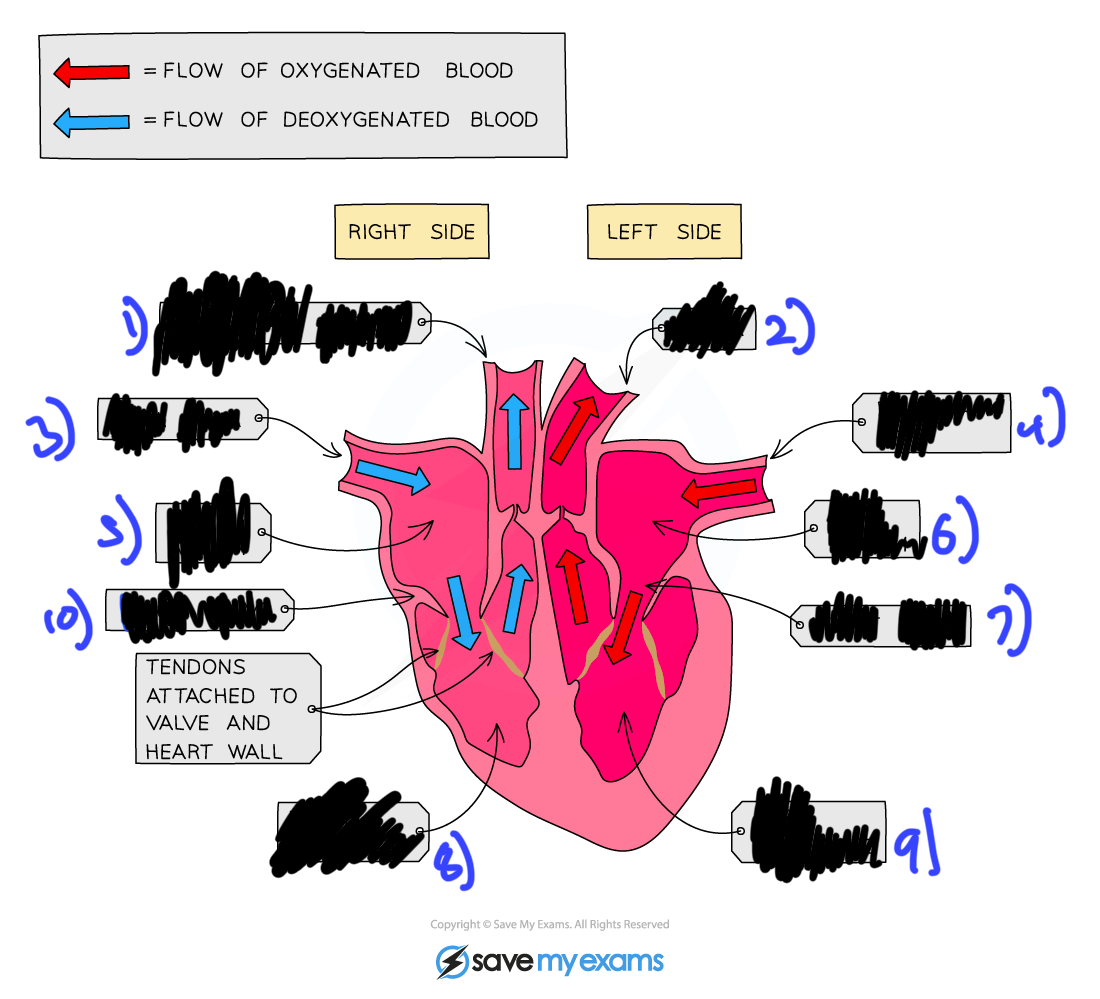
What is 4
Pulmonary Vein
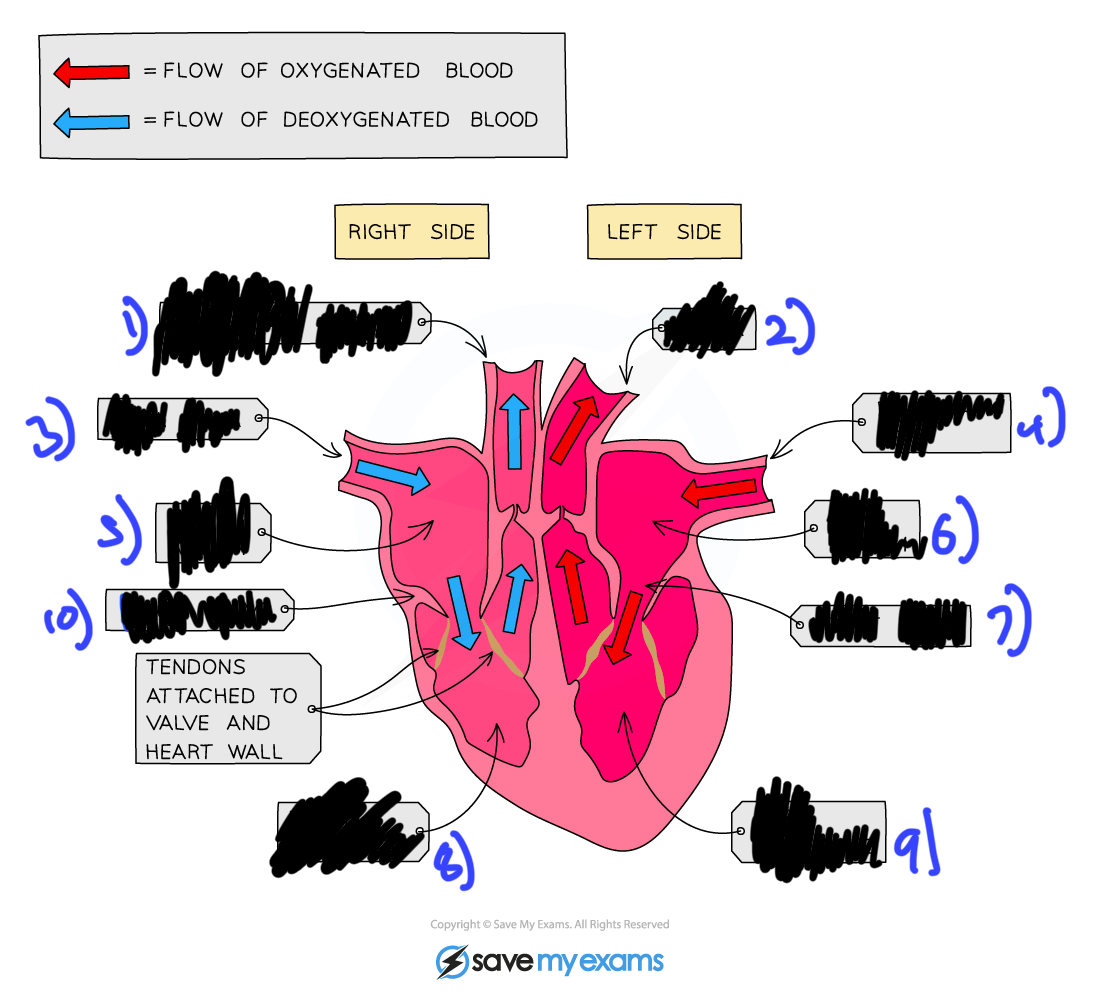
What is 3
Vena Cava

What is 2
Aorta

What is 1?
Pulmonary Artery
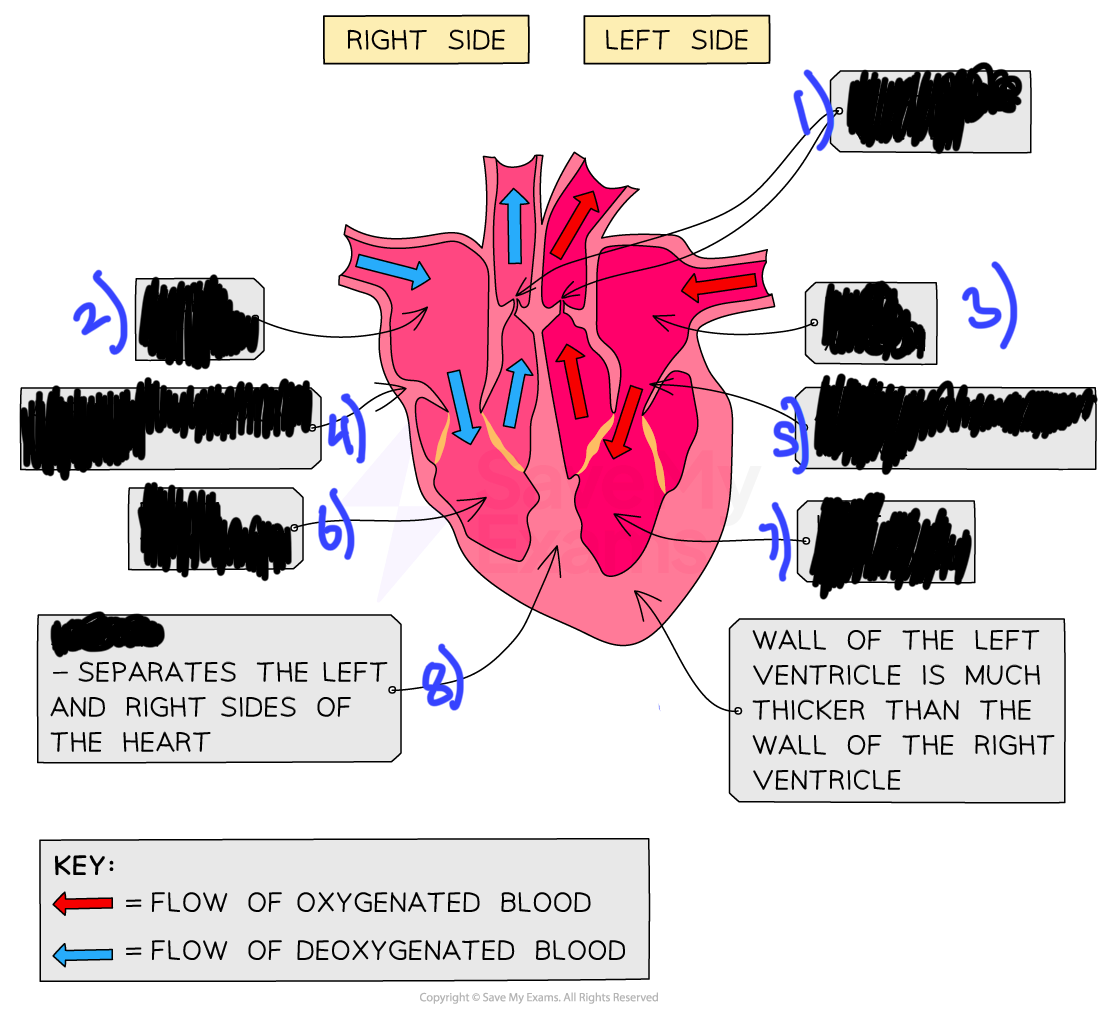
What is 1
Semi Lunar Valves

What is 2
Right Atrium
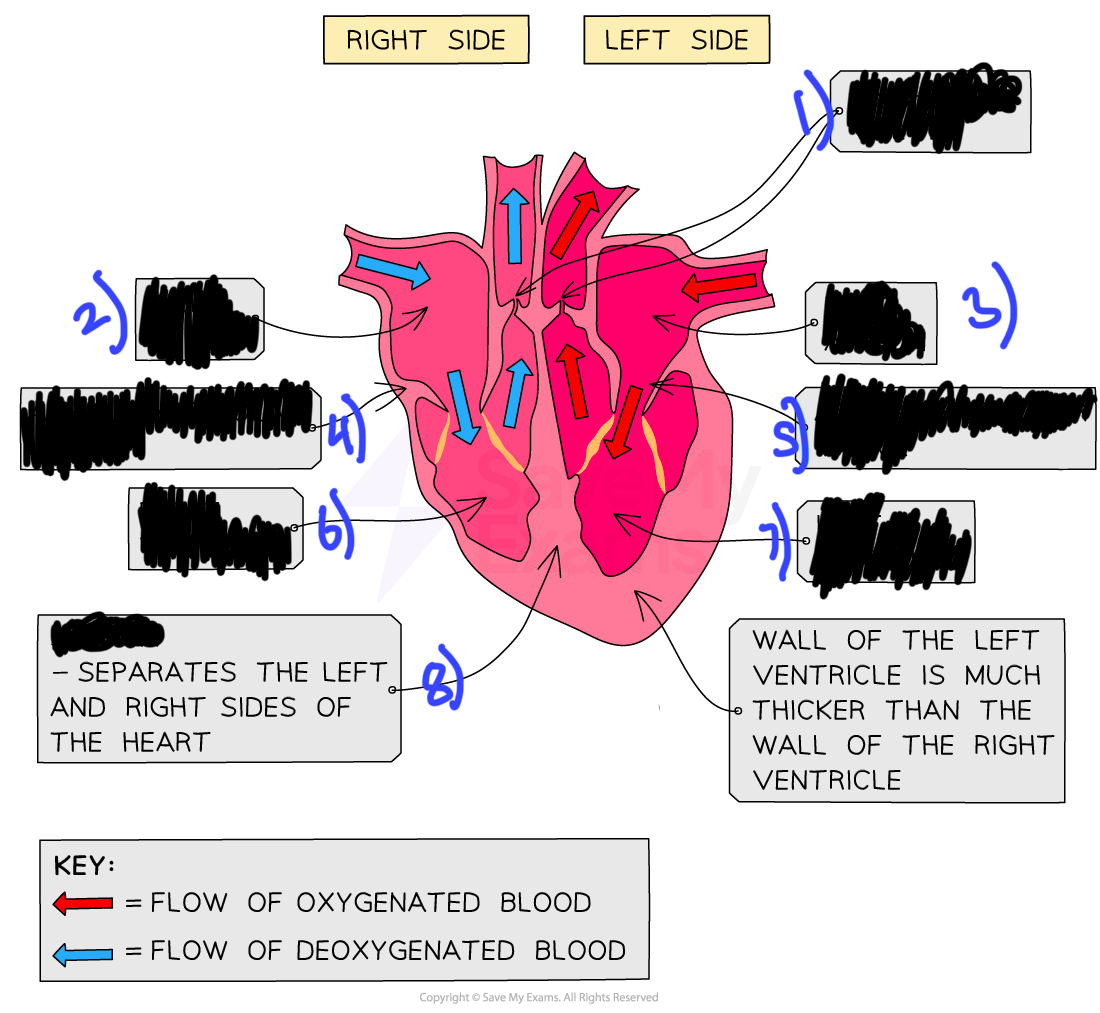
What is 3
Left Atrium

What is 4
Atrioventricular Valves

What is 5?
Atrioventricular Valve
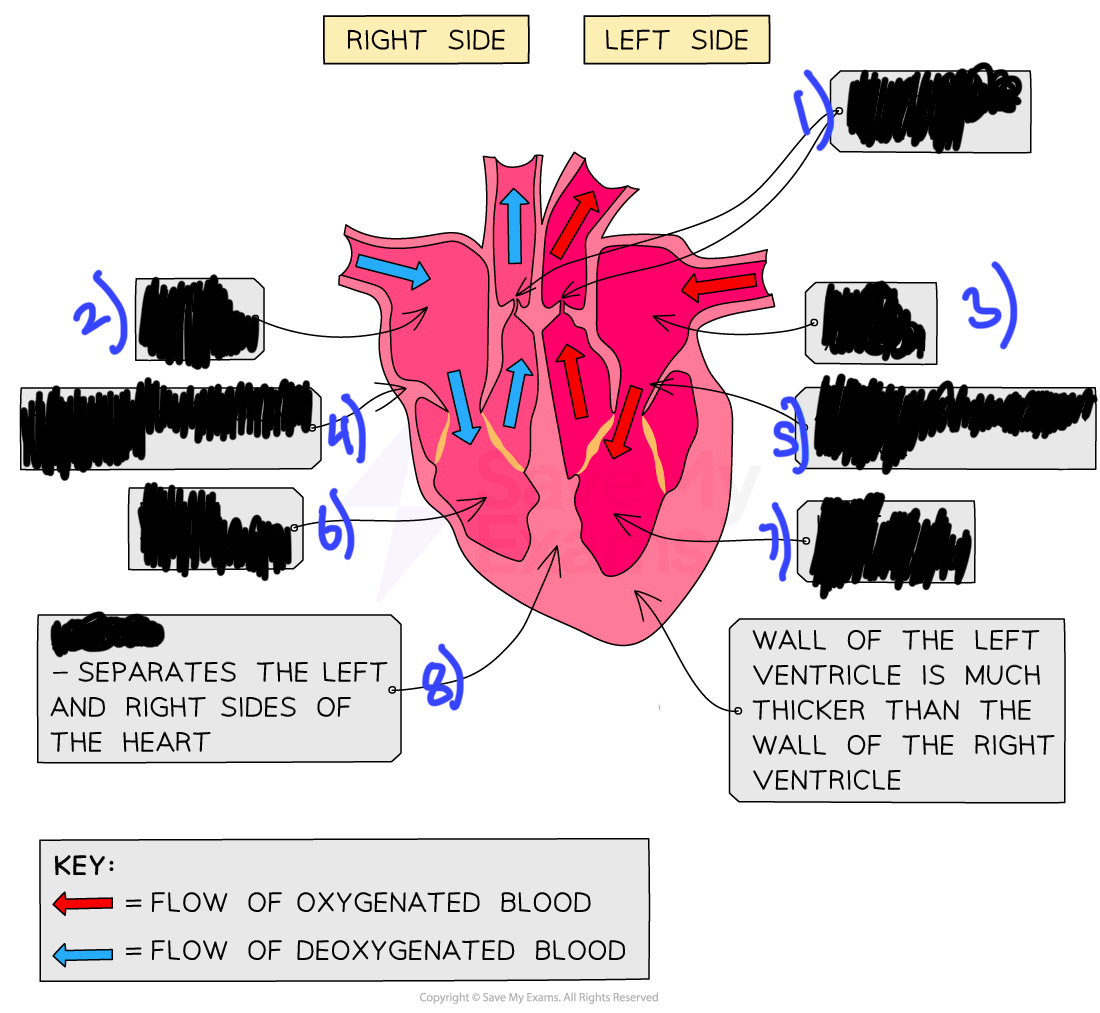
What is 6?
Right Ventricle

What is 7
Left Ventricle

What is 8
Septum
How is heart rate measured?
Beats per minute
How to investigate effects of exercise on heart rate?
Record pulse rate at rest for a minute
Do some exercise
Immediately measure pulse rate every minute until it returns to normal
Coronary Heart Disease
When a coronary artery becomes partially or temporarily blocked by fatty deposits called plaques mainly made from cholesterol, the arteries are no longer as elastic as they should be so can not stretch to accommodate blood being forced through. Heart muscle deprived of oxygen.
Risk factors for coronary heart disease
Diet high in saturated fats increasing blood cholesterol
Stress, increasing blood pressure
Smoking, nicotine causing blood vessels to narrow
Genetic predisposition, people with family history of Coronary Heart Disease are more likely to get it
Age, risk increases with age
Males are more likely to get it
How to reduce risk of coronary heart disease
Improving diet, less animal fats and more fruits and vegetables mean less cholesterol in blood and loss in weight
Quitting smoking, reduce narrowing of blood vessels
Exercising regularly, reduces blood pressure and cholesterol and stress levels and weight loss
Why are the left ventricles muscle walls thicker than the right ventricles
The right side of the heart pumps blood at a lower pressure than the left since its going to the capillaries in the lungs which would burst under higher pressure
Why is the muscle walls on the ventricles thicker than the ones of the atria
The ventricles have thicker muscular walls than the atria because the ventricles must generate enough pressure to push blood out into the arteries and into the body, whereas the atria only need a weak contraction to move blood a short distance into the ventricles below them.
Importance of septum
Separates the two sides of the heart so prevents oxygenated and de oxygenated blood from mixing so only de oxygenated blood can be sent to the lungs to become oxygenated and only oxygenated blood can be sent to the rest of the body to be used
Describe the functioning of the heart
De oxygenated blood coming from the body flows into the right atrium via the Vena Cava
Once the the right atrium is full of blood, it contracts pushing it through the atrioventricular valve into the right ventricle
The walls of the ventricle contract forcing blood past the semi lunar valves into the pulmonary artery, the valve then closes to prevent blood from flowing back into the heart
The blood travels to the lungs and moves through the capillaries through past the alveoli where gas exchange takes place.
The right side of the heart pumps blood at a lower pressure as it is going to capillaries in lungs which would burst under higher pressure
Oxygen rich blood returns through the left atrium from the pulmonary vein
Once atrium is full, it contracts, pushing blood through the atrioventricular valve into the left ventricle
Thicker muscle walls of the ventricle contract strongly to push blood forcefully into the aorta and all the way around the body
The semi-lunar valve prevents blood flowing back into the heart
Effect of physical activity on the heart
Increases heart rate during exercise to increase blood flow to the working muscles
Why is the heart beating faster during exercise important
Provides muscles with enough nutrients and oxygen for increased respiration
Removes waste products at a faster rate
Why does the heart continue to beat faster even after exercise
Ensures all excess waste products are removed from muscle cells
To deliver extra oxygen to the muscle cells to pay of oxygen debt accumulated by breaking down the lactic acid built up in the cells as a result of anaerobic respiration as the oxygen levels were not high enough for aerobic respiration
Arteries thickness
Thick and muscular with oxygenated blood
Arteries diameter of lumen
Narrow
Arteries valves?
No
Capillary thickness
One cell thick with gaps to let fluid out
Capillaries diameter of lumen
Very narrow
Capillary valves?
NO
Veins Thickness
Thin
Veins diameter of lumen?
Very thick
Do veins have valves?
Yes
Function of Capillaries
Carry blood to the cells of the tisues
Transport oxygenated blood from the arteries to the veins and de oxygenated blood from the cells to the veins

What is 1
Pulmonary artery
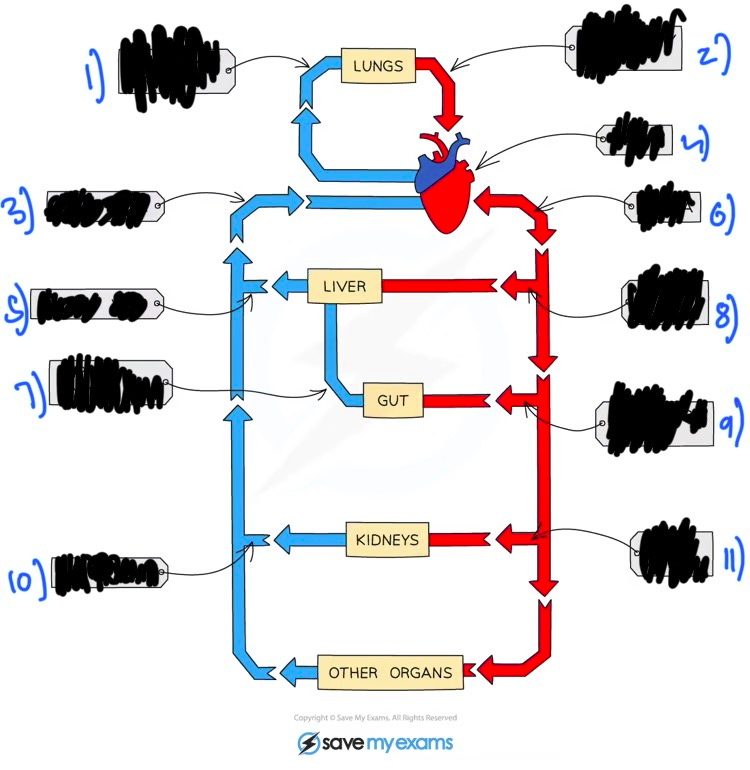
What is 2
Pulmonary vein

What is 3
Vena Cava

What is 4
Heart

What is 5
Hepatic Vein

What is 6
Aorta
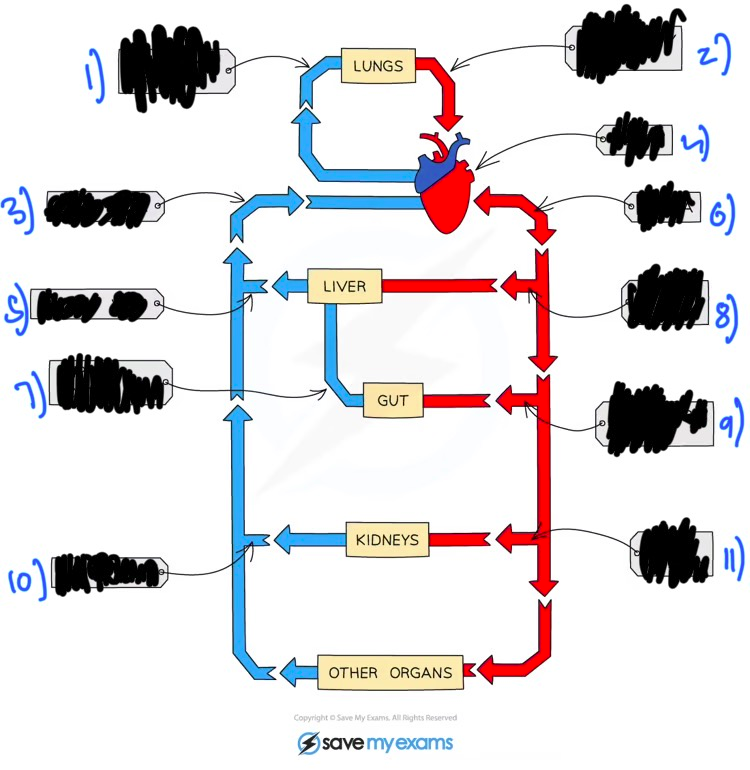
What is 7
Hepatic Portal Vein

What is 8
Hepatic Artery
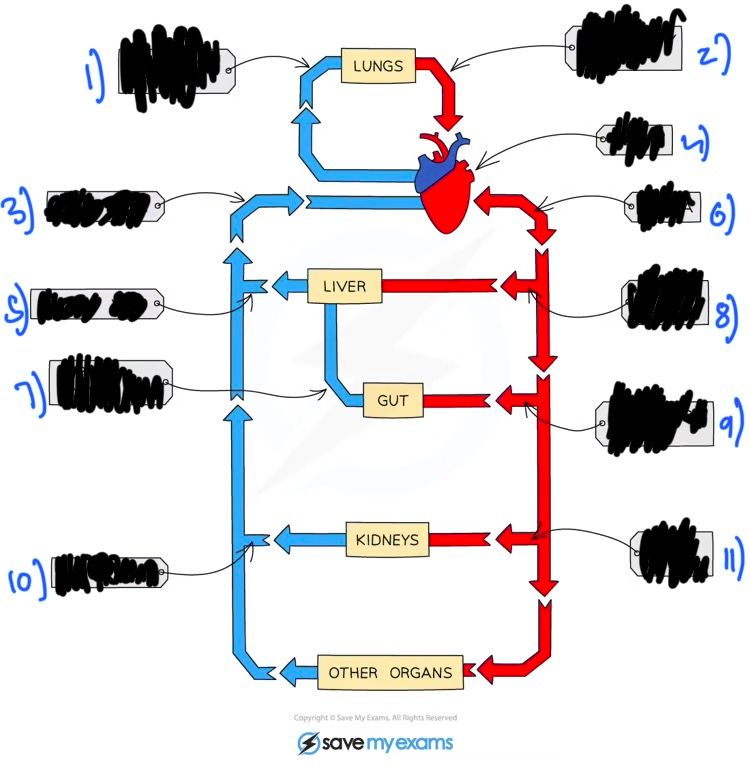
What is 9
Mesentric Artery

What is 10
Renal Vein
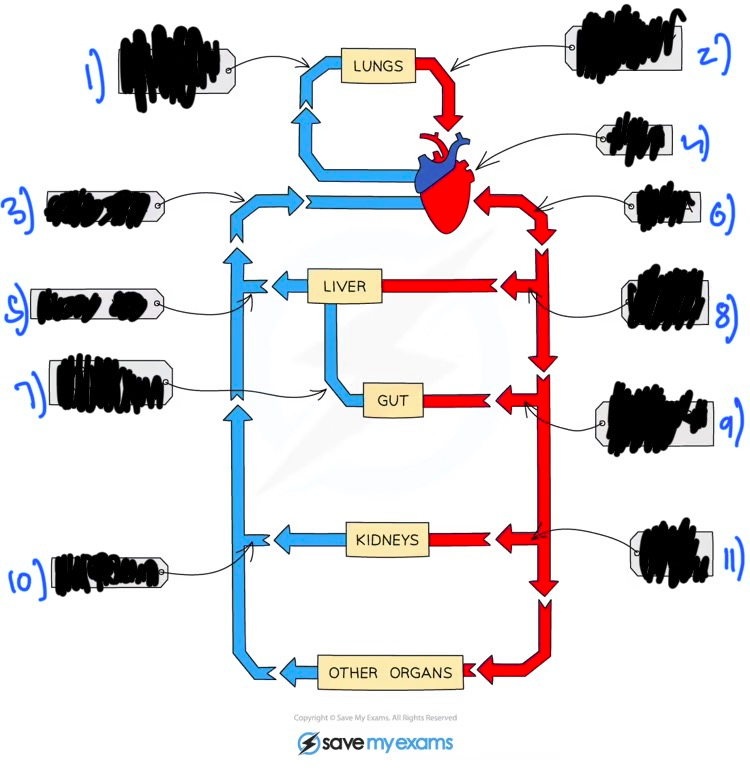
What is 11
Renal Artery
How is the structure of arteries adapted
Thick muscular walls containing elastic fibers to withstand the high pressure of blood and maintain the blood pressure as it recoil after the blood has passed through
Narrow lumen to withstand pressure
How is the structure of Veins adapted?
Large lumen as blood pressure is low
Contain Valves to prevent the backflow of blood as it is low pressure
How is the structure of capillaries adapted?
One cell thick walls so substances can easily diffuse in and out
Leaky walls so blood plasma can leak out and form tissue fluid surrounding cells
Components of blood
Red blood cells, white blood cells, platelets, plasma
Red blood cells function
Transport oxygen from the lungs to cells around the body. Carry oxygen in the form of oxyhaemolglobin with oxygen carried in the haemoglobin
White blood cells function
Defend the body against infections by pathogens by doing phagocytosis and antibody production
Platelets function
Clotting of blood
Plasma Function
Transport of blood cells, ions, nutrients, urea, hormones and carbon dioxide.
Role of blood clotting
Prevents blood loss and entry of Pathogens
Function of lymphocytes
Antibody Production
Function of phagocytes
Engulfing pathogens by phagocytosis
Describe process of clotting
Conversion of fibrinogen to fibrin to form a mesh