Lecture #5 - ID4741: History of Interior Design - Lecture #5 Rome
 Call Kai
 Learn
Learn Practice Test
 Spaced Repetition
 Match
Match Flashcards
 Knowt Play
1/55

There's no tags or description
Looks like no tags are added yet.
Name | Mastery | Learn | Test | Matching | Spaced | Call with Kai | Chat |
|---|
No analytics yet
Send a link to your students to track their progress
56 Terms
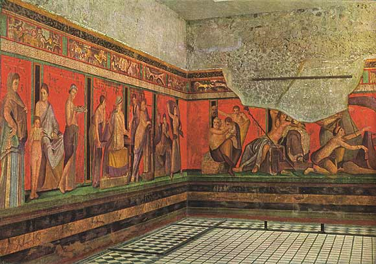
Identify The Image
The Villa of the Mysteries, near Pompeii,
frescoes, ca. 50 B.C.E.

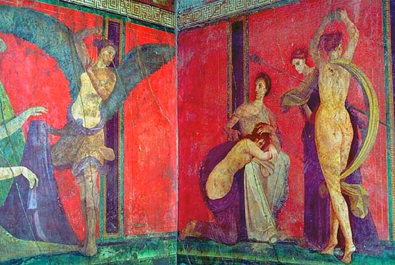
The Background of
The Villa of the Mysteries, near Pompeii, Frescoes
ca. 50 B.C.E.
• Examples of Pompeian fresco paintings
• Illusionistic ledge with a naturalistically rendered figure groups; “Pompeian Second Style”
• Subject: Initiation ceremonies = Roman Mystery Cult (Dionysus)
^ Mystery cults flourished in Rome before Christianity; initiation reserved to upper classes
• The frescoes follow a young female novice through the trials of initiation (whipped by winged genius?)

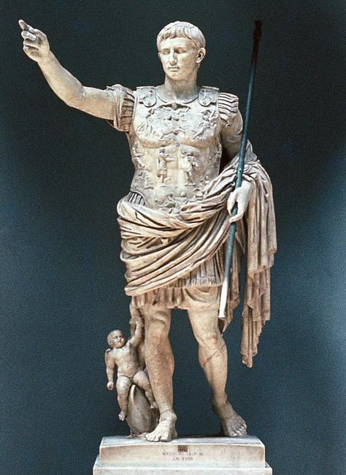
Identify The Image
Augustus of Primaporta
ca. 20 B.C.E.
Marble

The Background of
Augustus of Primaporta, ca. 20 B.C.E., marble
• Giving speech hope for Roman cultural renewal, announces the golden age of Augustan peace
• Sculpture reveals Roman art was predicated & admired Greek models
(artist of Greek origin);
• Sedate, idealized manner (“august”) fit Roman taste: Emperor proclaiming a diplomatic victory
• Breastplate decoration has mythological and allegorical figures:
(ex. sky god, earth goddess, personifications of the pacified provinces of Spain and Gaul (France) )
• Official religion of Imperial Rome = the Cult of the Emperor (Emperors seen as god-like)

Identify The Image
Ara Pacis Augustae, Rome
13-9 B.C.E.
Marble
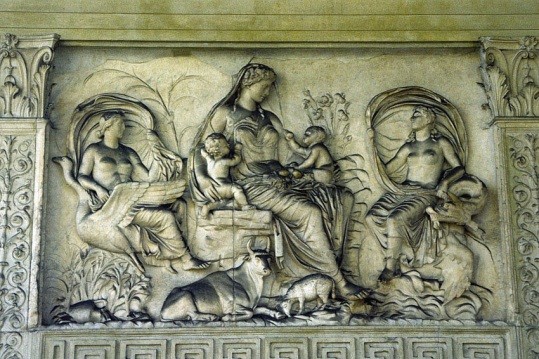

The Background of
Ara Pacis Augustae, Rome
13-9 B.C.E.
Marble
• Monument (“altar”=ara) to celebrate Augustan peace (pacis augustae)
(the pacification of Spain and Gaul (and the empire as a whole))
• Exterior and interior decoration = relief panels
^ 1. Tellus Relief panel (bottom left): ancient Roman earth mother; drapery, pose betray Greek influence
^ 2. Procession panel (bottom right): led by Augustus himself, commemorates dedication ceremonies
•Garlands, bucrania (oxen heads), acanthus leave decorations

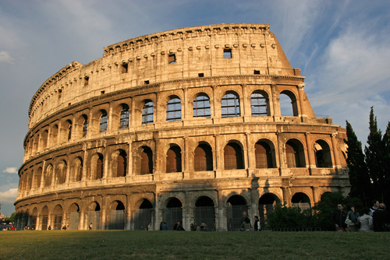
Identify The Image
Colosseum, Rome, 70-82

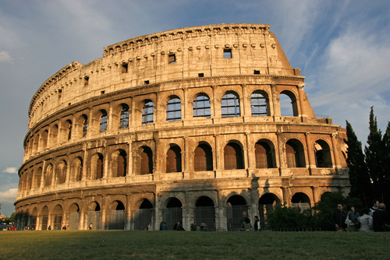
The Background of
Colosseum, Rome, 70-82
• An amphitheater (Roman invention), 2 semi-circular theaters enclosing an oval arena; movable sun cover
• Begun by Emperor Vespasian (69-79) and finished in 80 by Titus
• Name = a giant (“colossal”) statue of Nero that’s in front, has since vanished
• Example of Roman public works
• Performances: gladiator fights, man-beast struggles; inauguration: staged naval battle with 3,000 participants, arena flooded on purpose

Who created the arch?
Romans

Identify The Image
Arch of Titus, Rome, 81

The Background of
Arch of Titus, Rome, 81
• Typical Roman architectural feature = the triumphal arch
^ How emperors commemorated their military victories (each arch is associated with the rule of a specific emperor)
• Used by emperor to triumphantly enter Rome after battle (ornamental version of city gate)
^ Emperor Titus returning from conquest of Jerusalem at the end of the Jewish Wars (66-70)
• Reliefs: Spoils (menorah, trumpets) of the Temple of Jerusalem brought to Rome (bottom left) Titus triumphant on his chariot (right)

Identify The Image
The Pantheon, Rome
118-125


The Background of
The Pantheon, Rome
118-125
• Only building in continuous use since classical antiquity to the present day; built during rule of Emperor Hadrian 117-138
• Temple dedicated to all gods, later converted into a church
• Temple façade set in front a domed rotunda; dome consists of a shell of concrete that gradually thickens towards the base
• Interior: coffered ceiling (decorative, sunken panels), oculus (round opening in the ceiling); floor slightly convex (drainage)
Who created villas?
Romans

Identify The Image
Hadrian’s Villa, Tivoli near Rome
ca. 135 C.E.
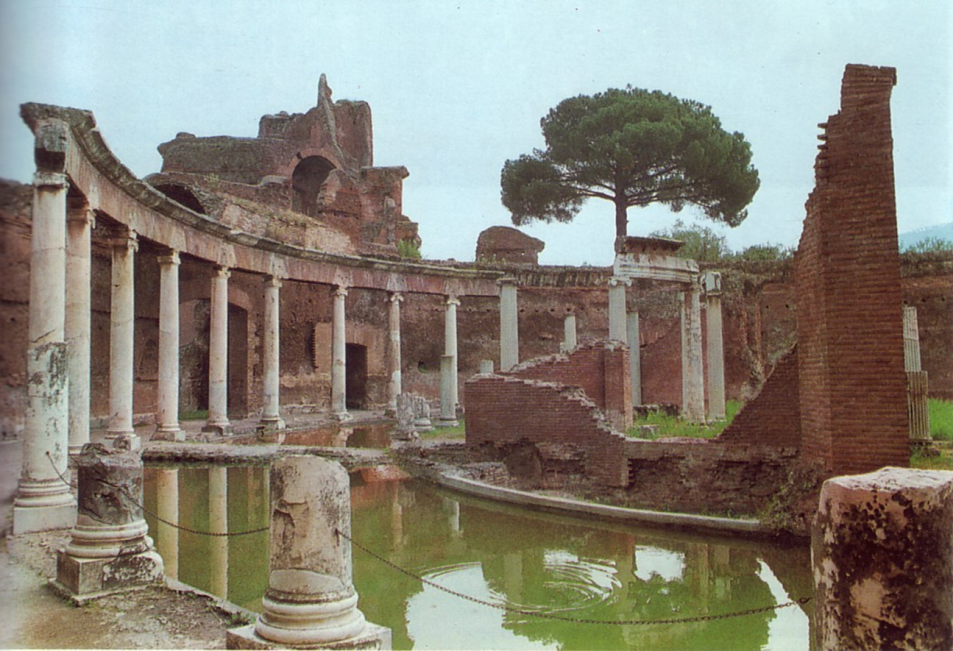

The Background of
Hadrian’s Villa, Tivoli near Rome
ca. 135 C.E.
• Palace built by Emperor Hadrian (2nd cousin Trajan) in the countryside near Rome
> Hadrian liked to entertain; Epicurean pleasures (wine and drink), theatrical performances
• Open spaces, no clear center, design based on emperor’s memories of travels and conquests abroad
• Romans invented the villa an architectural form > originally a farmhouse > rest from the negotium of the city, enjoyment of the otium of the countryside, esp. in summer

Identify The Image
Baths of Caracalla, Rome
ca. 215


The Background of
Baths of Caracalla, Rome, ca. 215
• Example of Roman public works; complex of public baths, named after Emperor Caracalla
• Monumentality of later Roman art and architecture
• Use of vaults, originally mosaic decoration; heights up to 140 feet; recreation for thousands of Romans at a time
• Succession of cold-water pool (frigidarium), central room with smaller warm-water pool (tepidarium), circular hot-water pool in domed rotunda (caldarium); steam baths, dressing rooms, lounges, exercise rooms (palestrae), even a public library


Identify The Image
Equestrian Statue of Marcus Aurelius, Capitoline Hill, Rome
65, bronze
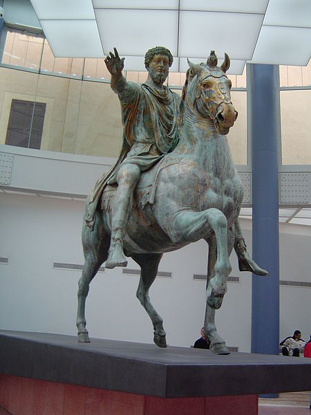
The Background of
Equestrian Statue of Marcus Aurelius, Capitoline Hill, Rome
65, bronze
The statue that survived
Statute moved from Capitoline Hill to the Museum
Guy in the statute = Emperor Consistine - granted tolerance to Christians
Statute gilded originally

Identify The Image
Schematic Rendering
Sella curulis stool
Late Republican or early Imperial periods, metal and wood

The Background of
Sella curulis stool
Late Republican or early Imperial periods, metal and wood
• Rooms in ancient Rome sparsely furnished
• Inlays of ivory, bone, silver, and gold were known
• Romans knew about the Greek’s Klismos chairs, turned them into their own Cathedra chairs
• More common, however, was the x-framed folding chair, known as Sella curulis in Latin
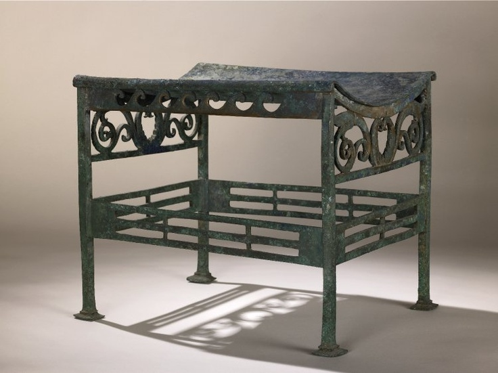
Identify The Image
Roman Bronze Stool from Pompeii
1st century B.C.E.
Bronze
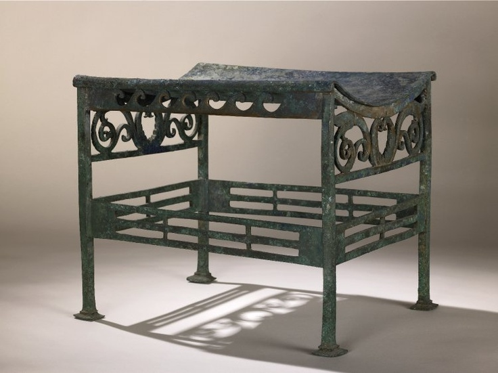
The Background of
Roman Bronze Stool from Pompeii
1st century B.C.E.
Bronze
• Not have held connotations of authority
• Stools made from various materials, such as bronze, wood, or iron, and would have either plain or animal’s feet
• In this example, a cushion would have been placed on the concave seat

Identify The Image
Roman Lectus Bed
Late Republican or early Imperial Period, bronze

The Background Of
Roman Lectus Bed
Late Republican or early Imperial Period, bronze
• The Roman Lectus-type bed, had headrests on both sides

Identify The Image
Roman Brazier
1st century C.E., bronze
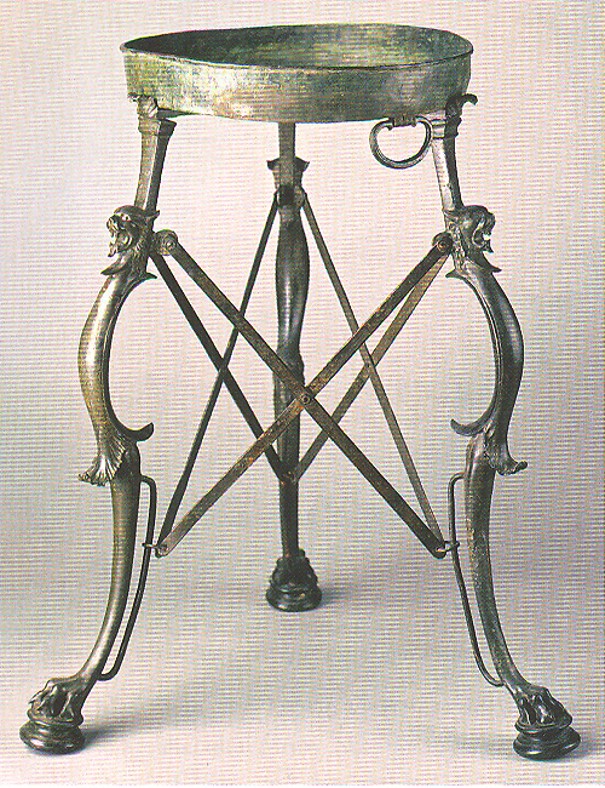
The Background of
Roman Brazier
1st century C.E., bronze
• Romans used bronze for their furniture: bronze tripods = tables; polished bronze plates = mirrors; braziers = warming rooms; bronze oil lamps = light; even library cabinets = rolled manuscripts
• The legs with decorations of animal heads and animal feet, very popular to the Romans, and believed to have been adopted from the Middle East
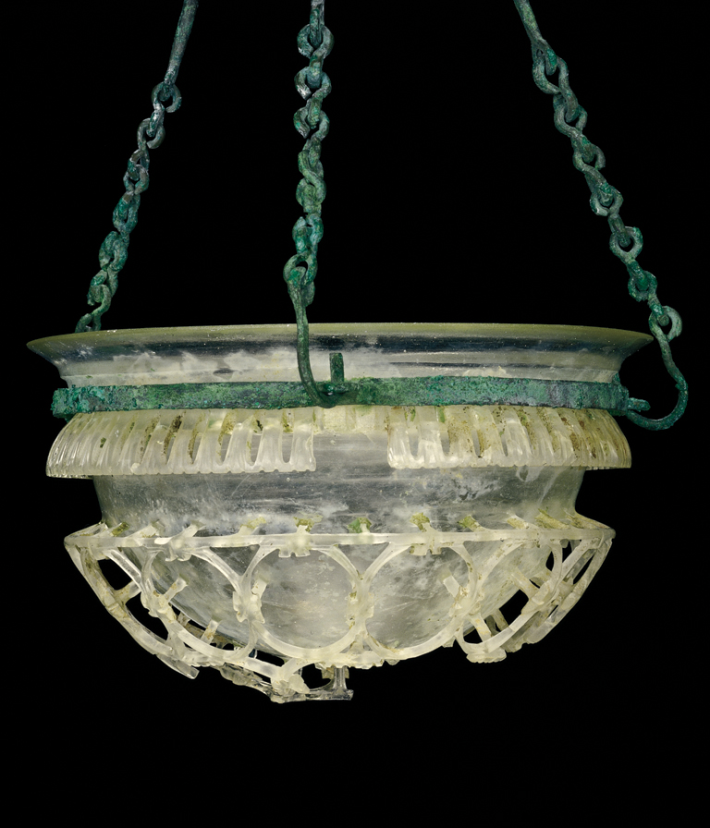
Identify The Image
“Cage” lamp of Diatreta glass
ca. 300 C.E., Diatreta glass and bronze

The Background of
“Cage” lamp of Diatreta glass
ca. 300 C.E., Diatreta glass and bronze
• Roman lamps held wicks floating in oil; some Candelabra were over 6’ tall
• Diatreta glass = a Roman glass carving technique: a freestanding surrounding “cage” remains attached to the vessel form by small glass strut
Identify The Image
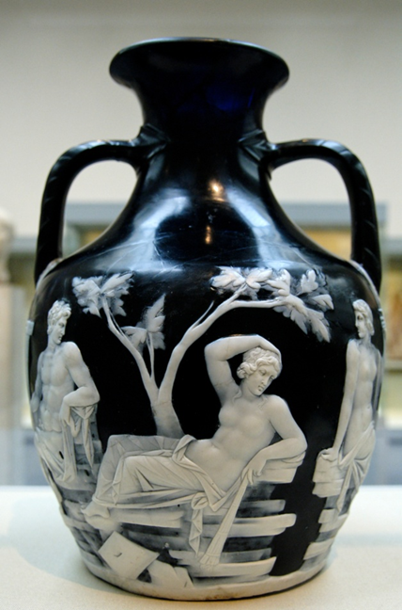
Portland Vase
1st cent. C.E.
Blown and cut glass (Roman Cameo Glass)
The Background of
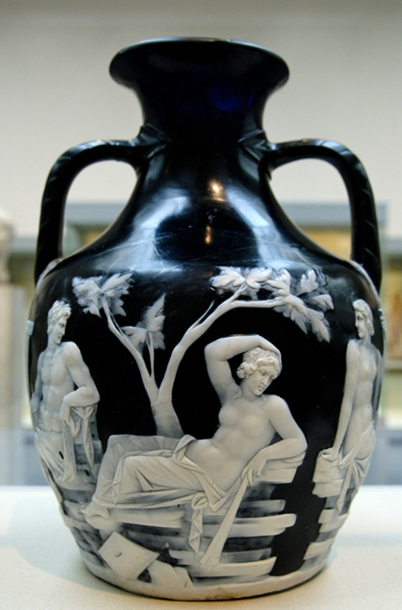
Portland Vase
1st cent. C.E.
Blown and cut glass (Roman Cameo Glass)
• Roman glassmaking skills example of technical superiority of Roman civilization
^ Skills fell into oblivion with the onset of the Middle Ages
• The Portland Vase the most famous piece of Roman glass, made of engraved cameo glass, a technique the Romans invented
^ Still used by contemporary American glass artist Barry Sautner
• Roman Cameo glass belong =
Which category does Roman Cameo glass belong, cold-worked vs. hot-worked glass?

Identify The Image
Roman Millefiori (“thousand flowers”) glass bowls
1st century to 2nd B.C.E.
Blown glass


The Background of
Roman Millefiori (“thousand flowers”) glass bowls
1st century to 2nd B.C.E.
Blown glass
• Originally Roman glassmaking technique: so-called murrine are laid out and fused to create a millefiori (thousand flours) patterns

Identify The Image
Villa Romana del Casale
Mosaics
4th cen
The Background of
Villa Romana del Casale
Mosaics
4th cen
• Excavated between 1929 and 1970s, the Villa Romana del Casale revealed the richest ensemble of Roman floor mosaics ever discovered (48,000 square feet)
• Although still largely pagan in iconography, the mosaics are contemporary with the transitional period to the Christian era (late classical antiquity, or early medieval) > reduced sense of three-dimensional space, naturalism
• Believed to have been executed by artists from northern Africa (today’s Tunisia)
• Even today, there are skilled craftsman in Italy or Tunisia who can conceptualize and deliver similar mosaics on demand; a living cultural tradition of the Mediterranean

Identify The Image
The Four Tetrarchs
ca. 305
Porphyry

The Background Of
The Four Tetrarchs
ca. 305
Porphyry
• Political chaos in the lat 3rd century; 18 claimants to the throne, uprisings and incursions (Germans, Persians) in the provinces; division of Empire seemed inevitable
• New Emperor Diocletian divides Empire into Eastern and Western half; each one of the emperors (“augustus”) has a deputy (“caesar”); together, they form the four tetrarchs
• Porphyry is an extremely hard stone; rendering, frontal pose are almost regressions to archaic simplicity; work originally located in the Philadelphion of Constantinople; “acquired” during 4th Crusade 1204 by the Venetians

Identify the Image
Constantine the Great
ca. 300
Marble

The Background Of
Constantine the Great
ca. 300
Marble
• Constantine emperor, who issued the Edict of Milan in 313 that granted Christians tolerance; he also moved the capital of the (reunified) Roman Empire to Constantinople, carried his name until it was conquered by Islamic forces
• Classical sense of measure and proportions disappear; monumentality; transition from late antiquity to early Medieval Period
• Huge marble head was part of a colossal statue of Constantine (30 feet high) placed the western apse of the Basilica (Forum) of Constantine
• Brick core, wooden torso sheathed with bronze; marble hands, feet, and head

Identify the Image
Al-Khazneh (the “Treasury”)
Rock-cut Mausoleum
Petra (Jordan)
2nd century
The Background Of
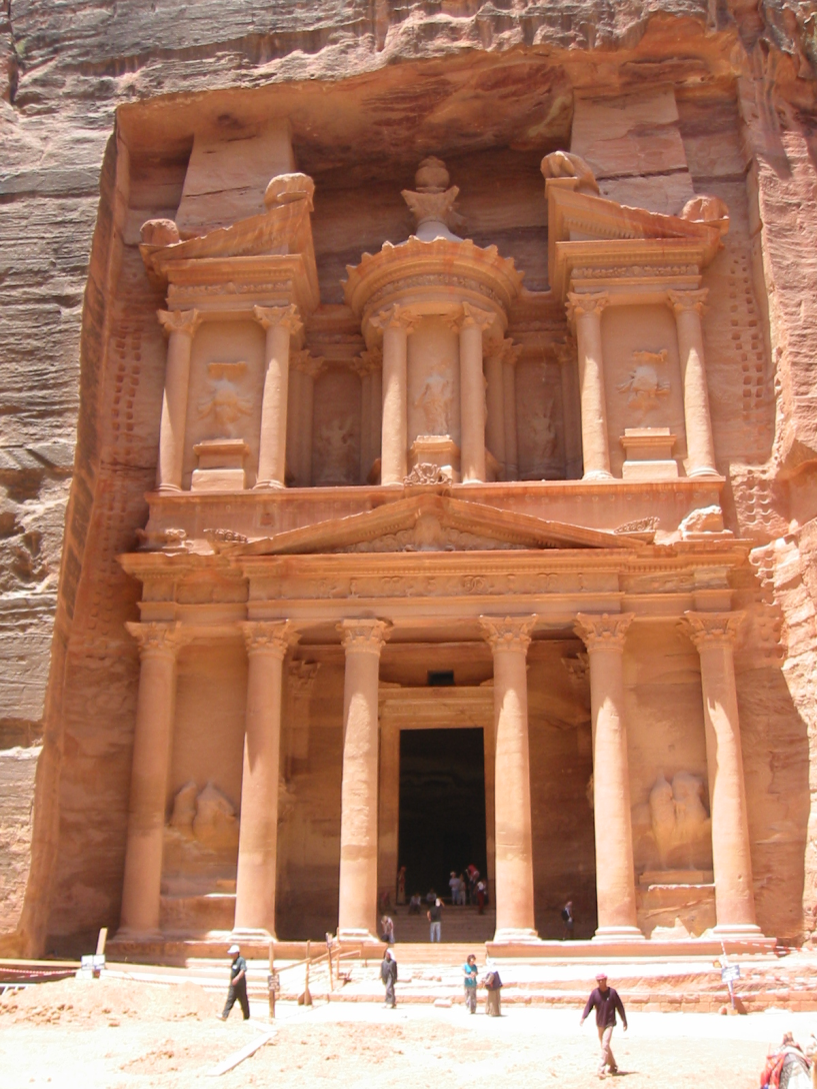
Al-Khazneh (the “Treasury”)
Rock-cut Mausoleum
Petra (Jordan)
2nd century
• Symptomatic or the decline of the Roman Empire was a shift of major building efforts to the provinces
• Here, in Petra an entire temple façade was excavated from rock
• Dramatic recesses, broken pediment of upper pediment
• Theatrical effects, possibly influenced by stages of Greek and Roman theaters

Identify the Image
The Porta Nigra (“Black Gate”)
Trier (Germany)
ca. 280-310


The Background Of
The Porta Nigra (“Black Gate”)
Trier (Germany)
ca. 280-310
• Constantius Chlorus, “caesar” of the Western hemisphere and father of Constantine the Great, established a new residence in the German city of Trier (Augusta Trevirorum)
• Sacked by the Franks and Alemanni (German tribes), the city was rebuilt with a large defensive wall, pierced by the “Black Gate” (Porta Nigra)
• Excellent example of a Roman city gate, built not only for defensive purposes but also to impress visitors with a display of imperial Roman power
• Use of rusticated (roughly hewn) masonry, structure left unfinished

Identify the Image
Arch of Constantine
Rome
312-315

The Background Of
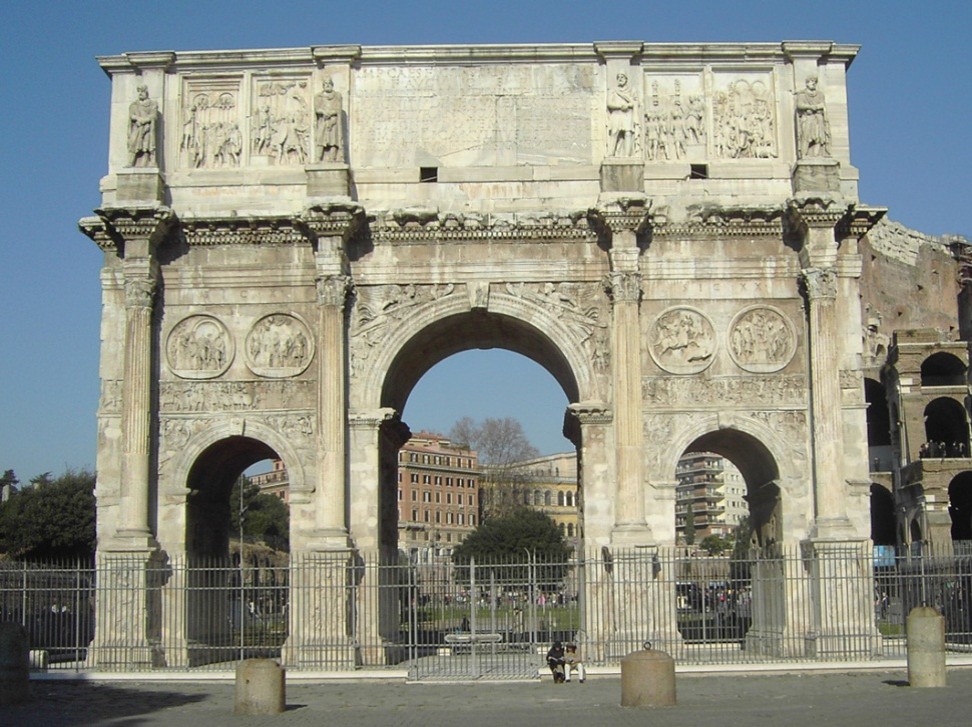
Arch of Constantine
Rome
312-315
• Shift to the Medieval and decline of classical ideals are also evident in relief sculpture on Constantine’s arch
• Medallions date from Hadrian’s time, but relief band below is genuine 4th century: Constantine, surrounded by his entourage, stands on a rostrum (a platform), addressing the people
• Rigid formality, repetition, flatness, static composition, lack of proportionality marks the shift
• Remnants of the classical ideal will continue to live on in Byzantine Art