UW Bio 200 Exam 1
 Call Kai
 Learn
Learn Practice Test
 Spaced Repetition
 Match
Match Flashcards
 Knowt Play
1/58

There's no tags or description
Looks like no tags are added yet.
Name | Mastery | Learn | Test | Matching | Spaced | Call with Kai |
|---|
No analytics yet
Send a link to your students to track their progress
59 Terms
5 core concepts
-information flow
-structure function
-energy transformation
-evolution
-systems
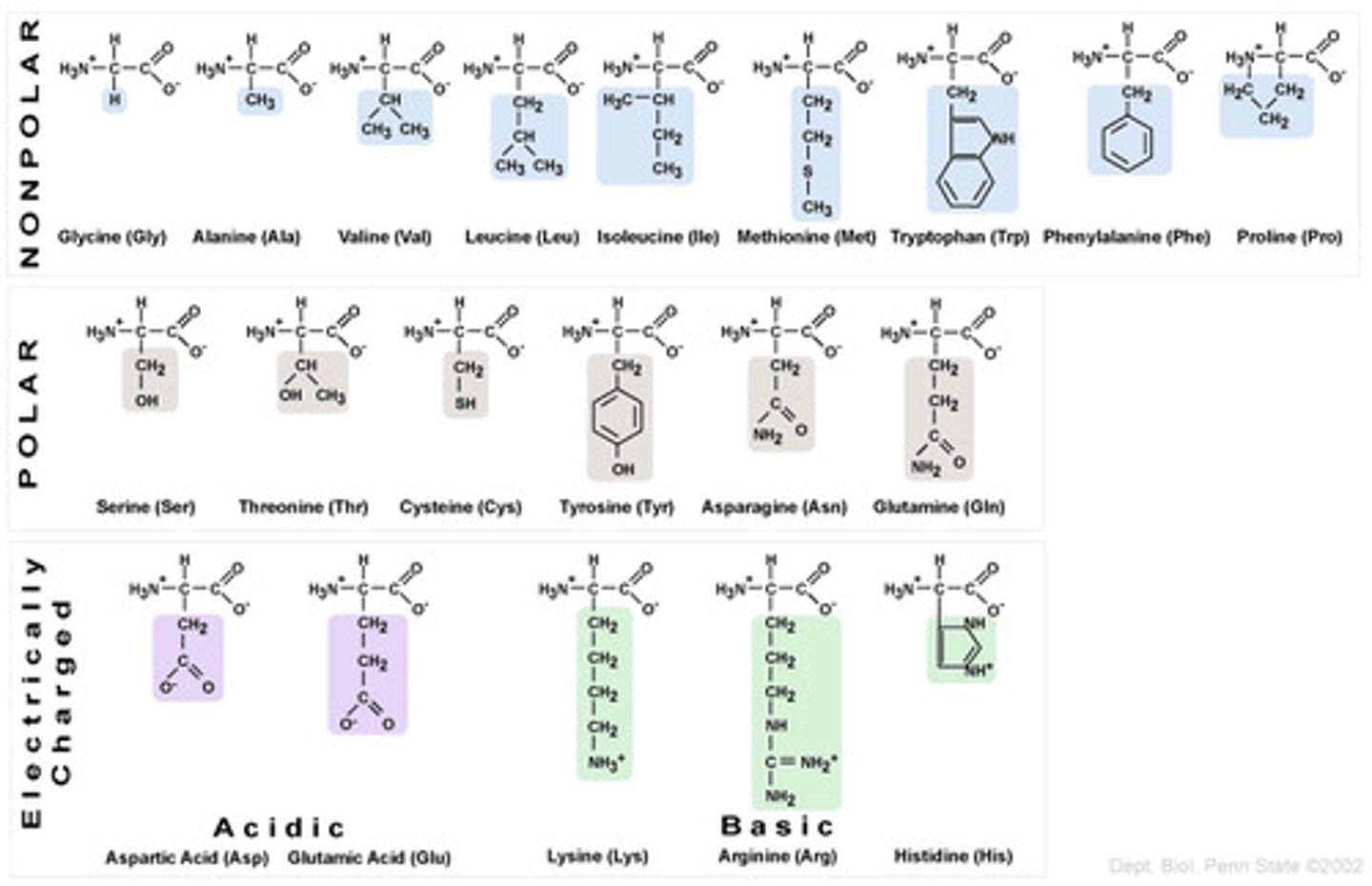
amino acid polarity
electronegativities of organic atoms
C~H
How to tell if a molecule is hydrophobic or hydrophilic
Non-polar: hydrophobic
Polar: hydrophilic
Types of bonds and stored potential energy
High to low
Covalent bonds:
peptide
disulfide bridge:
Ionic Bonds:
Hydrophobic interactions:
Hydrophilic interactions:
H bonds
molecular genotype + phenotype
genotype: order of nucleotides
phenotypes: proteins produced and their traits
DNA
A complex molecule containing the genetic information that makes up the chromosomes.
mRNA
A type of RNA, synthesized from DNA, that attaches to ribosomes in the cytoplasm and specifies the primary structure of a protein.
Gets copied and written 5'-3'
protein
Made from 3 nucleotides, from tRNA in the ribosome
allele
one of a number of different forms of a gene on the same place on the chromosome
genome
All the genetic information in an organism; all of an organism's chromosomes.
metabolic pathway
Begins with a specific molecule, which is then altered in a series of defined steps, resulting in a certain product.
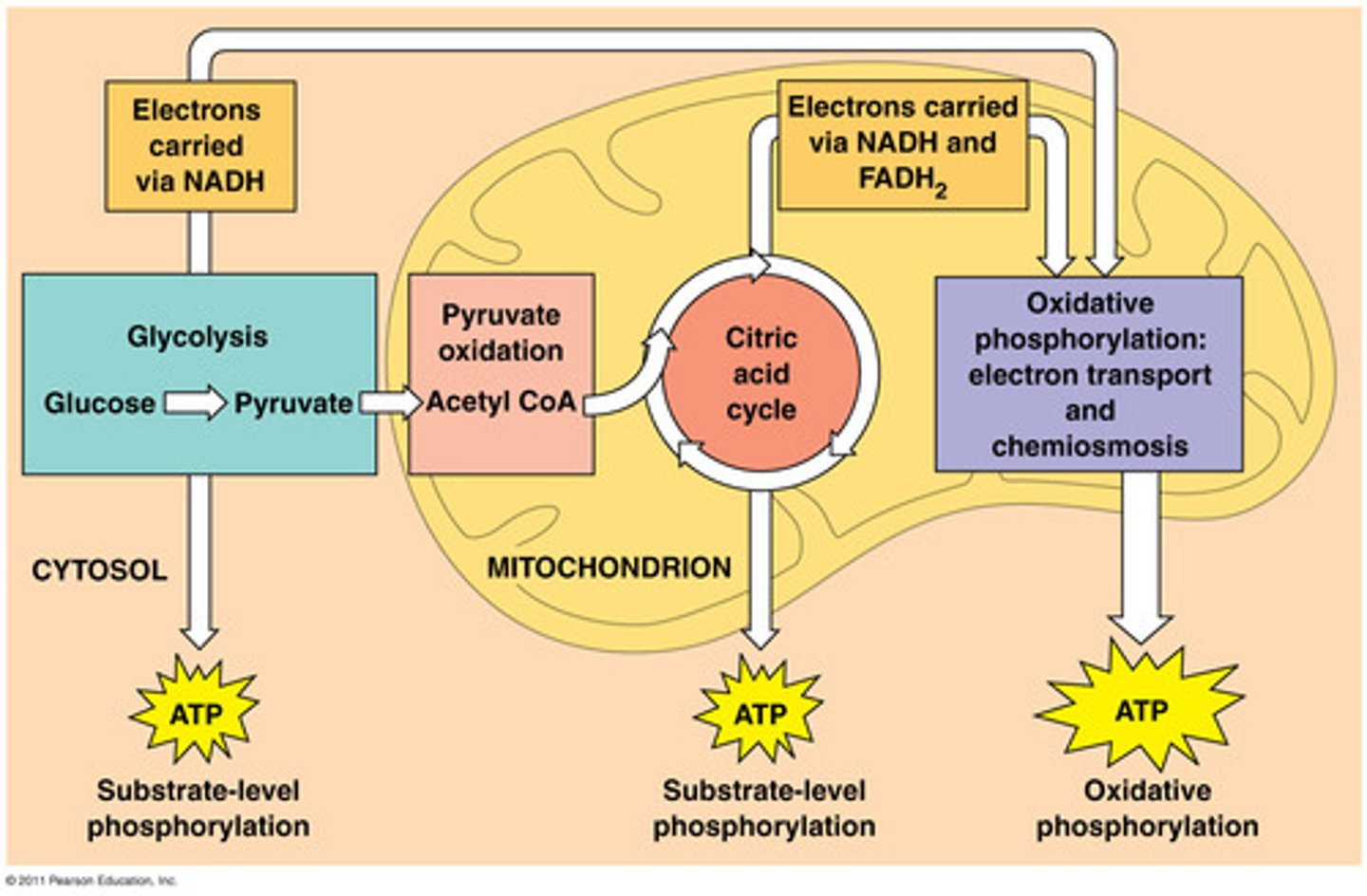
nucleotide
A building block of DNA, consisting of a five-carbon sugar covalently bonded to a nitrogenous base and a phosphate group.
5' vs 3'
- 5' will have an OH or phosphate group bound to C-5' of the sugar
- 3' will have an OH bound to C-3' of the sugar
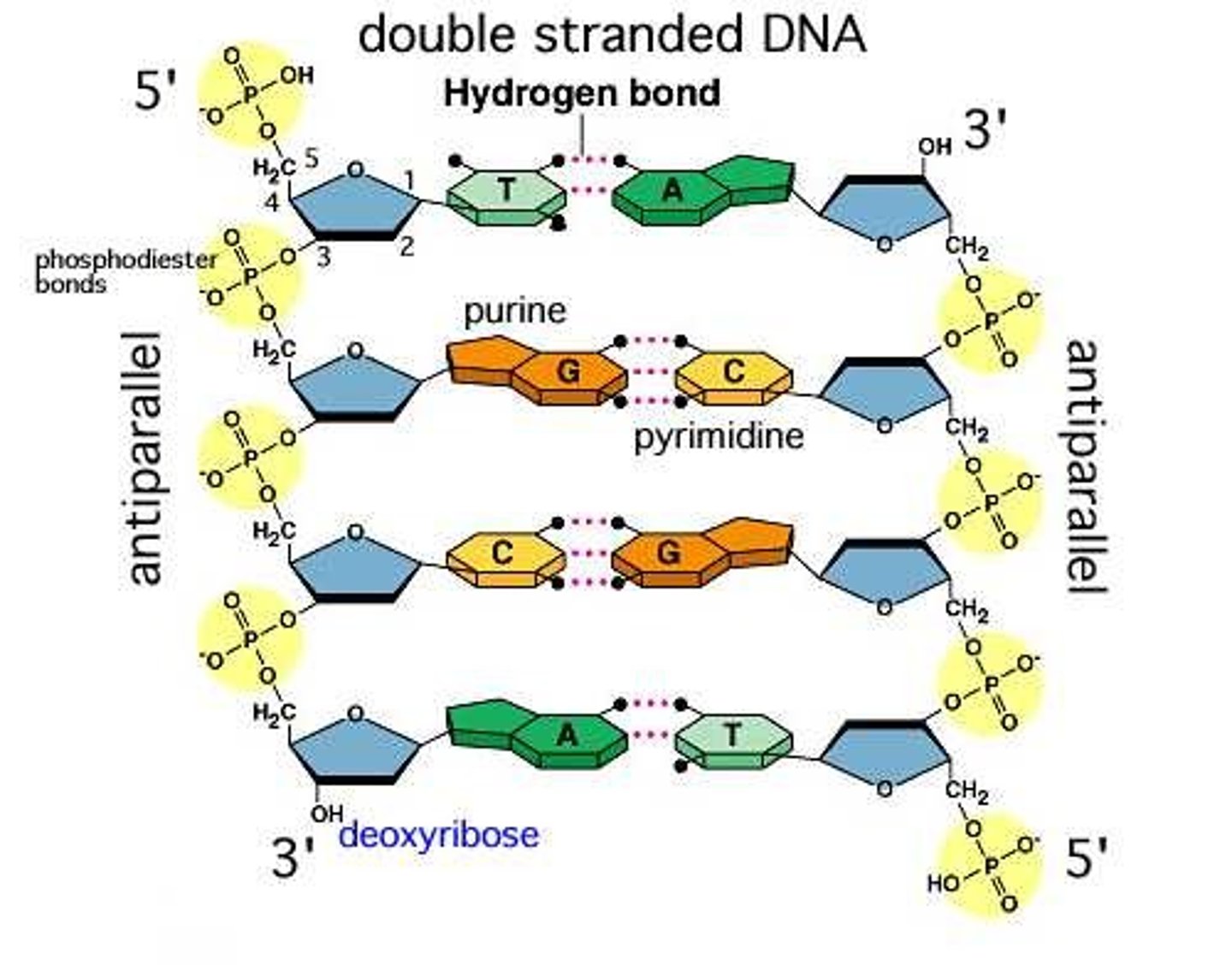
ribose vs. deoxyribose
-ribose: has an -OH group at C-2
-deoxyribose: has an -H group at C-2
phosphate group
A functional group consisting of a phosphorus atom covalently bonded to four oxygen atoms
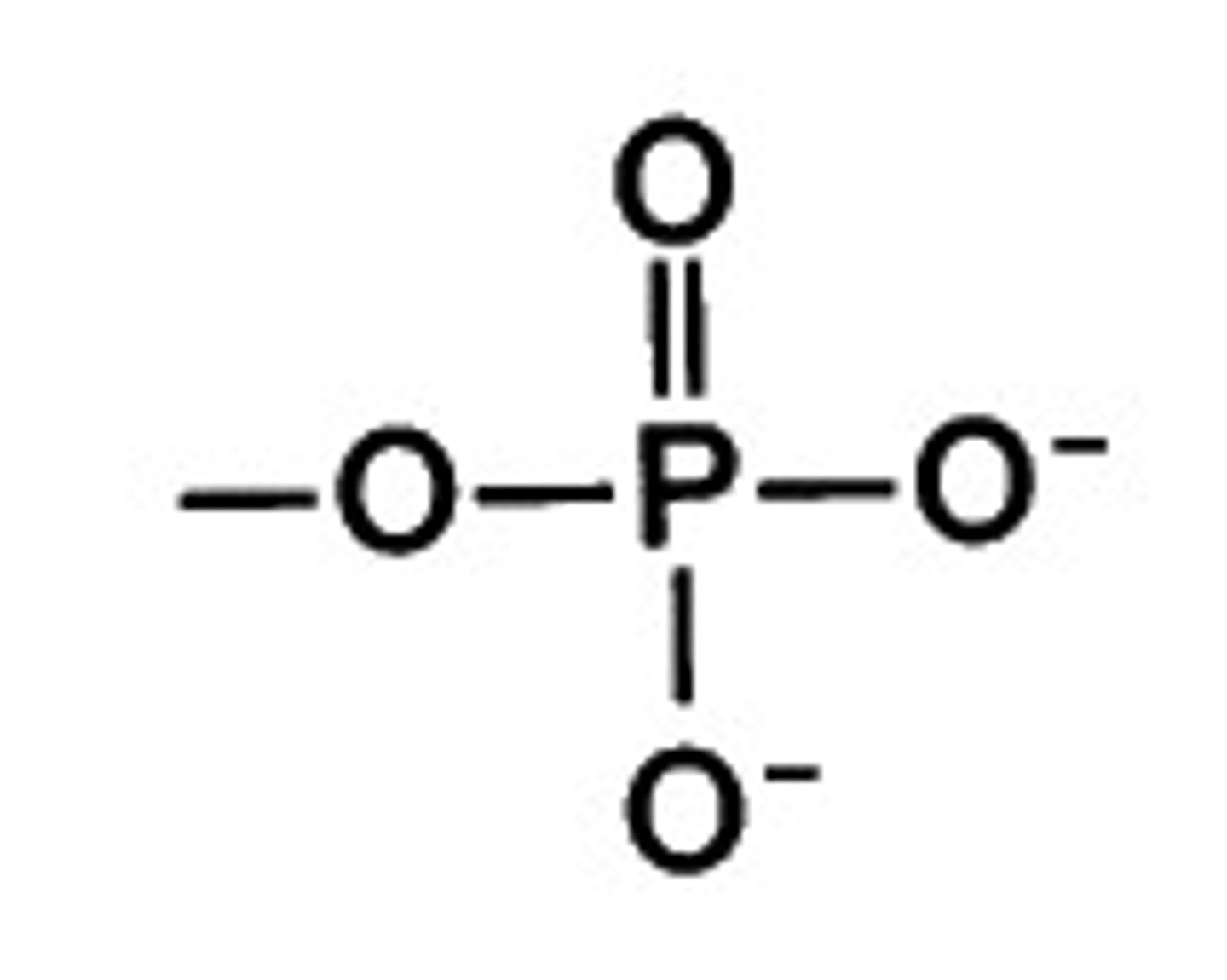
guanine, cytosine, thymine, adenine, uracil
GCTAU, chemical bases of nucleotides
GC bonds are stronger than AU bonds
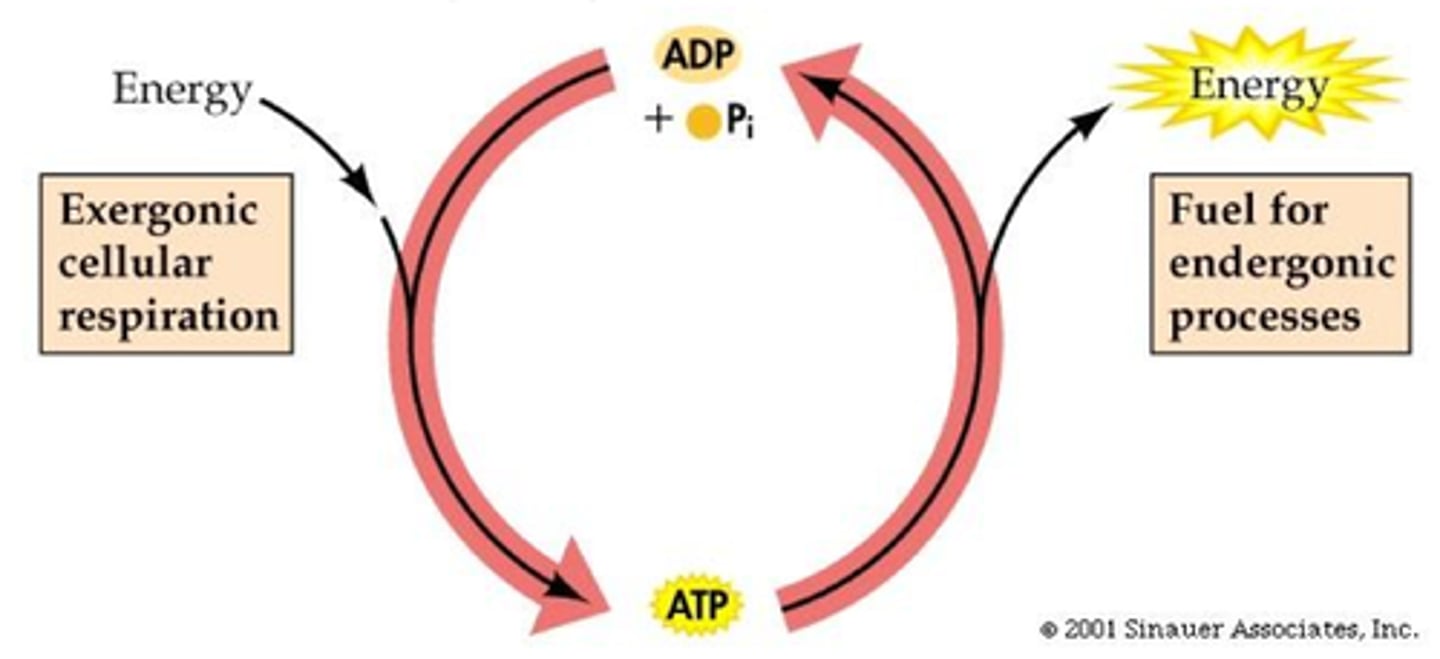
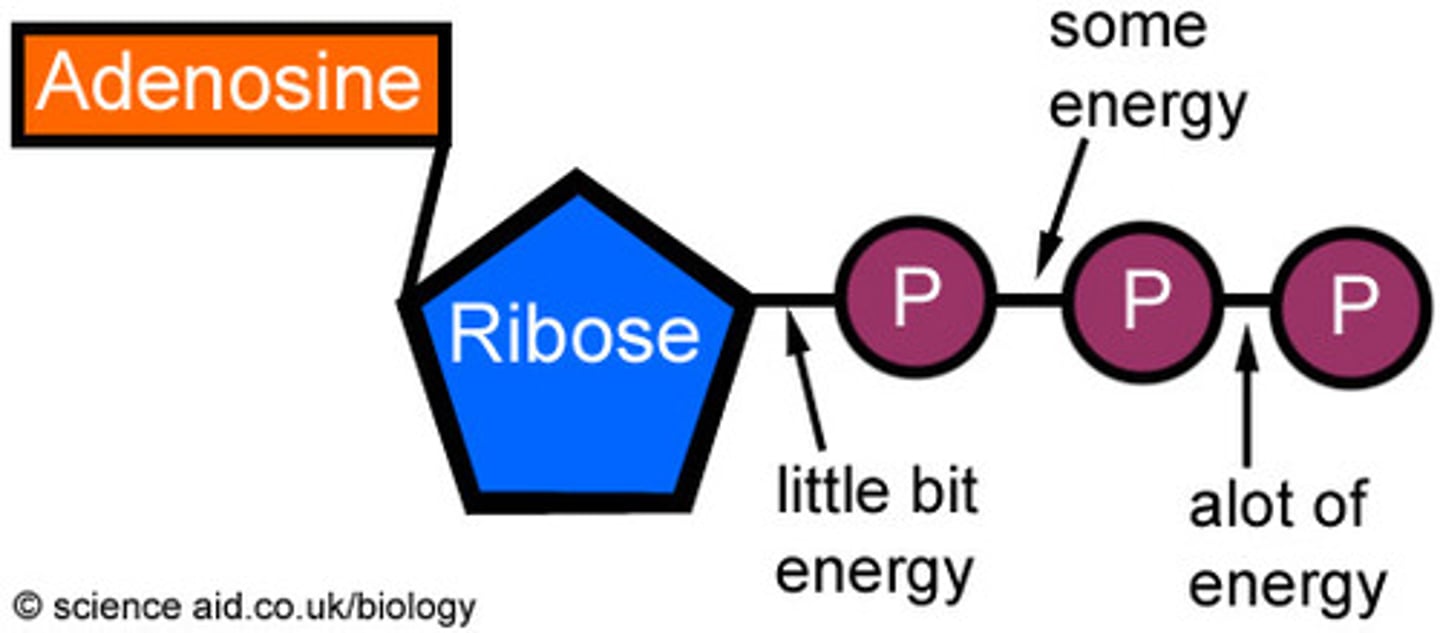
ATP
(adenosine triphosphate) main energy source that cells use for most of their work
affinity
attraction between two biological molecules, to bind, modify, or destroy
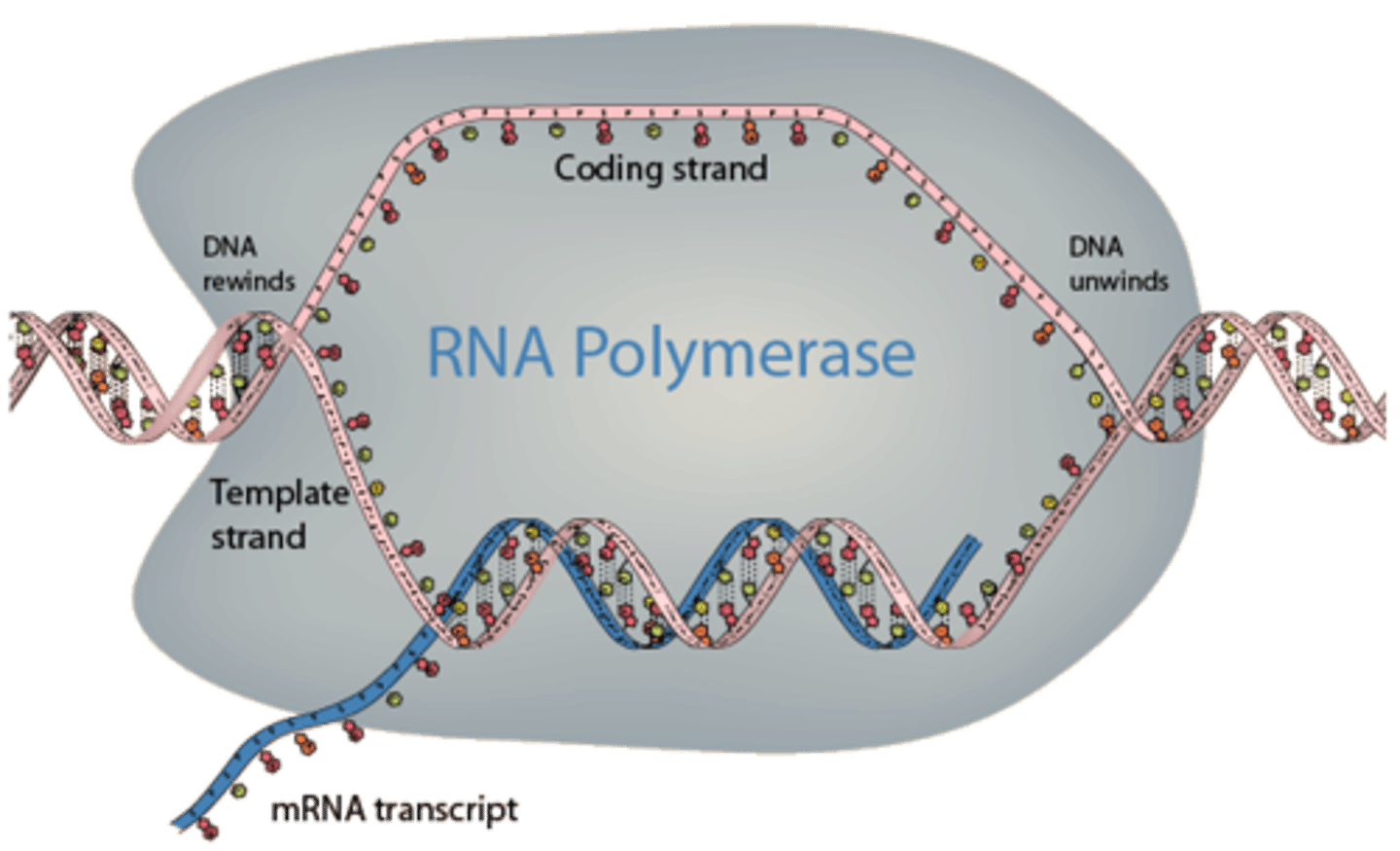
template vs non-template strand
template strand: strand on DNA moving towards 5' end from +1 spot
non-template strand: also known as coding strand, same base will be in the mRNA but T will be represented as U
upstream/downstream
Upstream: towards 5' end
Downstream: towards 3' end
RNA Polymerase
enzyme that links together the growing chain of RNA nucleotides during transcription using a DNA strand as a template
Sigma
a protein that must bind to the polymerase before transcription can begin
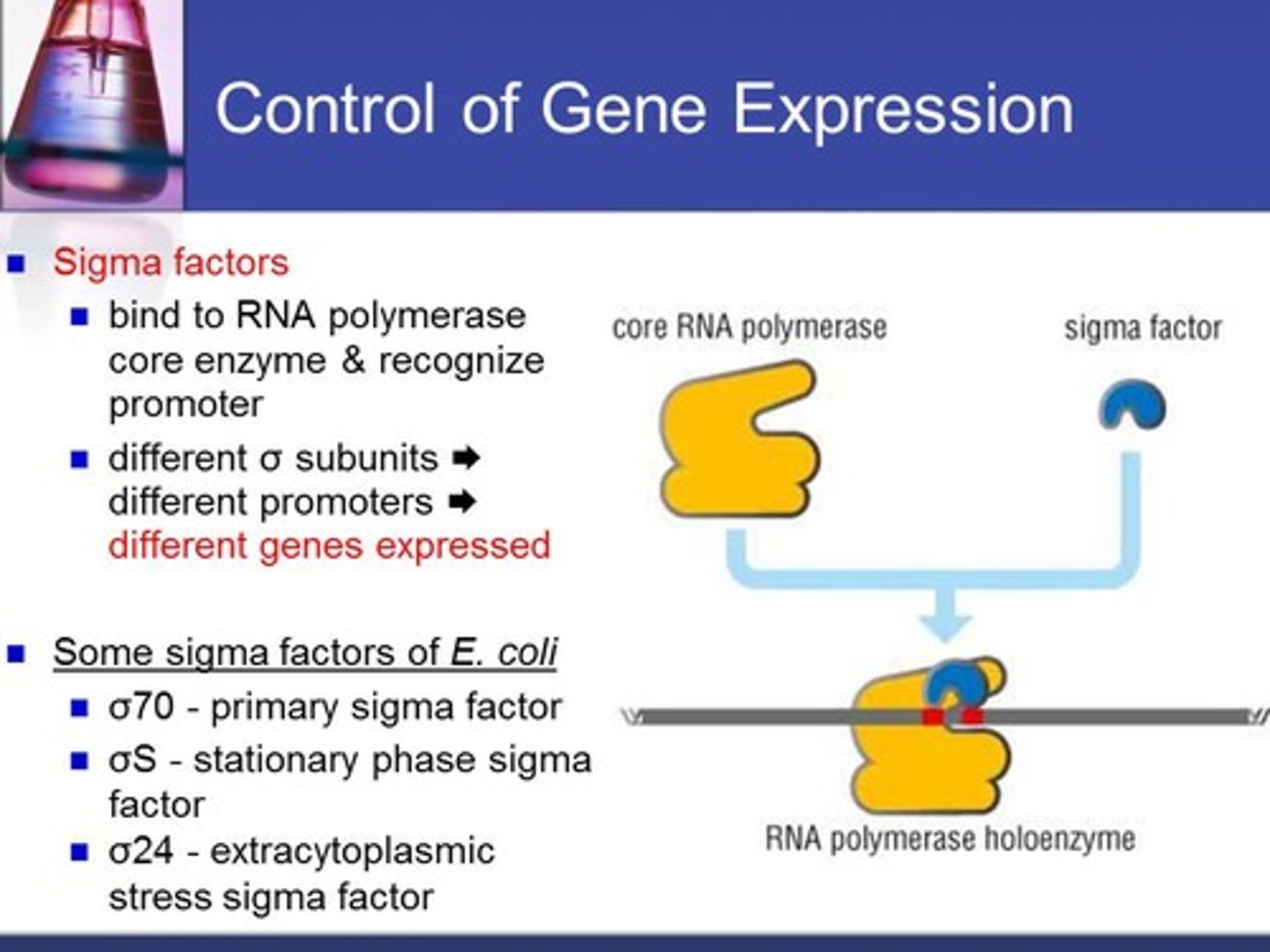
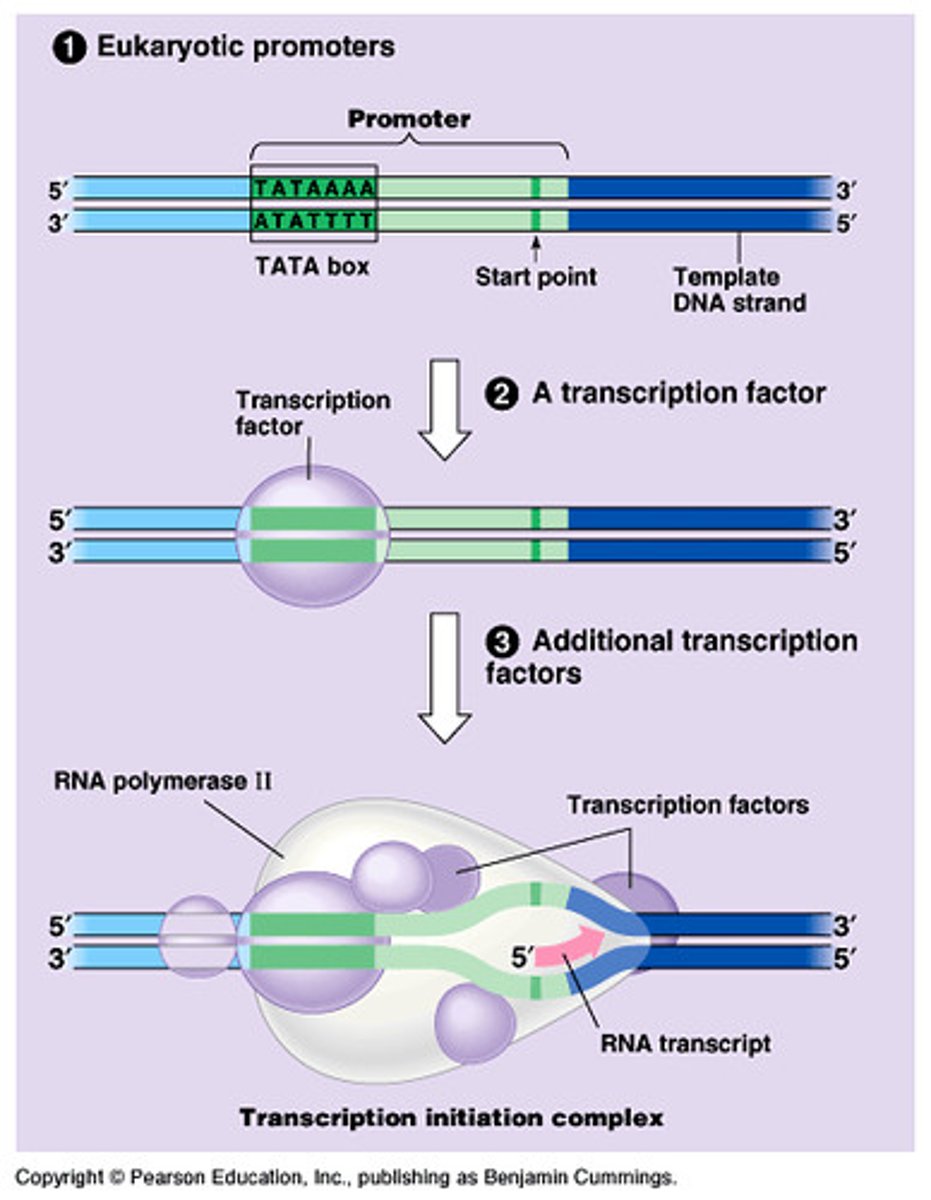
promoter
A specific nucleotide sequence in DNA that binds RNA polymerase and indicates where to start transcribing RNA.
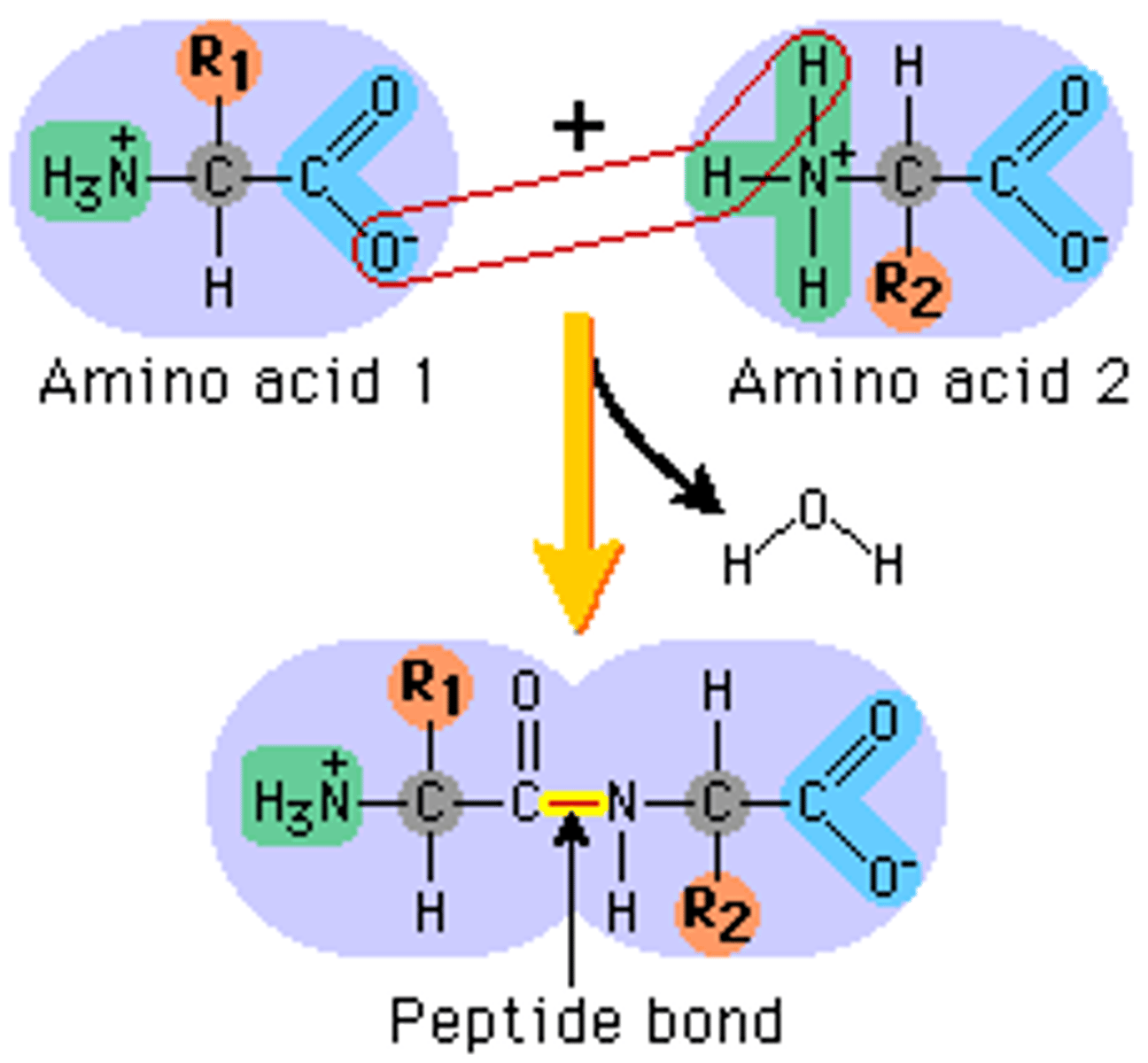
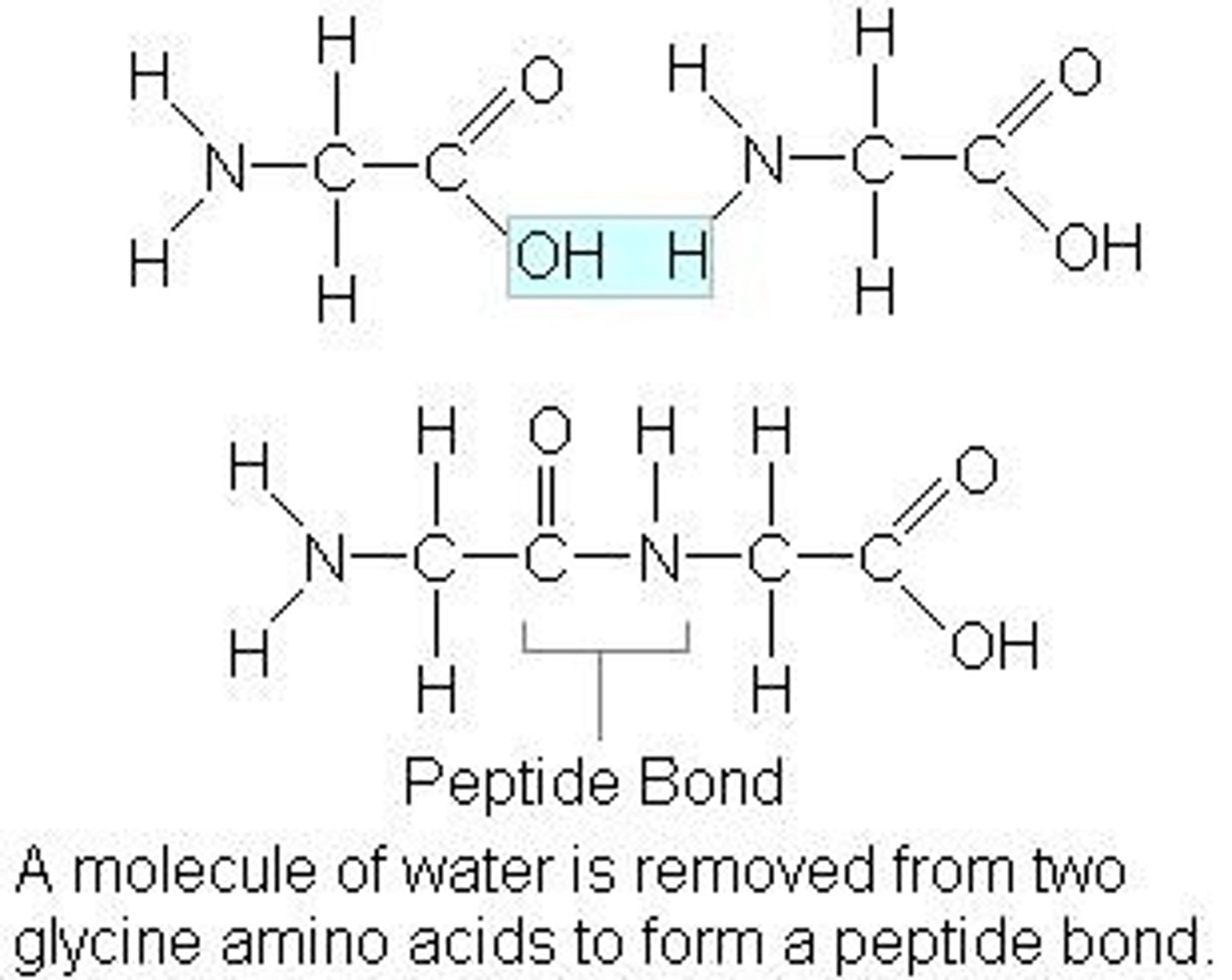
peptide bond
The chemical bond that forms between the carboxyl group of one amino acid and the amino group of another amino acid
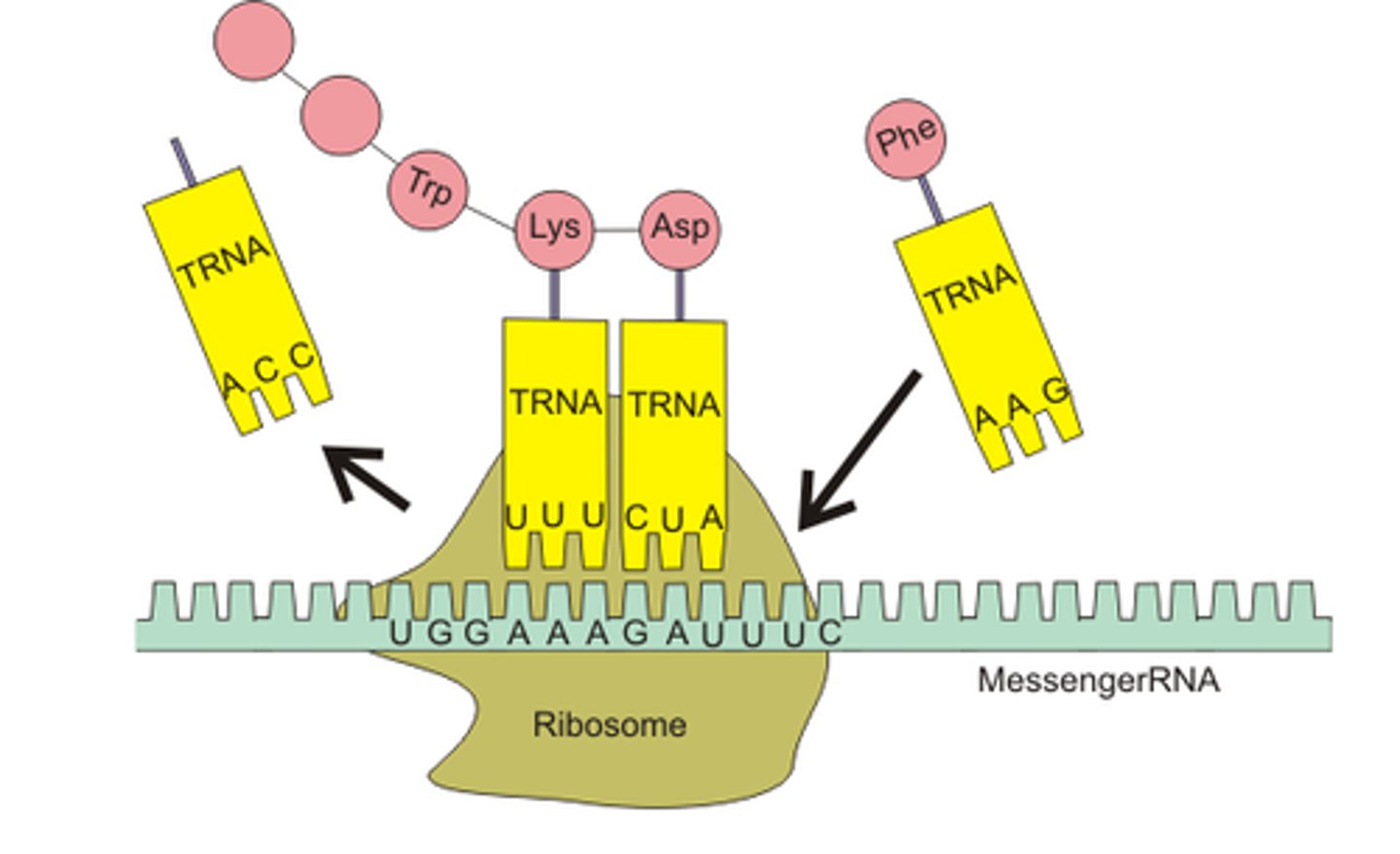
ribosome
site of protein synthesis
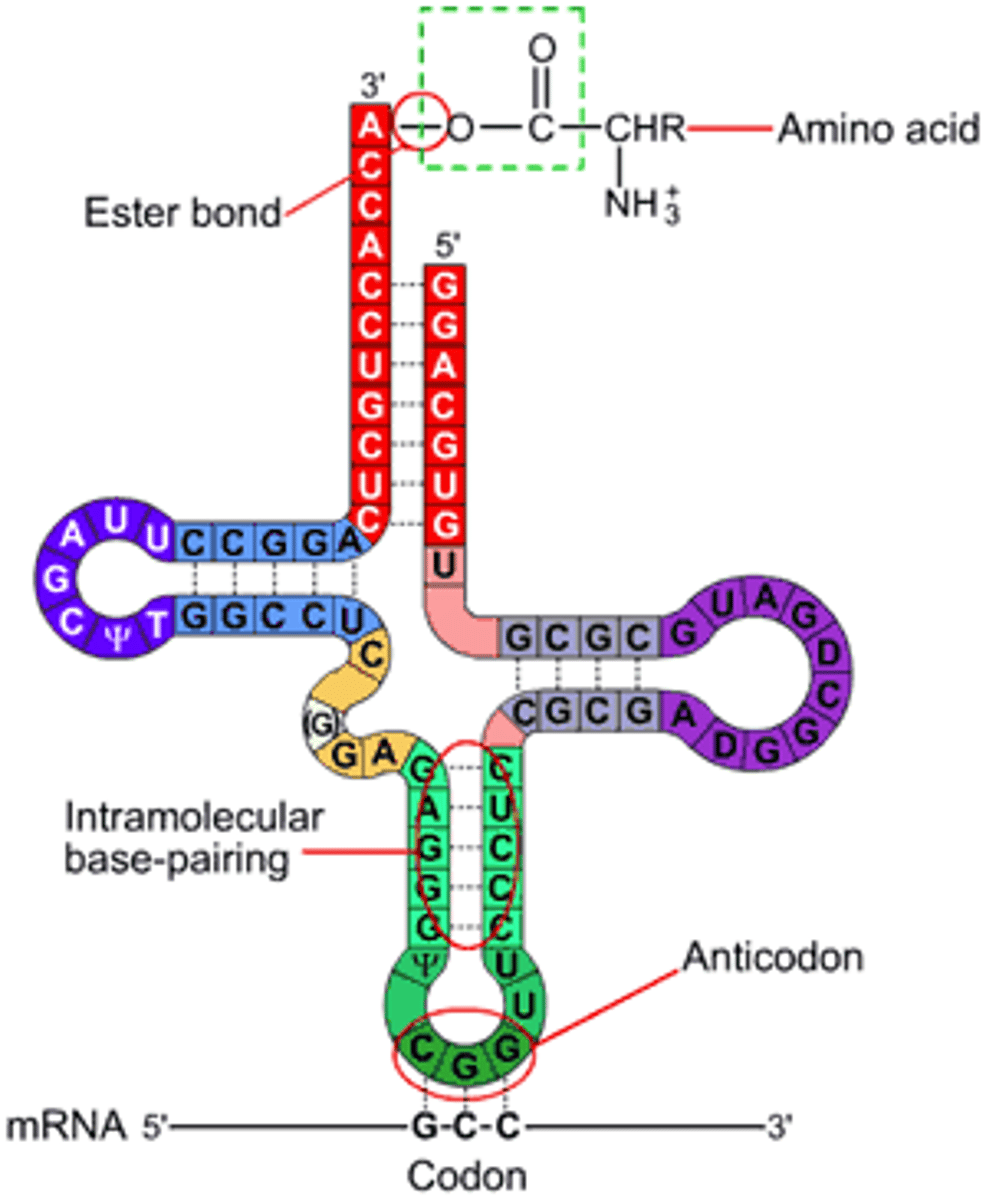
tRNA
transfer RNA; type of RNA that carries amino acids to the ribosome
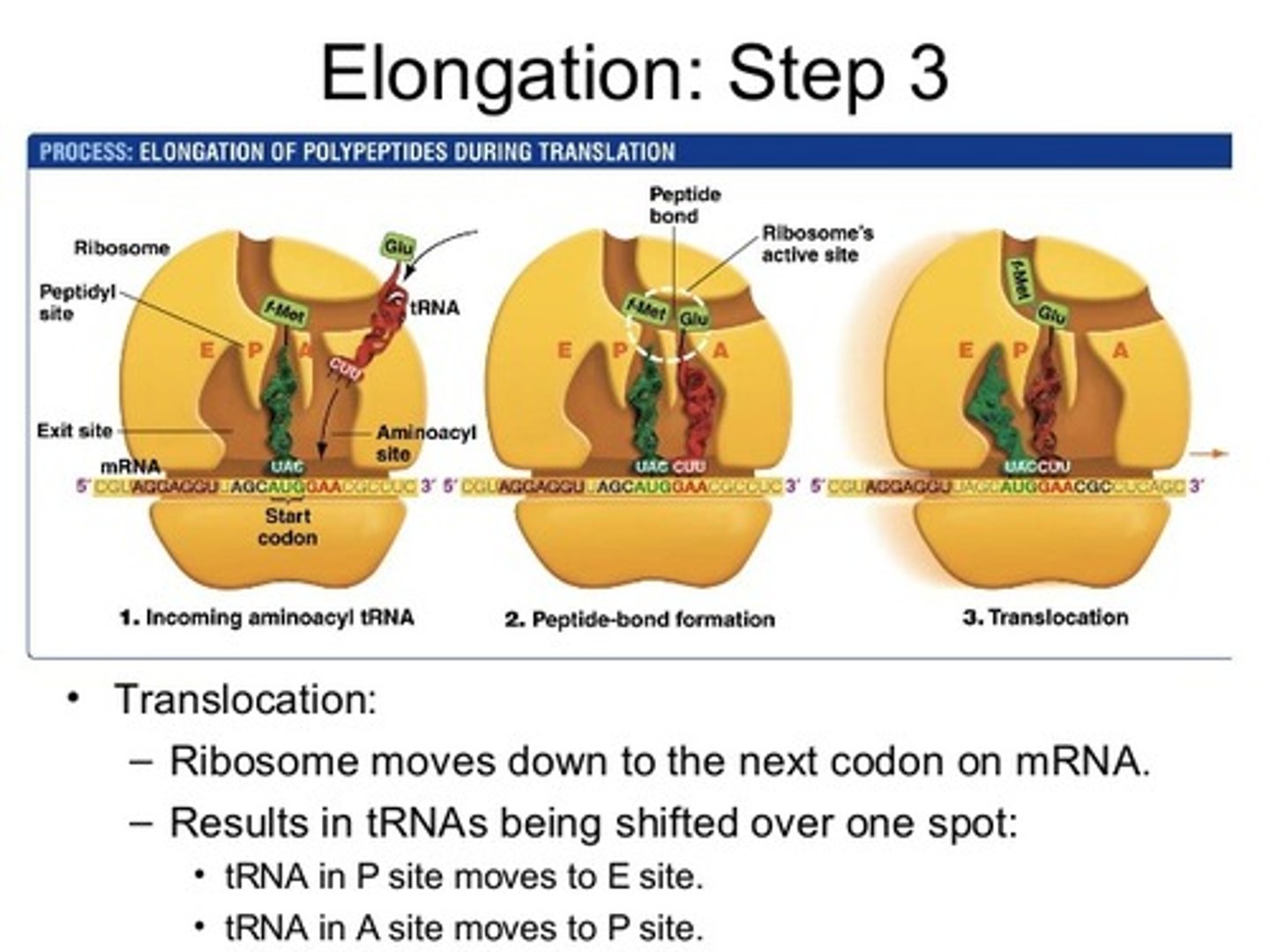
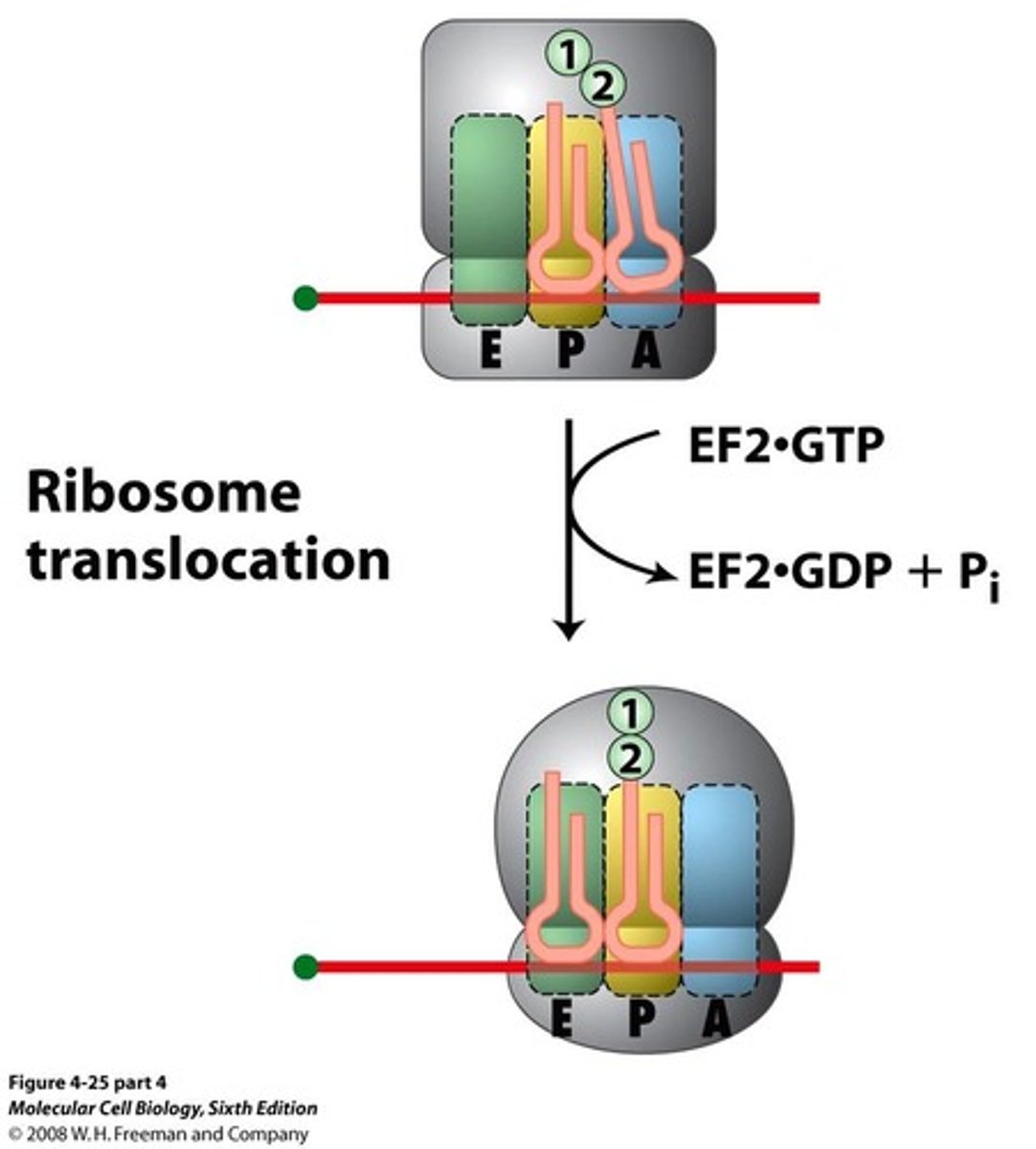
ribosome E, P, and A sites
E: exit site
P: holds tRNA with growing polypeptide chain
A: holds aminoacyl tRNA (acceptor site)
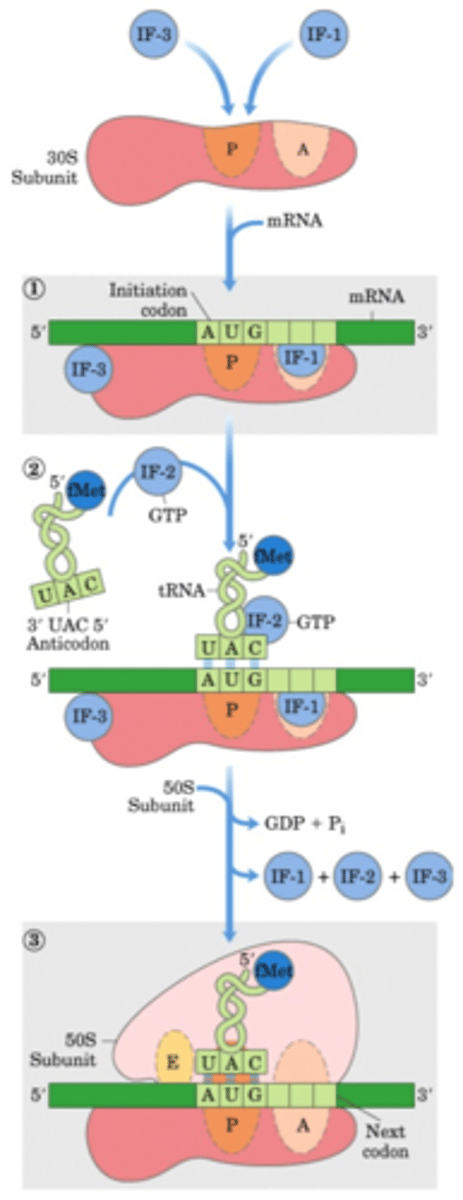
ribosome binding site
a sequence of nucleotides upstream of the start codon of an mRNA transcript that is responsible for the recruitment of a ribosome during the initiation of protein translation
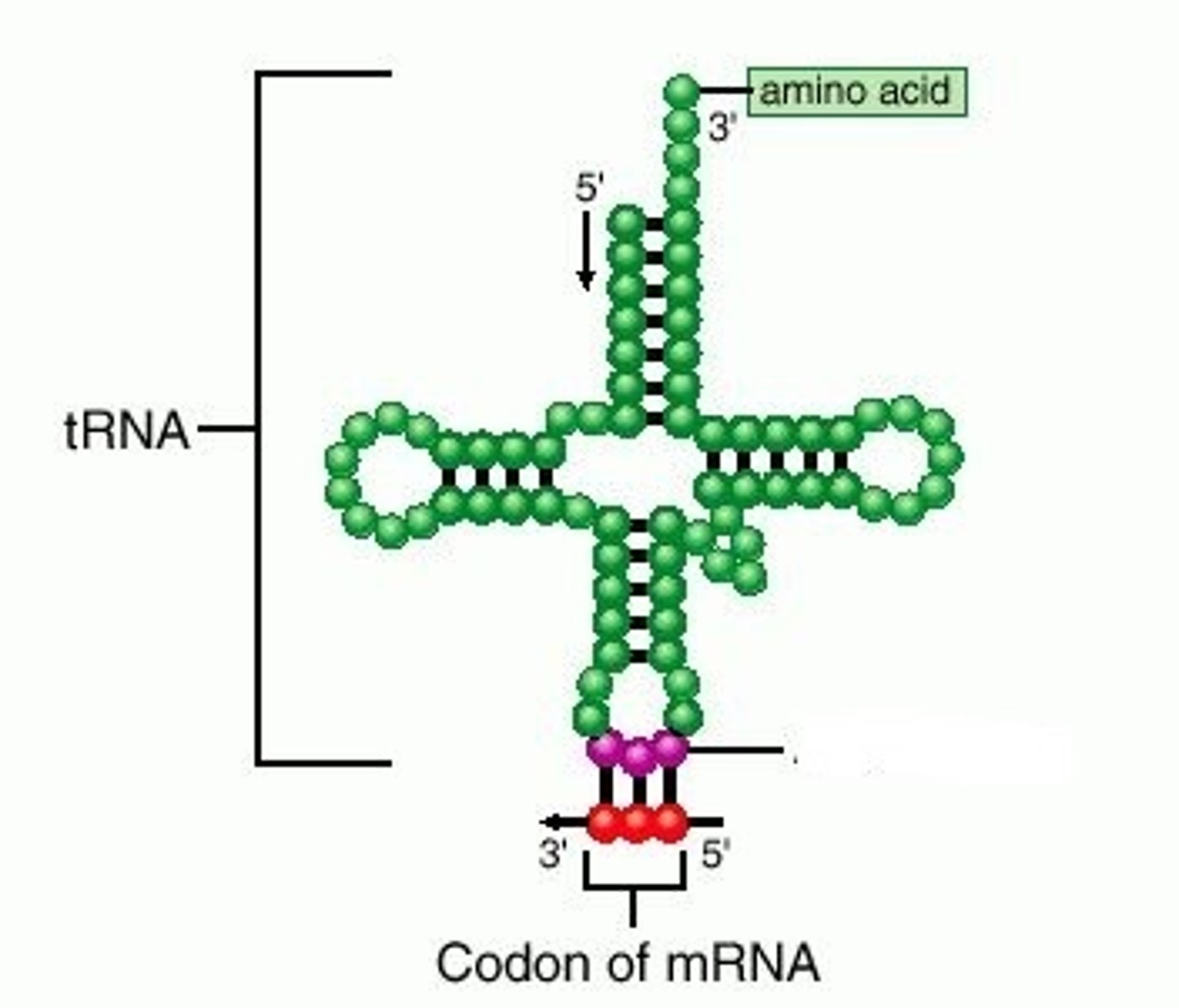
codon/anti-codon
A codon is a three-base sequence (three nitrogen bases in a row) on mRNA. It calls for a specific amino acid to be brought to the growing polypeptide. An anticodon is a three-base sequence on tRNA. It matches the codon.
release factor
Proteins that can trigger termination of RNA translation when a ribosome reaches a stop codon.
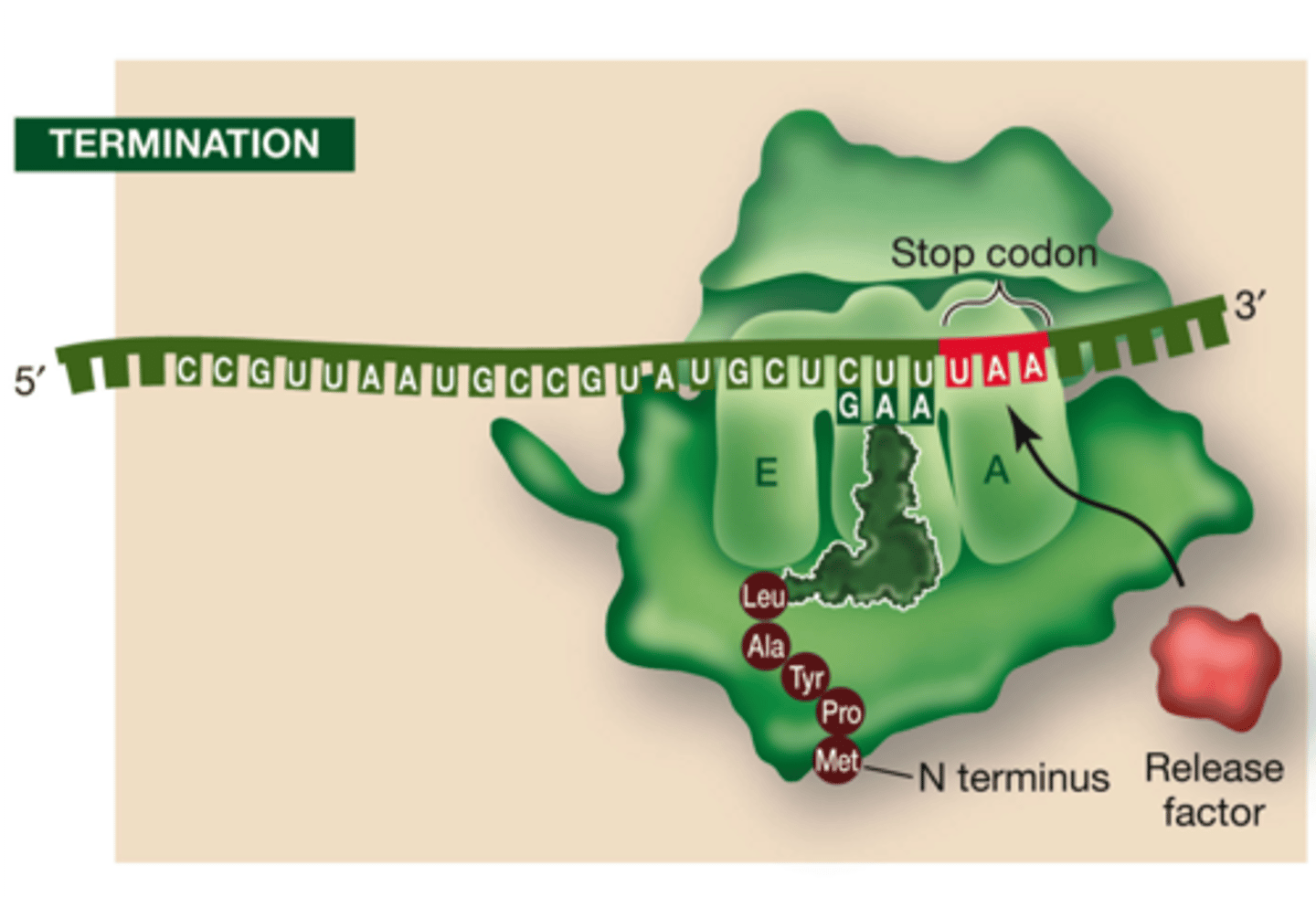
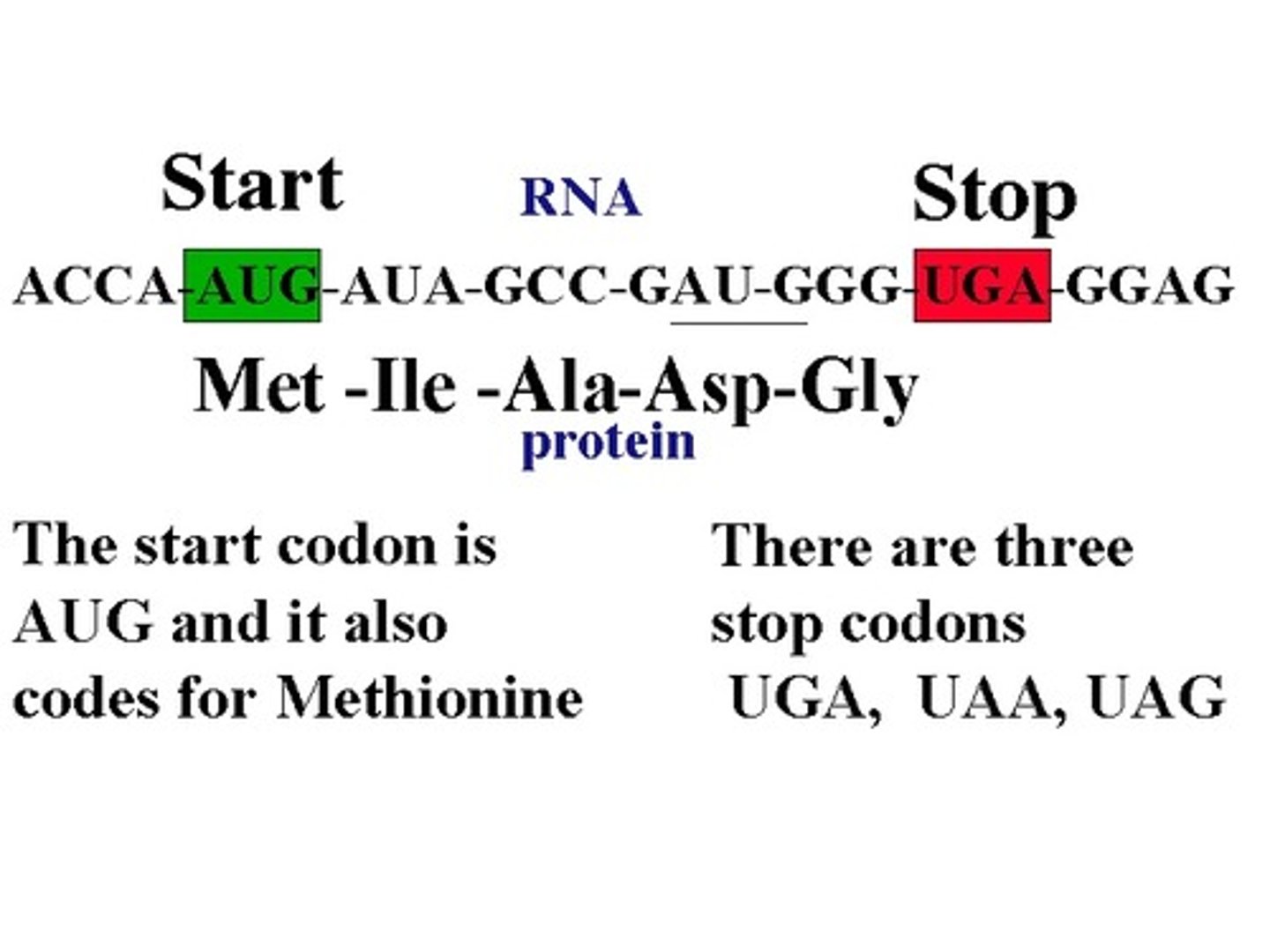
start codon/stop codon
A codon that either starts or stops the transcription process
Start: AUG (met)
Stop: UAA UAG UGA
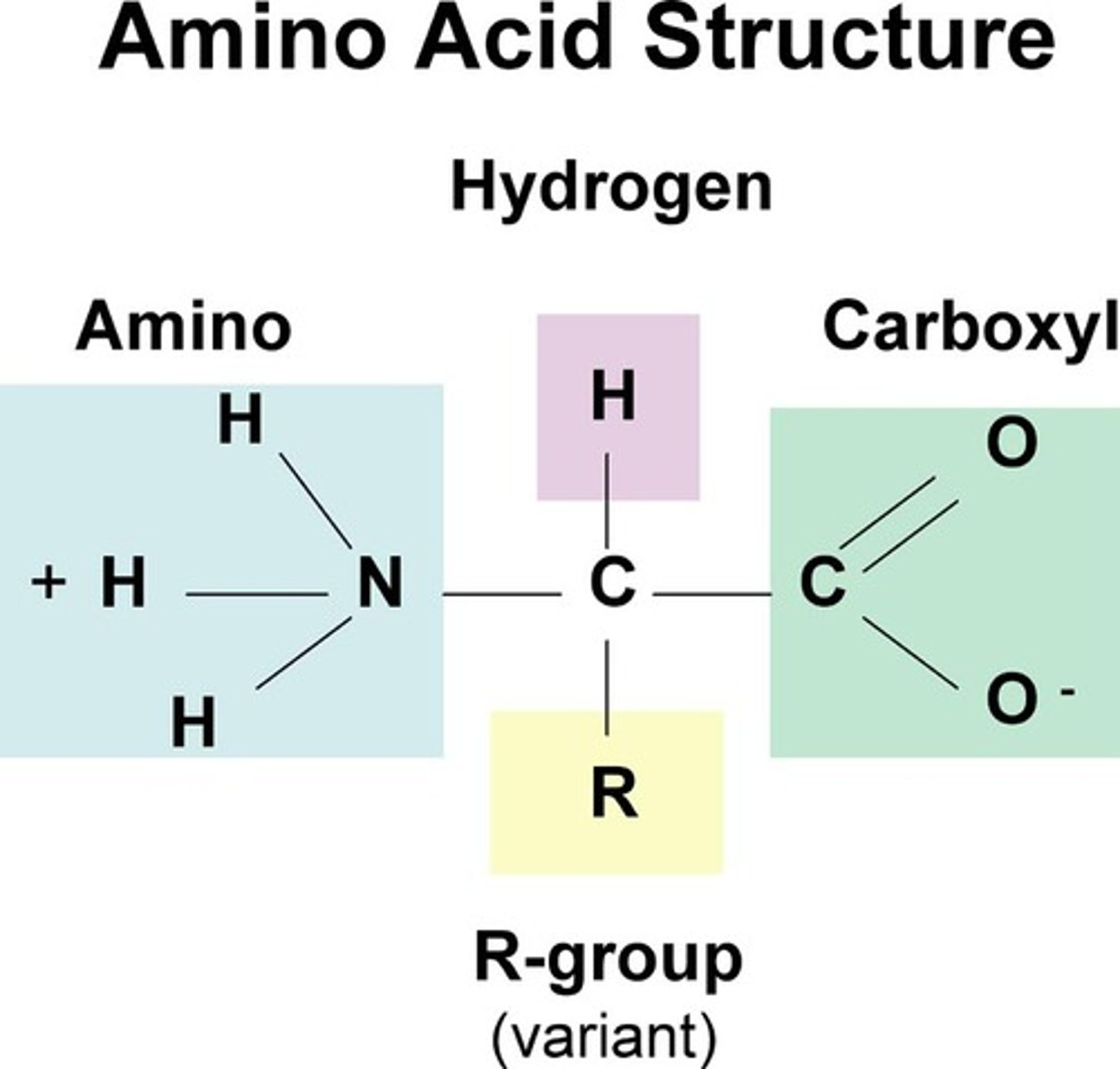
amino acid
Building blocks of protein
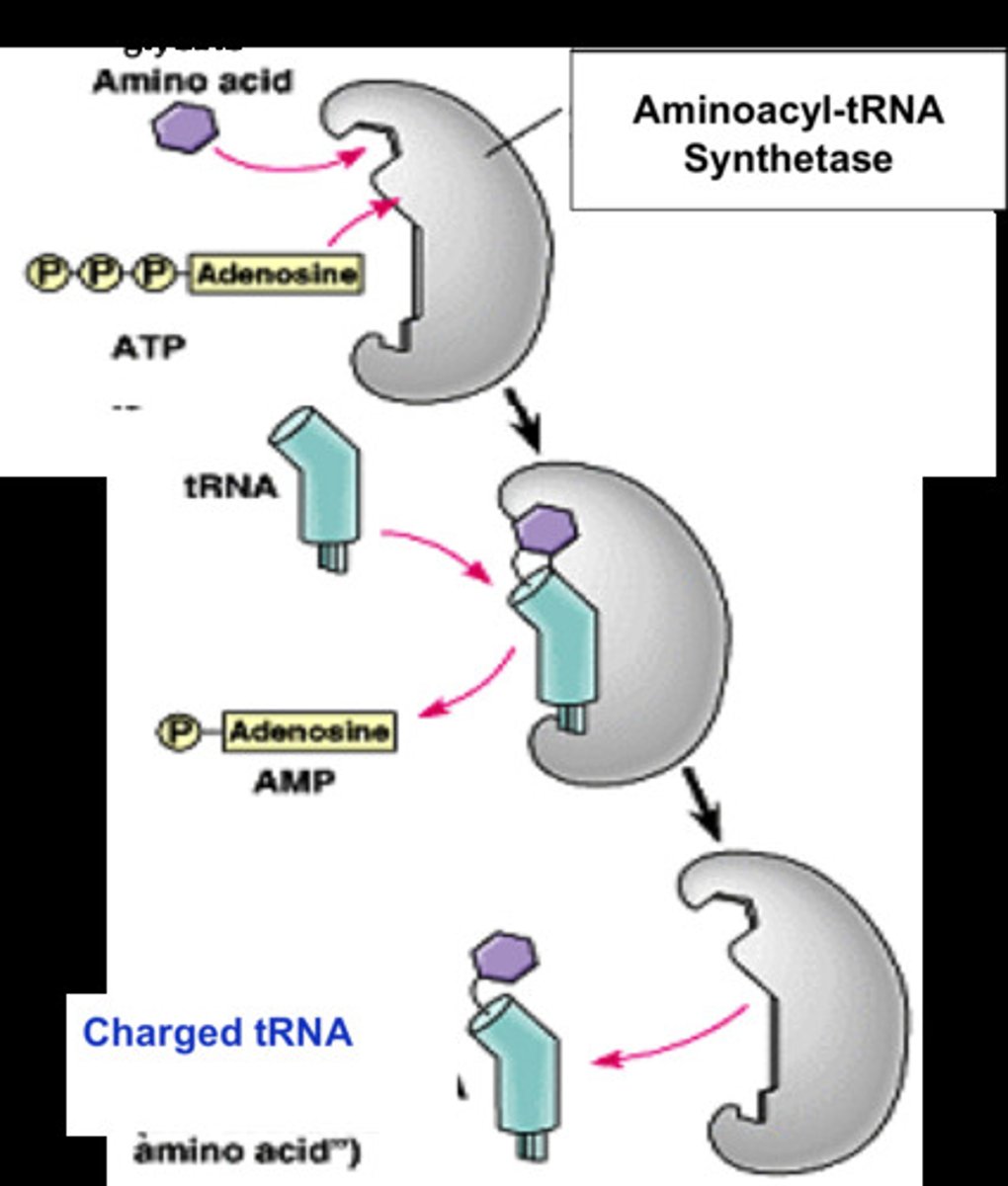
aminoacyl tRNA synthetase
During protein synthesis, an enzyme that attaches the correct amino acid to a tRNA molecule to form a "charged" aminoacyl-tRNA.
translocation of the ribosome
simultaneous movement of two tRNAs with the mRNA by one codon
levels of protein structure
primary, secondary, tertiary, quaternary
peptide synthesis
condensation reaction of the upstream carboxyl group of one amino acid to the downstream amino group of another
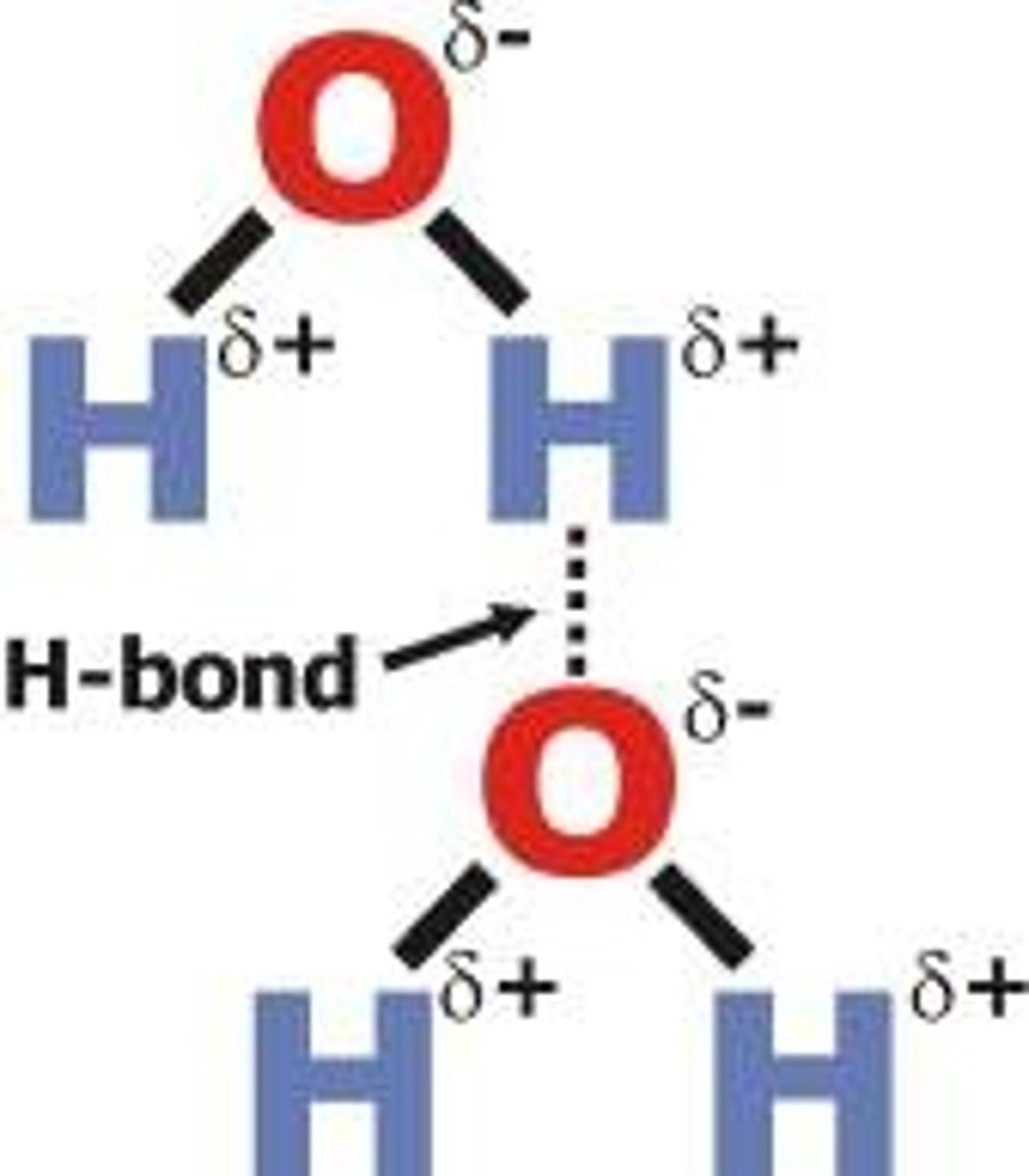
how to identify potential for hydrogen bond formation between R groups, amino groups and carbonyl groups
sharing of a hydrogen atom covalently attached to an electronegative element (typically O-H and N-H groups) between a lone pair of electrons on another electronegative element
impact of different types of mutations on protein structure
-Silent mutation: when a mutation occurs but it has no effect on the protein. multiple codons may result to the same amino acid
Missense mutation: when the substitution results to a different amino acid
Nonsense mutation: when a stop codon replaces what is supposed to be a codon for an amino acid. When a stop codon is reached, the translation is stopped prematurely and the protein is not formed.
Frameshift mutation: when an extra nucleic acid is inserted or deleted. This has severe effects as it will not only change one amino acid, but the rest of the remaining amino acids will be affected.
impact of changes in protein structure on function
Gain/change of function: a mutation could increase the function of a protein, or it could also acquire a new function due to changes in its amino acid sequence
Loss of function: The change in at a single point could affect the entire function of the protein. For instance, a single change can remove the ability of a receptor to bind to it. It is also possible that a change in some residues would change the polarity of the protein, and hence reduce its function. Nonsense mutations essentially stop protein synthesis prematurely.
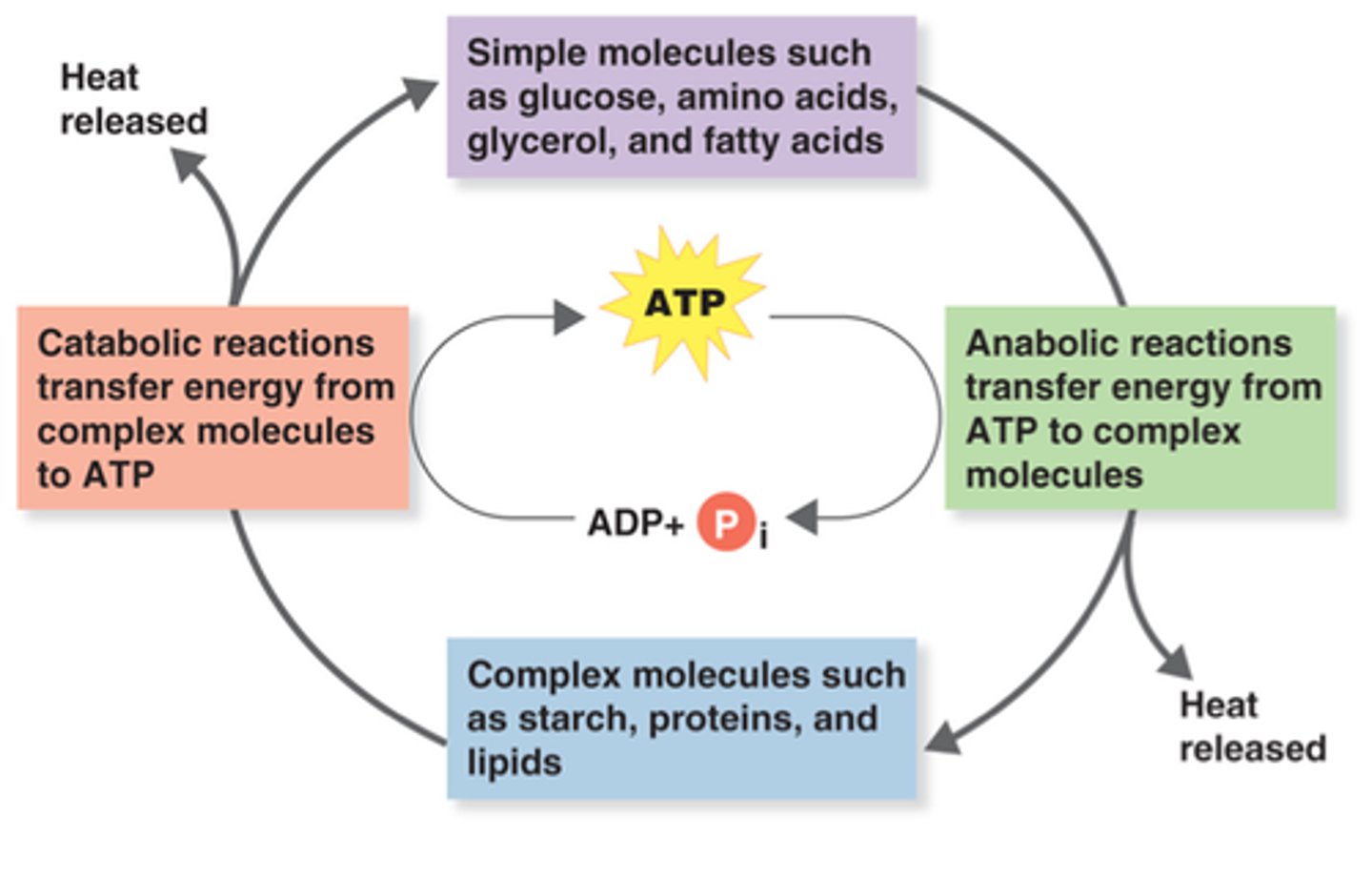
coupled reactions
pairs of chemical reactions in which some of the energy released from the breakdown of one compound is used to create a bond in the formation of another compound
ex. ATP
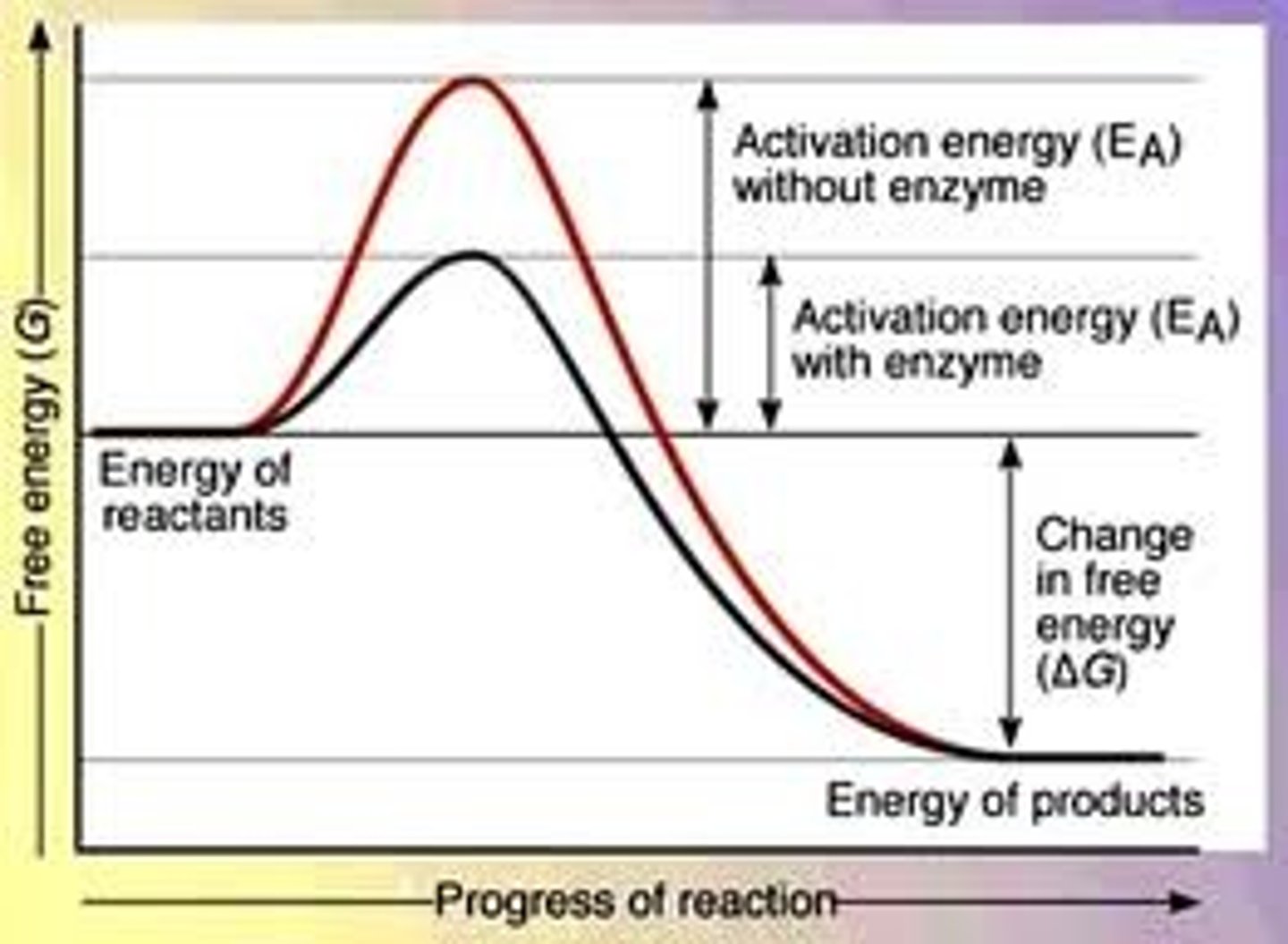
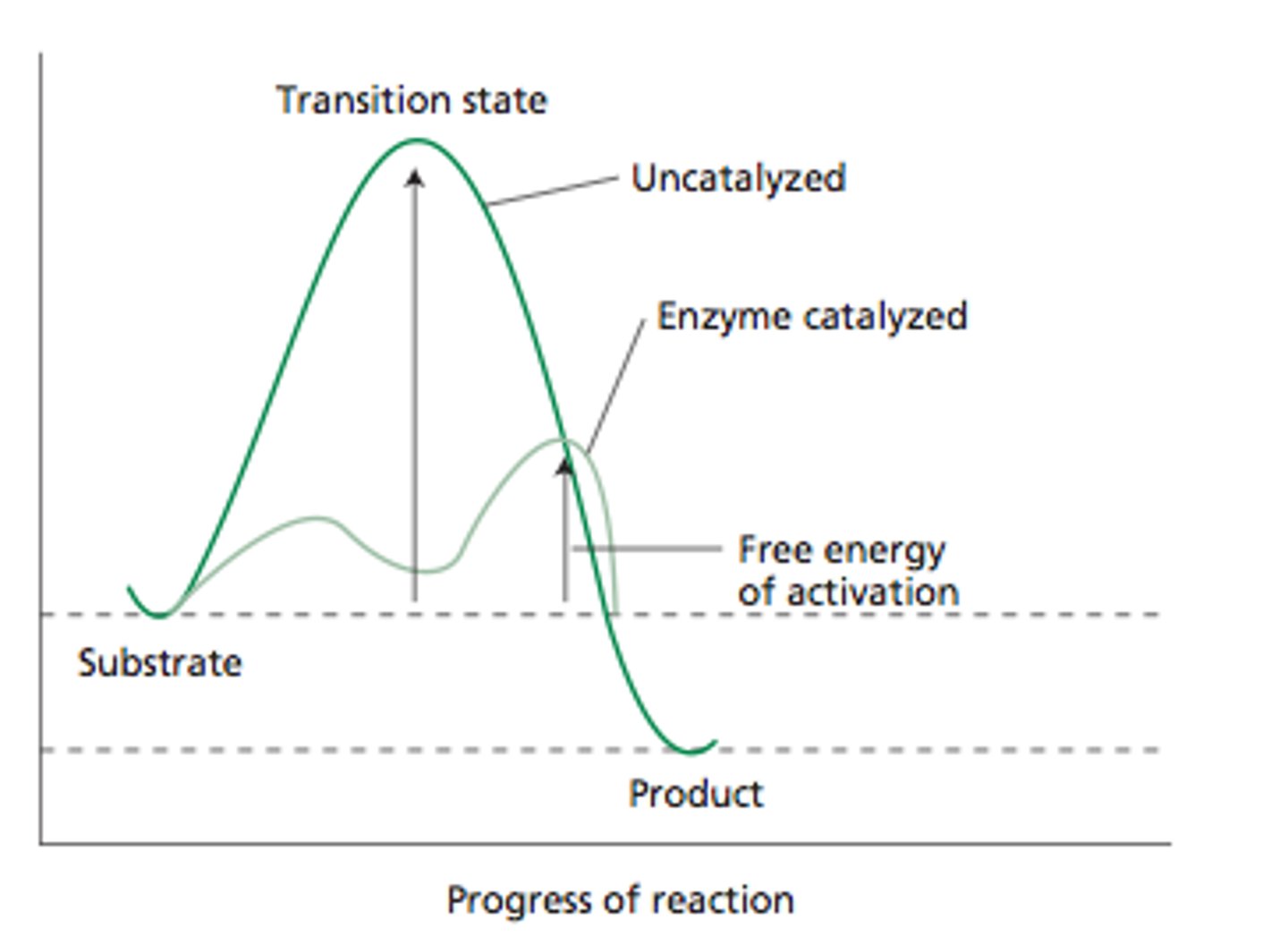
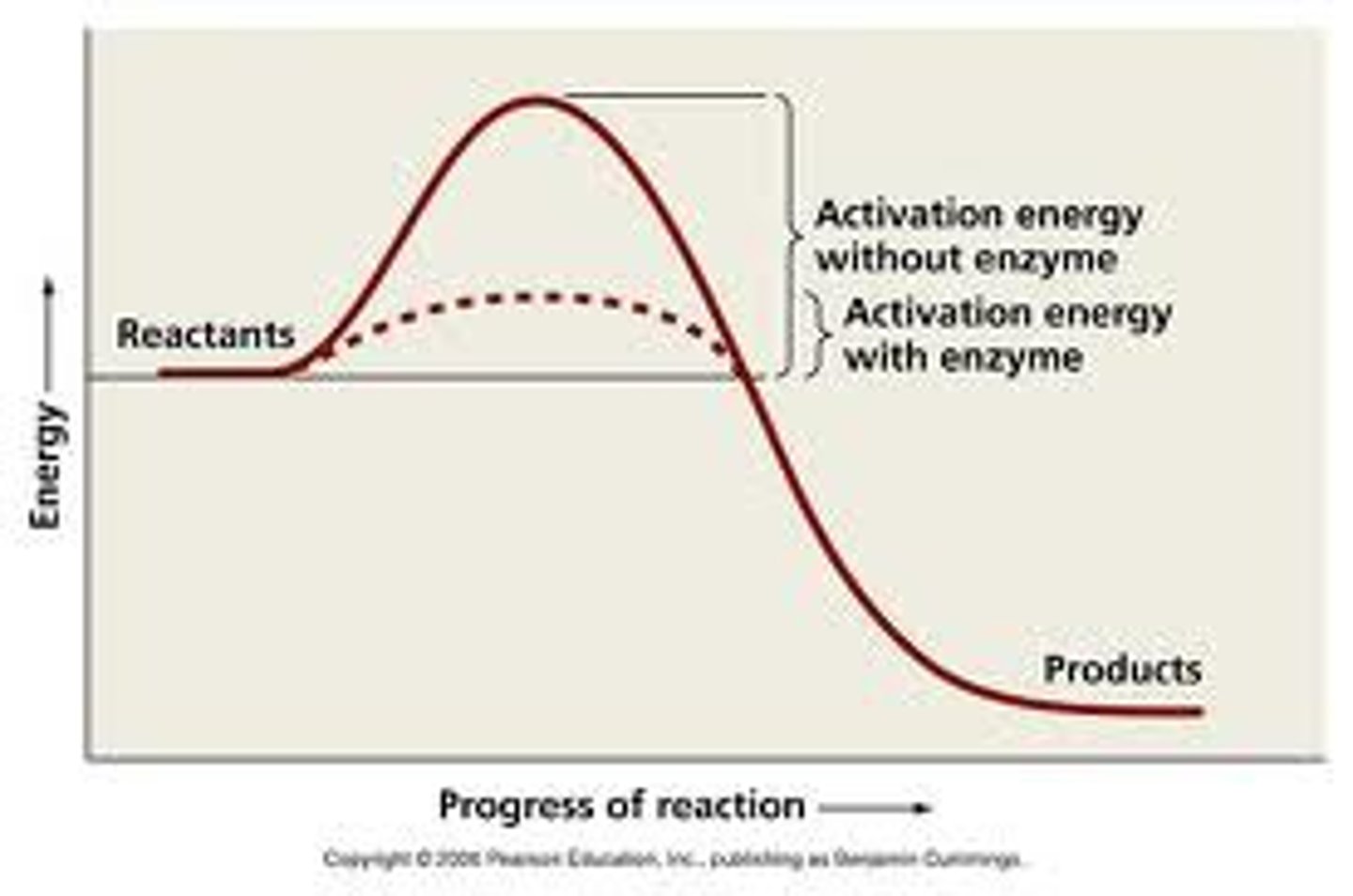
how does an enzyme increase the rate of a reaction (in terms of activation energy (Ea) and free energy (deltaG)
they are catalysts, which lowers the activation energy but does not change the free energy
how chemical properties of amino acids at an enzymes active site affect the rate of a chemical reaction
may have lower affinity for active site which carries out these functions:
-Binding Activity: The binding activity is a property of active site which increases the binding affinity of the substrate with an enzyme.
-Catalytic activity: It is a property of an active site which carries out the catabolic reaction where the enzyme and substrate react to form a product by reducing the activation energy.
how changes in enzyme structure caused by mutation, temperature, or pH affect the rate of a chemical reaction
-slower reaction above or below ideal pH
-slower reaction above or below ideal temperature. Too high of a temperature and the active site changes to fit a different amino acid or none at all
Compare and contrast different types of enzyme regulation
competitive inhibition: inhibitor binds to active site blocking the active site from the substrate
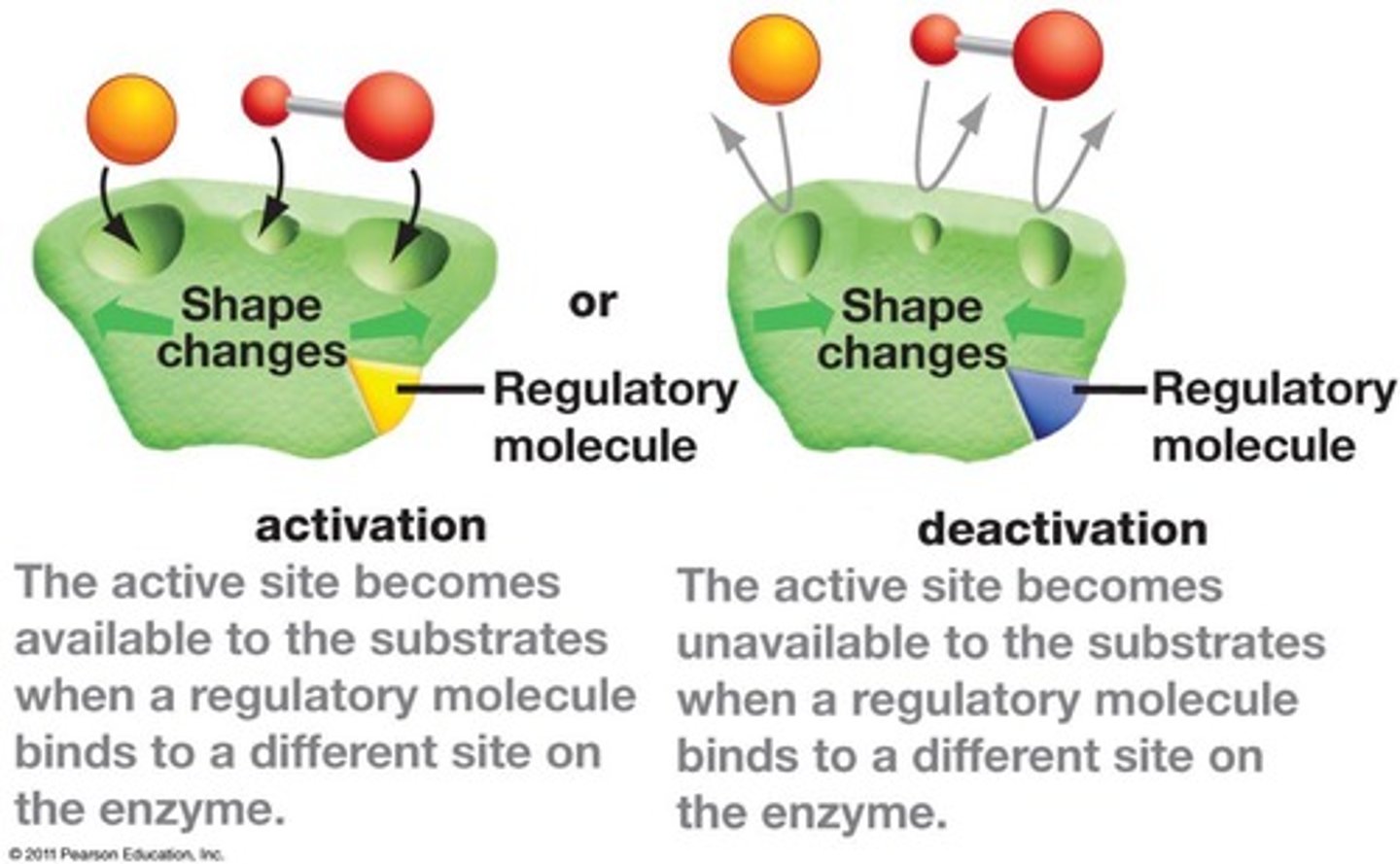
allosteric regulation: a regulatory either has to be present or cannot be present in order for the active site to be the right shape to accept substrates
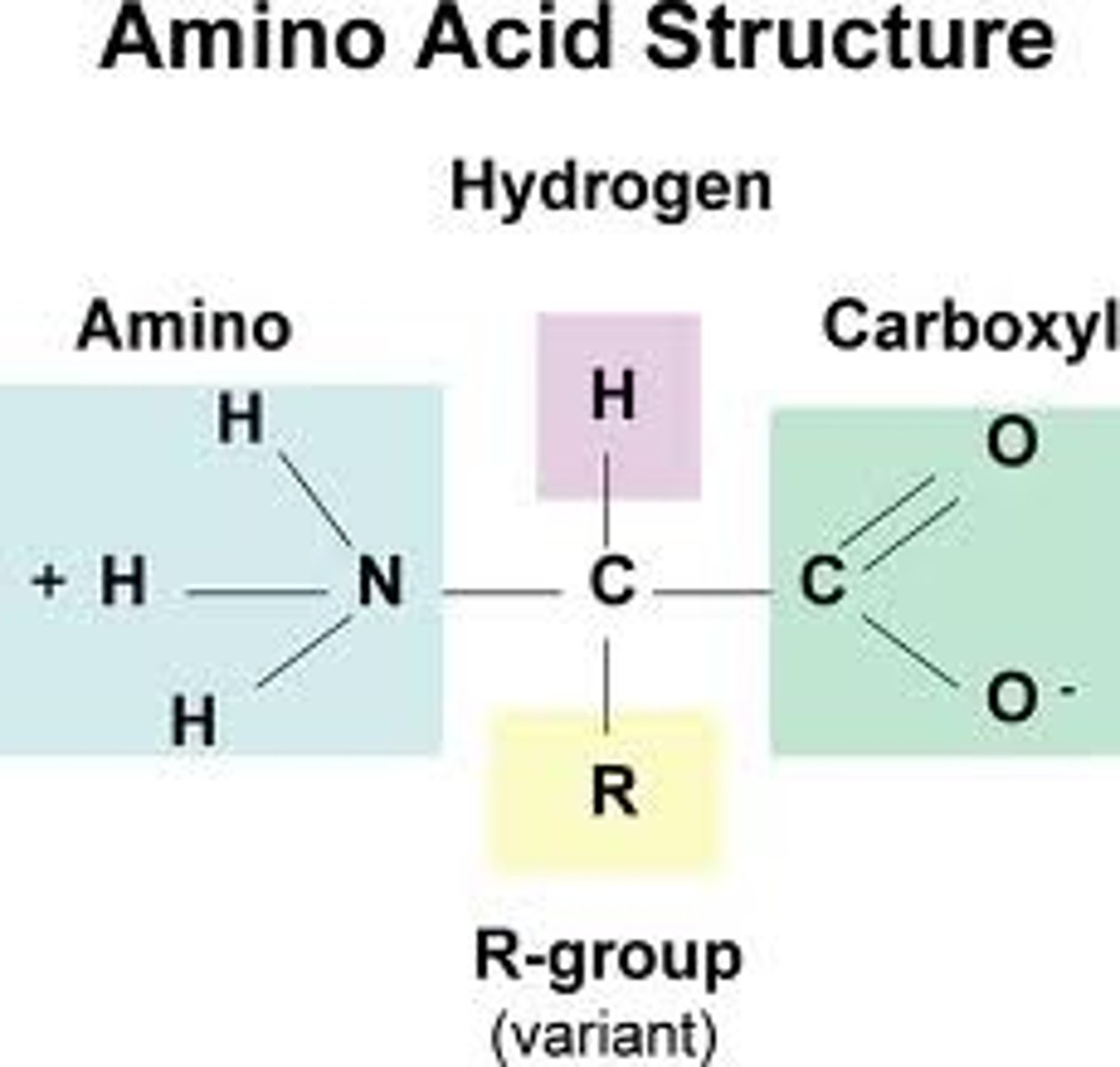
R group
An R-group is any group in which the carbon or hydrogen is attached to the rest of the molecule.
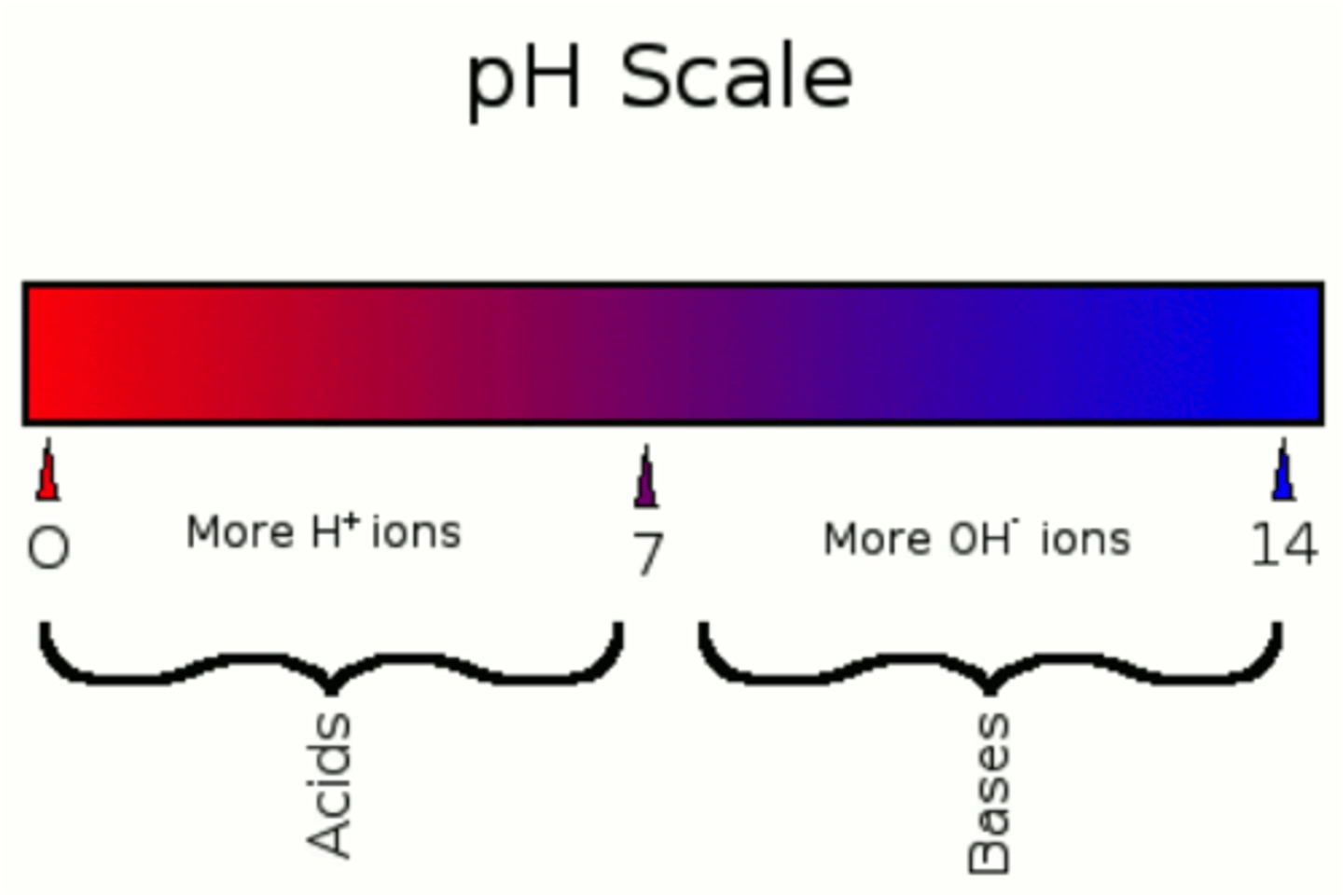
acidic/basic
acidic: low pH
basic: high pH
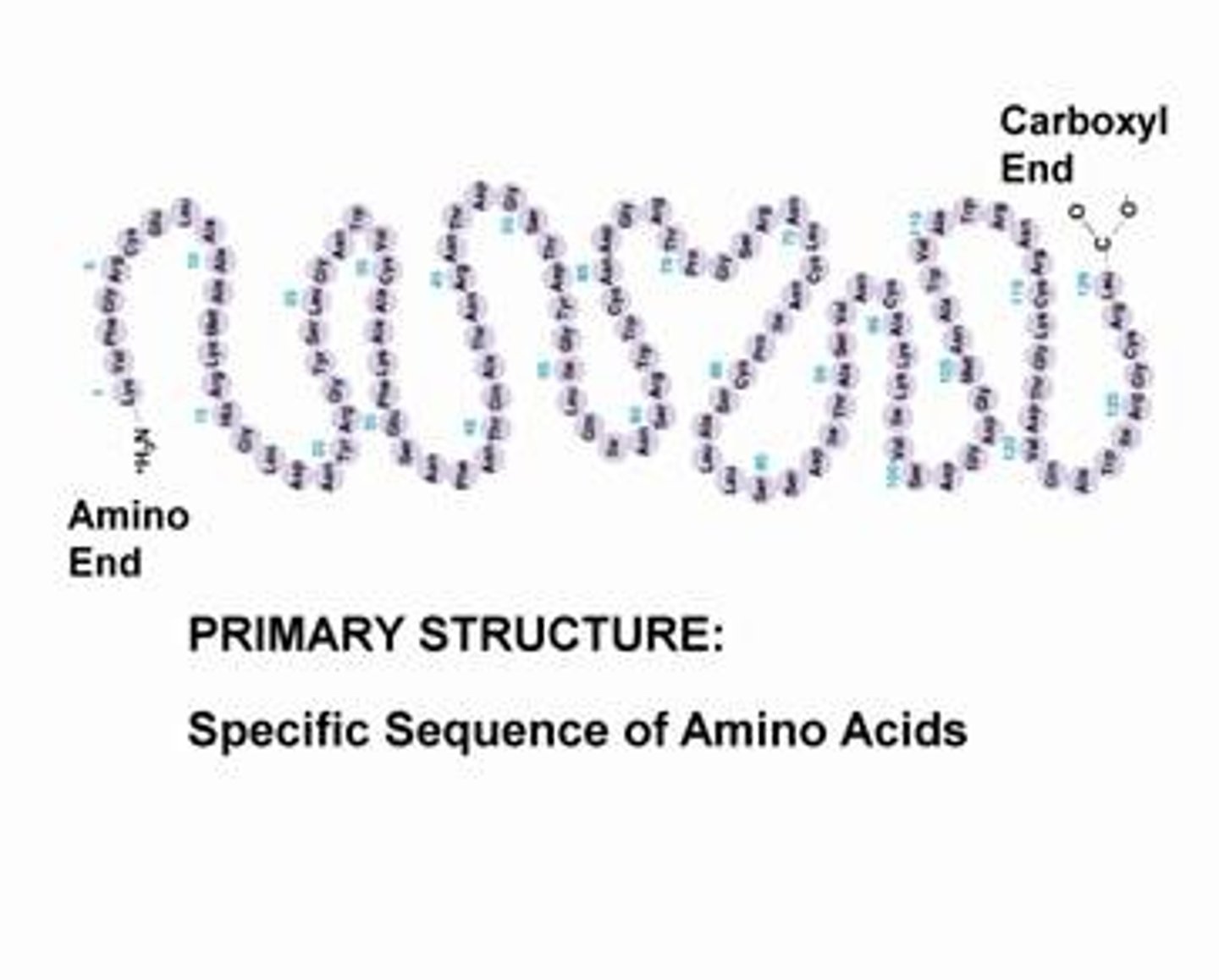
primary structure
-linear sequence of amino acids in a polypeptide chain
-covalent bonds
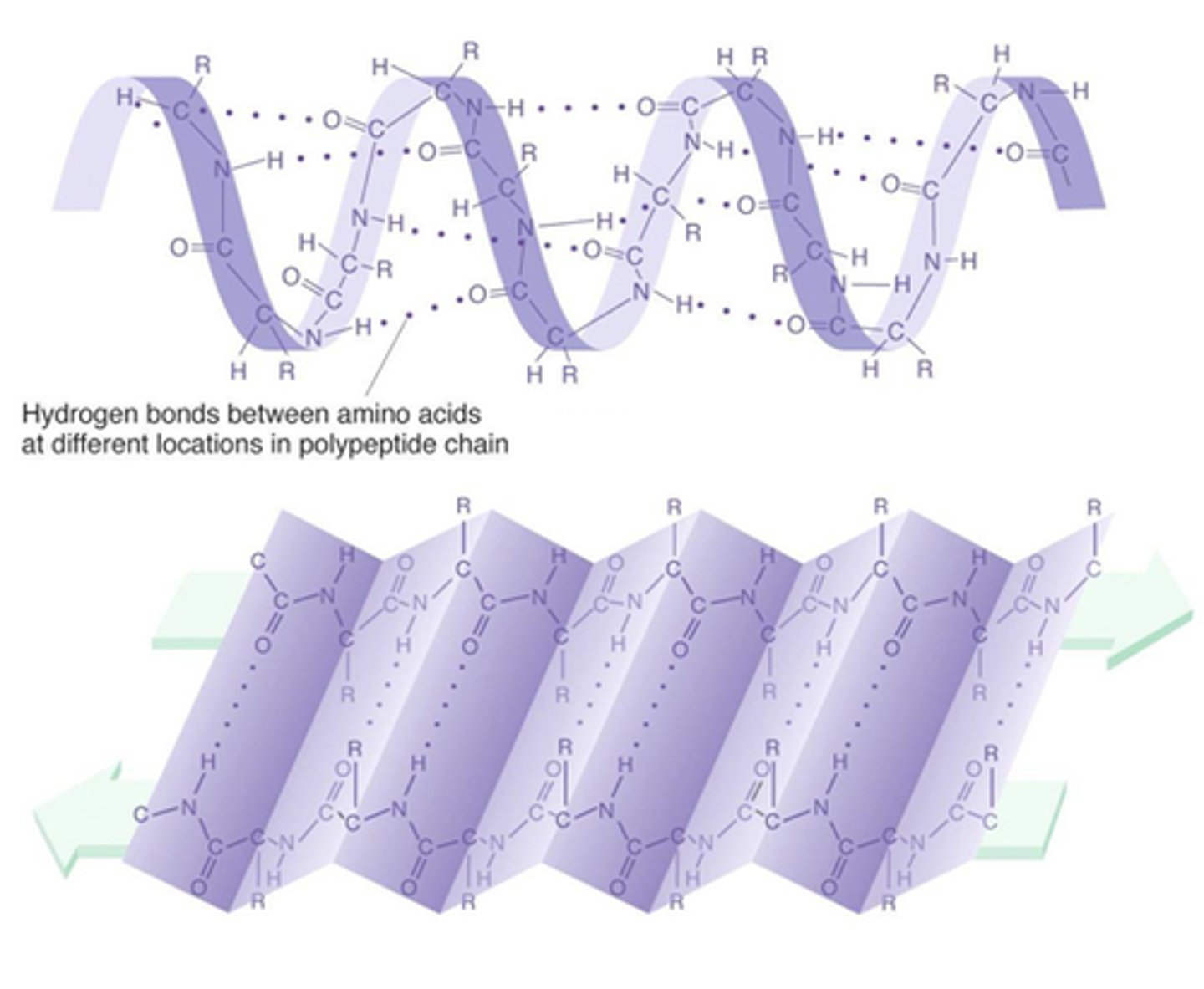
secondary structure
-alpha helix (coil) and beta (pleated sheets) sheets
-H bonds: backbone to backbone
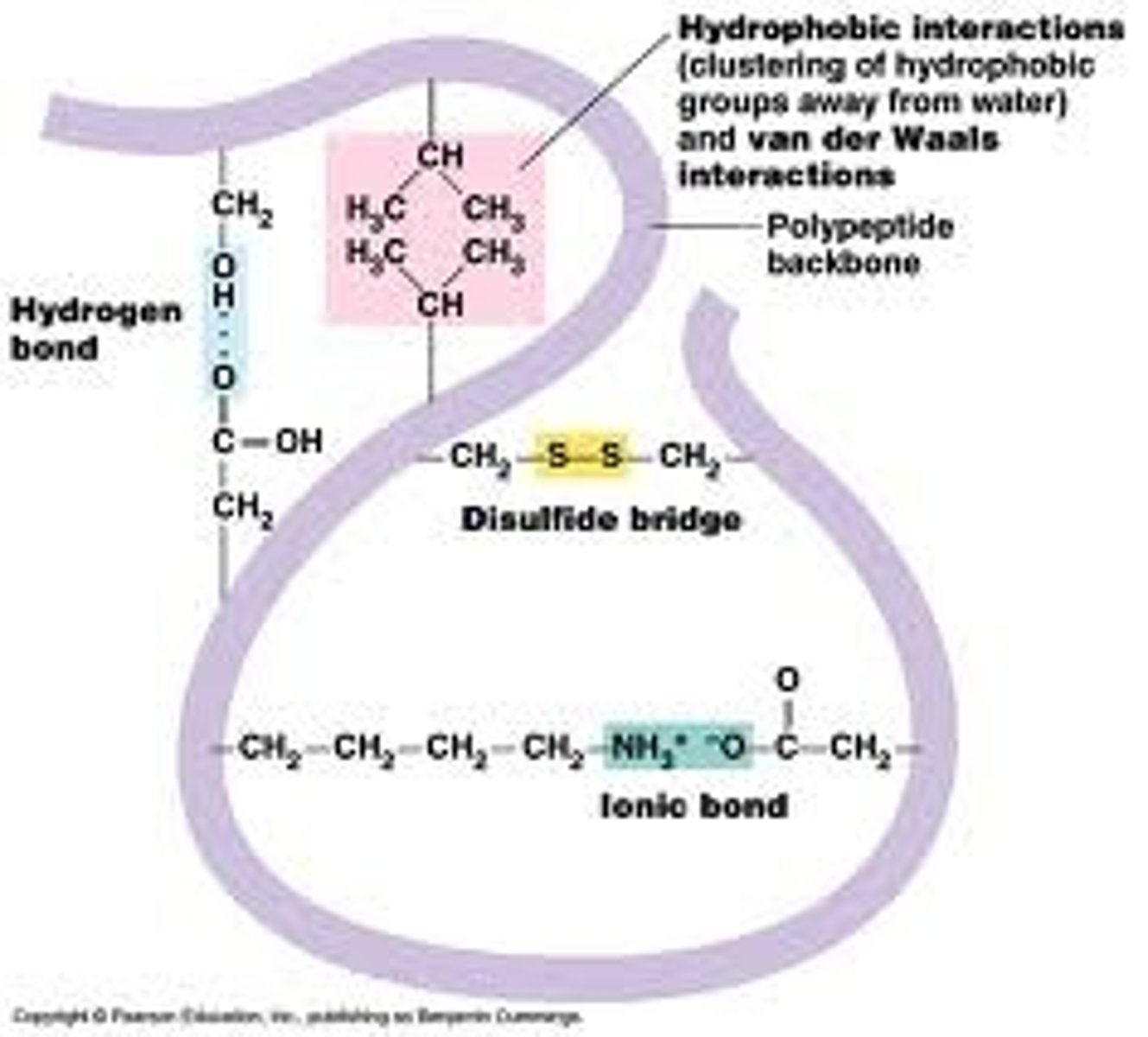
tertiary structure
-3d shape
-disulfide bridge: covalent bond b/w sulfur containing R groups
-Hydrogen bonds: R group to R group AND R group to backbone
-Hydrophobic interactions
-Ionic bonds
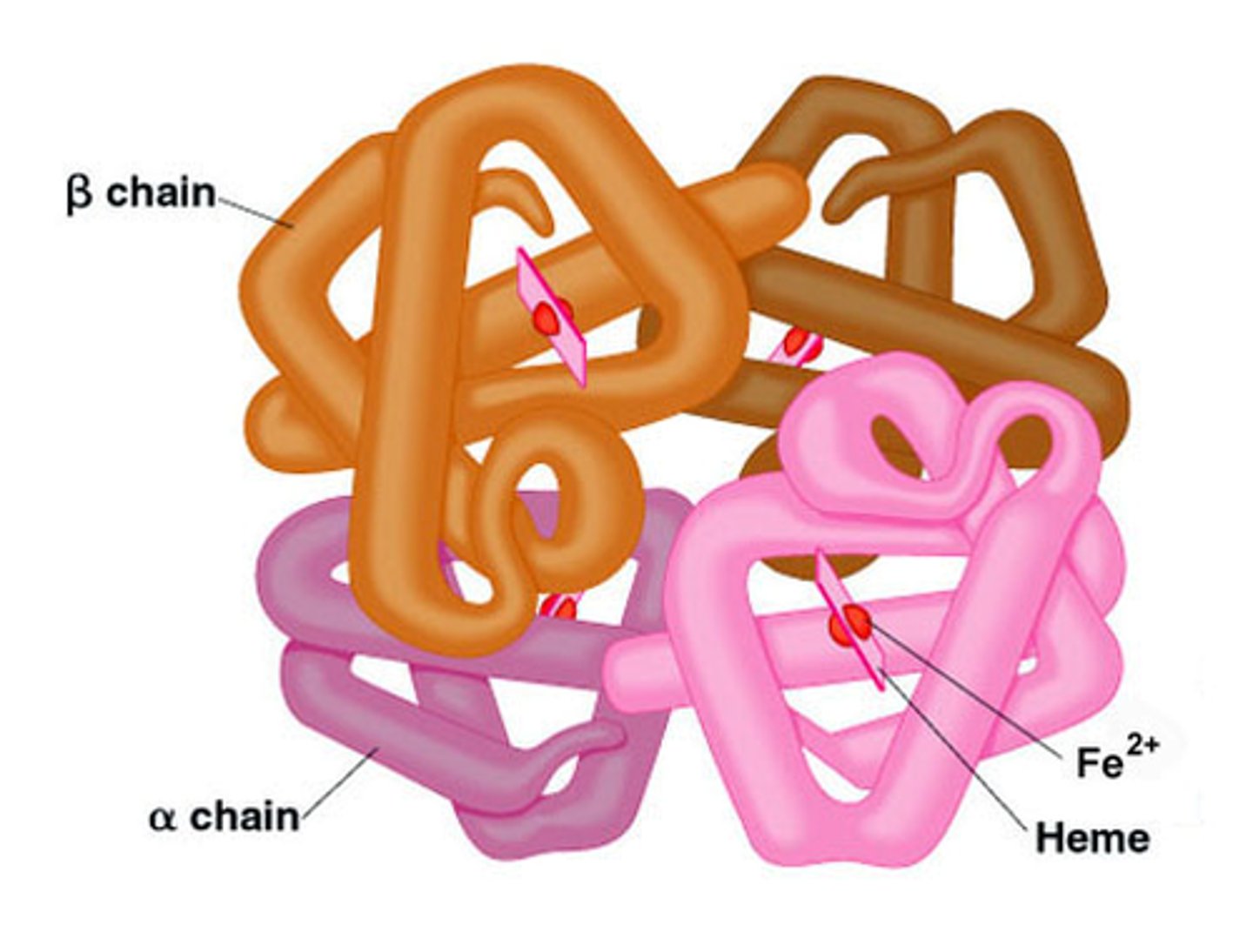
quaternary structure
-2+ proteins that bind together to form a complex (Sigma binding to RNA polymerase
-disulfide bonds: covalent bond b/e sulfur containing R groups
-Hydrogen bonds: R group to R group AND R group to backbone
-Hydrophobic interactions
-Ionic bonds
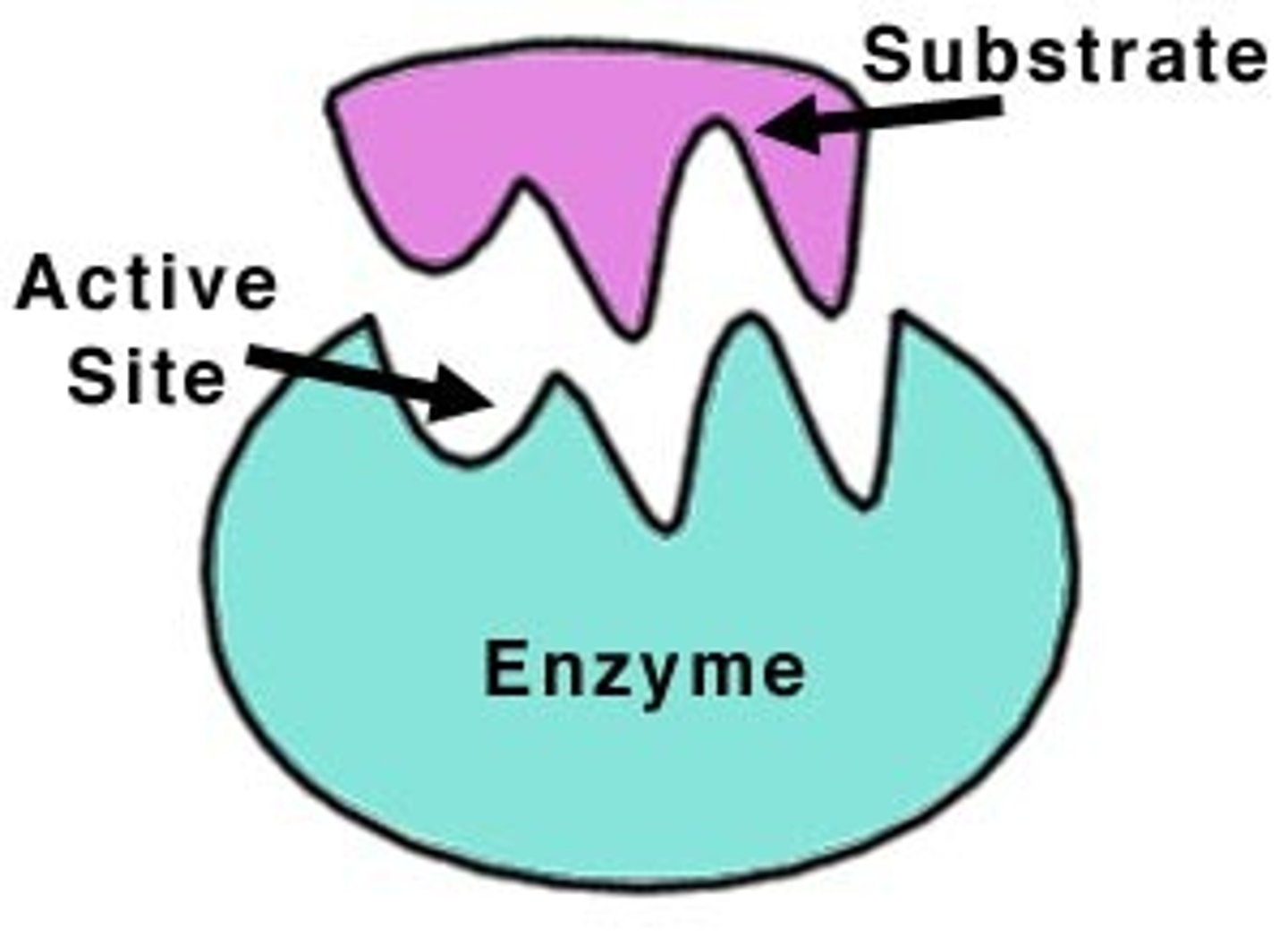
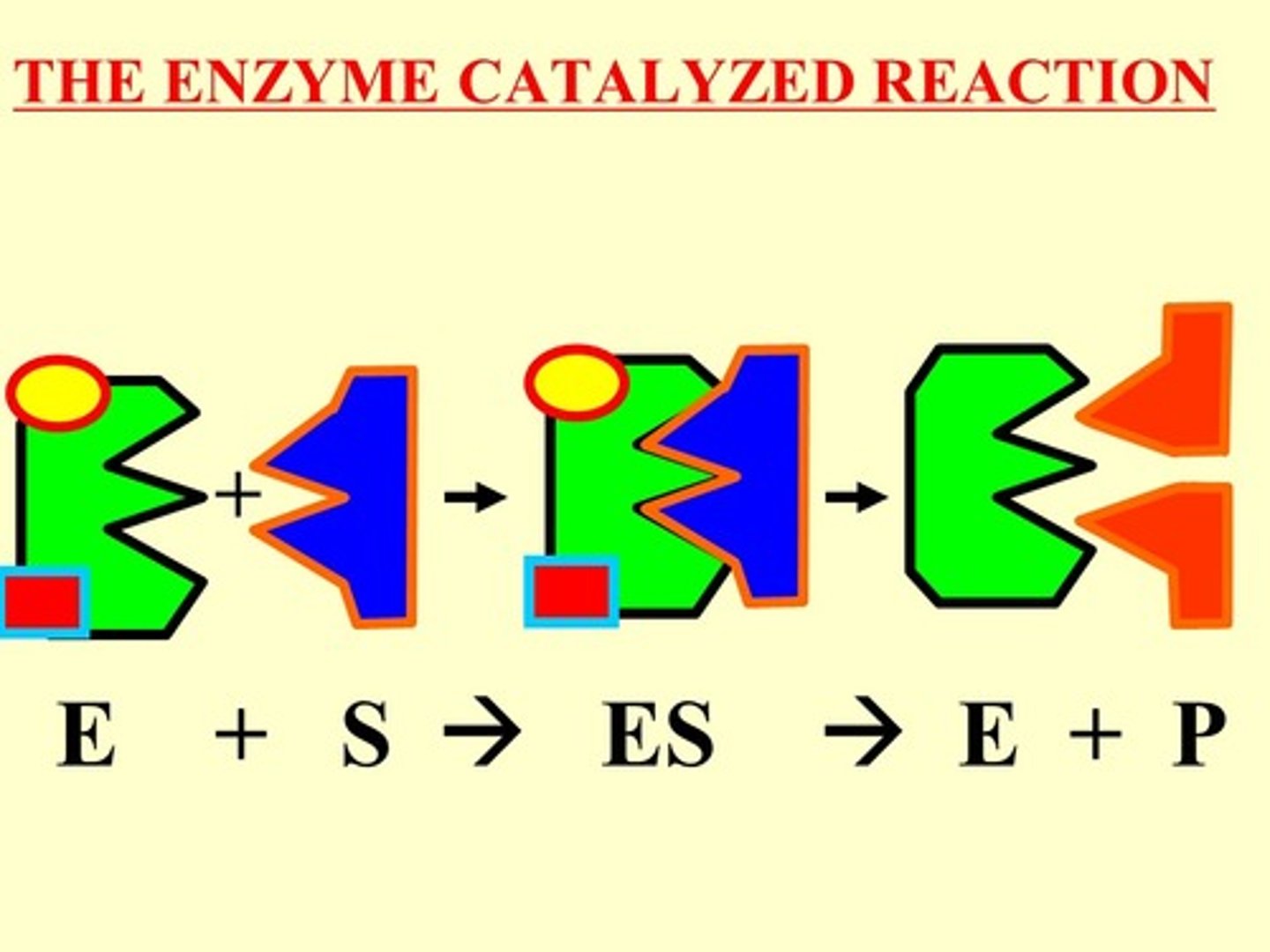
substrate
A specific reactant acted upon by an enzyme
catalyze
to lower activation energy
transition state
a high-energy intermediate state of the reactants during a chemical reaction that must be achieved for the reaction to proceed
activation energy
Energy needed to get a reaction started
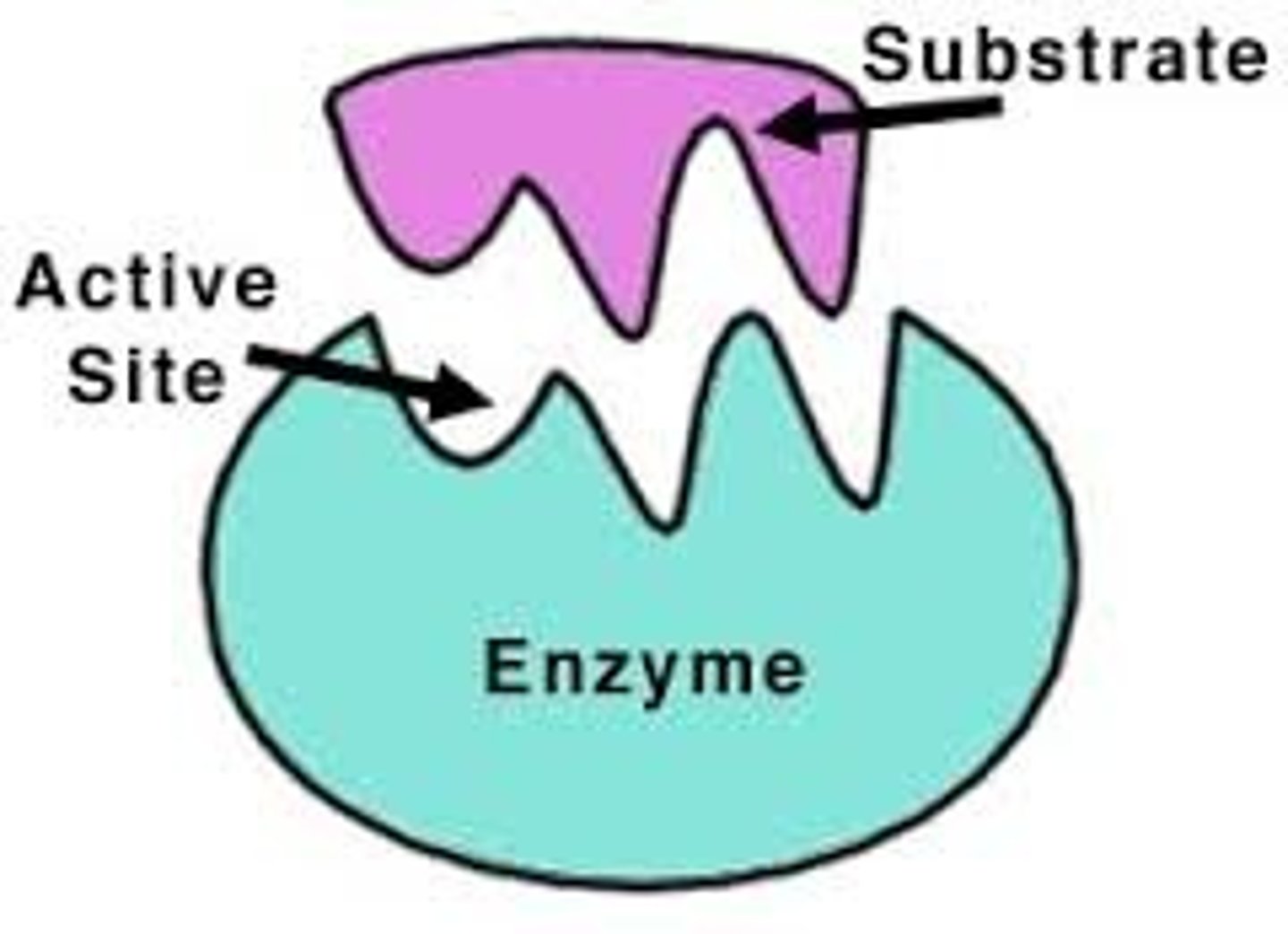
active site
a region on an enzyme that binds to a protein or other substance during a reaction.
kinase
An enzyme that transfers phosphate ions from one molecule to another
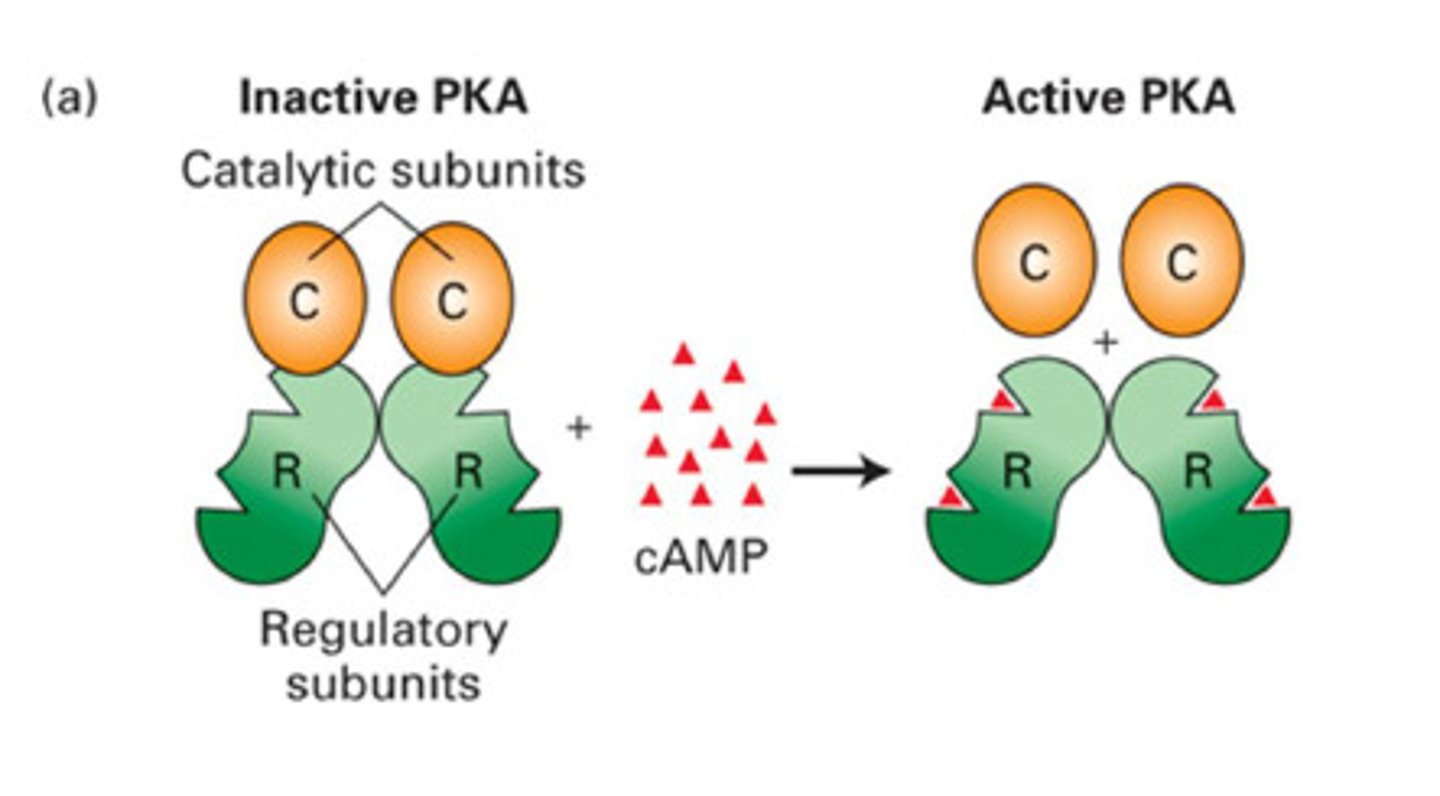
phosphorylation
The metabolic process of introducing a phosphate group into an organic molecule.
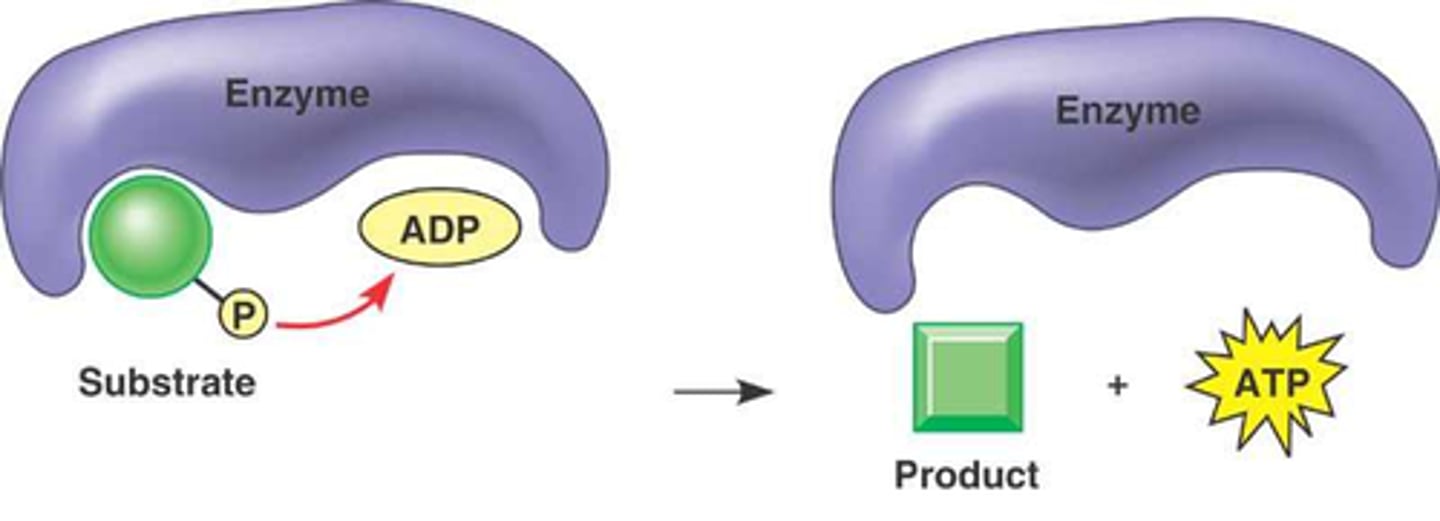
coupled reaction
a chemical reaction in which an exergonic reaction powers an endergonic reaction