Intro to Wetland Restoration
 Call Kai
 Learn
Learn Practice Test
 Spaced Repetition
 Match
Match Flashcards
 Knowt Play
1/11

There's no tags or description
Looks like no tags are added yet.
Name | Mastery | Learn | Test | Matching | Spaced | Call with Kai | Chat |
|---|
No analytics yet
Send a link to your students to track their progress
12 Terms
Evolution of the term Ecological Restoration
4 Hurdles of Wetland Restoration
- "one and done" mentality
- limited monitoring and documentation of outcomes
- failure to apply ecological principles
- poor communication
5 Areas to Advance in Wetland Restoration Outcomes
- Develop a wetland restoration database to allow synthesis and promote predictive capacity
- Apply key ecological principles to restoration planning
- Align practitioner and research incentives
- Apply proactive, thoughtful, & earnest consideration of human dimensions
- Integrate adaptation strategies to improve climate resilience
Develop a wetland restoration database to identify predictive patterns
- short-term (<10yrs) programs DO NOT monitor and collect enough data
- the is no global database (would allow synthesis across wetland types, promote predictive capacity and evidence-based management
- reports usually are in $ or # of projects instead of ecological or social outcomes
What is the relationship between a country's wealth and # of restoration projects?
the wealthier they are, the more restoration projects the do on average
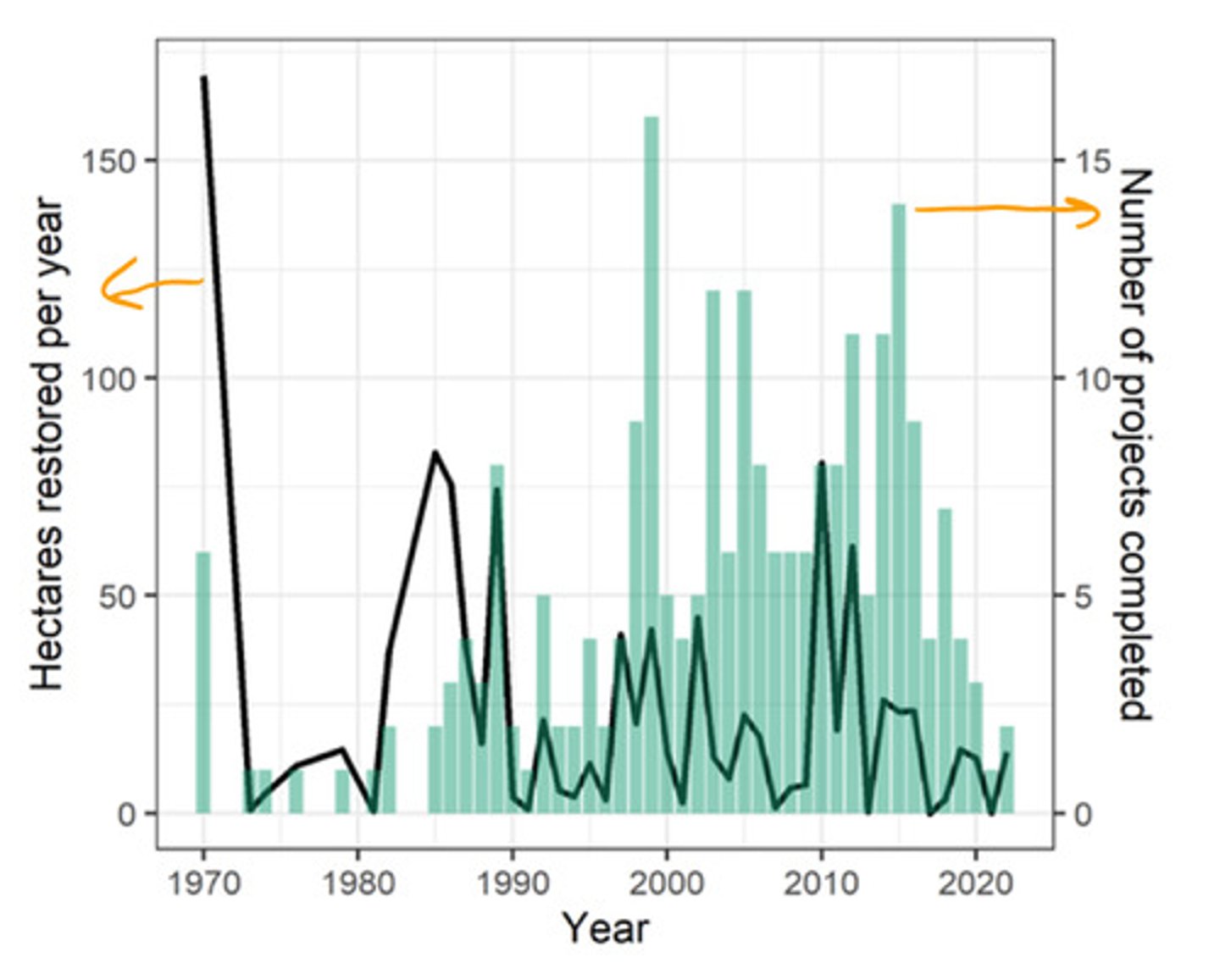
Why have tidal wetland restoration projects varied over time?
- limited availability of funding
- costs money to do projects
- costs money for the government to buy the land
Apply key ecological concepts to restoration planning
- ones that Zedler mentioned
- advancing the field for higher quality results
3 areas of Progress in Wetland Science Restoration
- importance of lanscape position and connectivity to reduce nutrient loading and promote diversity
- rewetting drained wetlands near soil surface minimizes CO2 equivalent emissions
- importance of genetic diversity
Align practitioner and research incentives
often have different ideals:
scientists = write papers
practitioners = need to implement intervention before science-based recommendations or appropriate restoration materials are available
Apply proactive, thoughtful, & earnest consideration of human dimensions
- 70% of projects don't consider human stakeholders
- indigenous led projects have been more successful than externally controlled ones
- including traditional knowledge is key
Integrate adaptation strategies to improve climate resiliency
- protecting existing peatlands is cheaper than restoring wetlands
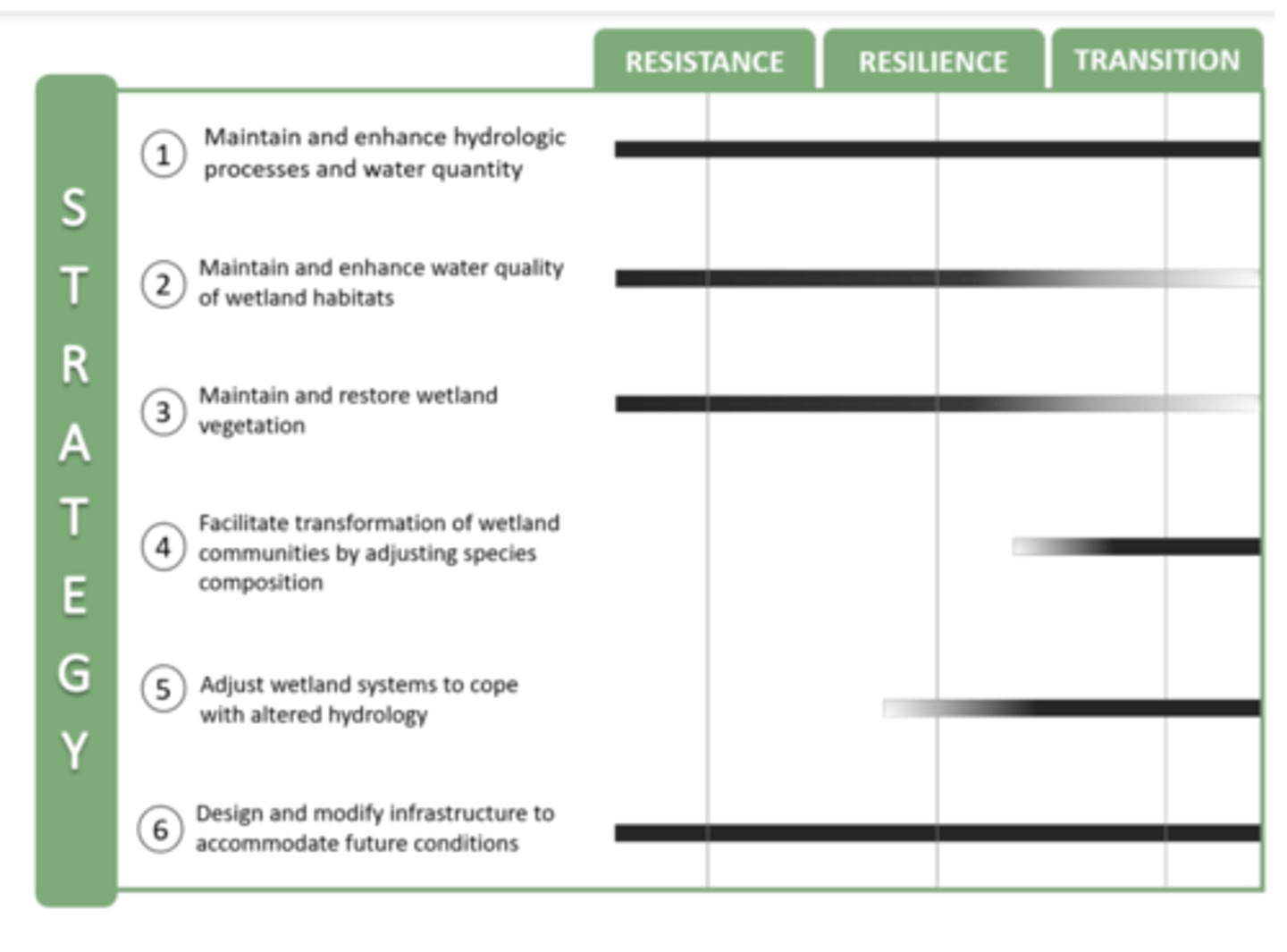
- 6 different strategies
6 Management Strategies
1. maintain and enhance hydrologic processes and water quantity
2. maintain and enhance water quality
3. maintain and restore wetland veg
4. facilitate transformation by adjusting species composition
5. adjust wetland systems to cope with altered hydrology
6. design and modify infrastructure for future conditions