L2- Counter Intuitive
 Note
Note Call Kai
 Learn
Learn Practice Test
 Spaced Repetition
 Match
Match Flashcards
 Knowt Play
1/39

There's no tags or description
Looks like no tags are added yet.
Name | Mastery | Learn | Test | Matching | Spaced | Call with Kai | Chat |
|---|
No analytics yet
Send a link to your students to track their progress
40 Terms
What are counter intuitive behaviours?
Looking at paradoxical behaviours in the context of Darwinian evolution
Counter intuitive behaviours explored in this lecture:
infanticide (meerkats)
self-sacrifice (worker honey bees)
sex change (anthias fish)
eating males during copulation (spiders)
female abuse during copulation (bean weevils)
Q→ why do humans eat so many sweets and soft drinks if they are so harmful?
looking at the proximate and ultimate reasons:
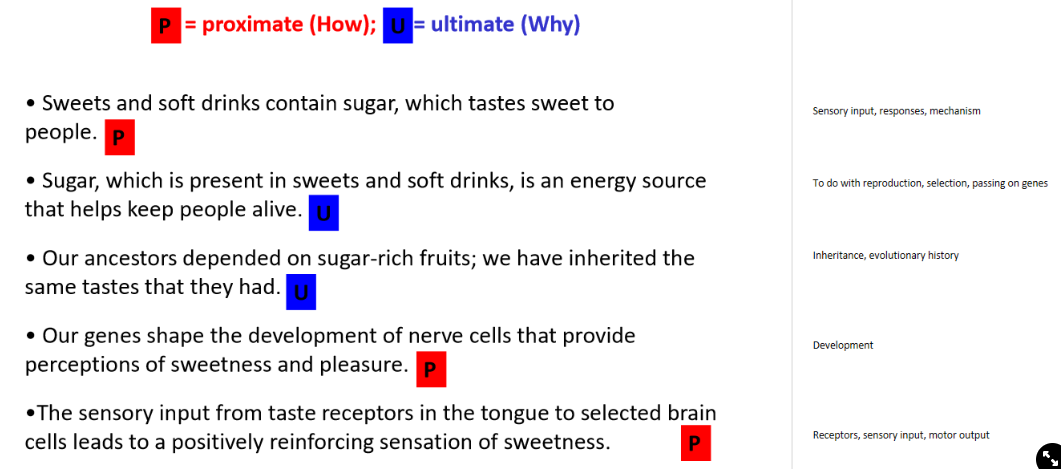
Evolutionary hypothesis for behaviours at two different levels:
Individual selection
Group selection
Evolutionary hypothesis for behaviours at two different levels, e.g.
e.g. Langur monkeys infanctide:
live in social groups, 1 male, multiple females
male is challenged, displaced and then all the infants are found dead
new male is the main suspect, if caught the females will attack him
Q→ why do male langurs kill the offspring? (hypotheses)
3 hypotheses:
Non-adaptive→ social overcrowding
Favoured by natural selection at the individual level→ females become pregnant sooner, more offspring before being overthrown
Favoured by natural selection at the group level→ reduces overcrowding and overexploiting of resources
Q→ why do male langurs kill the offspring? (evidence)
is unlikely as this only happens after a takeover and not more in large groups
most likely true
group selection can theoretically occur but the circumstances that favour group selection are usually very rare
When can group selection occur?
individuals have certain behaviours that are adaptations that assist the survival of the group
e.g. buffalos reduce their reproductive rate when the group is too populated, reduces the number of individuals, avoids overexploitation
groups with individuals that have the self-restraining gene survive better than group with individuals that have only the selfish gene
however, individual selection is usually stronger than group selection
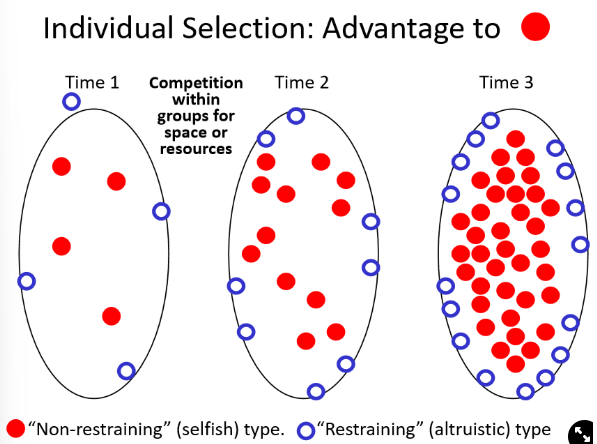
Individual selection:
red individuals→ non-restraining, selfish, reproduce as fast as possible
blue individuals→ restraining, altruistic, defend, reproduce slower
→ individual selection favours red individuals, red outnumbers the blue, red pass on the selfish gene, spreads through the population
Group selection:
two different groups compete for space/resources
→ the group with more blue individuals has the advantage as they have more defenders
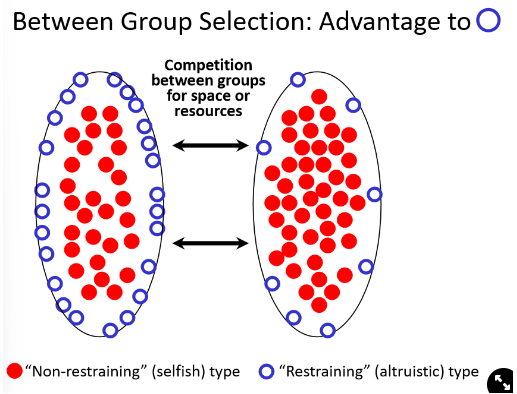
Individual selection vs Group selection:
within group level favours red (individual selection)
between group level favours blue (group selection)
group selection is only favoured when:
groups are long lived compared to indivduals
inter-group competition is important
Q→ why do male langurs kill the offspring? (conclusions)
→ langars have selection at an individual level (hypothesis 2 is correct)
Other examples of infanticide:
lions, langars→ males compete for females, males commit infanticide
giant waterbugs, jacana birds→ females compete for males, females commit infanticide
meerkats
meerkats infanticide:
live in social groups, 1 dominant female, subordinate females
the dominant and some subordinate females breed
pregnant females carry out the infanticide
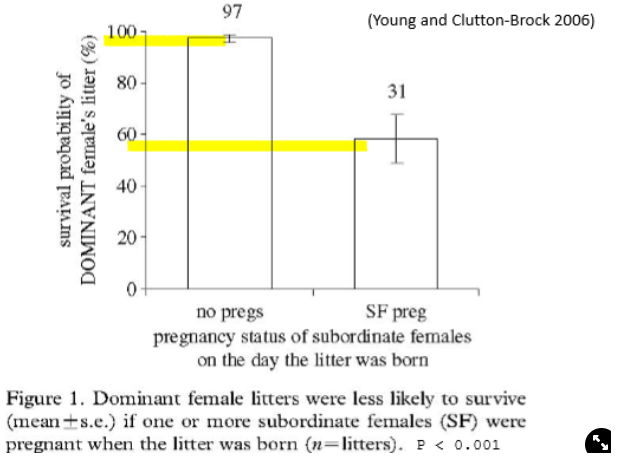
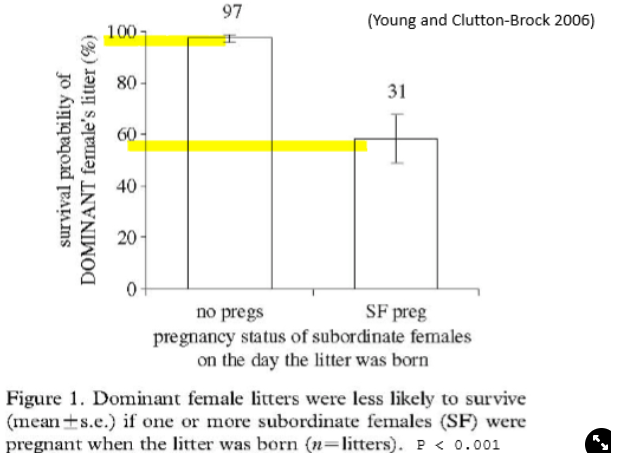
dominant offspring:
when no others are pregnant, there is nearly 100% survival of dominant offspring
when others are pregnant, ~55% survive
→ survival of dominant females litter is significantly lower if others are pregnant in the group
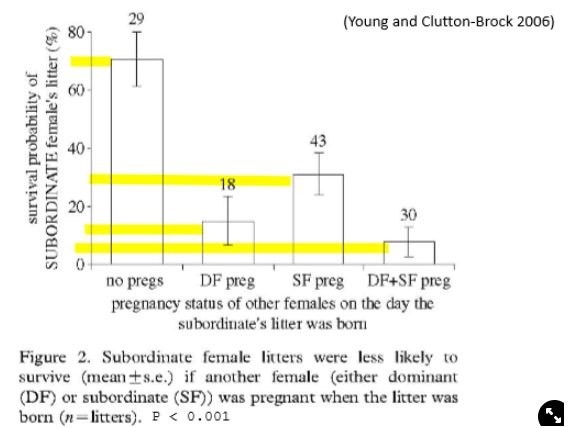
subordinate offspring:
when no others are pregnant, there is ~70% survival rate
when dominant is pregnant, there is ~15% survival rate
when other subordinates are pregnant, ~30% survival rate
when both dominant and subordinate are pregnant, ~10% survival rate
→ survival of subordinate females litter is significantly lower if others are pregnant in the group
Why do meerkats carry out infanticide?
infanticide is adaptive
pregnant females kill other offspring so they cannot compete with their unborn offspring for resources
increases the fitness by increasing the eventual quality of offspring
Alternatives to infanticide in meerkats:
dominance can suppress subordinate females from breeding in the first place
has costs and benefits
Self-sacrifice in Worker Honey Bees:
when a bee stings another animal, she leaves the sting and part of her abdomen behind too (autotomy), then dies
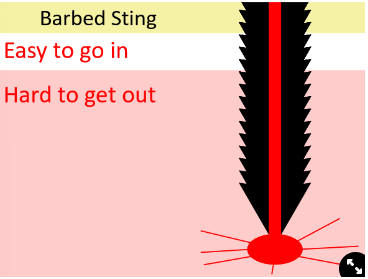
The bee sting has complex adaptive behaviours when not attached to bee:
is easy to go in
is hard to get out
has 3 barbed stings that pump venom into the intruder
has an alarm pheromone that guides other worker bees to the intruder and makes them more prone to sting the intruder→ this drives the intruder away from the nest
Q→ why do honey bees sacrifice themselves?
worker bees carry out reproductive altruism→ do not reproduce, rear close relatives, genes are passed on indirectly through kin selection
→ by sacrificing themselves, they save their reproductive investments instead and pass on genes by protecting kin
Sex change in Anthias Fish:
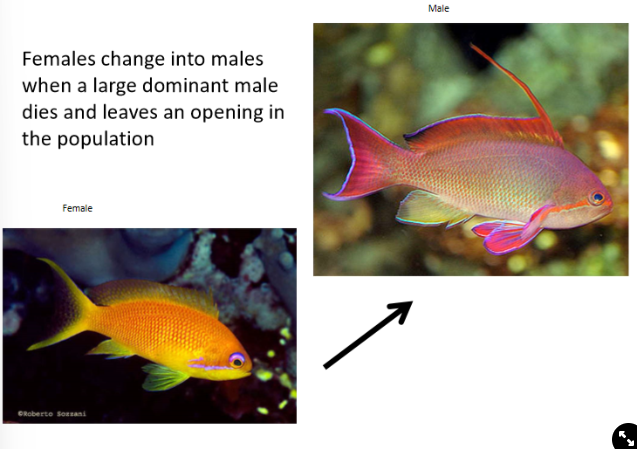
when a large dominant male dies, this leaves an opening in the population
a female grows a whole new set of gonads and changes into a male
Q→ why do female anthias fish change into males?
increases individual fitness
is more beneficial for them to be a dominant male to mate with lots of females
Spiders:
can detect smallest movements of prey
prey are a similar size to male spiders
female may deliberately or accidentally eat the males
male spiders have many strategies to not be eaten by female spiders
Strategies to not be eaten by female spiders:
Garden spider→ finds a female, waits for her to mature, plucks strands of the web as he approaches her, does not always work
Crab spider→ male grabs female, waits until she stops struggling, ties her up, moves underneath her, copulates, leaves her to get out
Nuptial gift→ food offerings of insects wrapped in silk, female is distracted with eating whilst the male copulates
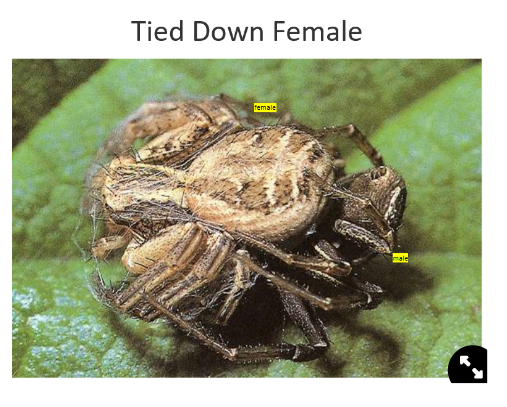
Spiders used in this study:
Latrodectus mactans→ North American black widow, female eats male after copulation
Latrodectus hasselti→ Australian redback, sister species, male is deliberately eaten whilst copulating
→ Latro- latin for servant/robber, Dektres- greek for biter
Redback spiders (studied by Maydiane Andrade):
the female is much larger than the male (f- 450mg, m- 5mg)
the female lives longer than the male (f- 2 years, m- 2-4 months)
males mature at a younger age than females
females recopulate with many males
Redback spider copulation:
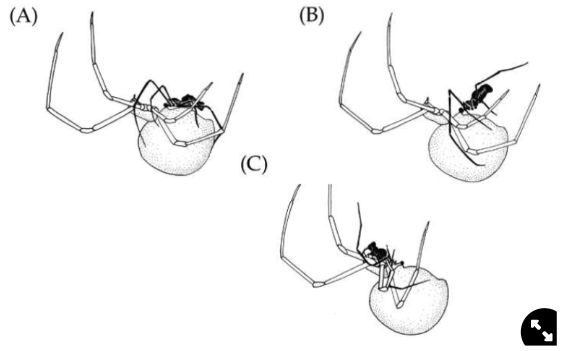
male aligns himself facing forward on her abdomen
male inserts sperm transferring organ into her reproductive tract
male elevates himself on his hindlegs, summersaults backwards into her jaw
female eat male whilst the sperm transfer is taking place
Q→ what is the fitness benefit of being eaten by the female?
female eating male does not increase egg production
benefit depends on if male is the first or second to copulate
First male spider to copulate:
if first male is eaten, 67% females reject a second male
if first male is not eaten, 4% females reject a second male
→ female is highly significantly less likely to remate if she eats the first male, increases males chance of paternity
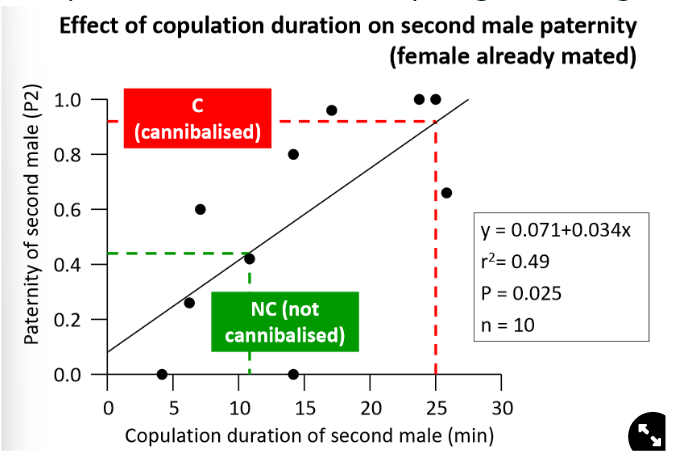
Second male spider to copulate:
males that are cannibalised copulate for longer
→ the longer the second male copulates, the more offspring he will gain
Spiders conclusion:
→ both the first and second males are eaten to increase their paternity, males are unlikely to find a second female in their short lifetime
Bean Weevil Copulation (Callosobruchus maculatus):
male penis tip is covered in spines that penetrate the lining of the female reproductive tract
male physically abuses the female so they do not copulate again
Findings of bean weevil study→ genital damage to females:
females that have mated with one male have significantly more damage to their reproductive tract than virgins

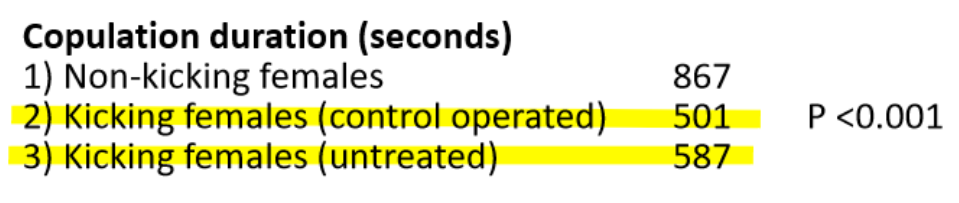
Findings of bean weevil study→ copulation duration:
females use back legs to kick males towards end of copulation
when the back/front legs of females are removed, females are significantly less likely to dislodge males
Findings of bean weevil study→ genital damage to females that can kick vs females that cannot kick:
females that kick have significantly less tract damage

Findings of bean weevil study→ female fecundity:
there is no difference in number of eggs laid in females that had one vs two damaging matings

Findings of bean weevil study→ female lifespan:
females that mates once live significantly longer than females who mates twice

Conclusions of bean weevil study:
damage to the reproductive tract discourages remating
kicking reduces the amount of time spent copulating
kicking reduces the amount of damage caused
the damage does not affect fecundity
damage does reduce lifespan though
→ males are currently winning this battle of the sexes (no fitness cost to them but significant fitness cost to females that die earlier) but it could switch in favour of the females in the future though (leads to a dynamic flux)
dynamic flux system→
females always trying to overcome the males, males always trying to overcome the females