Immune System II – Adaptive Immunity, Antibodies, T Cells & Disease
 Studied by 0 people
 Call Kai
 Learn
Learn Practice Test
 Spaced Repetition
 Match
Match Flashcards
 Knowt Play
1/41

There's no tags or description
Looks like no tags are added yet.
Name | Mastery | Learn | Test | Matching | Spaced |
|---|
No study sessions yet.
42 Terms
What is unique about MHC proteins?
No two individuals (except identical siblings) have the same combination of MHC proteins on their body cells.
What are the major stages of the antibody-mediated immune response?
Engulfment of Bacterium -> Degradation of Bacterium and Release of Antigens -> Presentation of Antigens on Dendritic Cell Surface -> Interaction of Antigen-Presenting Cell with Lymphocyte -> Activation of T Cell, Production of Helper T Cells -> Presentation of Antigens on B Cell Surface -> Interaction of B Cell with Helper T Cell -> Activation of B Cell -> Production of Plasma Cells and Memory B Cells
Diagram 15a: Antibody-mediated immune response
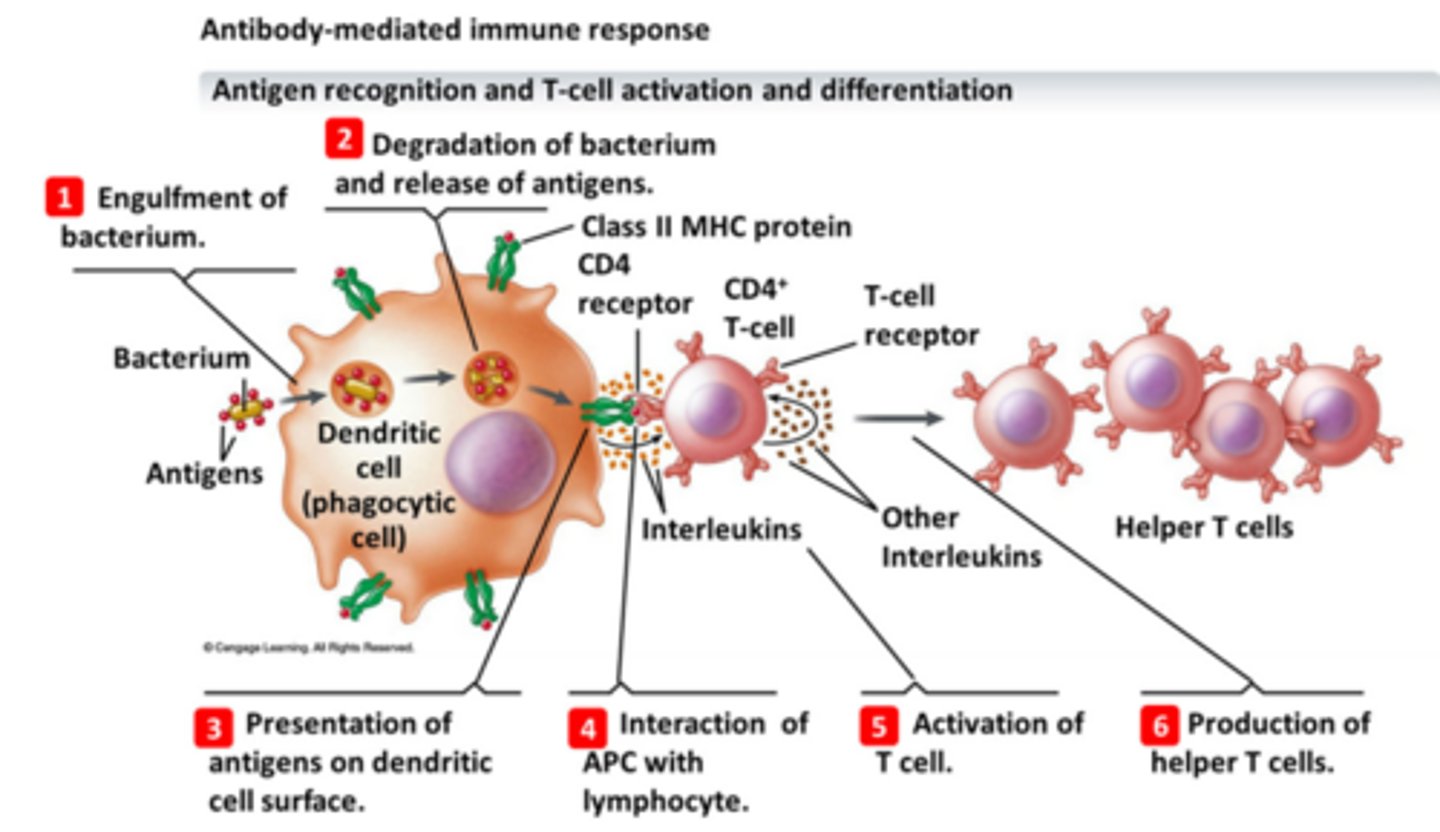
Diagram 15b: B-cell activation by helper T cells and differentiation of B cells into antibody producing cells
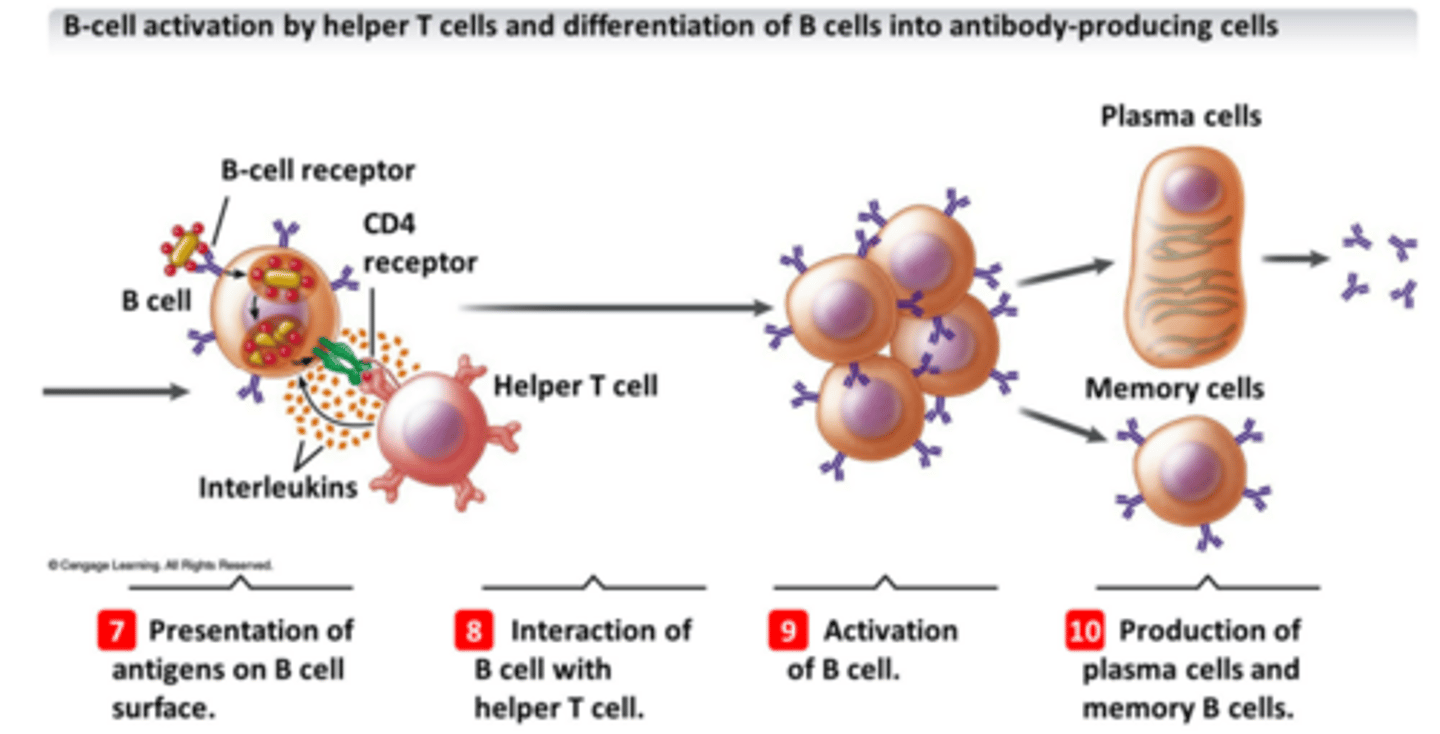
Diagram 16: B-cell activation without T cells

What is T cell-independent B cell activation?
Activation of a B cell by a polysaccharide antigen with repeating epitopes, without involvement of T cells.
What type of antigen activates B cells in a T cell-independent response?
Polysaccharide antigens with repeating epitopes on pathogenic bacterial cells.
What antibody is secreted during T cell-independent B cell activation?
Pentameric IgM.
When was the concept of clonal selection proposed?
In the 1950s by several scientists, most notably F. Macfarlane Burnet
What is clonal selection?
The process by which a specific lymphocyte is selected for cloning when it recognizes a particular foreign antigen.
Why is clonal selection necessary for adaptive immunity?
Because the body contains an enormous diversity of lymphocytes, each with a receptor that may recognize a specific antigen.
What are antibodies?
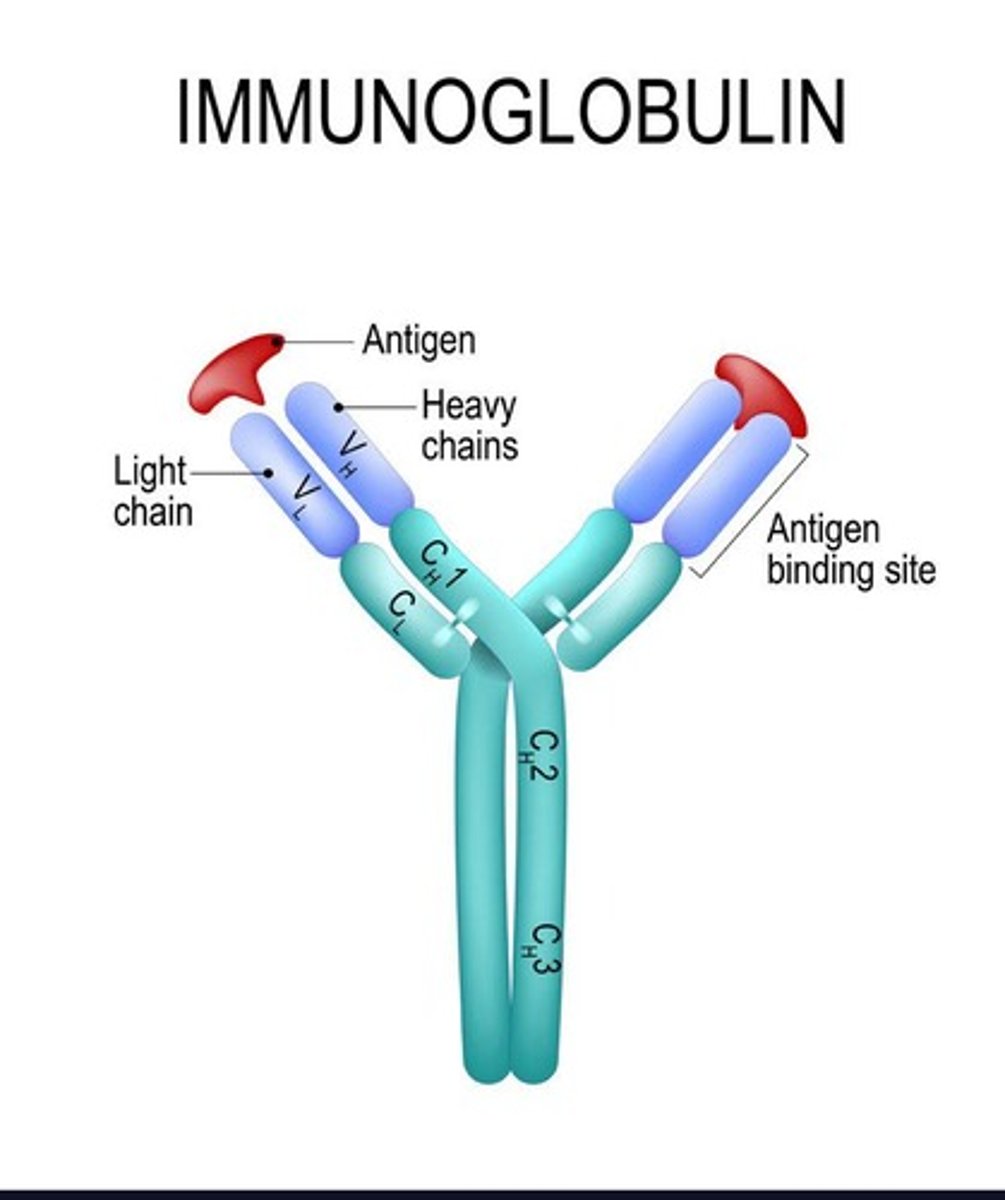
Large, complex proteins called immunoglobulins (Ig).
What happens when an activated B cell differentiates into a plasma cell?
It secretes antibodies identical to its B-cell receptor.
What is the basic structure of an antibody molecule?
Four polypeptide chains: two identical light chains and two identical heavy chains.
What distinguishes the variable region of antibodies?
The variable region has a different amino acid sequence for each antibody molecule, creating unique antigen-binding sites.
What determines the antigen-binding specificity of an antibody?
Differences in the amino acid sequences of the variable regions of the heavy and light chains.
What determines the class of an antibody?
The constant region of the heavy chains.
How is antibody diversity generated?
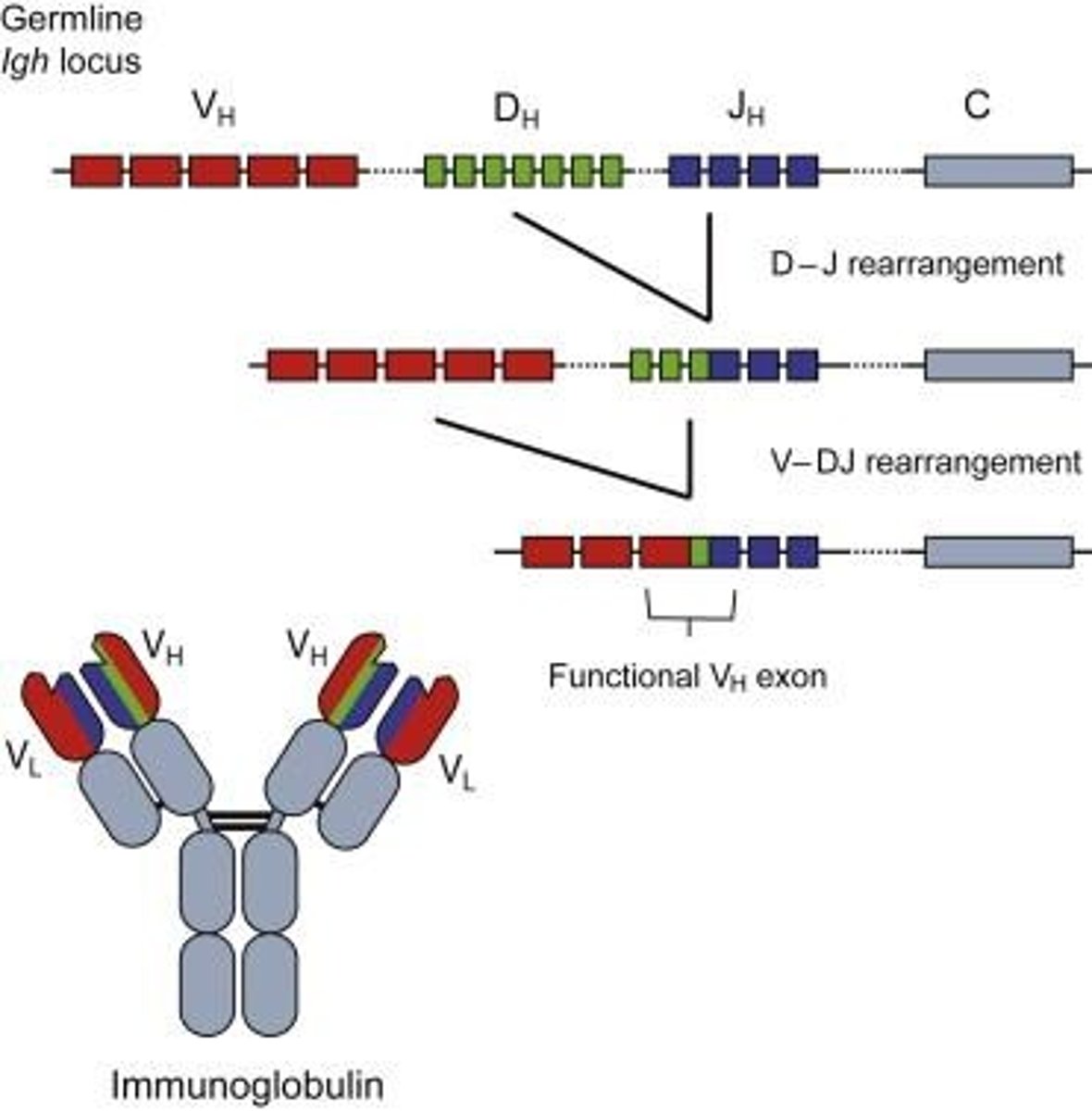
By rearrangements of DNA segments that encode parts of the light and heavy chains during B-cell differentiation.
How do light-chain and heavy-chain genes differ in antibody diversity?
Light-chain genes have one constant region, while heavy-chain genes have multiple constant region types.
How many classes of antibodies do humans have, and what determines the class?
Five classes; the antibody class is determined by the constant region of the heavy chain.
List the classes of antibodies for humans?
IgM, IgG, IgA, IgE, and IgD.
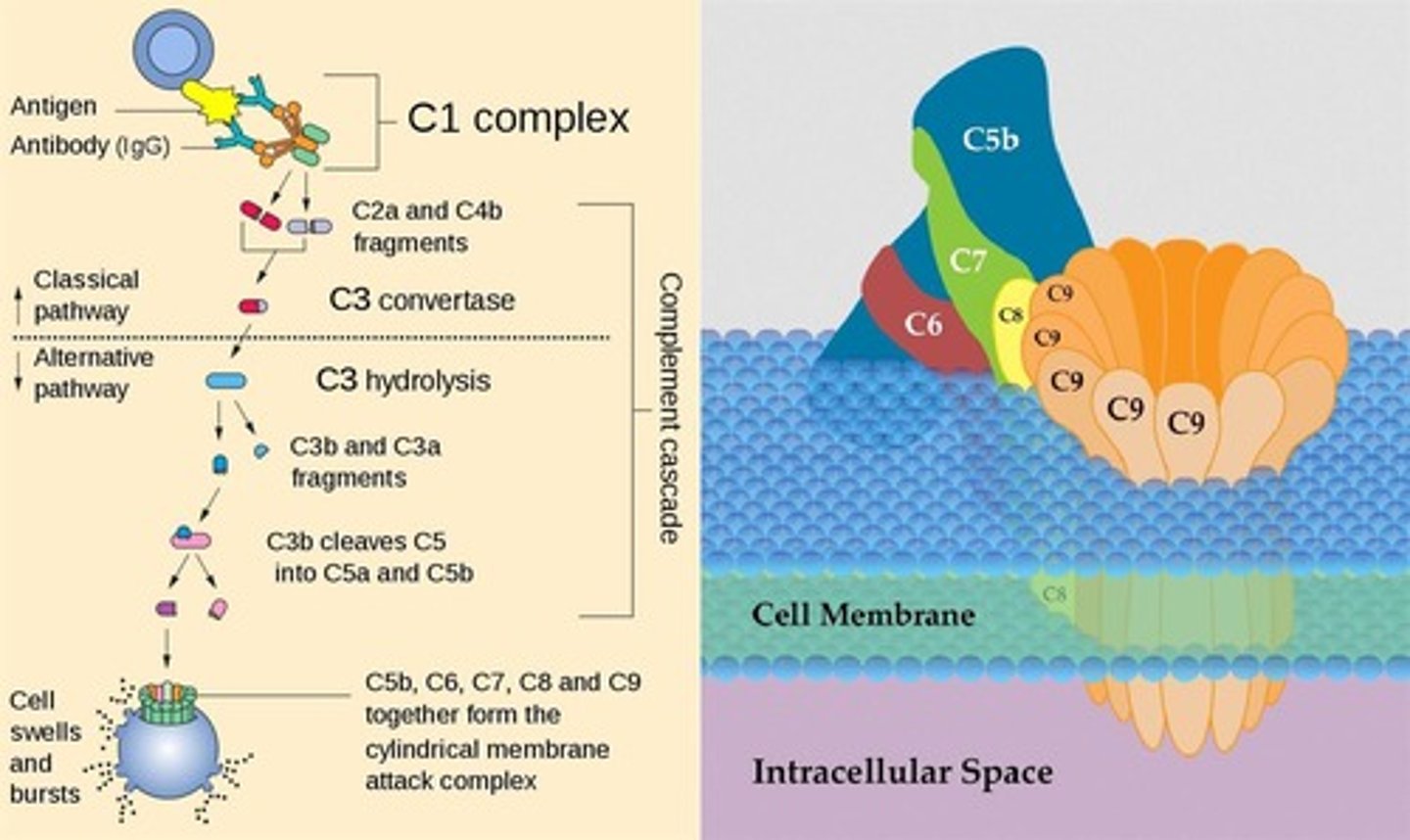
How do antibodies aid the complement system?
Antibodies bound to antigens stimulate the complement system, leading to membrane attack complex formation and lysis.
How do antibodies enhance phagocytosis?
Phagocytic cells recognize antibodies bound to pathogens and engulf and destroy them.
What is the basis of vaccination?
Immunological memory, produced by introducing antigens that trigger an adaptive immune response.
Why does a secondary immune response occur rapidly after vaccination?
Memory B cells and memory T cells remain in the body after the primary immune response.
What is active immunity?
The production of antibodies in response to exposure to a foreign antigen, resulting in immunological memory.
What is passive immunity?
The acquisition of antibodies from another person, such as through the placenta or breast milk.
How does passive immunity differ from active immunity?
Passive immunity is short-lived and produces no immunological memory.
What triggers a secondary immune response?
The re-exposure to the same foreign antigen, leading to a more rapid and robust antibody production.
What is the role of cytotoxic T cells?
They directly destroy host cells infected by pathogens, particularly viruses.
What is the process of antigen presentation?
Antigen fragments are displayed on the surface of infected cells by class I MHC proteins, allowing T cells to recognize them.
What is the function of perforins released by cytotoxic T cells?
They create pores in the membranes of infected cells, leading to cell rupture and death.
What is autoimmune disease?
A condition where the immune system mistakenly attacks the body's own proteins or cells.
What are allergens?
Substances that induce allergic reactions by causing B cells to secrete an overabundance of IgE antibodies.
What is anaphylactic shock?
A severe allergic reaction that constricts airways and drops blood pressure, potentially life-threatening.
How do some pathogens evade the immune system?
By changing surface proteins or entering a latent state, making them difficult to detect.
What is the significance of immunological tolerance?
It protects the body's own molecules from being attacked by the immune system.
What are the consequences of failure of immunological tolerance?
It can lead to autoimmune reactions, where antibodies are produced against normal molecules.
What are the five classes of antibodies?
IgM, IgG, IgA, IgE, and IgD.
What is the role of helper T cells in activating cytotoxic T cells?
They secrete cytokines that provide the second signal required for T cell activation.
What is the role of memory B cells?
They remain in the body after the primary immune response and facilitate a faster secondary response.
What is the function of antibodies in research?
They can be used to identify biological molecules and determine their locations and functions in cells.