Biological Bases of Behavior
 Studied by 0 people
 Call Kai
 Learn
Learn Practice Test
 Spaced Repetition
 Match
Match Flashcards
 Knowt Play
1/75

There's no tags or description
Looks like no tags are added yet.
Name | Mastery | Learn | Test | Matching | Spaced | Call with Kai |
|---|
No study sessions yet.
76 Terms
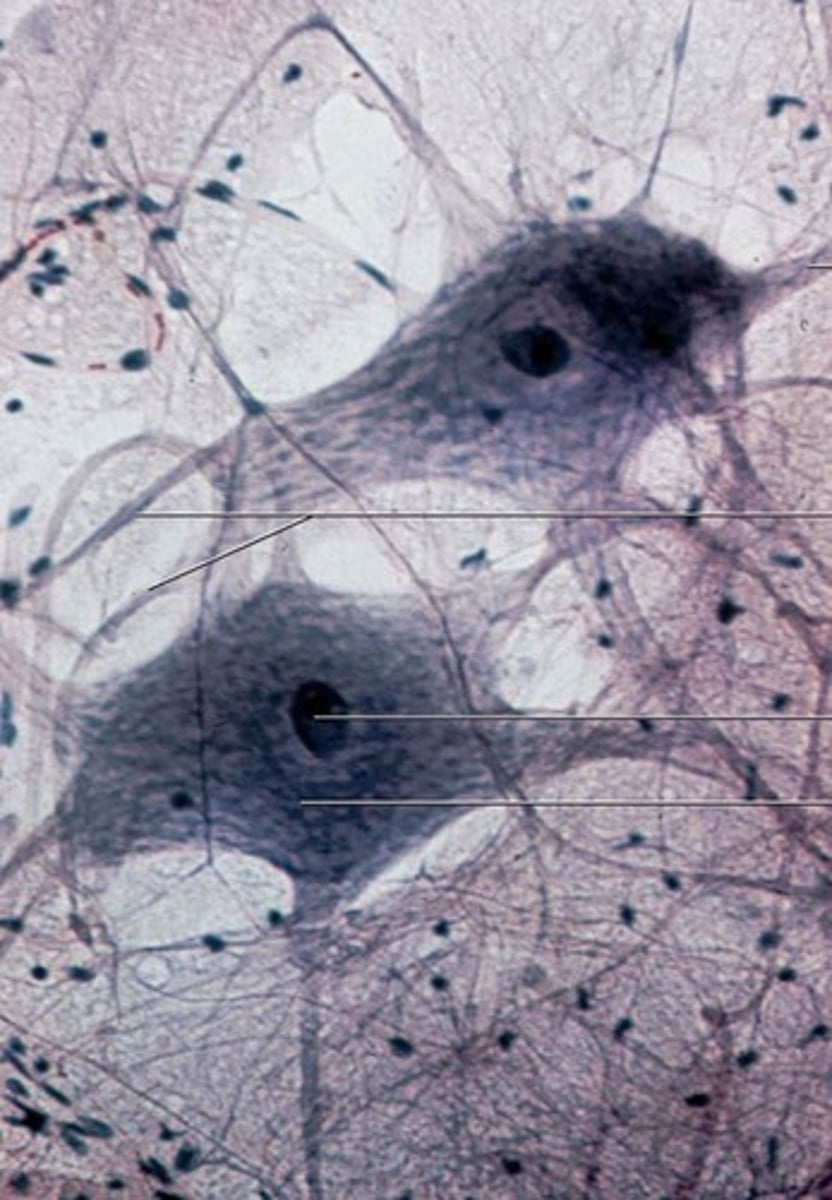
Neuron
Nerve cell specialized for communication
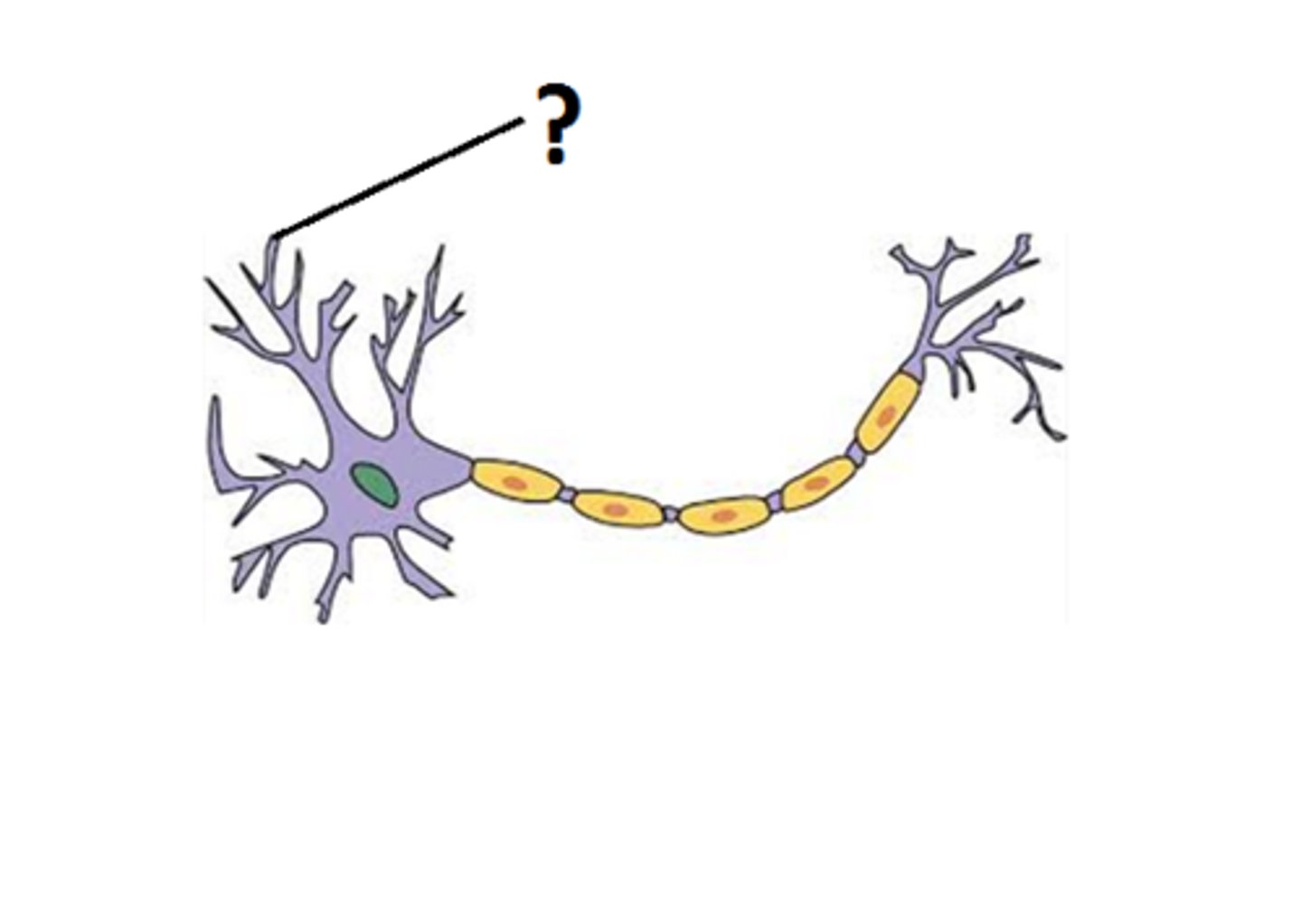
Dendrite
Branchlike parts of a neuron that are specialized to receive information.
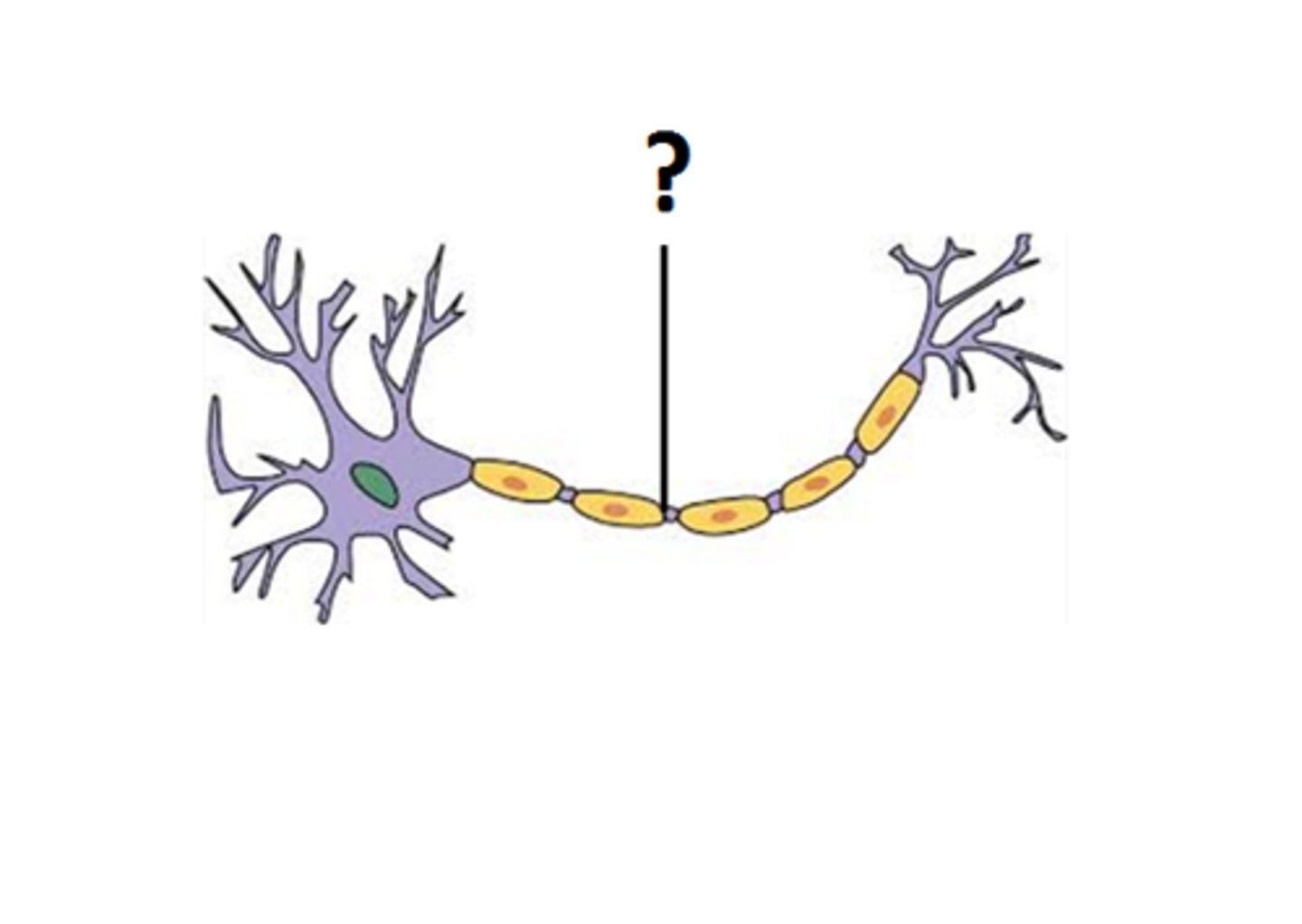
Axon
A threadlike extension of a neuron that carries nerve impulses away from the cell body.
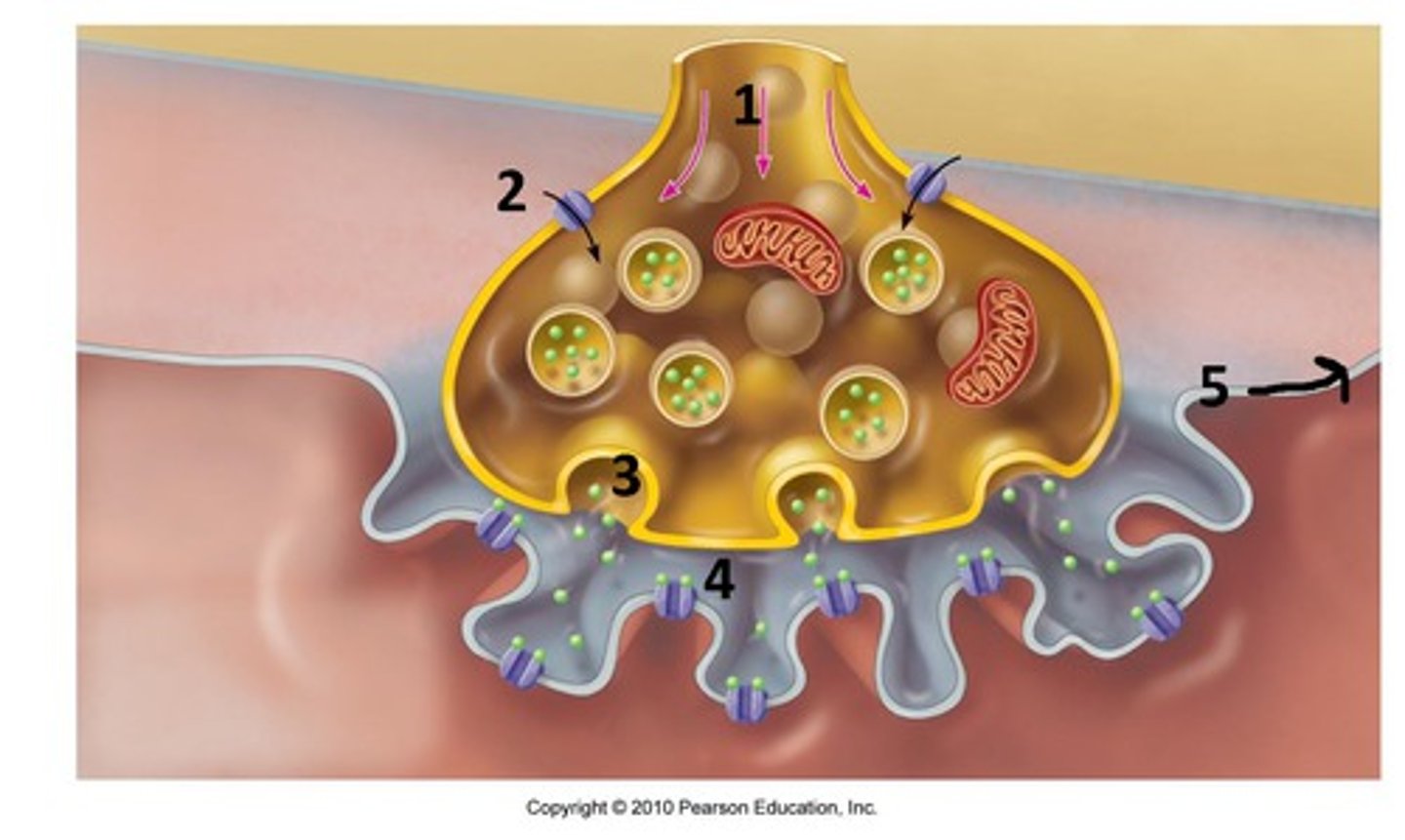
Synapse
gaps between neurons
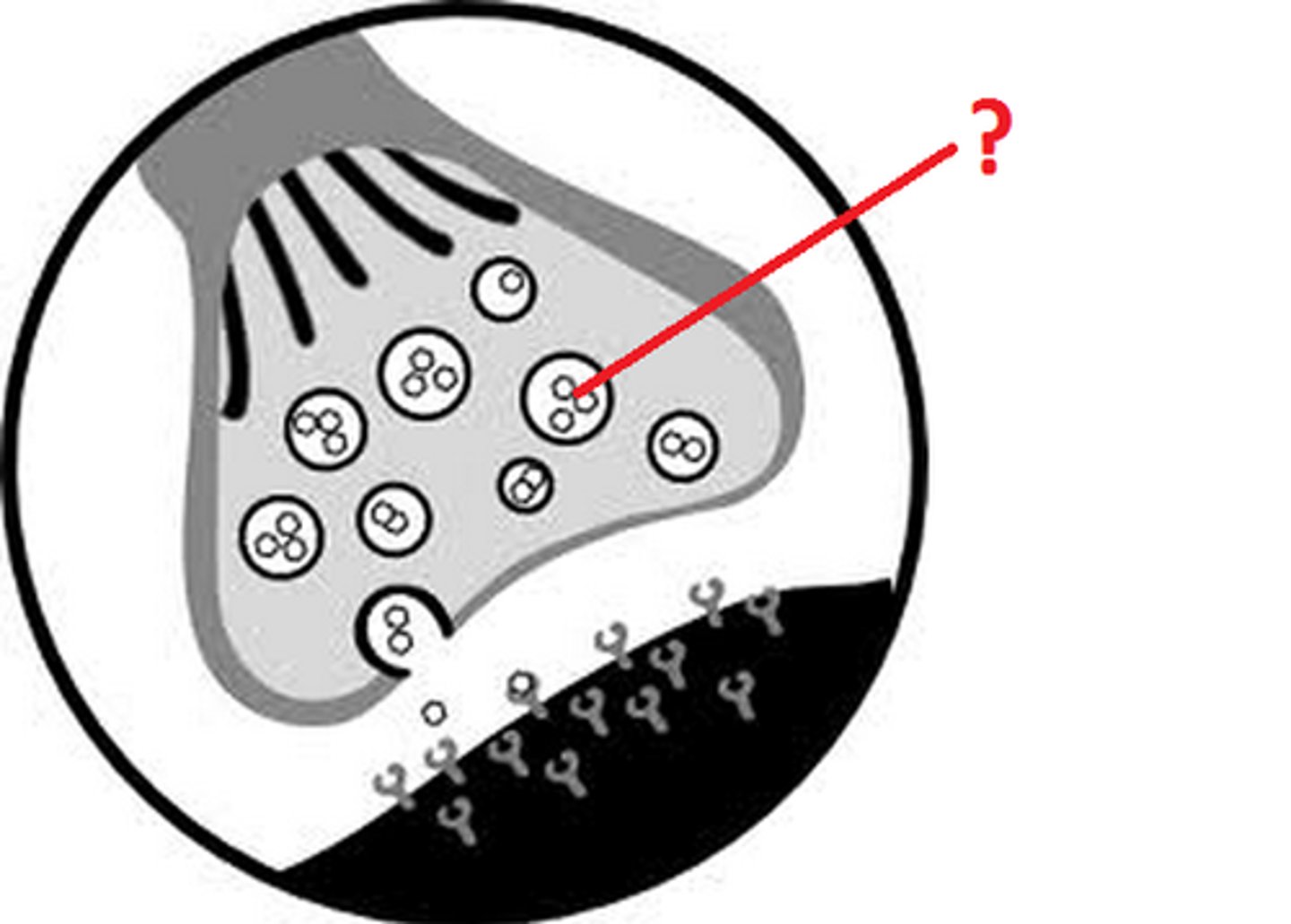
Neurotransmitter
Chemical messenger specialized for communication from neuron to neuron
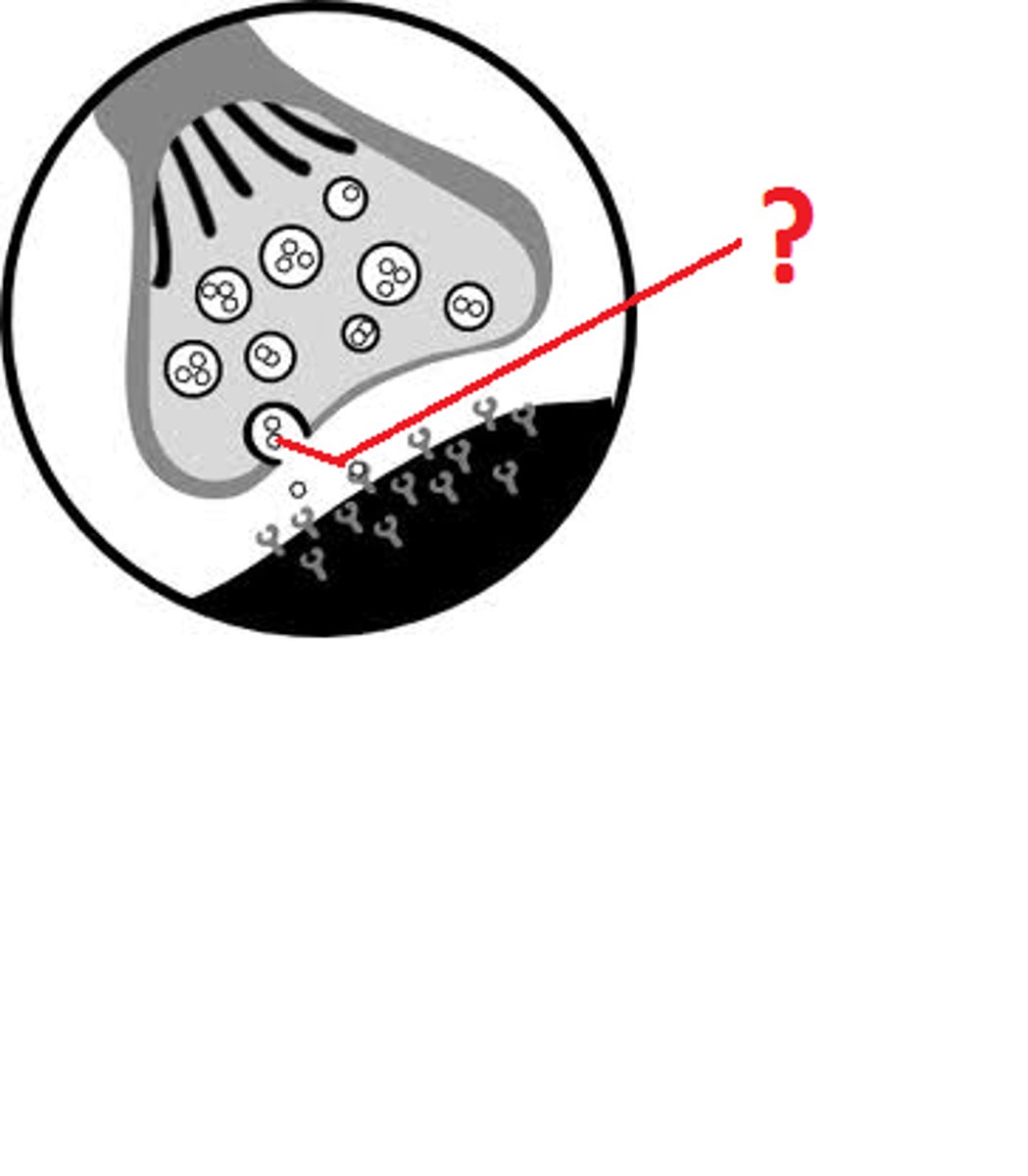
Synapse
Space between two connecting neurons through which messages are transmitted chemically
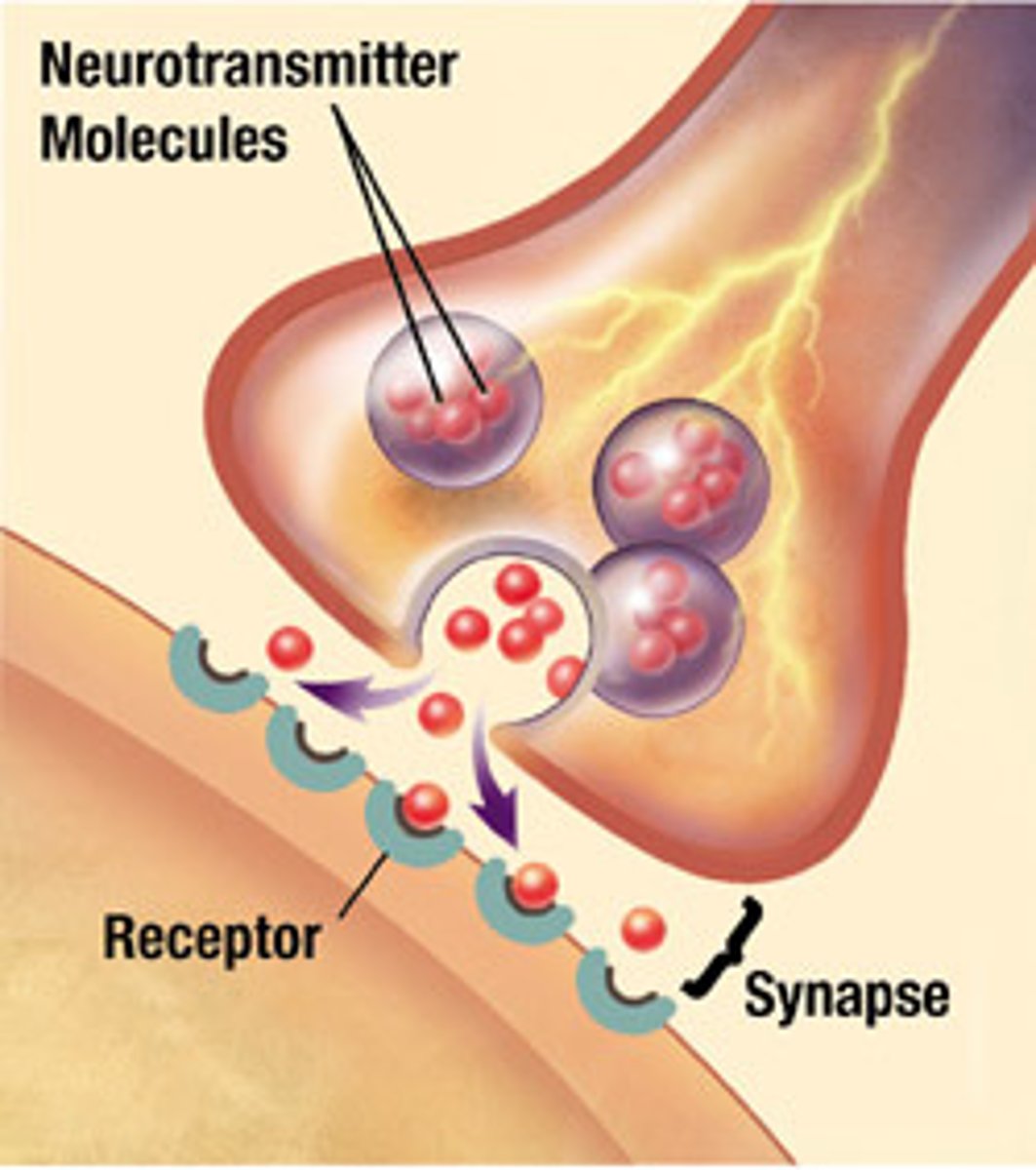
Synaptic cleft
A gap into which neurotransmitters are released from the axon terminal
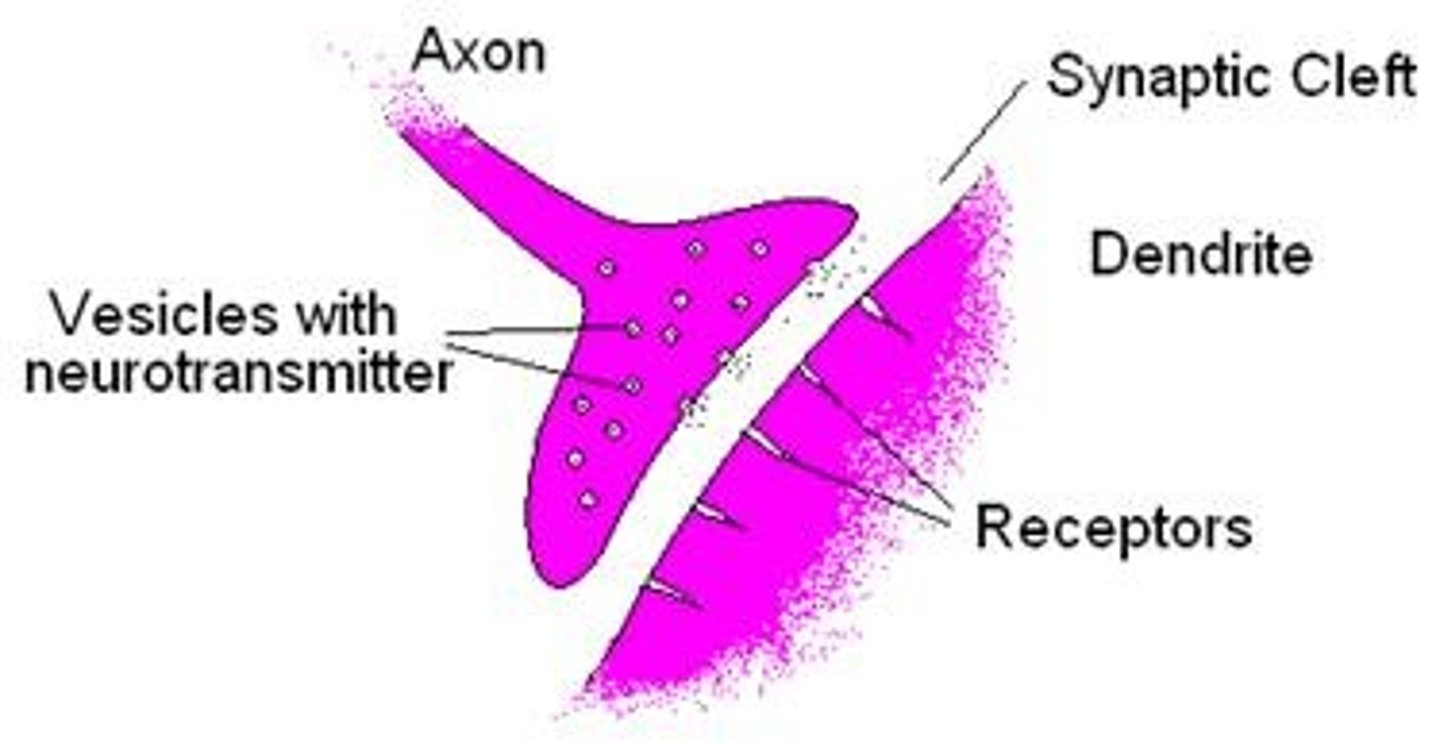
Glial cell
Cell in nervous system that plays a role in the formation of myelin and the blood-brain barrier, responds to injury, removes debris, and enhances learning and memory
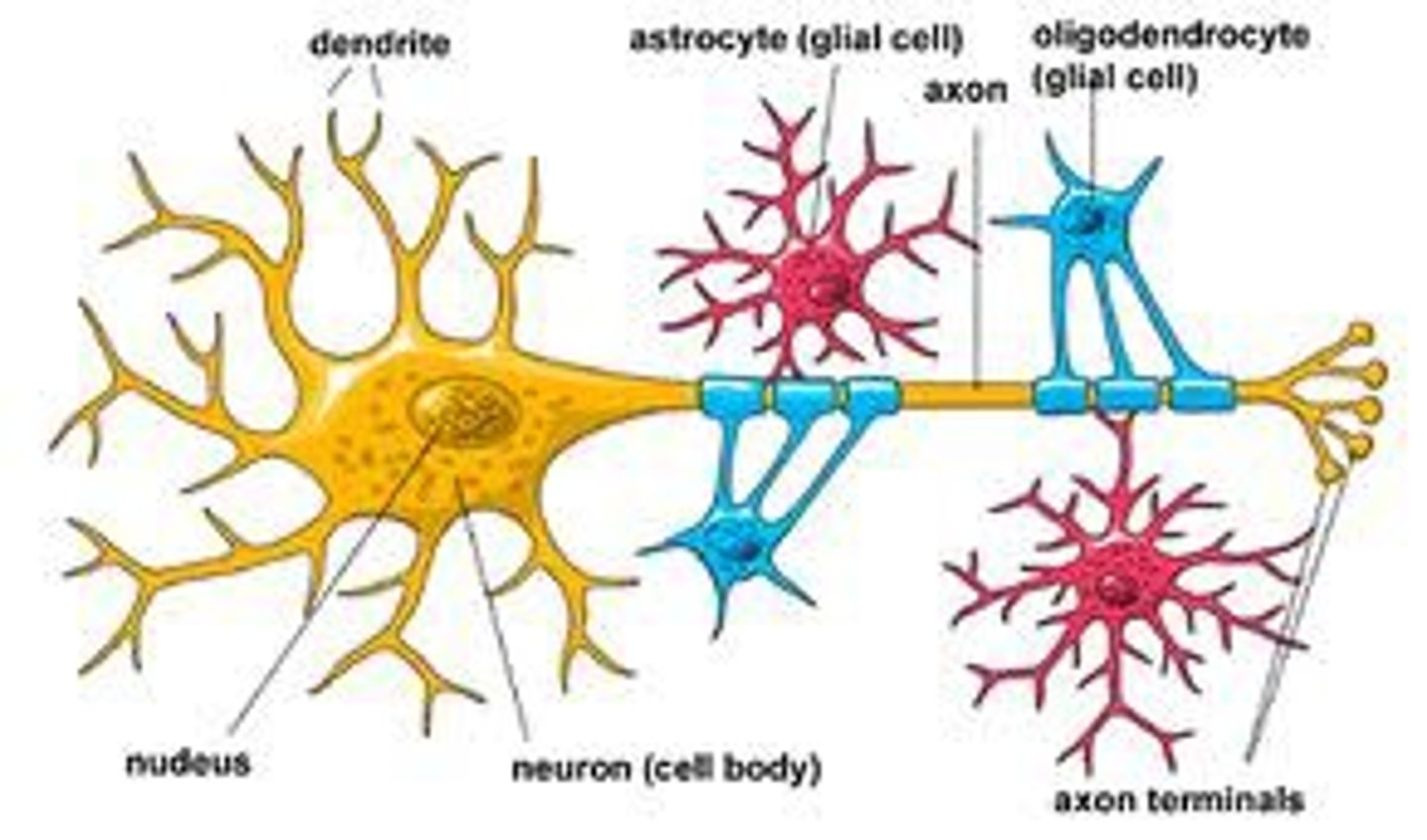
Threshold
Membrane potential necessary to trigger an action potential.
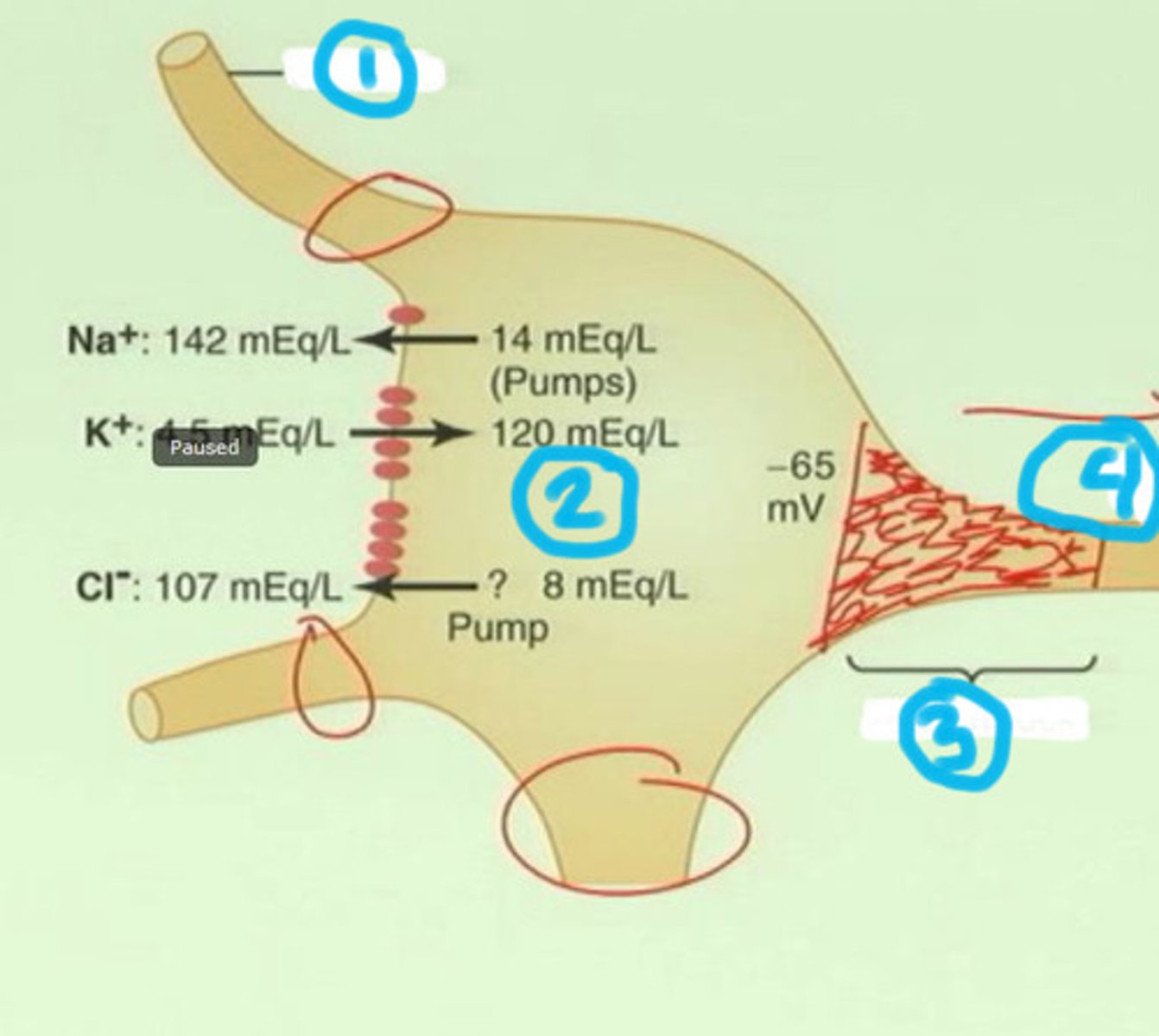
Action potential
A neural impulse; a brief electrical charge that travels down an axon.
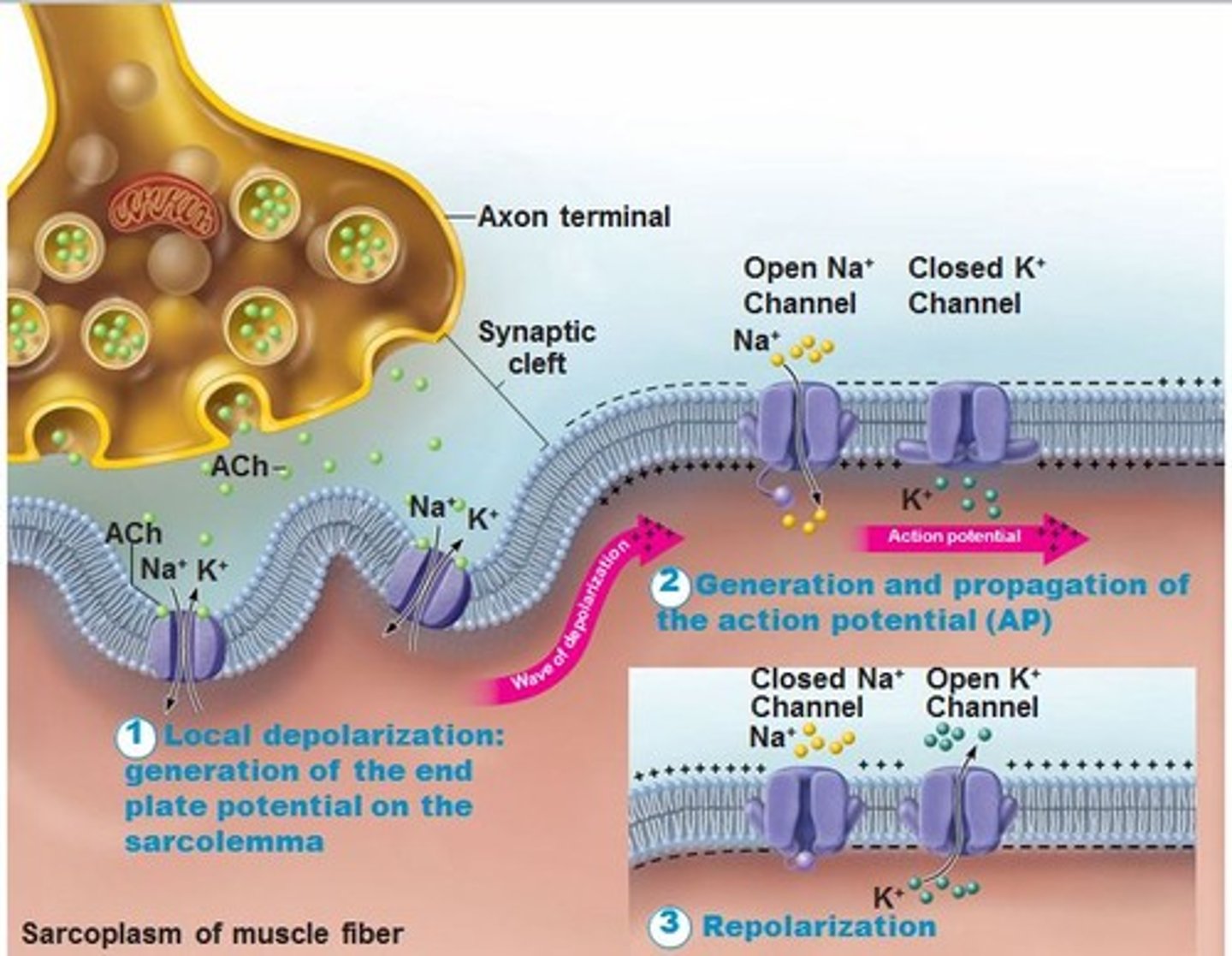
Absolute refractory period
Cardiac cells have not completely repolarized
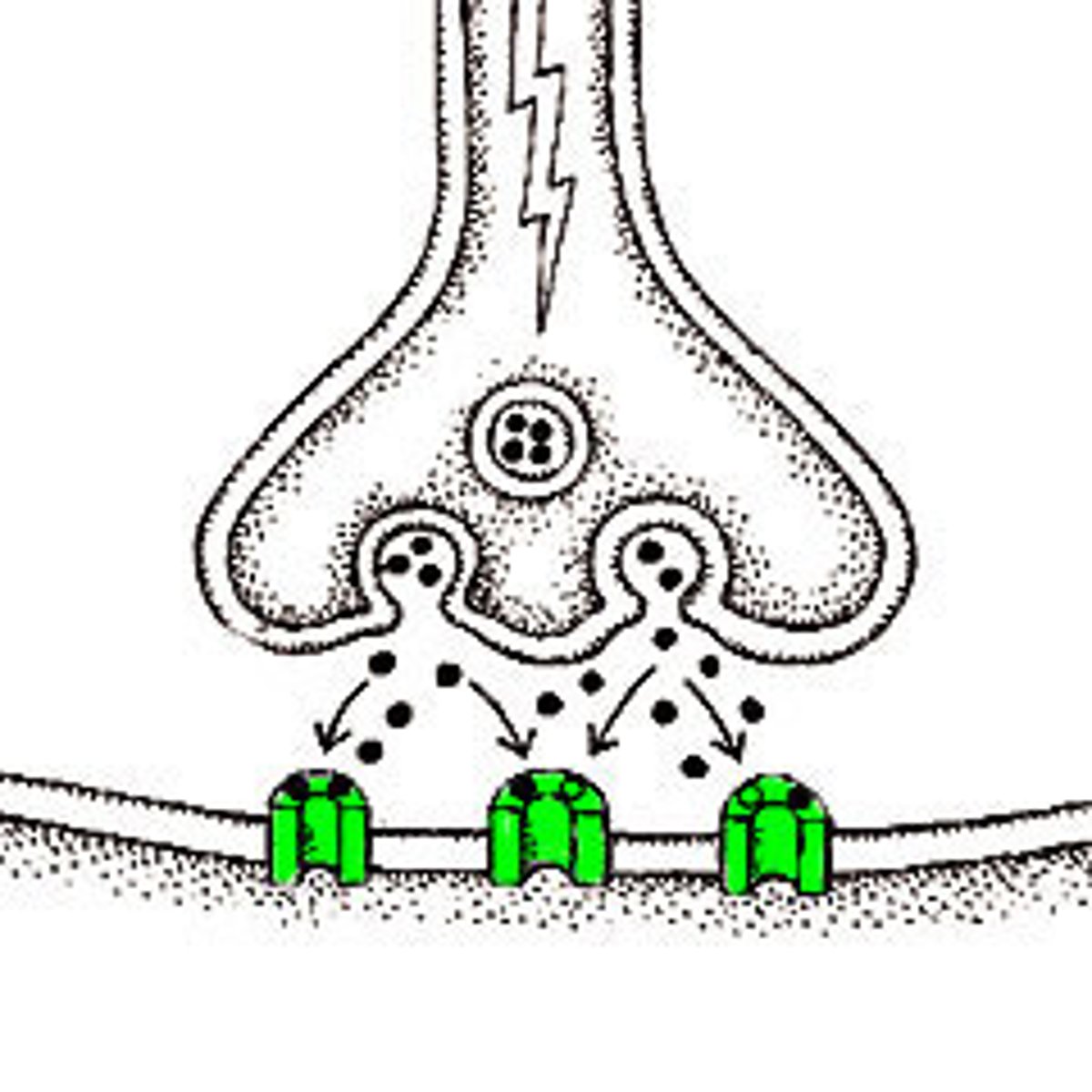
Receptor site
Locations on a receptor neuron into which a specific neurotransmitter fits like a key into a lock.
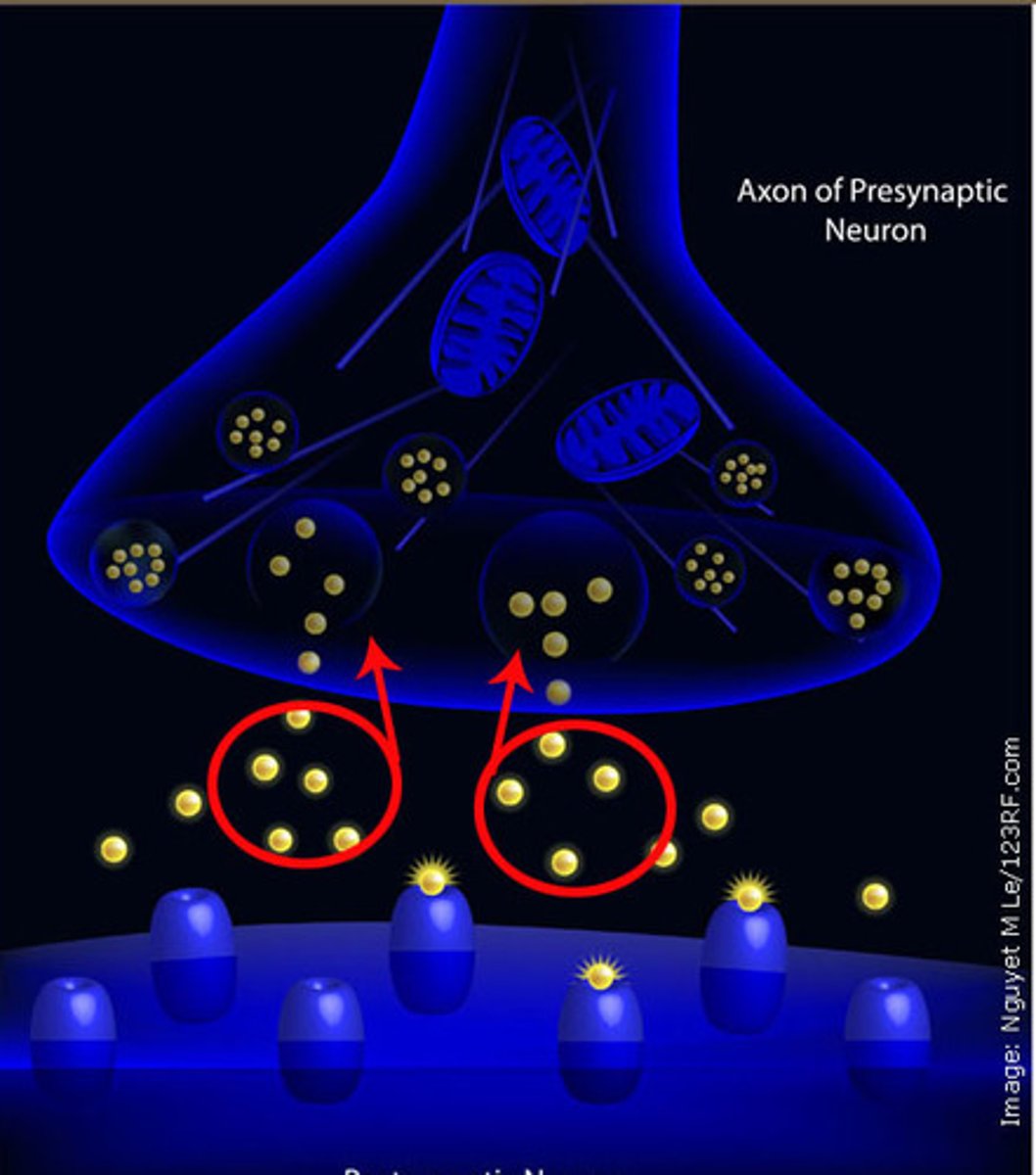
Reuptake
A neurotransmitter's reabsorption by the sending neuron
Endorphin
"Morphine within" - natural, opiate-like neurotransmitters linked to pain control and to pleasure.
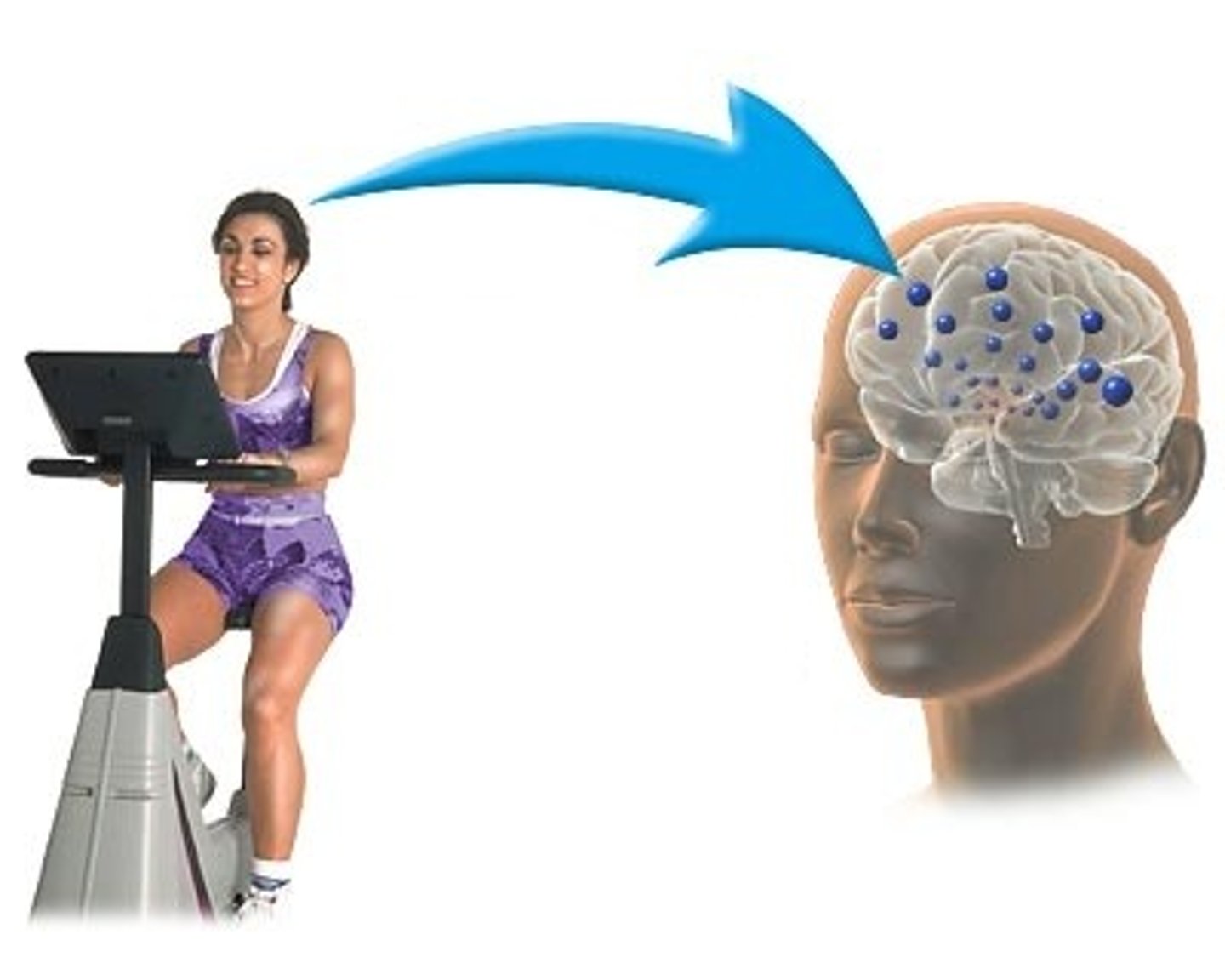
Plasticity
Ability of brain tissue to modify itself and take on new functions.

Neurogenesis
Creation of new neurons in the adult brain
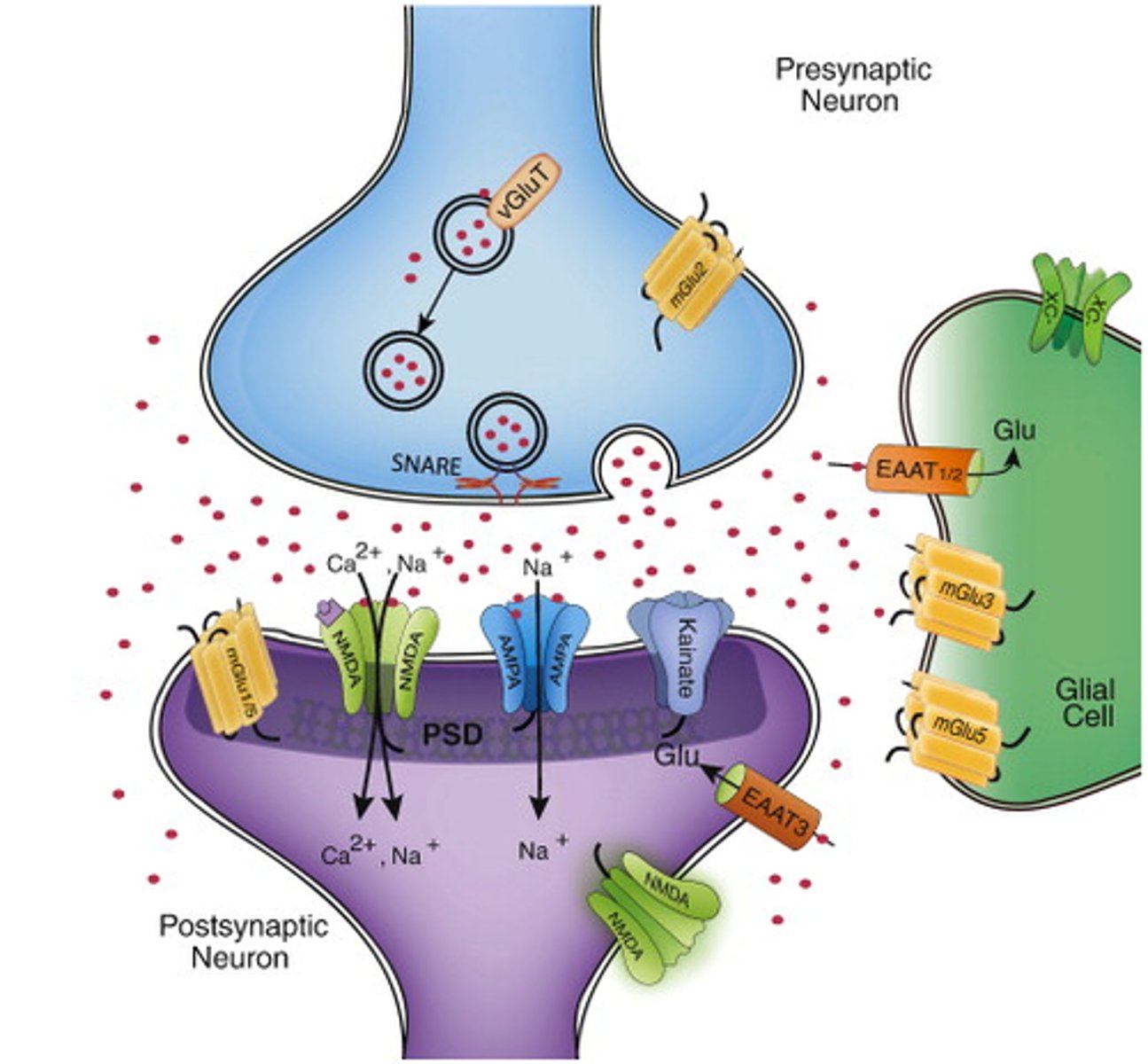
Glutamate
Main excitatory neurotransmitter in the nervous system; participates in relay of sensory information and learning
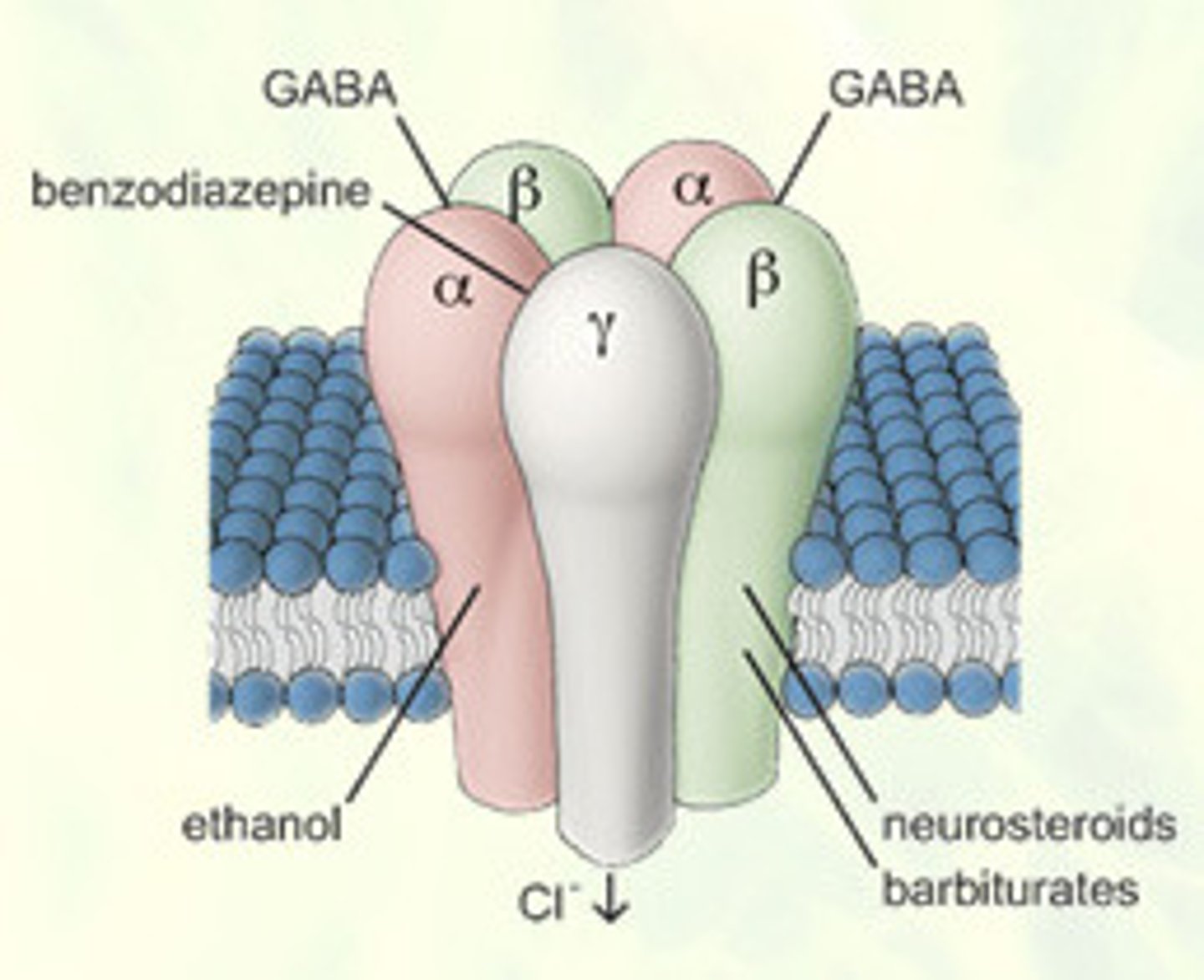
Gamma-aminobutyricvcacidc(GABA)
Main inhibitory neurotransmitter in the nervous system
Acetylcholine (ACh)
Muscle contraction (PNS) Cortical arousal (CNS)
Norepinephrine (NE)
Brain arousal and other functions like mood, hunger, and sleep

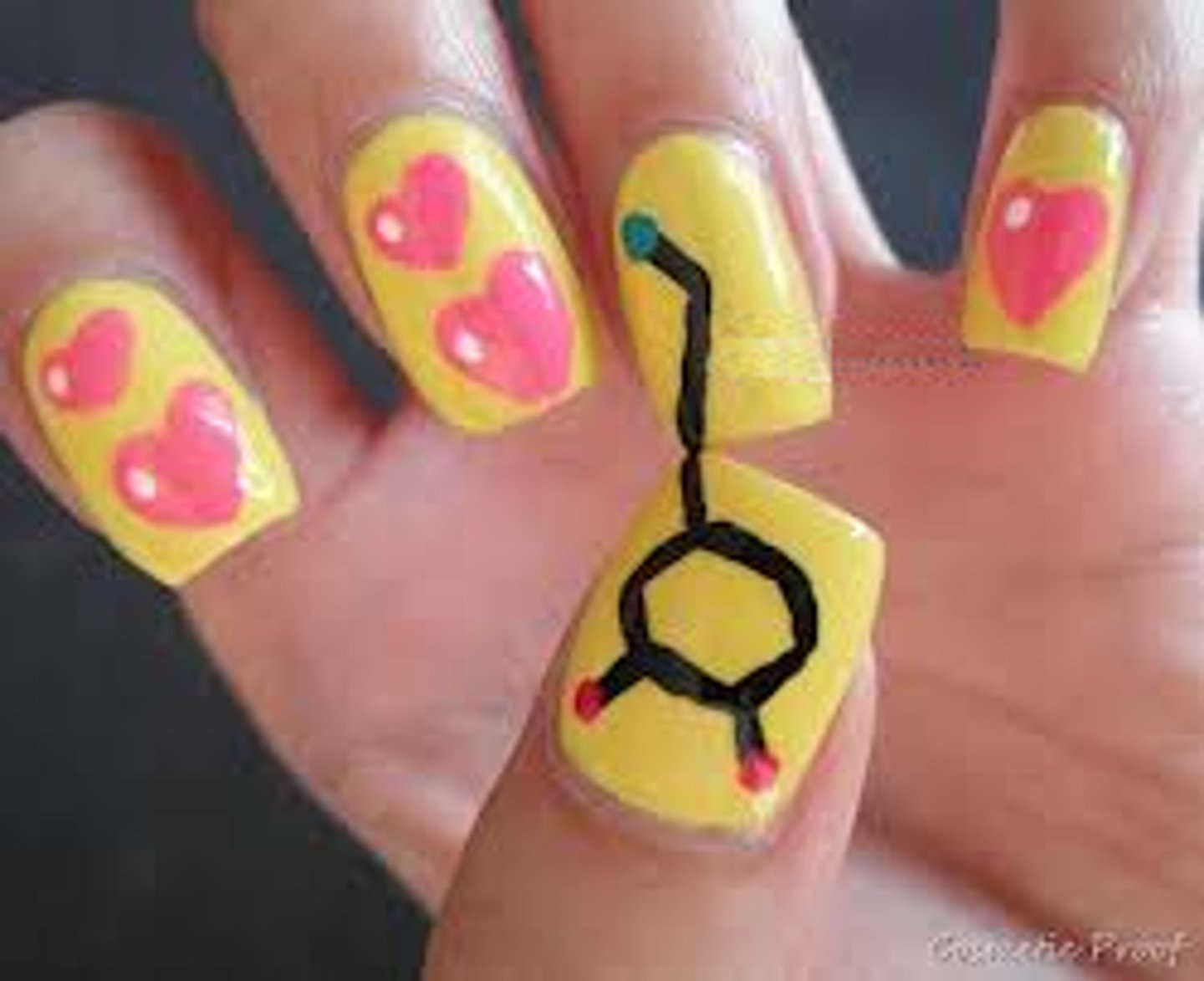
Dopamine
Motor function and pleasure reward
Serotonin
Mood and temperature regulation, happiness
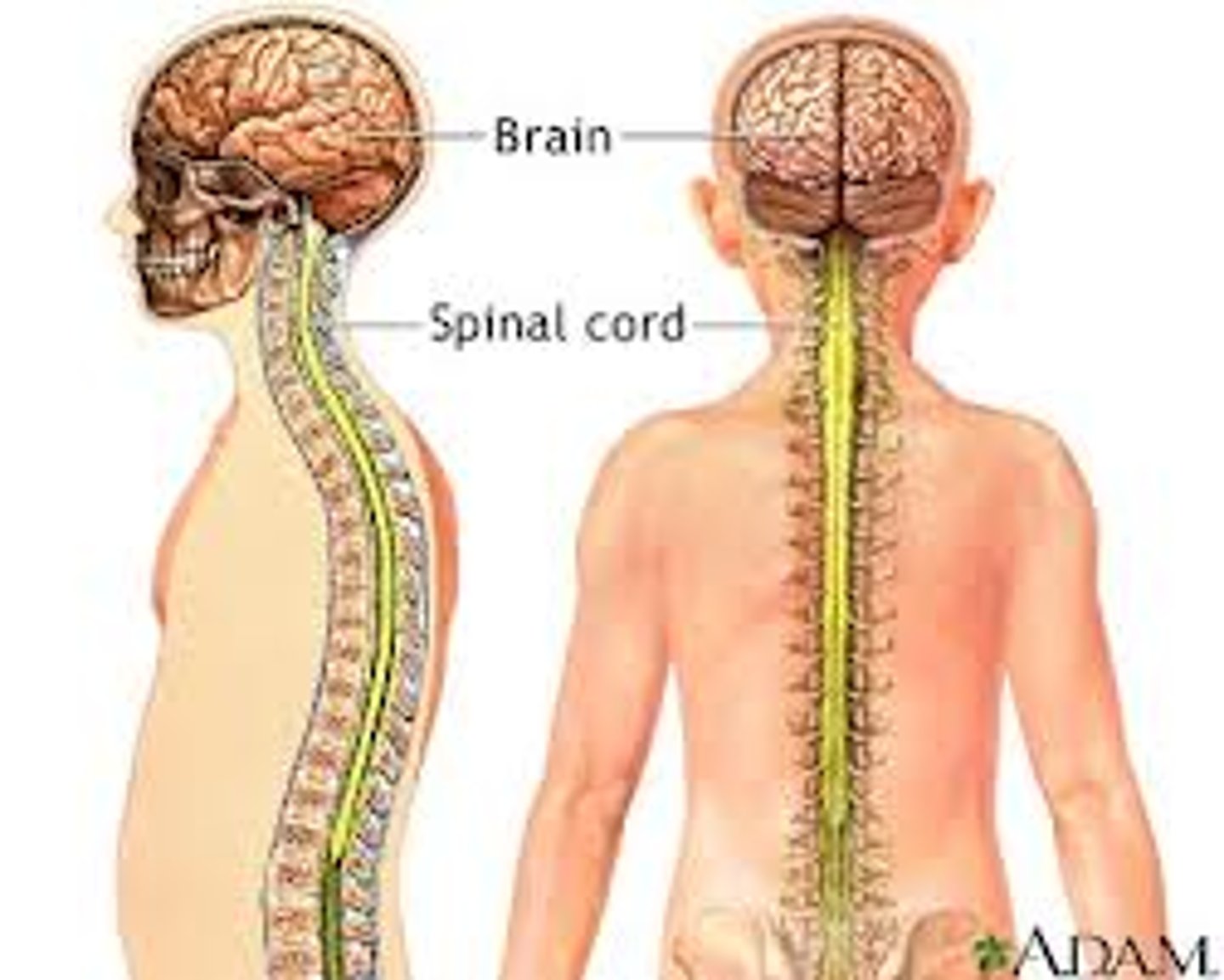
Central nervous system (CNS)
A system that includes the brain and spinal cord, controlling voluntary and involuntary acts
Peripheral Nervous System
nerves that lie outside the brain and spinal cord.
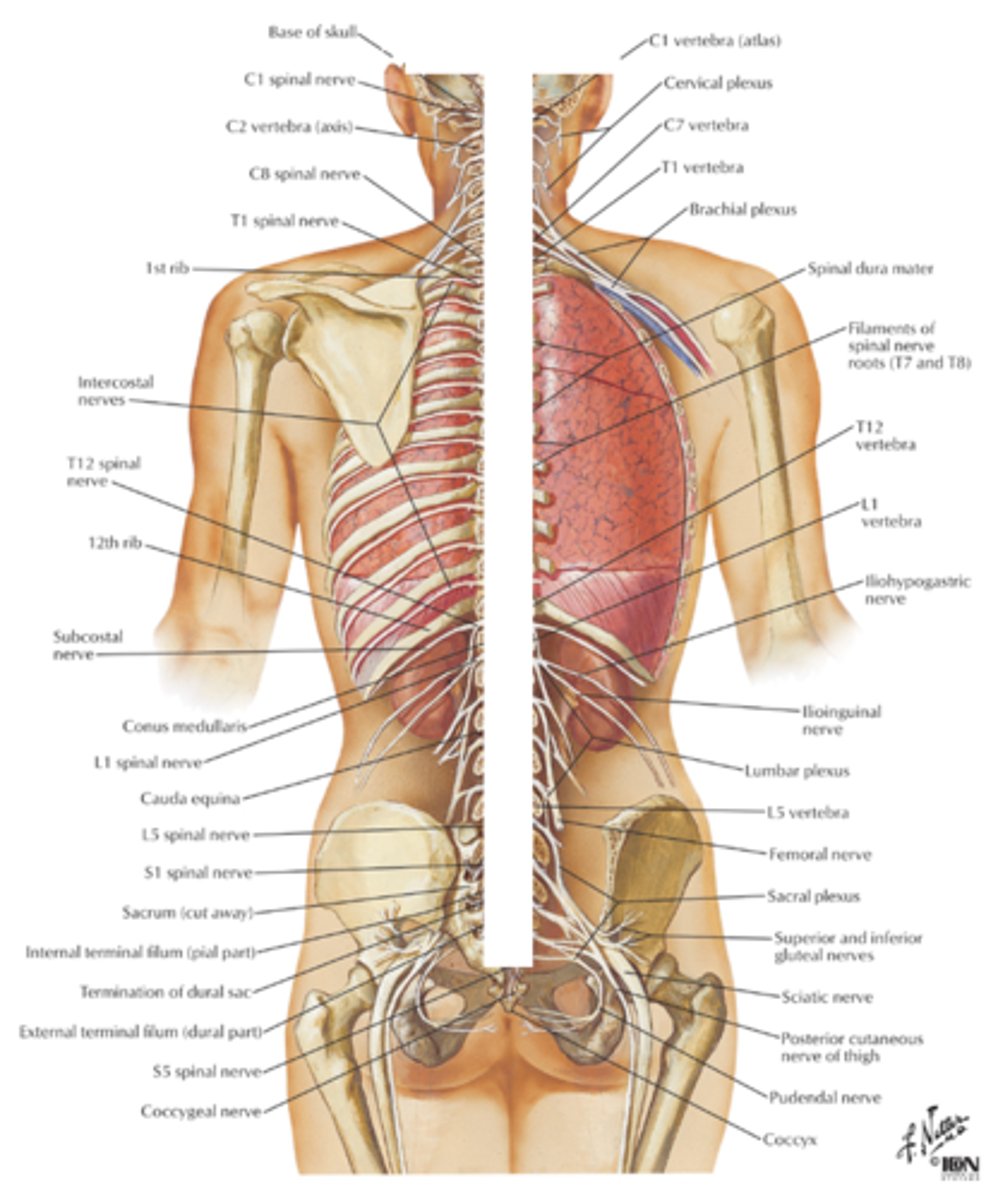
Cerebral Cortex
outermost part of forebrain, responsible for
analyzing sensory processing and higher brain functions
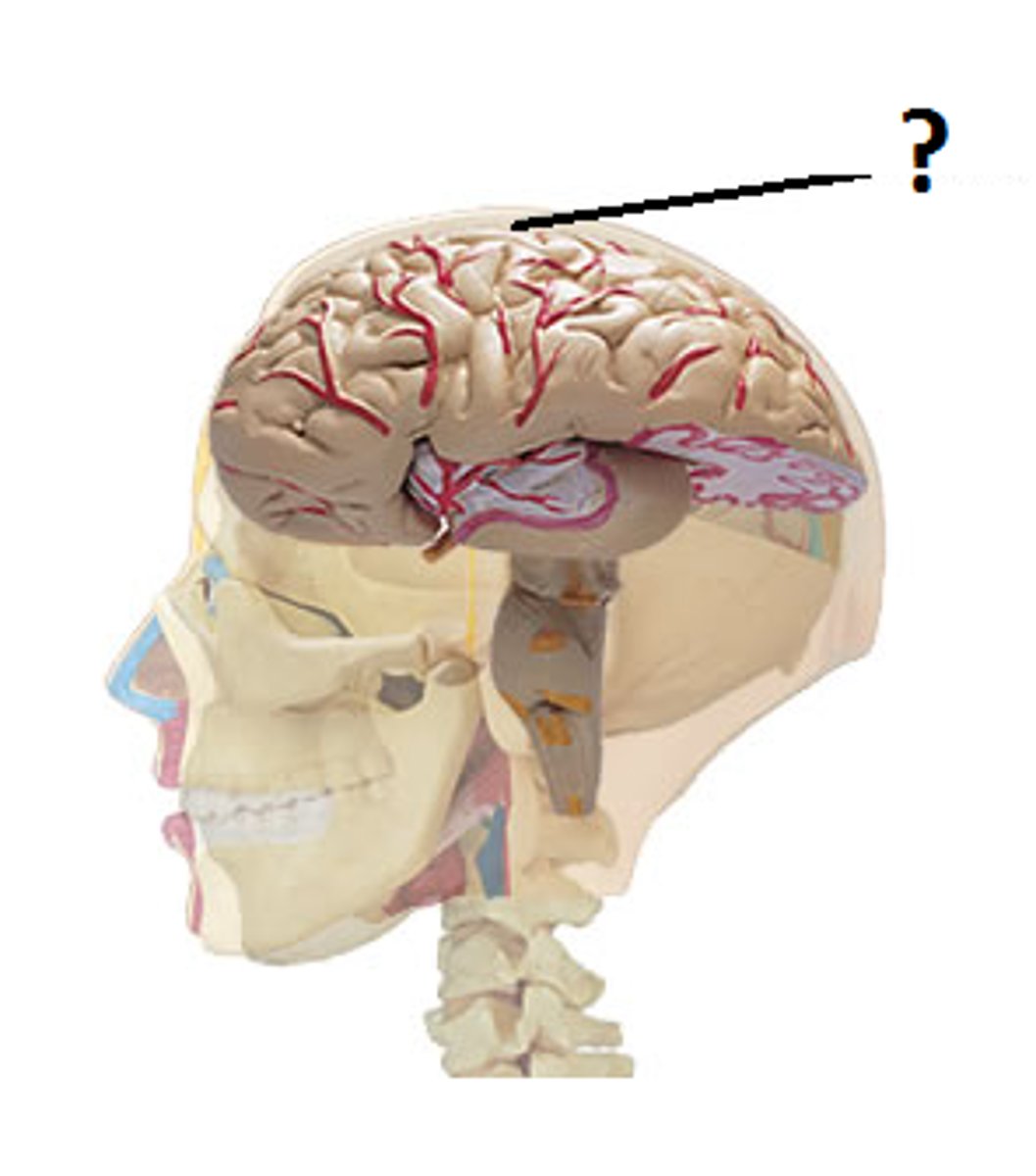
Forebrain (Cerebrum)
forward part of the brain that allows advanced intellectual abilities
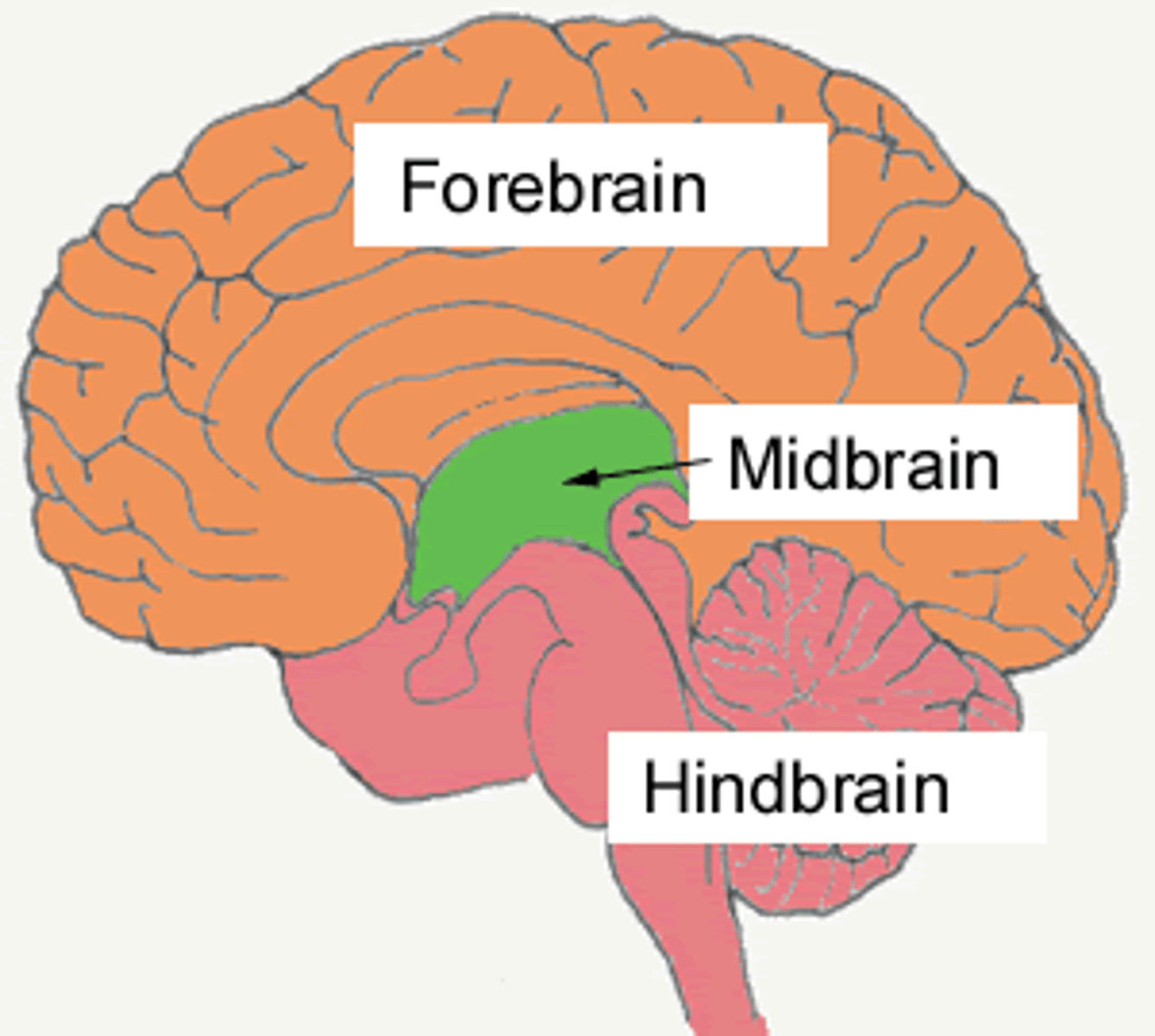
Cerebral Hemispheres
Divided into right and left by the cerebrum.
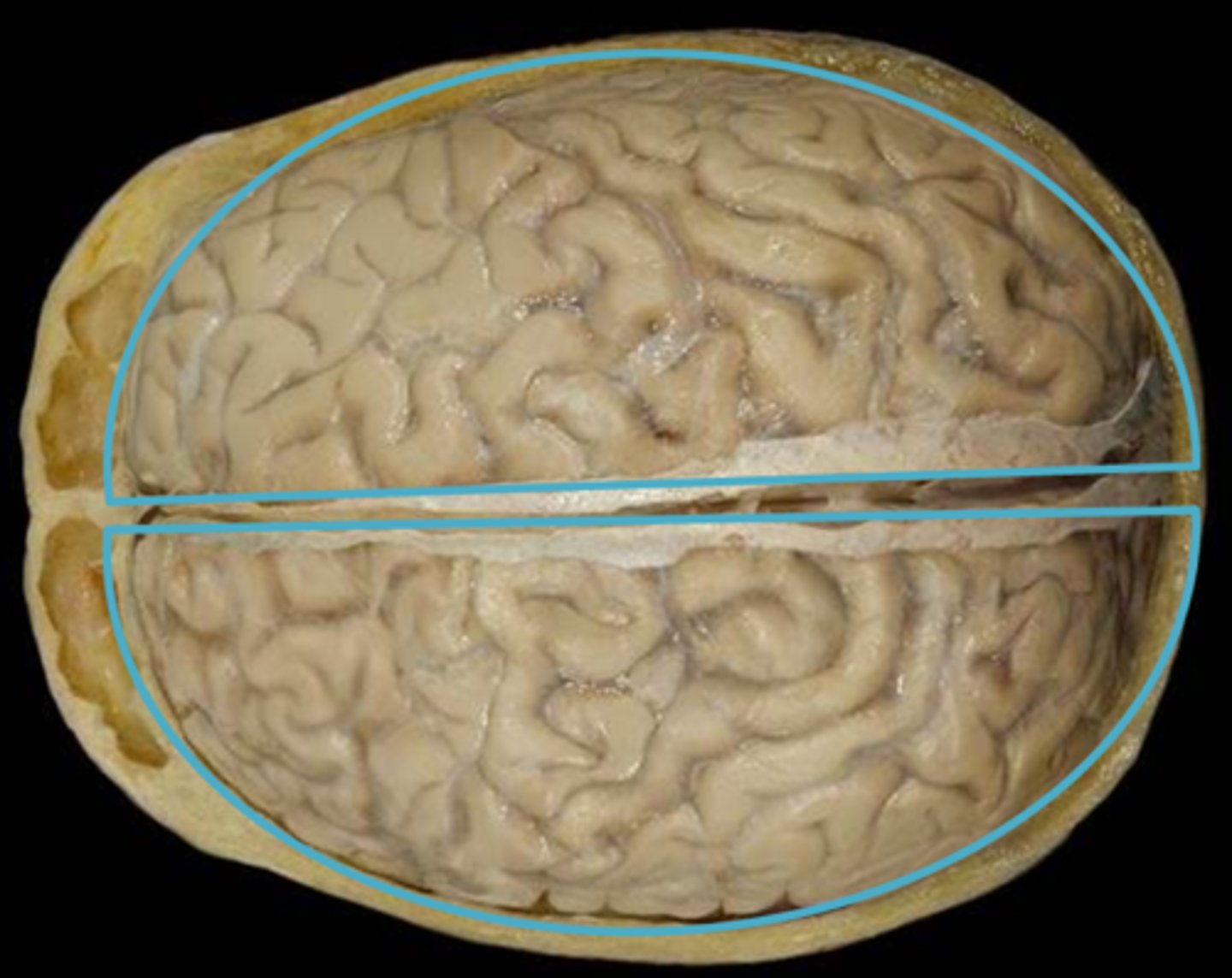
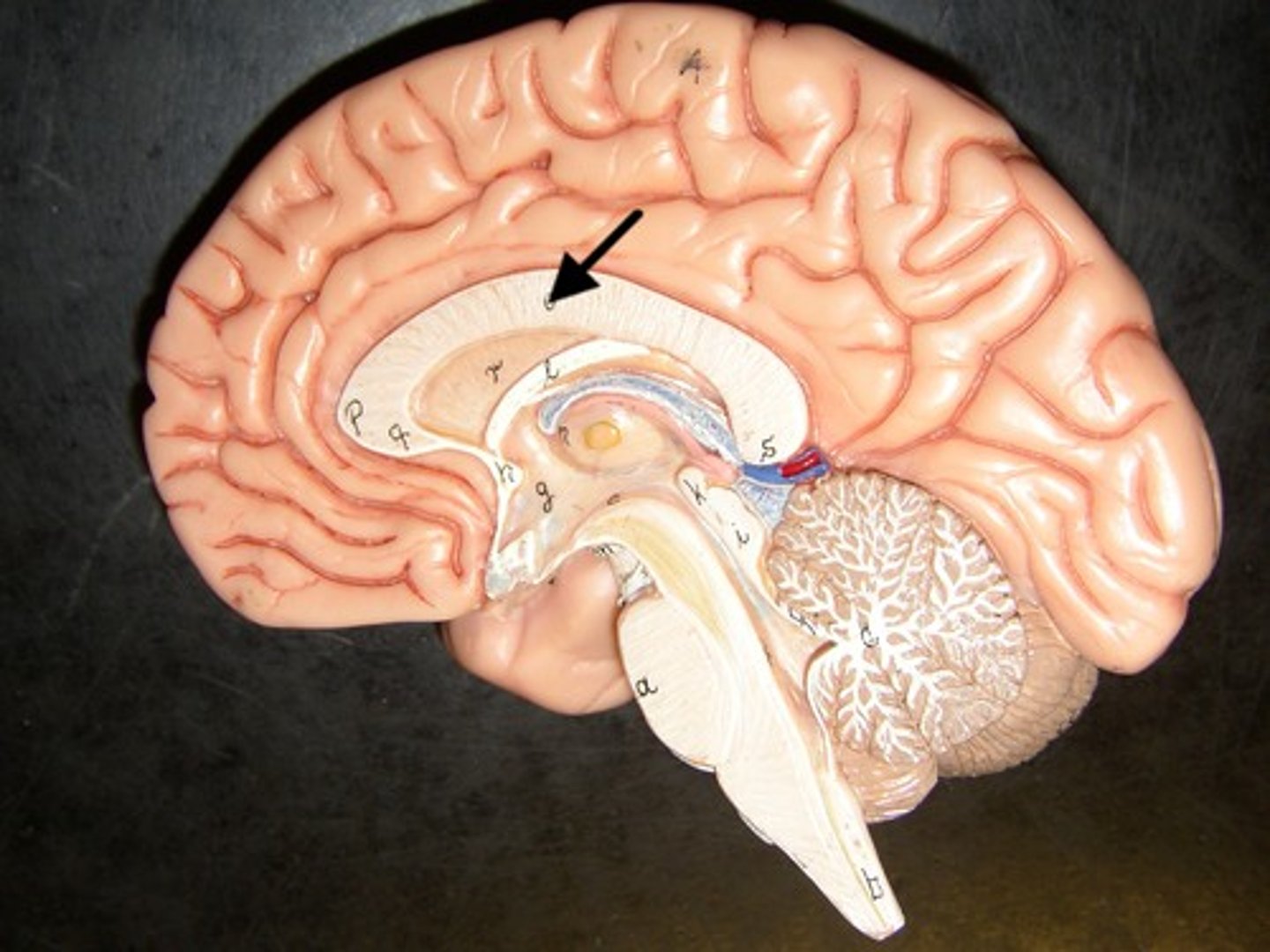
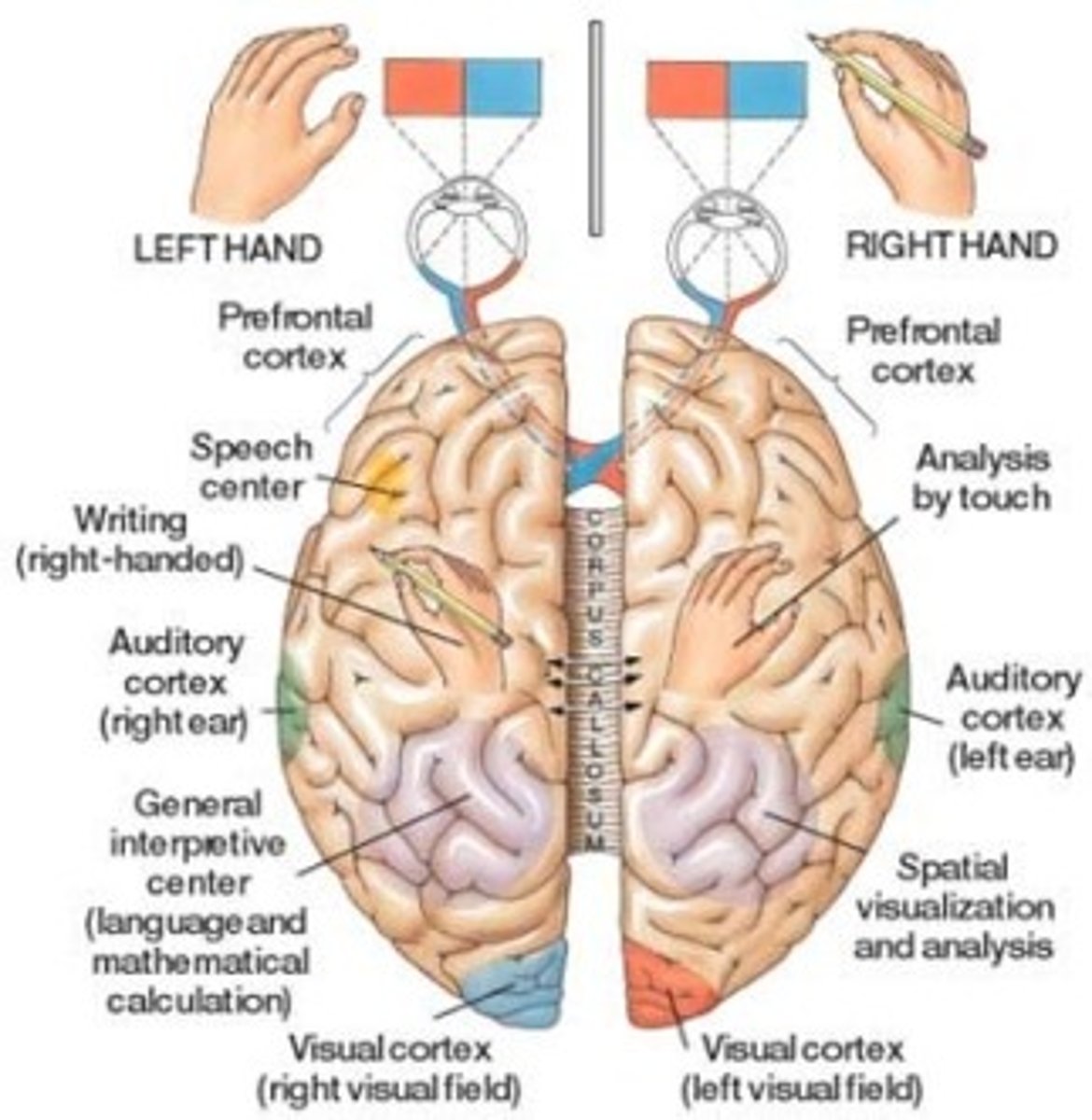
Corpus Callosum
A thick band of nerve fibers that connects large areas of the cerebral cortex on each side of the brain and supports communication of information across the hemispheres.
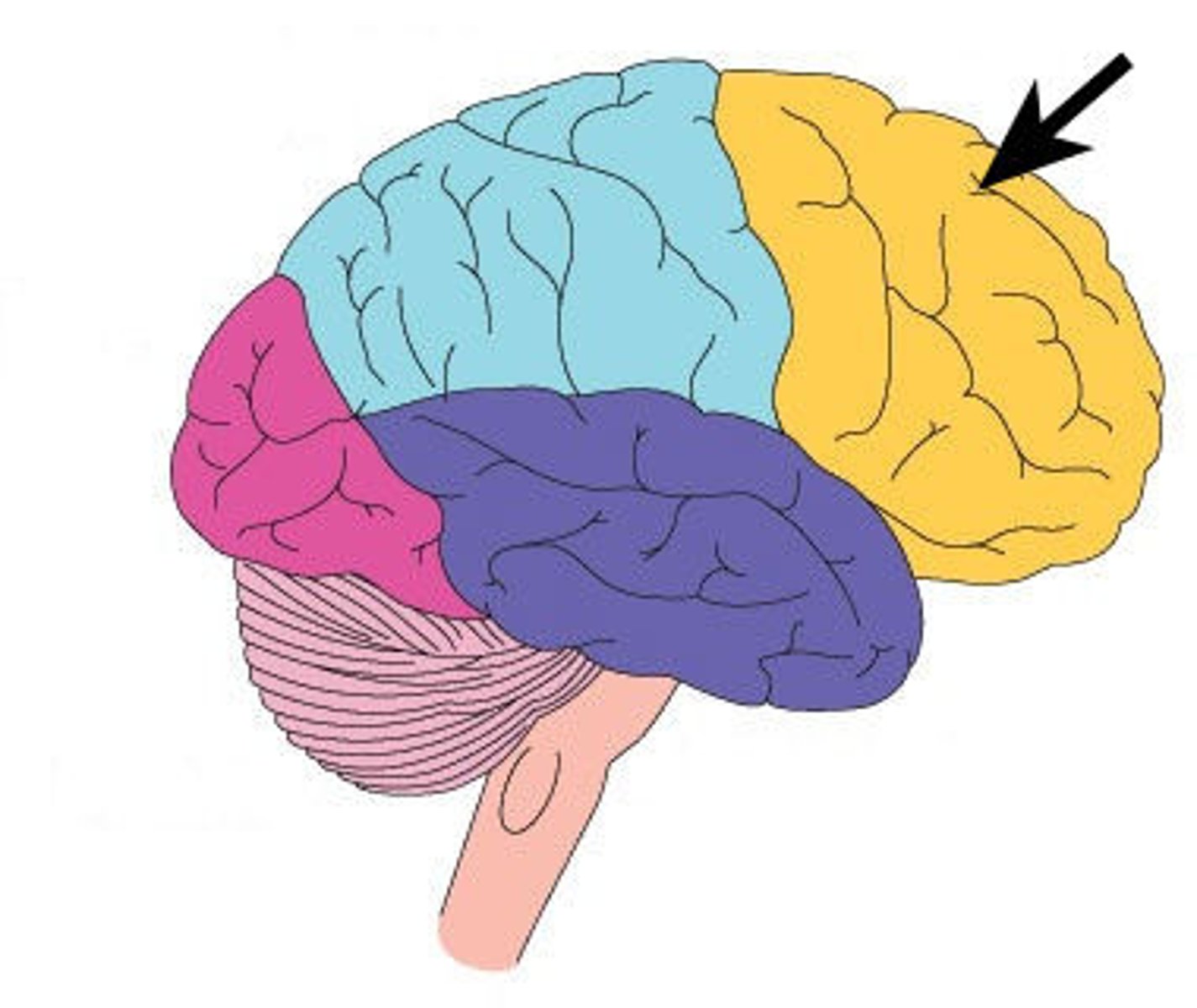
Frontal Lobe
A region of the cerebral cortex that has specialized areas for movement, abstract thinking, planning, memory, and judgement
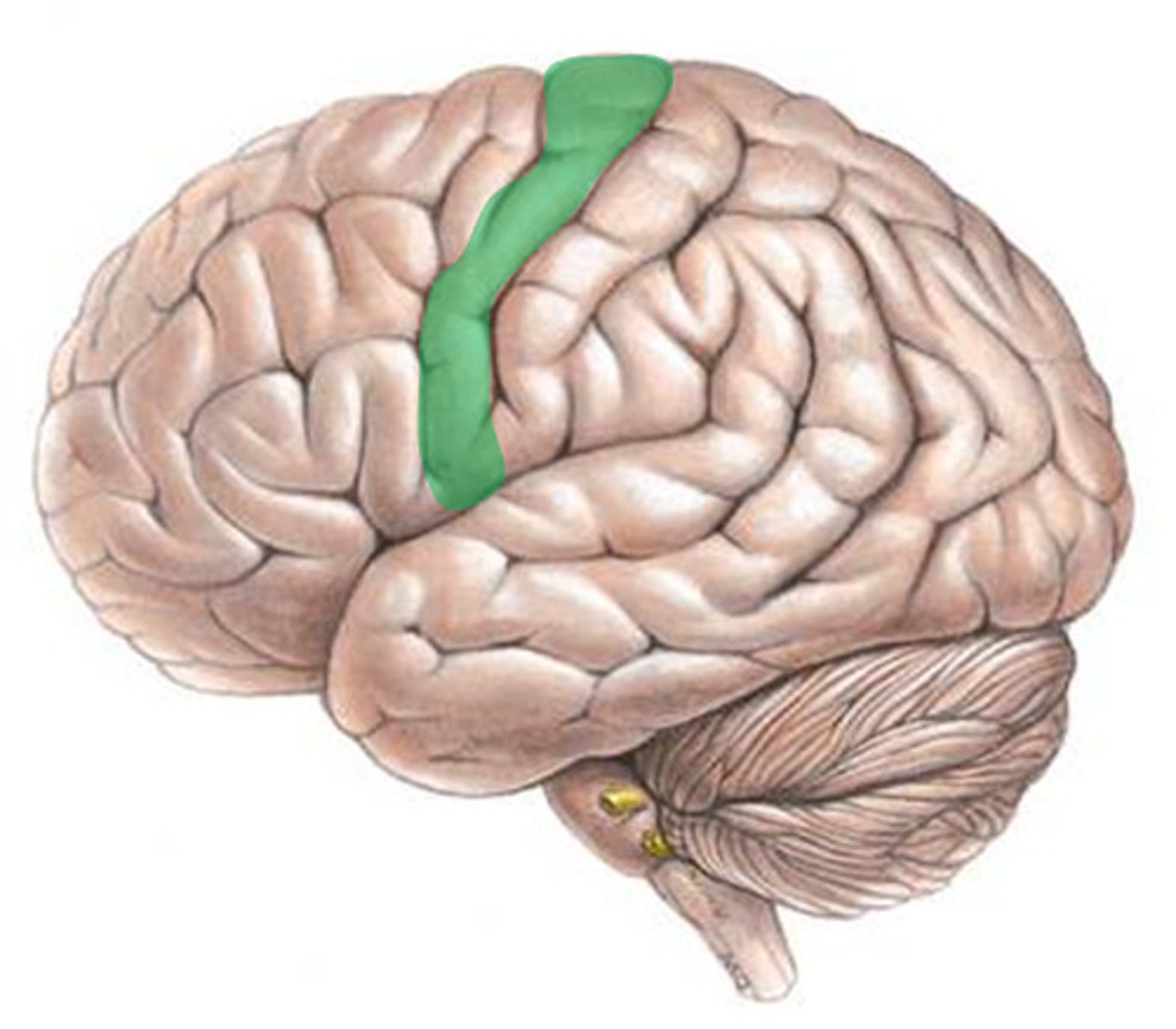
Motor cortex
An area at the rear of the frontal lobes that controls voluntary movements
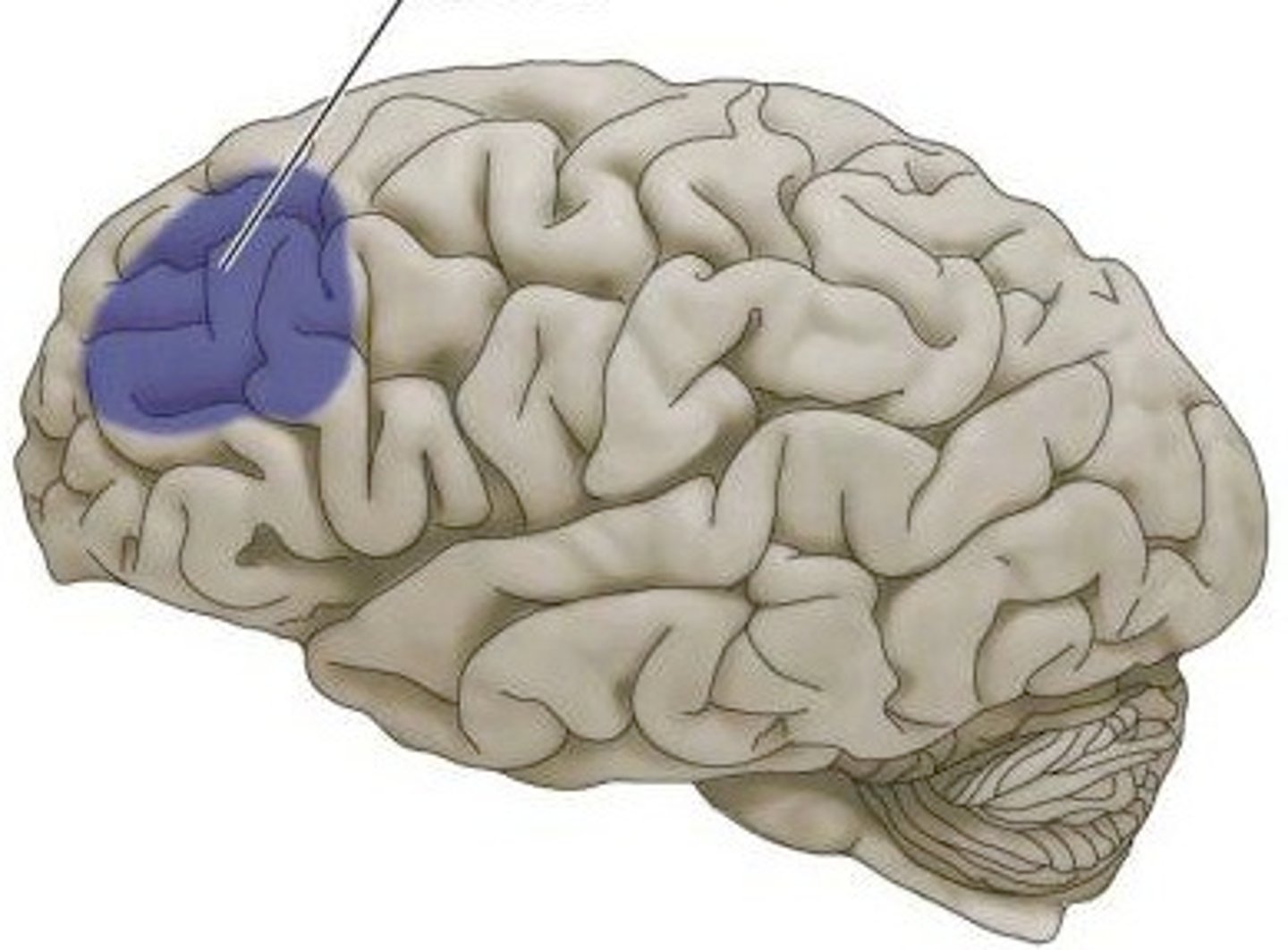
Prefrontal cortex
part of frontal lobe responsible for thinking, planning, and language
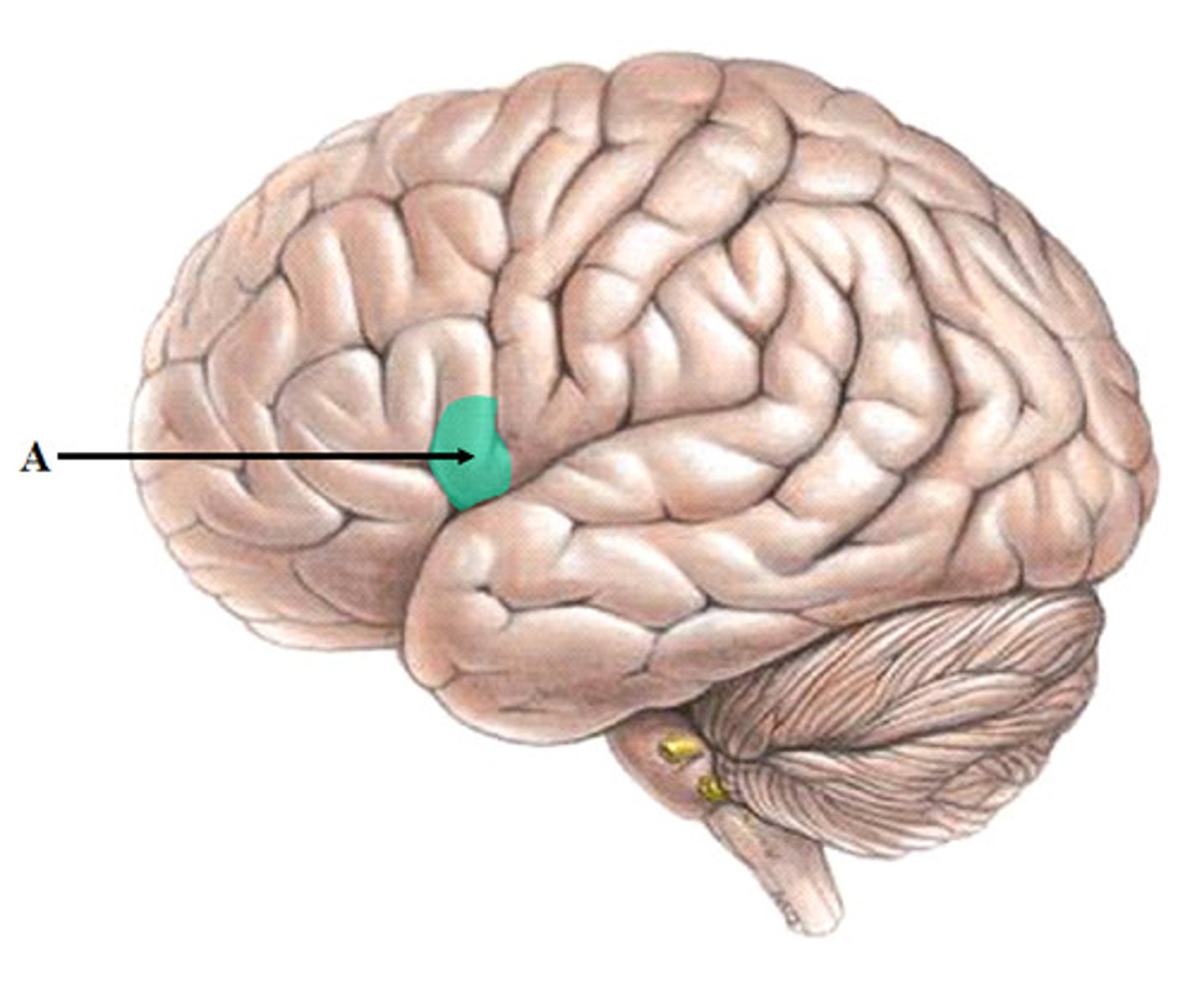
Broca's area
Controls language expression - an area of the frontal lobe, usually in the left hemisphere, that directs the muscle movements involved in speech.
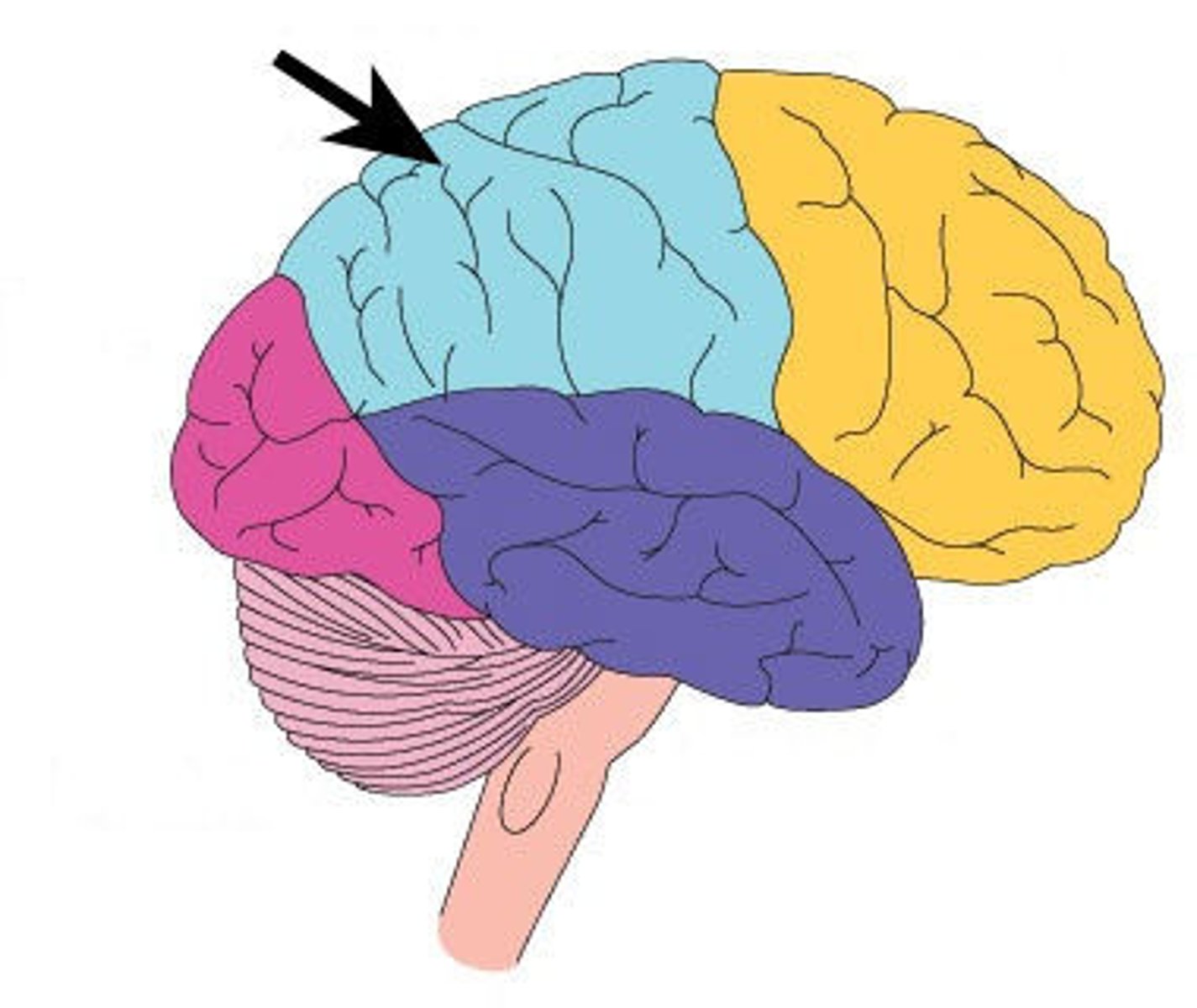
Parietal Lobe
upper middle part of the cerebral cortex lying behind the frontal lobe that is specialized for touch and perception
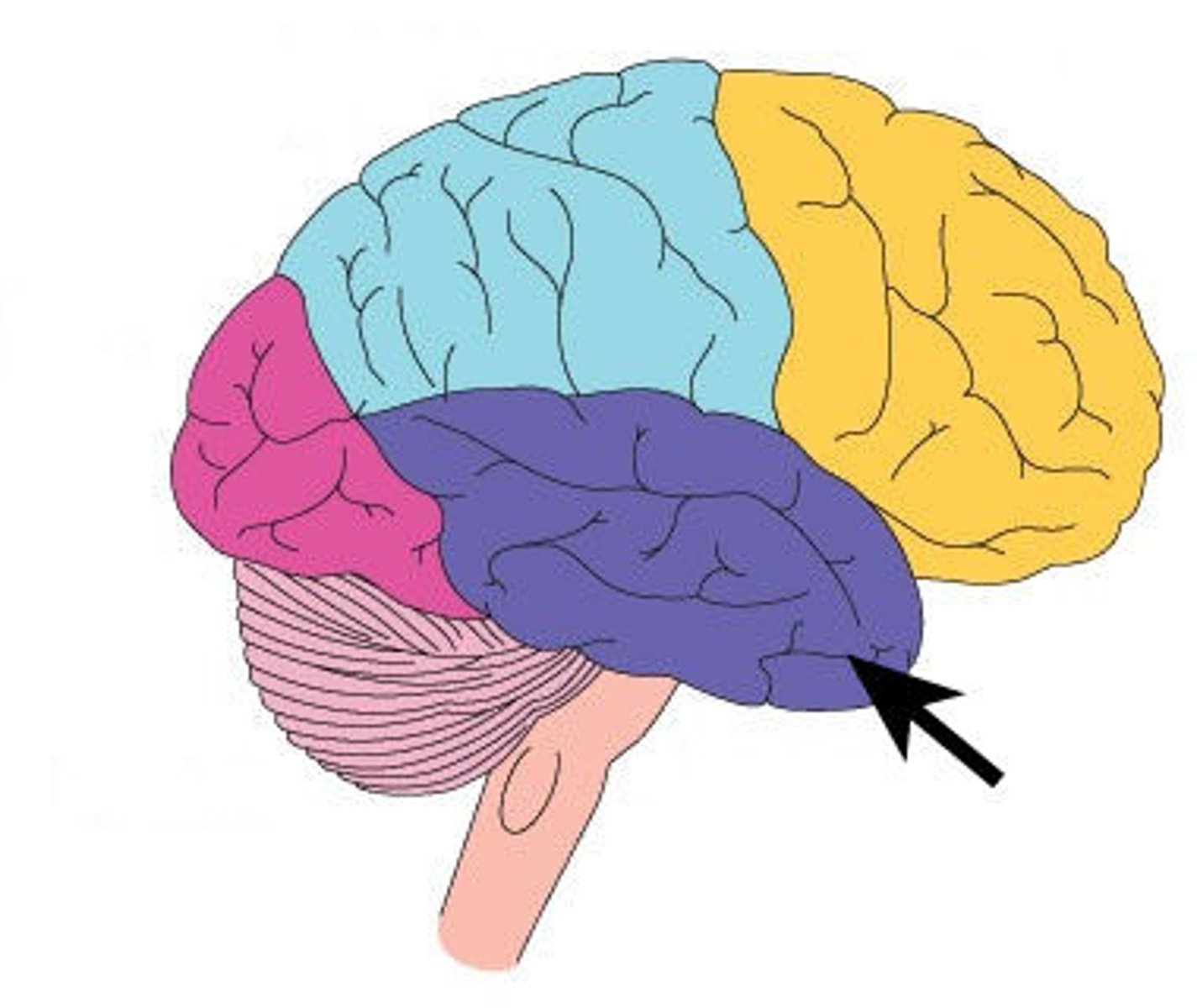
Temporal lobe
lower part of cerebral cortex that plays roles in hearing, understanding language, and memory
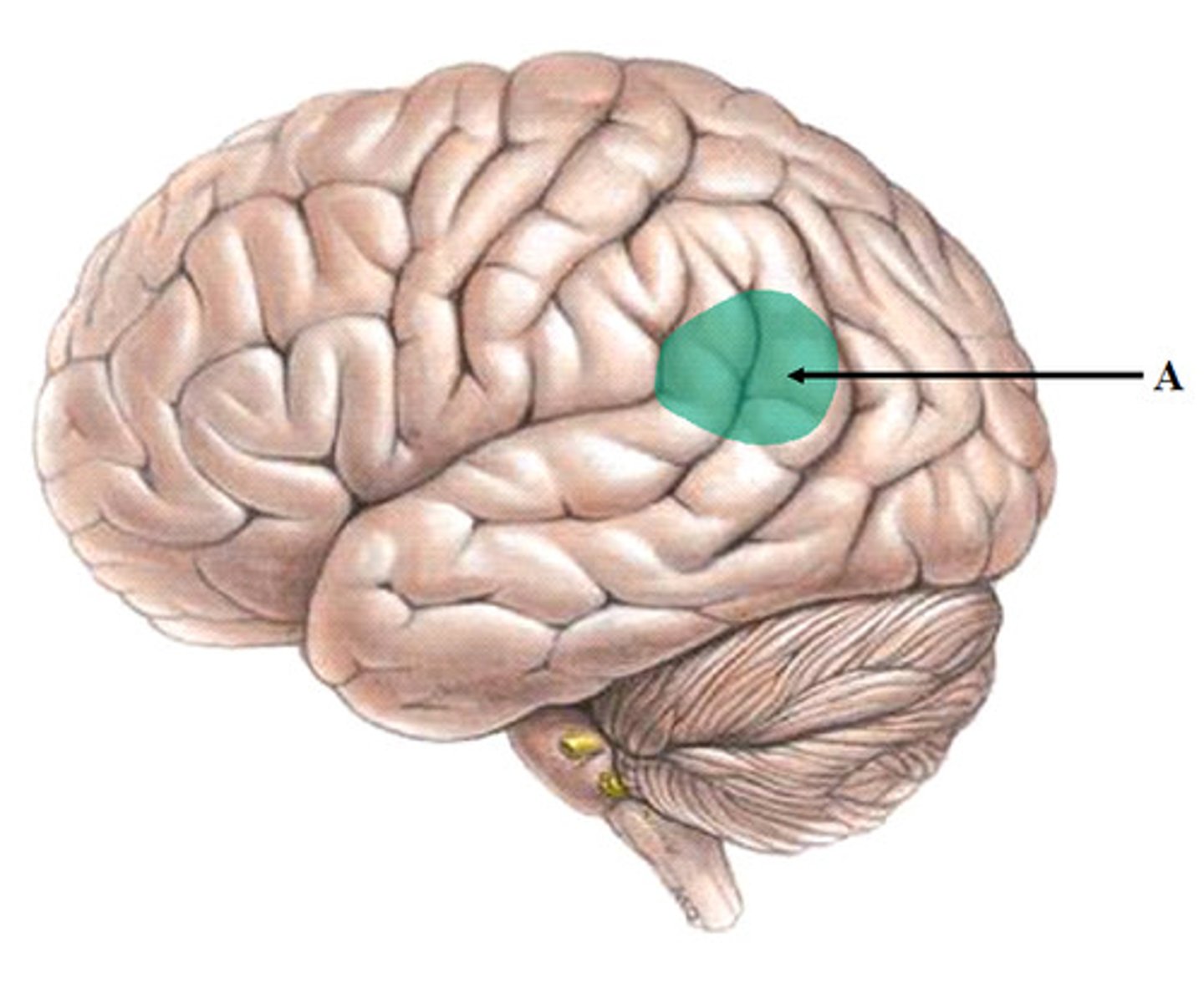
Wernicke's Area
part of the temporal lobe involved in understanding speech
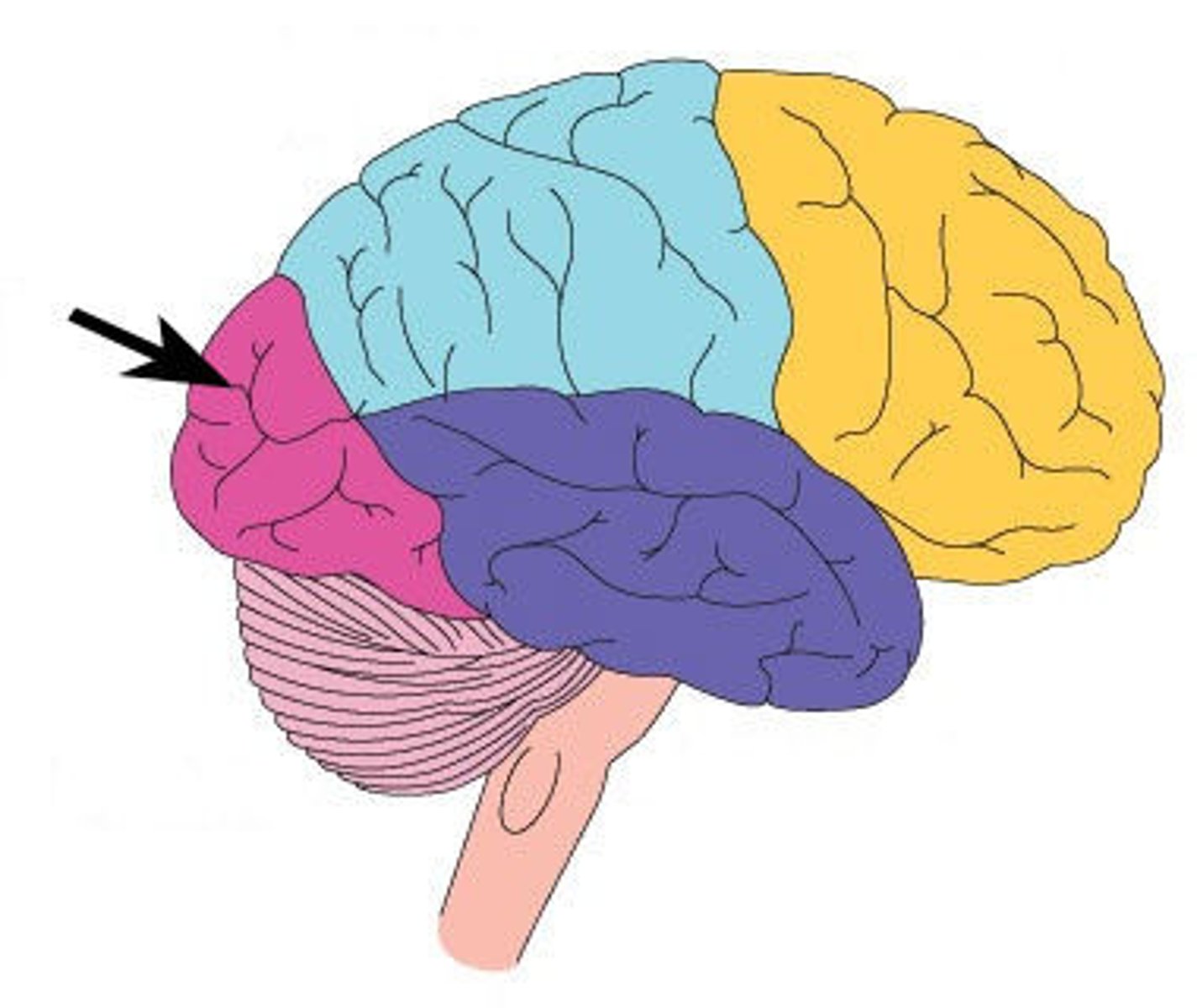
Occipital Lobe
back part of cerebral cortex specialized
for vision
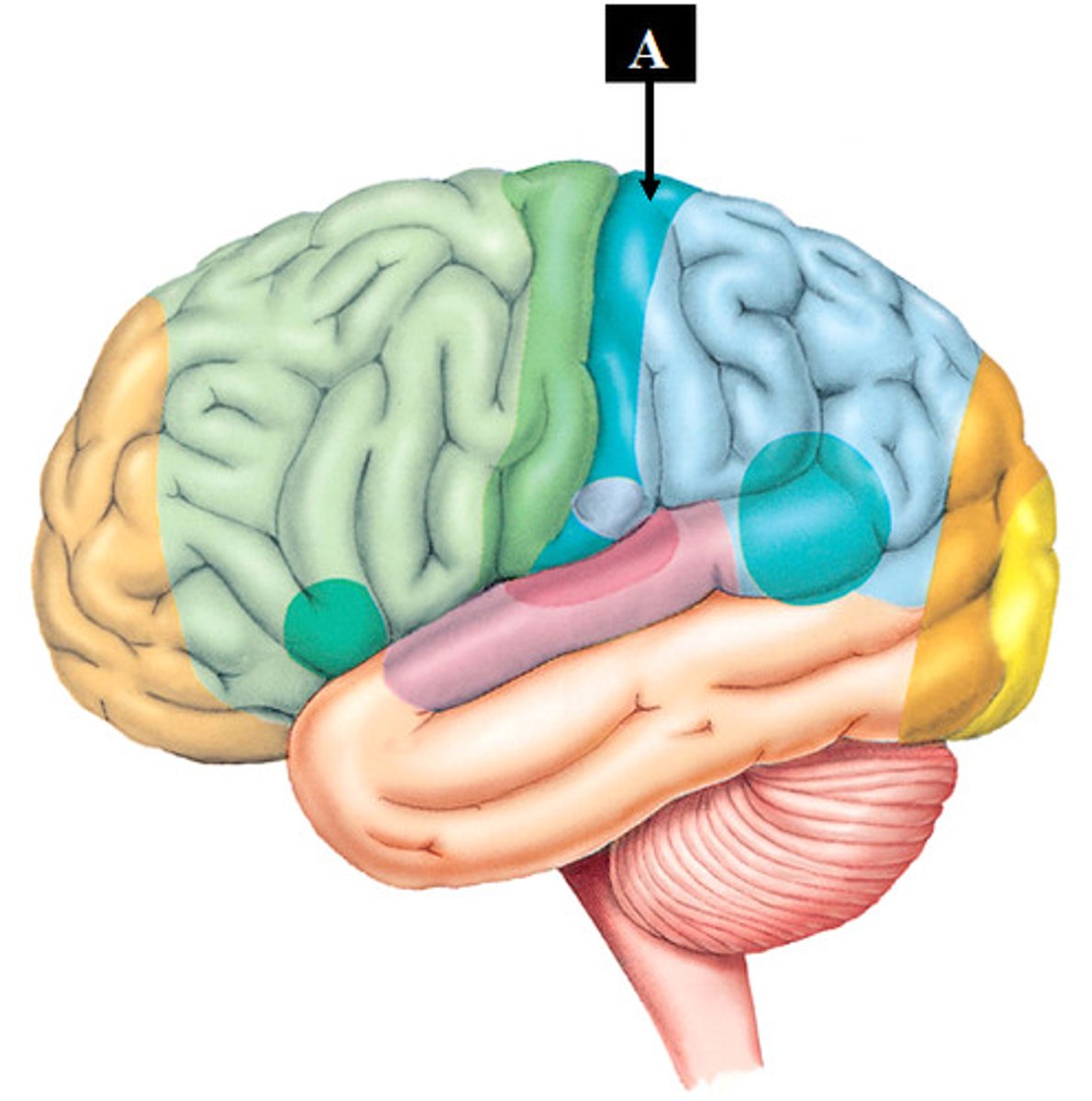
Primary Sensory Cortex
regions of the cerebral cortex that initially
process information from the senses
Limbic System
emotional center of brain that also plays roles in smell, motivation, and memory
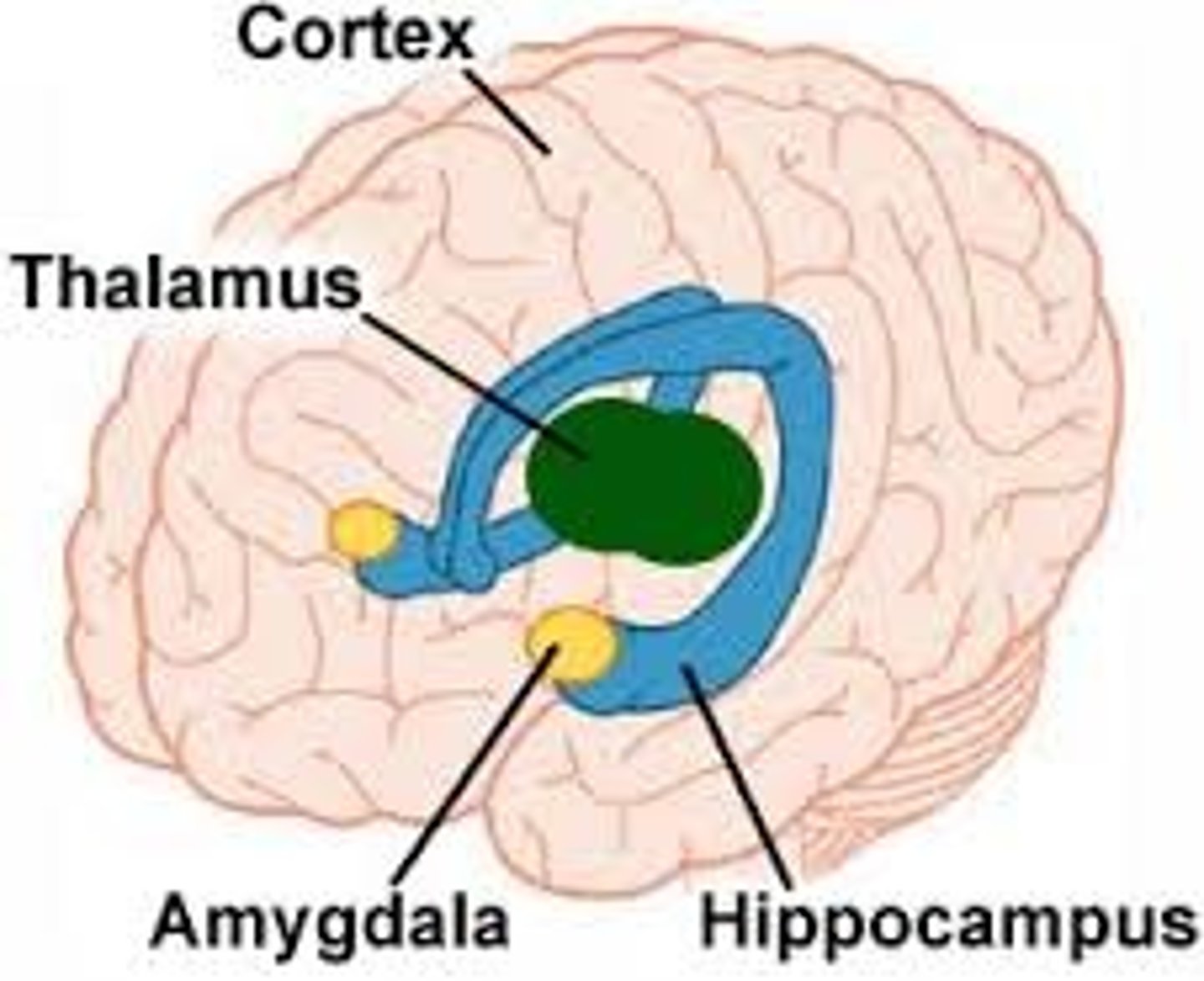
Thalamus
A forebrain structure that processes sensory information for all senses, except smell, and relays it to the cerebral cortex.
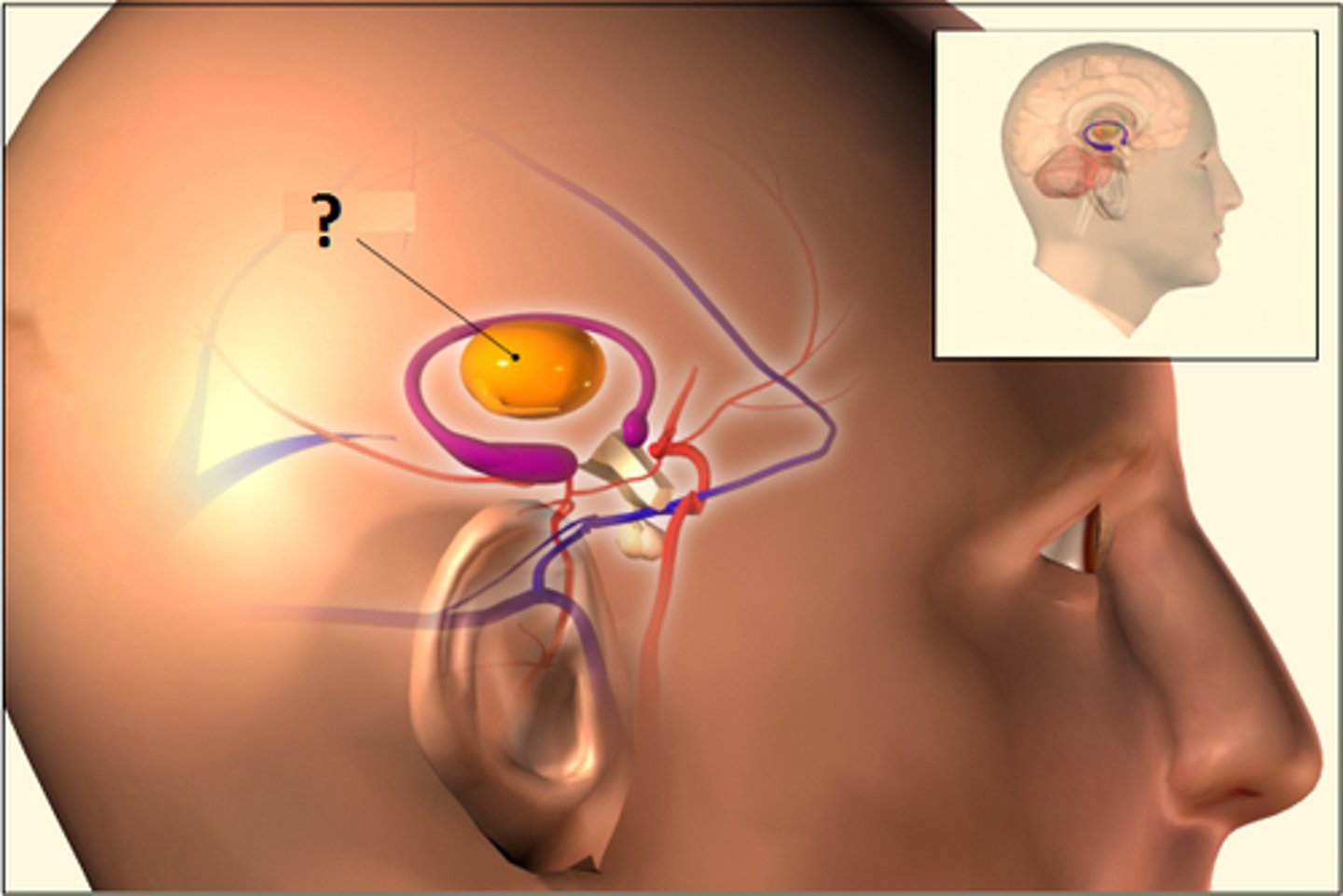
Hypothalamus
Structure below the thalamus, responsible for maintaining a constant internal state
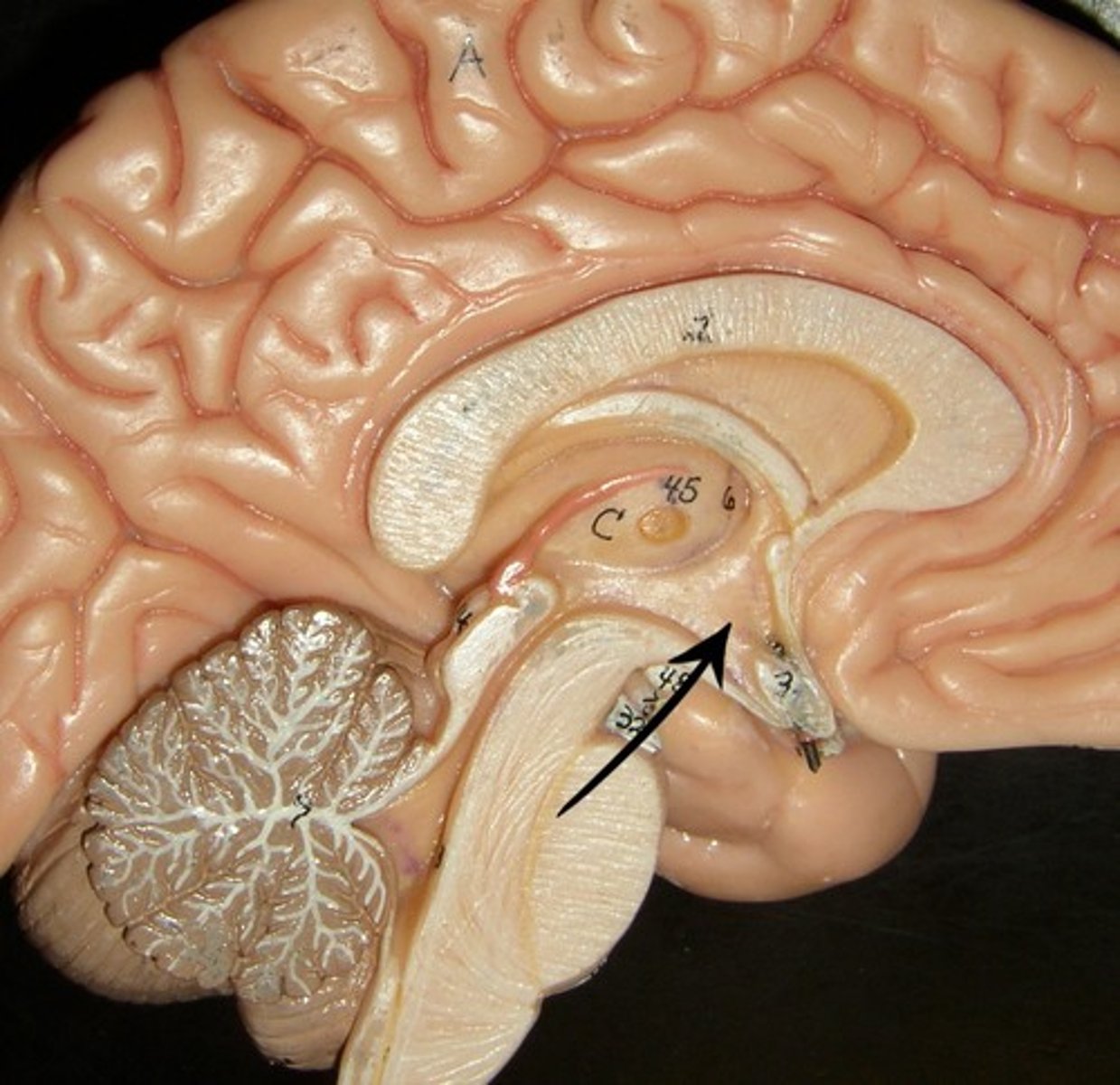
Amyglada
part of limbic system that plays key roles in
fear, excitement, and arousal
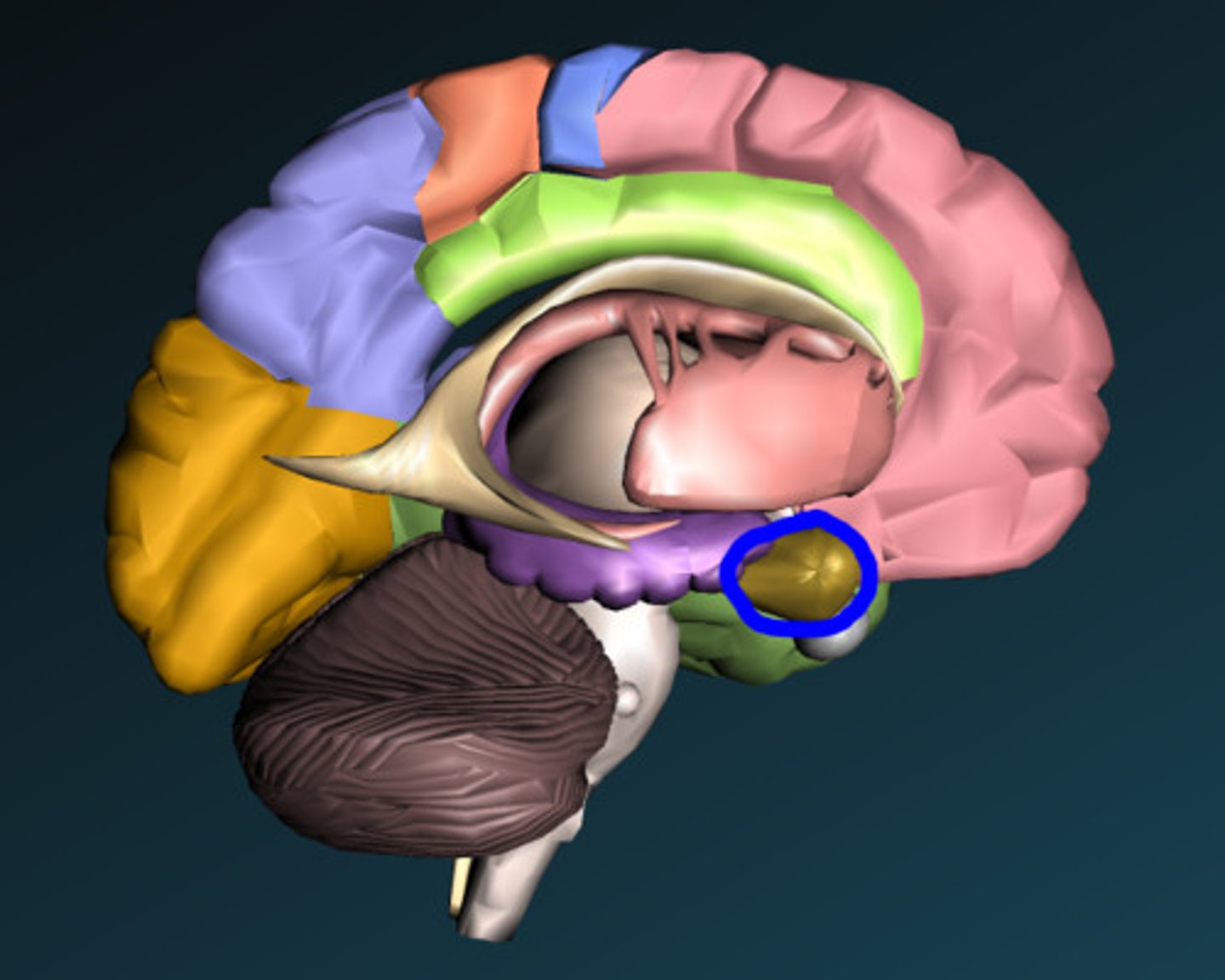
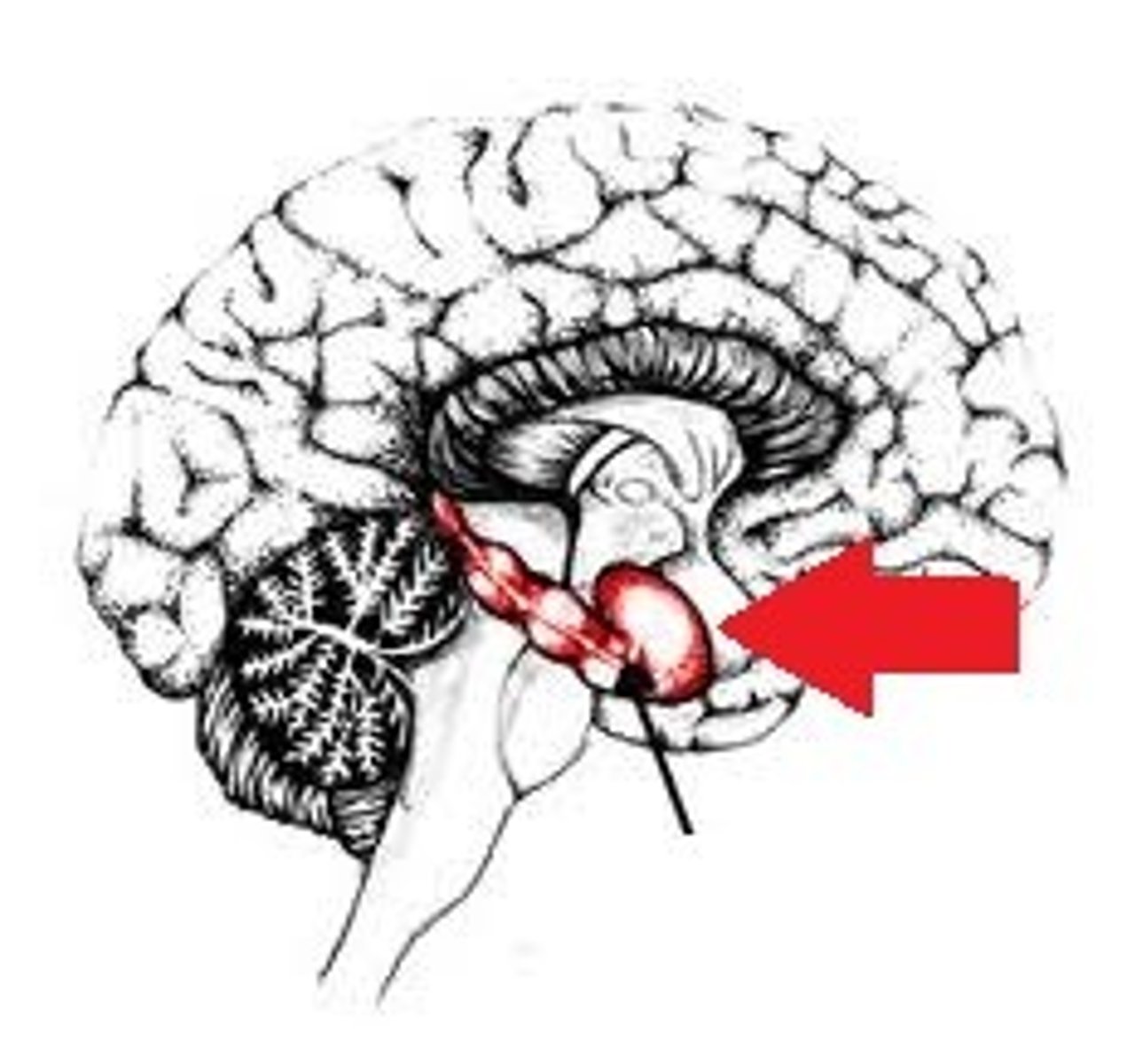
Hippocampus
part of the brain that plays a role in spatial
memory
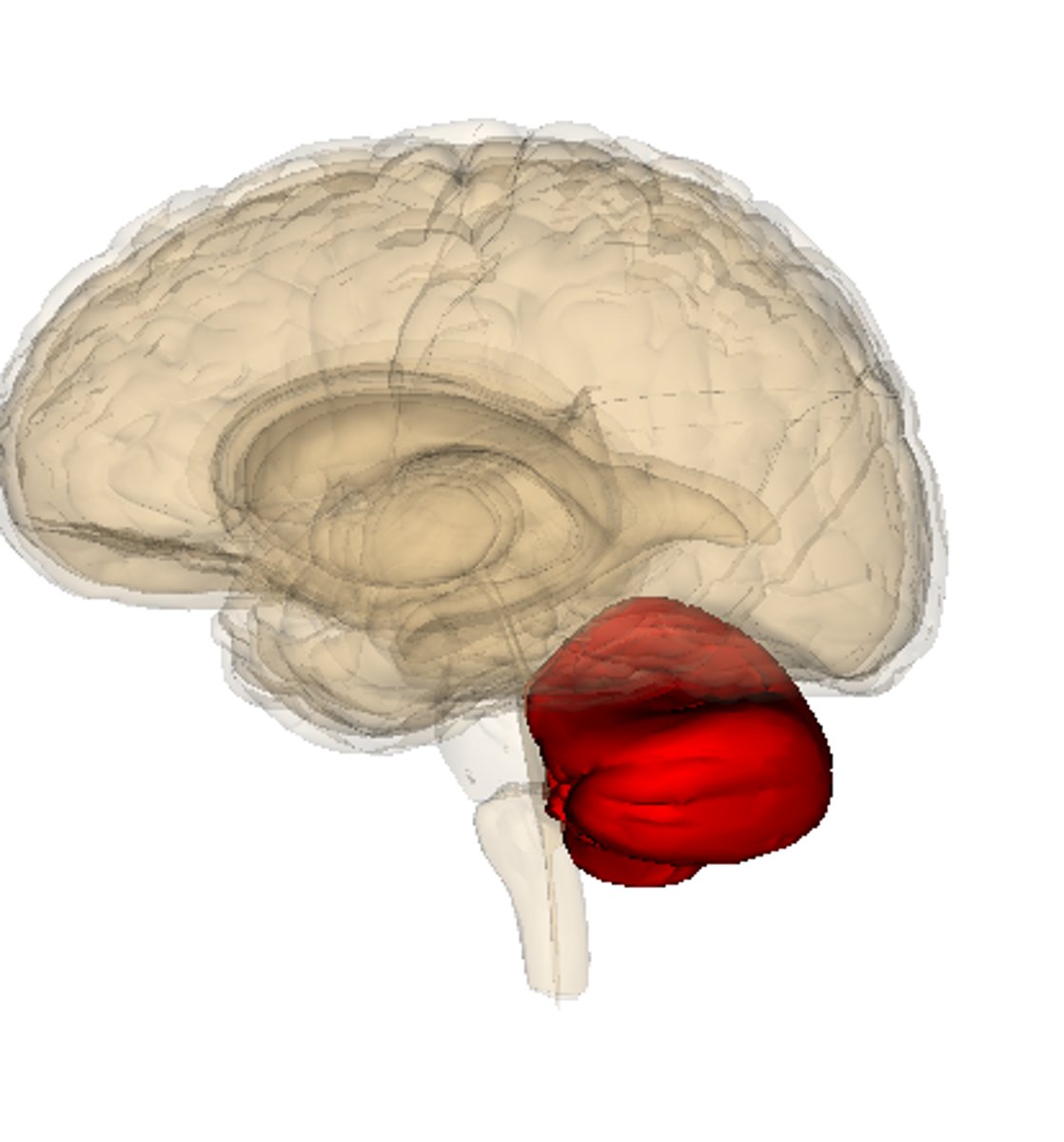
Cerebellum
Balance and coordination
Brain Stem
part of the brain between the spinal cord and cerebral cortex that contains the midbrain, pons, and medulla
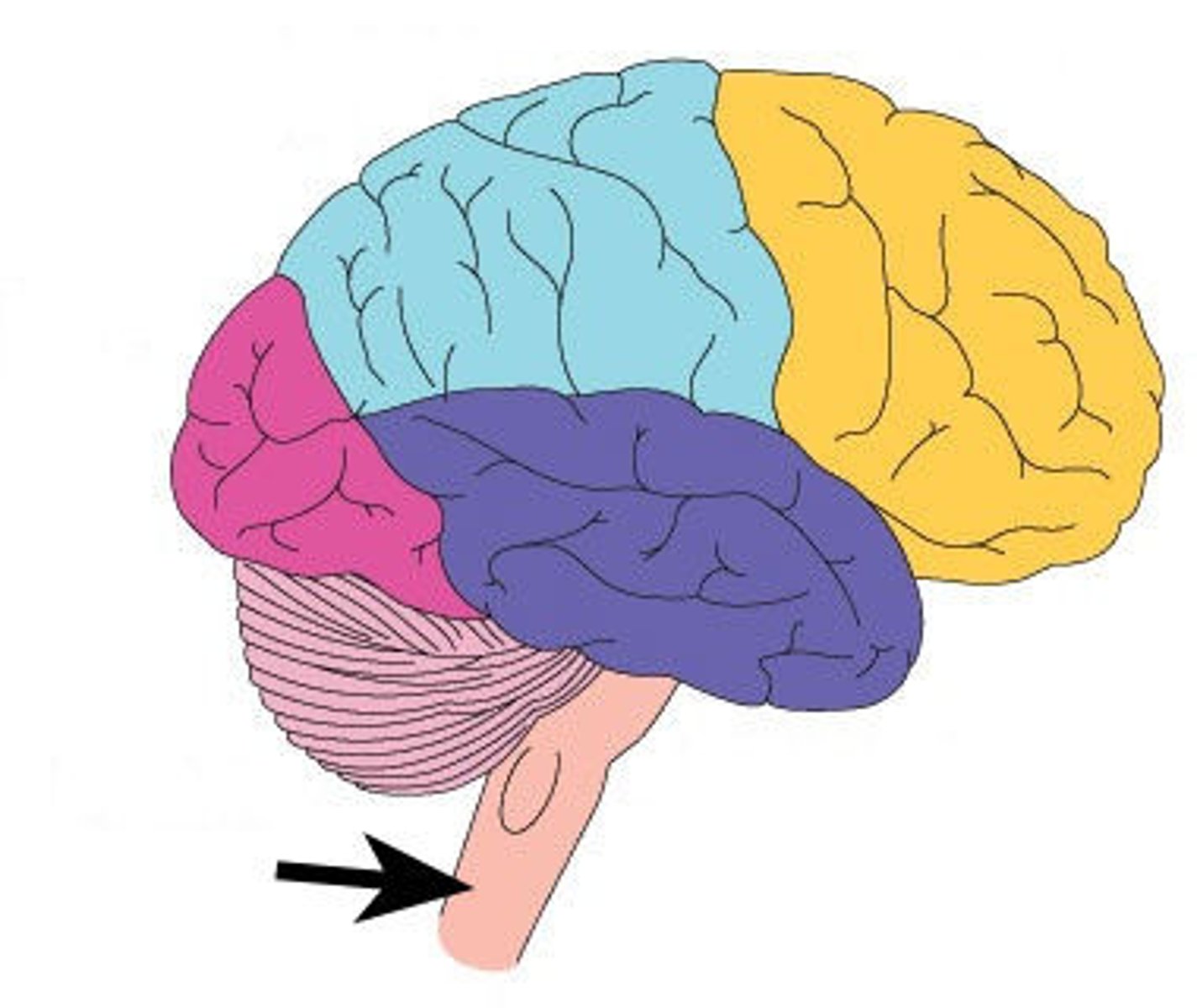
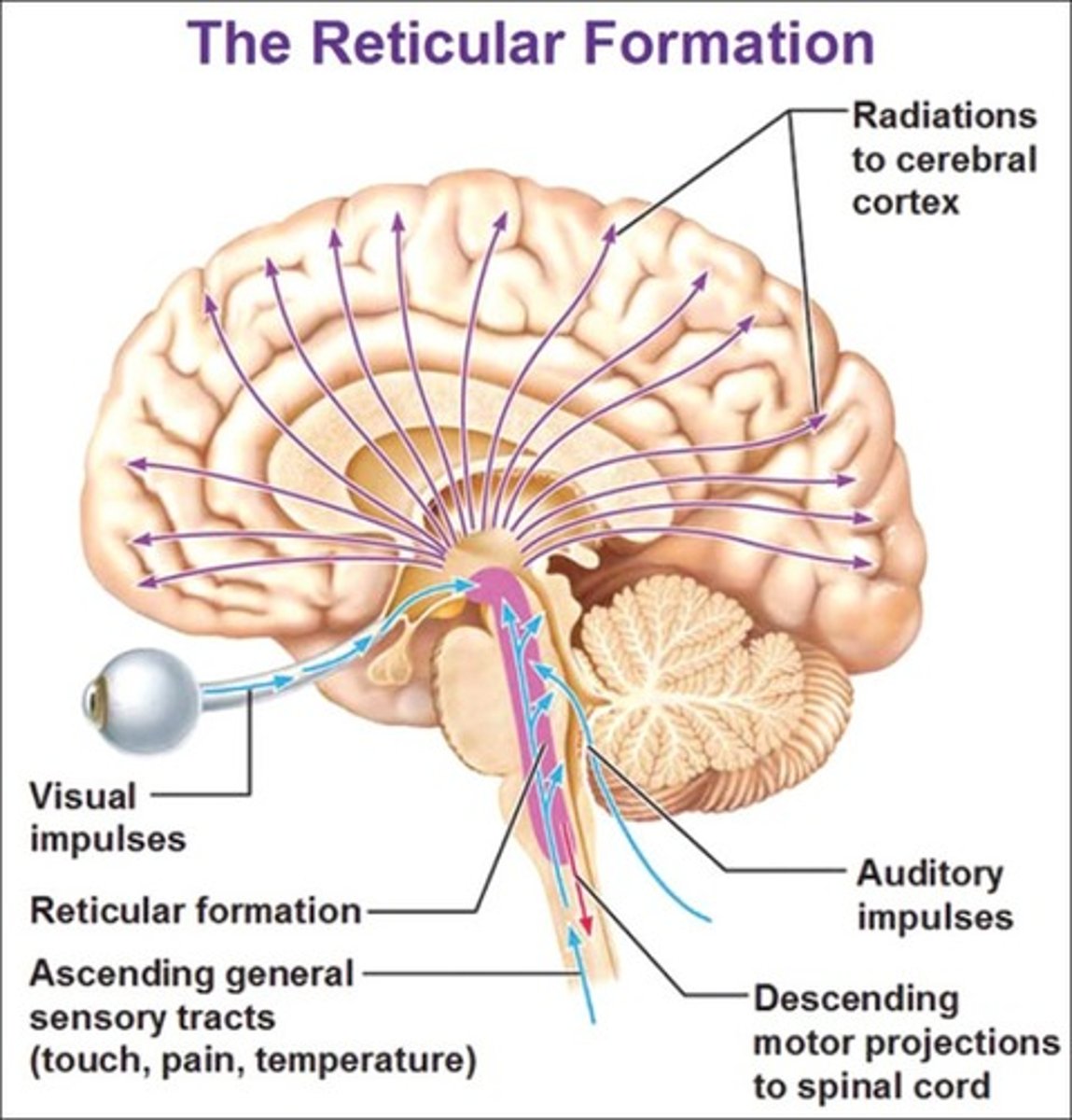
Midbrain
part of the brain stem that contributes to
movement, tracking of visual stimuli, and
reflexes triggered by sound
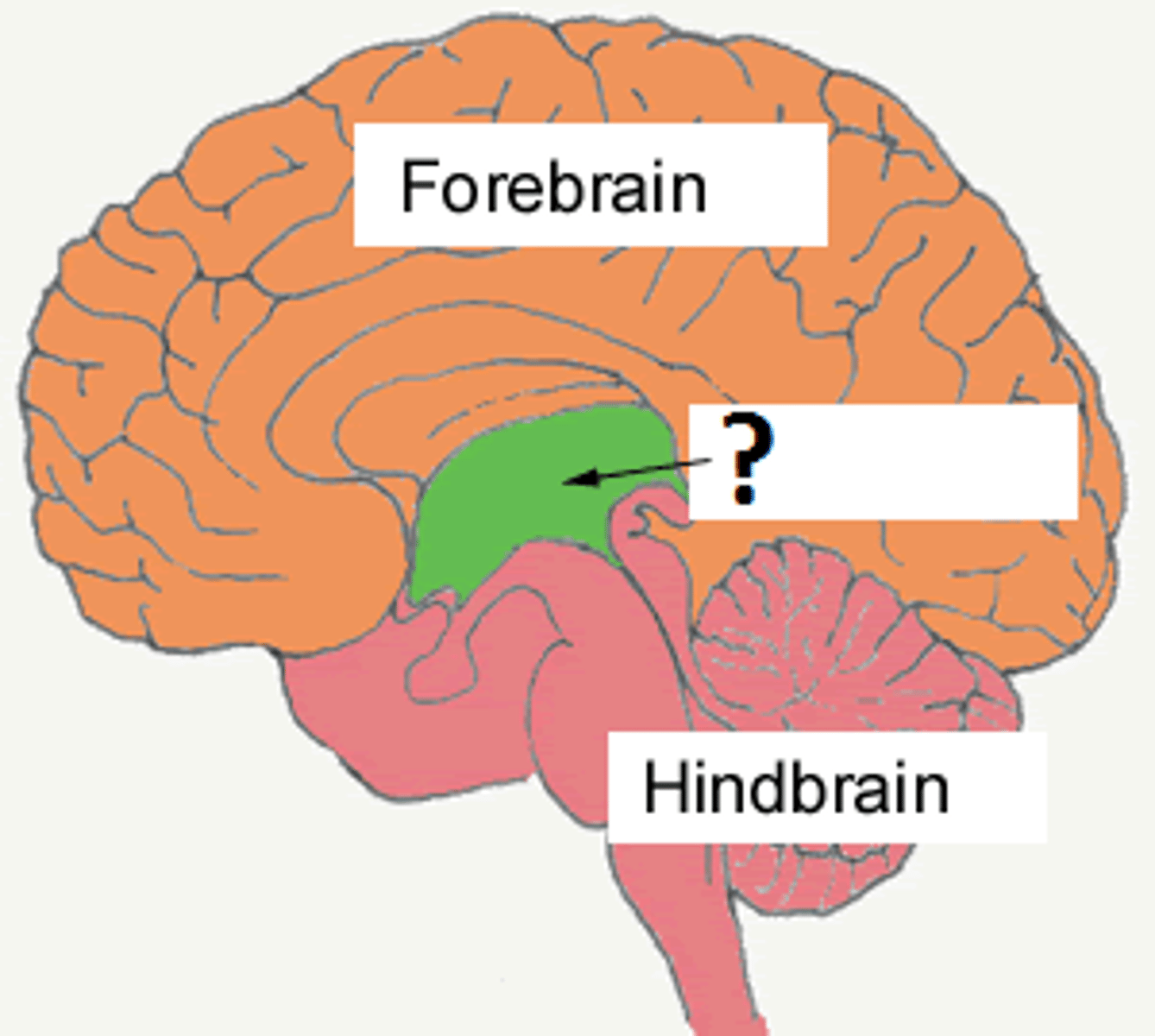
reticular activating system (RAS)
brain area that plays a key role in arousal
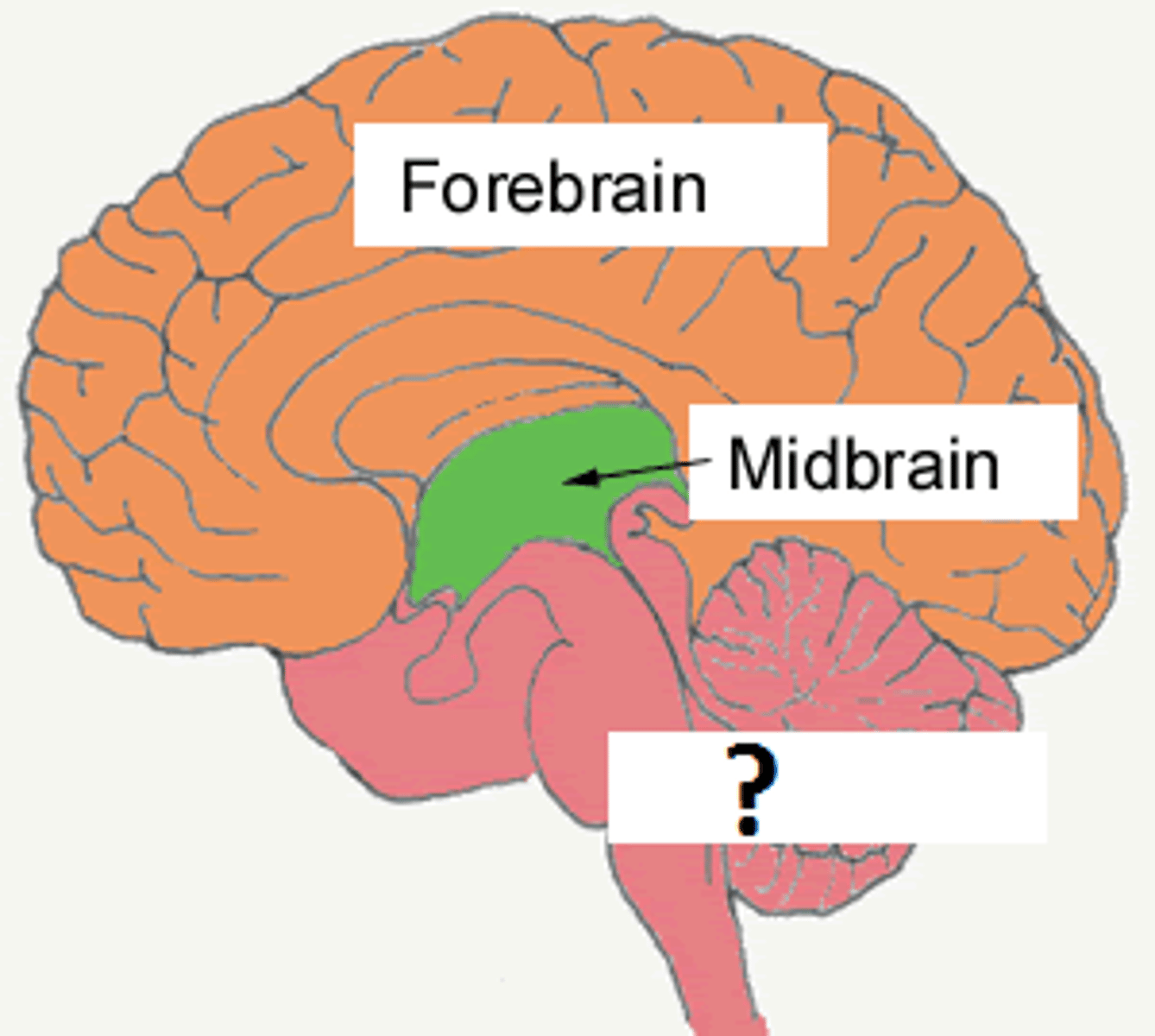
Hindbrain
region below the midbrain that contains the
cerebellum, pons, and medulla
Pons
part of the brain stem that connects the
cortex with the cerebellum
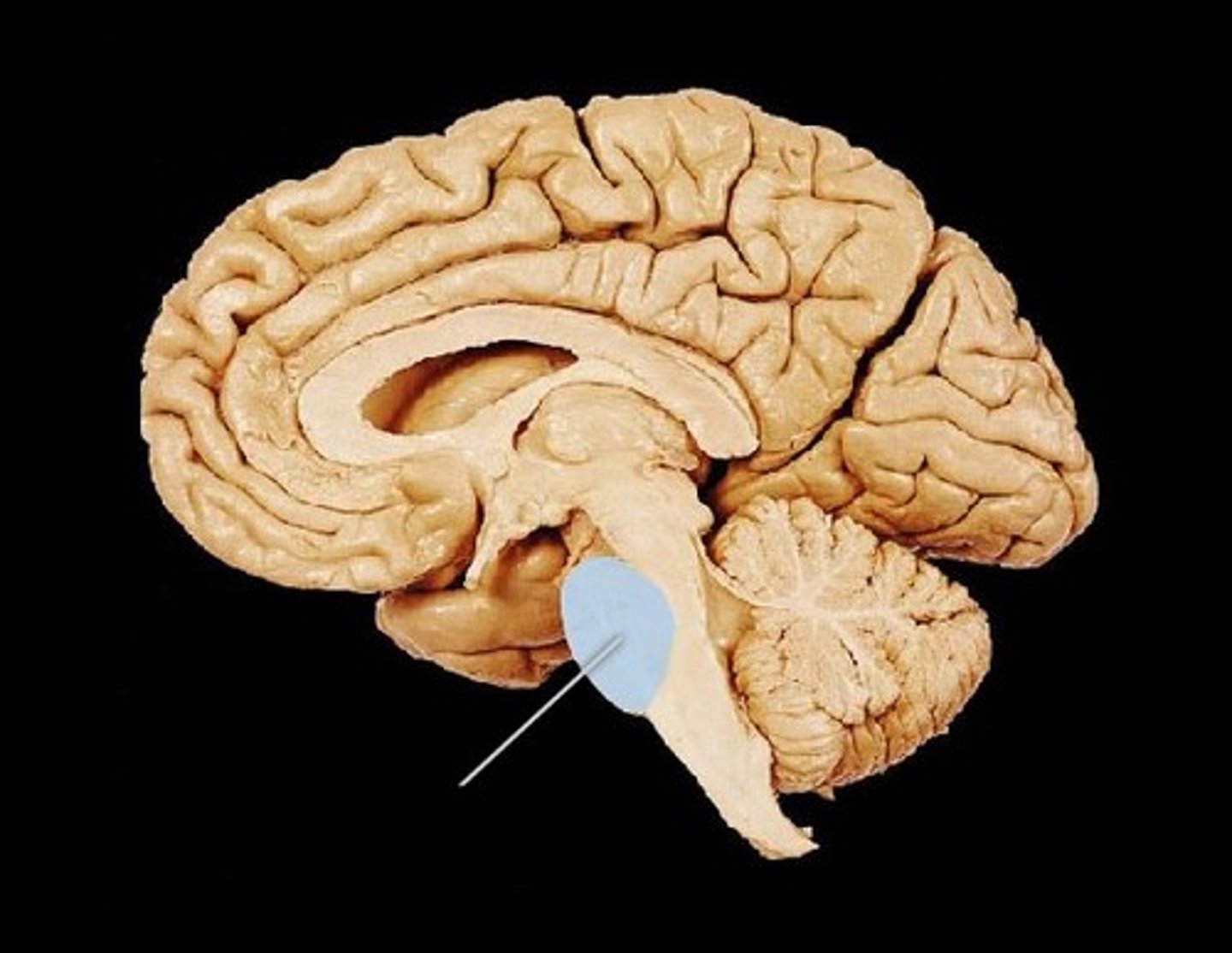
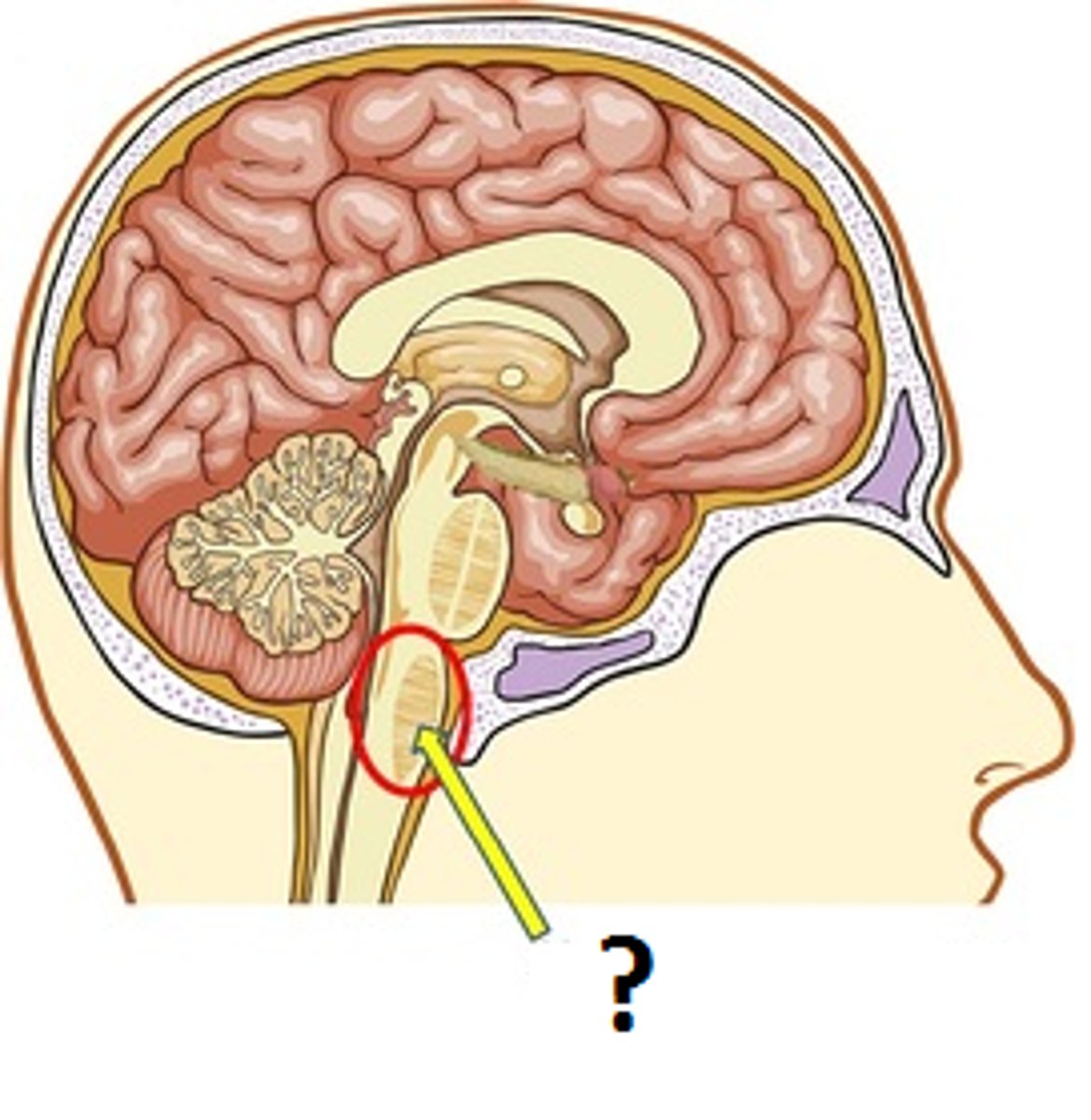
Medulla oblongata
part of brain stem involved in basic functions, such as heartbeat and breathing
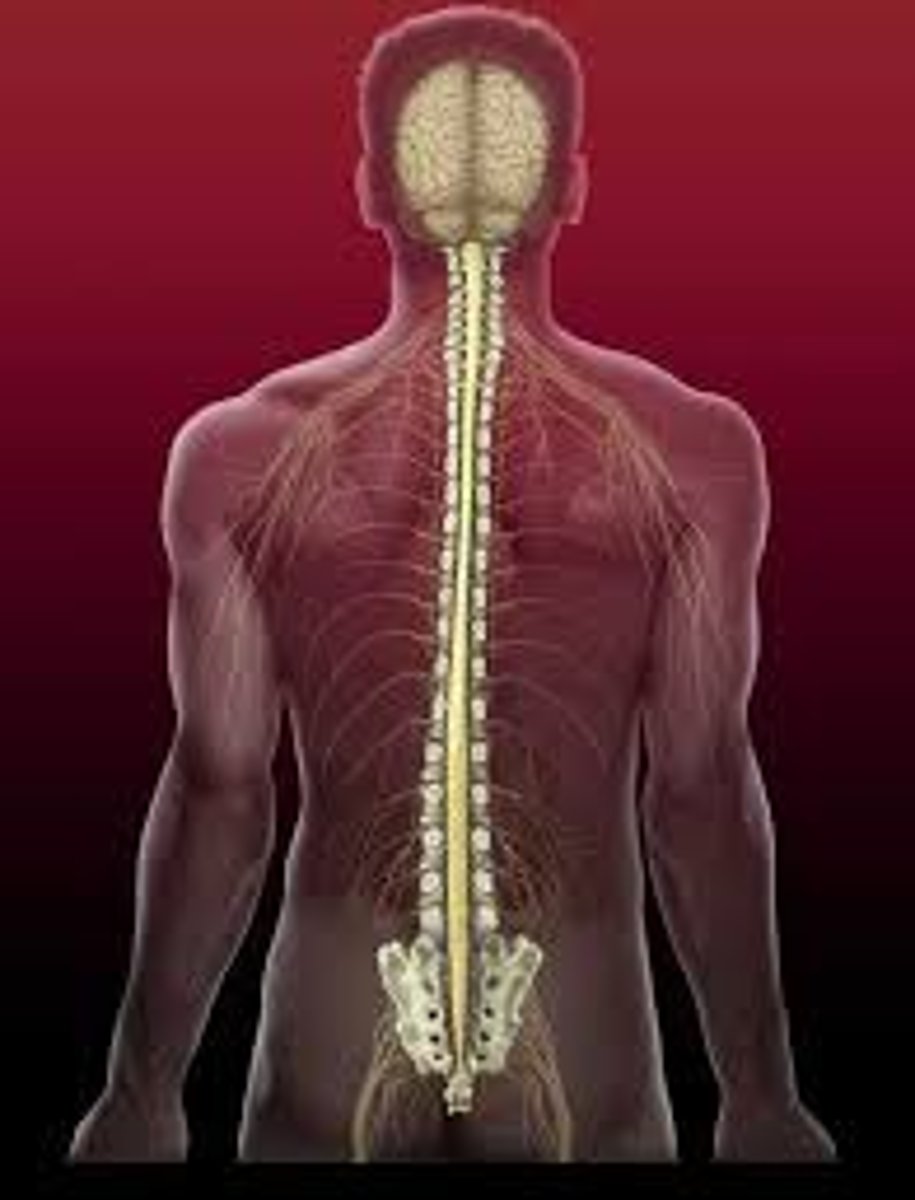
Spinal Cord
thick bundle of nerves that conveys signals
between the brain and the body
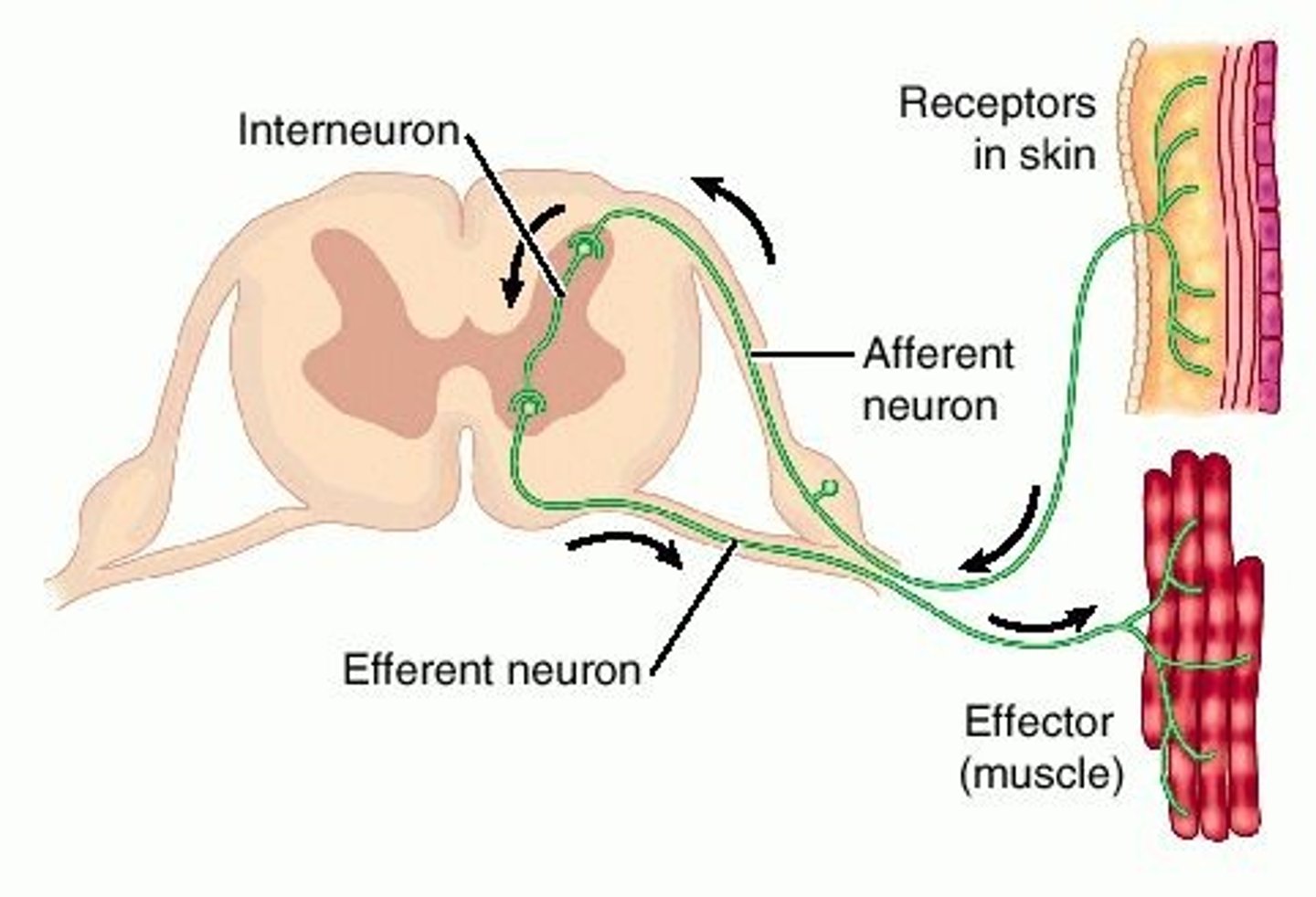
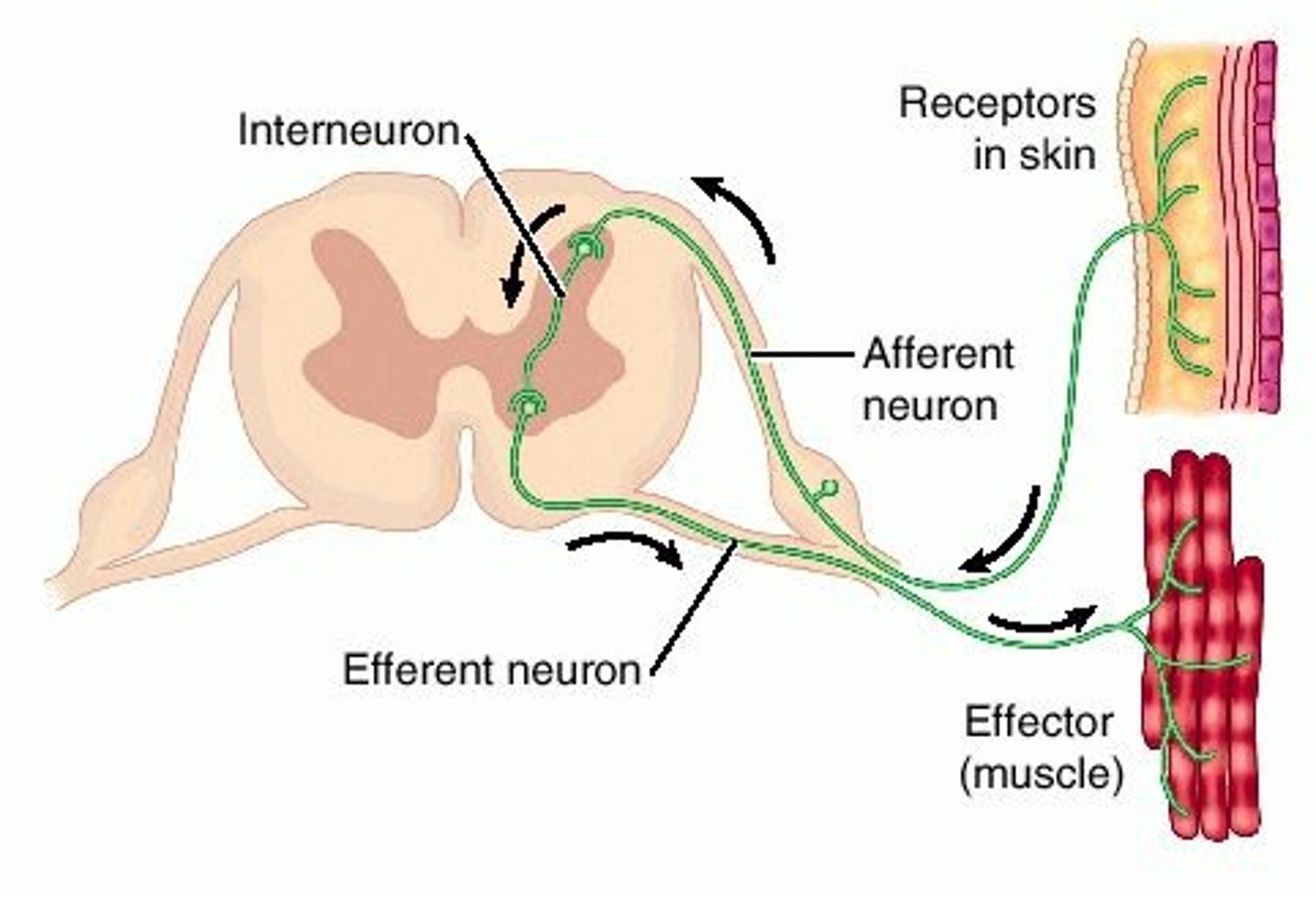
Interneuron
neuron that sends messages to other neurons nearby
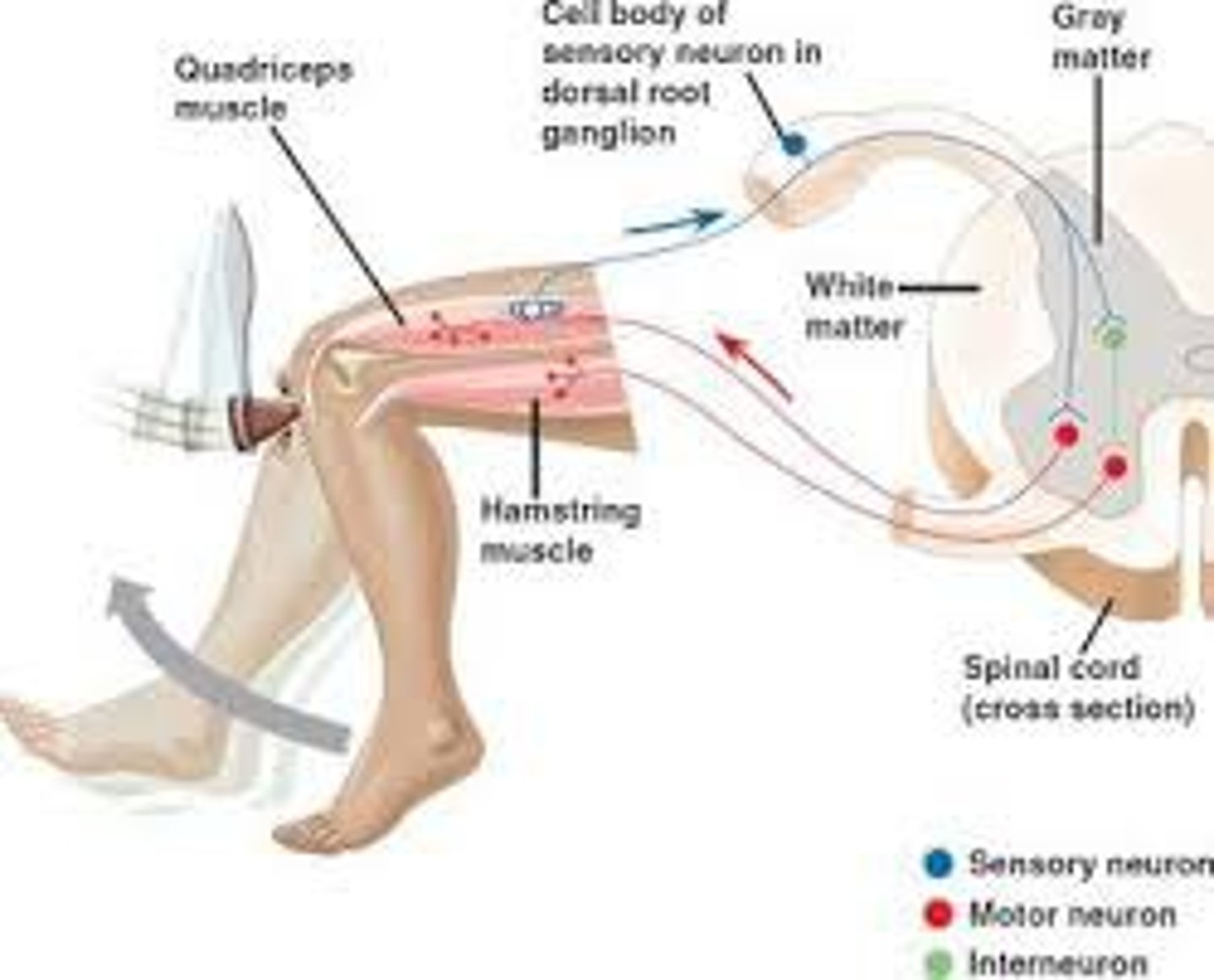
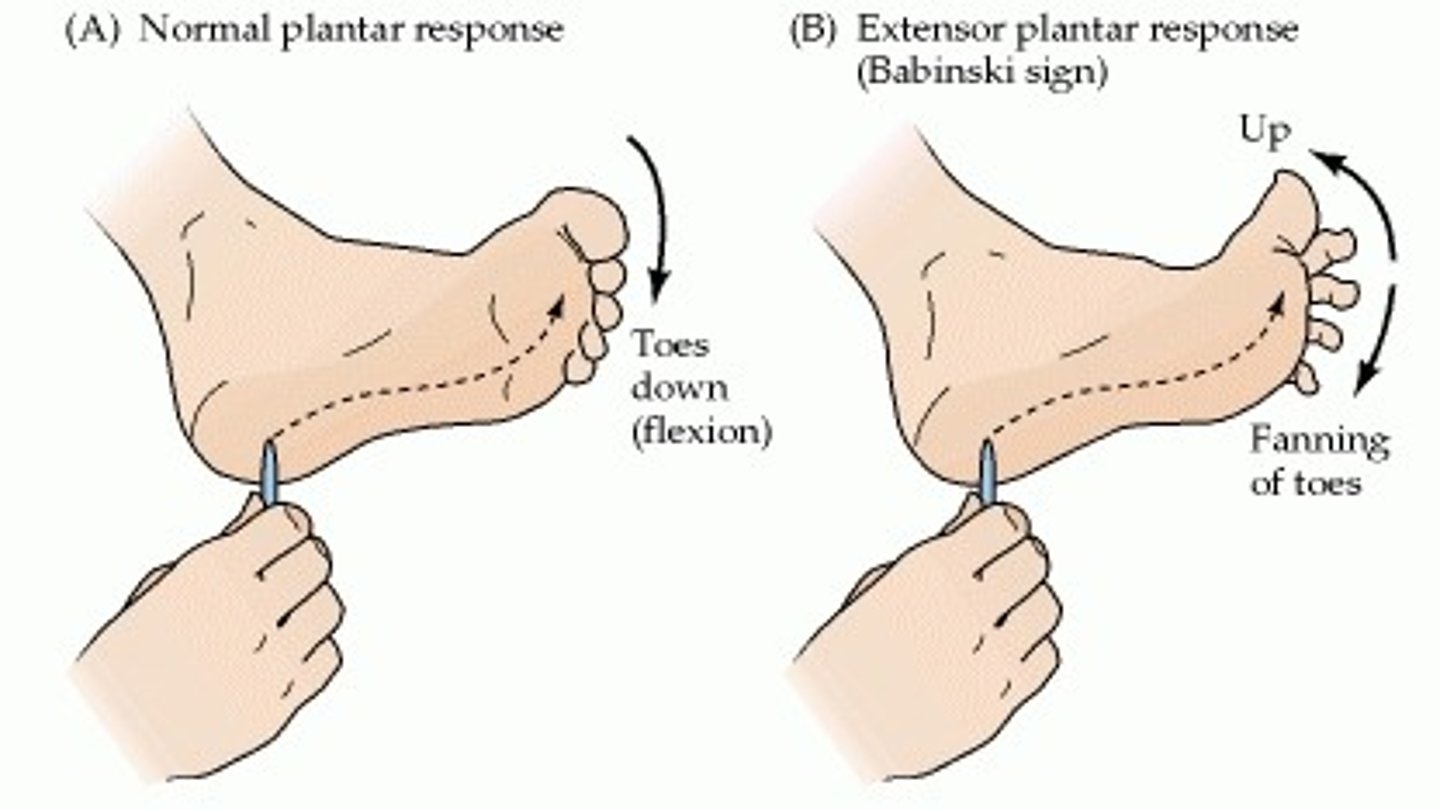
Reflex
an automatic motor response to a sensory
stimulus
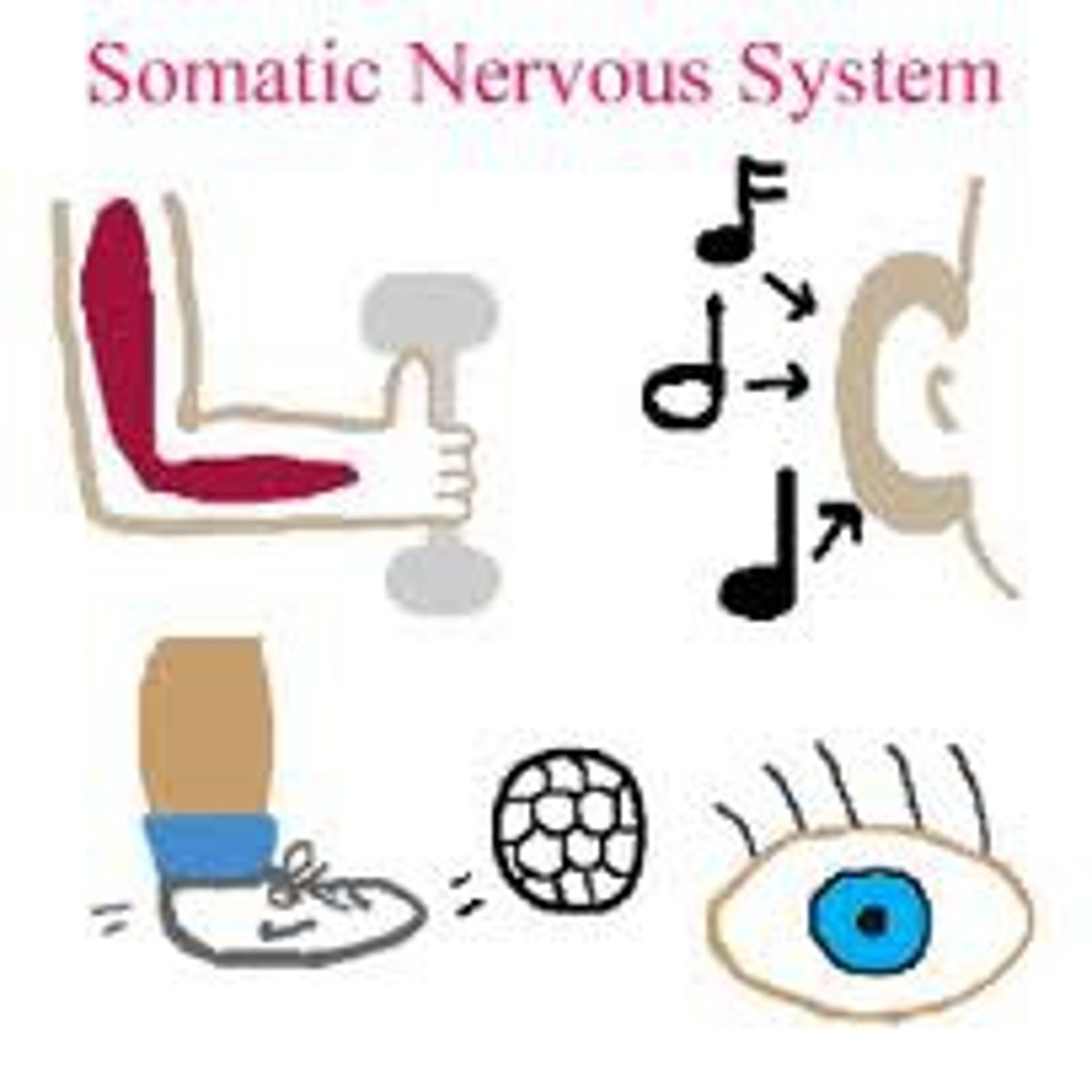
somatic nervous system
part of the nervous system that conveys
information between the CNS and the
body, controlling and coordinating voluntary
movement
autonomic nervous system
part of the nervous system controlling the
involuntary actions of our internal organs and glands, which (along with the limbic system) participates in emotion regulation
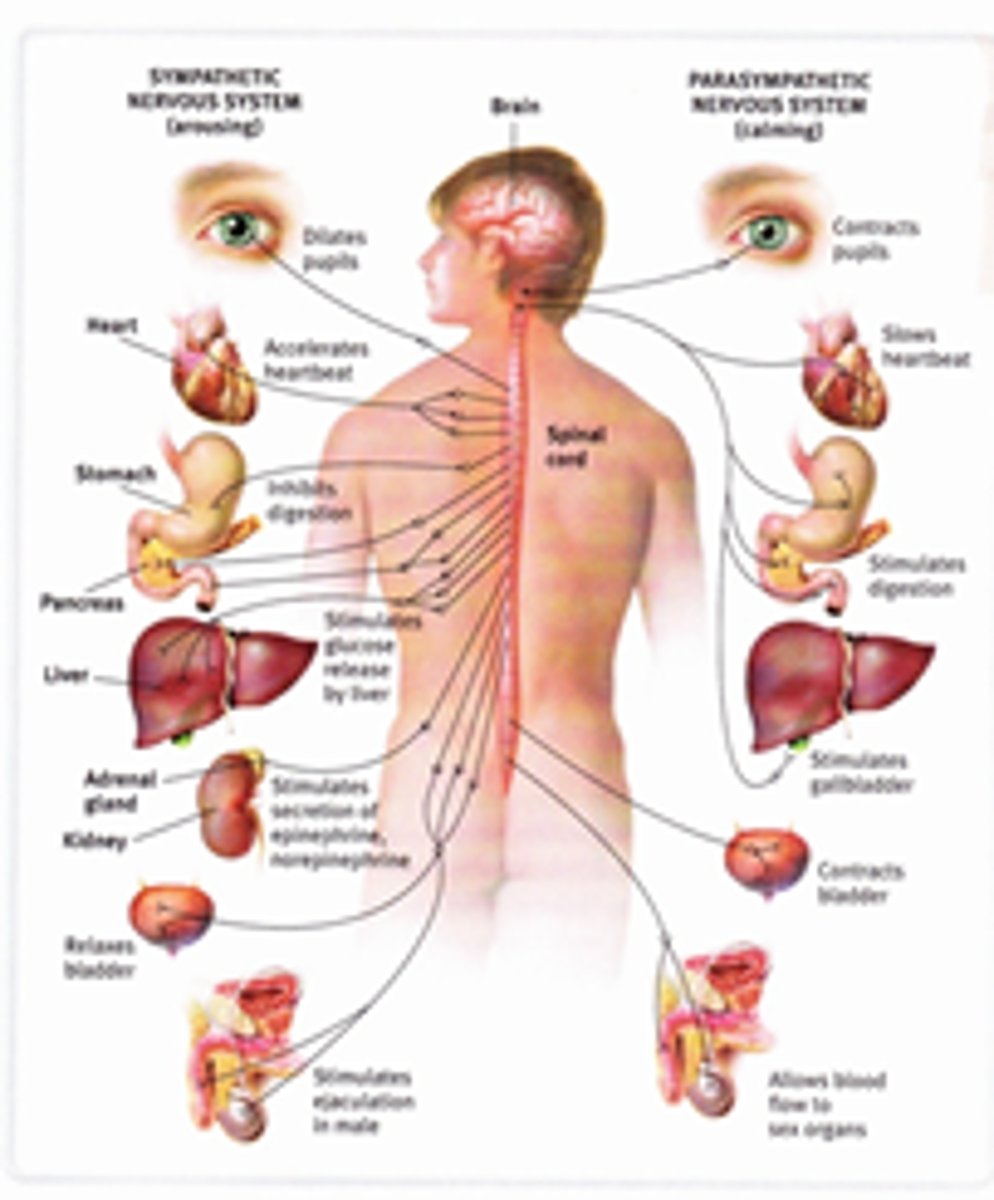
sympathetic nervous system
division of the autonomic nervous system
engaged during a crisis or after actions
requiring fight or flight
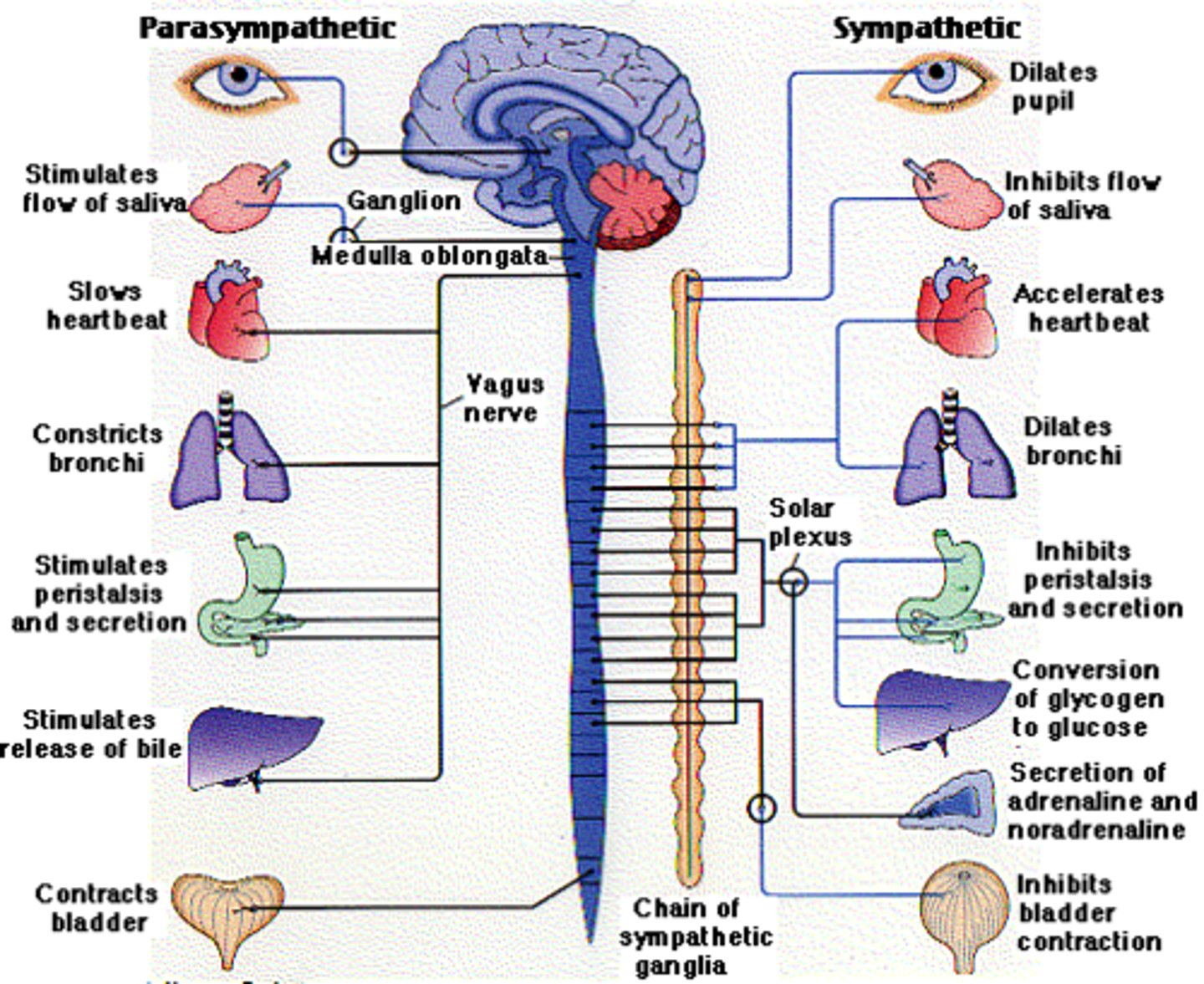
parasympathetic nervous system
division of autonomic nervous system that
controls rest and digestion

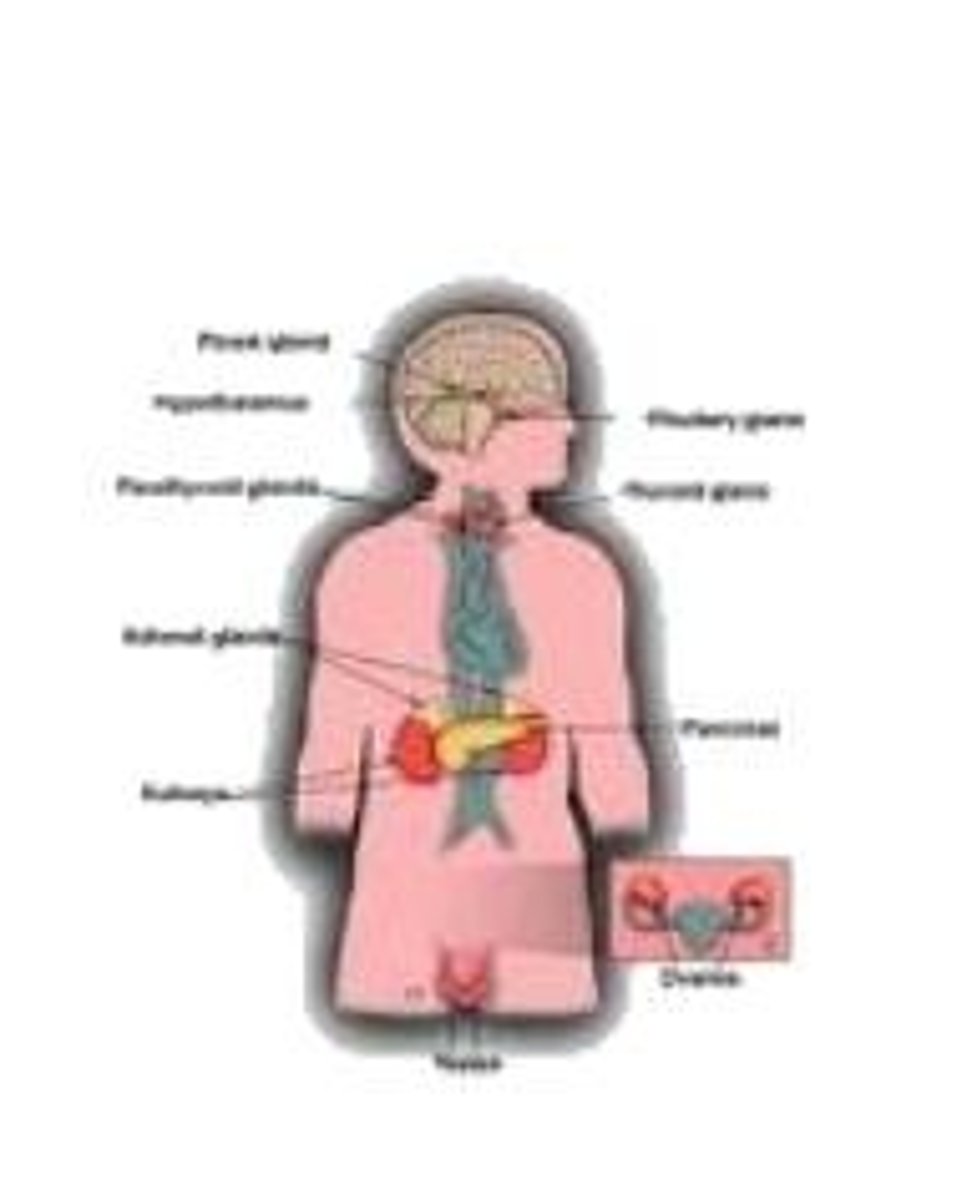
endocrine system
system of glands and hormones that
controls secretion of blood-borne chemical
messengers
Hormone
chemical released into the bloodstream that
influences particular organs and glands
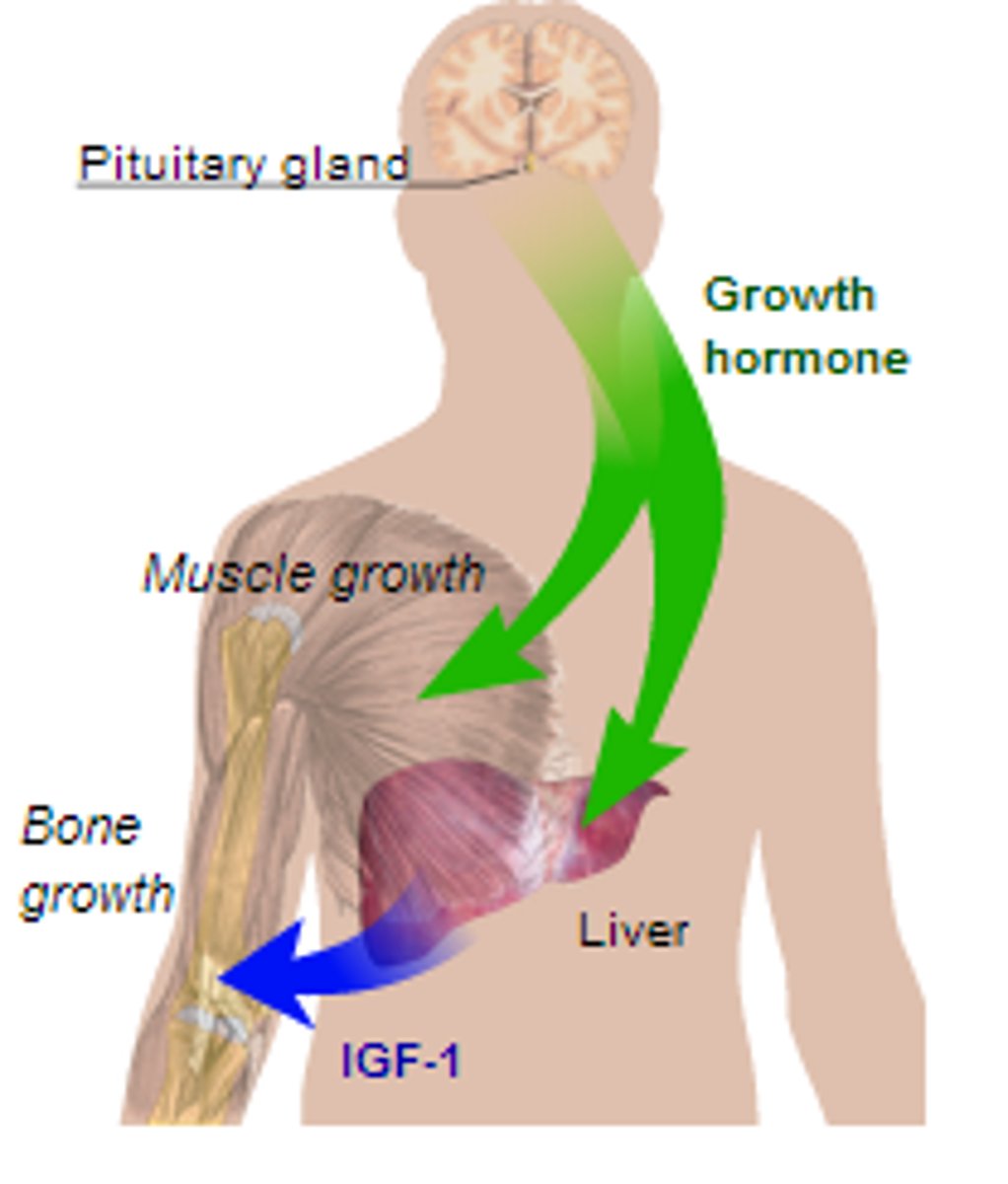
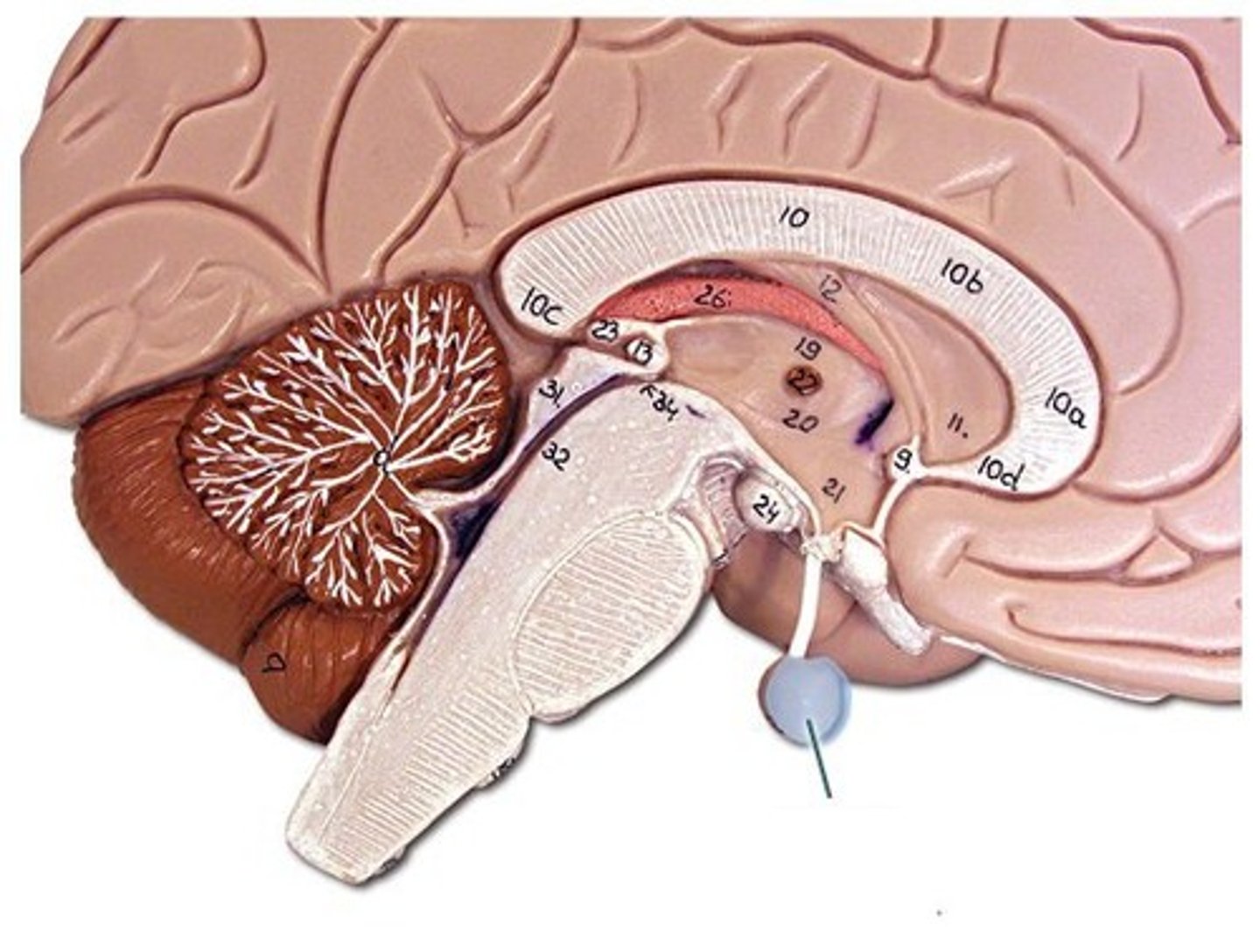
Pituitary Gland
master gland that, under the control of the
hypothalamus, directs the other glands of
the body
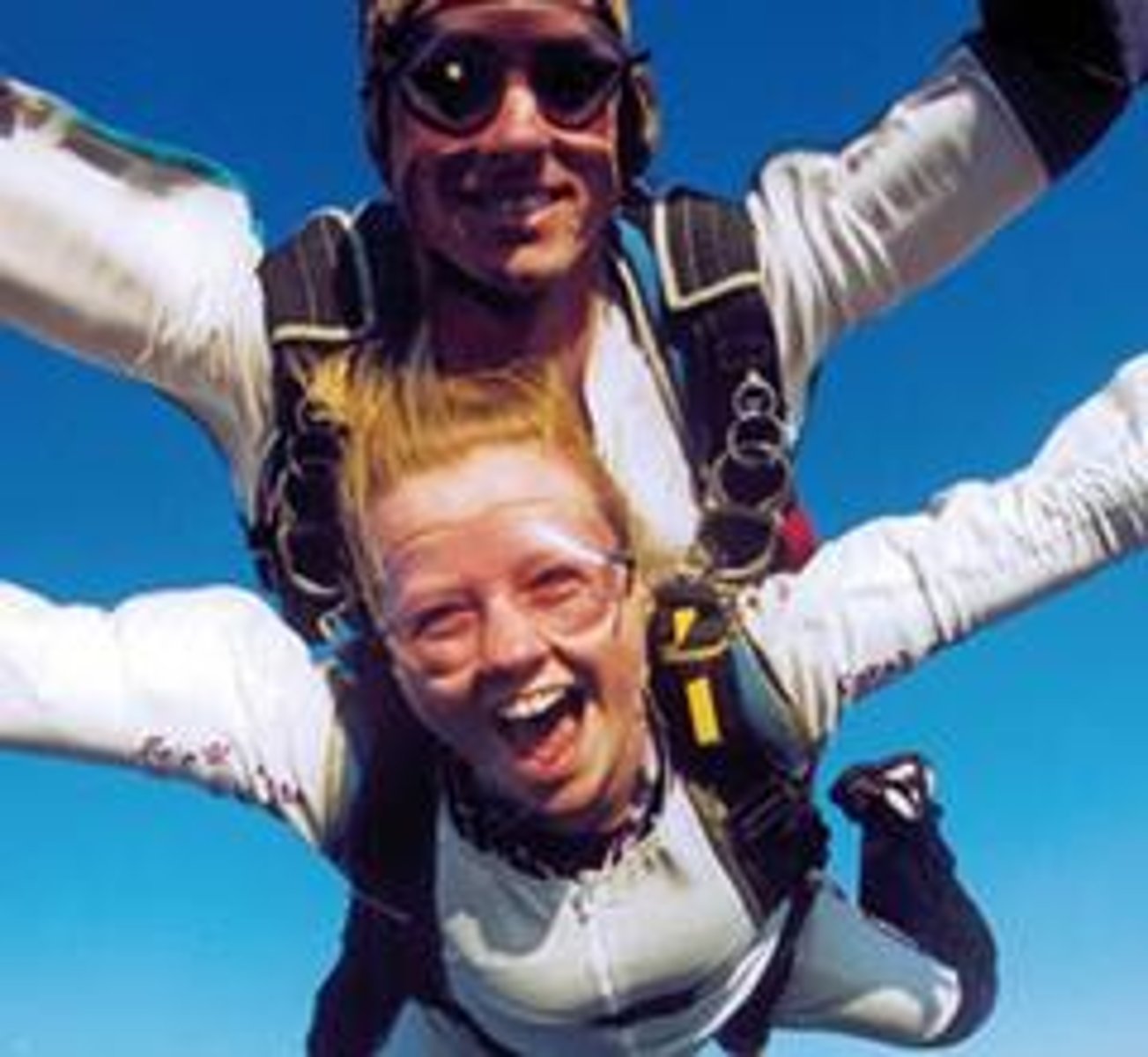
adrenal gland
tissue located on top of the kidneys that
releases adrenaline and cortisol during states of emotional arousal
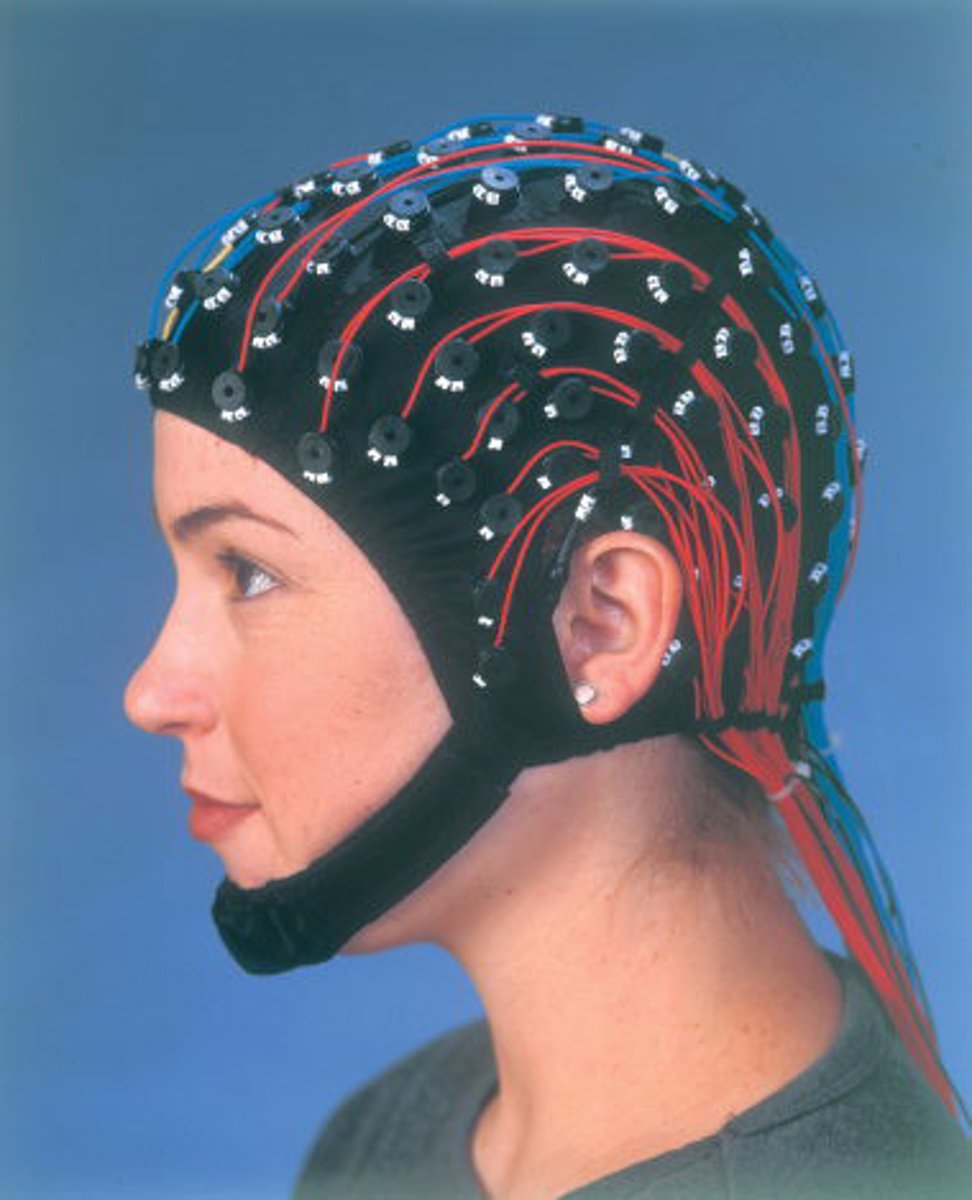
electroencephalograph (EEG)
recording of brain's electrical activity at the
surface of the skull
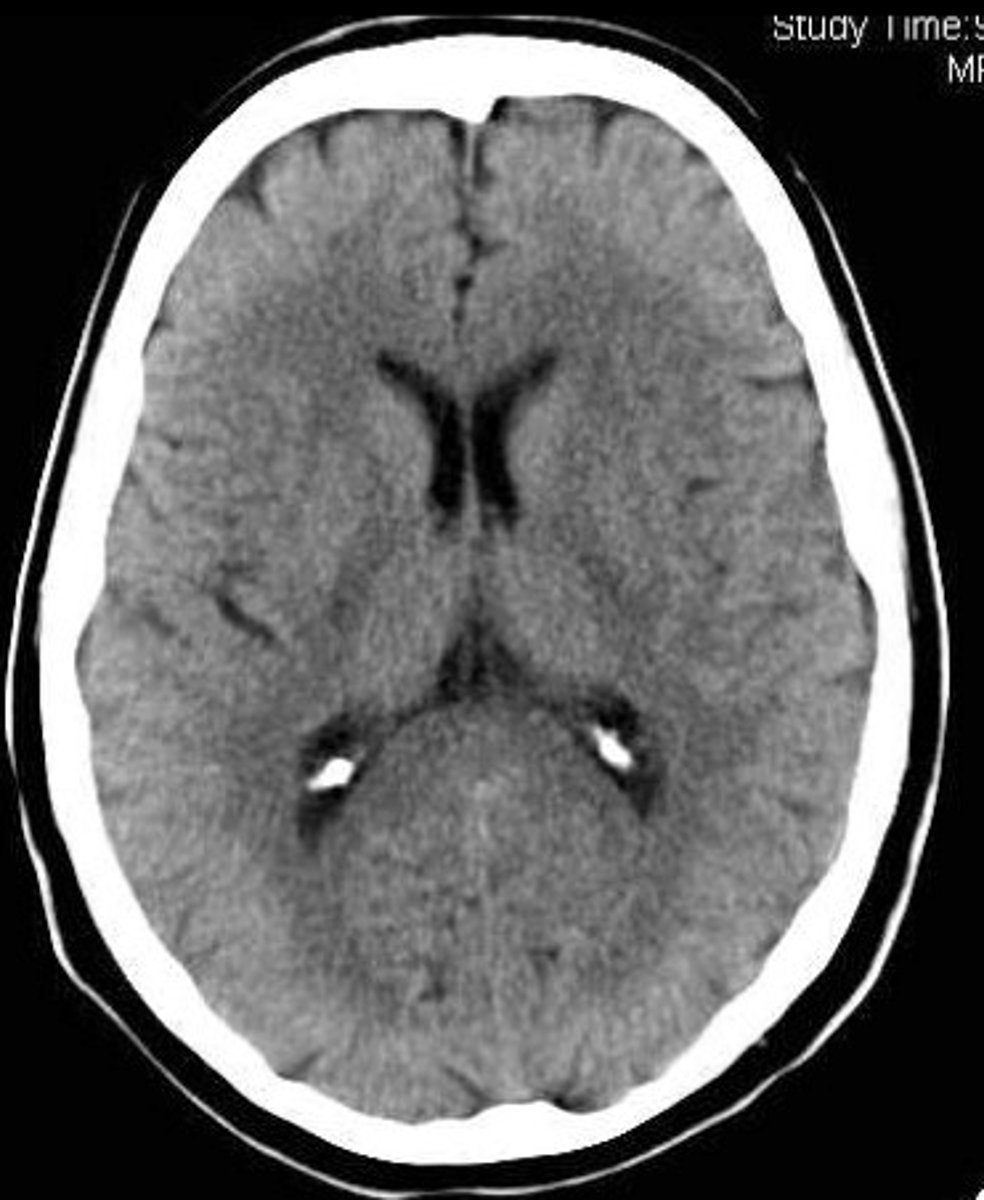
computed tomography (CT)
(CAT scan) a scanning technique using multiple X-rays to construct three-dimensional images
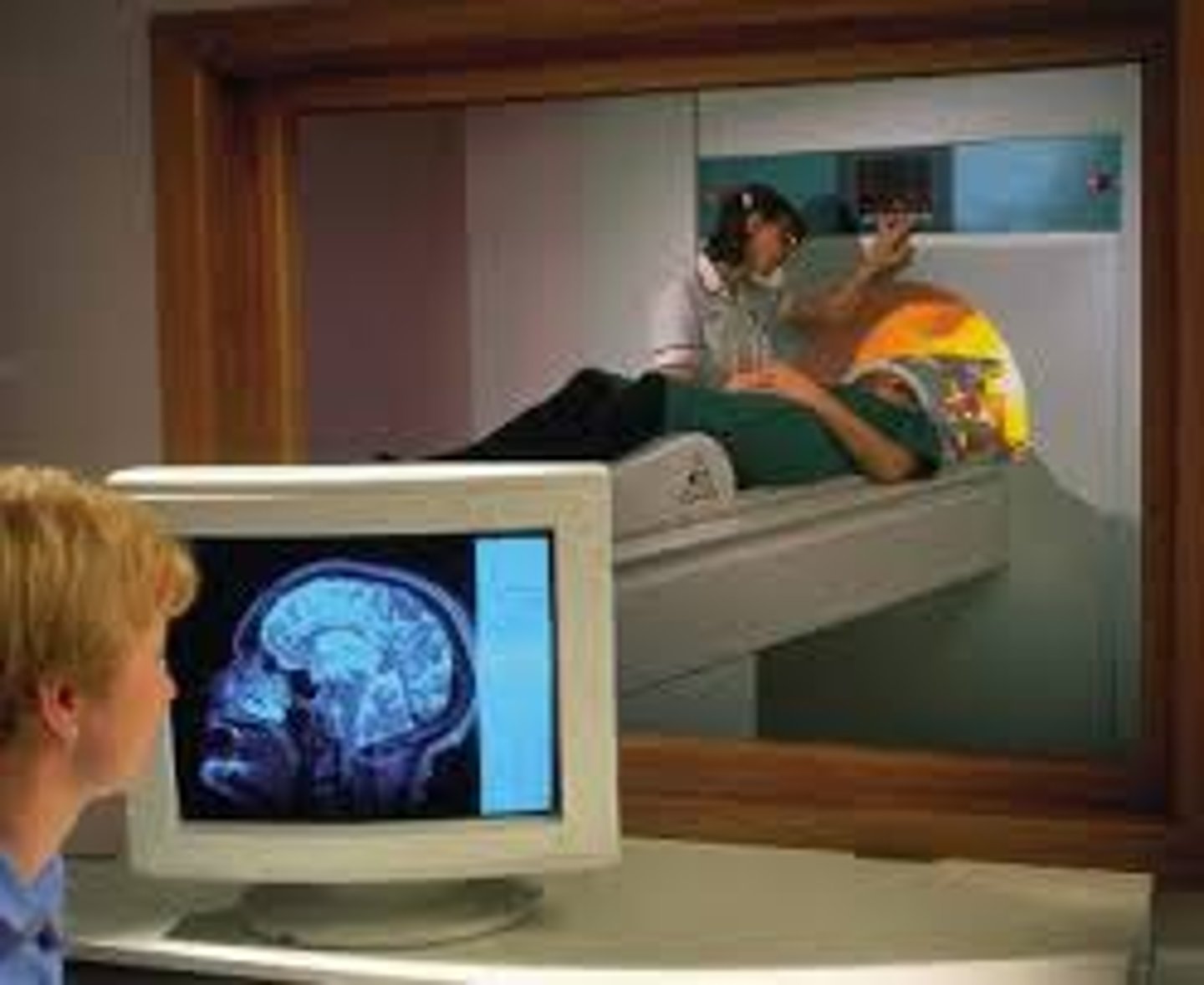
magnetic resonance imaging (MRI)
technique that uses magnetic fields to
indirectly visualize brain structure
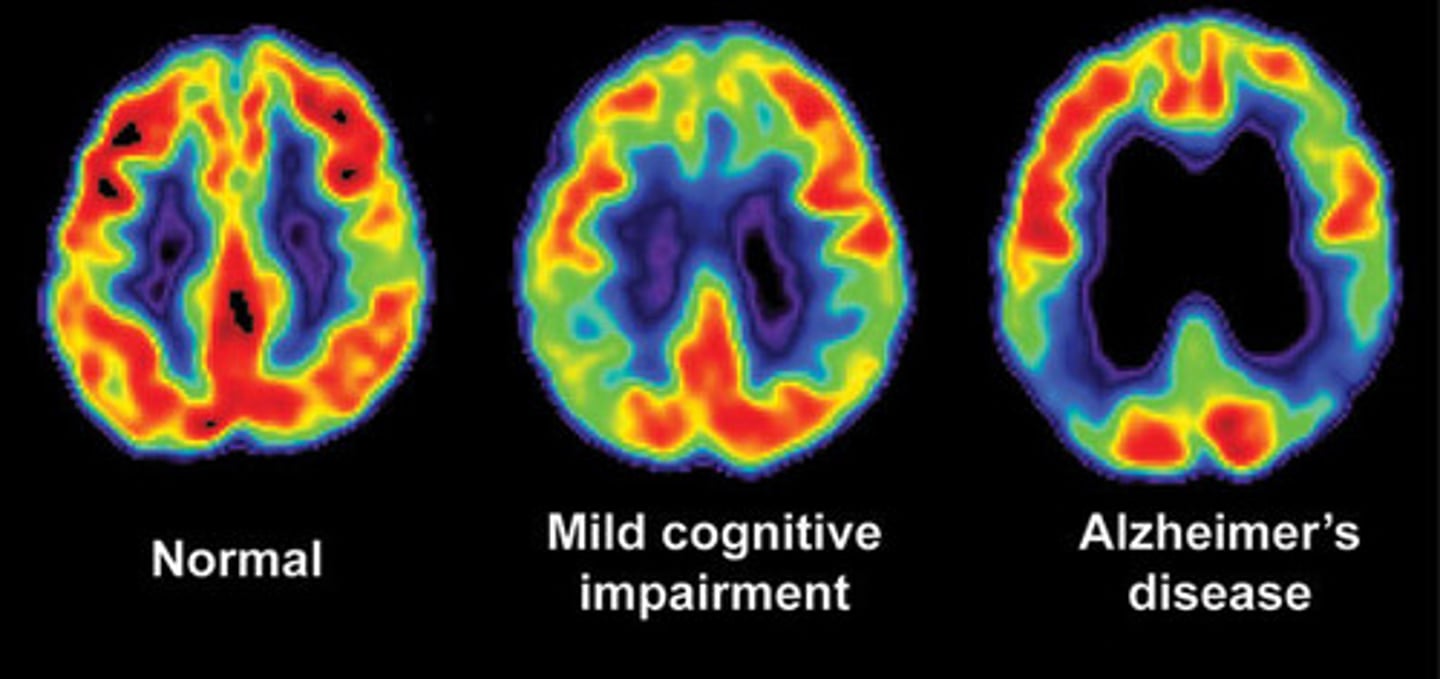
positron emission tomography (PET)
imaging technique that measures consumption of glucose-like molecules, yielding a picture of neural activity in different regions of the brain
functional MRI (fMRI)
technique that uses magnetic fields to visualize brain activity using changes in blood oxygen level
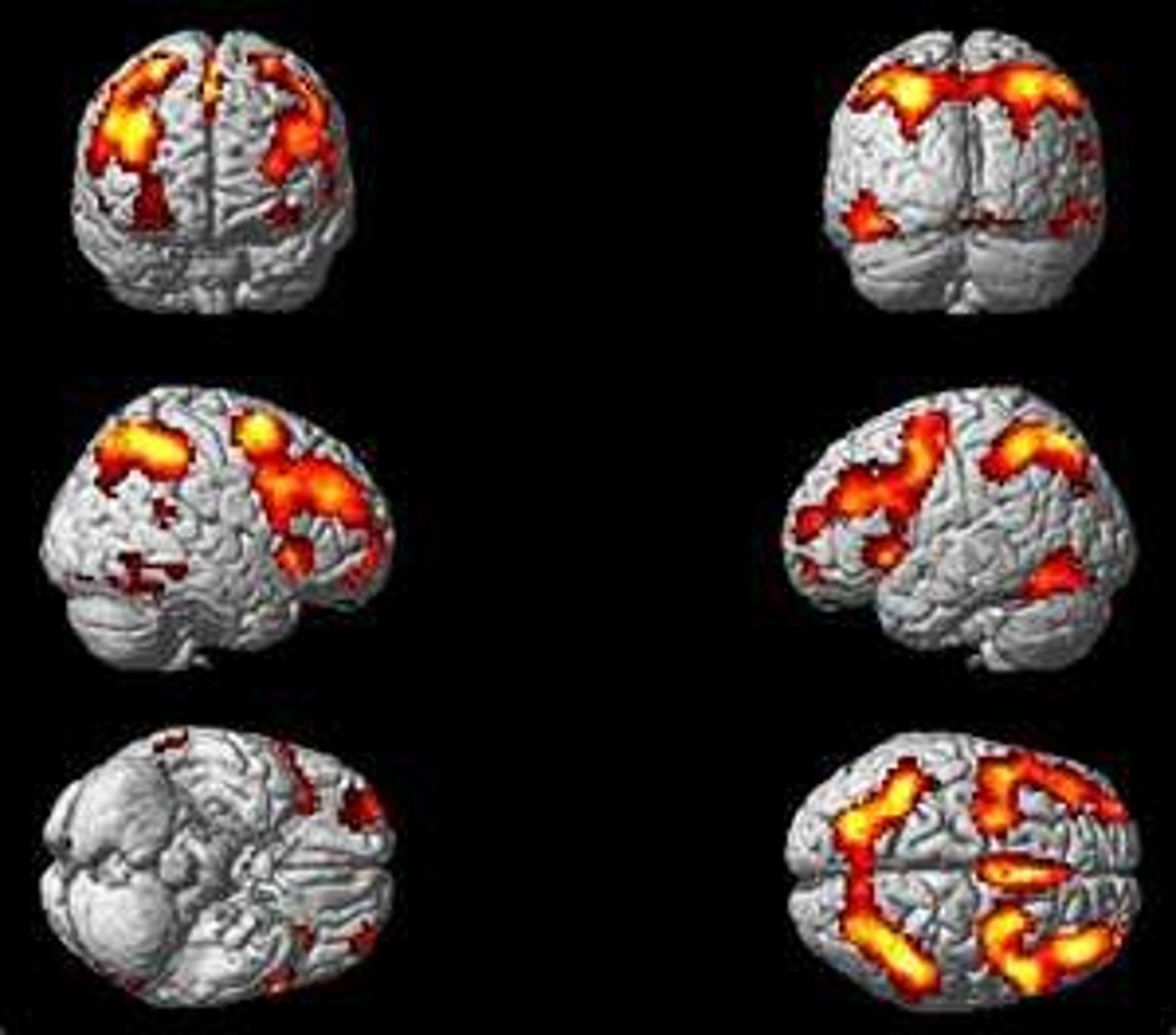
split-brain surgery
procedure that involves severing the corpus callosum to reduce the spread of epileptic seizures
Afferent Neurons
neurons that send signals to the brain
Efferent Neurons
neurons that send signals away from the brain
All-or-Nothing Principle
a neuron can release all of its neurotransmitters or none

Antagonist
locks into a receptor site like the neurotransmitter it mimics

Agonist
blocks a neurotransmitter
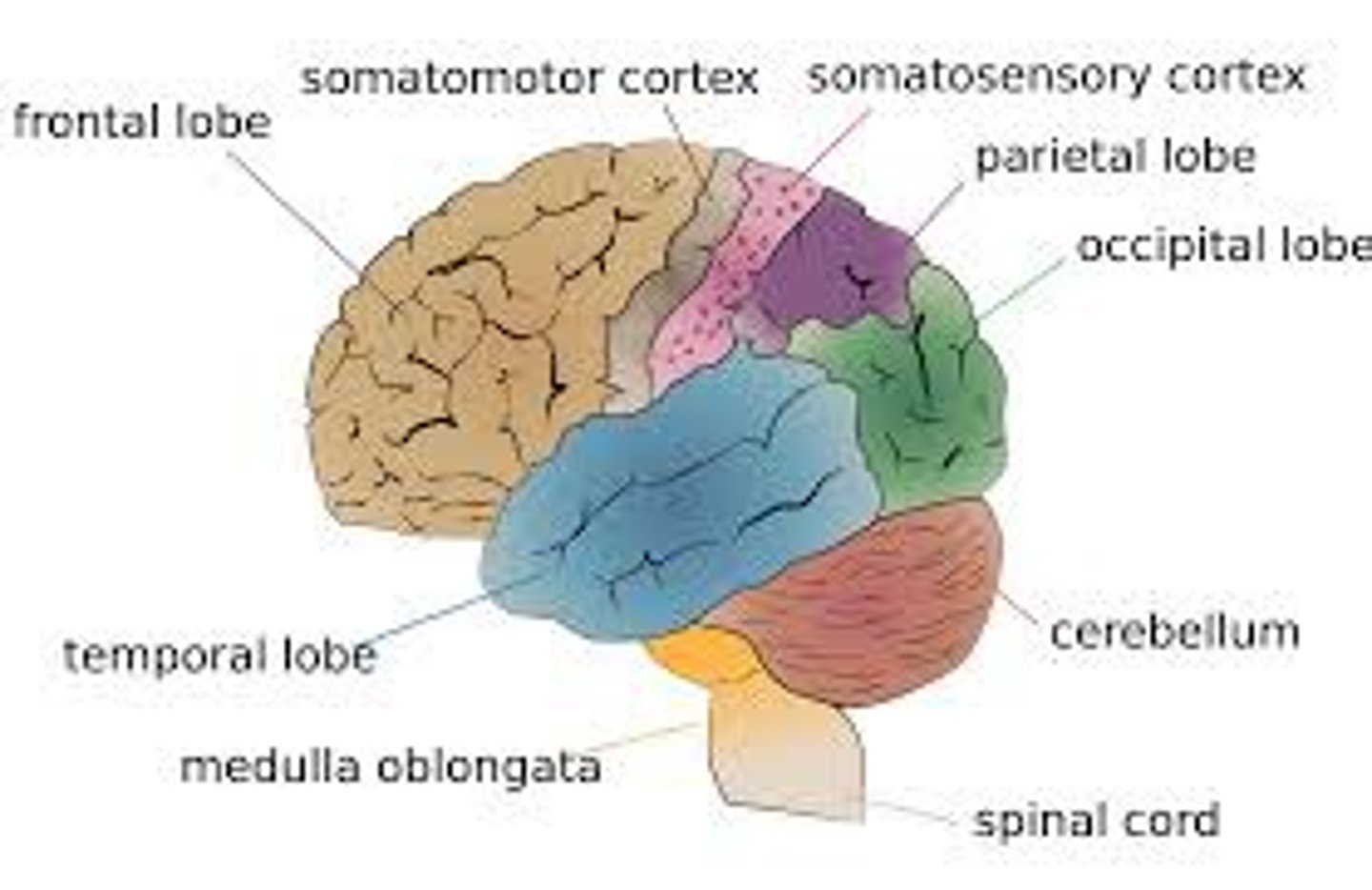
Sensory Cortex
portion of the brain which interprets body sensations
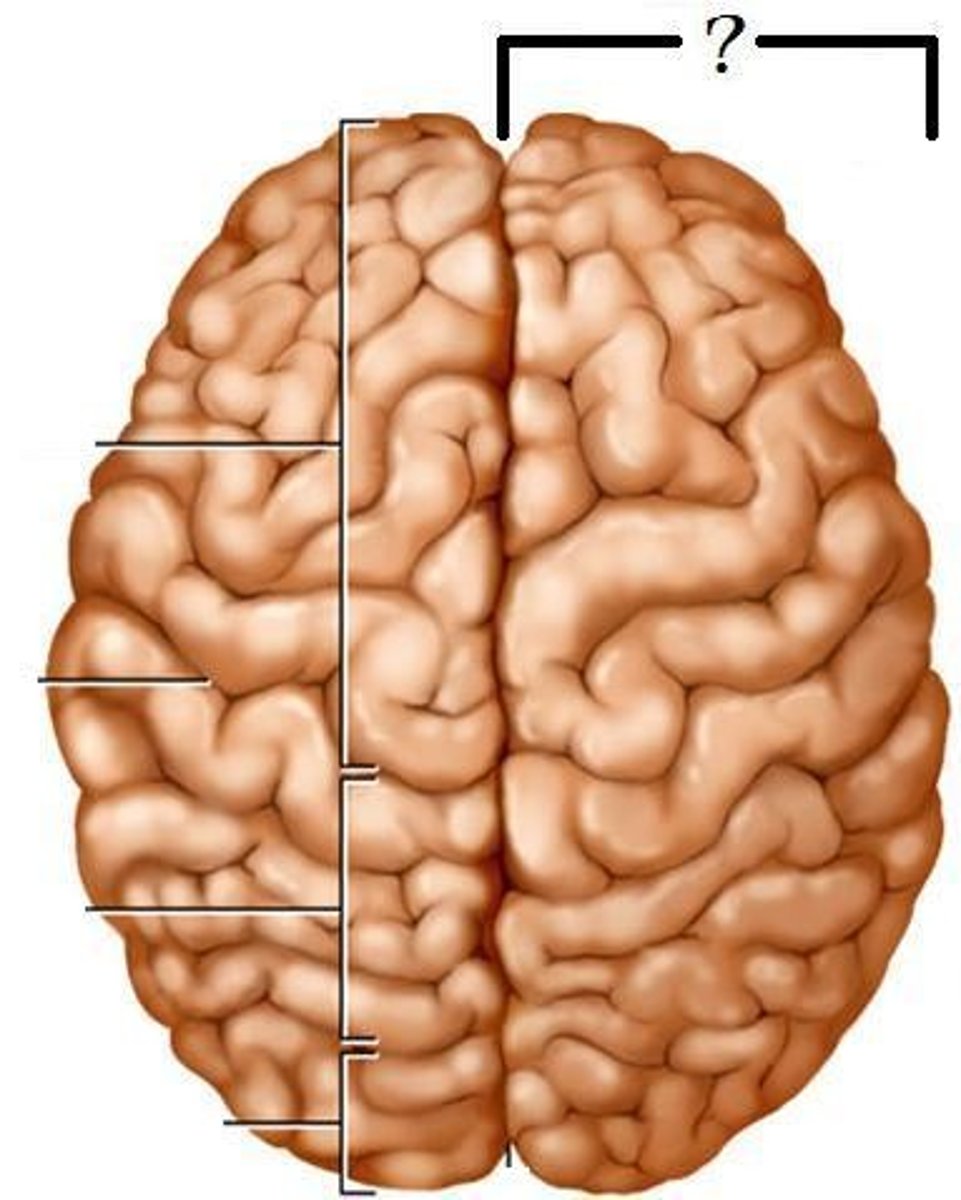
Right Hemisphere
part of the brain responsible for logic, spatial and holistic
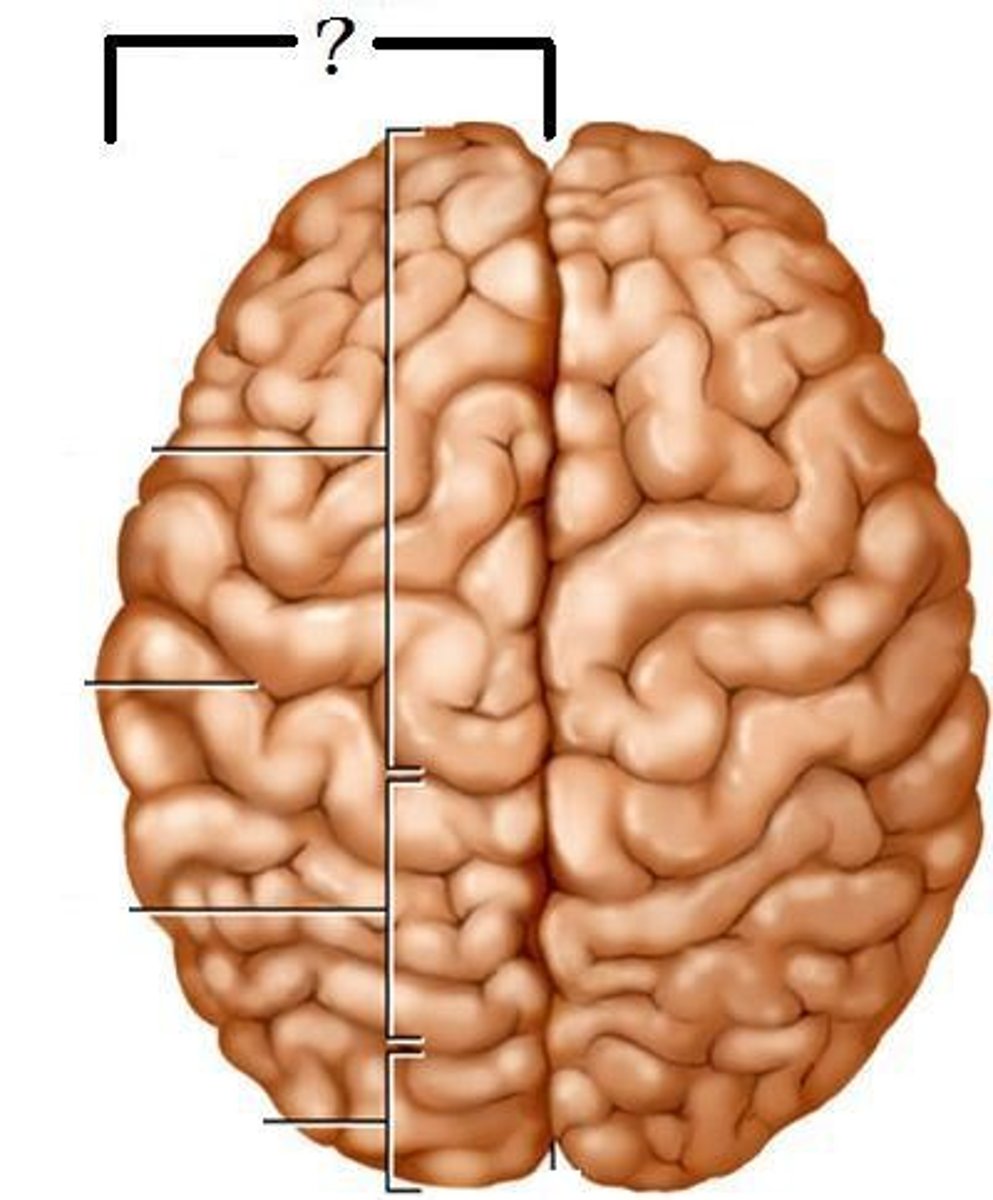
Left Hemisphere
part of the brain responsible for language, math and analyzing
soma
cell body of neuron? nucleus & vital organelles