Lecture 1- Intro to vet toxicology
 Call Kai
 Learn
Learn Practice Test
 Spaced Repetition
 Match
Match Flashcards
 Knowt Play
1/30

There's no tags or description
Looks like no tags are added yet.
Name | Mastery | Learn | Test | Matching | Spaced | Call with Kai | Chat |
|---|
No analytics yet
Send a link to your students to track their progress
31 Terms
poison
a substance that is capable of causing illness or death of a living organism when introduced or absorbed
poisonous
(of a substance) causing or capable of causing death or illness if taken into the body
toxin
a poisonous substance that is a specific product of the metabolic activities of a living organism, is notably toxic when introduced into the tissues of another organism, and is typically capable of inducing antibody formation
toxic
(of a substance) containing or being poisonous material especially when capable of causing death or serious debilitation
toxicant
any toxic substance. Toxicants can be poisonous and they may be synthetic or naturally occurring. The different types of toxicants can be found in the air, soil, water, or food.
venom
a toxic substance produced by some animals (ex: snakes, scorpions, hymenopterans, cnidarians, many others) that is injected into prey or an enemy chiefly by biting or stinging and has an injurious or lethal effect broadly
if you bite it and you die it’s poison if it bites you and you die it’s venom
toxicosis
a pathological condition caused by the action of a poison / toxin
intoxication
the state of being intoxicated. In common use, this frequently refers to ethanol, but “intoxication” is not specific for a cause. In medical and scientific contexts, it’s best to specify the cause (ex: “ethanol intoxication,” “propofol intoxication,” “marijuana intoxication,” etc).
poisoning
the action of administering poison to a living organism
toxicity
the quality of being toxic or poisonous
does natural = non toxic?
NO!
organic, non artificial does not mean anything safety wise
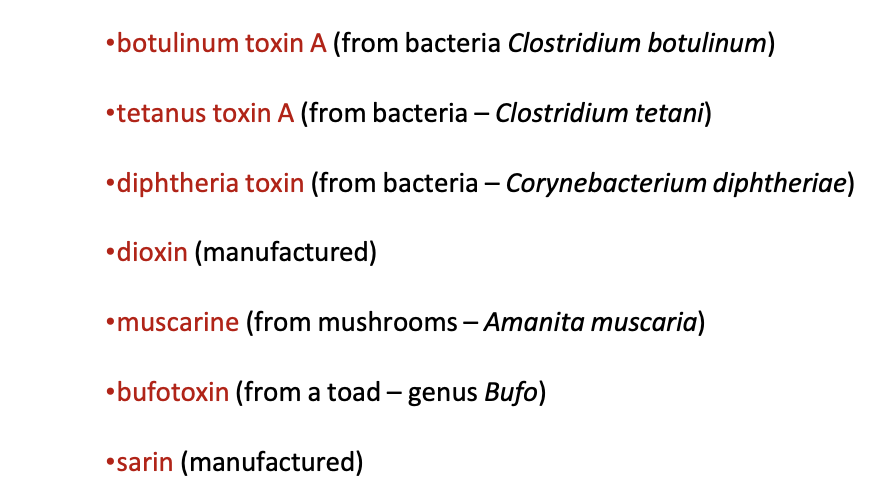
7 most deadly chemical substances
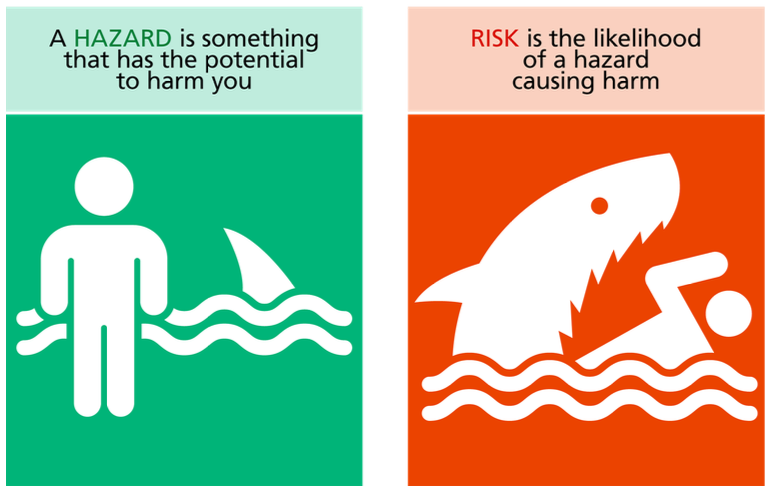
hazard
Something that has the potential to cause harm.
Includes an element of magnitude (ex: mild dermal irritation vs melanoma)
Could be physical trauma, chemical effect, infection, neoplasia, etc.
risk
The likelihood that a hazard will cause harm.
Includes an element of probability (1 in 100,000? Over what timeframe?)
Hazard x Probability = Risk
risk assessment
The systematic process of identifying, analyzing, and evaluating
potential hazards or risks that could cause harm, determining if the risk is
tolerable, and if not, what could be done to reduce or eliminate it.
hazard vs risk
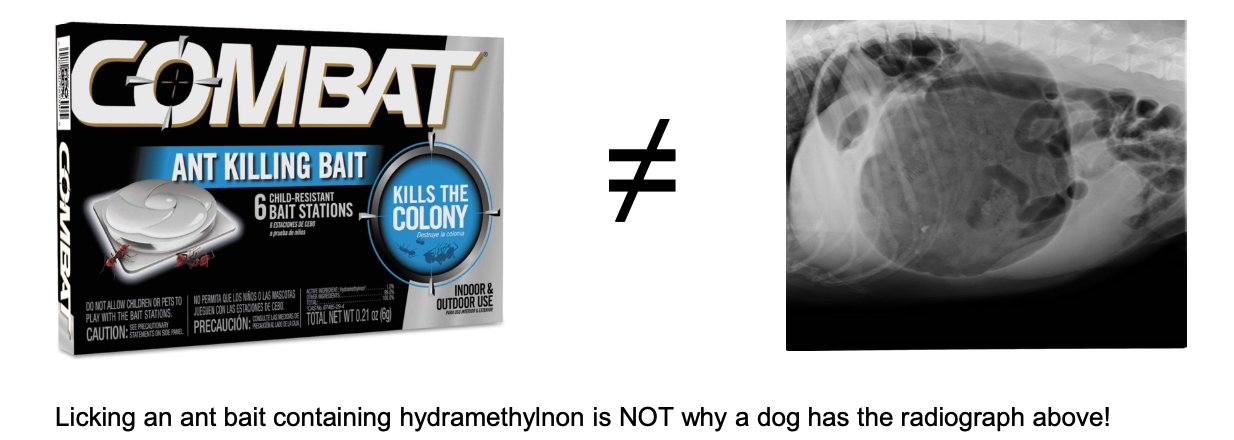
what is step one of toxicology analysis and what is it based on
step 1: list the toxicological differentials
signalment
history
clinical signs
other diagnostic information
T/F a toxic etiology being on your differential list means it’s the cause
false
what is step 2 of toxicology analysis
obtain appropriate samples
different toxins detectable in different matrices
when in doubt save it
step 3 of toxicology analysis
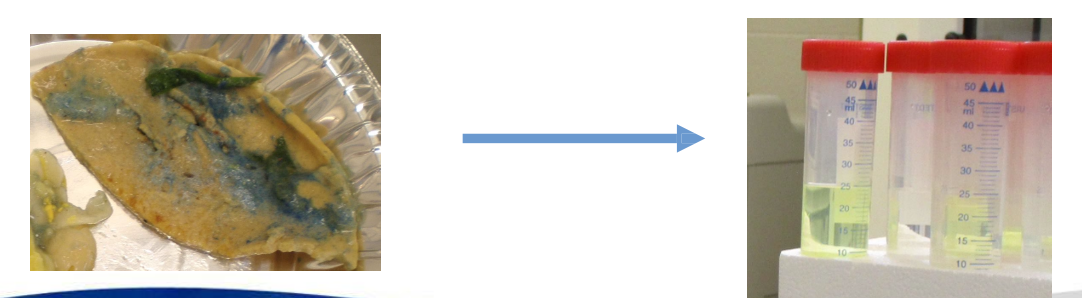
determine appropriate extraction technique
"Making colorful solids into clear liquids“
Clinician generally doesn’t do this – done with help of your D-lab team.
BUT they rely on YOU to collect, handle, and preserve the necessary samples.
step 4 of toxicology analysis
determine appropriate analysis
also genrally a D- lab decision
step 5 toxicology analysis
interpret results
qualitative vs quantitative
clinical significance
many toxicological diagnoses are based on
history
analysis is often ________ rather than diagnostic
confirmatory
when is history especially important
if illicit drug or alcohol toxicosis is suspected
baseline diagnostics
CBC, serum chemistry
+/- Urinalysis, +/- Coagulation profile
Radiographs, ultrasound, etc.
when do you normally perform baseline diagnostics
before specific toxicological testing
sample collection for analysis
history
examination
baseline diagnostics
environmental exam
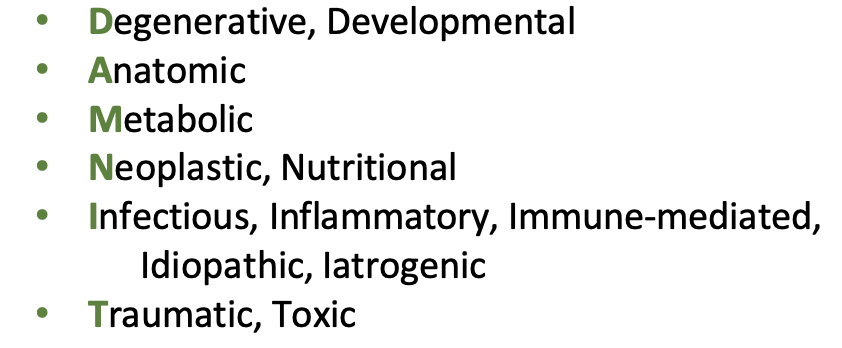
what is the DAMNIT mnemonic
what should you collect antemortem sampling
everything you can easily reach in the live animal
•Blood
•Whole blood and serum
•Please spin and separate serum!
•Urine
•Feces
•Vomit/gastric lavage
•Hair in cases of topical exposure
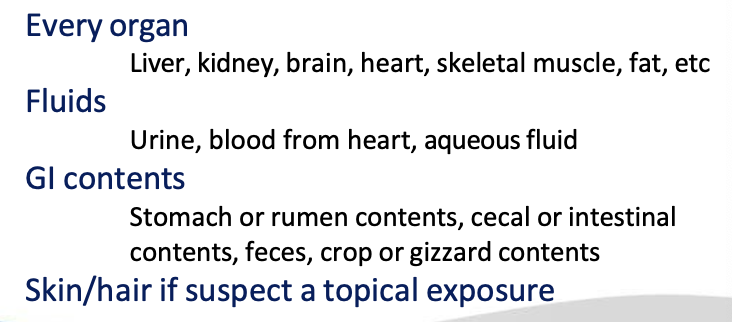
what to collect postmortem sampling
EVERYTHING and lots of it