Cardio Exam 3: Fooshy (HF)
 Call Kai
 Learn
Learn Practice Test
 Spaced Repetition
 Match
Match Flashcards
 Knowt Play
1/62

There's no tags or description
Looks like no tags are added yet.
Name | Mastery | Learn | Test | Matching | Spaced | Call with Kai | Chat |
|---|
No analytics yet
Send a link to your students to track their progress
63 Terms
Heart Failure
A clinical syndrome caused by inability of the heart to supply blood to meet ______
A clinical syndrome with ______ and corroborated by ______ levels and/or ______ evidence of ______
______ is a subset of HF characterized by ______ and ______
tissue metabolic requirements, S/Sxs caused by structural and/or functional cardiac abnormality, elevated natriuretic peptide (NP), objective, pulmonary or systemic congestion, CHF, LV systolic dysfunction (LVSD), volume excess
Heart Failure
RV pumps ______ blood to the ______ via ______
LV pumps ______ blood to the ______ via ______
RV → ______ circulation
LV → ______ circulation
deoxygenated, lungs, pulmonary arteries, oxygenated, systemic circulation, aorta, pulmonary, systemic
Flow
Q = Change in P / R
R = Resistance
Q = Flow
______ is the driving force for flow
R is the ______
Change in P, force that impedes flow
Pressure
Upstream pressure for the CV system → ______
The ______ pressure for the CV system in the ______
Aorta, downstream, right atrium (RA)
Resistance
______ is the dominant variable that determines the resistance
______ is opposite/inverse of Resistance
Radius, radius
Ejection Fraction
Ventricular performance → fraction of ______ ejected from the ______ during ______
EF = SV / EDV
______ = ______ → determined by ______
end-diastolic volume, ventricles, systole, SV, Stroke Volume, preload, afterload, and contractility
Frank-Starling Principle
______ produces a ______ stretch of heart muscle → ______
______ → amt of blood ejected from the ventricle with each cardiac cycle
______ → amt of blood in heart’s LV just before the heart contracts
Increased diastolic filling, greater, larger SV, Stroke Volume, End-Diastolic Volume
Key Mediators of CO
______ → ______ SV
______ → ______ SV
______ → ______ CO
Increased Contractility and Preload, Increased, Increased Afterload, Decreased, Increased SV and HR, Increased
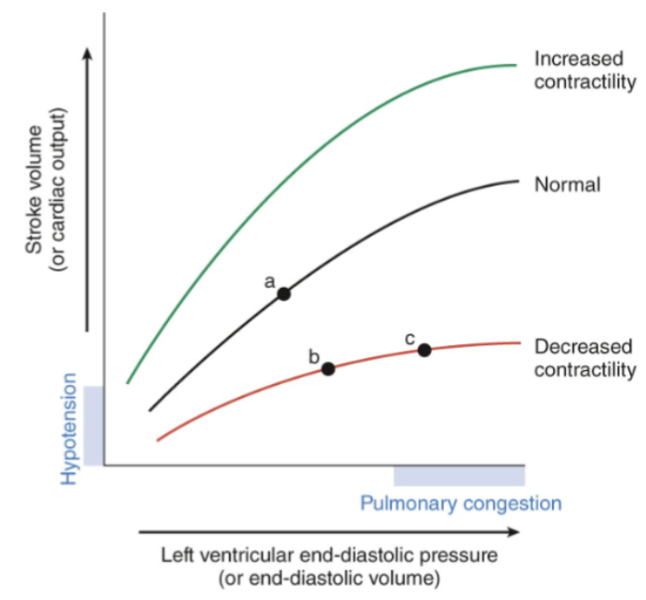
Preload
Ventricles are ______
stretched prior to contracting
Afterload
______ → ______
Aortic pressure during systole, increased resistance
Contractility (Inotropic state)
Changes in ______ for a given set of ______ conditions → ______ influences
myocardial force, preload and afterload, chemical and hormonal
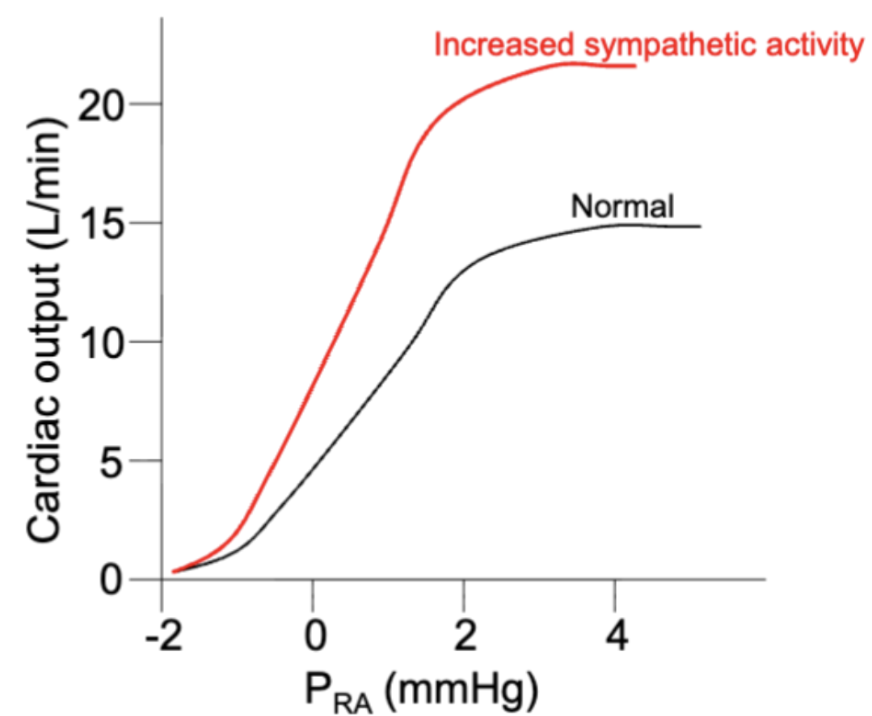
Cardiac Function → ______
Right Arterial Pressure
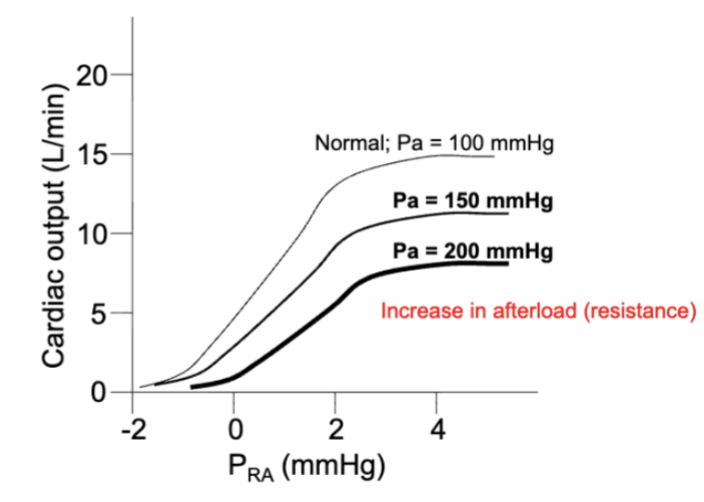
What does this image show?
Aortic Pressure
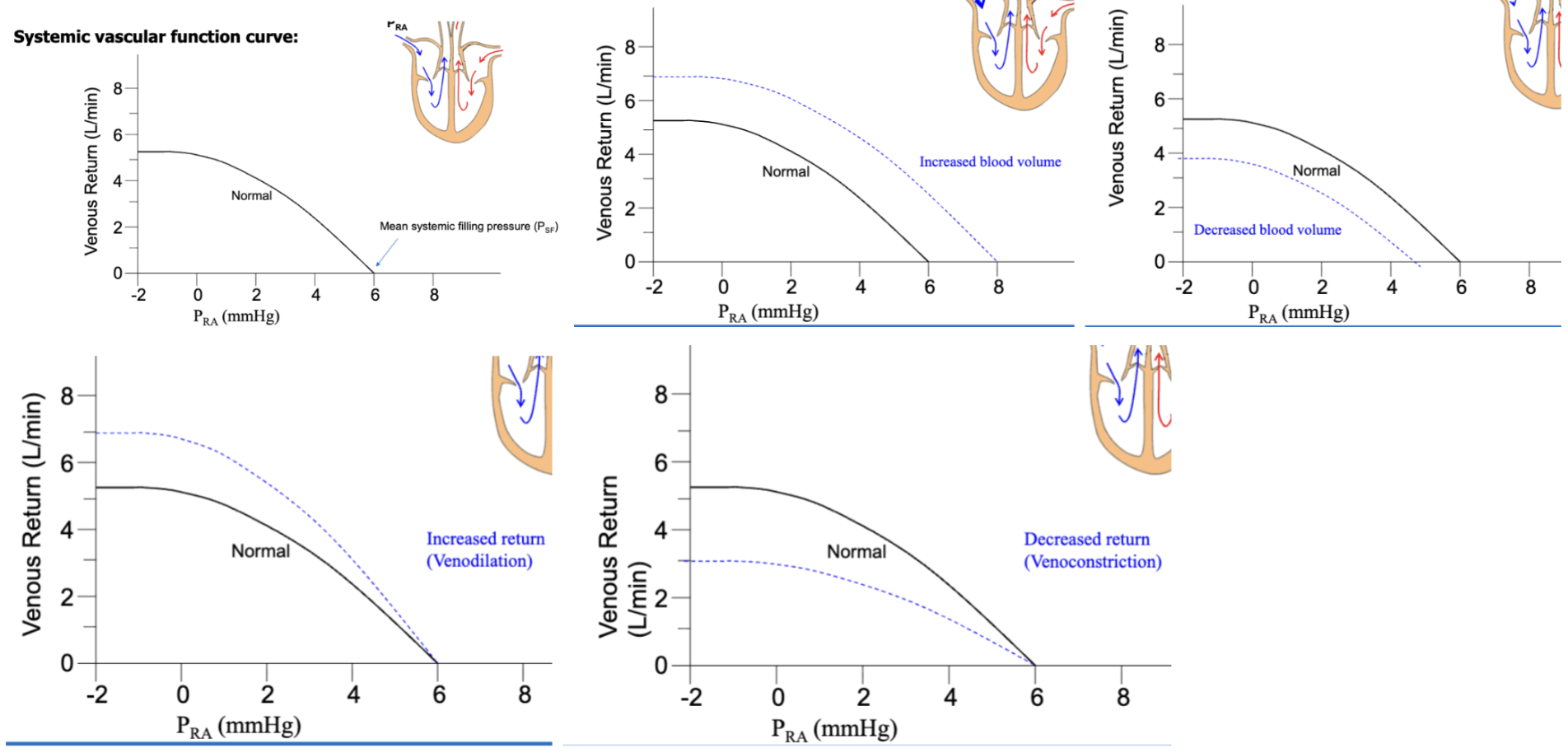
What does this image show?
Peripheral Circulation
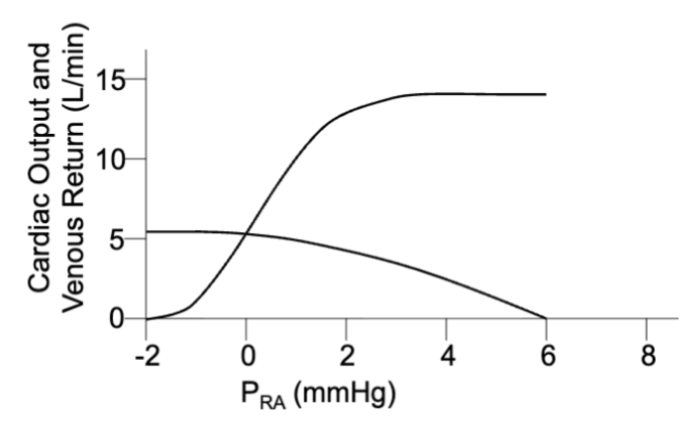
CV ______
Resting ______
Cardiac ______
Integration, CO and BP, function
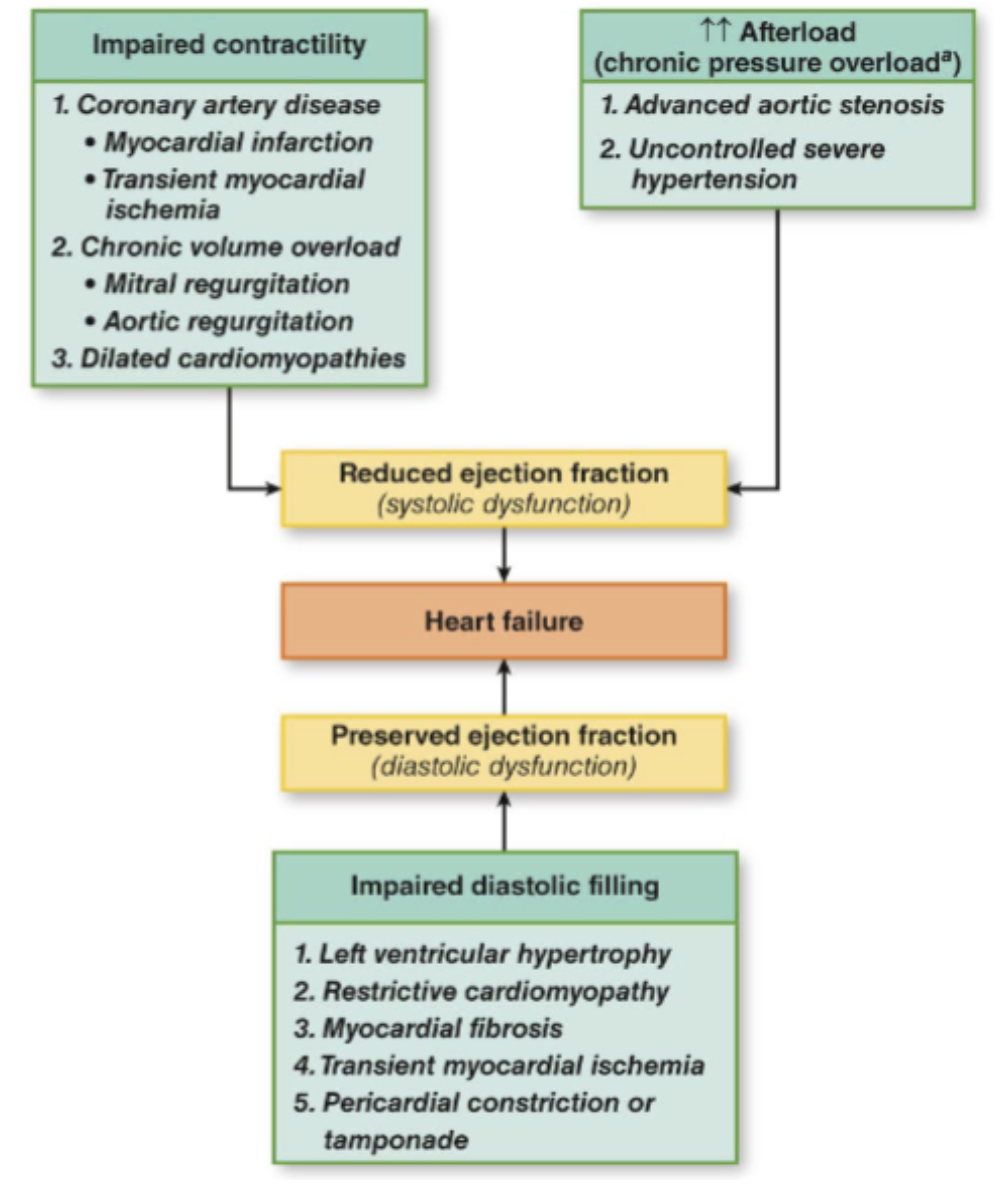
Conditions that Cause Left-Sided HF
KNOW IMAGE
Conditions that Cause LEFT-Sided HF IMAGE
Impaired Contractility → ______
______: ______ Myocardial Ischemia
______: ______
______ Cardiomyopathies
Increased Afterload (______ pressure overload) → ______
______ Stenosis
______
REF → ______ → Preserved ______ (______) → Impaired ______
______
______ Cardiomyopathy
Myocardial ______
______ Myocardial Ischemia
Pericardial ______ or ______
Reduced EF, CAD, MI and Transient, Chronic Volume Overload, Mitral and Aortic Regurgitation, Dilated, chronic, Reduced RF, Advanced Aortic, Uncontrolled Severe HTN, HF, EF, Diastolic Dysfunction, diastolic filling, LV Hypertrophy, Restrictive, Fibrosis, Transient, Constriction, Tamponade
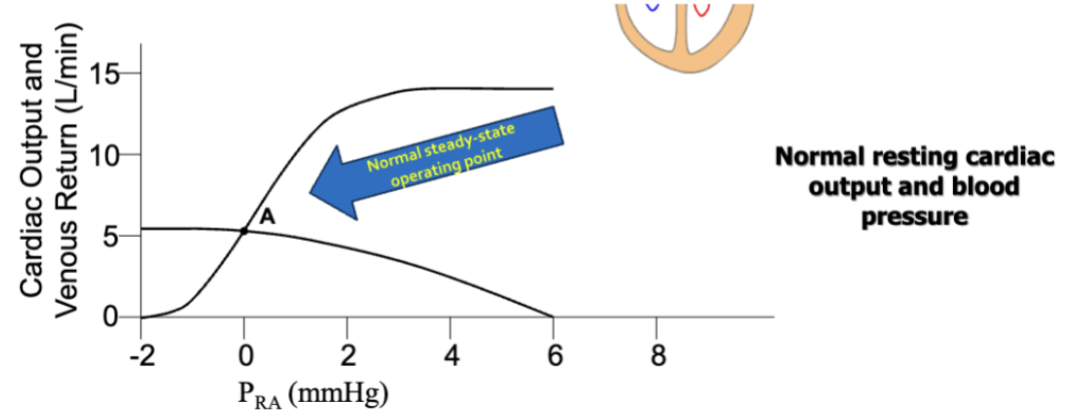
Compensatory Mechanisms In HF
KNOW IMAGE
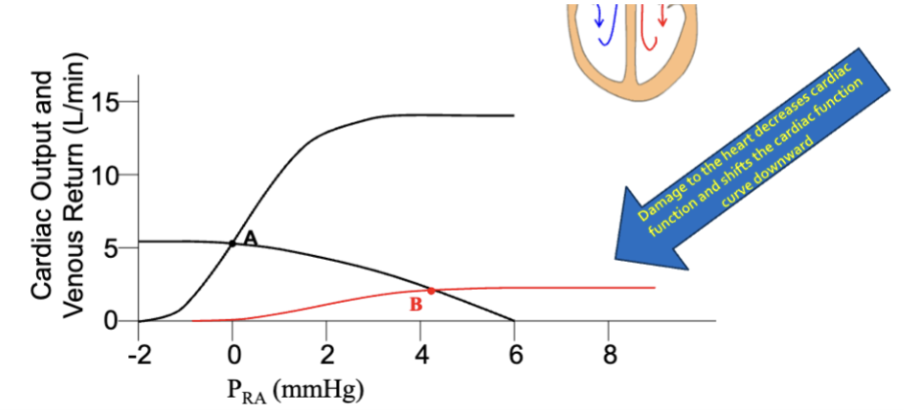
What is B?
HF
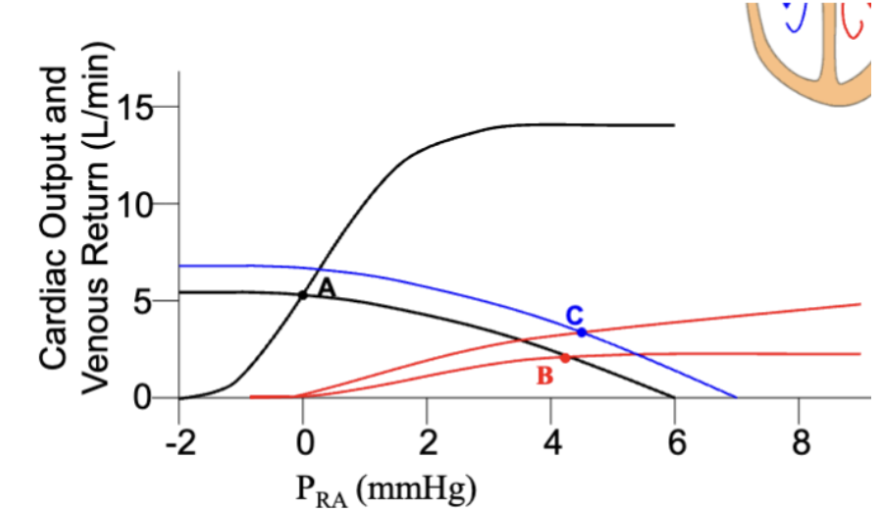
What is C?
HF (compensated)
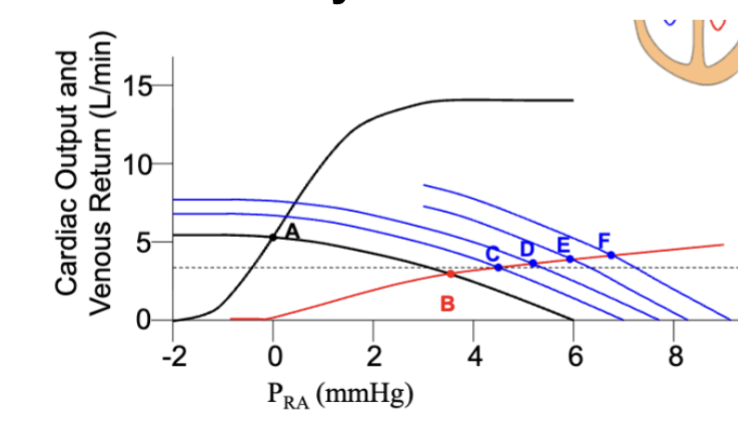
______
Kidney: ______ → ______
Kidney: ______
HF (Decompensated), Aldosterone, decreased Na excretion, Volume Retention
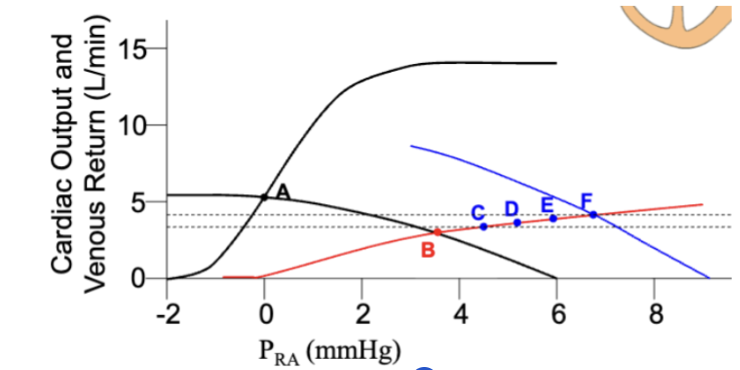
Heart Failure (Decompensated) Overall Sxs:
______
______ (______): Due to ______
______ (______): Due to ______
Reduced ______: Due to ______
______ hypertrophy
Na retention, Edema, fluid retention, Na retention, Dyspnea, SoB, pulmonary edema, exercise capacity, dyspnea, Ventricular
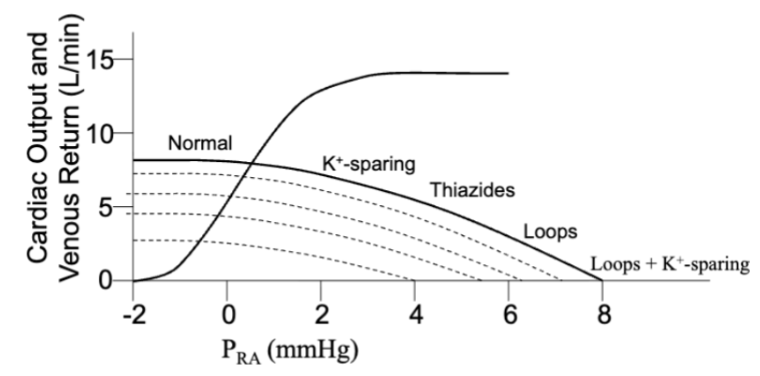
______ → ______
Diuretics in HP, decreased blood volume
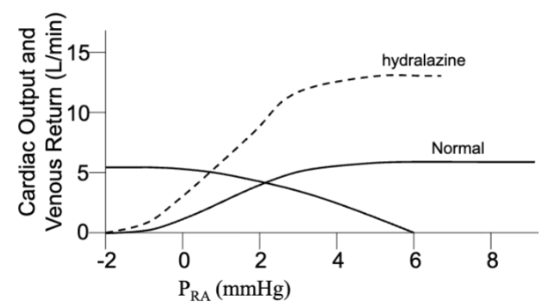
______ → ______
Vasodilators in HF, decreased BP
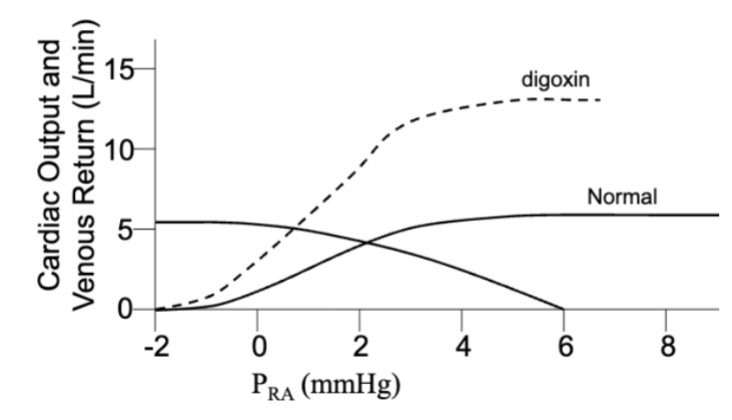
______ → ______
Inotropic Agents in HF, Increased CO
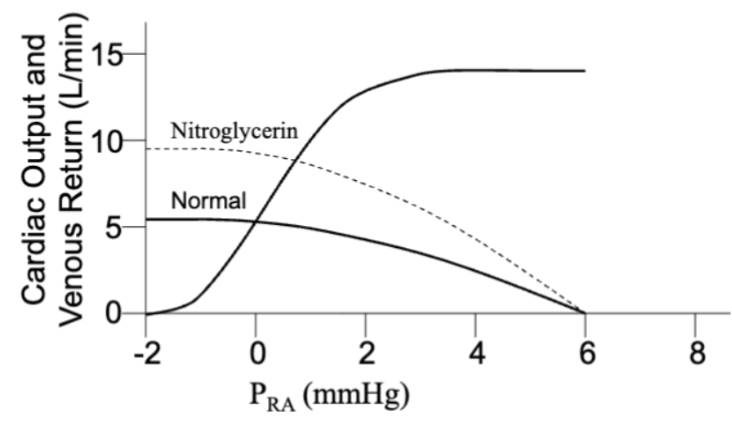
______ → ______
Nitrates in HF, Venous Smooth muscle relaxation
Ion Movements during Contraction of Cardiac Muscle
Drugs ______ → ______ (sustained)
______ (SR) → ______ entry from ______ triggers the release of ______ → ______ concentration → initiates the ______ → ______ by ______ and by extrusion from cell by ______ → ______ is restored by ______ (______ Na out and ______ K in)
increasing intracellular Ca levels, increases contraction force, Ca stores, Ca, outside the cell, lots of Ca from SR, increased Ca, contractile process, Ca removed, reuptake into the SR, Ca/Na exchange, no balance, Na/K ATPase, 2, 1
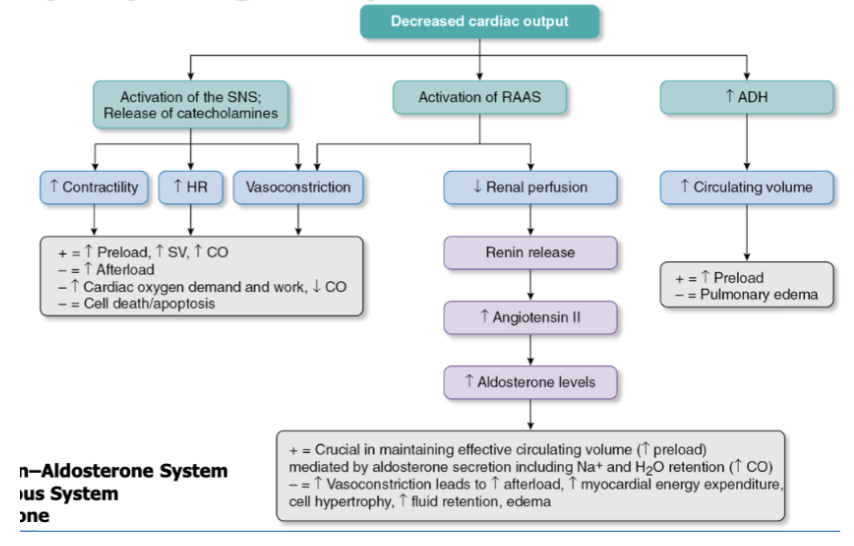
Compensatory Physiologic Responses in HF
KNOW IMAGE
Compensatory Physiologic Responses in HF IMAGE
Decreased CO Leads to…
______ (______)
______ contractility, HR, and vasoconstriction
+ → ______
– → ______ (______ → lead to ______)
______
Decreased ______ → ______ → increased ______ → increased ______ levels
+ → effective circulating ______/______
– → ______, leading to increased ______
______
Increased ______
+ → ______
– → ______
SNS Activation, releases catecholamines, increased, increases preload, SV, and CO, Afterload, increase oxygen demand, HF, RAAS Activation, renal perfusion, renin release, Ang II, aldosterone, volume, increased preload, increased vasoconstriction, afterload, Increased ADH, circulating volume, increased preload, pulmonary edema
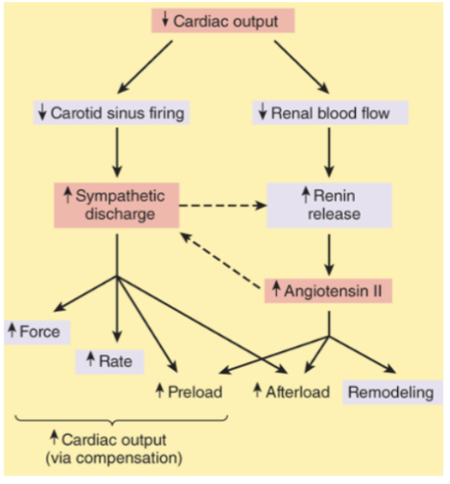
Compensatory Physiologic Responses in HF IMAGE
More specifically/info Part 1
______ sympathetic activity → ______ → Enhanced ______ and increased ______ → increased ______ → increased ______
Activation of RAAS System → ______ and ______ (______)
Compensatory responses ______ the workload of the heart as well, contributing to a ______
Increased, vasoconstriction, venous return, cardiac preload, stroke volume, CO, increased peripheral resistance/afterload, Na and water retention, preload, increase, continuous decline in cardiac function
Compensatory Physiologic Responses in HF IMAGE
More specifically/info Part 2
______ of Natriuretic Peptides → ______ of Natriuretic peptides → beneficial response may improve ______ and ______
Myocardial Hypertropy → Frank-Starling mechanism ______ in direct response to ______
______ and ______
______ to Natriuretic Peptides → ______ → ______
Activation, increased preload and release, cardiac function, HF Sxs, increased SV, increased preload, Increased inflammation, oxidative stress, Resistance, increased preload, Pressure overload
ACE-Is
Decreased vascular resistance (afterload) and venous tone (preload) → increased CO
Decreased production of Ang II and aldosterone → decreased retention of Na and water
ACE-Is
ACE-Is
______ and ______ → ______
Decreased production of ______ → decreased ______
Ex.
______
______
______
______
______
______
Decreased vascular resistance (afterload), venous tone (preload), increased CO, Ang II and aldosterone, Na and water retention, Captopril, Enalapril (Vasotec), Fosinopril, Lisinopril (Qbrelis, Zestril), Quinapril (Accupril), Ramipril (Altace)
______
Decreased afterload and preload in HF pts
Use if pt cannot tolerate ACE-Is due to cough or angioedema
C/I in pregnancy
ARBs
ARBs
______
Use if pt ______ due to ______
______
Ex.
______
______
______
______
Decreased preload and afterload in HF pts, cannot tolerate ACE-Is, cough or angioedema, C/I in pregnancy, Candesartan (Atacand), Losartan (Cozaar), Telmisartan (Micardis), Valsartan (Diovan)
______
Antagonists of aldosterone at the mineralocorticoid receptor
Prevent Na retention, myocardial hypertrophy, and hypokalemia
MRAs
MRAs
Antagonists of ______ at the ______
Prevent ______, myocardial ______, and ______
Spironolactone → binds to ______ receptors.
Eplerenone → ______ receptors → fewer ______ (ex. gynecomastia) than spironolactone.
Ex.
______
______
aldosterone, MR, Na retention, hypertrophy, hypokalemia, progesterone and androgen, more selective for aldosterone, endocrine effects, Eplerenone (Inspra), Spironolactone (Aldactone)
Angiotensin Receptor–Neprilysin Inhibitors (ARNI)
Inhibition of neprilysin→ increased vasoactive peptides activity
ARB → combined with a neprilysin inhibitor (sacubitril).
Angiotensin Receptor-Neprilysin Inhibitors (ARNI)
Angiotensin Receptor–Neprilysin Inhibitors (ARNI)
Inhibition of neprilysin→ ______ activity
______ → combined with a neprilysin inhibitor (______).
______ = ARNI.
Sacubitril/valsartan → ______
Ex.
______
Inhibition of neprilysin → ______ → ______
increased vasoactive peptide, ARB, Sacubitril, Sacubitril/Valsartan, decreased afterload, preload, and myocardial fibrosis, Sacubitril/Valsartan (Entresto), increased bradykinin levels, increased angioedema
BBs
______ activity
Improved ______ and ______ cardiac remodeling despite the initial exacerbation of Sxs → ______ → ______ → prevents deleterious effects of ______ on the cardiac ______ → ______, ______, and ______
______ → nonselective beta-adrenergic receptor antagonist and blocks alpha-adrenergic receptors
______ → beta-1 selective antagonists and metabolized by CYP2D6
______ → P-gp substrate
Ex.
______
______
______
______
negative inotropic, systolic function, reverse, decreased HR, inhibits renin release from the kidneys, NE, muscle fibers, Decreased remodeling, hypertrophy, cell death, Carvedilol, Bisoprolol and Metoprolol Succinate, Carvedilol, Bisoprolol, Carvedilol (Coreg, Coreg CR), Metoprolol Succinate (Toprol XL), Metoprolol Tartrate (Lopressor)
______
Negative inotropic activity
Improved systolic function and reverse cardiac remodeling despite the initial exacerbation of Sxs → decreasing HR → inhibits the renin release from kidneys → prevents deleterious effects of NE on the cardiac muscle fibers → decreased remodeling, hypertrophy, and cell death
BBs
______
Decreased preload → decreased venous return
Decreased plasma volume → decreased afterload
______ → most used ______ in HF pts
Decreased S/Sxs of volume overload (e.g., dyspnea, peripheral edema)
Diuretics, Loop Diuretics, diuretic
Diuretics
______ → ______
______ → ______
Loop diuretics → ______
______ of ______ (e.g., dyspnea, peripheral edema)
Ex.
______
______
______
______
Decreased preload, decreased venous return, decreased plasma volume, decreased afterload, most used diuretics in HF pts, Decreased S/Sx, volume overload, Bumetanide (Bumex), Furosemide (Lasix), Metolazone (Zaroxolyn), Torsemide (Soaanz)
______
Pacemaker Action Potential
Slowed diastolic depolarization in the SA node → decreased HR
Effect is dose dependent
Ex.
Ivabradine (Corlanor)
Block similar channels in the eye
C/I in pregnancy, breast feeding, advanced heart block, or with potent 3A4 inhibitors
Hyperpolarization-Activated Cyclic Nucleotide-Gated Channel Blockers (HCN Channel Blockers)
Hyperpolarization-Activated Cyclic Nucleotide-Gated Channel Blockers (HCN Channel Blockers)
______ action potential
______ in the ______ node → ______
Effect is ______
Ex.
______
Block similar channels in the ______
C/I in ______, ______, ______, or ______
pacemaker, slowed diastolic depolarization, SA, decreased HR, dose-dependent, Ivabradine (Corlanor), eye, pregnancy, breastfeeding, advanced heart block, potent 3A4 inhibitors
______
Decreased Ca in arteriole smooth muscle → Decreased afterload
Inhibits oxidases → increased NO levels and vasodilation → Decreased preload and afterload
It is often used with an oral nitrate (isosorbide dinitrate) in HF
Arterial Vasodilators
Arterial Vasodilators
______ in arteriole ______ → ______
Inhibits ______ → ______ levels and ______ → ______
It is often used with an ______ (______) in HF
Ex.
______
______
FDC ______
______
______
Decreased Ca, smooth muscle, decreased afterload, oxidases, increased NO, vasodilation, Decreased preload and afterload, oral nitrate, isosorbide dinitrate, Hydralazine, Isosorbide Dinitrate (Dilatrate-SR, Isordil), Hydralazine/Isosorbide Dinitrate (Bidil), Nitroglycerin, Nitroprusside (Nipride, Nitropress)
______
Nitrates → more venodilation than arterial dilation
Nitroprusside → more balanced
Arterial and Venous Vasodilators
Arterial and Venous Vasodilators
______ → more ______ than ______
______ → more ______
Nitrates, venodilation, arterial dilation, Nitroprusside, balanced
______
Decreased preload and afterload
Decreased glucose and Na reabsorption by inhibiting SGLT2 in the proximal tubule
Cardioprotective effect → inhibition of the Na/H exchanger → prevents Ca overload and contributes to natriuresis
Ex.
Dapagliflozin (Farxiga)
Empagliflozin (Jardiance)
Na-Glucose Cotransporter 2 Inhibitors (SGLTIs)
Sodium–Glucose Cotransporter 2 Inhibitors (SGLTIs)
______
______ reabsorption by inhibiting SGLT2 in the ______
______ effect → inhibition of the ______ → prevents ______ and contributes to ______
Ex.
______
______
Decreased preload and afterload, decreased glucose and Na, proximal tubule, Cardioprotective, Na/H exchanger, Ca overload, natriuresis, Dapagliflozin (Farxiga), Empagliflozin (Jardiance)
______
Directly stimulates sGC through a different binding site than NO and sensitizes sGC to endogenous NO
Ex.
Vericiguat (Verquvo)
Soluble Guanylate Cyclase Stimulators
Soluble Guanylate Cyclase Stimulators
Directly stimulates ______ through a different binding site than ______ and sensitizes ______ to endogenous ______
Ex.
______
sGC, NO, sGC, NO, Vericiguat (Verquvo)
Inotropic Drugs
______
Ex.
______
______
______
______
increased contractility and CO, Digoxin (Lanoxin), Dobutamine (Dobutrex), DA, Milrinone
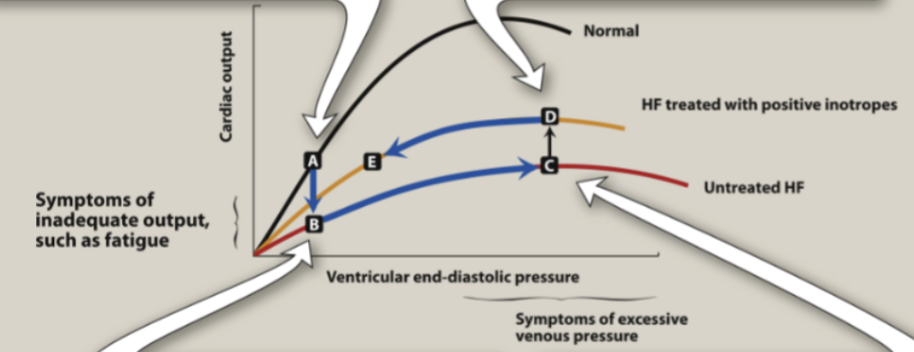
Explain this image related to inotropic drugs.
A → ______
A to B → ______
B to C → ______ → ______
C to D → ______ → ______
normal healthy heart, initial reduction in contractility in HF, increased Ventricular end-diastolic pressure, adequate CO, increased contractility, increased CO
______
Increased contractility of heart muscle
Only available digitalis glycoside is digoxin
Inhibition of Na/K-adenosine triphosphatase (ATPase) enzyme → decreased myocyte activity to pump Na from the cell → increased free Ca → increased cardiac contractility
Increased vagal tone → Decreased HR and myocardial oxygen demand
Slows conduction velocity through the AV node (useful for AFib).
Lower doses → digoxin more likely to inhibit neurohormonal activation w/o positive inotropic effects
Low serum drug concentration→ beneficial in HFrEF
Inotropic Drugs - Digitalis Glycosides
Inotropic Drugs – Digitalis Glycosides
______ of heart muscle
Only available digitalis glycoside is ______
Inhibition of ______ → ______ activity to pump ______ from the cell → ______ → ______
______ → ______ and myocardial ______
______ velocity through the ______ node (useful for ______).
Lower doses → digoxin more likely to inhibit ______ w/o ______ effects
Low serum drug concentration→ beneficial in ______
Increased contractility, digoxin, Na/K ATPase, decreased myocyte, Na, increased free Ca, increased contractility, Increased vagal tone, decreased HR, oxygen demand, slows conduction, AV, Afib, neurohormonal activation, positive inotropic, HFrEF
______
Large Vd and Well tolerated at lower doses
Eliminated intact by the kidney → require dose adjustment in renal dysfunction
IncreaseD the risk of arrhythmias
Digoxin is a substrate of P-gp → P-gp Inhibitors (increase digoxin levels)
Inotropic Drugs - Digoxin
Inotropic Drugs - Digoxin
______ and Well tolerated at ______ doses
Eliminated intact by the ______ → require ______ in ______
______ the risk of ______
Digoxin is a substrate of ______ → P-gp Inhibitors (______ digoxin levels)
Large Vd, lower, kidney, dose adjustment, renal dysfunction, increased, arrhythmias, P-gp subsrate, increased
______
Dobutamine and DA → positive inotropic effects and vasodilation (in the case of dobutamine) → improve cardiac performance
Increased Ca entry into myocardial cells and contraction
IV infusion
Short-term treatment of acute decompensated HF in the hospital
Binding of a Beta-adrenergic agonist, such as DA or Dobutamine → activates AC → produces cAMP → cAMP activates protein kinase → phosphorylates Ca channels → increased Ca flow into the cell → Increased contraction force of heart muscle
Inotropic Drugs - Beta-Adrenergic Agonists
Inotropic Drugs - Beta-Adrenergic Agonists
______ → ______ effects and ______ (in the case of ______) → improve cardiac performance
______ entry into ______ cells and ______
______
______-term treatment of acute ______ in the hospital
Binding of a Beta-adrenergic agonist, such as ______ → ______ → produces ______ → ______ activates ______ → ______ channels → ______ flow into the cell → ______ force of heart muscle
Dobutamine and DA, positive inotropic, vasodilation, dobutamine, cardiac, increased Ca, myocardial, contraction, IV infusion, short, decompensated HF, Dobutamine and DA, activates AC, cAMP, cAMP, protein kinase, phosphorylates Ca, increased Ca, Increased contraction
______
Milrinone → increased intracellular cAMP concentration → increased intracellular Ca → Increased cardiac contractility
Milrinone is usually given by IV infusion for short-term treatment of acute decompensated HF with low CO
Milrinone reduces pulmonary vasculature resistance → utilized for acute treatment of pulmonary HTN and right HF
Phosphodiesterase inhibitors prevent hydrolysis of cAMP → prolong protein kinase actions
Inotropic Drugs - Phosphodiesterase Inhibitors (PDE5-Is)
Inotropic Drugs - Phosphodiesterase Inhibitors (PDE5-Is)
Milrinone → ______ concentration → ______ → ______
Milrinone is usually given by ______ for ______-term treatment of acute ______ with ______
Milrinone reduces ______ vasculature ______ → utilized for acute treatment of ______ and ______
PDE5-Is prevent ______ → ______ actions
increased intracellular cAMP, increased intracellular Ca, Increased contractility, IV, short, decompensated HF, low CO, pulmonary, resistance, pulmonary HTN, right HF, cAMP hydrolysis, prolongs protein kinase