BMS 527 EXAM 3 CONTENT
 Call Kai
 Learn
Learn Practice Test
 Spaced Repetition
 Match
Match Flashcards
 Knowt Play
1/160

There's no tags or description
Looks like no tags are added yet.
Name | Mastery | Learn | Test | Matching | Spaced | Call with Kai | Chat |
|---|
No analytics yet
Send a link to your students to track their progress
161 Terms
The enzyme that converts glucose-6-phosphate to fructose-6-phosphate in glycolysis is:
A. phosphofructokinase
B. aldolase
C. phosphoglucose isomerase
D. hexose isomerase
C. phosphoglucose isomerase
What is the reaction catalyzed by the enzyme phosphoglycerate mutase?
A. 3-phosphoglycerate to 2-phosphoglycerate
B. 3-phosphoglycerate to 2-phosphoglycerate + ATP
C. 3-phosphoglycerate to 2-phosphoglycerate +NADH
D. 3-phosphoglycerate to phosphoenolpyruvate
A. 3-phosphoglycerate to 2-phosphoglycerate
Reticulocytes are immature red blood cells (RBCs) that still contain mitochondria. Reticulocytosis (that is, the increased production of reticulocytes) is commonly observed in patients with anaemias, which are a set of blood disorders characterized by a reduced ability to carry oxygen. Anaemia is frequently a result of lower than normal numbers of mature RBCs, and so it is thought reticulocytosis is one mechanism through which the body attempts to compensate for the lack of mature RBCs in anaemia patients.
Why would a pyruvate kinase (PK) deficiency potentially lead to reticulocytosis? (Select all that apply)
A. PK is a critical enzyme in the Krebs cycles
B. PK converts PEP to Pyruvate with the associated production of ATP
C. RBCs are dependent on glycolysis for energy
D. Pyruvate kinase is critical for trapping glucose into cells
B. PK converts PEP to Pyruvate w/ associated production of ATP
C. RBCs are dependent on glycolysis for energy
1,3-bisphosphglycerate is converted to what by the enzyme phosphoglycerate kinase?
A. 3-phosphoglycerate + ADP
B. 1-phosphoglycerate + ADP
C. 3-phosphoglycerate + ATP
D. 1-phosphoglycerate + ATP
C. 3-phosphoglycerate + ATP
Coversion of Glyceraldehyde-3-phosphate into dihydroxyacetone phosphate (and back!) can be performed by which of the following enzymes?
A. Triose phosphate isomerase
B. Hexose phosphate isomerase
C. Glucose isomerase
D. Enolase
A. Triose phosphate isomerase
Cleavage of fructose-1-6-bisphosphate into Glyceraldehyde-3-phosphate and dihydroxyacetone in glycolysis is performed by which of the following glycolytic enzymes?
A. Enolase
B. Aldolase
C. Amylase
D. Aminopeptidase
B. Aldolase
The enzyme that converts fructose-6-phosphate to fructose-1-6-bisphosphate in glycolysis is:
A. Hexokinase
B. Glucokinase
C. Phosphofructose isomerase
D. Phosphofructokinase
D. Phosphofructokinase
What is the name of the glycolytic enzyme that produces Phosphoenolpyruvate from 2-phosphoglycerate?
A. Aldolase
B. Oleolase
C. Enolase
D. Phosphoenolpyruvate kinase
C. Enolase
The enzyme that converts glucose to glucose-6-phosphate in glycolysis is:
A. Hexokinase
B. Pentokinase
C. Pyruvate kinase
D. Glucose-6-kinase
A. Hexokinase
Glyceraldehyde 3 phosphate dehydrogenase catalyzes the conversion of Glyceraldehyde 3 phosphate to 1,3 bisphosphoglycerate. What else is produced during this reaction?
A. ATP
B. ADP
C. NADH
D. FADH2
C. NADH
GLUT2 has a higher Km for Glucose than GLUT1. Which has the higher affinity for glucose?
A. GLUT1
B. GLUT2
C. Both the same
D. Cannot tell with this information
A. GLUT1
Which of the following ΔG values does not belong to a reaction that is an irreversible step of glycolysis?
A. -27.2
B. -25.9
C. +2.2
D. -13.9
C. +2.2
Which of the following is FALSE of glucose transporter (GLUT) proteins?
A. GLUT proteins have two glucose binding sites
B. GLUT proteins have the same Km value
C. GLUT proteins have different Km values
D. GLUT proteins have a hydrophilic core
B. GLUT proteins have the same Km value
Trapping glucose inside of the cell is a process catalyzed by what enzyme?
A. Phosphofructokinase
B. Hexokinase
C. Pyruvate Kinase
D. Phosphoglycerate kinase
B. Hexokinase
Glycolysis is a catabolic process that occurs where inside the cell?
A. Mitochondria
B. Cytoplasm
C. Nucleus
D. Nucleolus
B. Cytoplasm
Glucose transporters are transmembrane proteins. However, several polar amino acids are found in the "core" of these proteins where glucose binds. What is the likely explanation for this?
A. Glucose is polar
B. Help mixing with membrane lipids
C. Assist with protein folding
D. Assist in phosphorylation of glucose
A. Glucose is polar
The transport of glucose in a sodium-independent manner occurs:
A. Down a concentration gradient
B. Against a concentration gradient
C. Into the cell
D. Out of the cell
A. Down a concentration gradient
GLUT2 has a higher Km for Glucose than GLUT1. Which has the higher affinity for glucose?
A. GLUT1
B. GLUT2
C. Both the same
D. Cannot tell with this information
A. GLUT1
Glycolysis is a catabolic process that occurs where inside the cell?
A. Mitochondria
B. Cytoplasm
C. Nucleus
D. Nucleolus
B. Cytoplasm
Hexokinase catalyzes the phosphorylation of what reaction?
A. Glucose to Glucose-2-phosphate
B. Glucose to Fructose-6-phosphate
C. Glucose to Glucose-6-phosphate
D. Glucose to Fructose 1,6 bisphosphate
C. Glucose to Glucose-6-phosphate
The final 3 carbon product of glycolysis is:
A. Pyruvate
B. Phosphoenolpyruvate
C. 1,3-bisphosphoglycerate
D. 2,3-bisphosphoglycerate
A. Pyruvate
Glycolysis produces which of the following group of molecules?
A. ATP, NAD+ and Pyruvate
B. ADP, NAD+ and Pyruvate
C. ATP, NADPH and Pyruvate
D. ATP, NADH and Pyruvate
D. ATP, NADH and Pyruvate
Trapping glucose inside of the cell is a process catalyzed by what enzyme?
A. Phosphofructokinase
B. Hexokinase
C. Pyruvate Kinase
D. Phosphoglycerate kinase
B. Hexokinase
Conformational changes in the Hexokinase enzyme upon substrate binding serve what function?
A. Ensure proper binding to the active site
B. To bring ATP in close proximity to Carbon 6 in Glucose
C. Expel water from the active site
D. All of the above
D. All of the above
Which of the following is FALSE of glucose transporter (GLUT) proteins?
A. GLUT proteins have two glucose binding sites
B. GLUT proteins have the same Km value
C. GLUT proteins have different Km values
D. GLUT proteins have a hydrophillic core
B. GLUT proteins have the same Km value
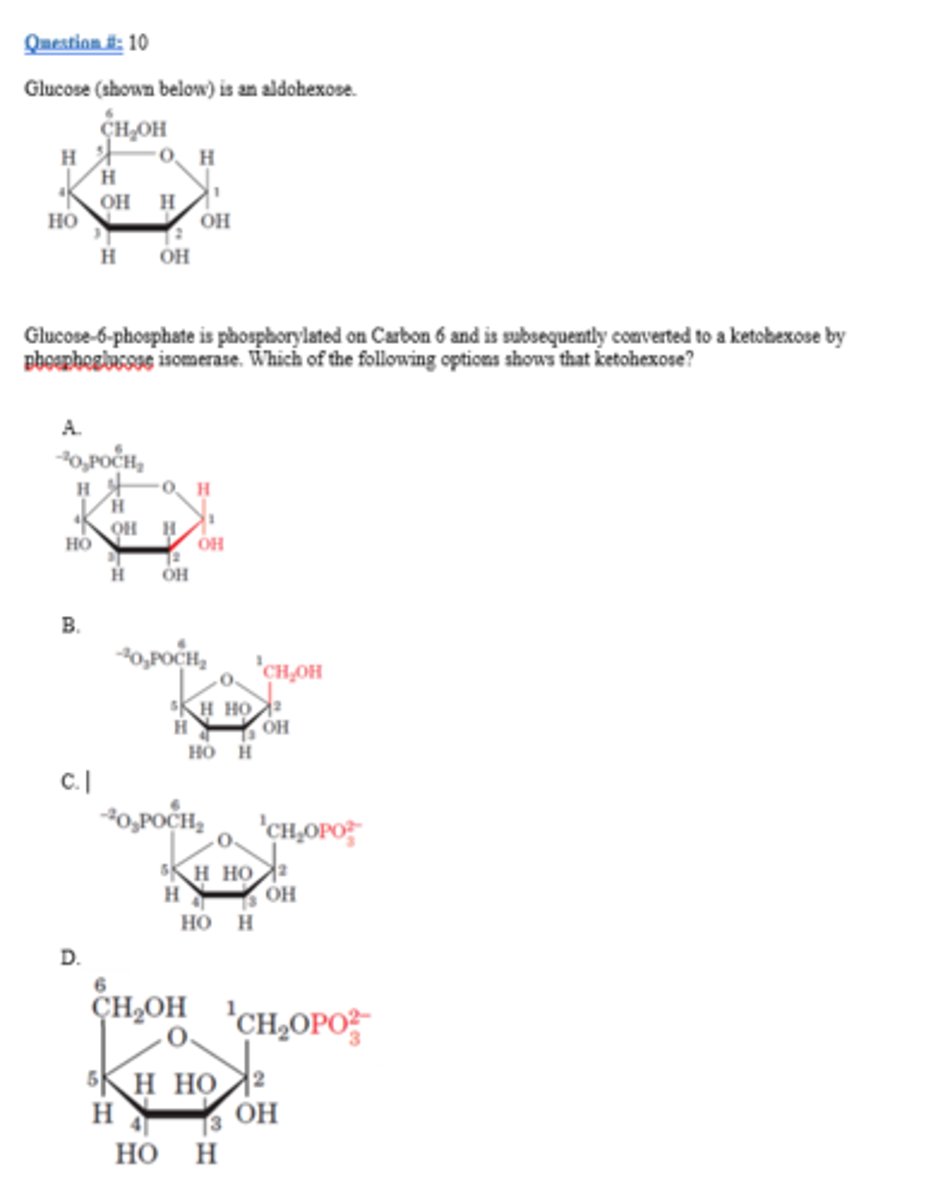
B.
The number of ATP molecules invested into glycolysis per molecule of Glucose is:
A. 1
B. 2
C. 3
D. 4
B. 2
The TOTAL number of ATP molecules produced in glycolysis per Glucose molecule is:
A. 2
B. 4
C. 6
D. 8
B. 4
The NET amount of ATP molecules produced per molecule of glucose during glycolysis is:
A. 2
B. 4
C. 6
D. 8
A. 2
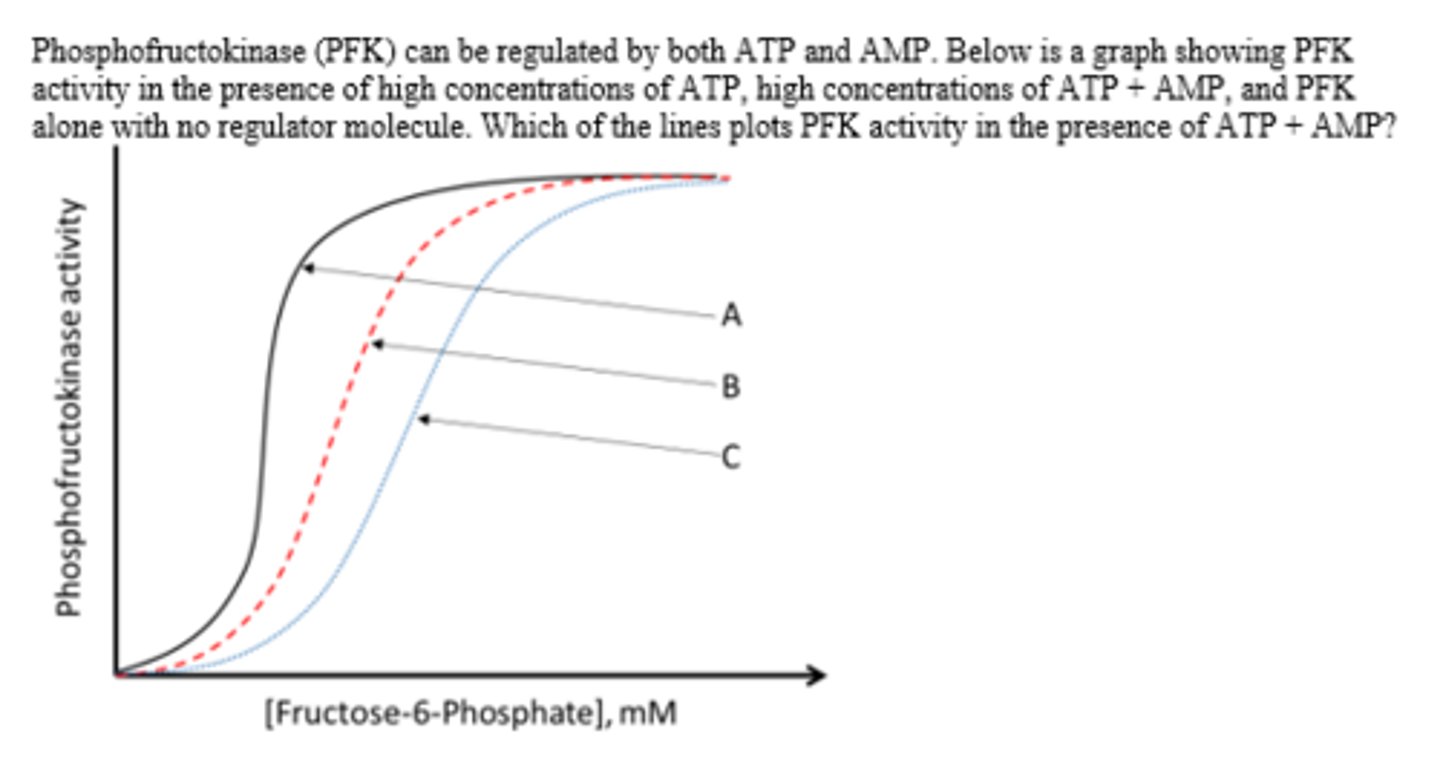
B
Aldolase catalyzes what reaction?
A. Isomerization of DHAP to GAP
B. Dehydration of 2PG to phosphoenolpyruvate
C. Cleavage of F1,6P to Glyceraldehyde-3-phosphate (GAP) and dihydroxyacetone phosphate (DHAP)
D. Conversion of 3PG to 2-phosphoglycerate
C. Cleavage of F1,6P to Glyceraldehyde-3-phosphate (GAP) and dihydroxyacetone phosphate (DHAP)
Which of the following is not considered an irreversible step of glycolysis?
A. Hexokinase reaction
B. Phosphofructokinase reaction
C. Triose phosphate isomerase reaction
D. Pyruvate kinase reaction
C. Triose phosphate isomerase reaction
Glukokinase is inhibited by which molecule?
A. Glucose
B. Glucose-6-phosphate
C. Fructose-6-phosphate
D. Fructose-1,6-phosphate
C. Fructose-6-phosphate
Fructose 1,6, bisphosphatase is an enzyme in the Gluconeogenesis pathway. What is the effect of AMP on this enzymes activity?
A. Inhibits enzyme activity
B. Increases enzyme activity
C. Competes for the enzyme active site
D. None of the above
A. Inhibits enzyme activity
Glucose-6-phosphatase is an enzyme that is part of the gluconeogenesis pathway. It is localised to the endoplasmic reticulum (ER) of cells. What challenges does this present for gluconeoenesis?
A. Transport of glucose-6-phosphate into the ER
B. Transport of fructose-6-phosphate into the ER
C. Export of glucose-6-phosphate out of the ER
D. Transport of PEP into the ER
A. Transport of glucose-6-phosphate into the ER
The enzyme Glyceraldehyde-3-phosphate dehydrogenase catalyzes the formation of which of the following products?
A. Dihydroxyacetone phosphate and NADH
B. 1,3-bisphosphoglycerate and NAD+
C. 1,3-bisphosphoglycerate and NADH
D. 2,3-bisphosphoglycerate and NADH
C. 1,3-bisphosphoglycerate and NADH
Coversion of Glyceraldehyde-3-phosphate into dihydroxyacetone phosphate (and back!) can be performed by which of the following enzymes?
A. Triose phosphate isomerase
B. Hexose phosphate isomerase
C. Glucose isomerase
D. Enolase
A. Triose phosphate isomerase
Cleavage of fructose-1-6-bisphosphate into Glyceraldehyde-3-phosphate and dihydroxyacetone in glycolysis is performed by which of the following glycolytic enzymes?
A. Enolase
B. Aldolase
C. Amylase
D. Aminopeptidase
B. Aldolase
The enzyme that converts fructose-6-phosphate to fructose-1-6-bisphosphate in glycolysis is:
A. Hexokinase
B. Glucokinase
C. Phosphofructose isomerase
D. Phosphofructokinase
D. Phosphofructokinase
The enzyme that converts glucose-6-phosphate to fructose-6-phosphate in glycolysis is:
A. phosphofructokinase
B. aldolase
C. phosphoglucose isomerase
D. hexose isomerase
C. phosphoglucose isomerase
The enzyme that converts glucose to glucose-6-phosphate in glycolysis is:
A. Hexokinase
B. Pentokinase
C. Pyruvate kinase
D. Glucose-6-kinase
A. Hexokinase
Carbohydrates contain two important functional groups that can tautomerize when catalyzed to do so by enzymes. What are the two functional groups?
A. Aldehydes and Ketones
B. Amines and Ketones
C. Amines and Aldehydes
D. Tertiary alcohols and Ketones
A. Aldehydes and Ketones
Glycogen is stored primarily in what organs? (Select all that apply)
A. Liver
B. Heart
C. Skeletal muscle
D. None of the above
A. Liver
C. Skeletal muscle
Glycogen synthase catalyzes α-1,4 glycosidic bonds when adding glucose molecules to extend linear glycogen chains. Why is another enzyme required to have "normally" branched structures of glycogen?
A. Glycogen synthase cannot catalyze α-1,6 glycosidic bonds for branching
B. Glycogen synthase hydrolyzes α-1,6 glycosidic bonds
C. Glycogen synthase is slow and adds one glucose at a time
D. None of the above
A. Glycogen synthase cannot catalyze α-1,6 glycosidic bonds for branching
The glycogen branching enzyme catalyzes the formation of what type of bond?
A. α-1,6 glycosidic bonds
B. α-1,4 glycosidic bonds
C. α-1,6 phosphodiester bonds
D. α-1,4 phosphodiester bonds
A. α-1,6 glycosidic bonds
The glycogen debranching enzyme has two functions: the first is α-1,6 glucosidase function which removes a single glucose molecule from a branch point. What is the other?
A. α-1,4 glucosidase activity that removes a single glucose molecule from linear chains
B. transferase activity that moves three glucose molecules from one branch to another branch via a new α-1,4 glycosidic bond
C. transferase activity that moves three glucose molecules from one branch to another branch via a new α-1,6 glycosidic bond
D. α-1,4 glucosidase activity that removes three to four glucose molecules for glycolysis to proceed
B. transferase activity that moves three glucose molecules from one branch to another branch via a new α-1,4 glycosidic bond
The pentose phosphate pathway produces what glycolytic intermediates? (Select all that apply)
A. Glucose-6-phosphate
B. Fructose-6-phosphate
C. Glyceraldehyde-3-phosphate
D. Phosphoenolpyruvate
B. Fructose-6-phosphate
C. Glyceraldehyde-3-phosphate
NADPH is essential for cells to maintain a supply of what?
A. GSH (Reduced glutathione)
B. GSSG (Oxidized glutathione)
C. ATP
D. Reactive oxygen species
A. GSH (Reduced glutathione)
Insulin is increased in response to high concentrations of plasma glucose, such as after a carbohydrate rich meal. What is the effect of insulin on the Pentose phosphate pathway (PPP)?
A. Inhibits PPP via Glucose-6-phosphate dehydrogenase
B. Promotes/activates PPP via Glucose-6-phosphate dehydrogenase
C. Increases ATP production from the PPP
D. None of the above
B. Promotes/activates PPP via Glucose-6-phosphate dehydrogenase
The function of Glycogenein is:
A. to serve as the core of glyocogen granules and begin the process of glycogen synthesis
B. Make α-1,2 glycogen branches
C. Make α-1,6 glycogen branches
D. Break α-1,6 glycogen branches
A. to serve as the core of glyocogen granules and begin the process of glycogen synthesis
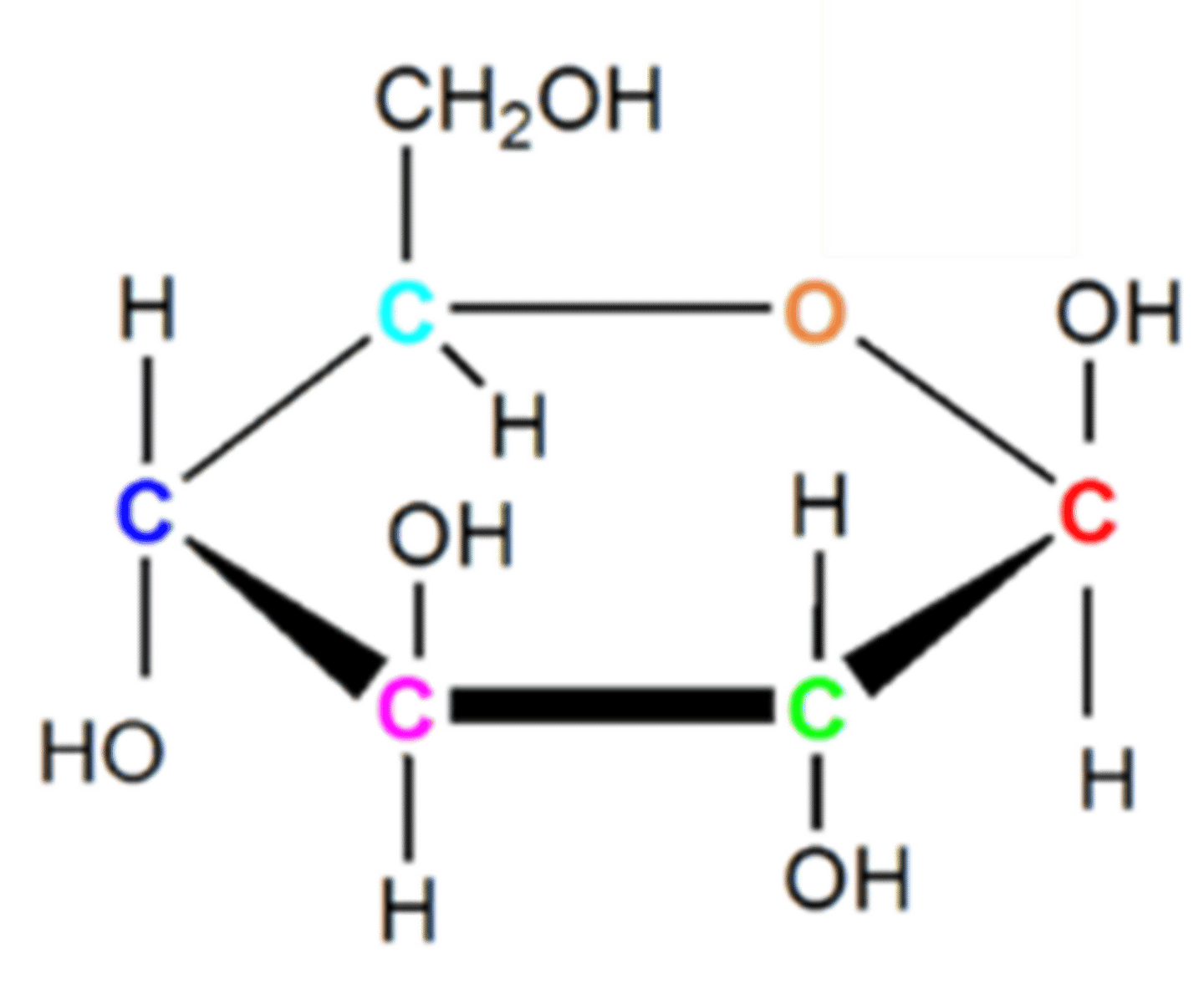
beta-D-Glucose
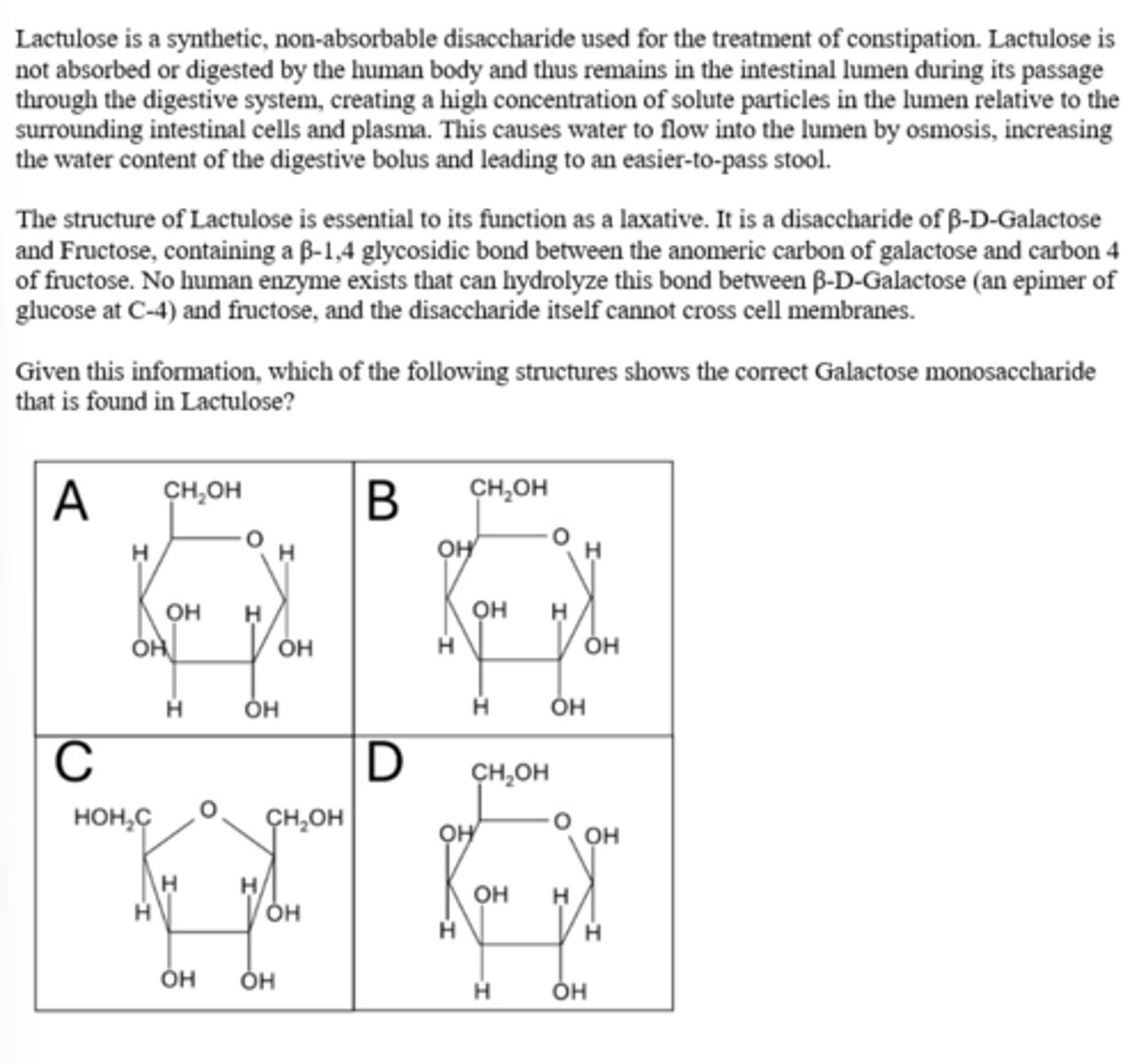
sugar D
The enzyme that converts glucose to glucose-6-phosphate in glycolysis is:
A. Hexokinase
B. Pentokinase
C. Pyruvate kinase
D. Glucose-6-kinase
A. Hexokinase
The enzyme that converts glucose-6-phosphate to fructose-6-phosphate in glycolysis is:
A. phosphofructokinase
B. aldolase
C. phosphoglucose isomerase
D. hexose isomerase
C. phosphoglucose isomerase
The enzyme that converts fructose-6-phosphate to fructose-1-6-bisphosphate in glycolysis is:
A. Hexokinase
B. Glucokinase
C. Phosphofructose isomerase
D. Phosphofructokinase
D. Phosphofructokinase
Cleavage of fructose-1-6-bisphosphate into Glyceraldehyde-3-phosphate and dihydroxyacetone in glycolysis is performed by which of the following glycolytic enzymes?
A. Enolase
B. Aldolase
C. Amylase
D. Aminopeptidase
B. Aldolase
Conversion of Glyceraldehyde-3-phosphate into dihydroxyacetone phosphate (and back!) can be performed by which of the following enzymes?
A. Triose phosphate isomerase
B. Hexose phosphate isomerase
C. Glucose isomerase
D. Enolase
A. Triose phosphate isomerase
1,3-bisphosphglycerate is coverted to what by the enzyme phosphoglycerate kinase?
A. 3-phosphoglycerate + ADP
B. 1-phosphoglycerate + ADP
C. 3-phosphoglycerate + ATP
D. 1-phosphoglycerate + ATP
C. 3-phosphoglycerate + ATP
What is the reaction catalyzed by the enzyme phosphoglycerate mutase?
A. 3-phosphoglycerate to 2-phosphoglycerate
B. 3-phosphoglycerate to 2-phosphoglycerate + ATP
C. 3-phosphoglycerate to 2-phosphoglycerate +NADH
D. 3-phosphoglycerate to phosphoenolpyruvate
A. 3-phosphoglycerate to 2-phosphoglycerate
What is the name of the glycolytic enzyme that produces Phosphoenolpyruvate from 2-phosphoglycerate?
A. Aldolase
B. Oleolase
C. Enolase
D. Phosphoenolpyruvate kinase
C. Enolase
Reticulocytes are immature red blood cells (RBCs) that still contain mitochondria. Reticulocytosis (that is, the increased production of reticulocytes) is commonly observed in patients with anaemias, which are a set of blood disorders characterized by a reduced ability to carry oxygen. Anaemia is frequently a result of lower than normal numbers of mature RBCs, and so it is thought reticulocytosis is one mechanism through which the body attempts to compensate for the lack of mature RBCs in anaemia patients.
Why would a pyruvate kinase (PK) deficiency potentially lead to reticulocytosis? (Select all that apply)
A. PK is a critical enzyme in the Krebs cycles
B. PK converts PEP to Pyruvate with the associated production of ATP
C. RBCs are dependent on glycolysis for energy
D. Pyruvate kinase is critical for trapping glucose into cells
B. PK converts PEP to Pyruvate with the associated production of ATP
Phosphofructokinase catalyzes the formation of Fructose 1,6 bisphosphate. What else is produced during this reaction?
A. NADH
B. NADPH
C. ATP
D. ADP
D. ADP
Glucose-6-phosphatase is an enzyme that is part of the gluconeogenesis pathway. It is localised to the endoplasmic reticulum (ER) of cells. What challenges does this present for gluconeoenesis?
A. Transport of glucose-6-phosphate into the ER
B. Transport of fructose-6-phosphate into the ER
C. Export of glucose-6-phosphate out of the ER
D. Transport of PEP into the ER
A. Transport of glucose-6-phosphate into the ER
Why might cells with defective Glucose-6-phosphate dehydrogenase be more susceptible to oxidative stress (i.e. damage to cellular biomolecules due to excess free radicals/reactive oxygen species).?
A. An inability to reduce glutathione
B. An inability to utilize oxygen as the final electron acceptor in ETC
C. An inability to debranch glycogen
D. An inability to transport glucose-6-phosphate into the endoplasmic reticulum
A. An inability to reduce glutathione
Glucose-6-phosphate dehydrogenase converts Glucose-6-phosphate to 6-phosphogluco-δ-lactone and produces what else in the process?
A. NADP+
B. NADH
C. ATP
D. NADPH
D. NADPH
The pentose phosphate pathway is a major source of which of the following?
A. NADH
B. NADPH
C. FADH2
D. ATP
B. NADPH
Which of the following enzymes is responsible for the aerobic fate of pyruvate in humans?
A. Pyruvate carboxylase
B. Pyruvate dehydrogenase
C. Lactate dehydrogenase
D. Pyruvate kinase
B. Pyruvate dehydrogenase
Which of the following enzymes is responsible for the anaerobic fate of pyruvate in humans?
A. Pyruvate dehydrogenase
B. Pyruvate carboxylase
C. Lactate dehydrogenase
D. Pyruvate kinase
C. Lactate dehydrogenase
The F1 subunit of what mitochondrial protein complex undergoes conformational changes to directly synthesize ATP?
A. Complex 2
B. Complex 3
C. Complex 4
D. Complex 5
D. Complex 5
The function of the F0 subunit of ATP synthase is:
A. To function as a channel/pore for H+ transport
B. To directly synthesize ATP
C. To inhibit H+ flow into the mitochondrial matrix
D. Accept electrons as part of the electron transport chain
A. To function as a channel/pore for H+ transport
Of the following options, which best suits the description of being "the function" of the citric acid cycle?
A. Direct generation of ATP
B. Direct generation of acetyl-CoA
C. Oxidation of electron carriers
D. Reduction of electron carriers
D. Reduction of electron carriers
Citrate is a 6 carbon molecule formed by 4 carbons from oxaloacetate and 2 carbons from what molecule?
A. Acetyl-CoA
B. Pyruvate
C. Malate
D. Succinate
A. Acetyl-CoA
Which of the following are FALSE about the citric acid cycle?
A. Some steps of the citric acid cycle are catabolic
B. Some steps of the citiric acid cycle are anabolic
C. The citric acid cycle occurs in the cytoplasm
D. The citric acid cycle occurs in the mitochondria
C. The citric acid cycle occurs in the cytoplasm
Electron transport through the electron transport chain generates energy. What is this energy directly used for?
A. Synthesize ATP
B. Generate an electrochemical gradient across the inner mitochondrial membrane
C. Reduce electron carriers
D. Drive reactions forward
B. Generate an electrochemical gradient across the inner mitochondrial membrane
Which of the following are electron acceptors in the electron transport chain? (Select all that apply)
A. Coenzyme Q
B. FAD
C. Iron-sulfur clusters
D. Cytochromes
A. Coenzyme Q
B. FAD
C. Iron-sulfur clusters
D. Cytochromes
Pyruvate dehydrogenase produces what products?
A. Acetyl-CoA and ATP
B. Acetyl-CoA and ADP
C. Acetyl-CoA and NADH
D. Acetyl-CoA and NAD+
C. Acetyl-CoA and NADH
What might large concentrations or build-ups of acetyl-CoA do to the reaction involving pyruvate dehydrogenase?
A. Drive the reaction forward
B. Inhibit the reaction
B. Inhibit the reaction
The final electron acceptor in the electron transport chain is:
A. Oxygen
B. Cytochrome C
C. ATP
D. NADH
A. Oxygen
Phosphorylation of isocitrate dehydrogenase, a heterotetrameric enzyme, inhibits enzyme activity through what mechanism?
A. Competitive inhibition
B. Allosteric inhibition
C. Negative feedback
D. Covalent modification of the active site
D. Covalent modification of the active site
The formation of oxaloacetate from malate is a highly endergonic process. Why might the formation of citrate assist in driving this reaction forward?
A. Citrate formation is highly exergonic and uses oxaloacetate as a substrate
B. Citrate formation is highly endergonic and uses oxaloacetate as a substrate
C. Citrate formation is highly exergonic and uses malate as a substrate
D. Citrate formation activates malate dehydrogenase
A. Citrate formation is highly exergonic and uses oxaloacetate as a substrate
E2 and E3 enzymes in the pyruvate dehydrogenase enzyme complex are regulated by what process?
A. Positive feedback
B. Negative feedback
C. Feed forward mechanisms
D. Phosphorylation
B. Negative feedback
A thioester bond is a high energy bond seen in which of the following molecules?
A. Coenzyme A
B. Acetyl-CoA
C. Lactate
D. NADH
B. Acetyl-CoA
In the electron transport chain, consecutive complexes are coupled to electron carriers that have [BLANK] reduction potentials
A. Increasing
B. Decreasing
C. Equal
D. None of the above
A. Increasing
The advantage of organising enzymes into multi-enzyme complexes is:
A. Successive reactions can be performed more efficiently due to reaction substrates and products being kept close proximity
B. Successive electron carriers can oxidize and reduce each other
C. Regulation of one enzyme subunit can efficiently regulate another subunit
D. All of the above
D. All of the above
A deficiency in the enzyme NADH-CoQ oxidoreductase can cause an elevated concentration of lactate in the blood and subsequent lactic acidosis. Why might this be the case?
A. NADH increases due to NADH-CoQ oxidoreducatase deficiency and NADH is an allosteric activator of monocarboxylate transporter proteins involved in lactate transport out of cells
B. NADH increases due to NADH-CoQ oxidoreducatase deficiency and inhibits glycolysis, resulting in an inability to produce pyruvate
C. Deficiency in NADH-CoQ oxidoreducatase activity results in a build up of lactate owing to the fact lactate is a substrate for NADH-CoQ oxidoreducatase
D. Deficiency in NADH-CoQ oxidoreducatase activity results in reduced ATP generation from ETC, a reliance on anaerobic glycolysis and increased conversion of pyruvate to lactate to recycle NADH
D. Deficiency in NADH-CoQ oxidoreducatase activity results in reduced ATP generation from ETC, a reliance on anaerobic glycolysis and increased conversion of pyruvate to lactate to recycle NADH
In the early 1930's, researchers studying obesity discovered a compound that was observed to increase heat production and lead to weight loss in humans. This compound, called 2-4-dinitrophenol (DNP), was later discovered to be a protonophore, or a molecule capable of transporting H+ proteins across lipid membranes. Based on this information, which of the following options would provide a logical mechanism of action for DNP induced weight loss?
A. DNP inhibits NADH formation by inhibiting the binding of H+ to NAD+, thus causing the glycolysis pathway to become inefficient resulting in glucose oxidation with reduced ATP production
B. DNP inhibits the binding of binding of H+ to FAD+, inhibiting succinate dehydrogenase and the passing of electrons from complex II to Coenzyme Q
C. DNP carries H+ across the inner mitochondrial membrane causing dissipation of the electrochemical protein gradient, resulting in lower ATP synthase activity despite continued energy expediture from the electron transport chain
D. DNP allosterically activates pyruvate carboxylase to stimulate gluconeogenesis resulting in the utilization of ATP during this process
C. DNP carries H+ across the inner mitochondrial membrane causing dissipation of the electrochemical protein gradient, resulting in lower ATP synthase activity despite continued energy expediture from the electron transport chain
Oxidation of 15 NADH and 1 FADH2 via the electron transport chain yields approximately how many ATP molecules?
15 NADH x 2.5 ATP/NADH = 37.5 ATP
1 FADH x 1.5 ATP/FADH = 1.5 ATP
Total = 37.5 + 1.5 = 39 ATP
During fatty acid biosynthesis, a fatty acyl chain is connected to which of the following molecules?
A. Acyl-carrier proteins
B. Acetyl-CoA
C. Proponyl-CoA
D. Ubiquitin
A. Acyl-carrier proteins
The activation of fatty acids involves both the cleavage of bonds in ATP and formation of thioester bonds in acyl-CoA. The overall ΔG for this process is close to 0. Why?
A. Because both ATP and Acyl-CoA contain high energy bonds
B. Because the next reaction if highly exergonic
C. Because the next reaction is highly endergonic
D. Because fatty acid oxidation is an energetically favorable process
A. Because both ATP and Acyl-CoA contain high energy bonds
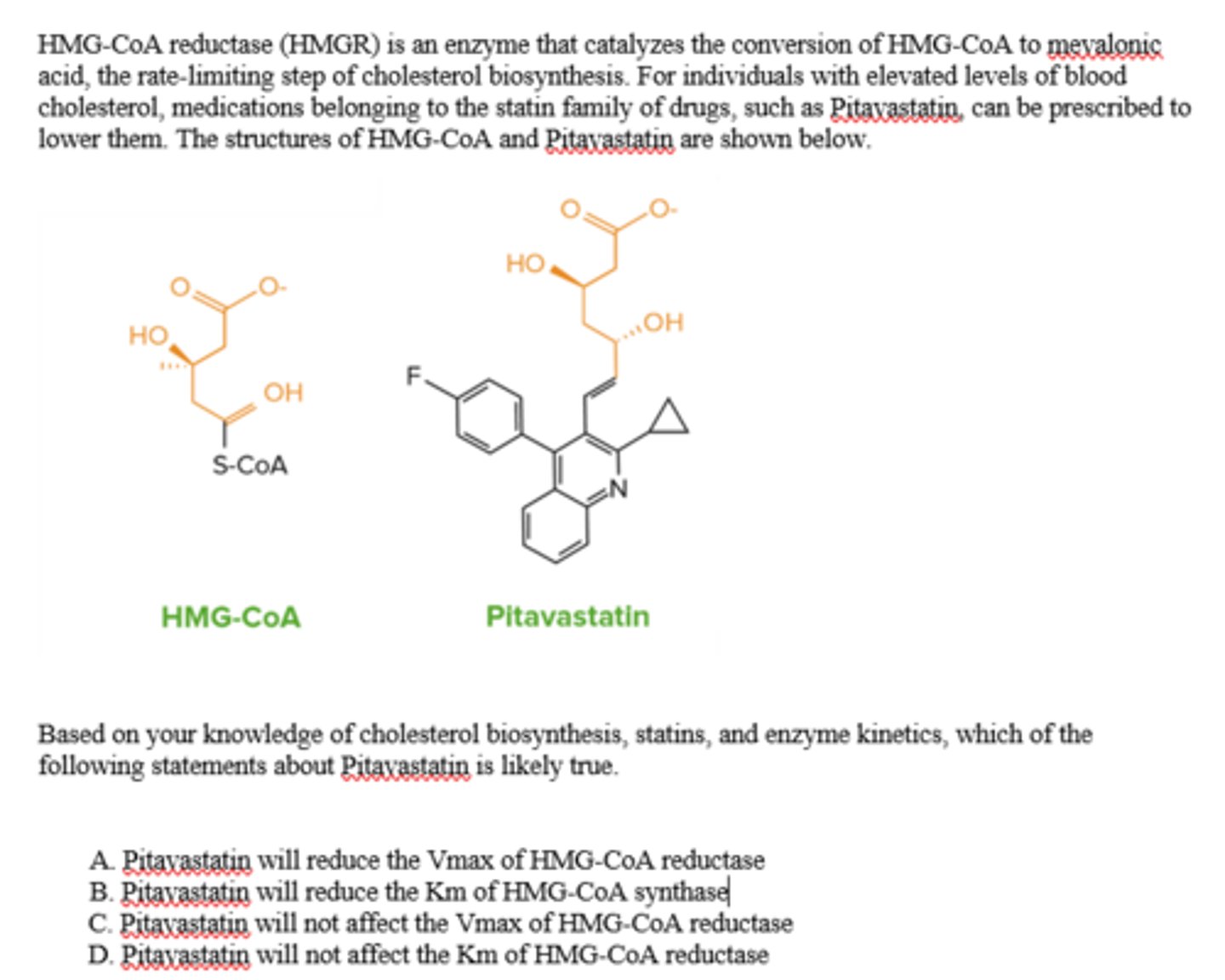
C. Pitavastatin will not affect the Vmax of HMG-CoA reductase
You are developing a new drug, Drug X, that works to remove excess lipids in patients who cannot fully metabolize lipids. Drug X efficiently binds to lipids in the blood and causes them to be excreted from the body.
An unrelated drug, Drug Y, is incredibly hydrophobic and needs to bind albumin in order to be distributed efficiently around the body.
You notice that when you administer Drug X at the same time as Drug Y, Drug X still removes lipids from the body but the efficacy (effectiveness) of Drug Y increases. Which of the following reasons may best explain why?
A. Drug X and Drug Y act on the same target sensitizing the patient to Drug Y
B. Drug Y binding to albumin is enhanced by Drug X improving biodistribution
C. Drug Y binding to albumin is decreased by Drug X improving biodistribution
D. Drug Y binding to lipids is increased by Drug X improving biodistribution
B. Drug Y binding to albumin is enhanced by Drug X improving biodistribution
Which of the following options is false:
Enzymatic digestion of lipids occurs in the _______?
A. Mouth
B. Stomach
C. Intestine
A. Mouth
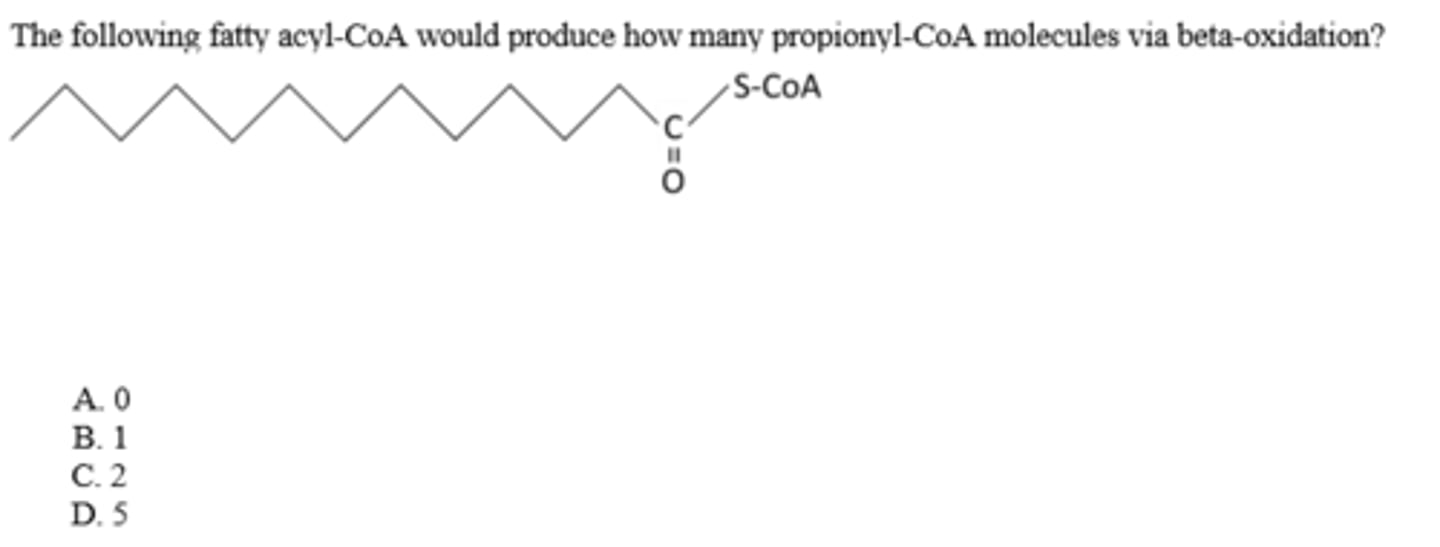
B. 1
The "goal" of fatty acid oxidation is to what? (Select all that apply)
A. Produce acyl-CoA
B. Produce acetyl-CoA
C. Produce oxidized electron carriers
D. Produce reduced electron carriers
B. Produce acetyl-CoA
D. Produce reduced electron carriers
Lipids are more energy dense than carbohydrates because:
A. They are more reduced
B. They are more oxidized
C. They contain glycerol
D. The contain phosphates
A. They are more reduced
A fatty acid can be described as follows:
19:2Δ7,11
How many molecules of Acetyl-CoA can be generated from complete beta oxidation of this fatty acid?
A. 8
B. 9
C. 10
D. 11
A. 8
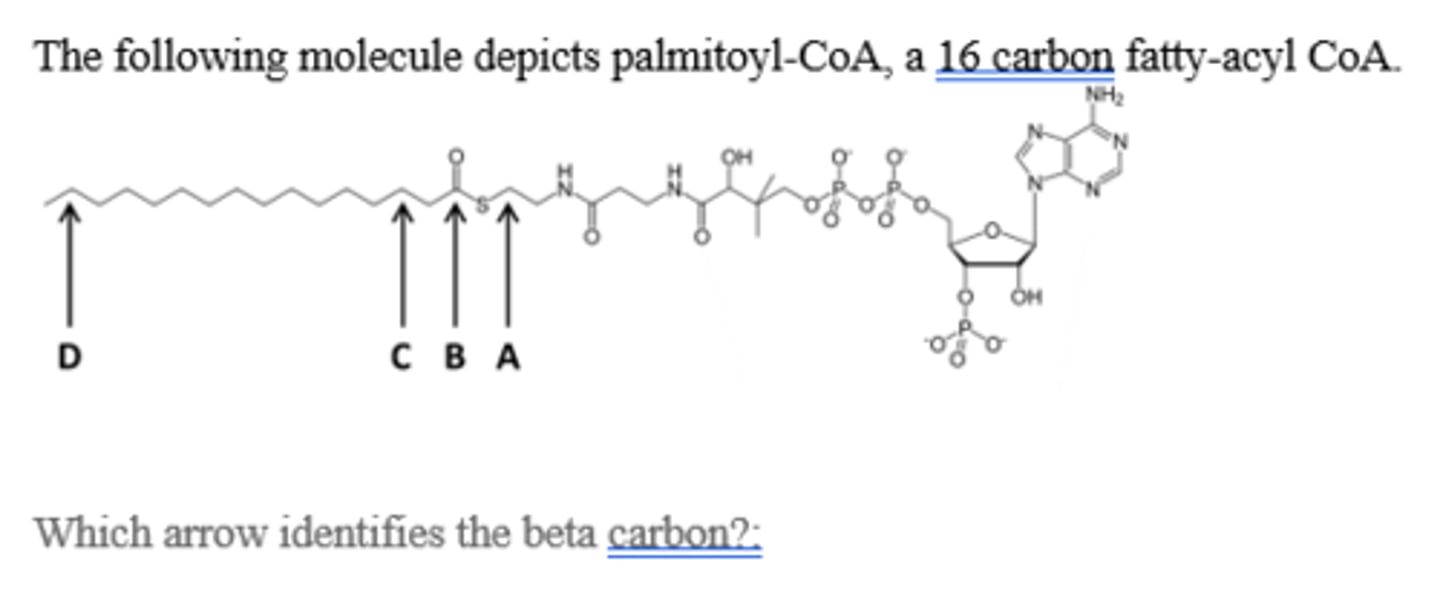
C
The primary role of chylomicrons is to do which of the following?
A. pickup cholesterol accumulating in tissues and transport to the liver
B. transport endogenous TAGs and cholesterol from the liver to the tissues
C. transport exogenous, dietary TAGs and cholesterol from the intestines to the tissues
D. synthesize new TAG molecules in intestinal cells
C. transport exogenous, dietary TAGs and cholesterol from the intestines to the tissues
Which of the following properties makes Bile salts useful emulsifying agents?
A. hydrophobicity
B. hydrophillicity
C. amphipathicity
D. None of the above
C. amphipathicity
Transport of fatty acids across the mitochondrial membranes is directly dependent on the activity of which of the following enzymes?
A. Carnitine palmitoyltransferase
B. Citrate synthase
C. ATP synthase
D. Acyl-CoA dehydrogenase
A. Carnitine palmitoyltransferase