Nervous System Overview
 Call Kai
 Learn
Learn Practice Test
 Spaced Repetition
 Match
Match Flashcards
 Knowt Play
1/22

There's no tags or description
Looks like no tags are added yet.
Name | Mastery | Learn | Test | Matching | Spaced | Call with Kai | Chat |
|---|
No analytics yet
Send a link to your students to track their progress
23 Terms
Nervous System Function
Detect change in internal and external environments
Plan and execute appropriate responses in muscles, organs, and glands
Capacity for learning, memory, cognition, self-awareness, intellect and personality
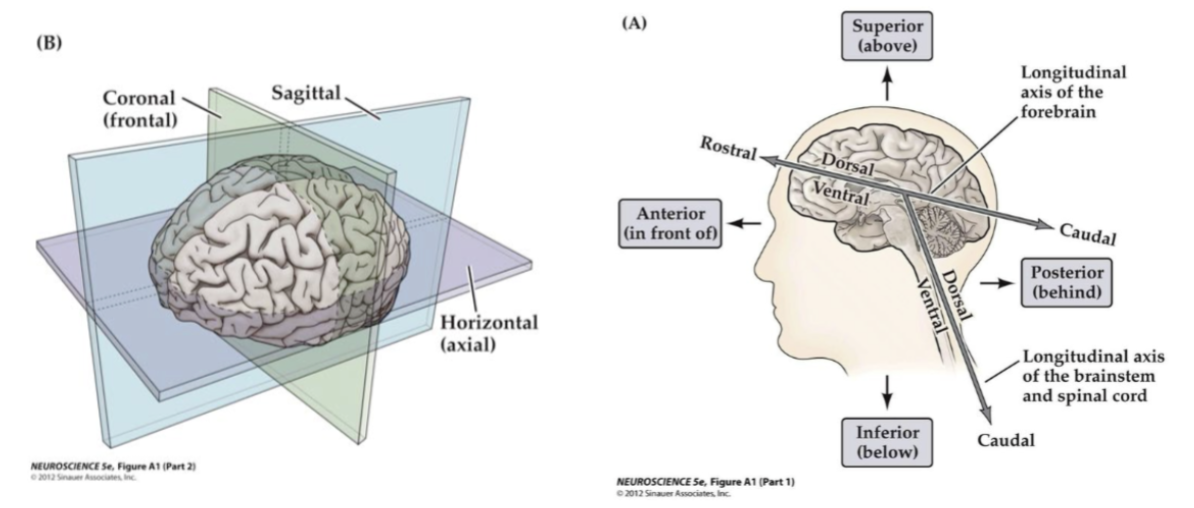
Anatomical Planes and Directions
axis of the forebrain- rostral to caudal
axis of the brainstem- rostral (toward the cerebrum) to caudal (toward the cauda equina)
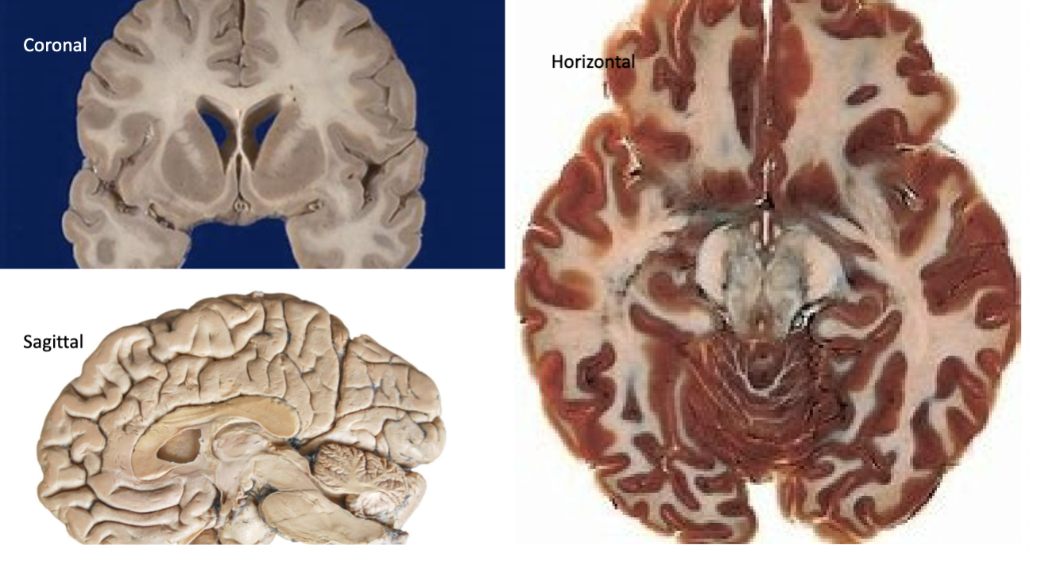
Anatomical Organization of NS
CNS- brain, SC, and cranial nerve 1 and 2
PNS- cranial nerves, spinal nerves, plexuses, peripheral nerves
Somatic NS
Detecting changes in external environment
Control of movement
without sensation, complex/coordinated/adapted movement is impossible (but reflexes and simple movement is possible)
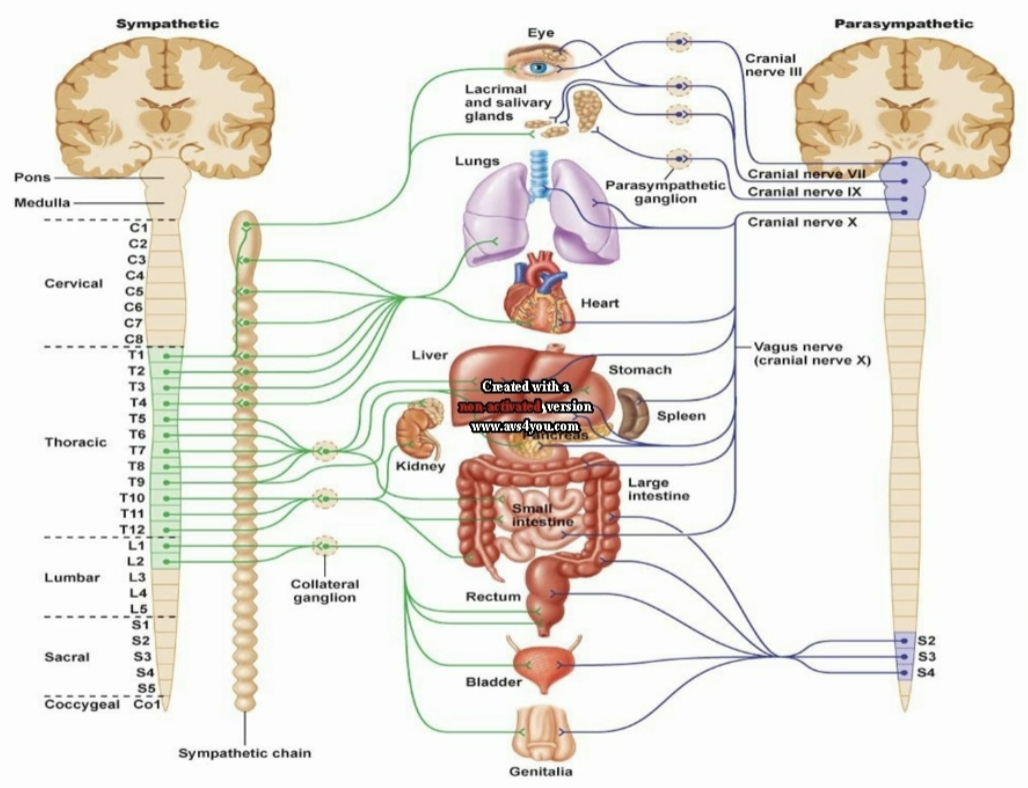
Autonomic NS
Detect changes and controls activity in viscera
Sympathetic- fight or flight
Parasympathetic - feed, breed, rest, digest
pupil constriction/dilation, saliva, digestion, heart rate, bronchi constriction/dilation, sweat, genitalia/reproduction
Sensory System
somatosensation- proprioception, tactile
special senses- vision, vestibular, gustatory, olfactory, auditory
interoception- visceral
pain- tactile, visceral
Motor System
Motor output
reflexes- long/short loop
triggered responses- CPG/equilibrium responses
volitional movement- cortically/subcortically driven
Motor learning
Motor control
Motor coordination
Limbic System
executive function, emotional regulation, motivation/behavior
includes prefrontal cortex, amygdala, anterior cingulate cortex, hippocampus

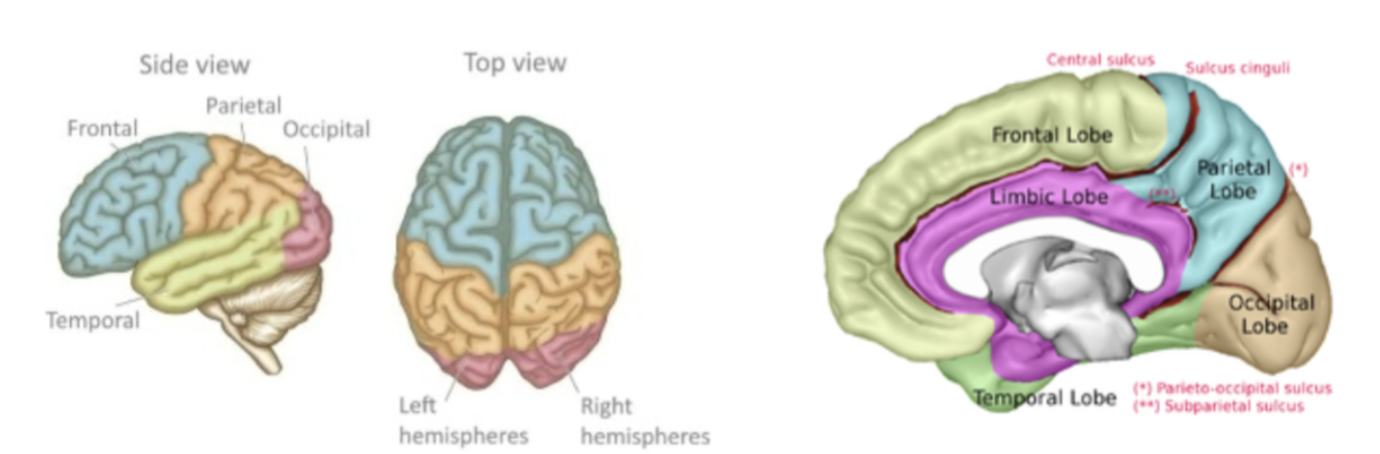
Cerebral Hemisphere
Left and right hemispheres divided by the longitudinal fissure
Lateralization of function
Left: logic, analytical, language
Right: spatial, creative, visual comprehension
Frontal- planning, goal directed behavior, motor function, social behavior, cognition
Parietal- sensory, awareness, and processing
Temporal- declarative memory, auditory processing
Occipital- vision
Limbic System/Lobe- motivation, emotion, learning, memory
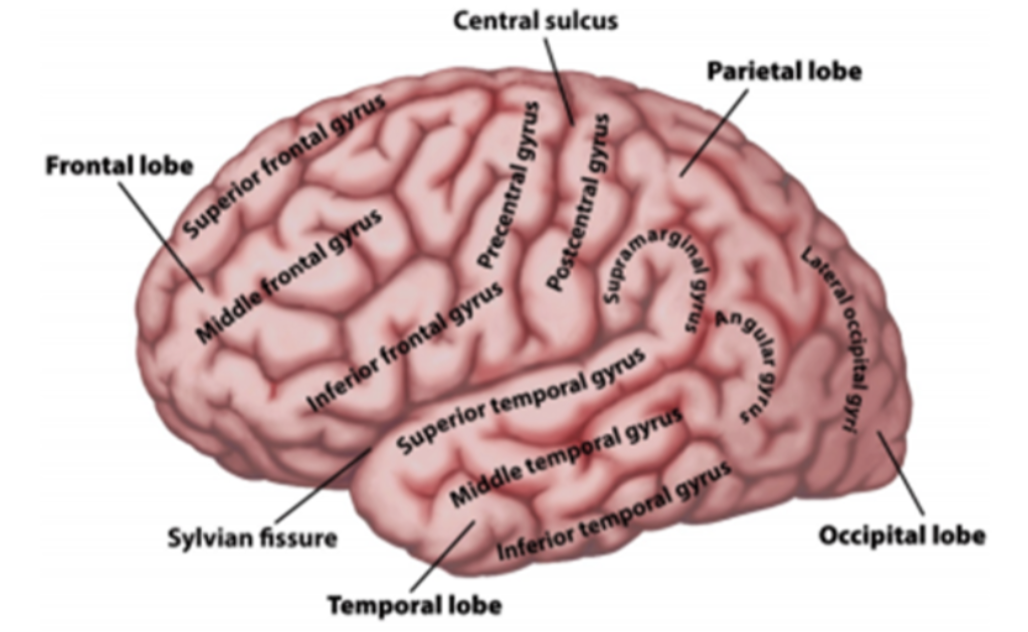
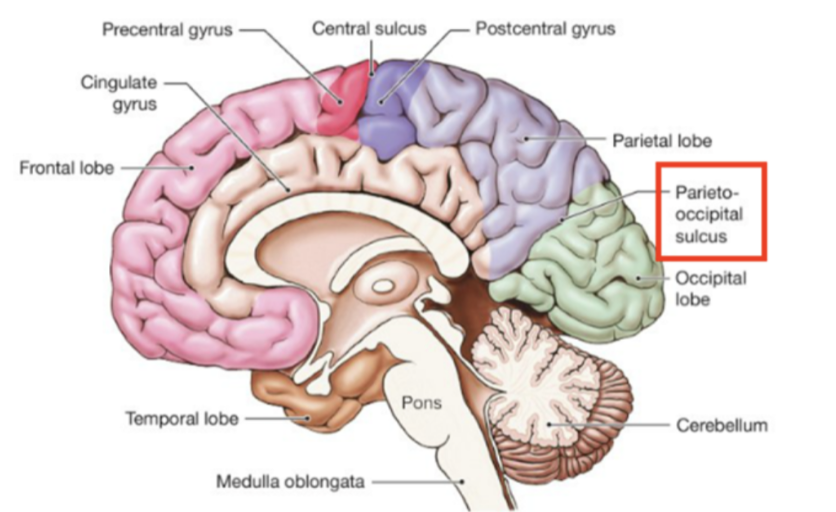
Surface Anatomy
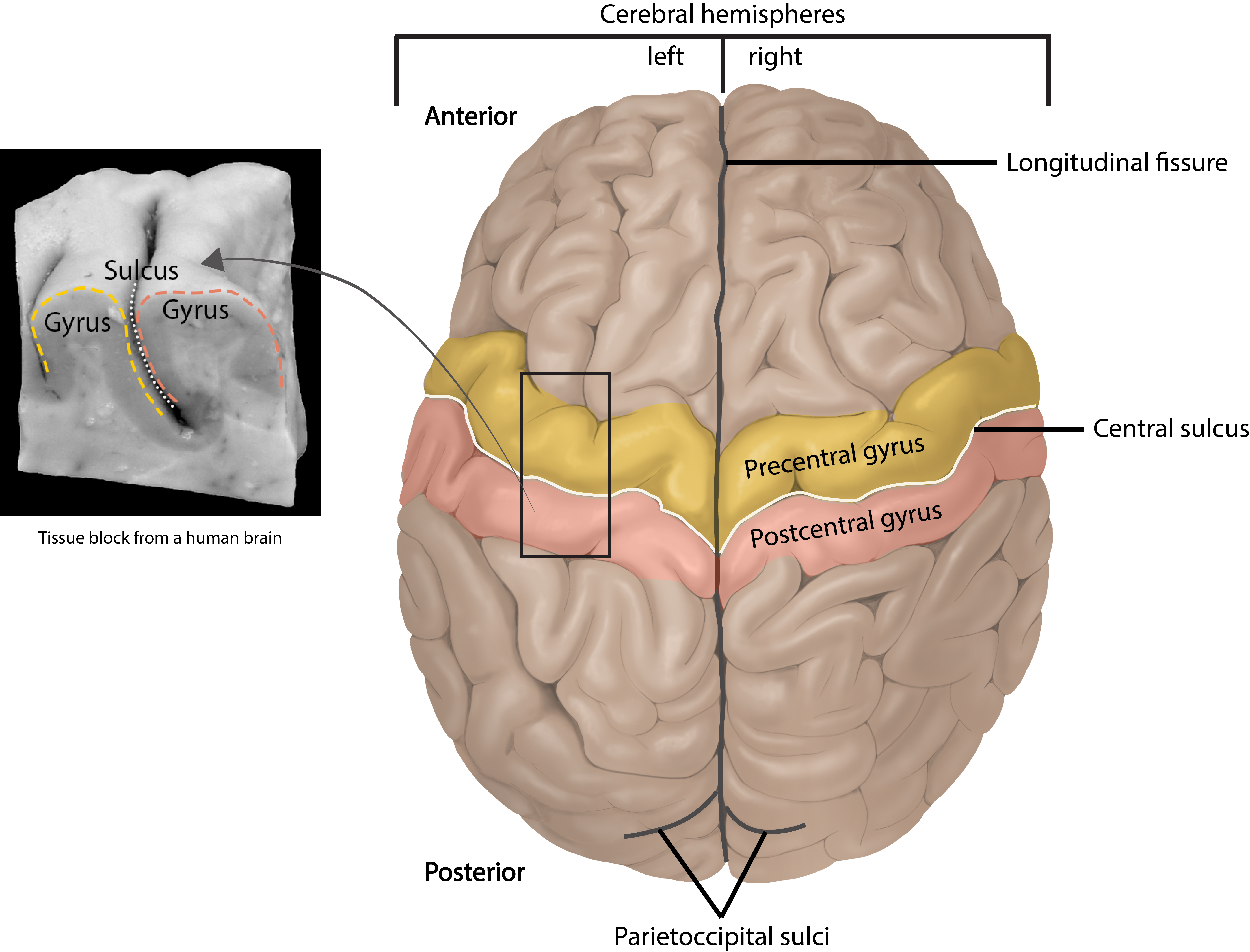
Gyri- hills
precentral gyrus (M1)
postcentral gyrus (S1)
Sulci- vallies
Longitudinal fissure- separates L and R hemisphere
Central sulcus- separates frontal and parietal lobe
Parietal-occipital sulcus- on the medial surface
Lateral sulcus (sylvian fissure)- separates temporal and frontal lobes
surface of the cerebral cortex is mostly gray matter (cell bodies where info is processed)
deeper in the cerebral cortex is mostly cortical white matter (axons that transmit info)
Precentral and Postcentral Gyrus
gyrus right next to the central sulcus
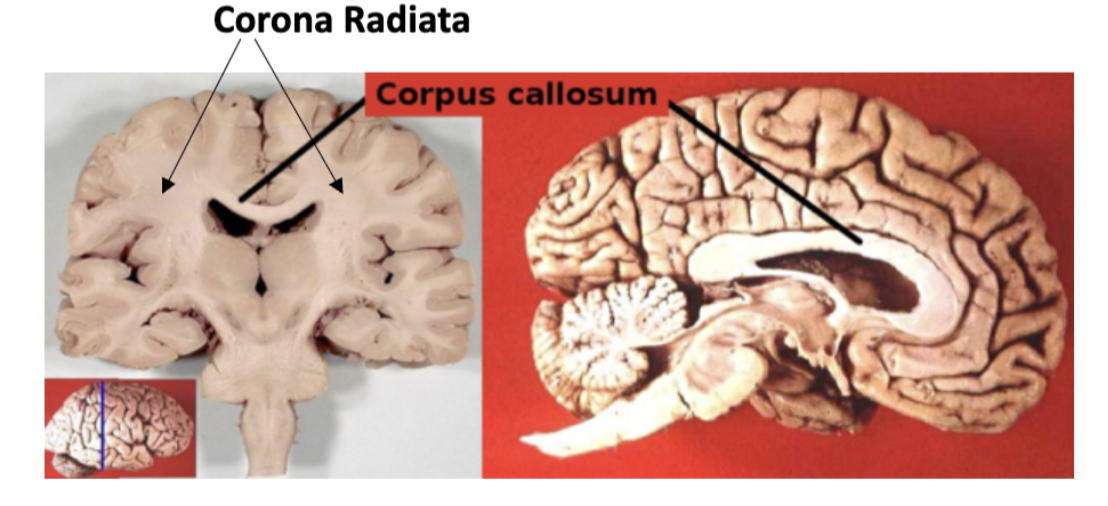
Internal anatomy
corpus collosum- connects L and R hemisphere
corpus radiata- connects cortex to brain stem and thalamus
internal capsule- conduit of axons connecting cerebral cortex to other brain areas and spinal cord
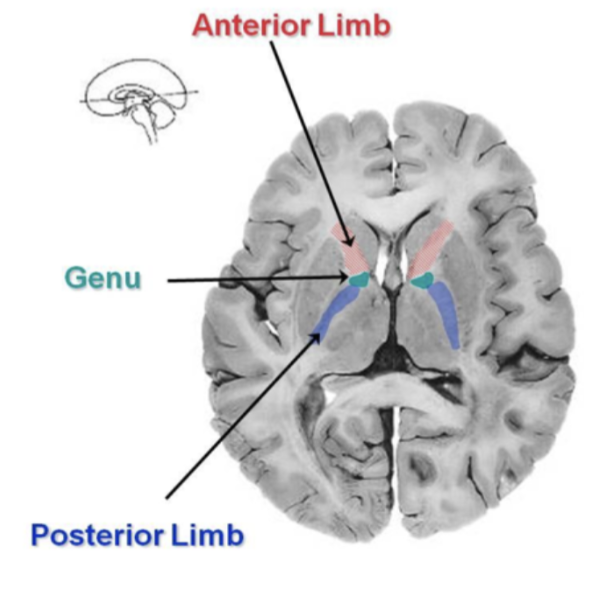
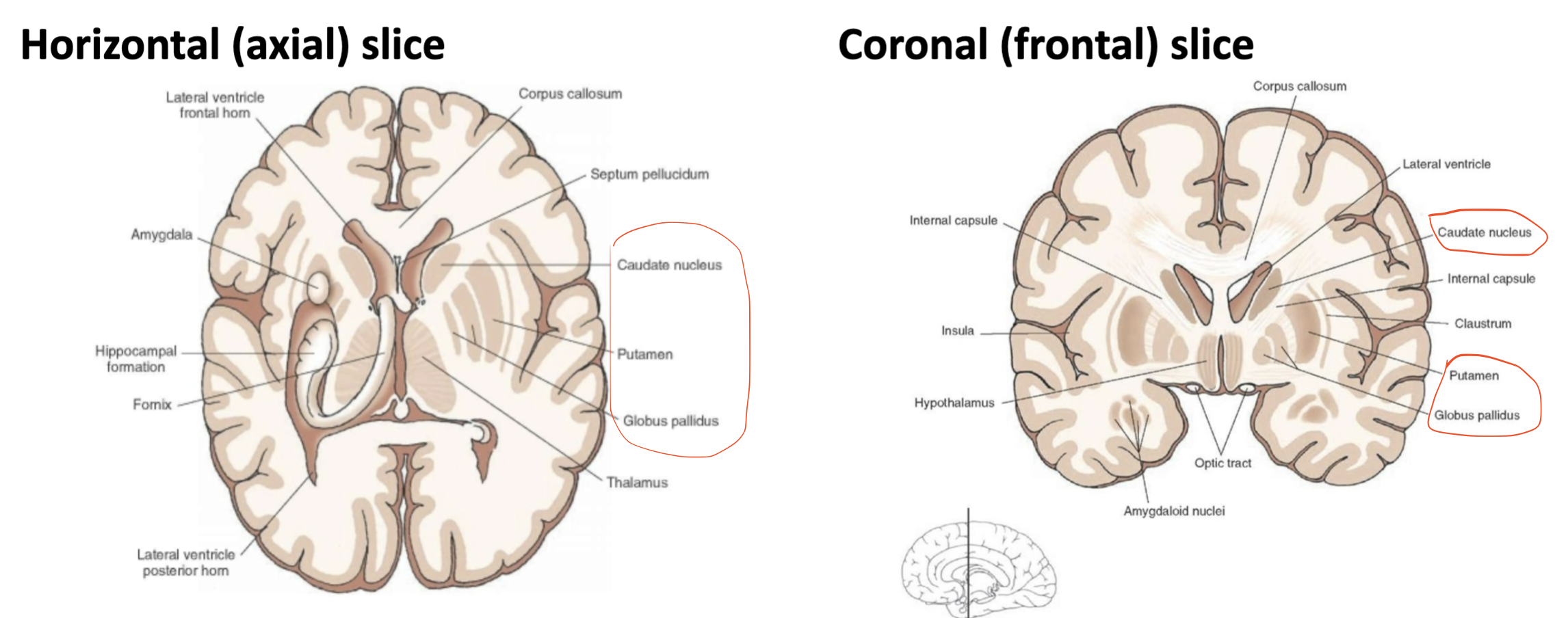
Subcortical gray matter- Basal Ganglia
3 nuclei (caudate, putamen, globus pallidus), social and goal-oriented behavior, movement, emotions
gray/light tan space between thalamus/hypothalamus and basal ganglia is the internal capsule
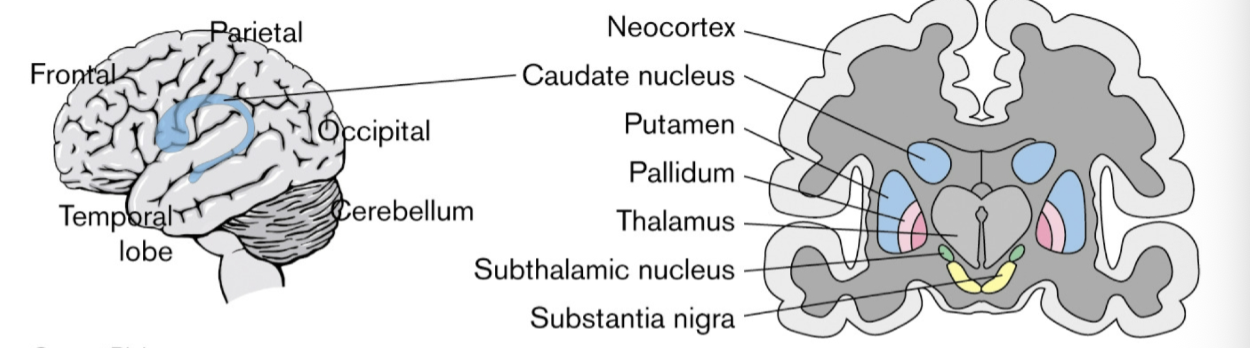
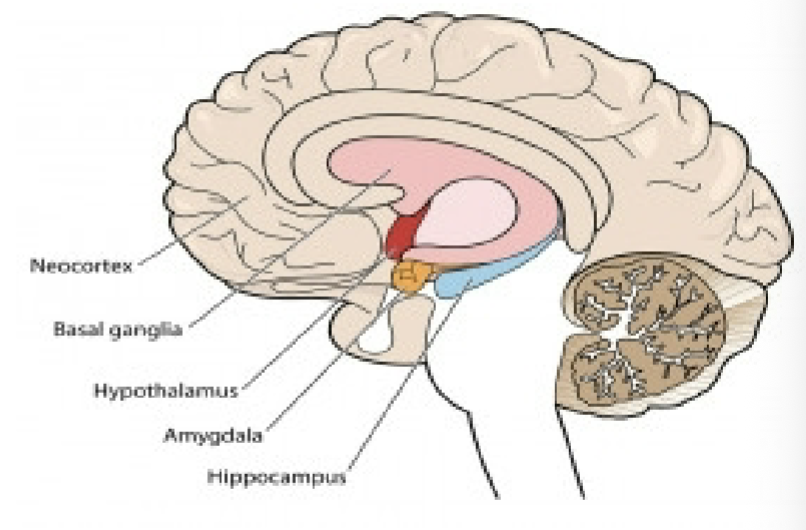
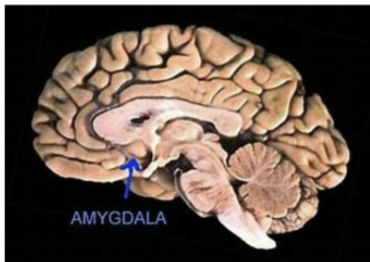
Subcortical gray matter- Amygdala
emotions and motivation
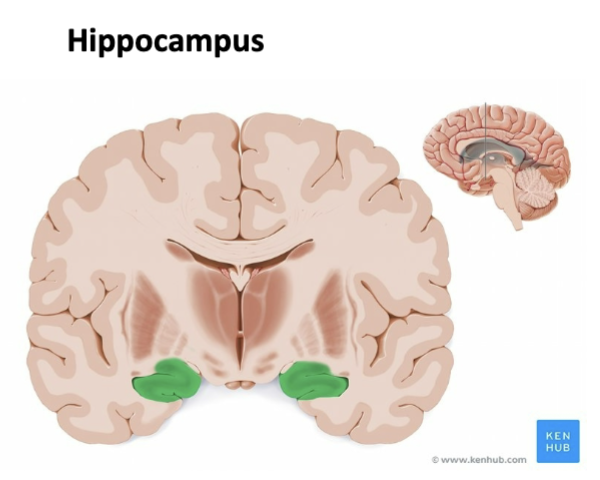
Subcortical gray matter- hippocampus
declarative memory
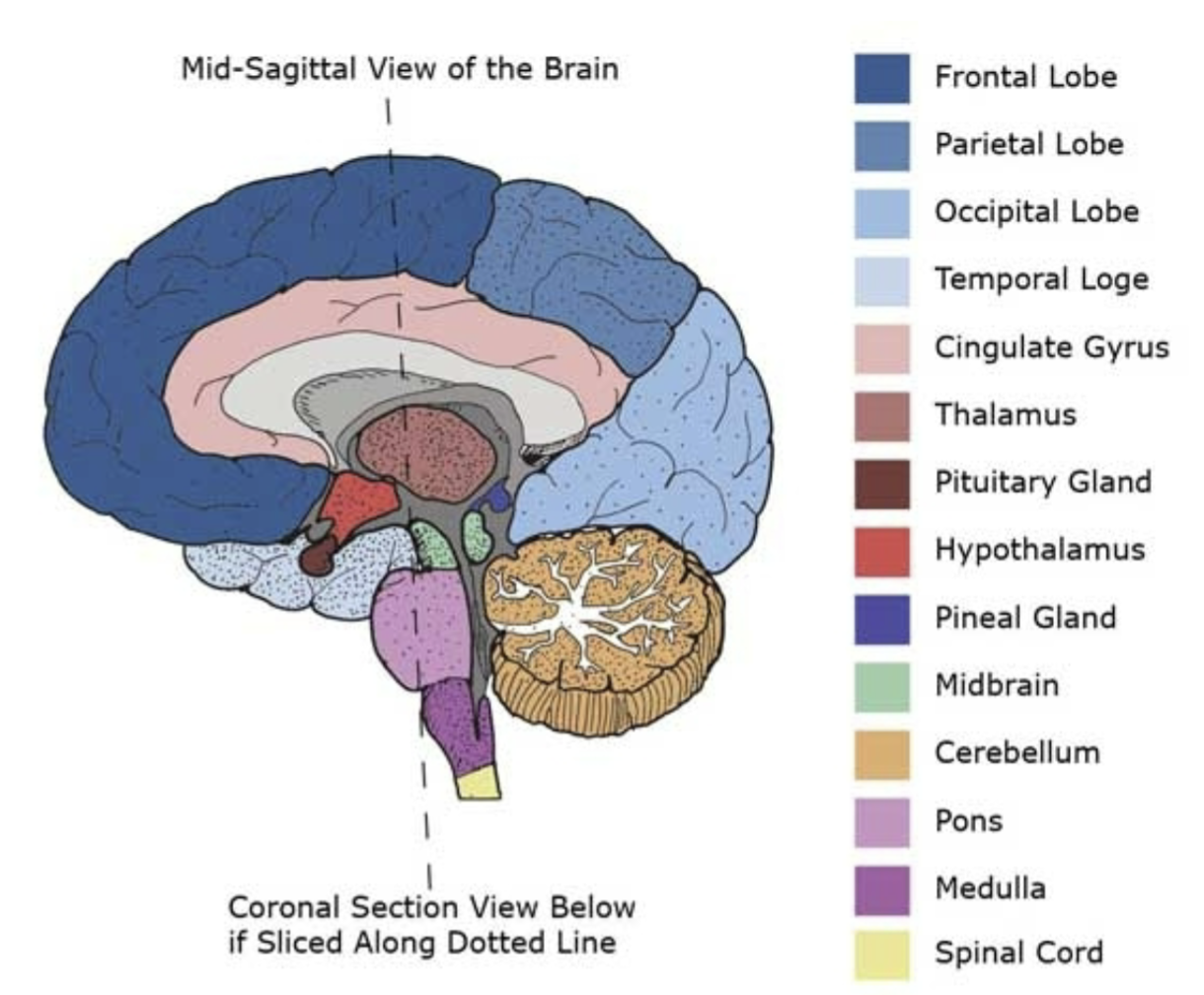
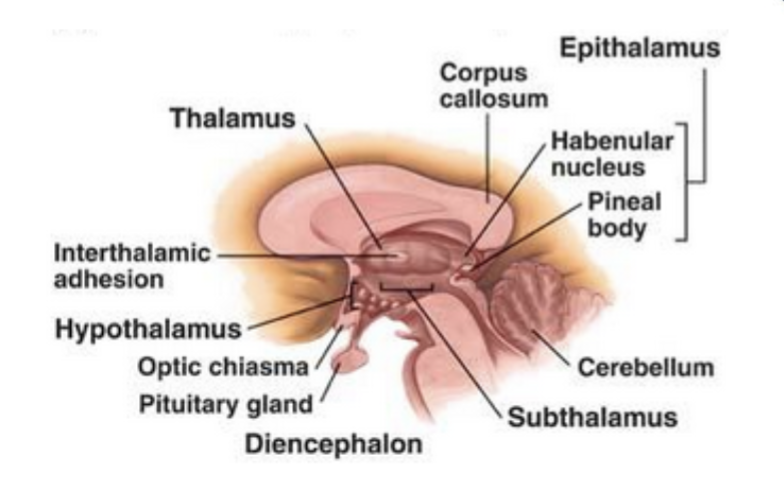
diencephalon
thalamus- collection of nuclei that relays info to the cortex; process emotions and some memory; sensory integration, regulate consciousness/arousal/attention
hypothalamus- inferior to thalamus; maintains homeostasis; regulates growth and reproductive organs
epithalamus (pineal gland)- postero-superior to thalamus; influences other endocrine glands (pituitary and adrenal)
subthalamus- inferolateral to thalamus; movement control; closely related to the basal ganglia
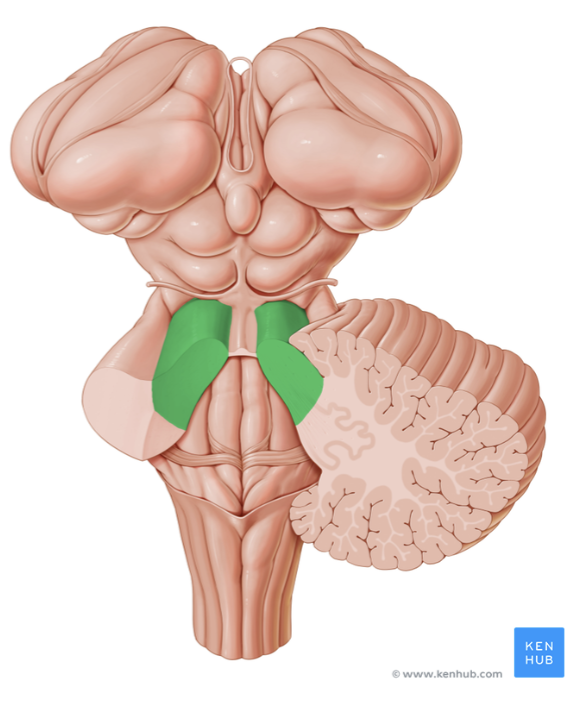
cerebellum
connects the brain stem to the cortex- motor coordination, postural control, and emotional/cognitive function
2 large cerebellar hemispheres
vermis connects the 2 hemispheres
3 cerebellar peduncles (axon tracts) connect cerebellum to brainstem
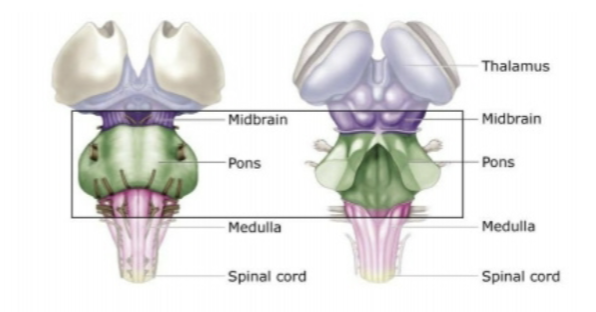
Brainstem
midbrain- most superior; motor and sensory processing, oculomotor control, vision and auditory processing, arousal and consciousness, pain perception
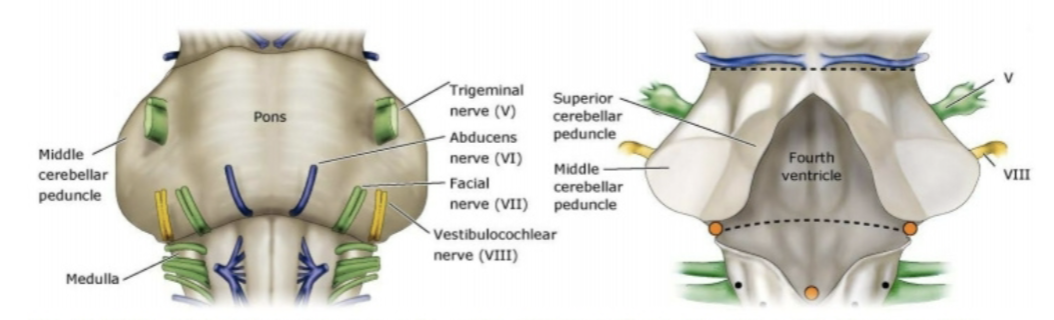
pons- middle; motor coordination/control, facial movements and swallowing, sensory processing from face and head, auditory processing
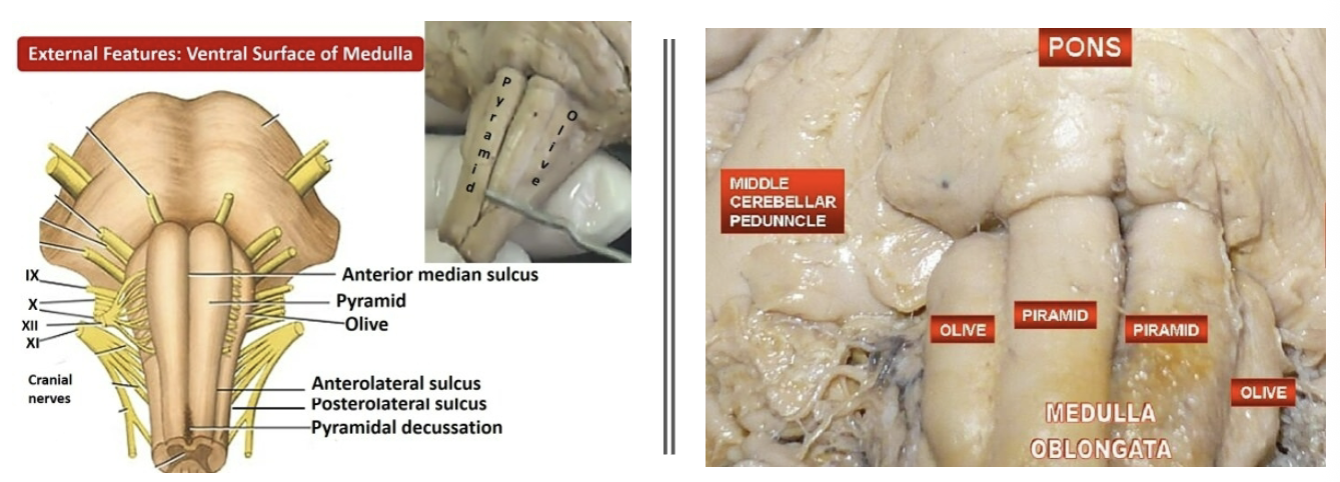
medulla- inferior; sensory processing (body/face), motor output, vestibular function, taste, cardiovascular and respiratory control, vital reflexes (cough, sneeze, vomit, swallow)
longitudinal divisions:
basilar (anterior)
tegmentum (posterior)
tectum (posterior to tegmentum in midbrain)

Pons
Medulla
Spinal Cord
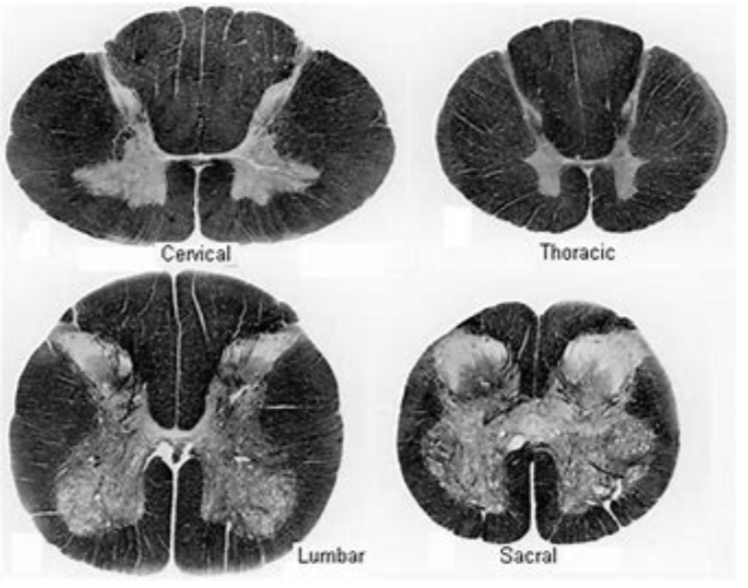
contained within the vertebral column and runs from the foramen magnum to the 1st lumbar vertebra
nerve fibers continue below L1—> cauda equina
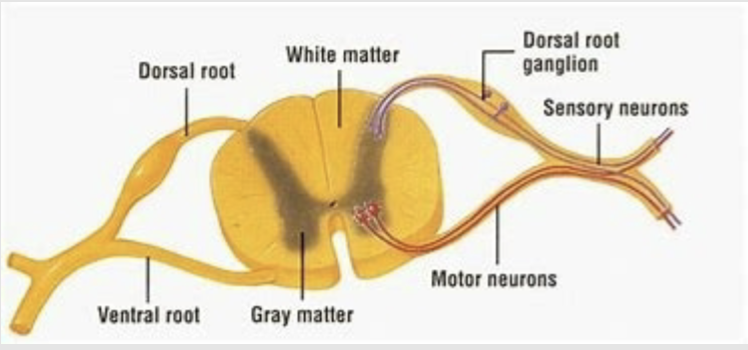
gray matter (interneurons, cell bodies) in the middle and white matter (axons and myelin) surrounding
sends info between peripheral structures and the brain
31 Pairs of Spinal Nerves
dorsal nerve root- carries afferent fibers, cell bodies in dorsal root ganglia
ventral root- carries efferent fibers, cell bodies in spinal gray matter