2) Temperature Regulation
 Call Kai
 Learn
Learn Practice Test
 Spaced Repetition
 Match
Match Flashcards
 Knowt Play
1/29

There's no tags or description
Looks like no tags are added yet.
Name | Mastery | Learn | Test | Matching | Spaced | Call with Kai | Chat |
|---|
No analytics yet
Send a link to your students to track their progress
30 Terms
What is Uthoff’s Phenomenon?
→ temporary worsening of vision (blurring/dimming) when core body temp increases-
seen in pt with demyelinating diseases (e.g., MS)
Heat impairs signal transmission in previously damaged (demyelinated) nerves
Humans maintain an average body temperature of…
98.6°F or 37° C
When is body temperature typically at its lowest and highest?
Morning (AM) = lowest
Evening (PM) = highest
How does age affect body temperature?
↑ age = ↓ body temp
Where is the body’s temperature regulatory center located?
Hypothalamus - determines the "set point"
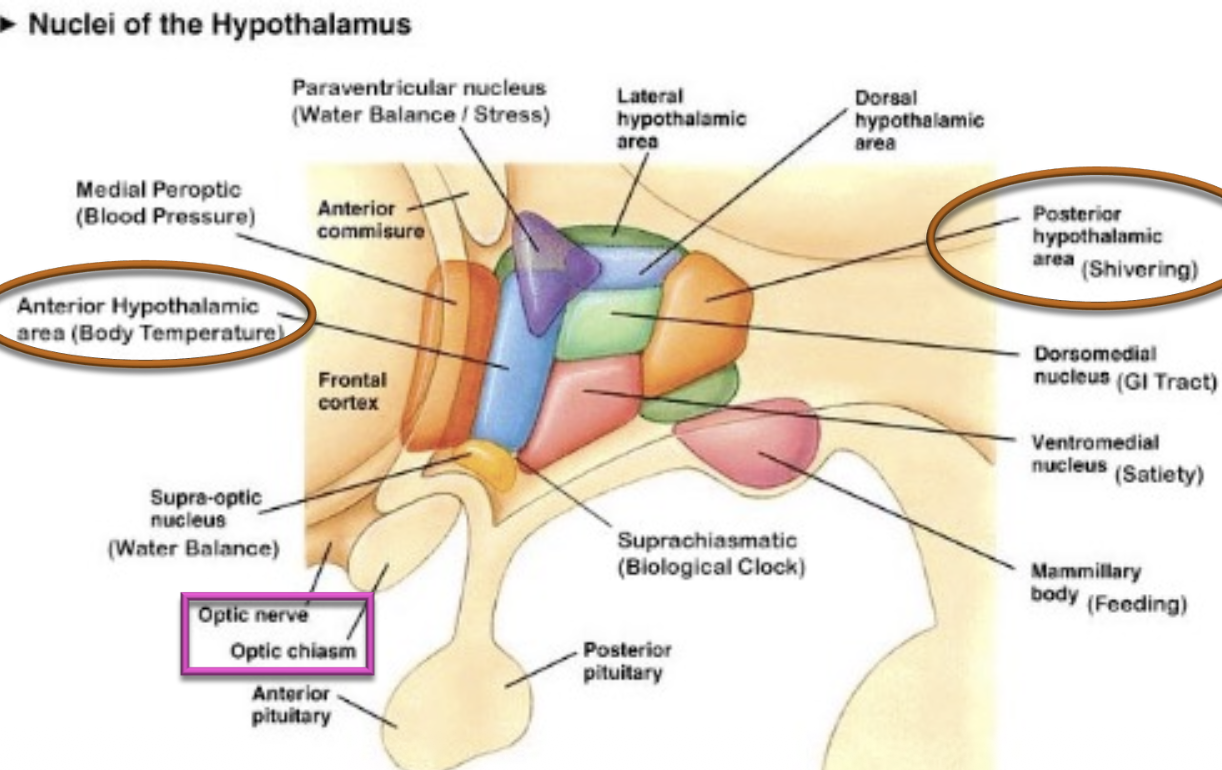
Which specific hypothalamic areas control temperature and shivering?
Anterior hypothalamic area controls body temp
Posterior hypothalamic area controls shivering
List 4 main ways the body generates heat.
Thyroid hormone production
SNS activation
Shivering
Behavioral components (e.g., seeking warmth)
Why are thyroid hormones considered thermogenic?
↑ Na-K-ATPase activity
↑ O2 consumption
↑ metabolic rate
↑ heat production
How does thyroid activity differ in heat vs. cold intolerance?
Hyperthyroidism (↑TH) causes heat intolerance
↑ BMR, ↑ O2 consumption, ↑ heat production
Hypothyroidism (↓ TH) causes cold intolerance
↓ BMR, ↓ O2 consumption, ↓ heat production
What role does the SNS play in heat conservation?
→ Synergistic with and depends on presence of a thyroid response
Stimulation of β-adrenergic receptors in brown fat → ↑ metabolic rate & heat production without shivering
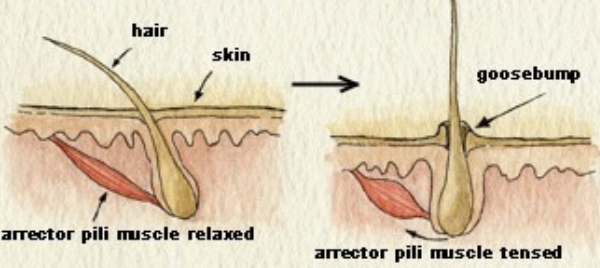
Stimulation of α1 adrenergic receptors in skin → vasoconstriction of superficial vessels to prevent further heat loss + shunt blood to your core + stimulates arector pili muscles (goose bumps)
Why does being cold make you need to urinate?
Peripheral vasconstriction ↑ BP → stimulates urine production to ↓ BP by ↓ volume (peeing)
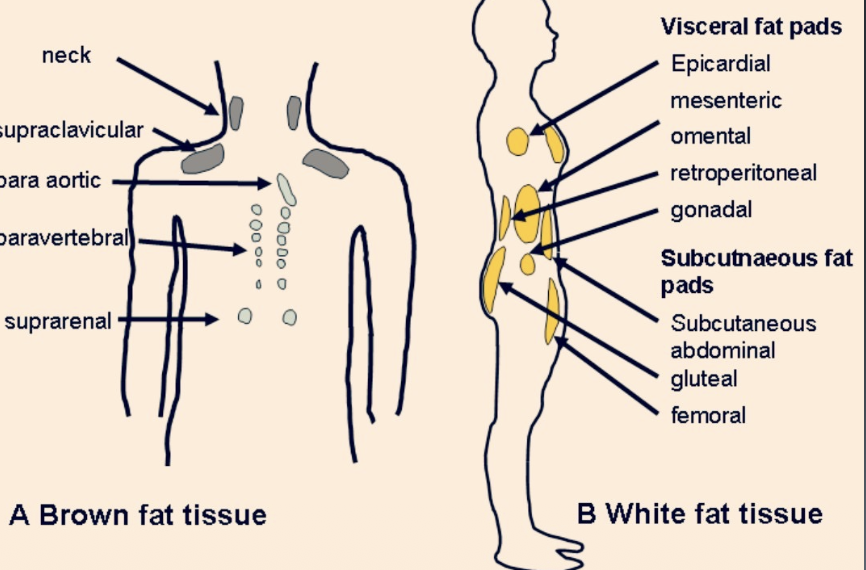
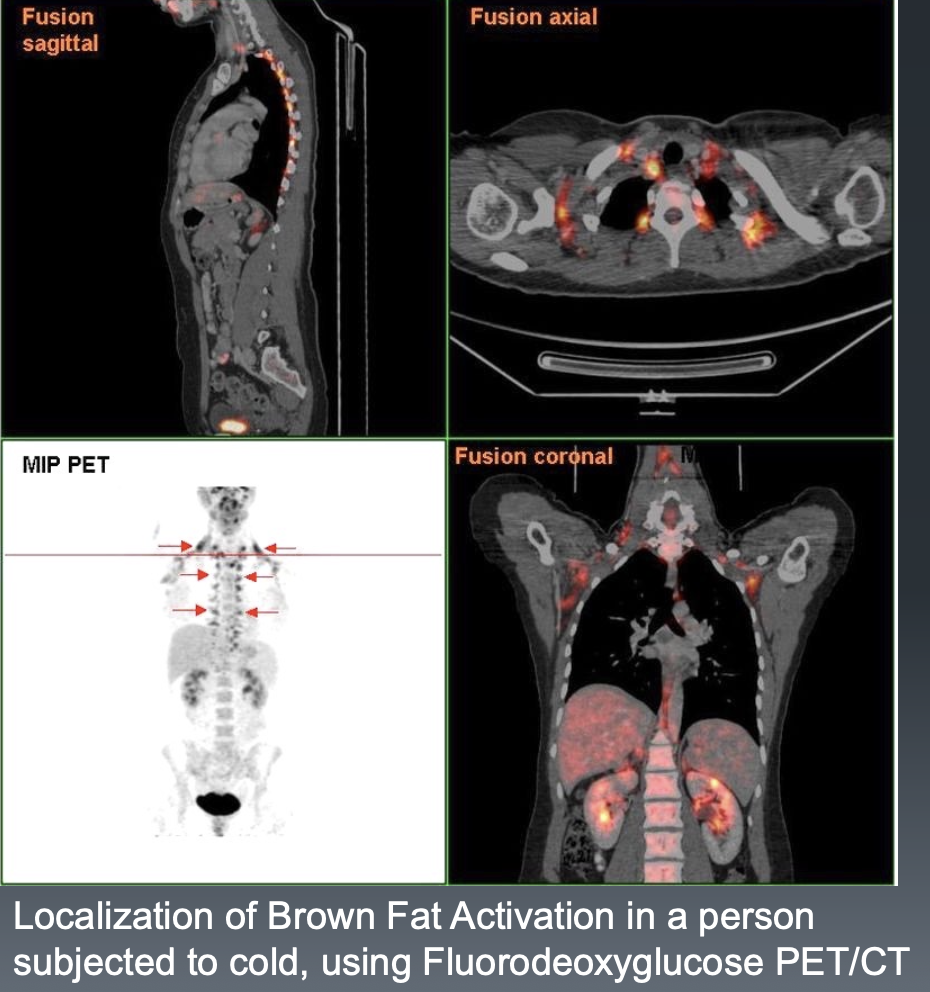
What is the primary role of Brown Fat? Where is it found?
Role: Non-shivering thermogenesis
this is critical in neonates (making up 5% of their body mass)
Location: Back, along the upper half of the spine and toward the shoulders
How does brown fat change with age?
↑ Age = ↓ Brown fat
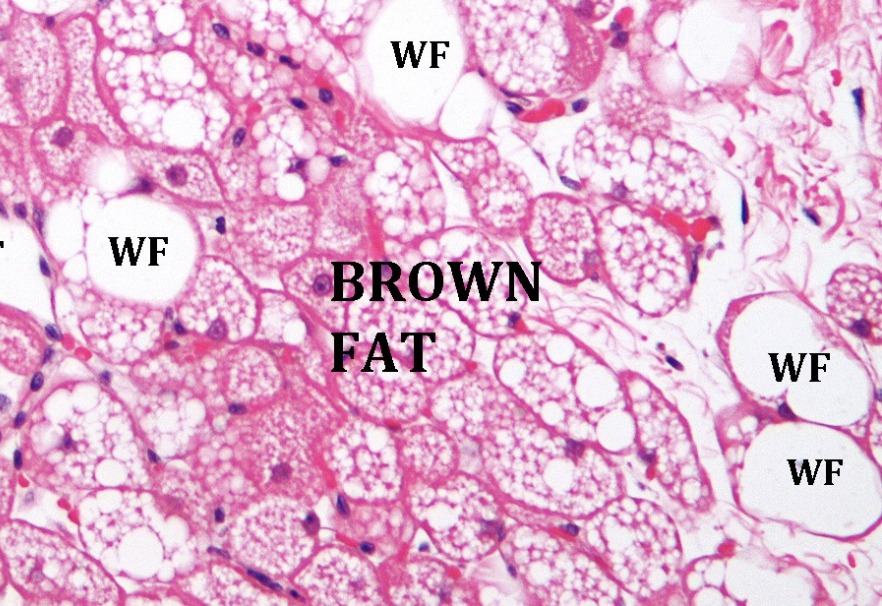
Compare White fat and Brown fat.
White fat
single lipid droplet (“look” empty)
less capillaries
Brown fat
multiple smaller droplets
↑ (iron-containing) mitochondria + lacy cytoplasm
more capillaries to supply the tissue with O2 and nutrients + distribute produced heat throughout the body
How does Brown Fat produce heat instead of ATP even though it has mitochondria?
→ it has Thermogenin (uncoupling protein-1)
this allows H+ to flow back through the mitochondrial membrane quickly, generating heat instead of ATP
What is the most effective way for the body to generate heat in a short time?
Shivering (rhythmic skeletal muscle contraction)
Which nerve fibers mediate the shivering response?
α-motor fibers fire skeletal muscles
γ-motor fibers keep spindles taut for repeated firing
How does Shivering change with age?
↑ Age = ↓ shivering
What is the medical term for severe or violent shivering?
Rigors
How does the body cool itself through the skin?
Vasodilation of peripheral blood vessels → shunts blood to surface → heat loss
Stimulation of eccrine sweat glands → sweat
Behavioral components (getting out of the sun, removing excess clothing, etc)
What is the rate of perspiration for a human?
greater 3L /hour
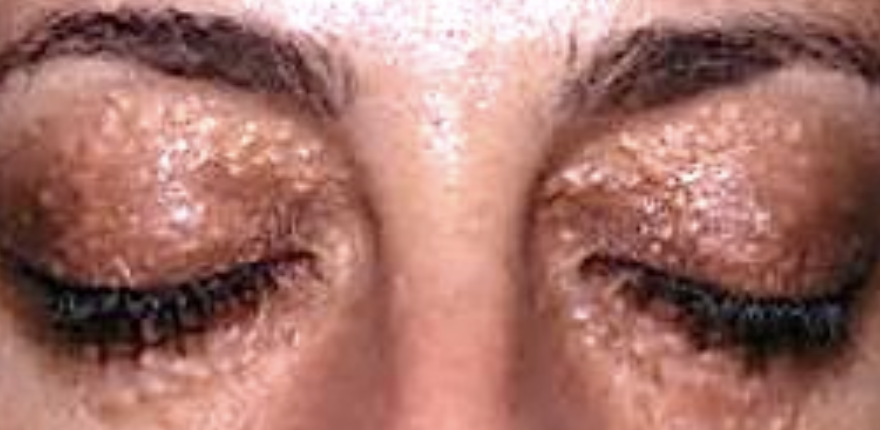
What is Syringoma?
→ Benign growth of eccrine sweat glands in the lids
Begins at puberty
not treated except for cosmesis
What is a patient with a fever called?
Febrile
How does fever assist in immune defense?
Move temps above optimal temp for microbe growth and replication
Strengths CD-8 lymphocytes function
List the steps explainng the physiological cause of a fever.
Pyrogens (pus) trigger IL-1 release
Prostaglandin production
↑ hypothalamic set point
↑ temp
How do aspirin and ibuprofen reduce fever?
Inhibit cyclooxygenase (COX)
↓ prostaglandin production
No increase in hypothalamic set point
↓ Fever
True or False: Acetominophen, aspirin and ibuprofen can all be used to reduce fever.
False - Acetominophen less effective for fever
What’s the difference between Heat Exhaustion and Heat Stroke?
Heat Exhaustion (wet)
→ excessive sweating and dehydration → ↓blood volume, ↓ BP, fainting
Heat Stroke (dry)
→ DRY, hot skin with potential tissue damage that can occur due to ineffective heat reduction methods
temp >104°F
What is Malignant Hyperthermia?
→ complication of inhaled anesthetics caused by an inherited muscle receptor defect that keeps Ca2+ channels open
leads to continuous muscle contraction & massive heat production
heat dissipating mechanisms can’t keep up
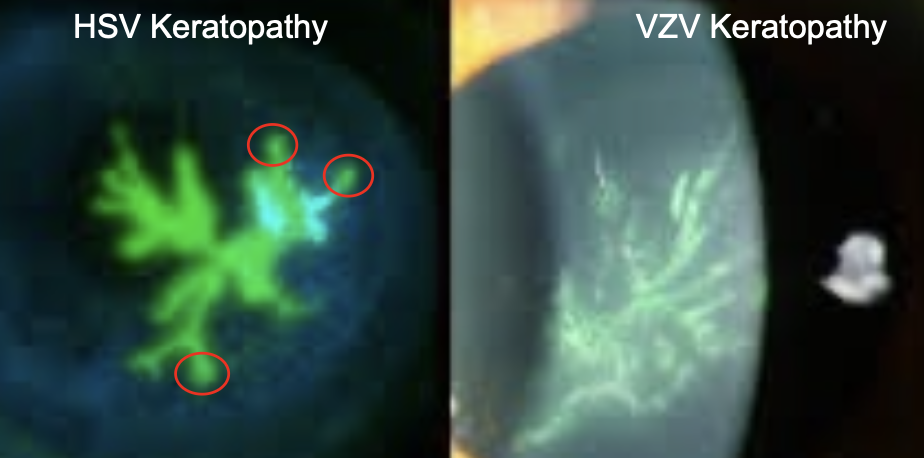
How do you distinguish HSV from VZV Keratitis on a stain?
HSV has sharp edges and knobs at the ends (dendrite)
VZV has a feathery pattern with no end knobs (pseudodendrite)