Group Process Weeks 1-3
 Call Kai
 Learn
Learn Practice Test
 Spaced Repetition
 Match
Match Flashcards
 Knowt Play
1/38

There's no tags or description
Looks like no tags are added yet.
Name | Mastery | Learn | Test | Matching | Spaced | Call with Kai | Chat |
|---|
No analytics yet
Send a link to your students to track their progress
39 Terms
Absolute Knowing
Knowledge is right or wrong, exists in absolute form, and is the instructor's purview.
Transitional Knowing
Knowledge is mostly certain but can be uncertain in some areas; acquired by obtaining information.
Independent Knowing
Knowledge is largely uncertain, comes from thinking for oneself, and is explored with peers.
Contextual Knowing
Knowledge is uncertain but judged as substantiated by synthesizing experts, evidence, and experience.
Integrated Learning
Connecting disparate information, drawing on wide knowledge, and linking learning between contexts.
Group Program
The combination of assessment, protocol, and sessions providing intervention to a specific population.
Group Session
A 30-to-90-minute session designed to reach specific goals within an overall program.
Group Protocol
An intervention plan for a group program.
Group Structure
The organization and procedures of a group, such as what is done first and next.
Group Context
The historical and environmental background in which a group exists.
Group Climate
Physical, interpersonal, or external forces that impact the experience of group members.
Group Composition
The makeup of the group (e.g., open vs. closed, voluntary vs. involuntary).
Group Norms
Implicit seating arrangements and patterns of interaction that become normative expectations.
Group Cohesiveness
The intensity of feeling toward fellow group members and membership in the group.
Group Maturity
When group members are able to balance their own needs with group needs.
Group Format
How groups are presented and how they meet the various needs of members.
Cole's Seven Steps
Introduction, Activity, Sharing, Processing, Generalizing, Application, and Summary/Wrap up.
Functional Group Model
Group model designed to include purposeful activity and meaningful occupation in group intervention.
Developmental Approach (Groups)
Focuses on points of growth, crisis, or conflicts resolved based on developmental levels.
Humanistic Approach (Groups)
Focuses on growth, self-development, and healing through belonging and shared experience.
Psychodynamic Approach (Groups)
Focuses on ego development, insight, symbolic meaning of activity, and interpersonal issues.
Behavioral-Cognitive Approach (Groups)
Focuses on learning, practice, cognitive restructuring, behavioral goals, and reinforcement.
Sensory Motor Approaches (Groups)
Focuses on motor, sensory, perceptual, or cognitive changes using sensation and practice.
Allen's Cognitive Disabilities (Groups)
Focuses on measuring and monitoring problem-solving ability and safety during performance tasks.
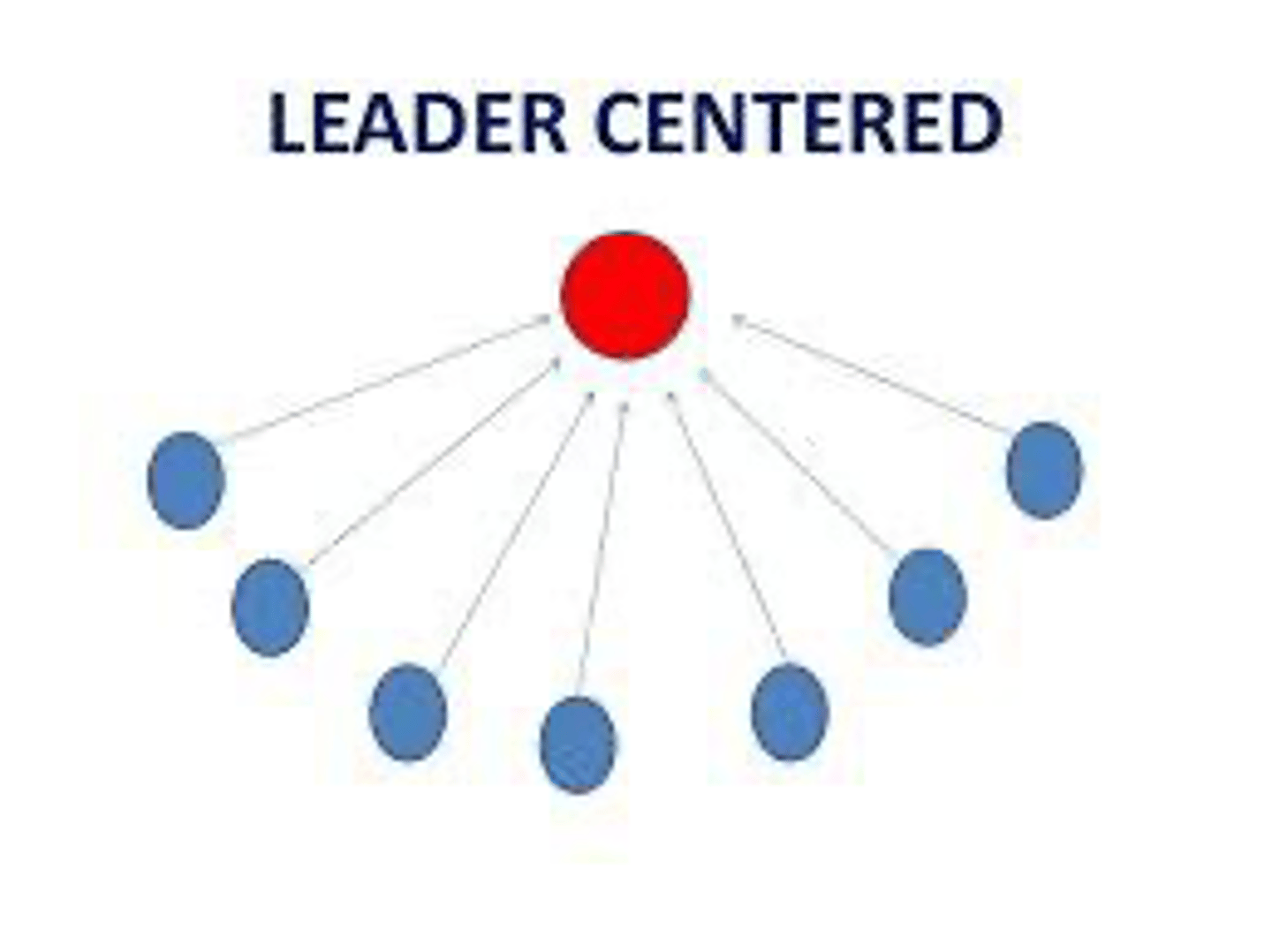
Leader Centered vs. Group Centered Interaction
The contrast between communication directed through the leader versus interaction among members.
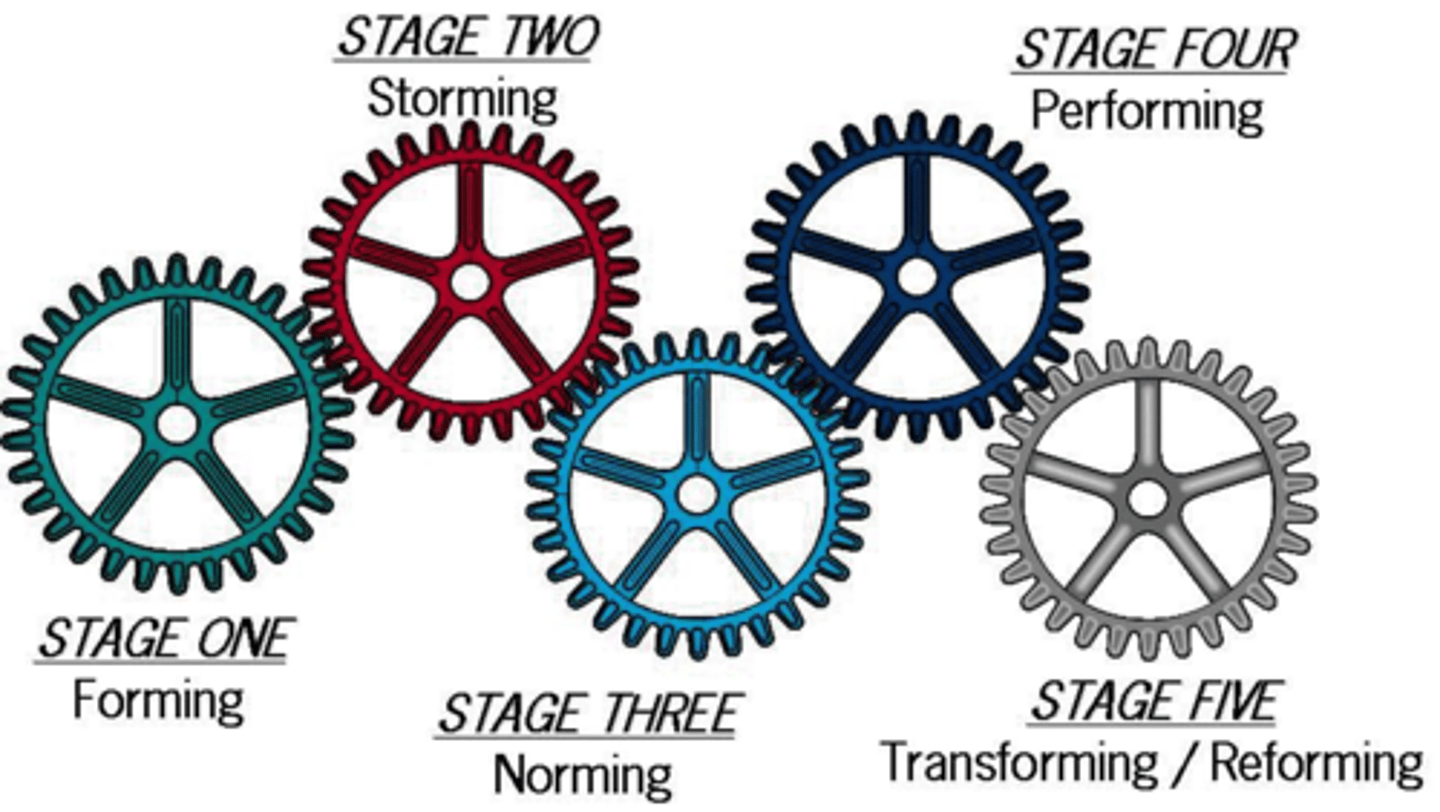
Tuckman's Stages of Group Development
Forming, Storming, Norming, Performing, and Adjourning.
Active Listening
Reflecting back what was heard and how it was understood while suspending judgment.
Therapeutic Feedback
Stating or nonverbally demonstrating one's reaction to another person, ideally using nonthreatening 'I' statements.
Concrete Language
Using clear words to identify actions and solutions without relying on sarcasm, irony, or innuendo.
Challenging (Confrontation)
An invitation to engage in self-examination by exploring the consequences of one's behavior.
Meaning Attribution
The leader articulates observed behaviors to explicitly clarify, explain, or interpret their meaning.
Reality Testing
Sharing and reviewing one's understanding of a situation to check for distortions or faulty beliefs.
Bridging
A form of reality testing where the leader asks members if they share the speaker's experience.
Self-Disclosure (Leader)
Revealing present feelings or relevant past information to appear real and effective without violating boundaries.
Professional Boundaries
A framework protecting clients and therapists from attempting to meet inappropriate emotional or psychological needs.
Modeling Behavior
Leaders demonstrating the behaviors they hope members will learn and encouraging imitation.
Universal Design for Learning (UDL) Guidelines
Engagement (how learners engage), Representation (sensorial/cultural approaches), and Action/Expression (how they act on learning).
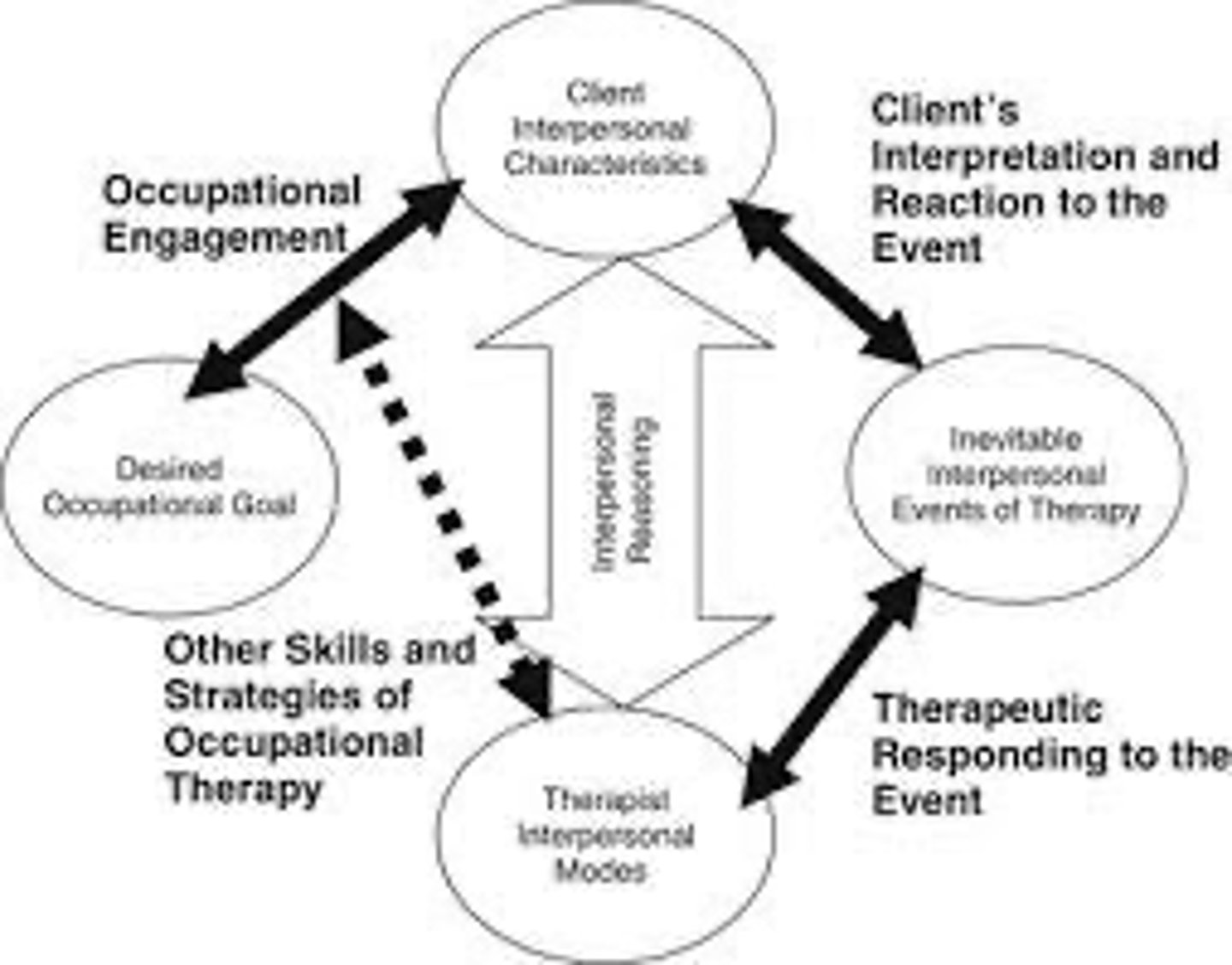
IRM Therapeutic Modes
Advocating, Collaborating, Empathizing/Compassion, Encouraging, Instructing, and Problem solving.
IRM Steps for Interpersonal Reasoning
Anticipate, Identify and cope, Determine if mode shift is required, Choose response mode, and Gather feedback.