ch. 16 - select topics (embronic development, cloning, stem cells)
 Studied by 3 people
 Call with Kai
 Learn
Learn Practice Test
 Spaced Repetition
 Match
Match Flashcards
 Knowt Play
1/23

There's no tags or description
Looks like no tags are added yet.
Name | Mastery | Learn | Test | Matching | Spaced | Call with Kai |
|---|
No study sessions yet.
24 Terms
transformation from zygote to adult involves…
cell division
cell differentiation
morphogenesis
cell division
process from zygote to embryo
cell differentiation
the process by which cells become specialized in structure and function
e.g. production of tissue

cell morphogenesis
the physical processes that give an organism it's 3-dimensional shape
apoptosis
described as programmed cell death
occurs in mature organisms in cells that are infected, damaged or at the end of their functional lives
occurs in vertebrates but can also occur in fungi and yeasts
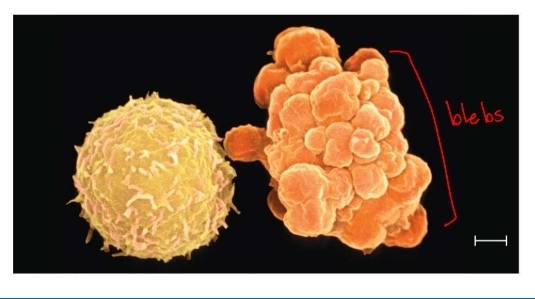
process of apoptosis
DNA, organelles and other cytoplasmic components are fragmented
cells become multilobed and the contents are packaged into vesicles called blebs
these blebs get engulfed by scavenger cells
what is apoptosis used for?
protects neighbouring cells from damage by nearby dying cells
essential for development and maintenance
such as morphogenesis of hands and feet
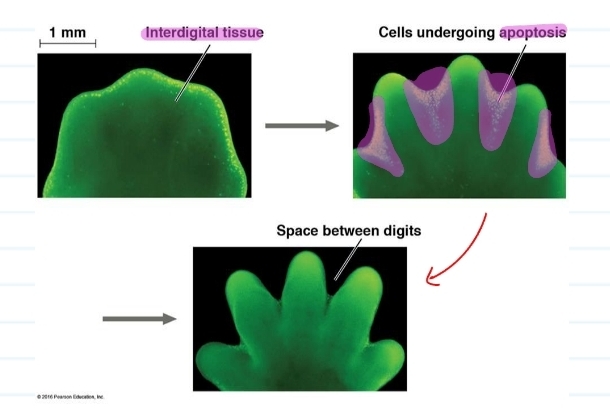
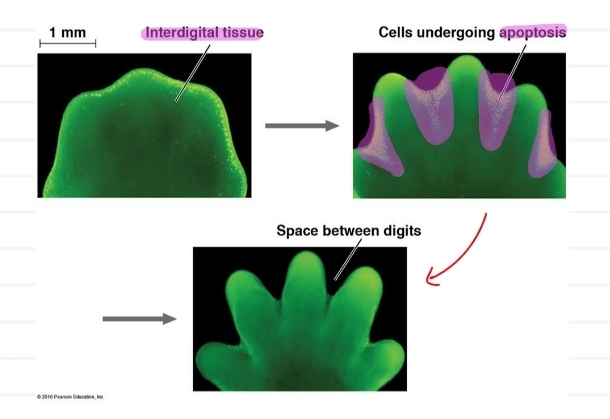
apoptosis in morphogenesis
the embryonic region that develops into feet has a solid, platelike structure
apoptosis eliminates the cells in the interdigital region
the space in between appendages/digits (fingers and toes)
is apoptosis the same in every organism?
no, the level of apoptosis will vary
e.g. in ducks the level is lower between the developing digits because webbed feet for ducks is more useful to them more than it is in feet of chickens (land bird)
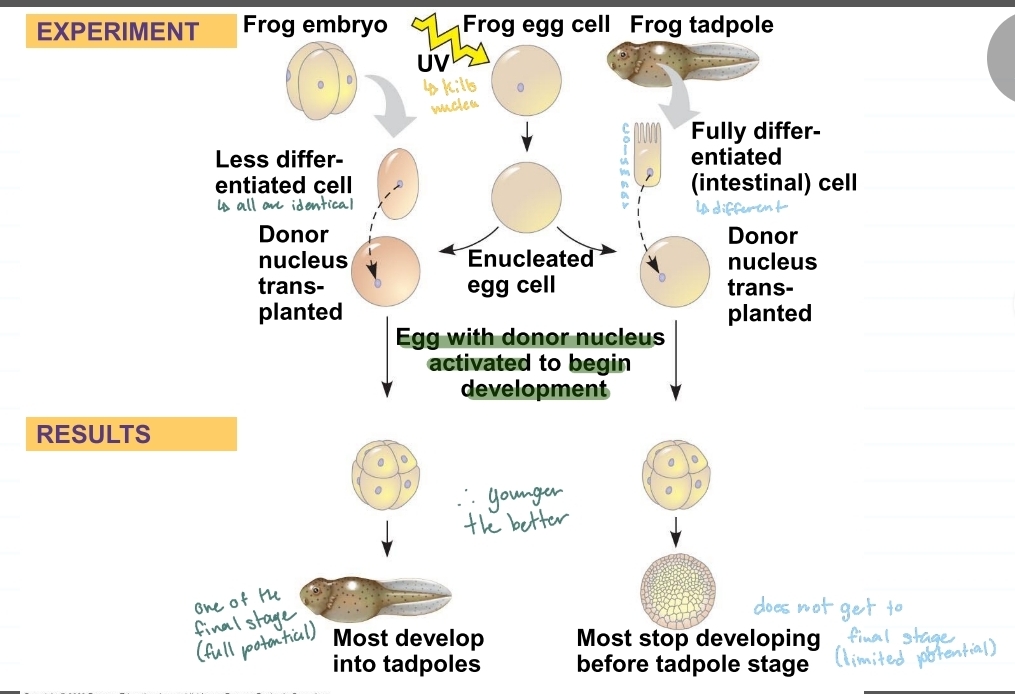
cloning animals: nuclear transplantation
process where the nucleus of an unfertilized egg cell is replaced with the nucleus from another cell
may produce organisms that are genetically identical to the “parent" that donated the nucleus
experiements were done by John Gurdon
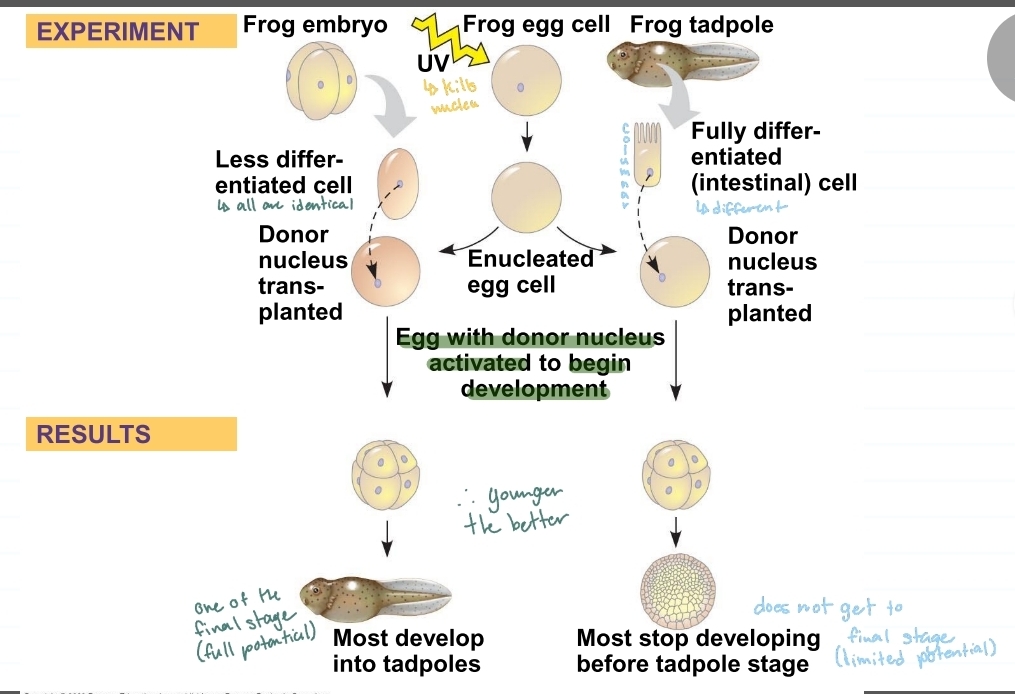
what did the nuclear transplantation show?
showed that a transplanted nucleus can support normal development of the egg
however older the donor nucleus, the lower the percentage of normally developing tadpoles
John Gurden concluded from this work that nuclear potential is restricted
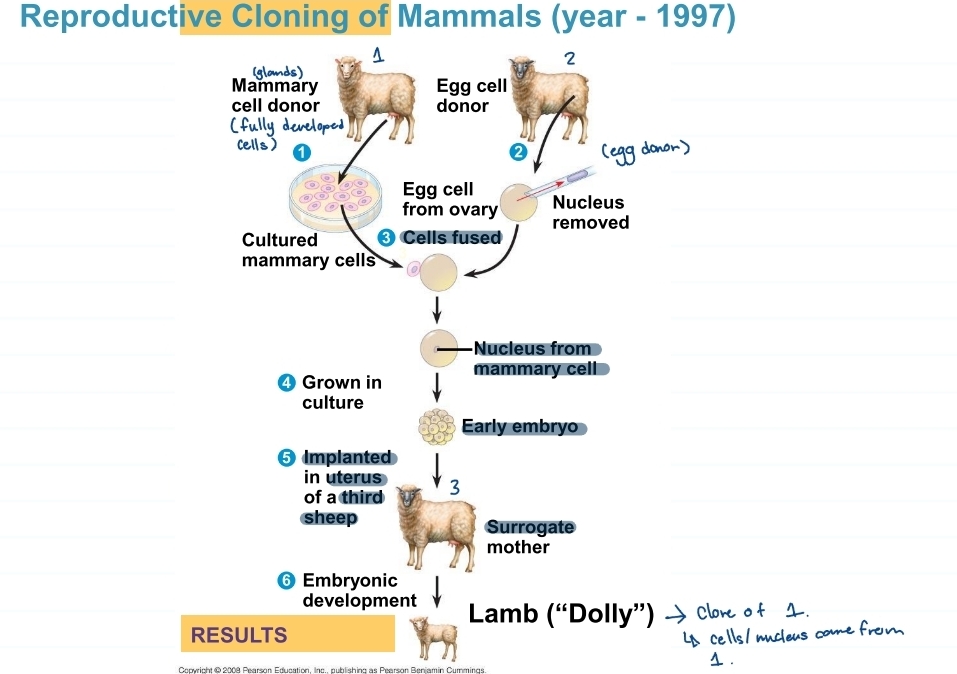
reproductive cloning of mammals
1997 scottish researchers announced the birth of Dolly
a lamb cloned from an adult sheep via nuclear transplantation from a different cell
Dolly had a premature death in 2003 and arthritis led to speculation that her cells were not as healthy as those of a normal sheep
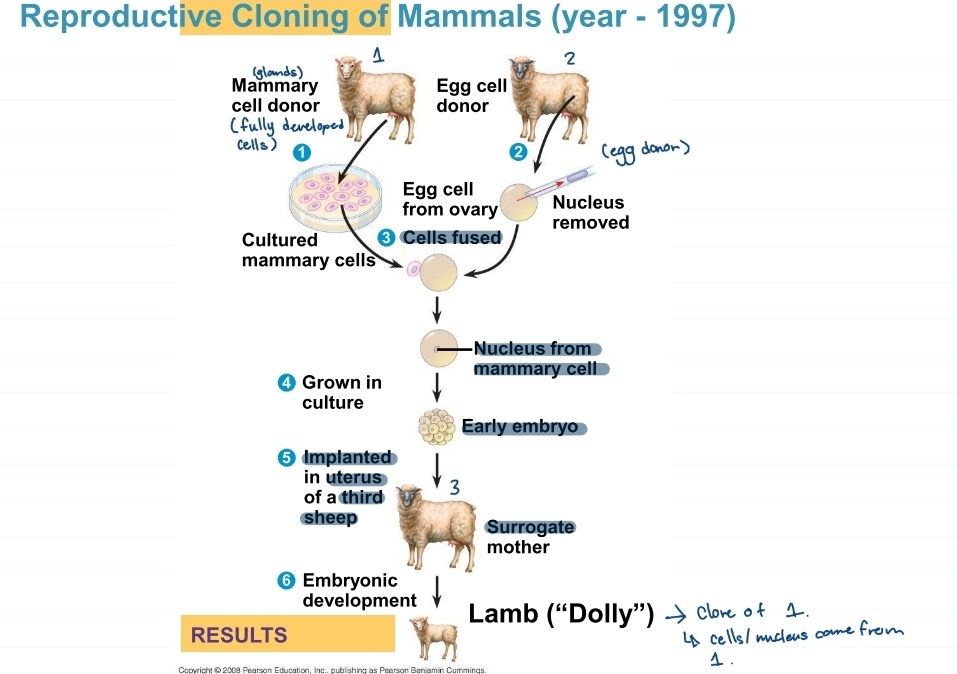
how was dolly made?
they took mammary cells from one sheep
they then took a egg cell from another sheep and removed the nucleus
once they have both they fuse the cells together (aka. insert the mammary cell's nucleus inside the egg cell)
they allow the egg cell with the nucleus from the mammary cell to grow in an early embryo
the early embryo will then be implanted into the uterus of a surrogate sheep
then the embryo will grow into a lamb and will be birthed
the lamb that is birthed from the surrogate mother is a clone of the sheep they took mammary cells from
b/c cells/nucleus came from the first sheep
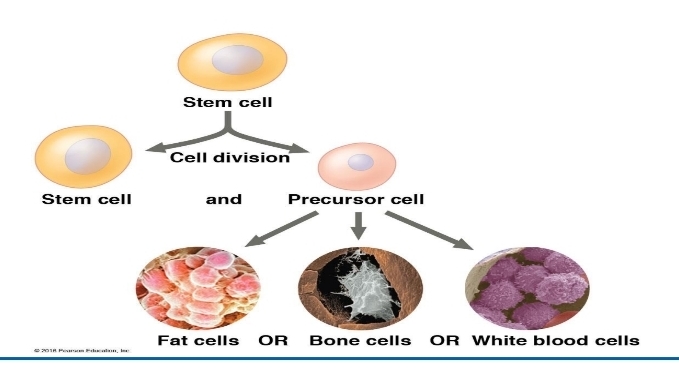
stem cells
a relatively unspecialized cell that can reproduce itself forever and can differentiate into specialized cells of one or more type
can change into different specialized cells like, fat cells, WBC, bone cells, etc.
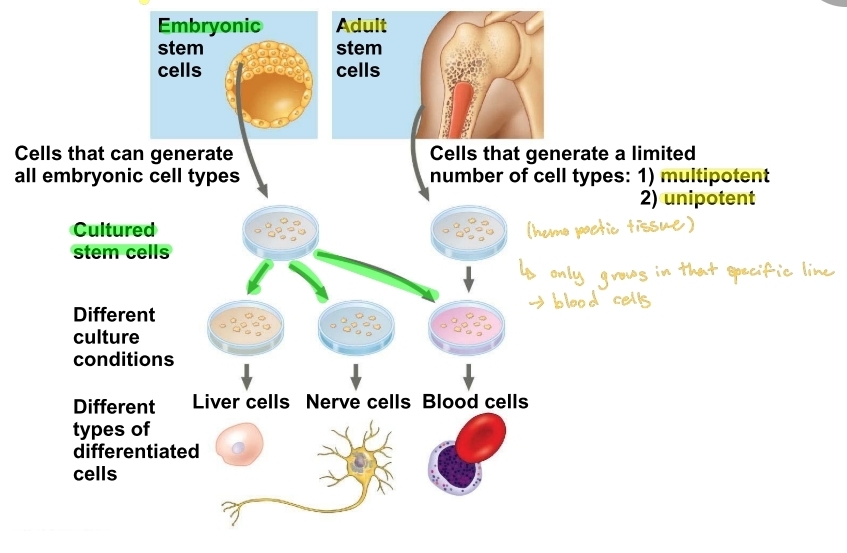
types of stem cells
embryonic (ES0
adult or somatic
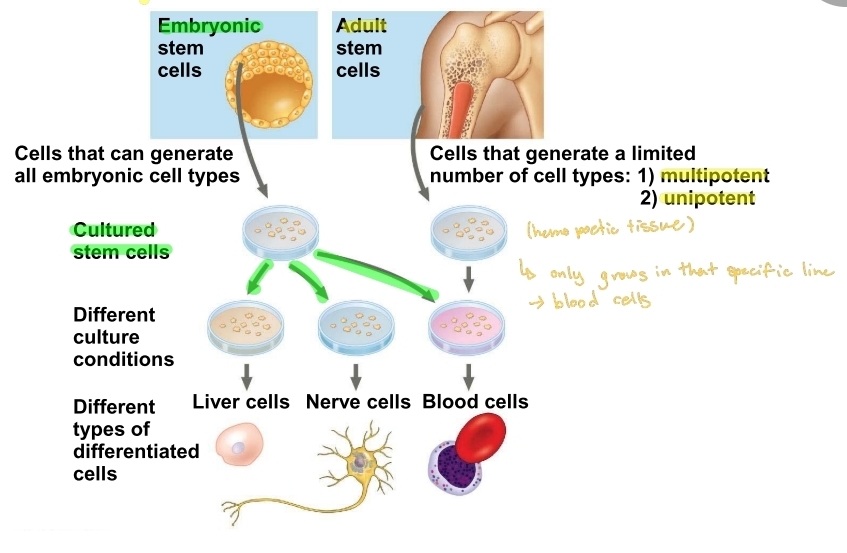
embryonic
isolated from early embryos at the blastocyst stage (blastula)
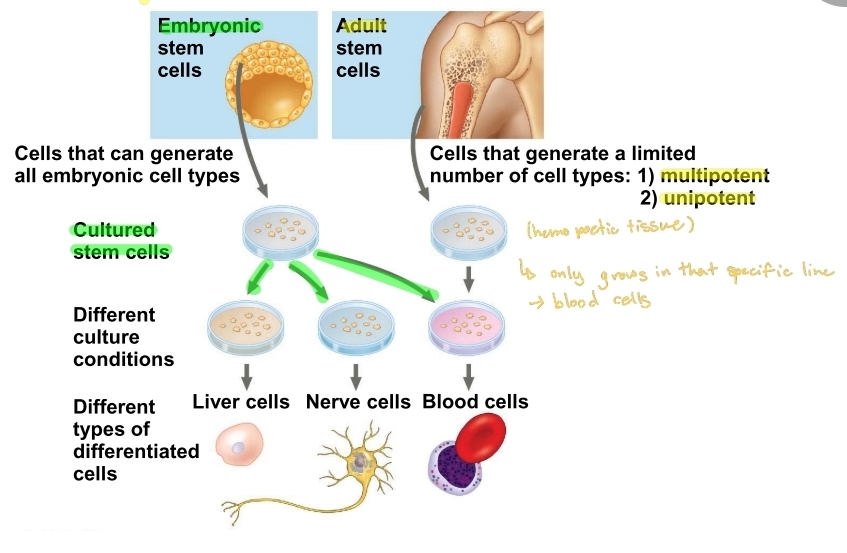
blastula
cells that are constantly dividing
e.g. onion root tip
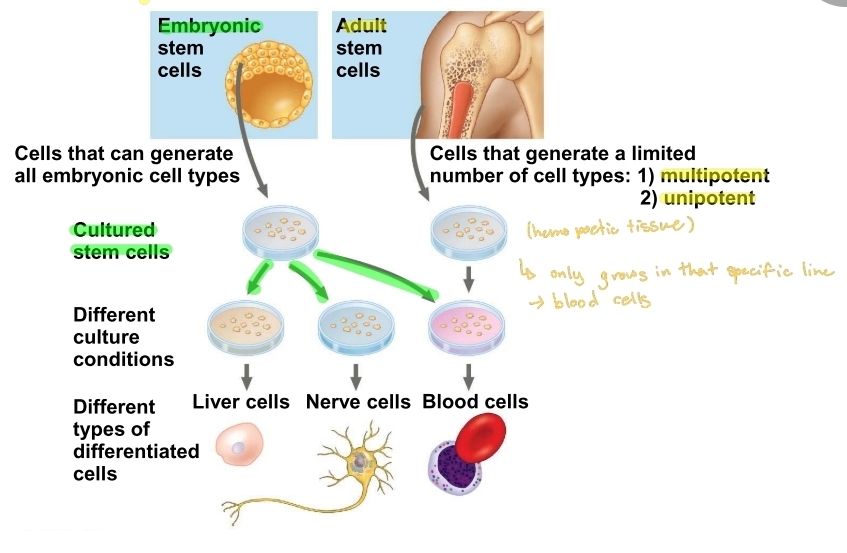
adult or somatic
used for repair and replacement
e.g. skin cells or bone marrow cells
only able to generate a limited number of cell types
e.g. can only generate what it was taken from → not pluripotent ability
reason for research with embryonic/adult stem cells
they have enormous potential for medical applications
goal is to supply cells to repair damaged or diseased organs (due to accidents or diseases
e.g. nerve cells for parkinson's or huntington's, insulin producing pancreatic cells for type 1 diabetes
why is taking embryonic stem cells controversial?
this is because you can only take it from babies or the actual embryo
this can cause the embryo to die if taken from it.
however it is more promising than taking adult stem cells
In vitro fertilization (IVF)
process of fertilization outside of the female body
creates 7 embryos
can be implanted into the female → leads to multiple babies or not if it did not implant
sometimes they are sent for research
can be frozen and preserved for pregnancy
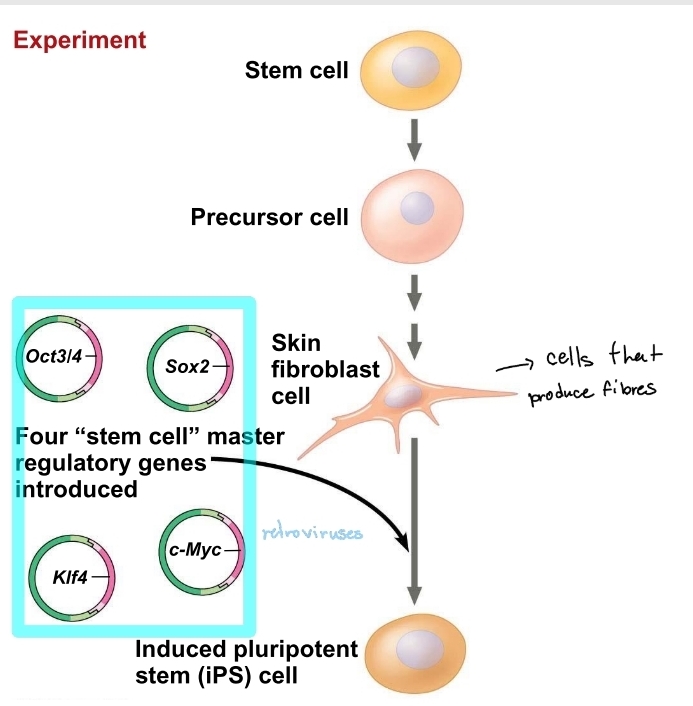
induced pluripotent stem (iPS) cells
when researchers are able to transform fully differentiated adult stem cells to act like ES cells using retroviruses
this work was done by John Gurdon and Shinya Yamanaka (received Nobel prize)
how does iPS cells relate to regenerative medicine?
the cells from the patient can be turned into iPS cells to potentially replace diseased (nonfunctional) cells
e.g. Masayo Takahasi studied patients with age-related macular degeneration (disease of the retina)
obtained skin cells from the patient and turned them into iPS cells which turned into retinal cells, which was used to transplant them into the patient's eye
John Gurdon
scientist who studied stem cells and nuclear transplantation
established the basis for cloning and regenerative medicine