Anaerobic respiration
 Studied by 0 people
 Call Kai
 Learn
Learn Practice Test
 Spaced Repetition
 Match
Match Flashcards
 Knowt Play
1/4

There's no tags or description
Looks like no tags are added yet.
Name | Mastery | Learn | Test | Matching | Spaced |
|---|
No study sessions yet.
5 Terms
What is the stages of anaerobic Respiration and explain why
its only glycolysis as there is no oxygen so no ETC, no oxidative phosph., no NAD and FAD oxidised so no krebs and link as not enough FAD and NAD
How does glycolysis continue?
For glycolysis to continue there must be a way to regenerate NAD and remove pyruvate
This is done by pyruvate being the final electron acceptor and taking the hydrogen from NAD to regenerate it
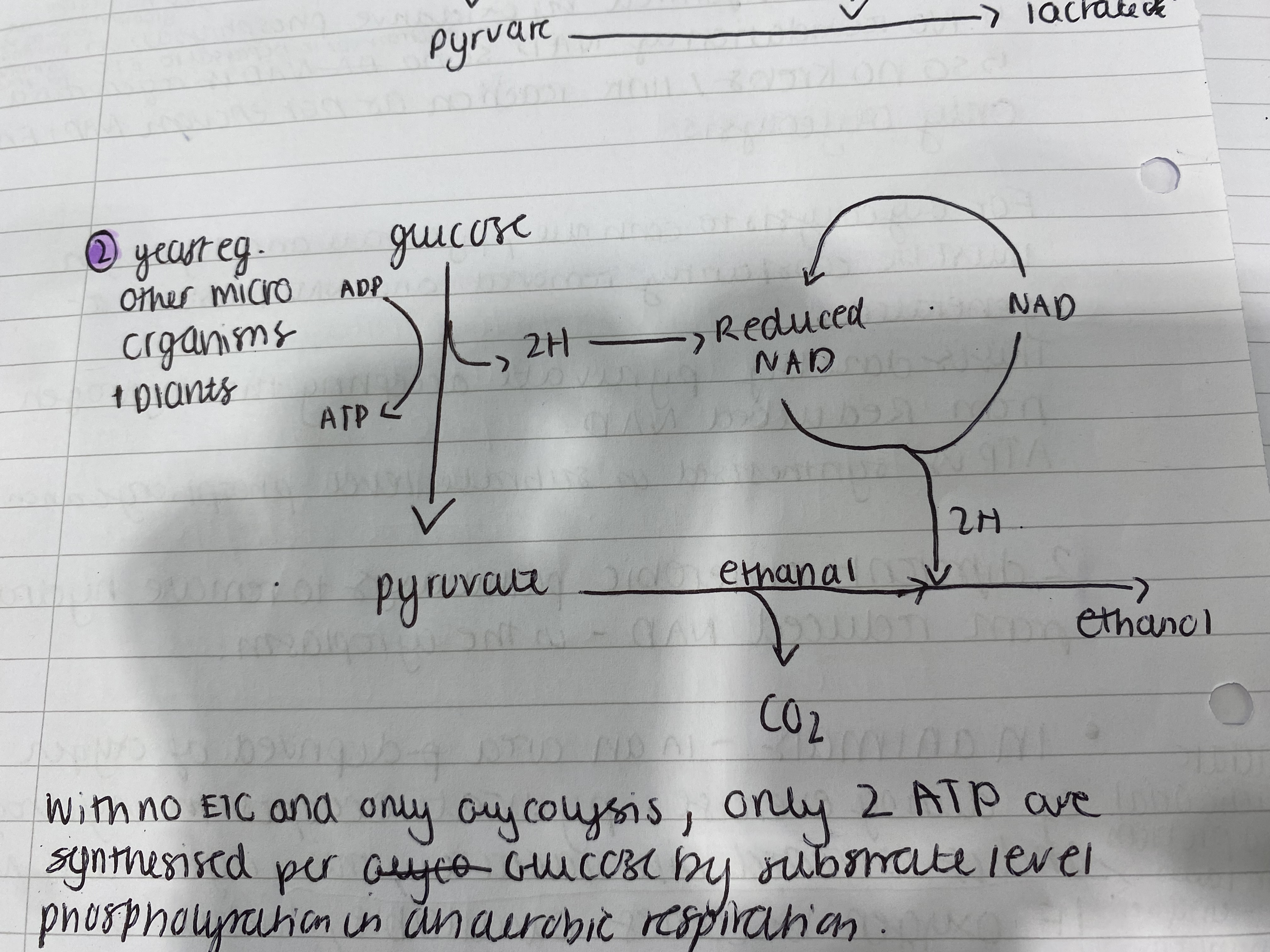
What are the steps for Anaerobic respiration in animals
Animals - Glucose is broken down into pyruvate which by substrate-level phosphorylation produces 2 ATP and reduced NAD. then pyruvate accepts the hydrogen to regenerate NAD and produce lactate (lactic acid - bad as lowers pH and denatures enzymes) - which is broken down to release water an co2 when oxygen is available
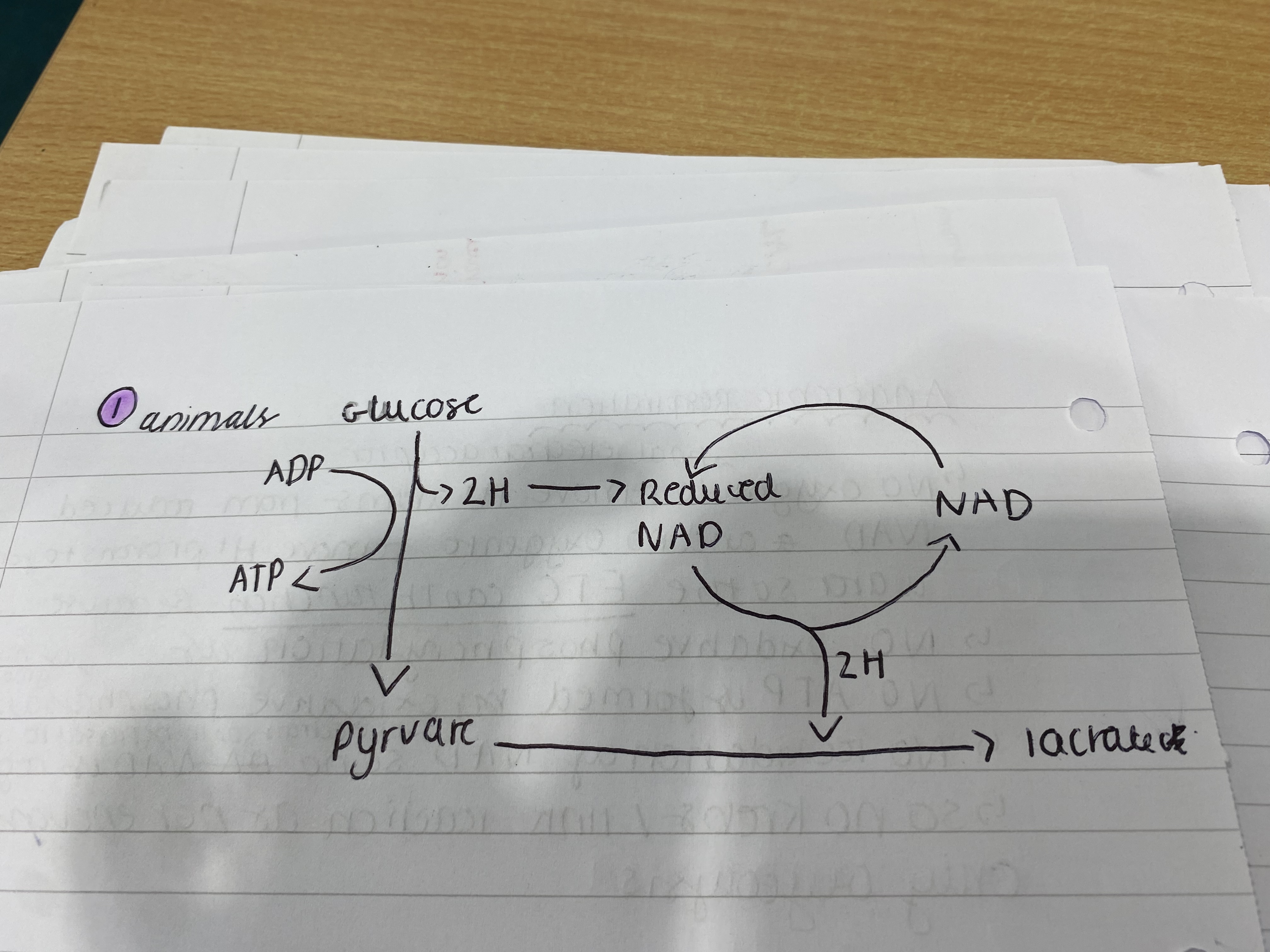
explain the process in micro-ogranisms
Eg. yeast and plant cells in water logged soil
Glucose is broken down into pyruvate which by substrate-level phosphorylation produces 2 ATP and reduced NAD. then pyruvate is converted into enthanal and CO2. The ethanal accepts the 2 hydrogen to regenerate NAD and produce ethanol which can’t be broken down.