RISK INS / 4.1 & 4.2
 Call Kai
 Learn
Learn Practice Test
 Spaced Repetition
 Match
Match Flashcards
 Knowt Play
1/24

There's no tags or description
Looks like no tags are added yet.
Name | Mastery | Learn | Test | Matching | Spaced | Call with Kai | Chat |
|---|
No analytics yet
Send a link to your students to track their progress
25 Terms
Premium principles depend exclusively on

Assumptions
Uninsurable Risk
We will assume that X is a bounded non-negative random variable.
Most premium principles can also be applied to unbounded and possibly negative claims.
When the result is an infinite premium, the risk at hand is uninsurable.
Premium Principles
Net Premium
Expected Value Principle
Variance Principle
Standard Deviation Principle
Exponential Principle
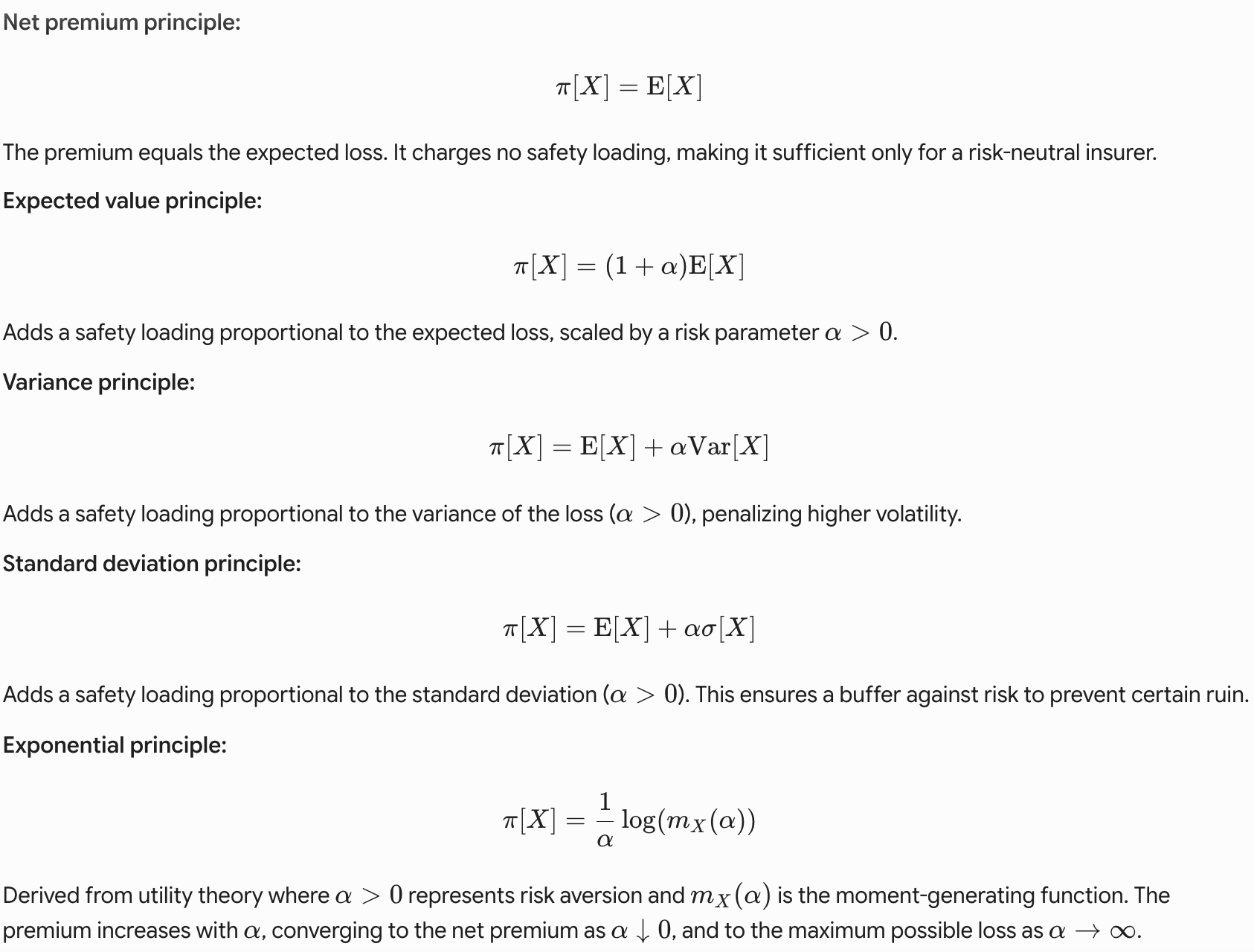
Premium Principles
Zero Utility Premium
Mean Value Principle
In these two premium principles, the ‘parameter’ is a function
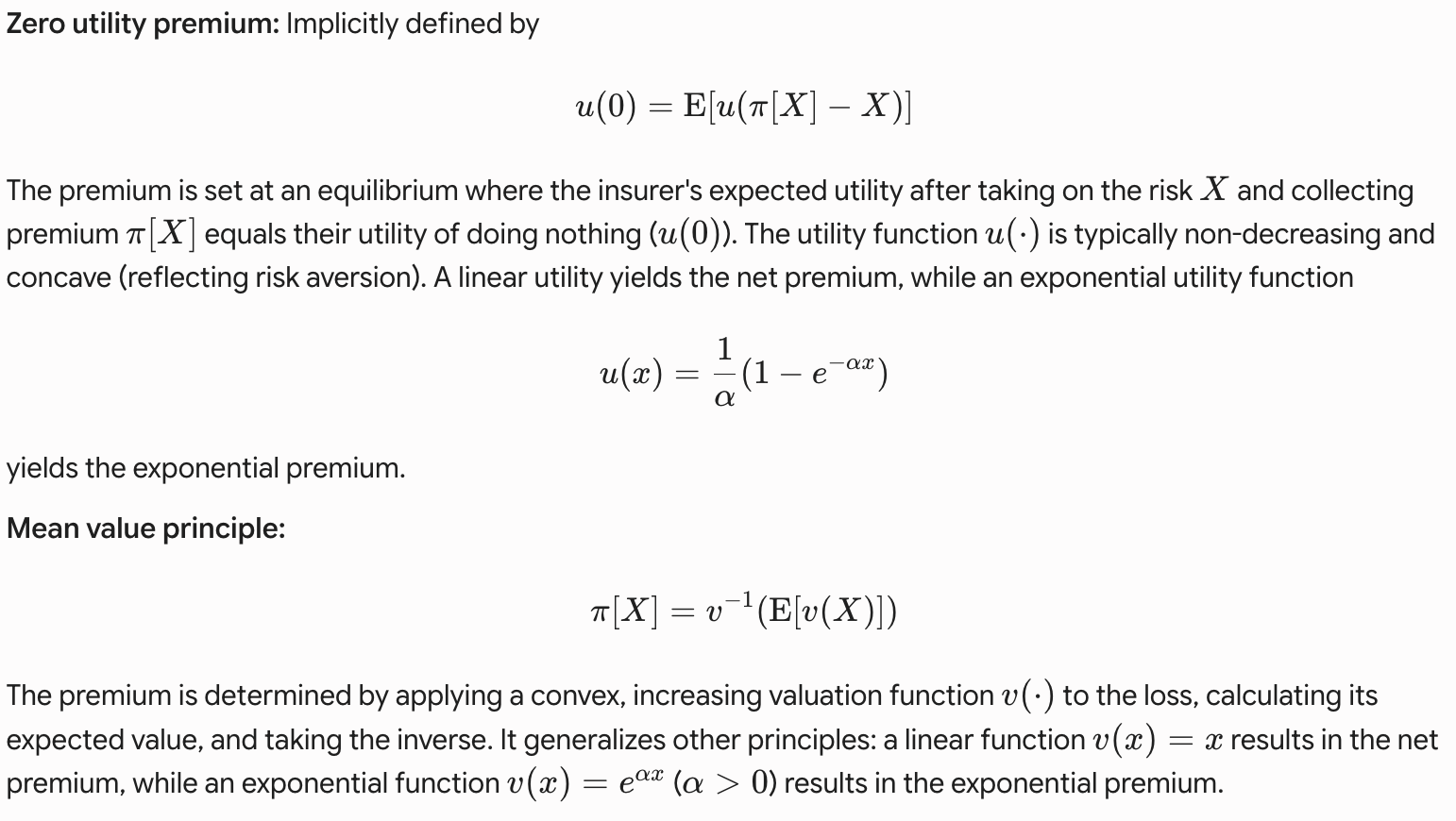
Premium Principles
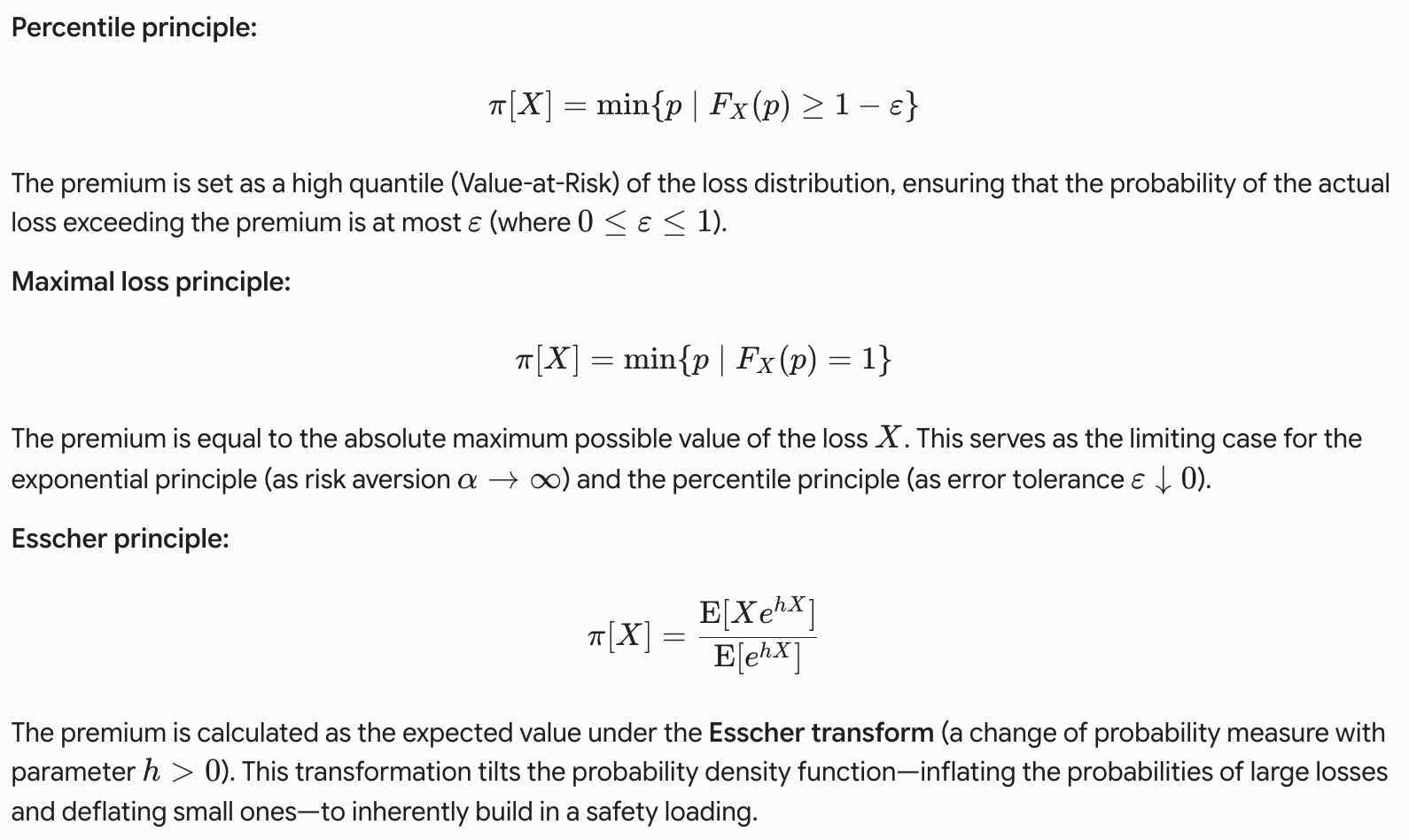
Percentile Premium
Maximal Loss Principle
Esscher Principle
These premium principles are chiefly of theoretical importance
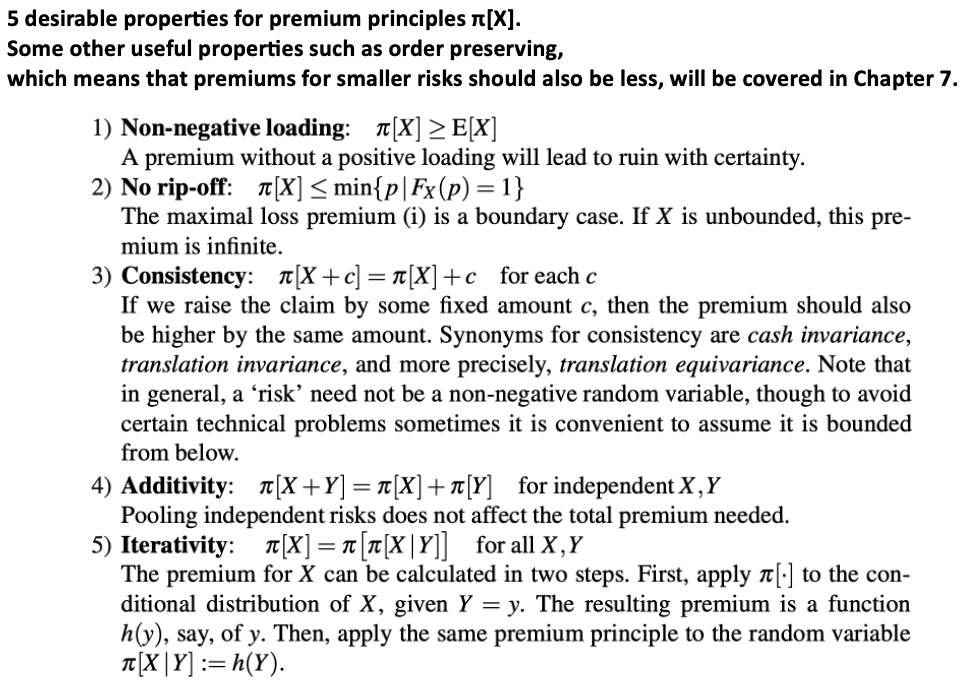
Properties of Premium Principles
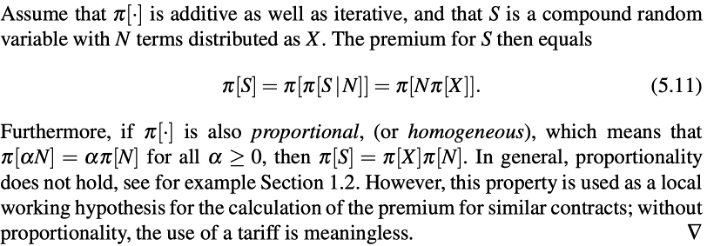
If π is additive as well as iterative, and S is a compound r.v. with N terms distributed as X
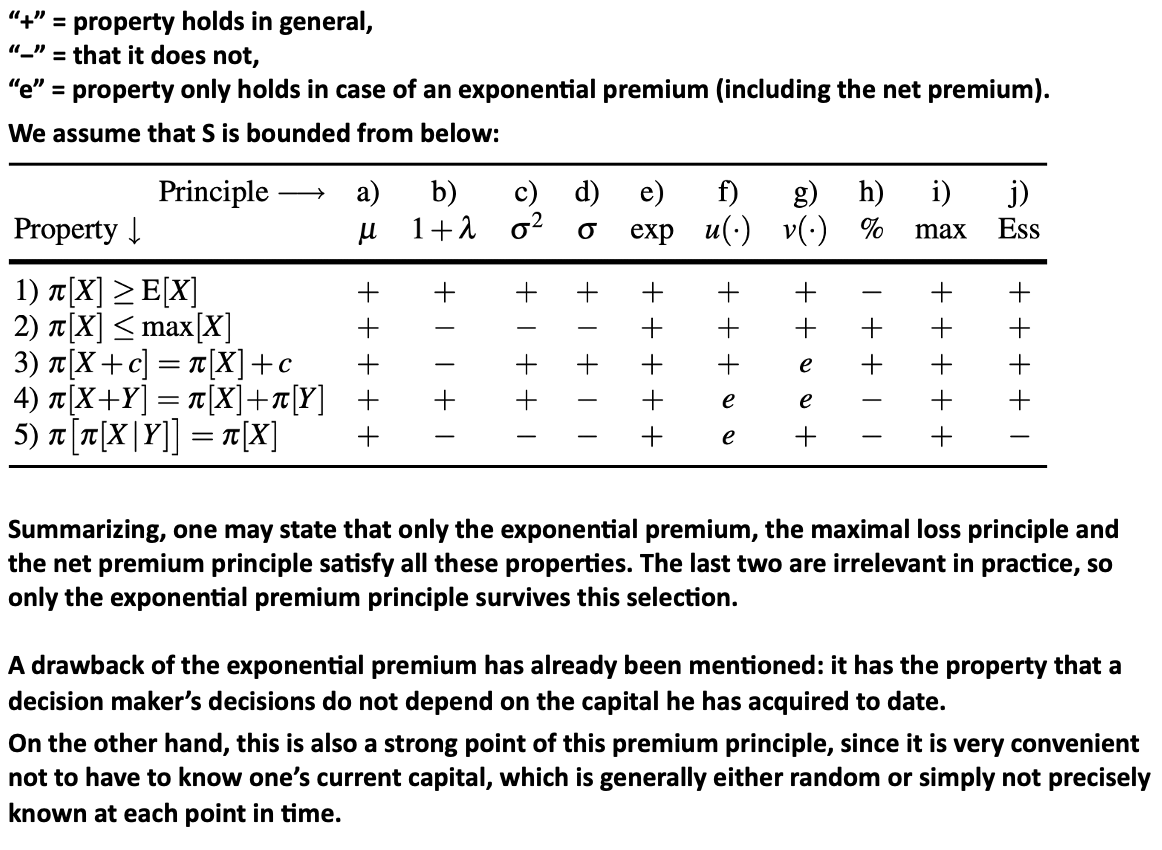
Premium Principle (Properties) Summary
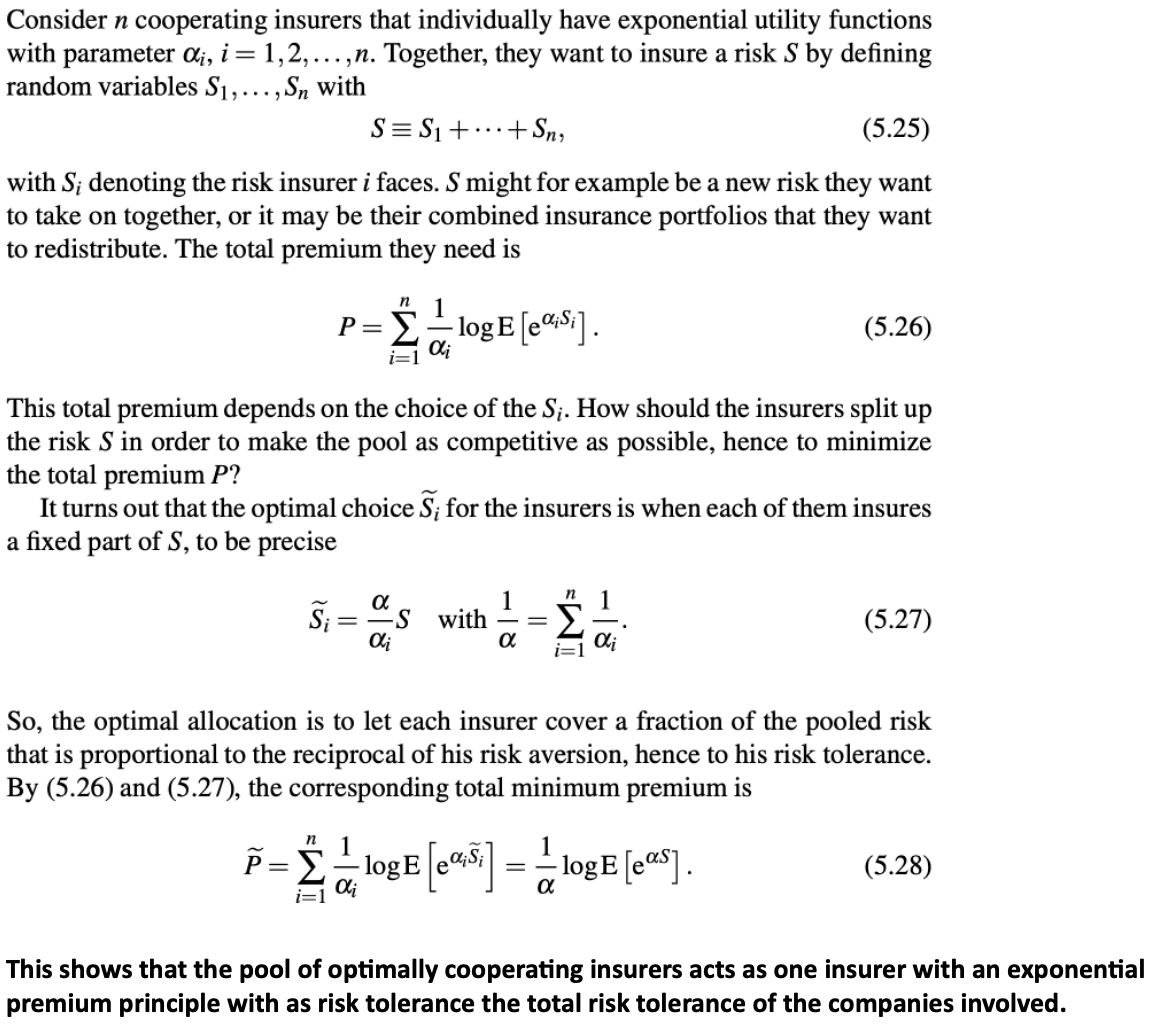
Premium Reduction by Coinsurance
Bonus-Malus Systems
Introduction
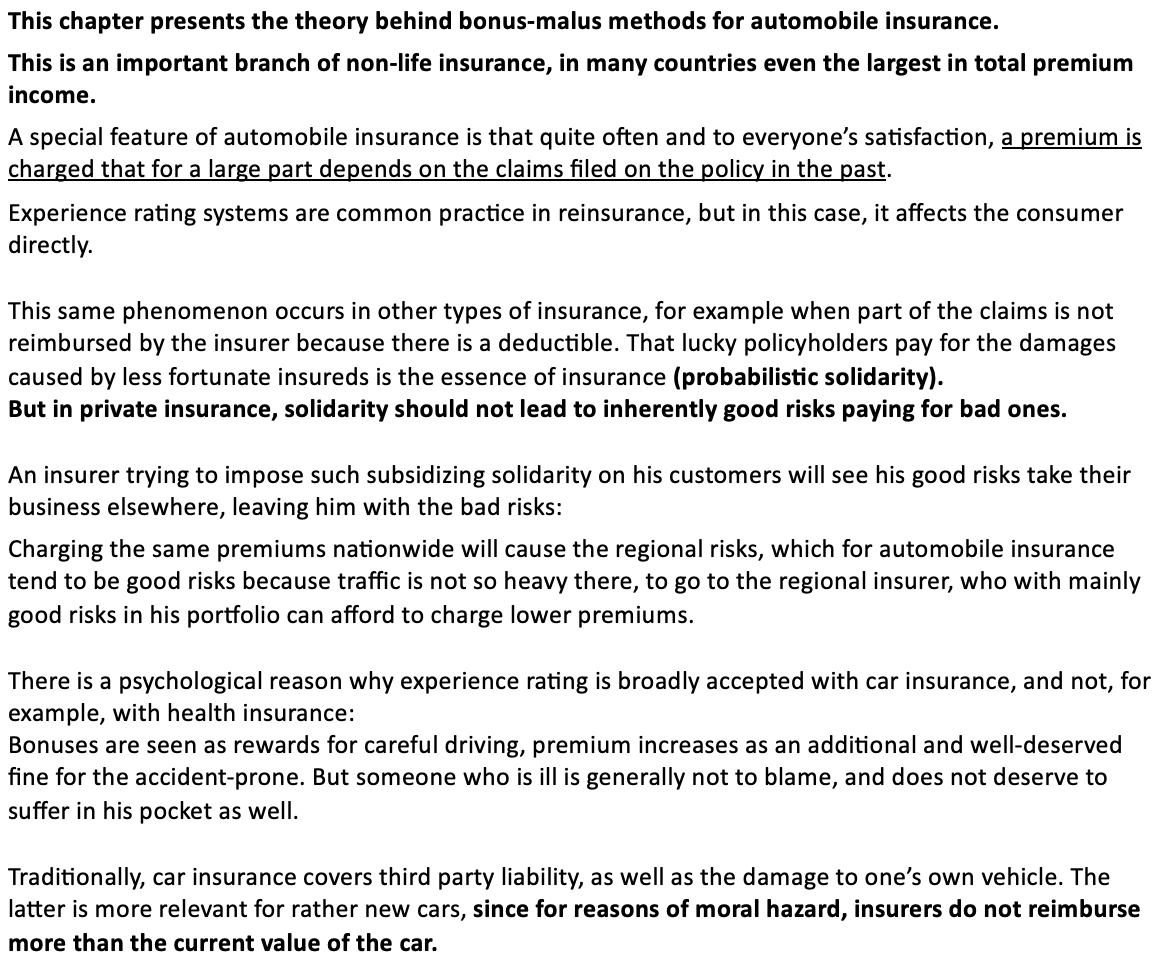
A Generic Bonus-Malus System
Bonusmalus Scale
A Generic Bonus-Malus System
Introduction

A Generic Bonus-Malus System
How to determine Premium?
& Bonusmalus Scale
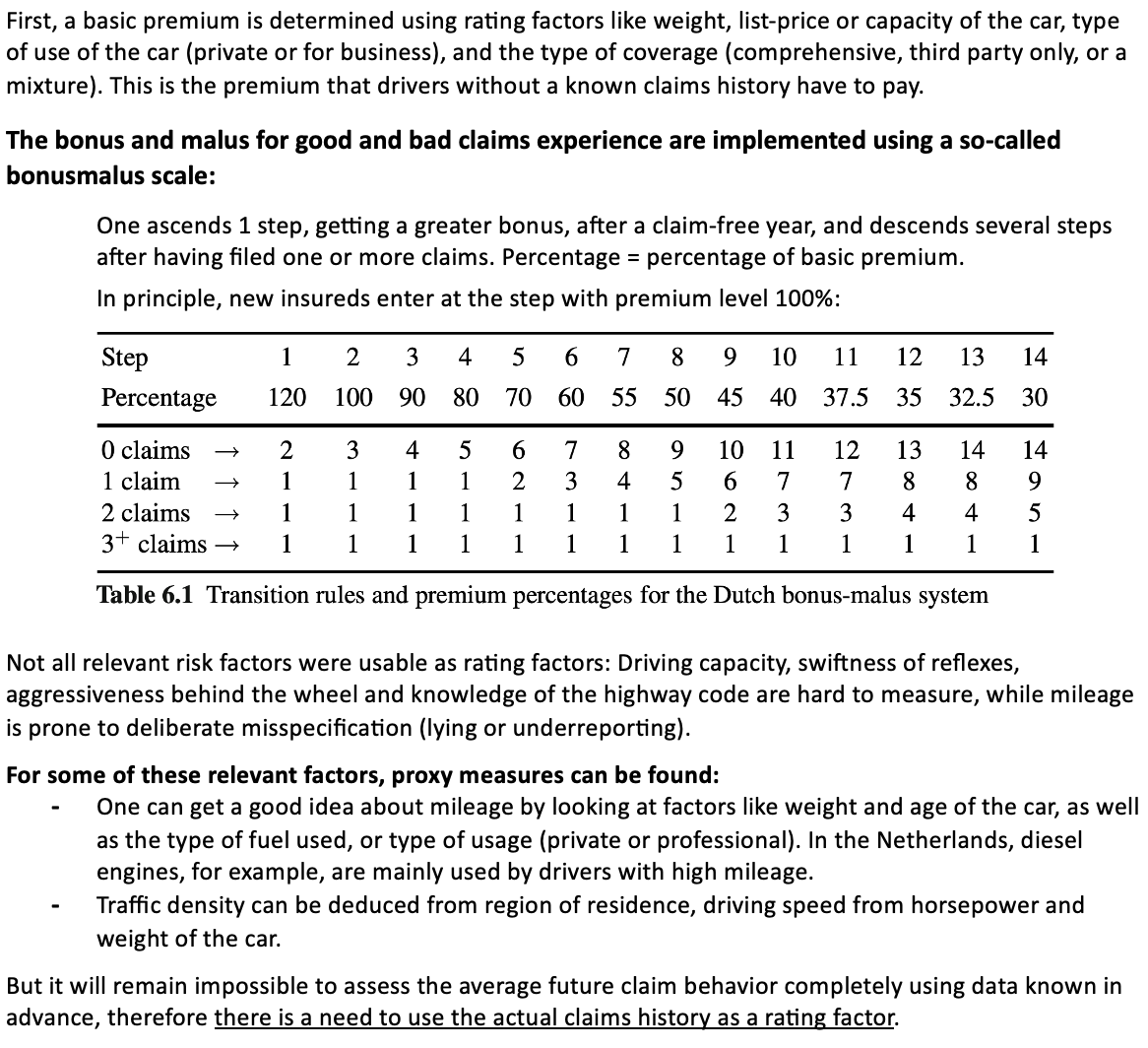
A Generic Bonus-Malus System
Ex post factor
Fixed ex ante

A Generic Bonus-Malus System
In the investigation, the following was found:
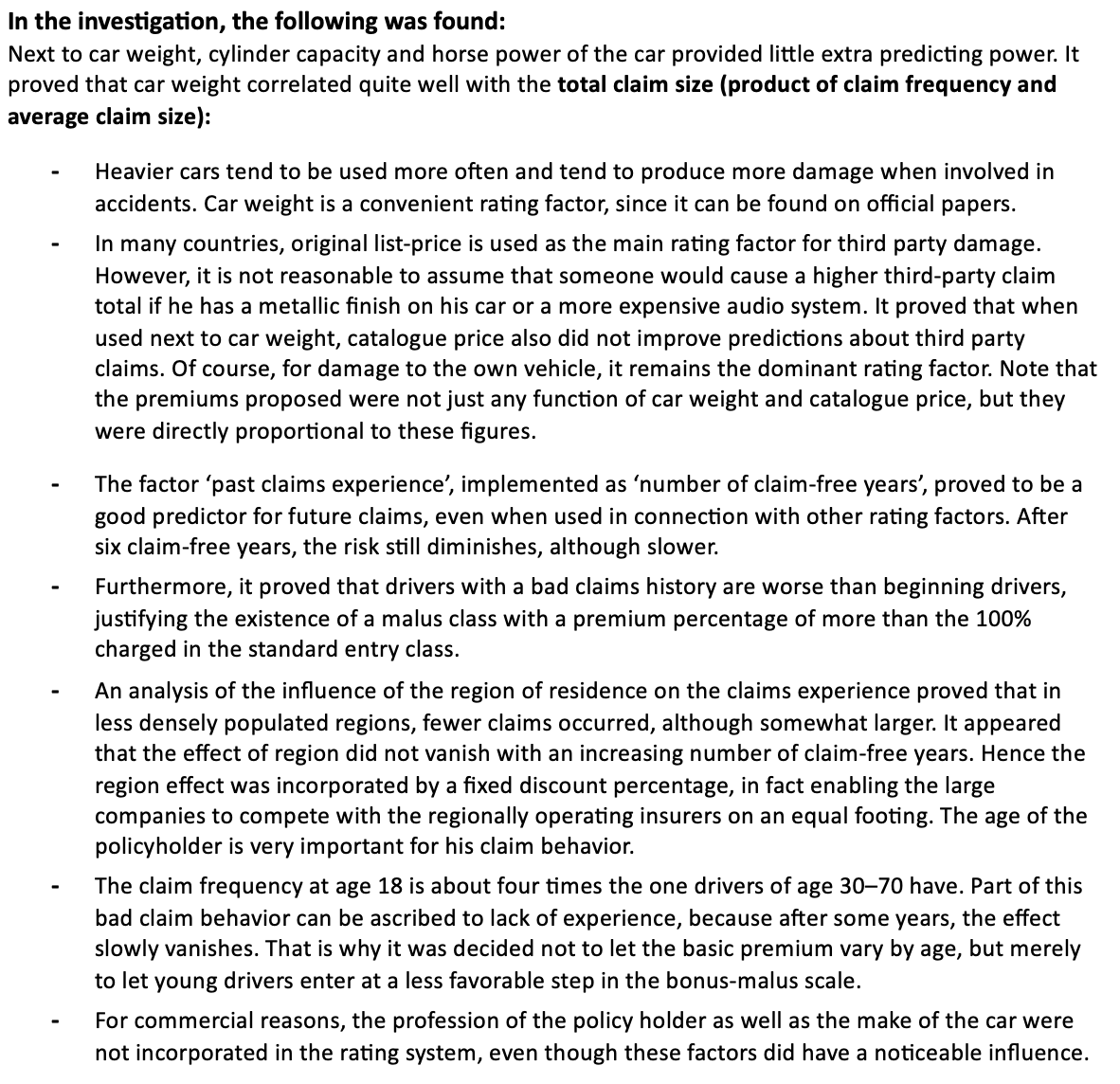
Note on bonus-malus system

Bonus-Malus Systems
Markov Analysis
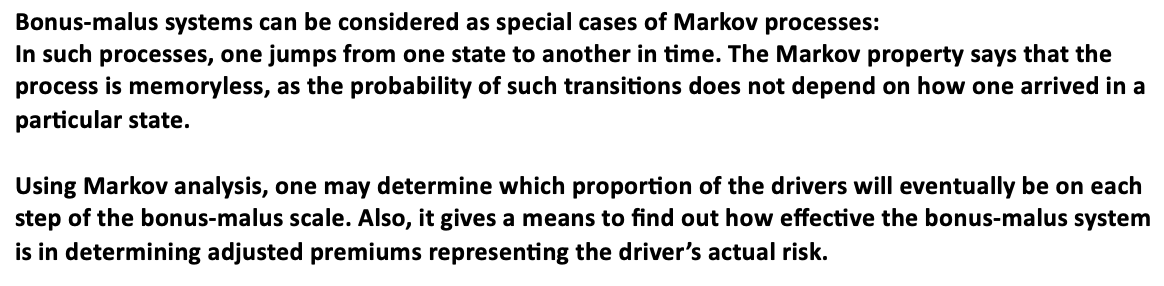
Bonus-Malus Systems: Markov Analysis
Transition Matrix
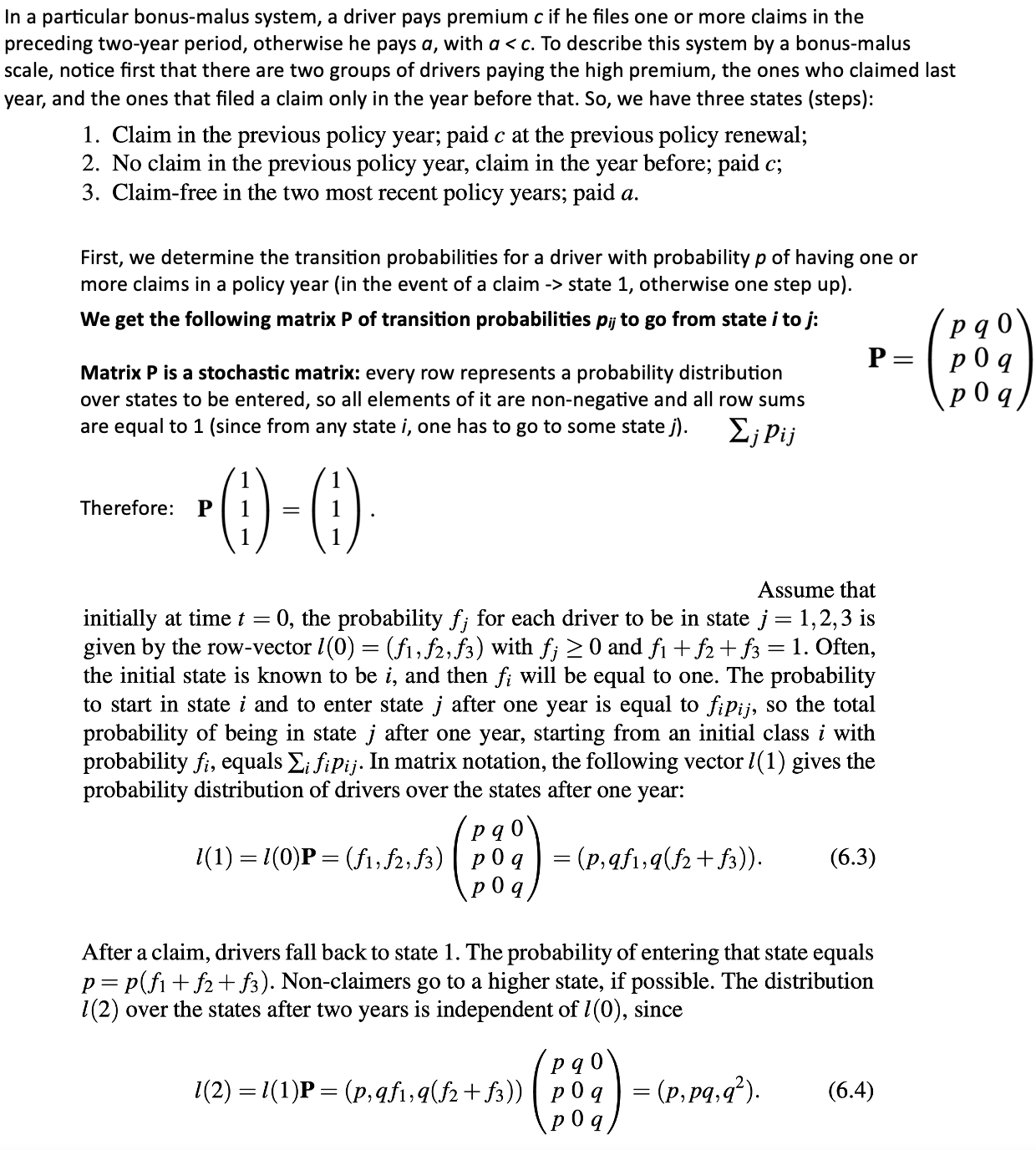
Bonus-Malus Systems: Markov Analysis
Steady State Distribution
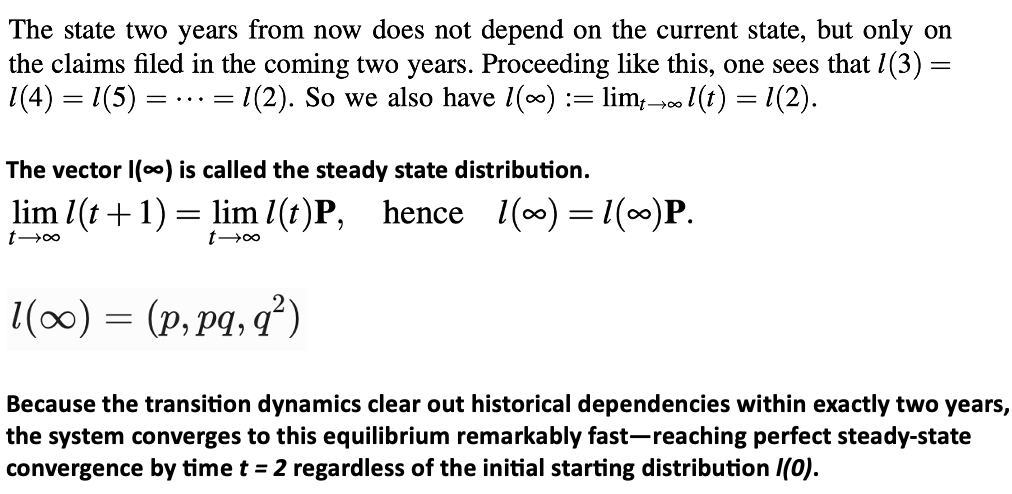
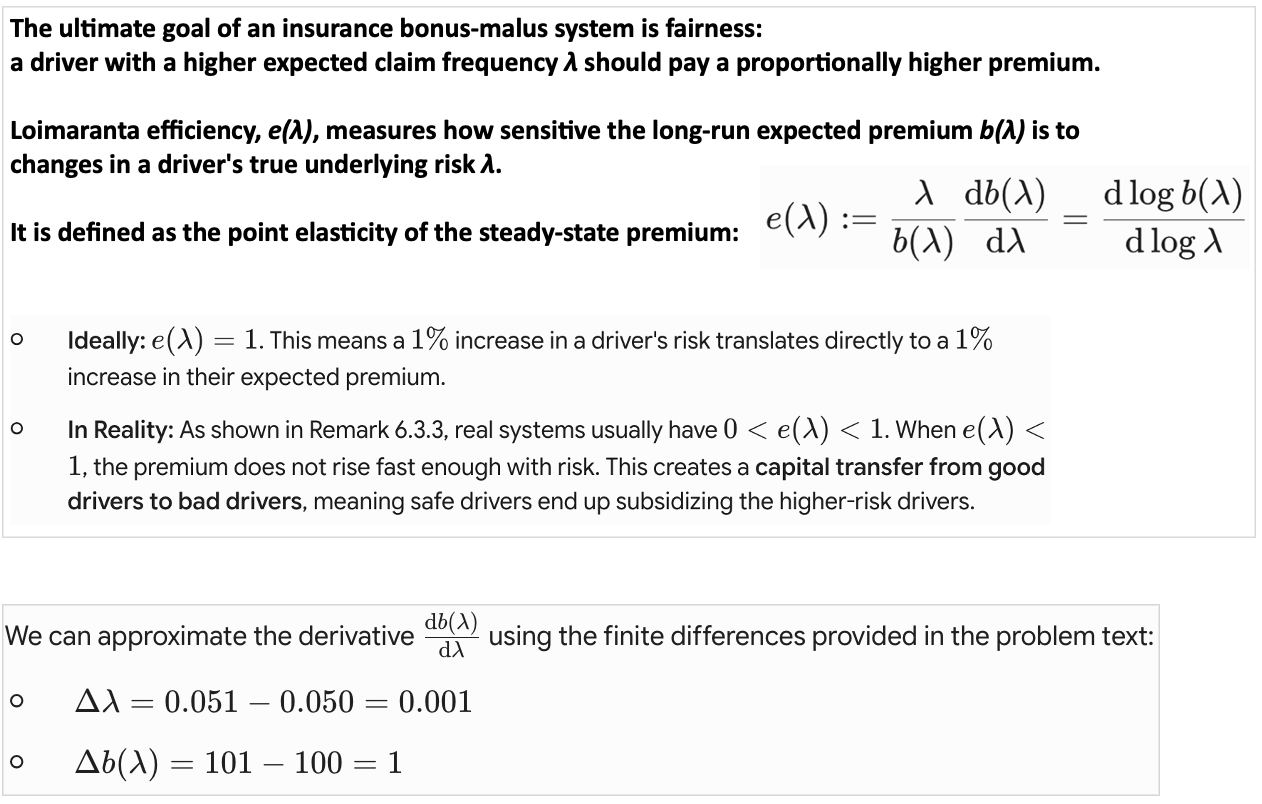
Loimaranta Efficiency
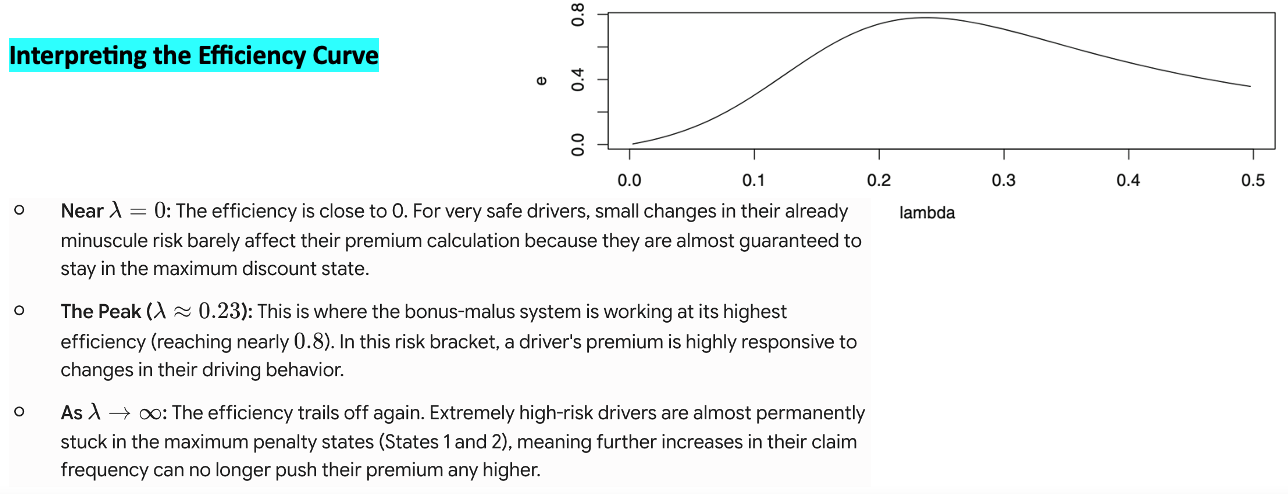
Interpreting the Efficiency Curve
Finding Steady State Premiums & Loimaranta efficiency
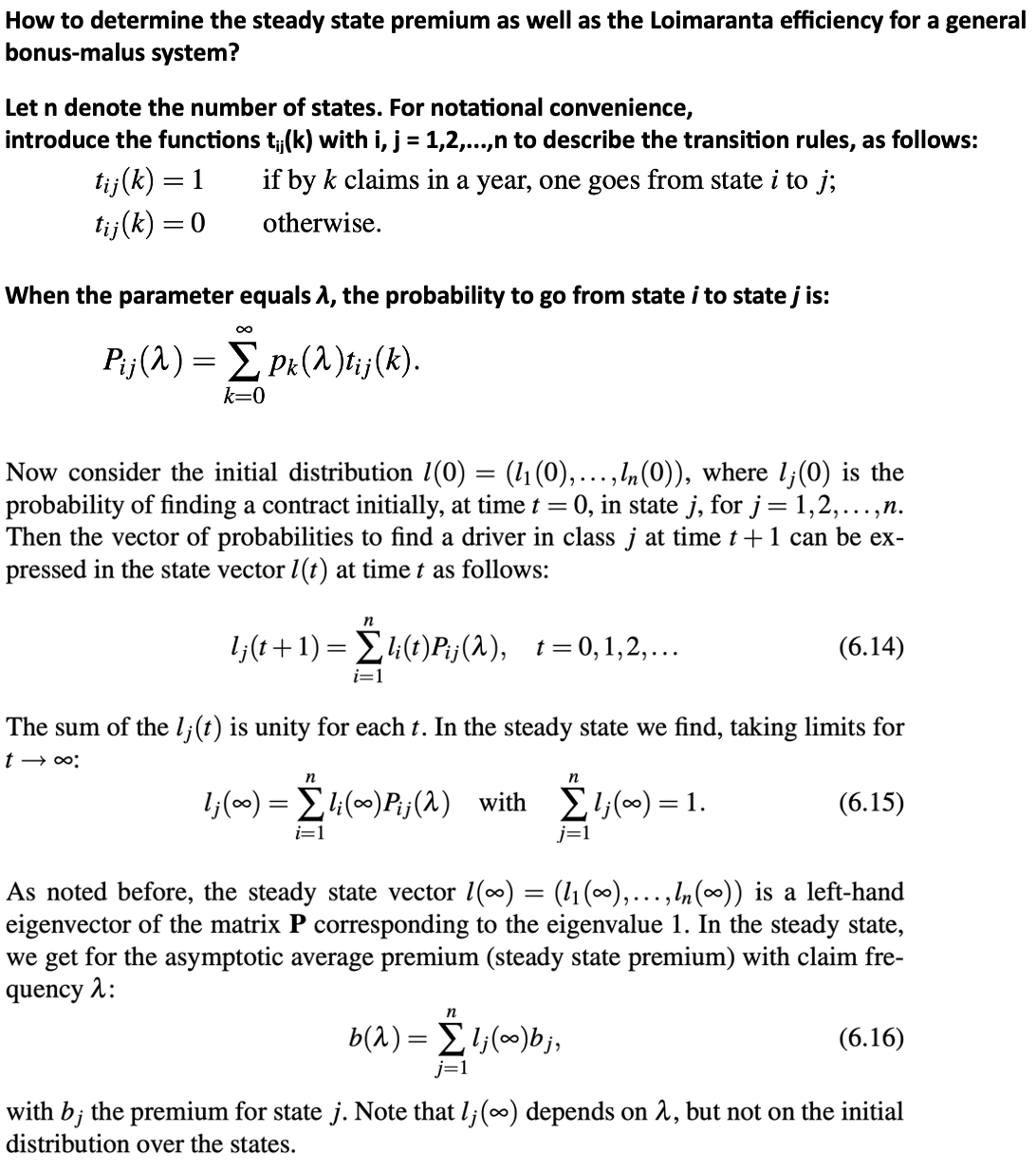
π = …
when dealing with Bonus-Malus systems modeled as Markov chains

Solving for the Stationary Distribution (π)

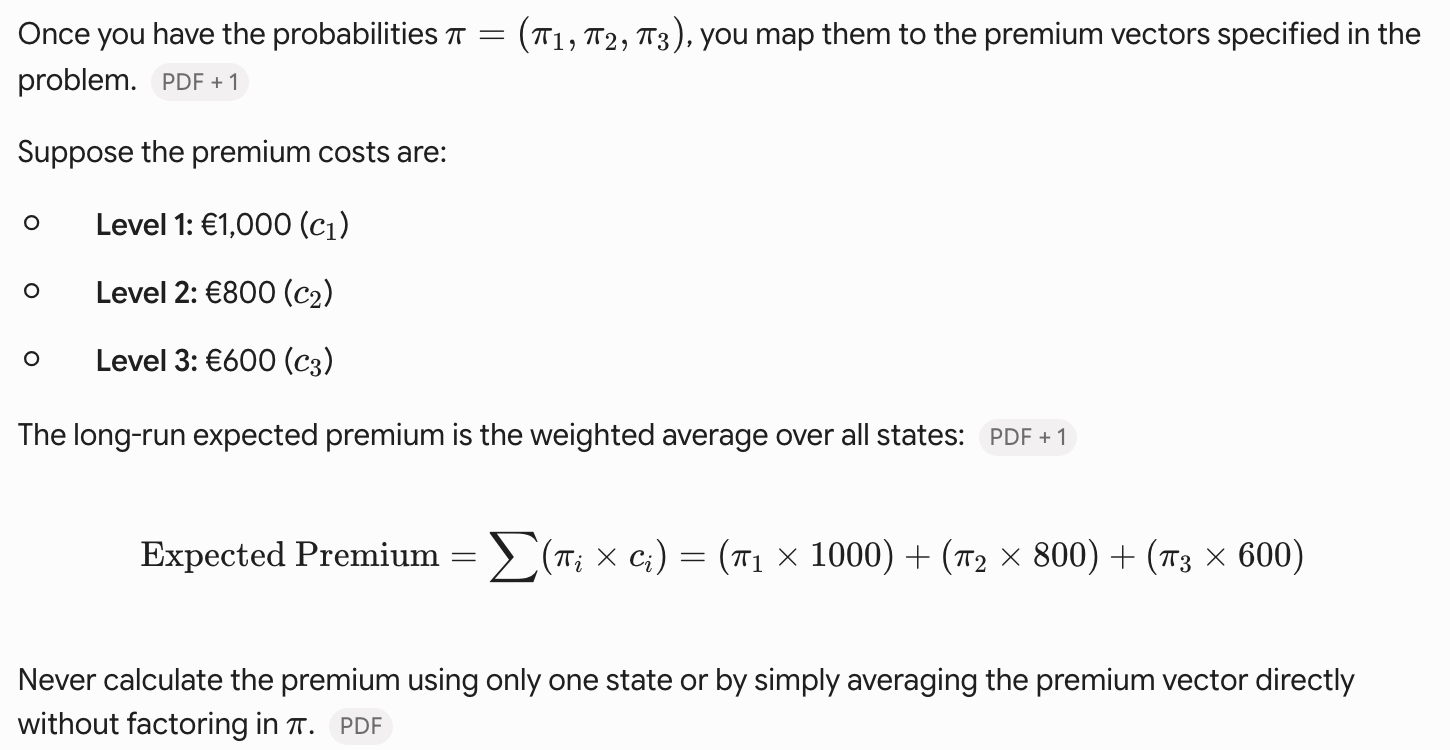
Calculating the Long-Run Expected Premium