Kaplan MCAT General Chemistry Chapter 4: Compounds and Stoichiometry
 Studied by 0 people
 Call Kai
 Learn
Learn Practice Test
 Spaced Repetition
 Match
Match Flashcards
 Knowt Play
1/53

There's no tags or description
Looks like no tags are added yet.
Name | Mastery | Learn | Test | Matching | Spaced |
|---|
No study sessions yet.
54 Terms
Molecular weight
The mass (in amu) of the constituent atoms in a compound as indicated by the molecular formula.
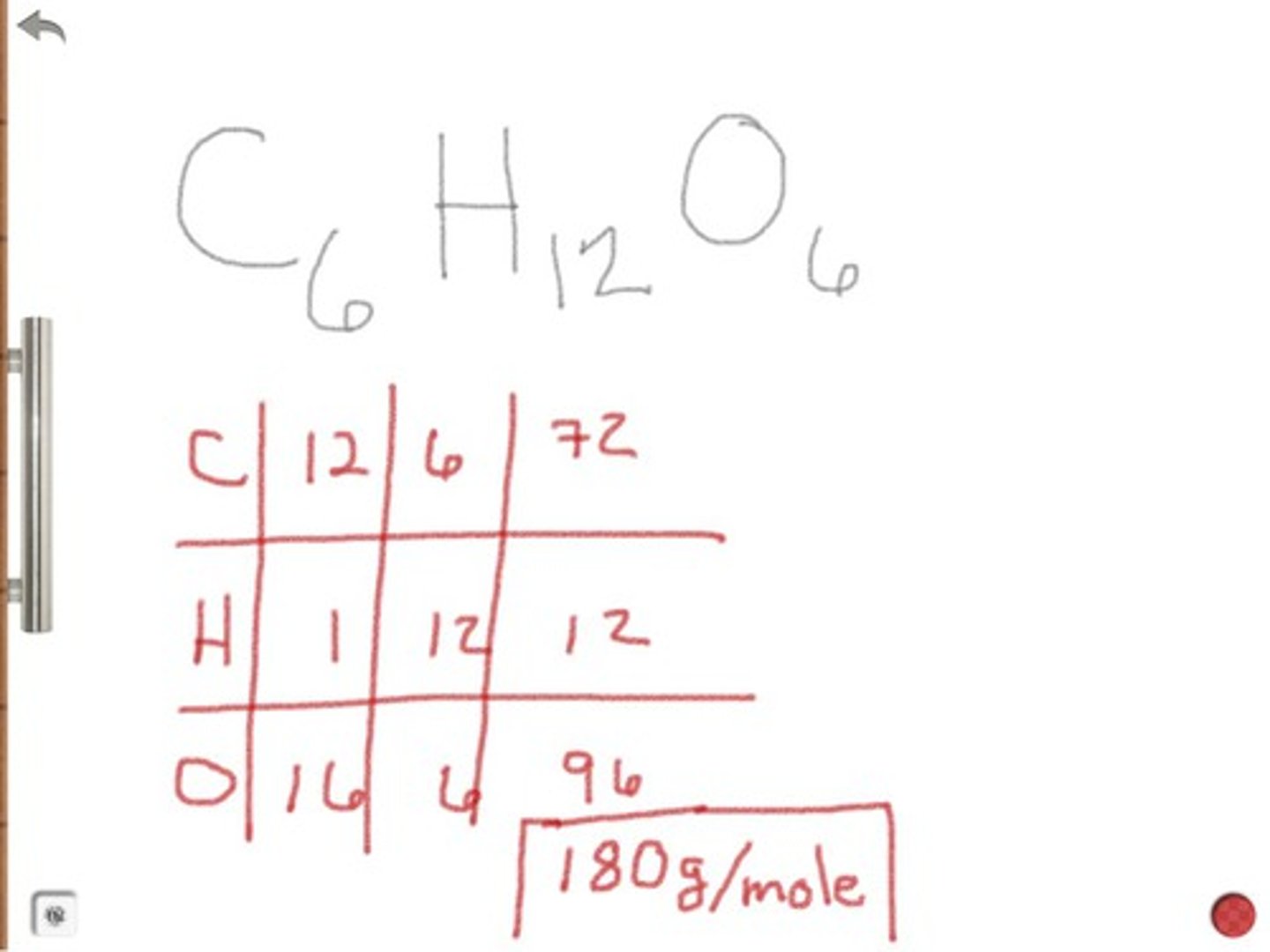
mole
one mole of a compound has a mass in frame equal to the molecular or formula weight of the compound in amu.
ex. one molecule H2CO3 has a mass of 62 amu and one mole of the compound has a mass of 62 grams
Moles from mass equation:

Molar mass
The mass of one mole (Avogadro's number 6.023x10^23 particles) of a compound; usually measured in grams per mole.
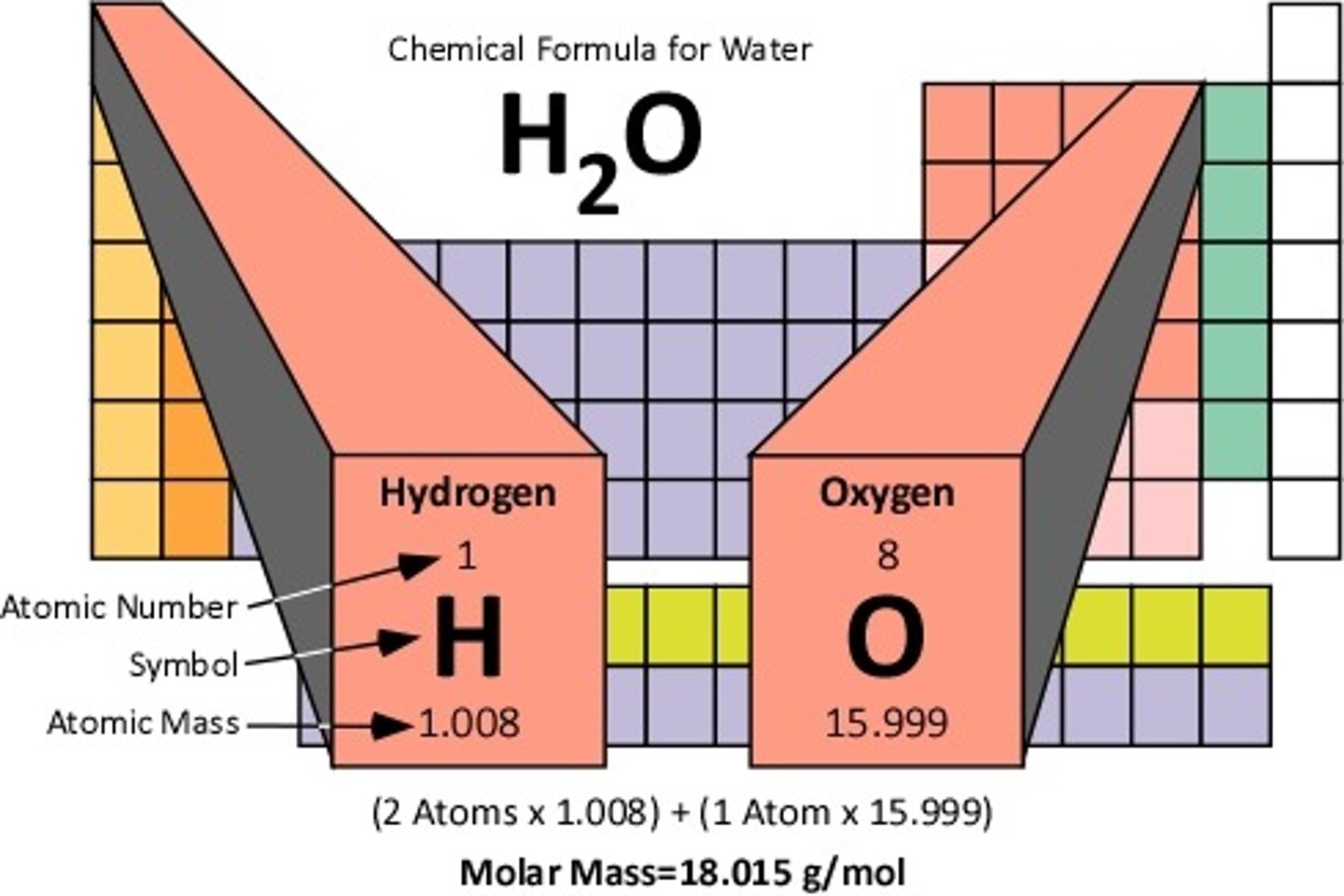
units for molar mass vs molecular weight
g/mol vs amu/molecule
equivalents
how many moles of the thing we are interested in will one mole of a given compound produce
ex. sodium will donate one mole of electrons (one equivalent), magnesium will donate two moles of electrons (two equivalents)
Gram equivalent weight
A measure of the mass of a substance that can donate one equivalent of the species of interest.
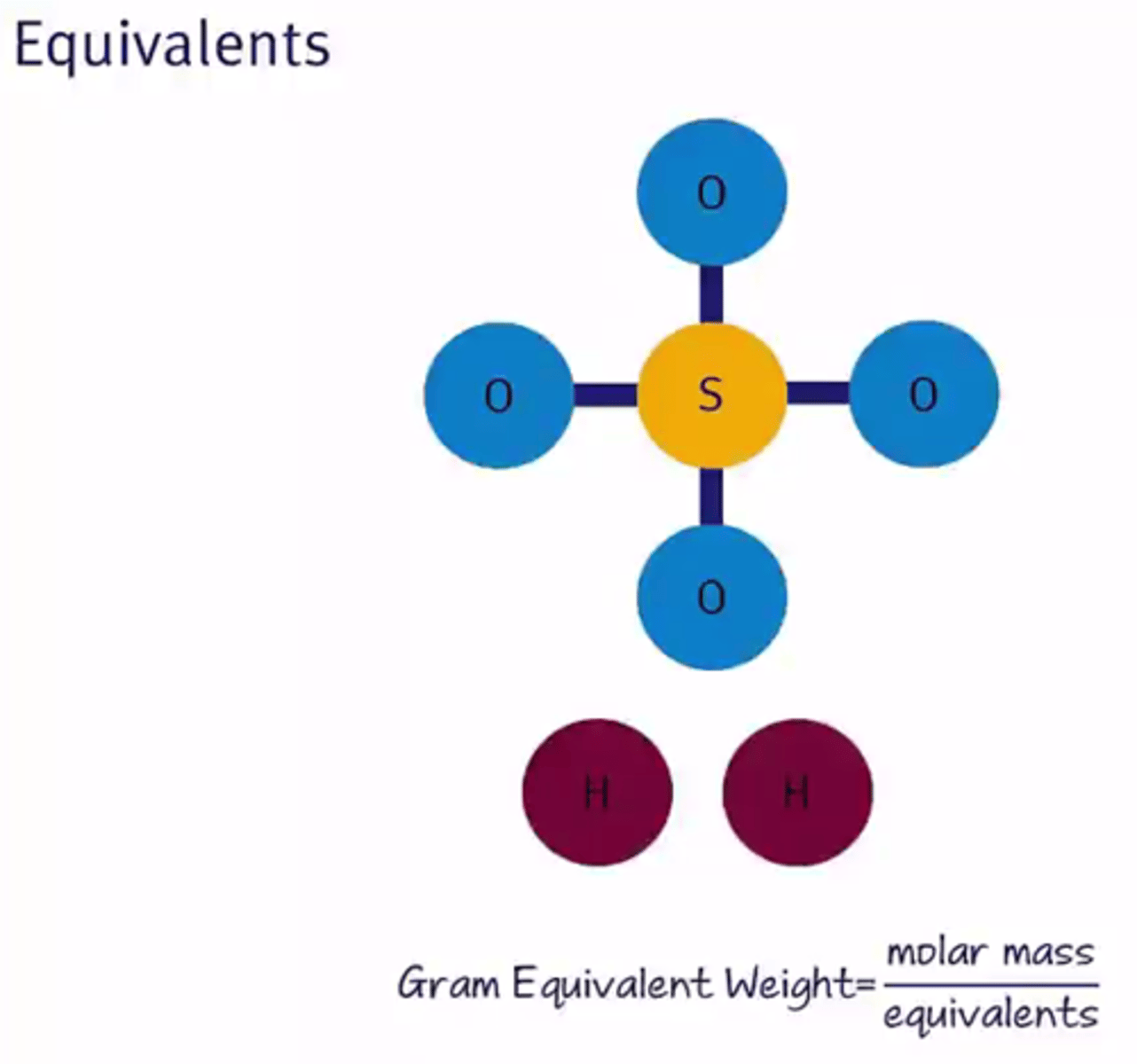
Gram equivalent weight equation:

Normality
The ratio of equivalents per liter; it is related to molarity by multiplying the molarity by the number of equivalents present in one mole of a compound.
ex. 1N solution of acid contains a concentration of hydrogen ions equal to 1 mole/L

normality compared to molarity
1N HCl solution, molarity is 1M because monoprotic, in a 1N H2CO3 solution, the molarity of H2CO3 is 0.5M because diuretic
Equivalents
Moles of the species of interest, equivalents are most often seen in acid-base chemistry ( H+ ions or -OH ions) and oxidation-reduction reactions.
Equivalents from mass equation:

Molarity from normality equation:

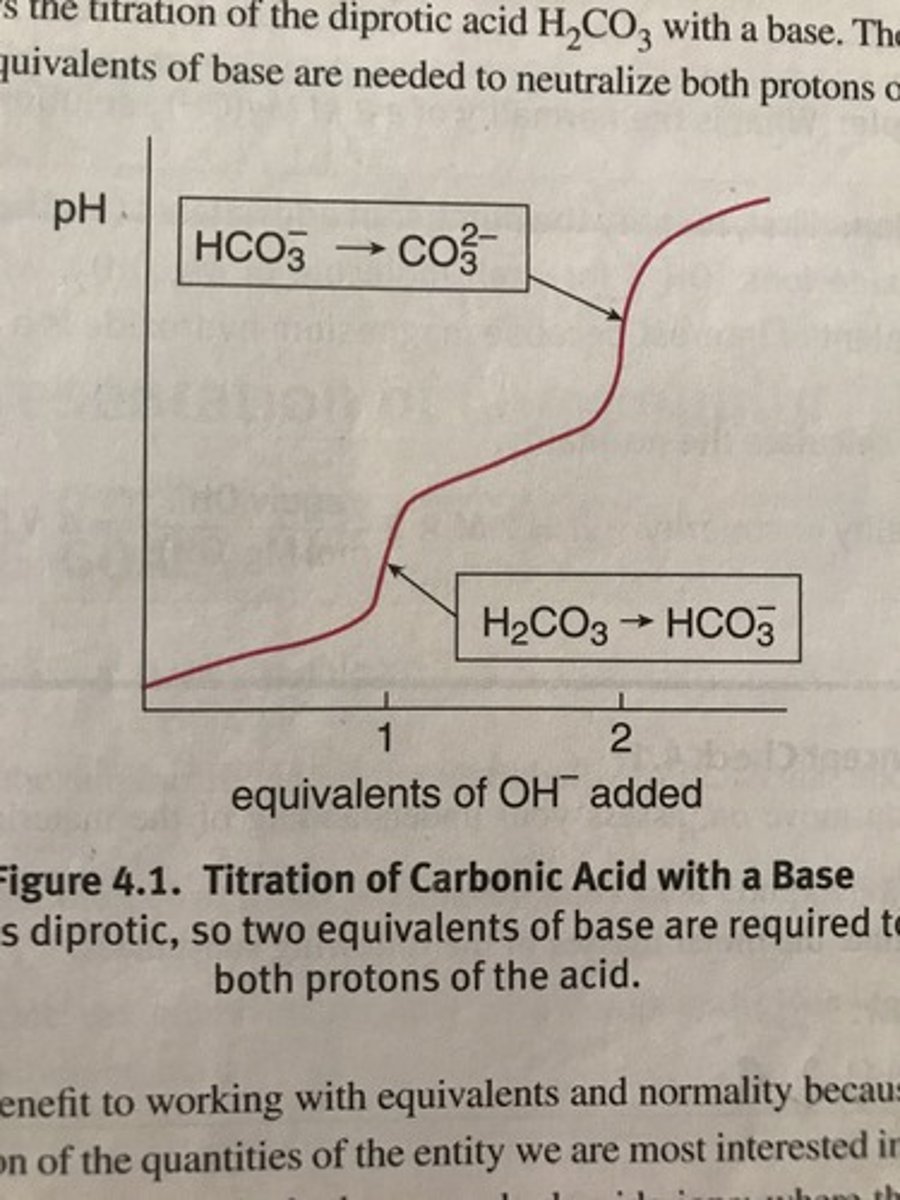
In a titration, a diprotic acid requires ____
two equivalent so base to neutralize bth protons of this acid
The law of constant composition
any pure sample of a compound will contain the same elements in the same mass ratio.
formular for ionic compounds
only empirical
Percent composition equation:

1 mole of any ideal gas at STP
22.4 L
one mole of any substance=
its molar mass in grams (from the periodic table)
Limiting reagent
The reactant that will be consumed first in a chemical reaction. Determines the amount of product that can be formed.
all comparisons must be in moles
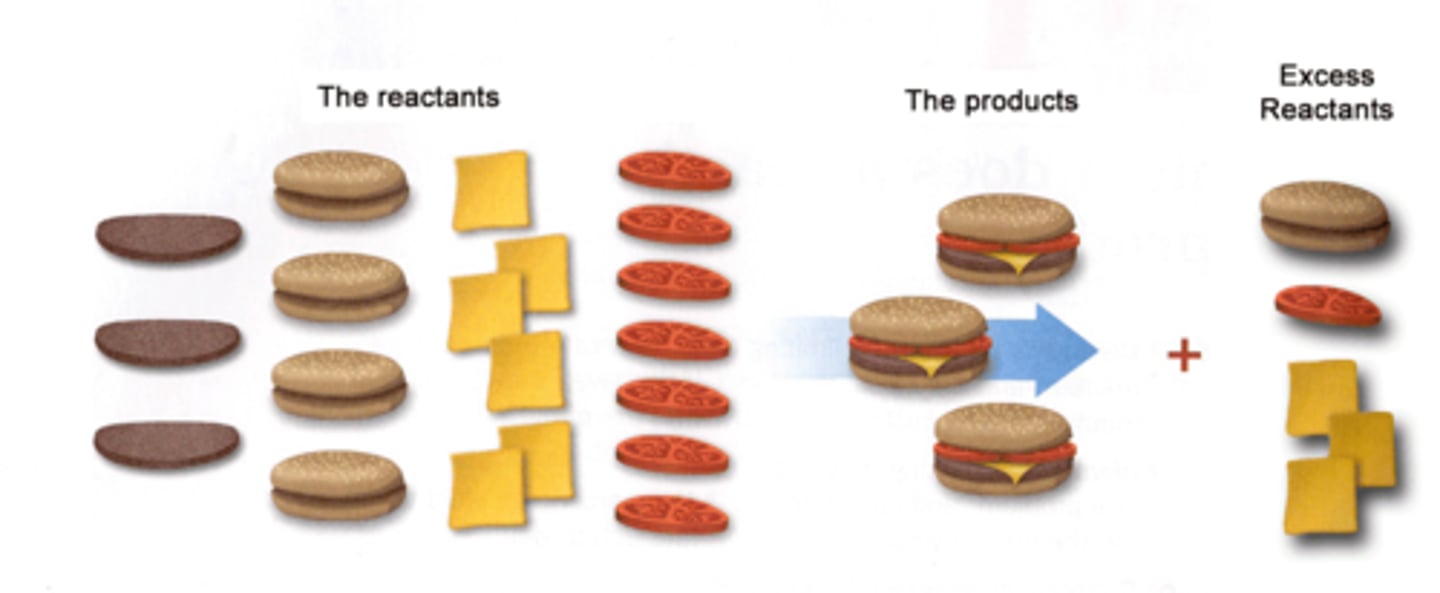
Excessive reagents
The reagents left over after limiting reagent is consumed.
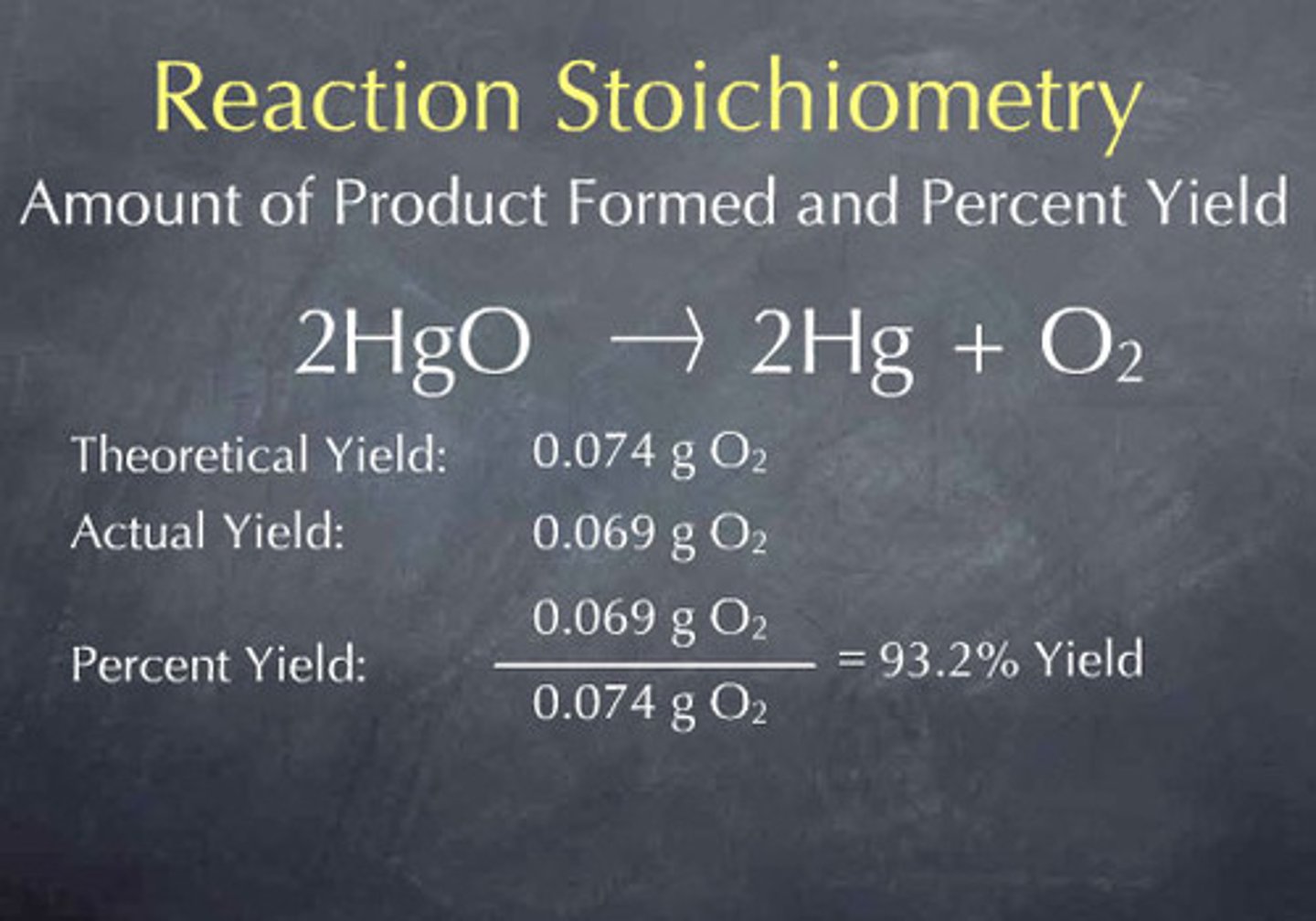
Theoretical yield
The amount of product generated if all of the limiting reactant is consumed with no side reactions.
principles involving the determination of the limiting reagent
1. all comparisons of reactants must be done in units of moles. gram-to-gram comparisons will be useless and may even be misleading
2. it is not absolute mole quantities of the reactants that determine which reactant is the limiting reagent. rather, the rate at which the reactants are consumed (the stoichiometric ratios of the reactions), combined with the absolute mole quantities determine which reactant is the limiting reagent
how to find limiting reagent
first, determine the number of moles for each reactant
look at balanced equation
ex. Fe+S ->FeS
based on what's given you calculate 0.5 mole Fe and 0.75 mol S
because 1 mole of Fe is needed to react with 1 mole of S and there are 0.5 moles of Fe for the given 0.75 moles S, the limiting reagent is Fe. Thus, 0.5 moles of Fe will react with 0.5 moles of S, leaving an excess of 0.25 moles of S in the vessel. The mass of the excess reagent will be:
0.25mol x 32.1gS/1molS = 8g S
theoretical yield
the maximum amount of product that can be produced from a given amount of reactant
Percent yield
Calculated by dividing actual yield by theoretical yield and multiplying by 100.
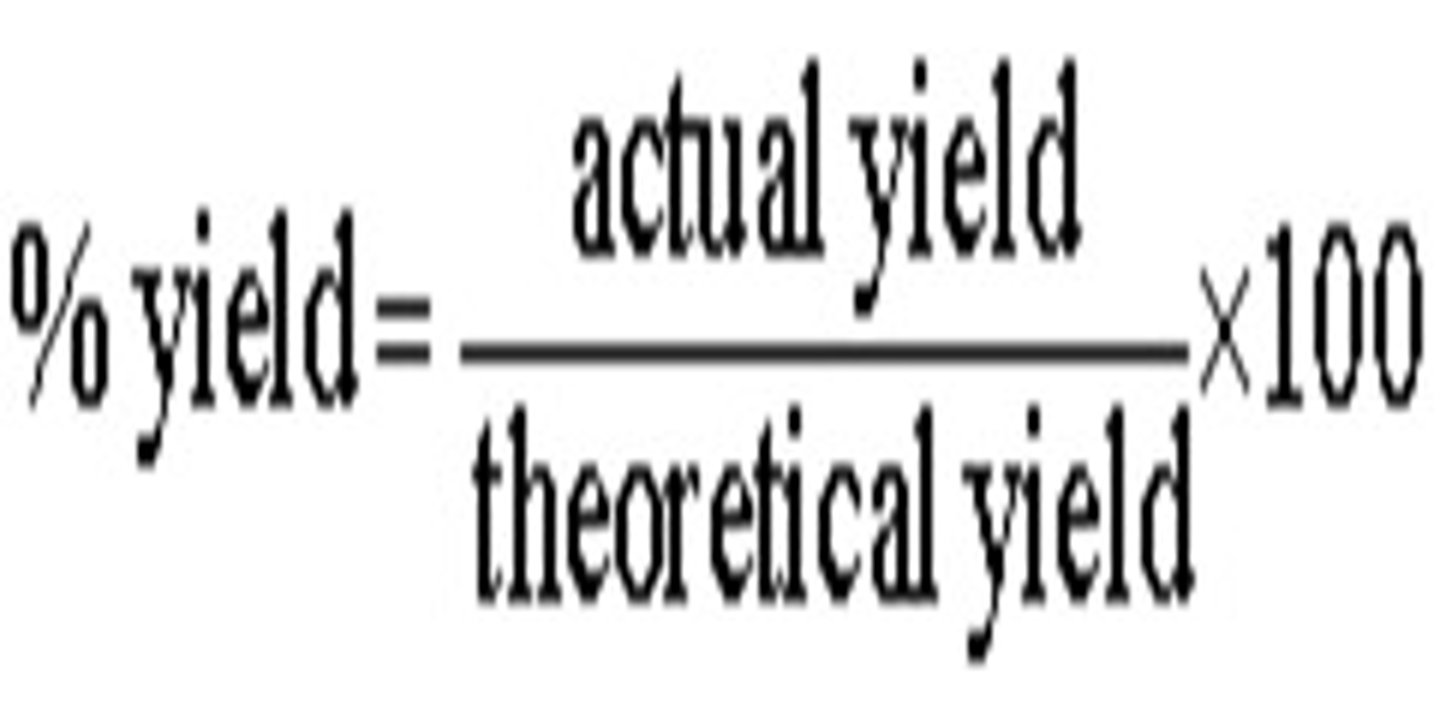
how to calculate percent yield given mass of reactants and products
balance equation
calculate theoretical yield by using reactant, stoichiometry to convert to product
then determine percent yield
use grams
If 46g Na and 32g O2 are provided, find the maximum number of moles of sodium oxide produced. Identify the LR and find the mass of excess reagent left over once the reaction has run to completion.
4Na+O2-->2Na2O
covert 46g Na to moles to get 2 mol Na
convert 32 g O2 to moles to get 1 mol O2 (you have two oxygens so its 32 not 16)
You need 4 sodium atoms for every oxygen molecule, sodium will run out first then. TO determine how much Na2O is formed, use your stoic to get 1 mole Na2O
LR is Na, so 2molNa x 1molO2/4molNa = 0.5 mol O2 gets used so you have one mole so 1.0-0.5= 0.5mol )2 in excess. Convert to grams to get 16 g excess O2
ferrous vs ferric
ferrous Fe2+
ferric Fe3+
Monoatomic ions named?
Monoatomic ions are named by dropping the ending of the name of the element and then adding -ide

Polyatomic anions named?
Many polyatomic anions contain oxygen and are called oxyanions.
When an element forms two oxyanions, the smaller - ite and the larger = ate.

Nitrite vs Nitrate
NO2-
NO3-
Multiple oxyanions? aka extended series of oxyanions:
If an extended series of oxyanions, Hypo goes first and per goes last.
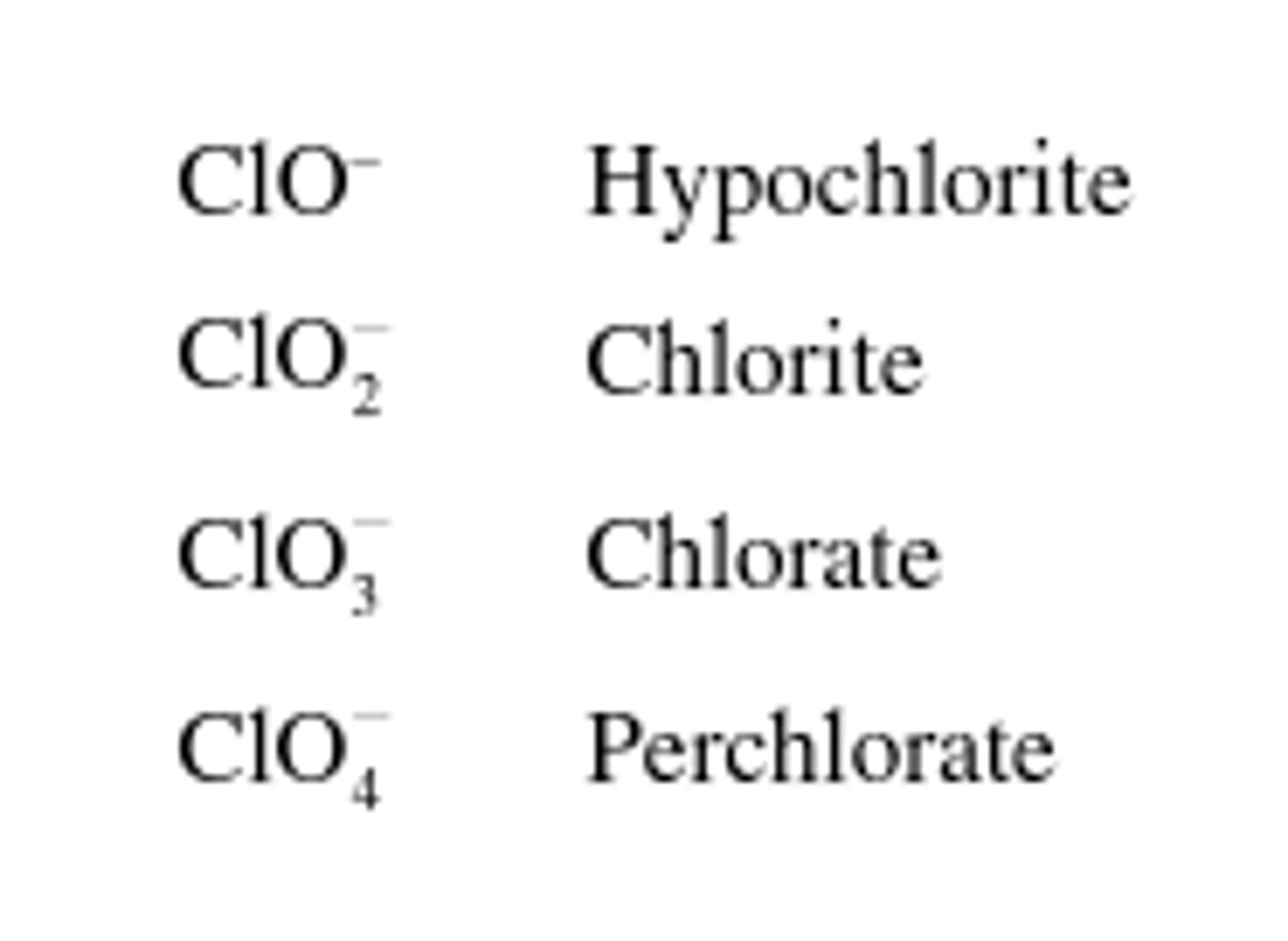
ClO-
ClO2-
ClO3-
ClO4-
Hypochlorite
Chlorite
Chlorate
Perchlorate
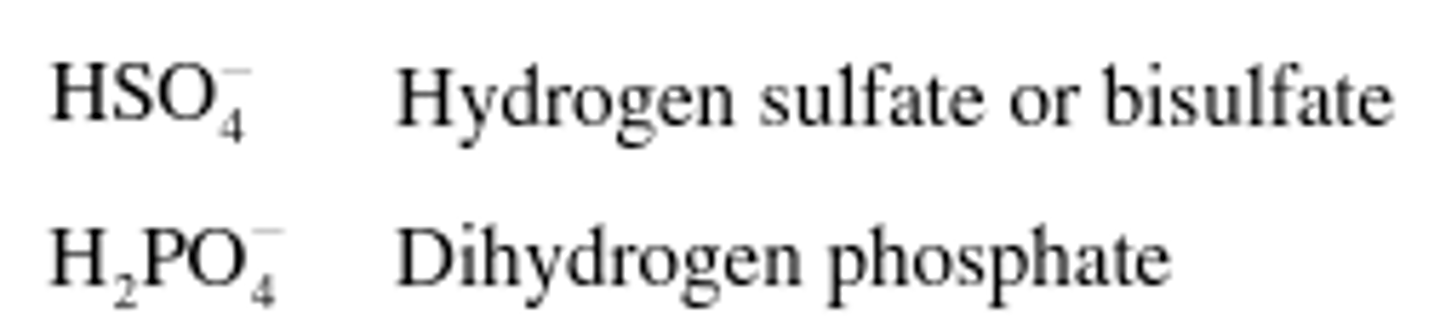
Polyatomic anions with H+?
Polyatomic anions often gain one or more H+. The resulting ions are named by adding hydrogen or dihydrogen in front of the anion's name.
older convention is bi- prefix (bisulfate HSO4-)
Mnemonic for -ite vs -ate?
The l-IGHT-est anions have the fewest oxygens, the heaviest anions ATE the most oxygens.
Common polyatomic ions to know:

ammonium
NH4+
Acetate
C2H3O2-
Cyanide
CN-
permanganate
MnO4-
thiocyanate
SCN-
Chromate
CrO4 2-
Dichromate
Cr2O7 2-
borate
BO3 3-
Ionic charge
Predictable by group number and the type of element (metal vs nonmetal) for respective elements.
What charges will metals form?
Metals for positively charged cations based on group number.
What change will nonmetals form?
Nonmetals form negatively charged anions based on the number of the electrons needed to achieve the octet.
Electrolytes
solutes that enable solutions to carry current
Contain equivalents of ions from molecules that dissociate in solution. The strength of an electrolyte depends on the degree of solvation
ionic compounds are good electrolytes because they dissolve readily, nonpolar covalent compounds are the weakest because they do not form current-carrying ions
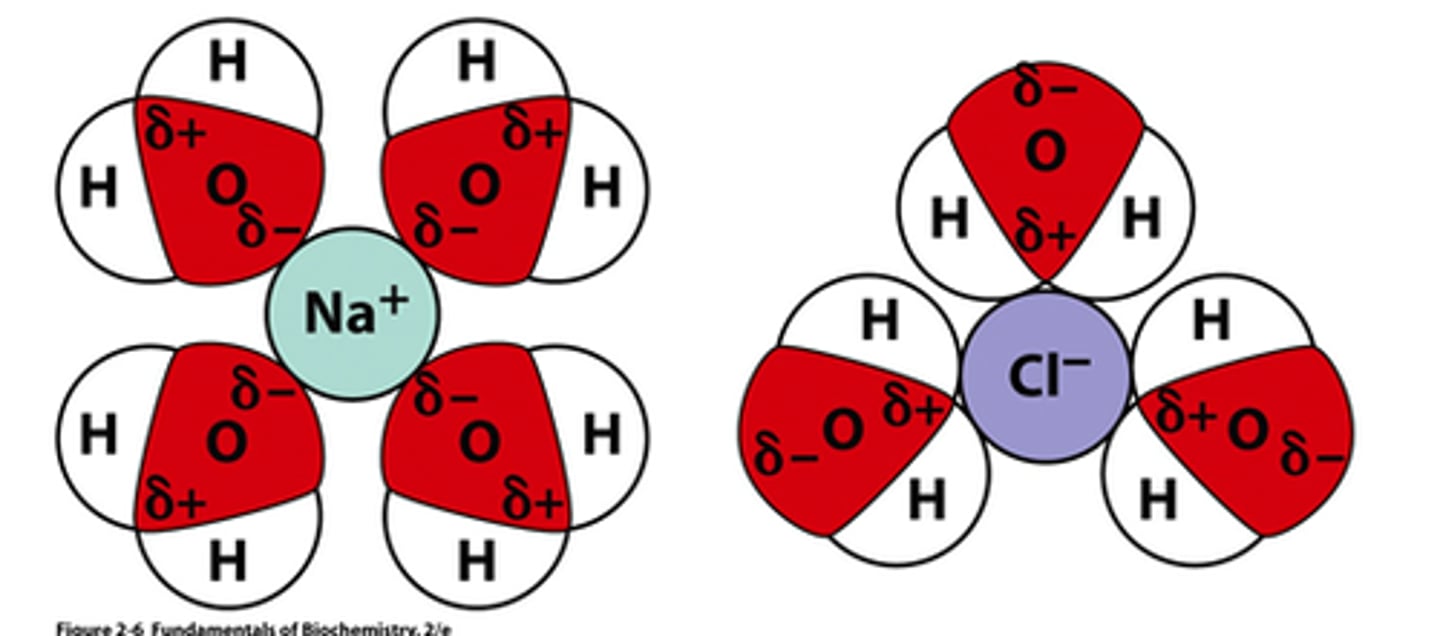
Solvation
the process by which the positive and negative ions of an ionic solid become surrounded by solvent molecules
a solute is considered a strong electrolyte if
it dissociates completely into its constituent ions
NaCl and KI, highly polar covalent bonds that dissociate into ions when dissolved like HCl in water
nonelectrolytes
substances that form no ions in water and cannot conduct electricity
O2 CO2 and glucose, many nonpolar gases and organic compounds
ionic compounds are measured with
formula weights, not molecular weights like covalent compounds
the best electrolytes
dissociate readily and are ionic compounds with large amounts of cations and anions