Lipid Metabolism 4 (2)
 Call Kai
 Learn
Learn Practice Test
 Spaced Repetition
 Match
Match Flashcards
 Knowt Play
1/20

There's no tags or description
Looks like no tags are added yet.
Name | Mastery | Learn | Test | Matching | Spaced | Call with Kai | Chat |
|---|
No analytics yet
Send a link to your students to track their progress
21 Terms
Intestinal digestion of dietary TG
TG--> colipase, lecithin, pancreatic lipase, HOH, 2 FAs--> B-monoglyeride (B-MG or 2-MG)
occurs outside the cell and then TG gets reformed back to TG inside the cell
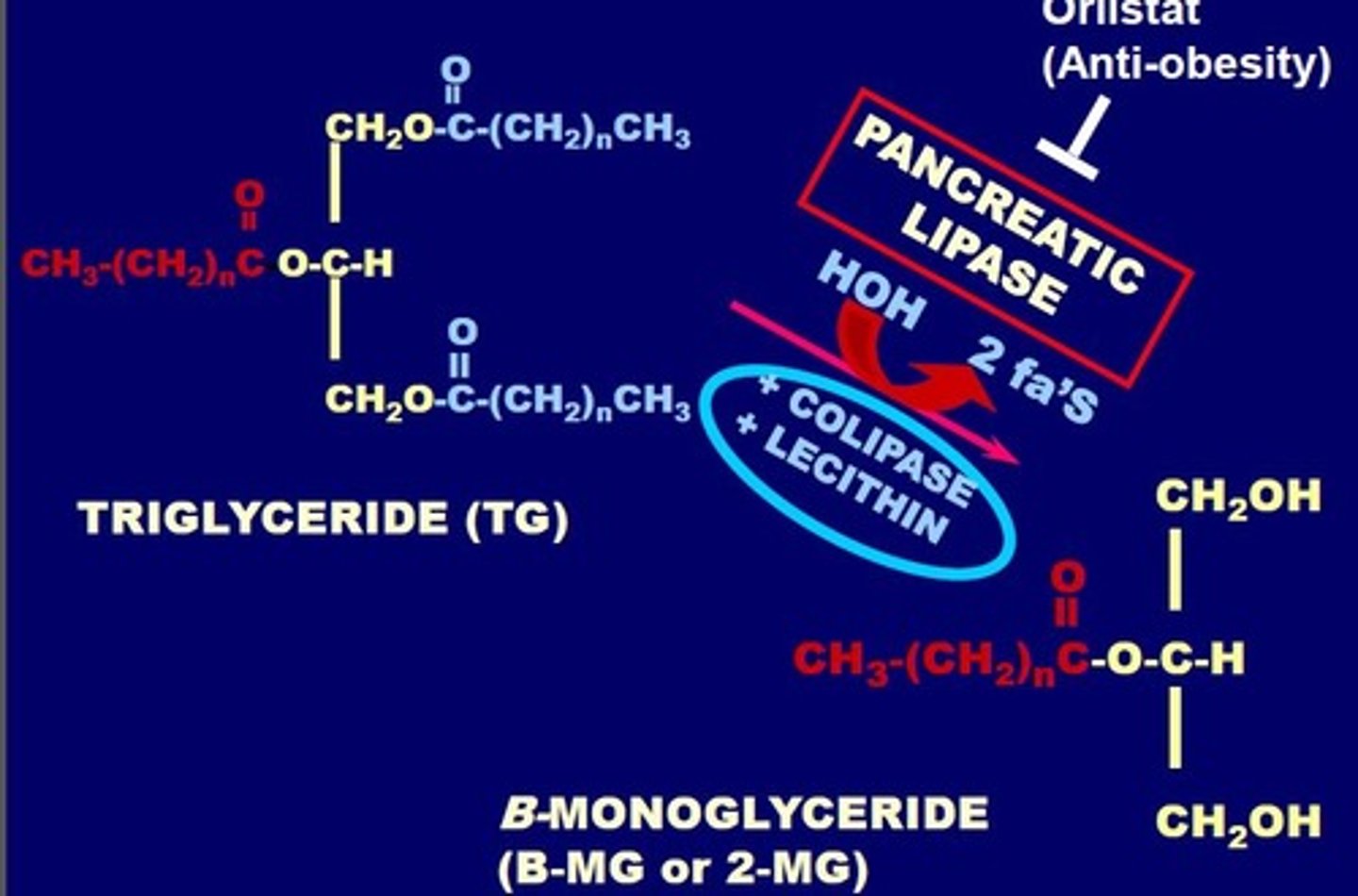
Orlistat
-anti-obesity
-blocks pancreatic lipase, halts TG to B-monoglyceride (B-MG or 2-MG)
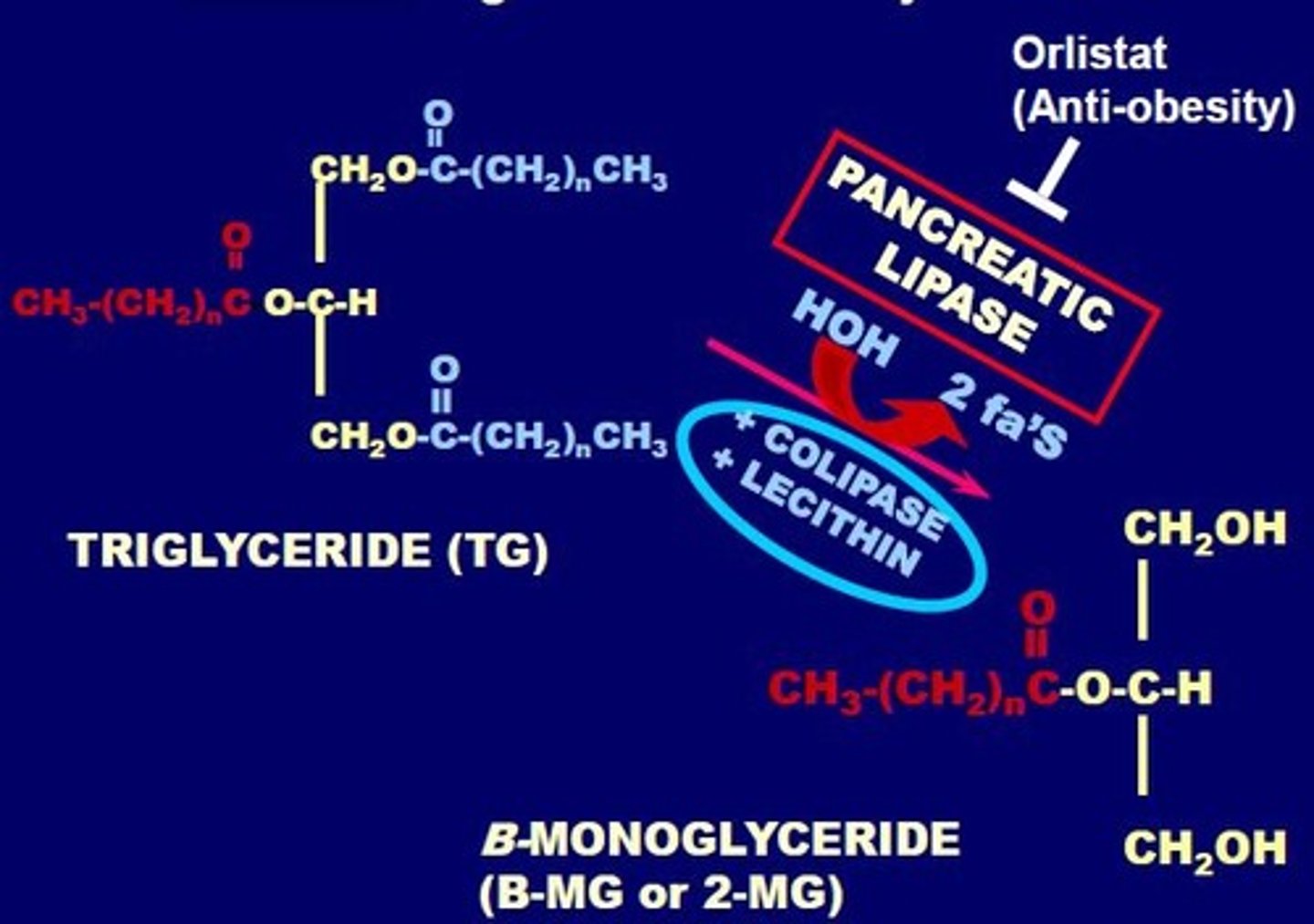
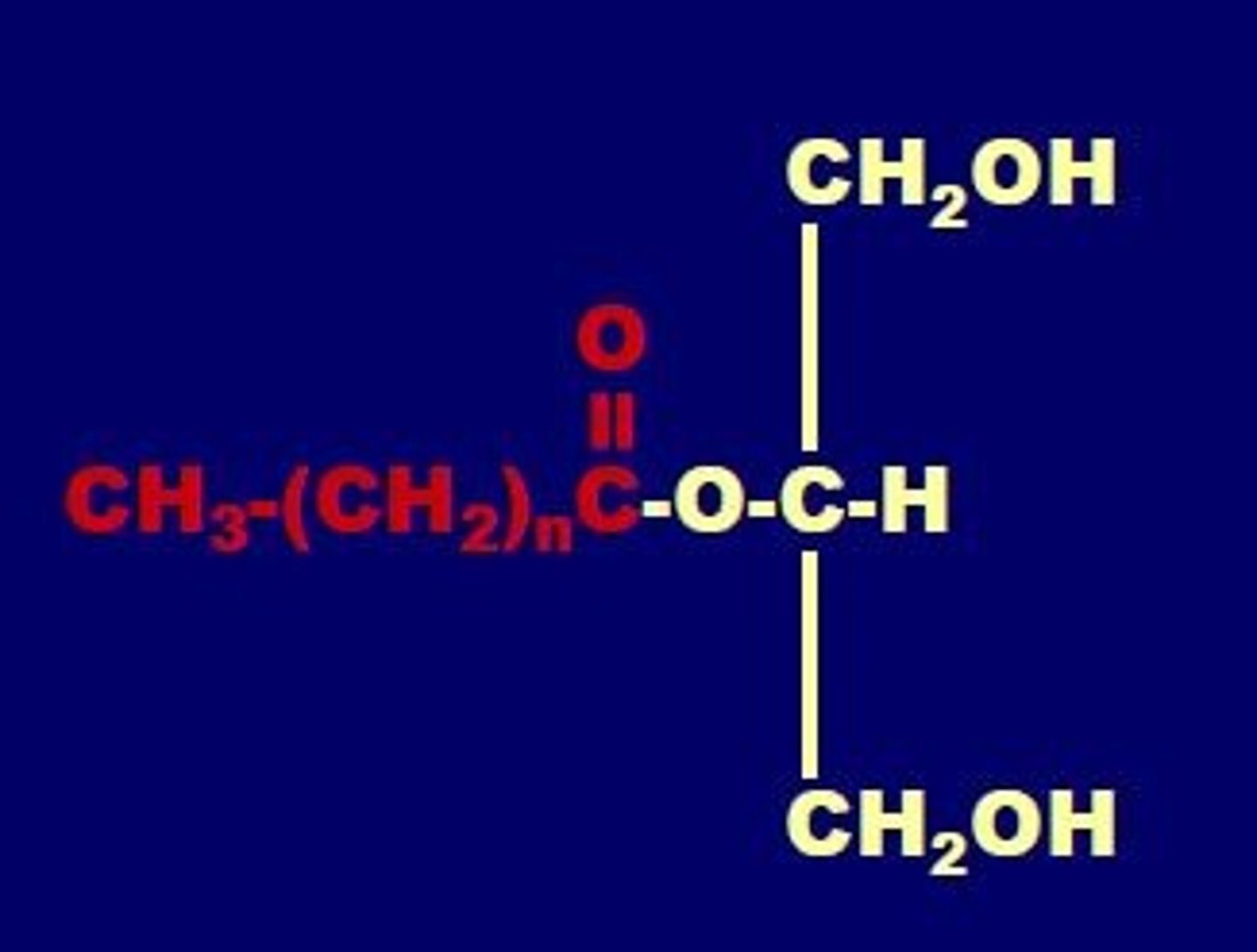
the breakdown product of TG absorbed into the intestinal cells
B-MONOGLYCERIDE
(B-MG or 2-MG)
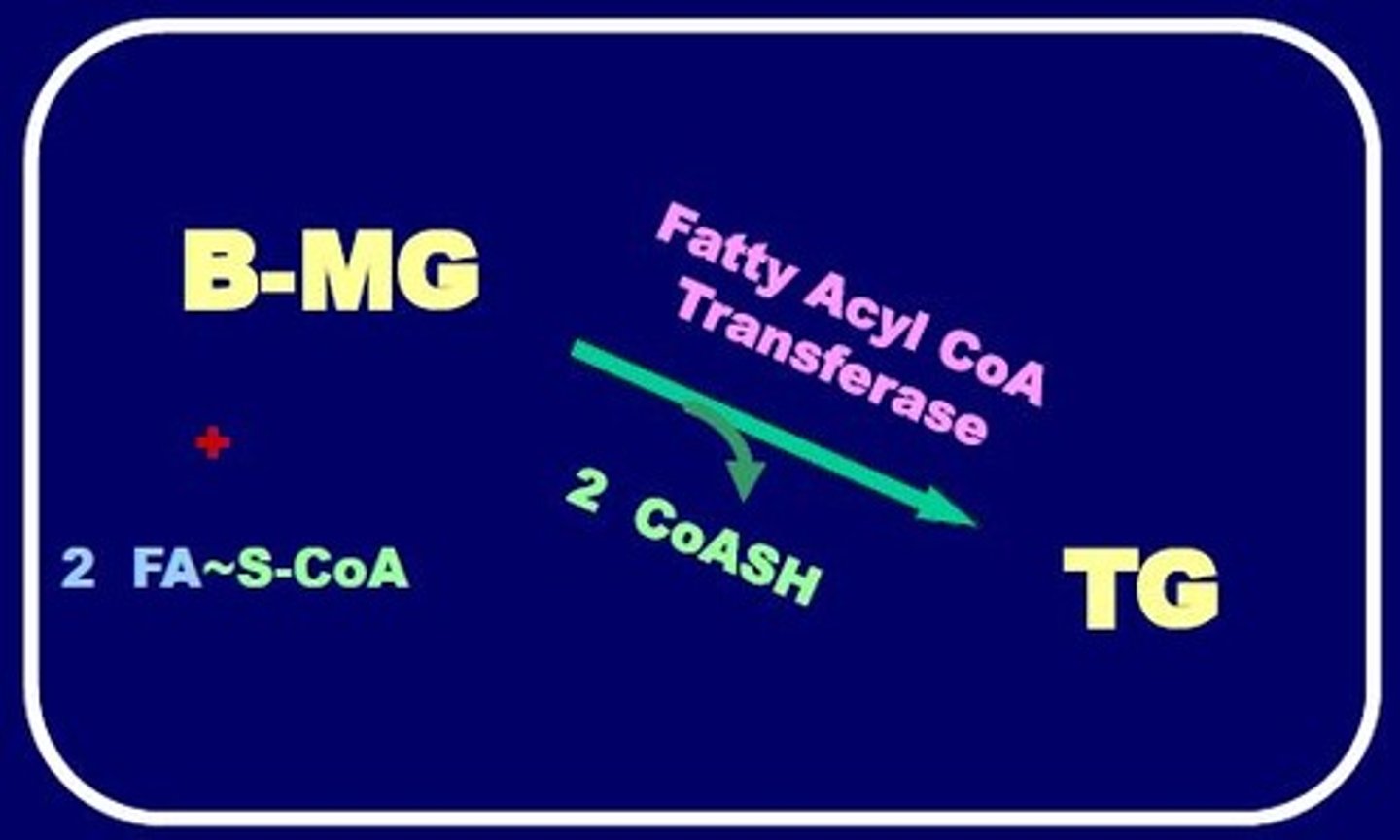
inside the intestinal epithelial cell what happens to B-MG
B-MG + 2 FA~S-CoA--> Fatty acyl CoA Transferase + 2 CoASH --> TG
The fate of the vast majority of cholesterol
bile salts
others go to membranes and steroid hormones
Endogenously made lipids: Sites of cholesterol synthesis and percentage of total Endogenously made pipids
1) liver- MAJ site 50%
2) intestine 15%
3) extrahepatic (skin) 35%
major site of endogenously made lipids
liver
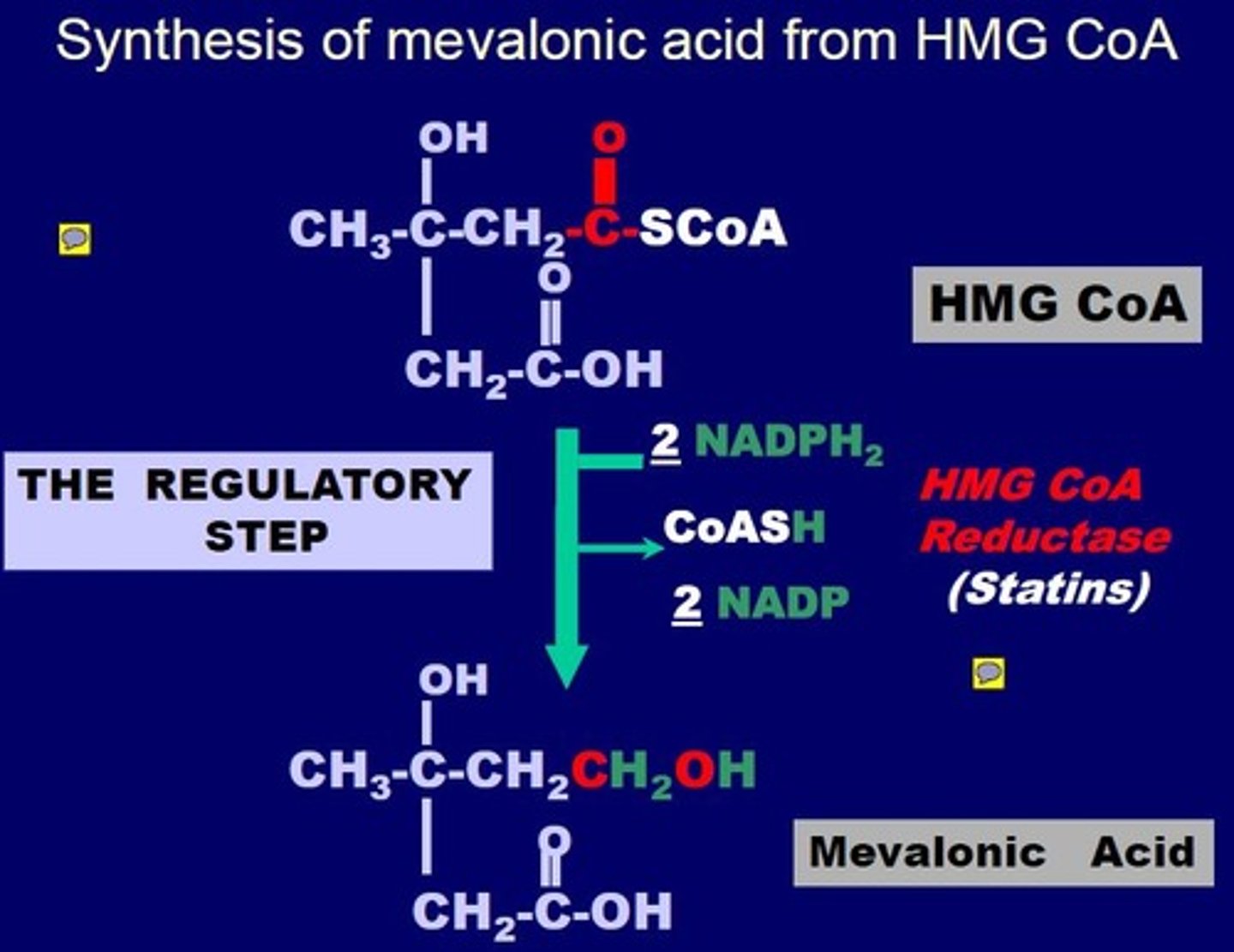
Synthesis of mevalonic acid from HMG CoA--step in cholesterol synthesis
HMG CoA--> HMG CoA reductase + NADPH2 --> Mevalonic Acid + CoASH + 2NADP
This is the REGULATORY STEP in the cholesterol synthesis
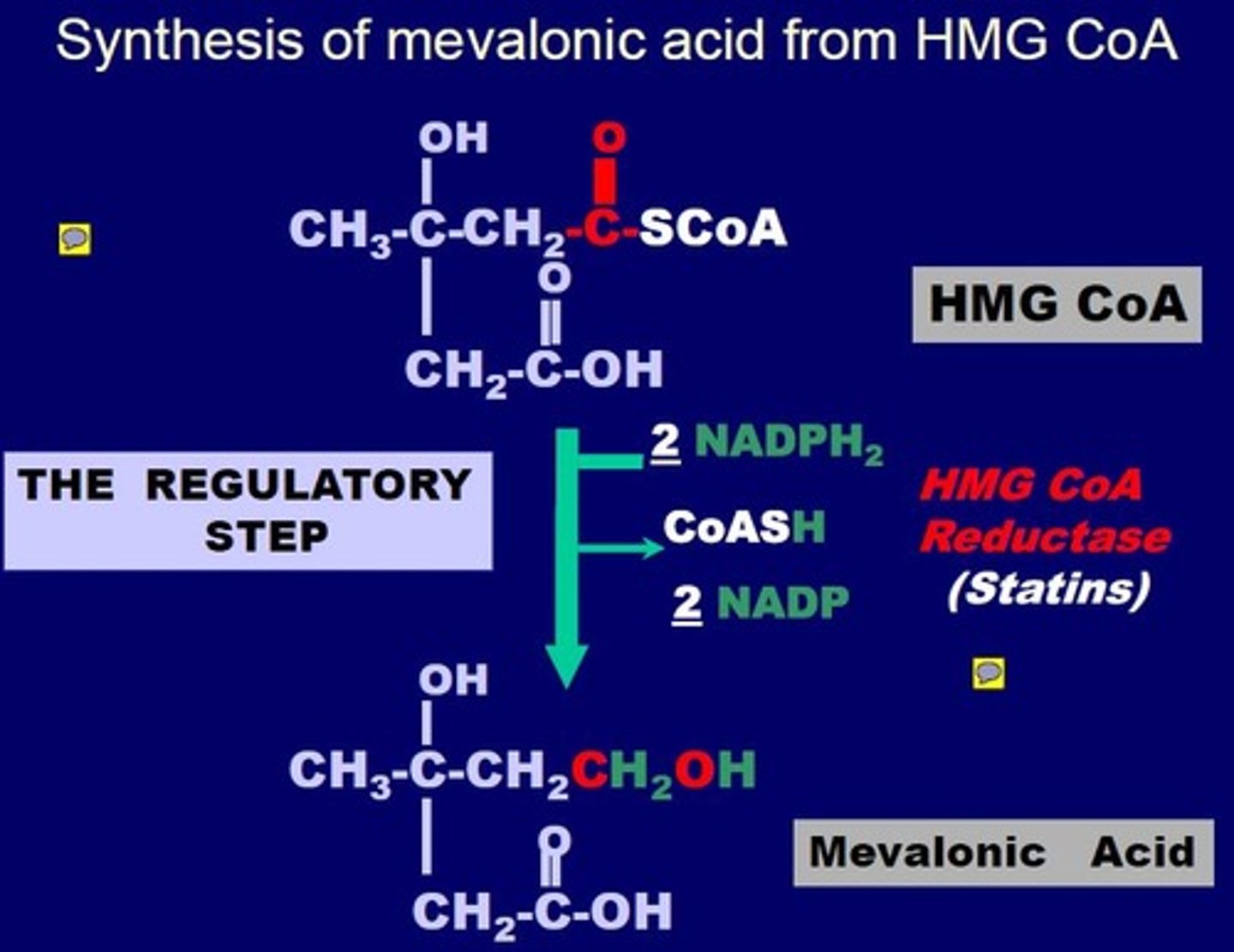
The enzyme that catalyzes the synthesis mevalonic acid from HMG CoA--the regulatory step in cholesterol synthesis
HMG CoA reductase
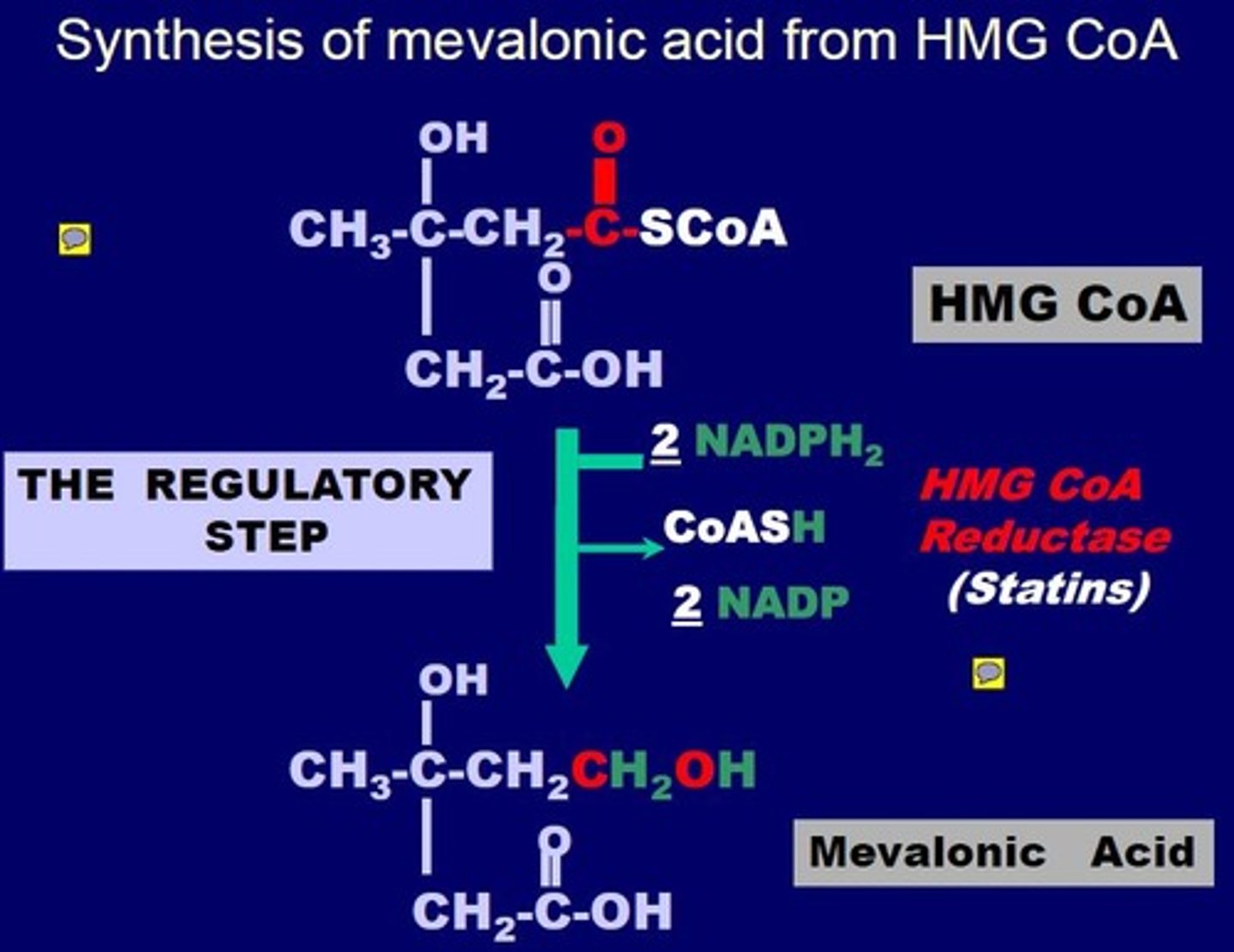
how do statins halt the synthesis of cholesterol?
By inhibiting HMG CoA Reductase
This stops the synthesis of mevalonic acid from HMG CoA
esterification of cholesterol (inside intestinal epithelial cell)
cholesterol + fatty acyl CoA --> ACAT--> cholesteryl ester (CE) + CoASH
ACAT= Acyl (fatty) Cholesterol Acyl (fatty) Transferase`
NPC1L1 transporter
transports dietary cholesterol from the lumen of the gut to the intestinal epithelial cell
fatty acyl transferase
catalyzes reaction of B-monoglyceride + 2 fatty acyl--> triglyceride
occurs inside the intestinal epithelial cell
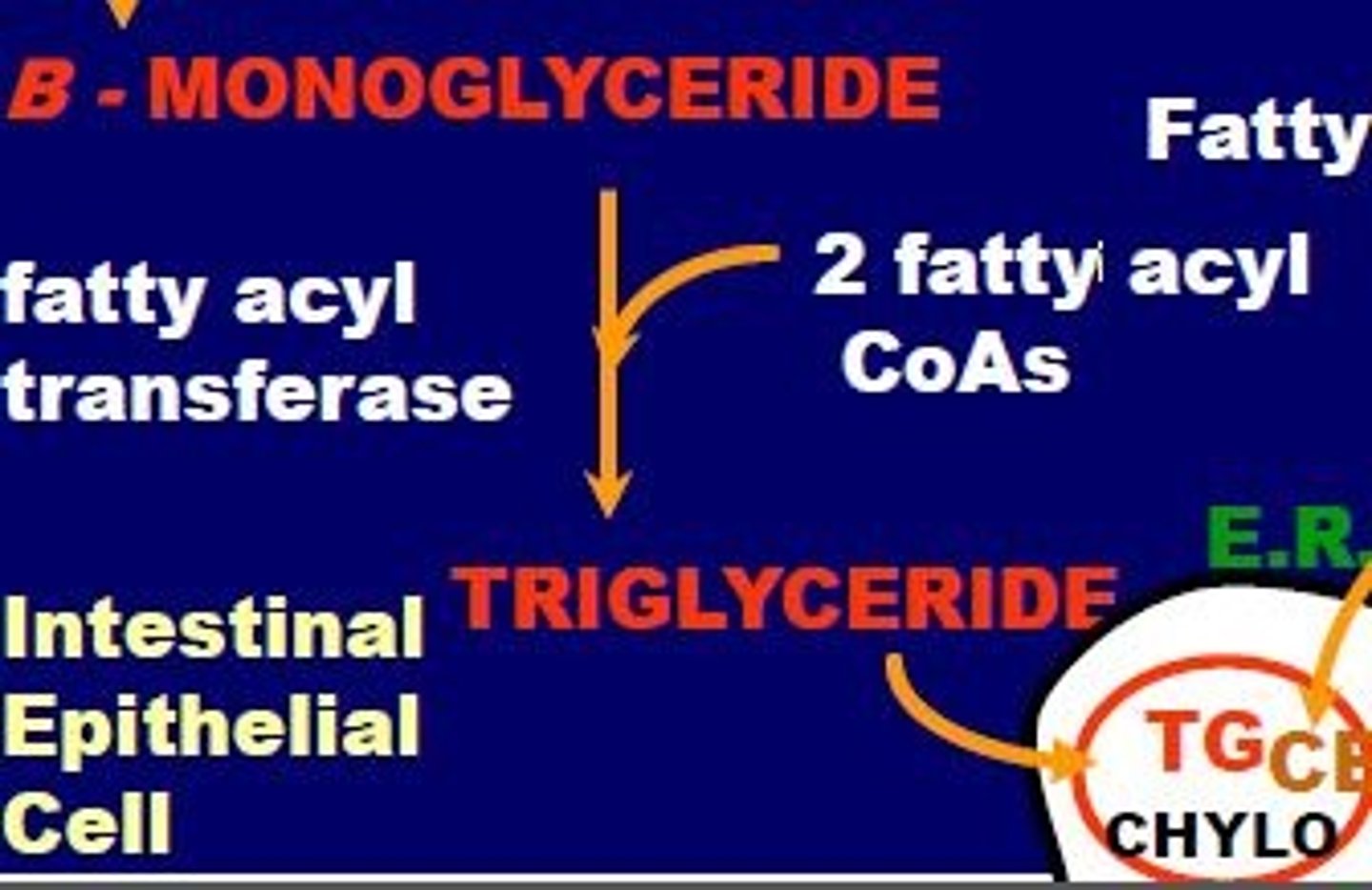
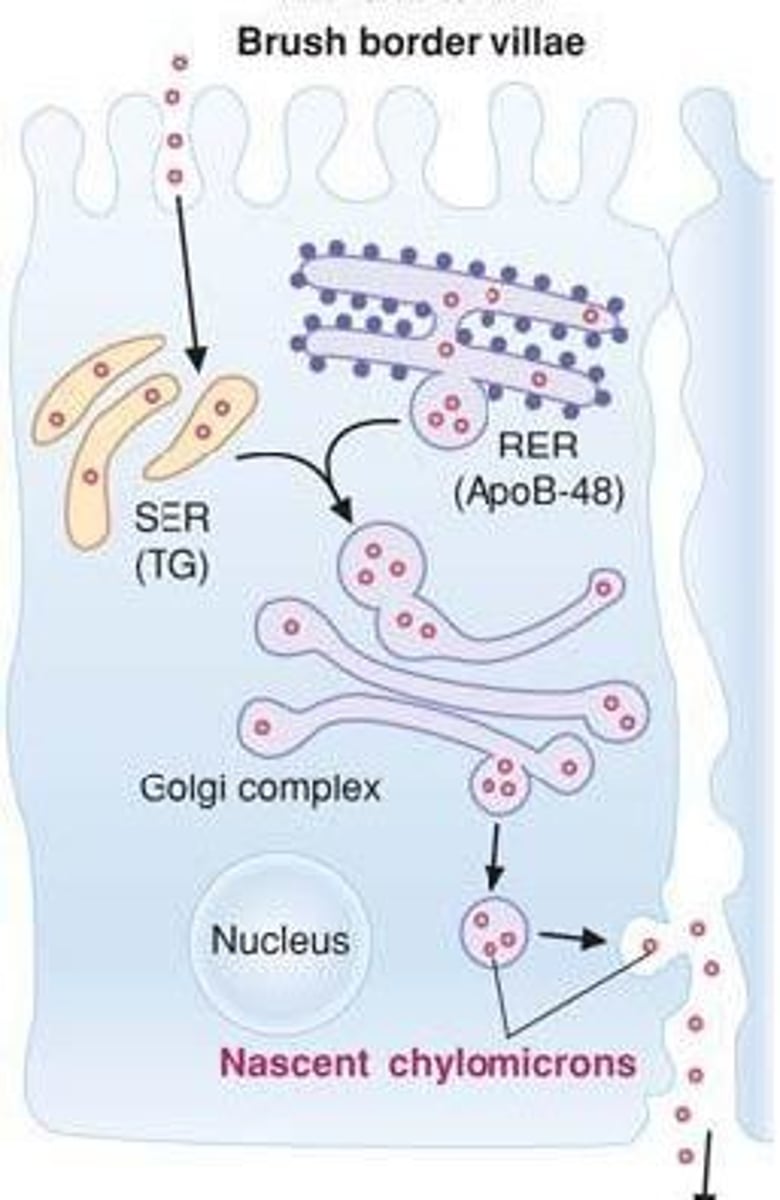
formation and secretion of chylomicrons
-occurs in intestinal epithelial cells
-assembly in ER and golgi
-TG from smooth-ER
-ApoB-48 from rough ER
-both combine in Golgi to make nascent chylomicrons
what proteins get transferred from HDL to chylomicrons--leading the maturation of nascent chylomicrons to mature chylomicrons?
ApoCII and ApoE
Major Site of TG synthesis
Liver
TG synthesis in the cells RXN
Glycerol + 3FAs --> TG --> VLDL
Major apolipoproteins and which lipoprotein they belong to (excluding HDL)
-Apo B-48= chylomicron
-Apo B-100 = VLDL, LDL, & IDL
VLDL and LDL Life Cycle
1) Liver secretes nascent TAG-rich VLDL particles
2) Apo C-II and Apo E are transferred from HDL to nascent VLDL
3) Extracellular lipoprotein lipase, activated by apo C-II, degrades TAG in VLDL
4) Apo C-II and apo E are returned to HDL
5) LDL binds to specfic receptors to extrahepatic tissues and on the liver where they are endocytosed
VLDL in liver
LDL in blood
How does NPC1 inhibitors work as an anti-cholesterol drug?
NPC1 transports cholesterol from lumen into intestinal epithelial cell. An inhibition of this would block and halt intestinal absorption of cholesterol
How does ABC1 mutation lead to Tangier disease/low HDL?
The ABC1 mutation inhbits ABC1 transporter, preventing release of cholesterol into blood from intestinal epithelial cell. HDL needs blood cholesterol to form and Tangier disease is charecterized by low levels of HDL in blood. Thus, inhibiting ABC1 transporters lowers HDL and causes Tangier disease.