P&O QUIZZES EXAM 3
 Call Kai
 Learn
Learn Practice Test
 Spaced Repetition
 Match
Match Flashcards
 Knowt Play
1/4

There's no tags or description
Looks like no tags are added yet.
Name | Mastery | Learn | Test | Matching | Spaced | Call with Kai | Chat |
|---|
No analytics yet
Send a link to your students to track their progress
5 Terms
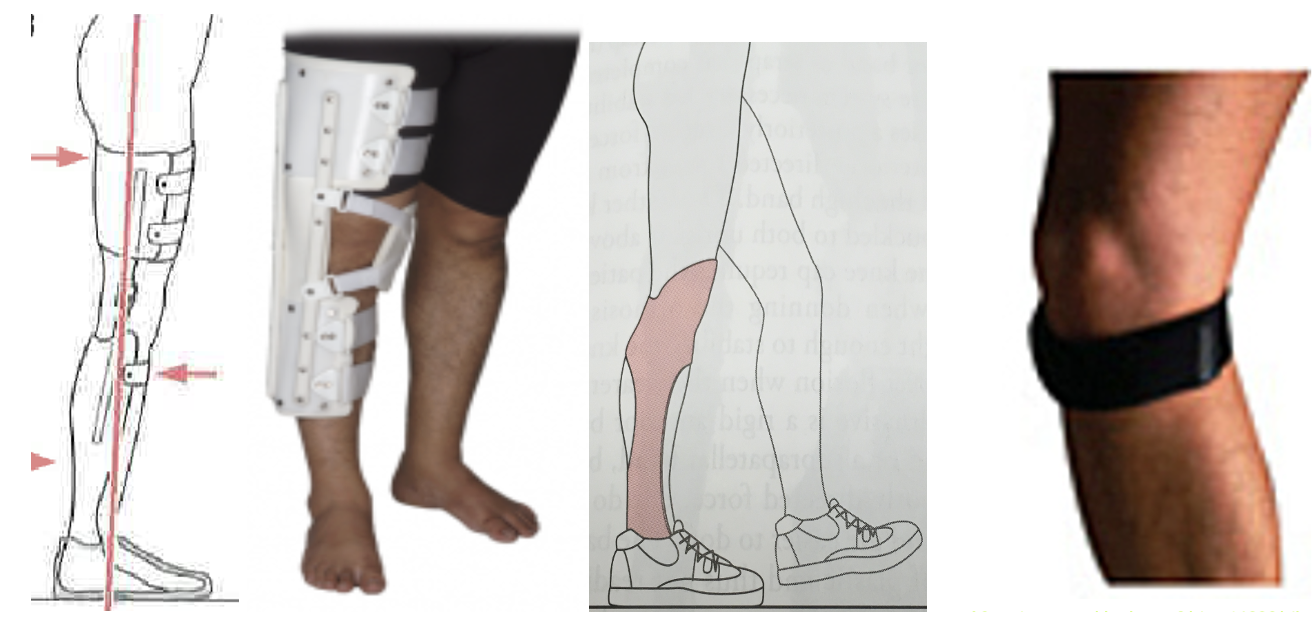
A patient demonstrates knee instability during stance phase, specifically excessive knee flexion (knee buckling) due to quadriceps weakness, but has adequate ankle range of motion and no significant mediolateral knee instability. Which orthosis is generally the BEST choice?
Option C is correct. It is a floor reaction orthosis that controls knee instability. Options A and B are KAFOs. Option B is a KAFO with a frontal plane control specifically for genu valgum. With these KAFOs, the patient will be less compliant using these braces because they are more difficult to don and doff and more invasive. Option D is an infrapatellar strap, which would not control knee instability.
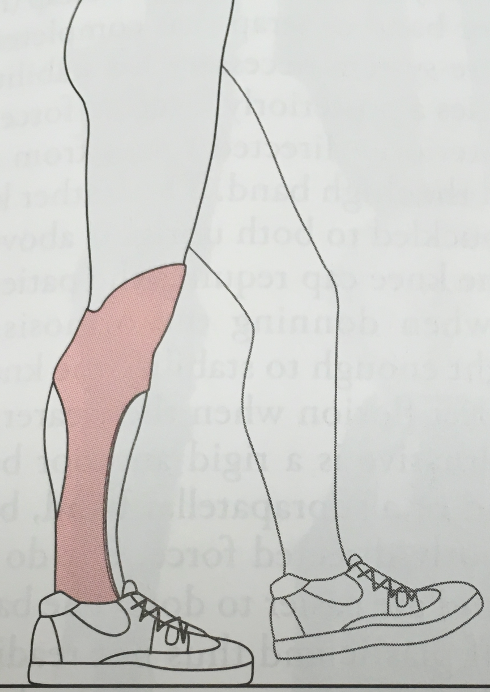
What orthotic modification should be recommended to better control pronation, a flexible calcaneo-valgus, or fixed calcaneo-varus?
A) Metatarsal Bar
B) Rocker Sole
C) Lateral Heel Wedge
D) Medial Heel Wedge
D) Medial Heel Wedge
→ The metatarsal bar lessen the pressures at the metatarsal heads.
The rocker sole improves function, protects the foot and ankle, and enables smoother gait.
The lateral heel wedge controls supination.
The medial heel wedge controls pronation (a flexible calcaneo-valgus or fixed calcaneo-varus).
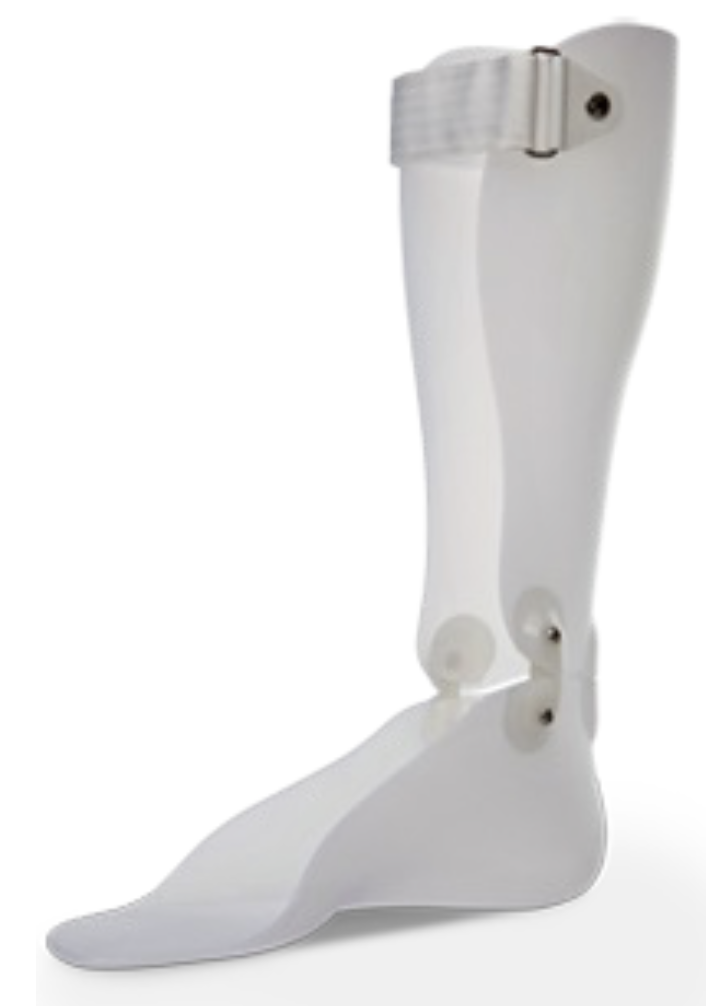
Which patient population would LEAST likely use the orthosis in this photo?
A) Patients with L4 weakness
B) Patients with mild recurvatum
C) Patients with midfoot instabilities
D) Patients with severe ankle instability
D) Patients with severe ankle instability
→ Patients using a plastic articulating AFO have L4 weakness or foot drop, mid and hind foot instabilities, mild recurvatum, and min to no edema.
Your patient presents with complaints of right lateral ankle pain. He describes “rolling” his ankle when he stepped off a curb. He has been seen by his primary care physician, and X-rays are negative for a fracture. Moderate joint laxity is noted, but an endpoint is still present. Moderate translation, minimum brusing, and moderate swelling are noted. Which statement is accurate?
A) The patient sustained a Grade 3 anterior talofibular ligament sprain and will use a lace up ankle stabilizing orthosis (ASO).
B) The patient sustained a Grade 2 anterior talofibular ligament sprain and will use a lace up ASO.
C) The patient sustained a Grade 3 posterior talofibular ligament sprain and will use a CAM walker.
D) The patient sustained a Grade 2 posterior talofibular ligament sprain and will use a CAM walker.
B) The patient sustained a Grade 2 anterior talofibular ligament sprain and will use a lace up ASO.
→ This patient has sustained a Grade 2 lateral ankle sprain (ATFL) and will use an ankle support orthosis (ASO).
A football player sustained a non-contact knee injury while planting the leg to make a cut. The patient heard a pop and felt the knee buckle. Anterior drawer, Pivot shift, and Lachman test, which were positive. Based on this information, which statement is correct?
A) The patient has a LCL tear and knee measurements for a prophylactic knee orthosis should be taken at the mid-patella and 6 inches above the mid-patella.
B) The patient has an ACL tear and knee measurements for a postoperative rehabilitative knee orthosis should be taken at the mid-patella and 6 inches above and 6 inches below the mid-patella.
C) The patient has an PCL tear and knee measurements for a prophylactic knee orthosis should be taken at the mid-patella and 6 inches above and 6 inches below the mid-patella.
D) The patient has a MCL tear and knee measurements for a postoperative rehabilitative knee orthosis should be taken at the mid-patella and 6 inches above and 6 inches below the mid-patella.
B) The patient has an ACL tear and knee measurements for a postoperative rehabilitative knee orthosis should be taken at the mid-patella and 6 inches above and 6 inches below the mid-patella.
→ The clinical prediction rule for an ACL tear is a positive Anterior drawer, Pivot shift, and Lachman test. A post-op brace would be used with measurements taken at the mid-patella and 6 inches above and 6 inches below the mid-patella.