Micro Unit 1
 Call Kai
 Learn
Learn Practice Test
 Spaced Repetition
 Match
Match Flashcards
 Knowt Play
1/36

There's no tags or description
Looks like no tags are added yet.
Name | Mastery | Learn | Test | Matching | Spaced | Call with Kai | Chat |
|---|
No analytics yet
Send a link to your students to track their progress
37 Terms
Which of the following characteristics is commonly used to classify bacteria?
A. Cell shape and arrangement
B. Gram-stain reaction
C. Biochemical/metabolic characteristics
D. All of the above
D
What does scientific nomenclature refer to?
A. Naming organisms using a standardized two-part system
B. Classifying bacteria only by Gram stain
C. Identifying bacteria by colony color
D. Grouping bacteria based only on disease caused
A
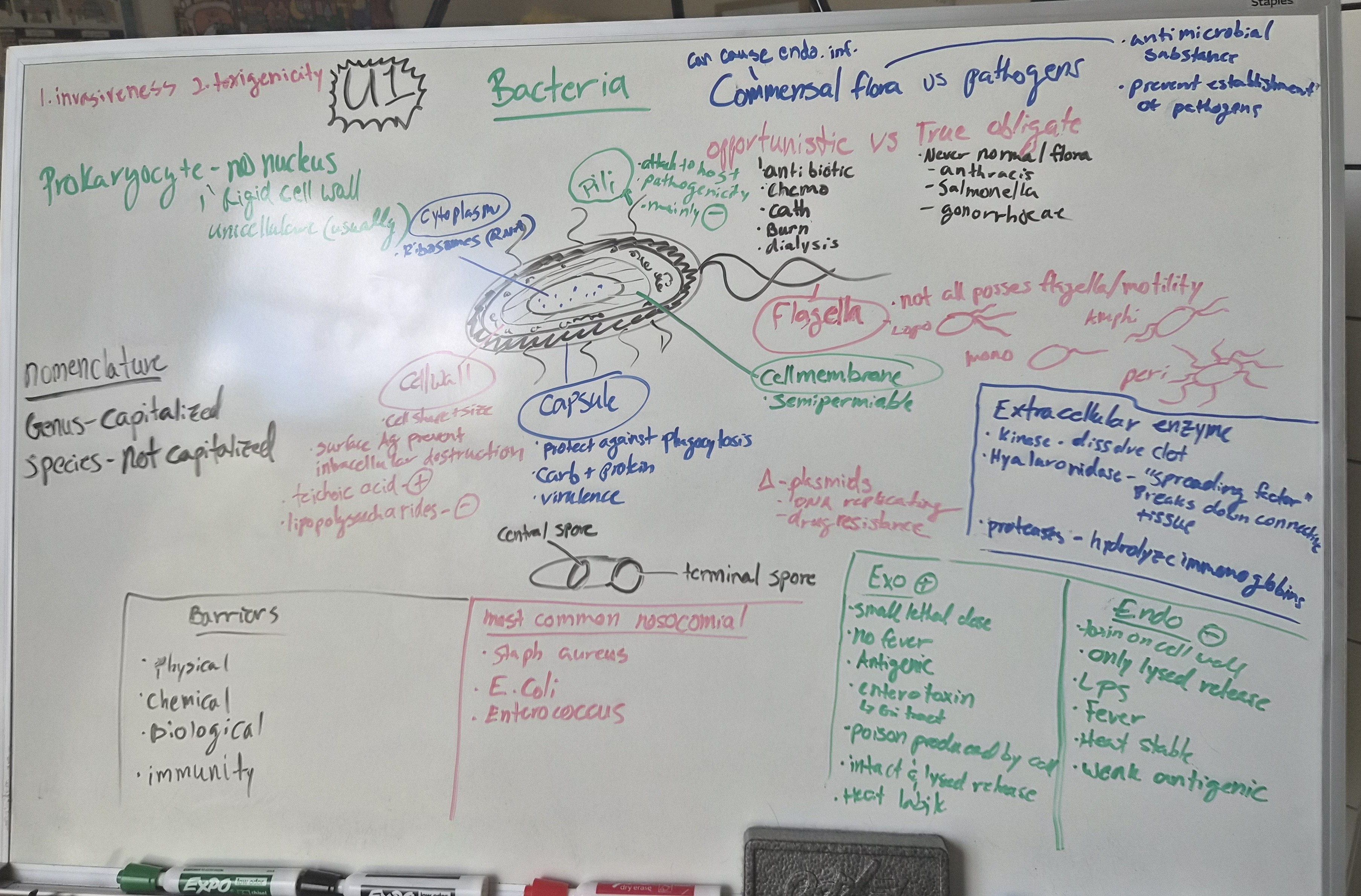
Which of the following is a major difference between prokaryotic and eukaryotic cells?
A. Prokaryotic cells have a membrane-bound nucleus
B. Eukaryotic cells lack DNA
C. Prokaryotic cells lack a membrane-bound nucleus
D. Eukaryotic cells do not contain ribosomes
C
Which structure is found in both prokaryotic and eukaryotic cells?
A. Mitochondria
B. Ribosomes
C. Nucleus
D. Golgi apparatus
B
A spherical bacterium is described as a:
A. Bacillus
B. Coccus
C. Spirillum
D. Vibrio
B
What bacterial structure is primarily responsible for motility?
A. Capsule
B. Pili
C. Flagella
D. Ribosomes
C
Which bacterial structure can help a pathogen avoid phagocytosis by host immune cells?
A. Capsule
B. Ribosome
C. Plasma membrane
D. Endospore
A
Bacteria most commonly reproduce by:
A. Mitosis
B. Binary fission
C. Meiosis
D. Budding
B
A bacterium that requires oxygen for growth is called a:
A. Obligate anaerobe
B. Facultative anaerobe
C. Obligate aerobe
D. Aerotolerant anaerobe
C
Which of the following is considered a portal of entry for microorganisms?
A. Respiratory tract
B. Gastrointestinal tract
C. Broken skin
D. All of the above
D
Which term describes the ability of a microorganism to cause disease?
A. Virulence
B. Pathogenicity
C. Toxigenicity
D. Colonization
B
Which term describes the degree of pathogenicity of a microorganism?
A. Virulence
B. Toxigenicity
C. Colonization
D. Commensalism
A
What does toxigenicity mean?
A. The ability of a microorganism to invade tissue
B. The ability of a microorganism to produce toxins
C. The ability of a microorganism to resist antibiotics
D. The ability of a microorganism to form spores
B
An opportunistic pathogen is best described as:
A. A microorganism that always causes disease in healthy people
B. A microorganism that causes disease mainly when host defenses are weakened or when it enters an unusual body site
C. A virus that infects only bacteria
D. A harmless organism that can never cause disease
B
Which of the following helps a pathogen invade and establish infection?
A. Adhesins that help it attach to host cells
B. Capsules that help it avoid phagocytosis
C. Enzymes that help it spread through tissues
D. All of the above
D
Which statement best describes an exotoxin?
A. It is part of the outer membrane of Gram-negative bacteria
B. It is usually released by living bacterial cells and is often a protein
C. It is only released when bacteria die
D. It is composed of lipopolysaccharide
B
Which statement is true about endotoxin?
A. It is secreted by both Gram-positive and Gram-negative bacteria
B. It is a protein that can be converted into a toxoid
C. It is part of the outer membrane of Gram-negative bacteria
D. It usually has a very specific target in the body
C
A person develops influenza after inhaling respiratory droplets from someone who coughed nearby. This is an example of:
A. Vehicle transmission
B. Vector transmission
C. Droplet transmission
D. Fomite transmission
C
Which of the following is an example of indirect contact transmission?
A. Touching an infected person's skin
B. Being bitten by a mosquito
C. Touching a contaminated doorknob and then touching your face
D. Inhaling airborne particles that remain suspended in the air
C
Which of the following is considered the first line of defense against infection?
A. Antibodies
B. Skin and mucous membranes
C. T lymphocytes
D. Complement proteins
B
Which of the following is part of the second line of defense?
A. Intact skin
B. Phagocytosis and inflammation
C. Antibody production
D. Memory B cells
B
The third line of defense is best described as:
A. Physical barriers such as skin
B. Nonspecific inflammation
C. Specific immune responses involving B and T lymphocytes
D. Normal microbiota preventing colonization
C
A nosocomial infection is:
A. An infection acquired from food
B. An infection acquired in a healthcare setting
C. An infection passed from mother to fetus
D. An infection caused only by antibiotic-resistant bacteria
B
Which of the following is one of the most effective ways to prevent nosocomial infections?
A. Hand hygiene
B. Giving antibiotics to every patient
C. Keeping all patients isolated
D. Avoiding all invasive procedures
A
Which of the following can increase a patient’s risk for a nosocomial infection?
A. Urinary catheters
B. IV lines
C. Mechanical ventilation
D. All of the above
D
A patient develops a urinary tract infection caused by E. coli that normally lives in the patient’s intestinal tract. This infection would be classified as:
A. Exogenous infection
B. Endogenous infection
C. Vector-borne infection
D. Airborne infection
B
A bacterium produces an enzyme that breaks down connective tissue, allowing it to spread more easily through the host. This enzyme is acting as a:
A. Nutritional requirement
B. Virulence factor
C. Portal of entry
D. Normal flora mechanism
B (hyaluronidase)
Which bacterial structure is most directly involved in attachment to host cells?
A. Flagella
B. Fimbriae/pili
C. Ribosomes
D. Endospores
B
Which of the following best describes a plasmid?
A. The bacterial chromosome
B. A small extra piece of DNA that may carry traits such as antibiotic resistance
C. A structure used for motility
D. A protein toxin secreted by bacteria
B
A bacterium can grow in the presence of oxygen but can also grow without it. It is best classified as a:
A. Obligate aerobe
B. Obligate anaerobe
C. Facultative anaerobe
D. Microaerophile
C
Which term describes transmission through a contaminated common source, such as food, water, blood, or medication?
A. Vehicle transmission
B. Vector transmission
C. Direct contact transmission
D. Droplet transmission
A
A mosquito transmits Plasmodium to a person, causing malaria. This is an example of:
A. Vehicle transmission
B. Vector transmission
C. Droplet transmission
D. Direct contact transmission
B
Which of the following is an example of a chemical component of the first line of defense?
A. Stomach acid
B. Antibodies
C. Cytotoxic T cells
D. Memory B cells
A
Which bacterial cell structure is primarily responsible for maintaining cell shape and preventing osmotic lysis?
A. Capsule
B. Cell wall
C. Ribosome
D. Plasmid
B
Which structure is found in Gram-negative bacteria but not Gram-positive bacteria?
A. Peptidoglycan
B. Cytoplasmic membrane
C. Outer membrane containing LPS
D. Ribosomes
C
Which statement about Gram-positive bacteria is correct?
A. They have a thin peptidoglycan layer and an outer membrane
B. They have a thick peptidoglycan layer and no outer membrane
C. They contain LPS in their cell wall
D. They lack a cell wall entirely
B
Review