chapter 17
 Call Kai
 Learn
Learn Practice Test
 Spaced Repetition
 Match
Match Flashcards
 Knowt Play
1/47

There's no tags or description
Looks like no tags are added yet.
Name | Mastery | Learn | Test | Matching | Spaced | Call with Kai | Chat |
|---|
No analytics yet
Send a link to your students to track their progress
48 Terms
active immunization
weak/ killed pathogen for antibody/ T-cell production
Passive immunization and what are antitoxins
(ex: breastfeeding) immunoglobulin/ antibodies are directly injected (antitoxins are the antibodies)
an effective vacciene
stimulates B/ T cells + memory, not many boosters, long shelf life
a measurement of how much antibody in serum will recognize a particular epitope and how tightly the antibodies bind to that epitope (a blood test that measures the concentration of specific antibodies in your blood to verify immunity)
antibody titer
heard immunity is relatively _/_ % of a population and only works for ______ diseases
3/4, contagious
branch of immunology that reveals the contents of a seurm, its: ____ and ____
serology, antibodies/ antigens
how selective an antibody is towards an antigen
specificity
how many antigens// antibodies must be positive to make a positive test
sensitivity
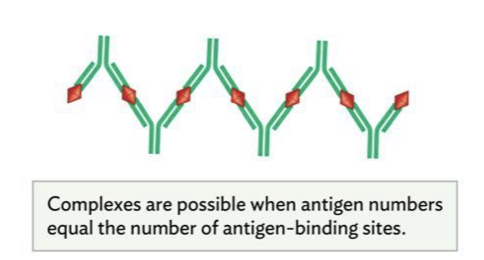
_________: makes a complex of antibodies and antigen and can be used to identify some pathogens, measures ____ _____ _____
immunoprecipitation, small soluble antigens
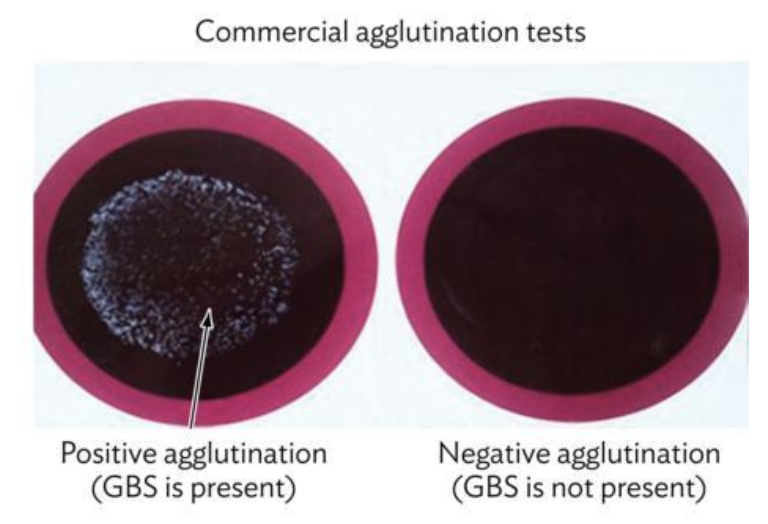
assays that measures ____ ____ insoluble antigens, can check for blood type using ___ specific to that thing
agglutination, whole cell, IgM
antigen to antibody interaction detected via enzyme
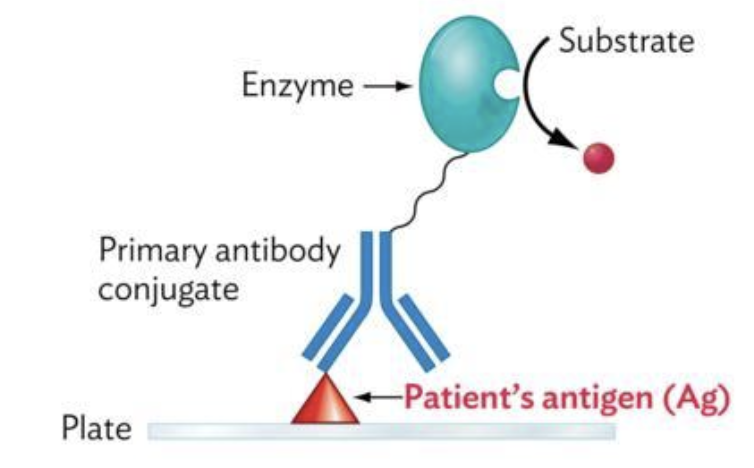
_____ _____ uses patient antigen to quantify specific antigens in a patient
direct ELIA
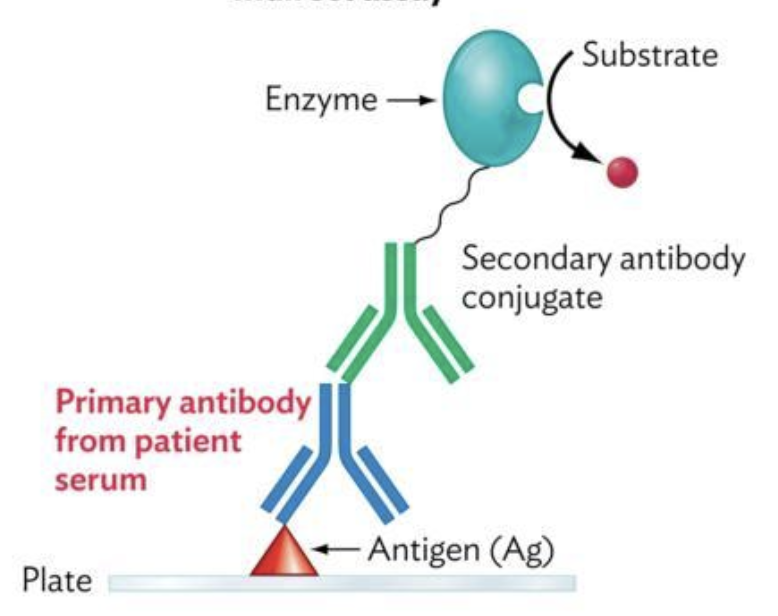
_____ _____ uses patient antibodies to detect antibodies in patient
indirect ELIA
______ immunofluorescence microscopy uses patient ______
direct, tissue
______ immunofluorescence microscopy uses patient ______
indirect, antibody
what encompasses type I hypersensitivity
can range from allergies to anaphylaxis
what are the two stages of type I hypersensitivity
sensitization (IgE bodies bind to mast cells [no symptoms]), degranulation (mast cells degranulate [burst open] releasing symptom causing chemicals)
the two _____ _____ chemicals released during degranulation (stage two of type I hypersensitivity) are
mast cell, histamine (vasodilation, hives) / prostaglandins (makes worse)
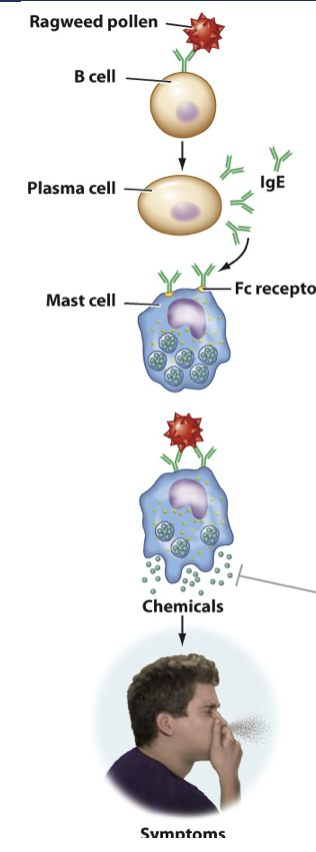
this image describes ____ _ _________
type I hypersensitivity
type __ ________ are ____ type incompatibilities due to ___ antibodies
II hypersensitivity, blood, IgG
in Type ___ hypersensitivities an immune _______ binds to the cell ___ which triggers compliment and ________ are called in causing inflammation
III complex wall neutrophils
Type _ hypersensitivity is the only… (stages)
T cell mediated hypersensitivity meaning it is delayed, there are two stages sensitization (antigen processing and presentation by dendritic cells) and secondary exposure
Type ___ hypersensitivity has two possible routes:
Helper T cells call in neutrophils/ macrophages by releasing cytokines which travel to the site of infection and damage the tissues or Cytotoxic T cells recognize allergen altered epithelial cells bc of MHC1 and kill the infected cells
primary immunodeficiencies
childhood (1-2000 babies)
secondary immunodeficiencies
acquired at any age from HIV or immunosuppressant drugs or radiation therapy
Severe combined immunodeficiencies (SCIDs) are _ ____ immunodeficiencies that:
T cell, mutations in any one of 12 genes, by 6 mo/old infants have infections
DiGeorge Syndrome is a _ ____ immunodeficiency that:
T cell, Poorly developed or absent thymus, hypoparathyroidism, facial deformities and heart disorders/ infections
MHC __ deficiency is a _ ____ immunodeficiency that:
II, T cell, helper T cells only recognize antigens presented by MHC II making them vulnerable to infections which happens because of mutations in the genes encoding MHC II regulators
X-linked agammaglobulinemia (_____ Disease) is a _ ____ immunodeficiency that:
Brutons, B cell, effects men where no B cells are made so no antibodies are made and reucrrent infections w/ encapsulated bacteria
Hyper ___ syndrome is a _ ____ immunodeficiency that:
IgM, B cell, CD40 ligand is mutated meaning B cells cant class switch making only IgM leading to recurrent pyogenic bacterial infections
Selective ___ deficiency is a _ ____ immunodeficiency where:
IgA, B cell, patients lack IgA leading to mucosal infections
process by which your body detects and eliminates cancer cells
Immune surveillance
solid mass in lymphoid organ
Lymphoma
malignant lymphoid cells found in circulation or bone marrow
Leukemia
malignant plasma cell growth at a single site
Plasmacytoma
malignant plasma cells at multiple sites, often bone
Multiple myeloma
How is Non-Hodgkin’s Lymphoma distinguished from Hodgkin’s Lymphoma?
It lacks Reed-Sternberg cells
How do B-cell neoplasms generally arise?
They arise when genes regulating cell proliferation or cell death are moved (translocated).
What is the genetic mechanism and viral association behind Burkitt’s Lymphoma?
The cell proliferation gene cMYC is moved next to an antibody gene the associated virus is Epstein-Barr virus (EBV).
What is the genetic mechanism of Follicular Lymphoma?
The BCL2 gene (which prevents apoptosis) is moved near immunoglobulin (IG) gene promoters.
What are the key defining features of Hodgkin’s Lymphoma?
Presence of Reed-Sternberg cells, moves to many lymph node groups, associated with Epstein-Barr virus (EBV).
any kind of Lymphoma is a…
B-cell neoplasm
ability to recognize self antigens and foreign antigens
Self tolerance
Systemic lupus erythematosus (SLE) is characterized by
butterfly rash on face, Type III hypersensitivity, Complexes deposit in tissues/organs triggering inflammation
Grave’s Disease
an autoimmune disease where autoantibodies bind to the thyroid-stimulating hormone receptor causing hyperthyroidism
Hashimoto’s Disease
Autoantibodies bind and damage the thyroid causing hypothyroidism
Type I Diabetes
Type IV hypersensitivity where T cells attack the islet cells of the pancreas
Rheumatoid Arthritis
antibodies form immune complexes with connective tissue in joints and cause inflammation