Lecture 4: Introduction to Equine Farriery and Shoeing
 Call Kai
 Learn
Learn Practice Test
 Spaced Repetition
 Match
Match Flashcards
 Knowt Play
1/54

There's no tags or description
Looks like no tags are added yet.
Name | Mastery | Learn | Test | Matching | Spaced | Call with Kai | Chat |
|---|
No analytics yet
Send a link to your students to track their progress
55 Terms
- outer layer of the hoof made of keratin
- grows about 6-9 mm per month (a year for a new hoof)
- main function is it's a weight bearing structure
What are some basics about the hoof wall?
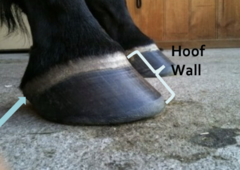
- periople
- the top protective layer for the coronary band
- extends distally about 2 cm
What is the blue arrow pointing at?
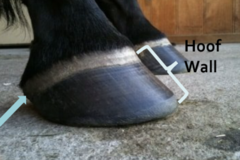
- coronary band
- junction of hair and keratinized tissue
What is this part of the equine hoof?
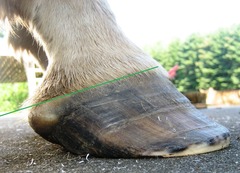
- area where the hoof "breaks over", which can change pressure points and conformation leading to injuries if not maintained
What is the clinical significance of the toe?
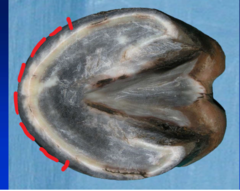
- common source of cracking with imbalanced trimming
What is the clinical significance of the quarter?
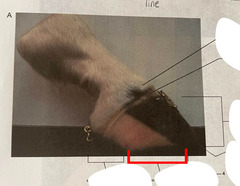
- shock absorption
- expands and contracts with weight bearing
What is the function of the heal?
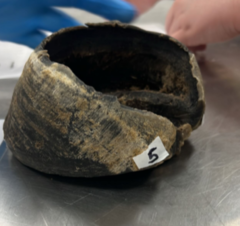
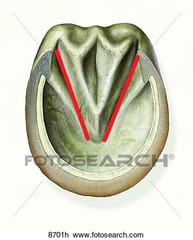
- bars
- keratinized and prevent the heal from spreading too much
What is this part of the equine hoof? What is its function?
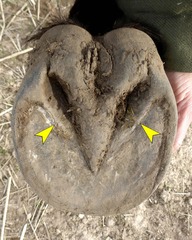
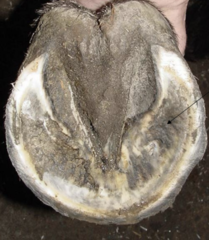
- while line
- if there is an area of separation it's a site for bacteria to enter and cause infection (white line disease)
What is this part of the equine hoof? What is its clinical significance?
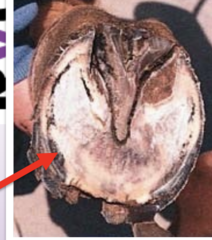
- central sulcus
What is this part of the equine hoof?
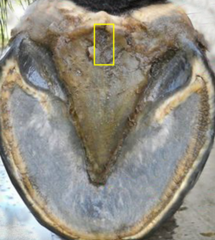
- frog
What is this part of the equine hoof?
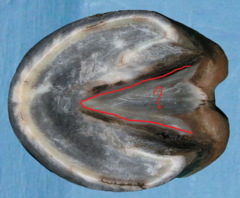
- collateral sulci
What is this part of the equine hoof?
- sole
What is this part of the equine hoof?
- collateral cartilages
- structural support for the heel bulbs
- act as shock absorbers
What is this part of the equine hoof? What is its function?
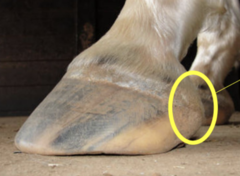
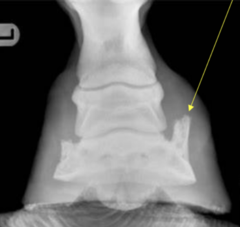
- collateral cartilages that are ossified
What is this part of the equine hoof? Is this abnormal?
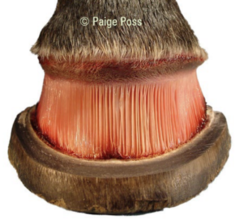
- insensitive and sensitive
- suspend P3 (coffin bone) in the hoof capsule
What types of lamina are there and what is its function?
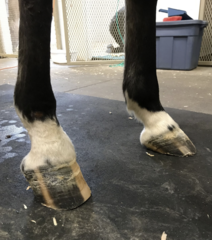
- mediolateral imbalance, when one side is longer than the other
What is wrong with this horse
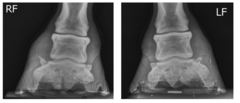
- 6 weeks +/- 2 weeks
What is the typical interval between hoof trimmings?
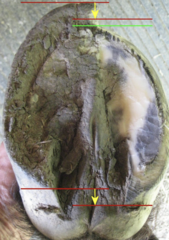
- hoof wear, quality and shape of hoof
- difference between feet
- lateral imbalance
- toe wear
- flare vs upright side
When trimming the equine hoof what do we assess for?
- normal
How would you describe this hoof?
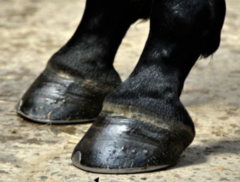
- underrun heels
- long toe and low heal
How would you describe this hoof?
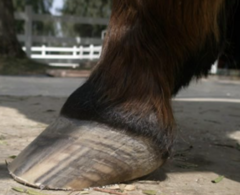
- underrun heels
- long toe and low heal
How would you describe the hoof closer to the camera?
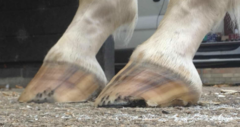
- toe dragging
- can indicate lameness in that limb, but not always the cause
These hoofs have an abnormal toe. What could this be from and indicate?
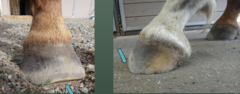
- Flairs
- the side that flairs will bear more weight
How would you describe this hoof? What does this mean for the hoof?
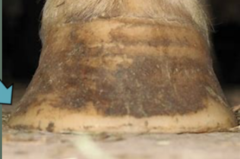
- contracted heels
- often an indication of another problem --> often navicular disease
How would you describe this hoof? What does it indicate?
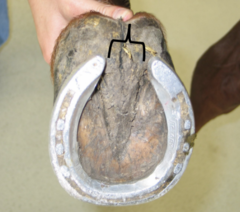
- contracted heels
How would you describe this hoof?
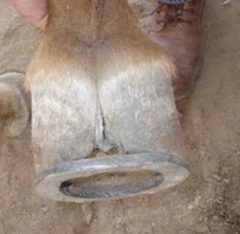
false
- this is normal, you just need to make sure both feet are balanced
True or false
this horse has rear hooves that are different shaped. This is a problem and is something that needs to be corrected.
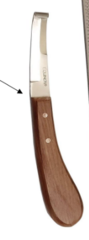
- hoof knife
- clean the frog and remove sole (done first)
What is this farrier tool? What is its purpose?
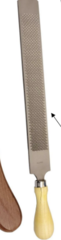
- rasp
- remove flares, level weight bearing surface and shape hoof (done 3rd)
What is this farrier tool? What is its purpose?
- clinch cutters
What is this farrier tool? What is its purpose?
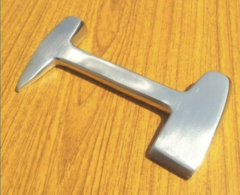
- crease nail pullers
What is this farrier tool? What is its purpose?
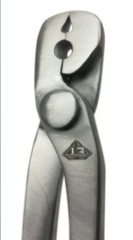
- farrier hammer
What is this farrier tool? What is its purpose?
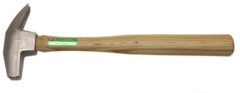
- hoof stand
What is this farrier tool? What is its purpose?
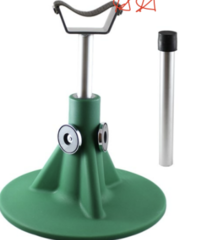
- clincher
What is this farrier tool? What is its purpose?
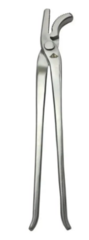
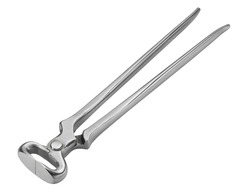
- nippers --> flat top and smooth end
- remove length from the hoof wall (done 2nd)
What is this farrier tool? What is its purpose?
- shoe pullers --> rounded top and ball on end
What is this farrier tool? What is its purpose?
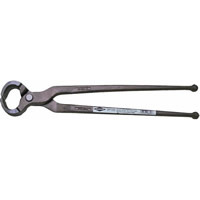
- with hoof knife clean the frog and remove sole
- with nippers remove length from the hoof wall
- with rasp remove flares, level weight bearing surface and shape hoof
- check balance
What are the steps of hoof trimming?
- no
Is this horse well trimmed?
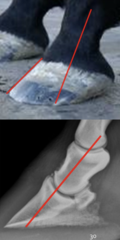
- yes
Is this horse well trimmed?
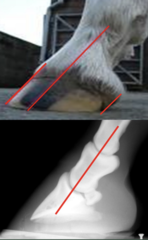
- the principles
- should be able to pull the shoe, but not really to put them on
What does a vet need to know about shoeing a horse?
- the horses job
- horses natural conformation
- needs to support and align the boney column --> POOR SHOEING = LAME HORSE
What does the fit of the shoe depend on?
true
True or false
you can't fix conformation with shoeing
- foot not balanced
- nail clinches raised
- shoe loose or twisted
- shoe and/or nail heads warn
- hoof wall grown over shoe
What are the signs a horse needs to be re-shod, from early to late signs?
- most common
- durable
- heavy (horse lifts knee more)
- can make from scratch
How is steel as shoeing material?
- less durable
- lighter (horse lifts knee less - flat knees)
- must be fabricated in factory
- can't be hot shod
How is aluminum as shoeing material, compared to steel?
1. remove shoe
2. trim hoof
3. shape shoe
4. nail shoe on
5. set nails
6. cut clinches
7. crimp clinches
8. finish clinches
9. finish hoof
What are the steps to shoeing?
- when the shoe is shaped without heat before nailing on the hoof
What is cold shoeing?
- farrier does not need forge
- requires less skill (????)
- cheaper?
What are the advantages to cold shoeing?
- shoe will not perfectly fit against hoof
- harder for farrier to perfectly shape shoe
What are the disadvantages to cold shoeing?
- where the shoe momentarily is applied to the horse's hoof to shape the shoe
What is hot shoeing?
- best fit of shoe to foot
- heat allows farrier to shape shoe better
- custom shoeing possible
What are the advantages to hot shoeing?
- farrier must carry forge
- most expensive ?
- can injure sensitive tissues if shoe is held too long
- takes longer
What are the disadvantages to hot shoeing?
- support at heel
- promotes break over (the point in a stride when the hoof rolls over the toe and lifts off the ground)
- bony column aligned with dorsal hoof wall
What are the outcomes of a good quality shoeing job?
- can cause damage to hoof wall --> unhappy owner
- can be painful in horses with painful hooves (laminitis)
What are things to consider when removing a shoe?
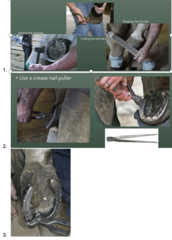
1. raise, cut, or rasp off clinches
2. pull out nails with a crease nail puller if painful feet
3. pull shoe off starting from heel and work to toe, have leverage toward center and toe of foot
What are the steps for removing a shoe?
- start at the heel and push handles quickly and forcefully
- alternate sides and move toe toward the toe until the shoe is loose
How do you pull the shoe?