Development of the Dental Organ
 Call Kai
 Learn
Learn Practice Test
 Spaced Repetition
 Match
Match Flashcards
 Knowt Play
1/77

Earn XP
Description and Tags
Friday lecture 8/21
Name | Mastery | Learn | Test | Matching | Spaced | Call with Kai | Chat |
|---|
No analytics yet
Send a link to your students to track their progress
78 Terms
As early as the __________ of fetal life, the development of the deciduous teeth may first become evident.
second month
An epithelial thickening that occurs in the region where teeth will form is called the ___________.
Dental Lamina
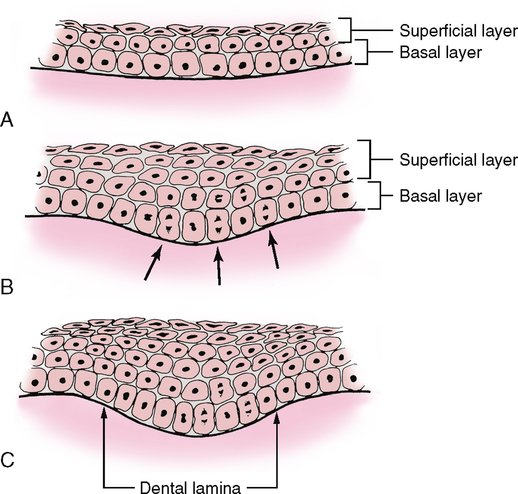
When does the dental laminate start to develop?
Occurs at about six weeks of prenatal life
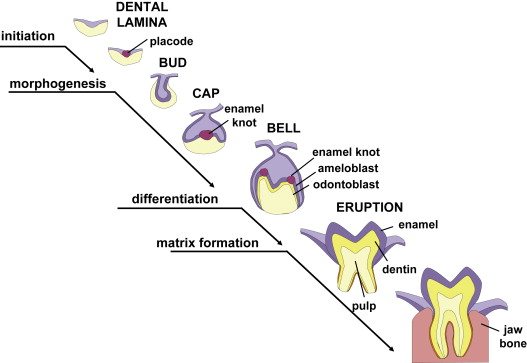
The dental laminate differentiates into the ______ and ______.
ectoderm and mesenchyme
Shortly after the dental lamina differentiates, ______ tooth buds begin to appear on dental lamina.
twenty
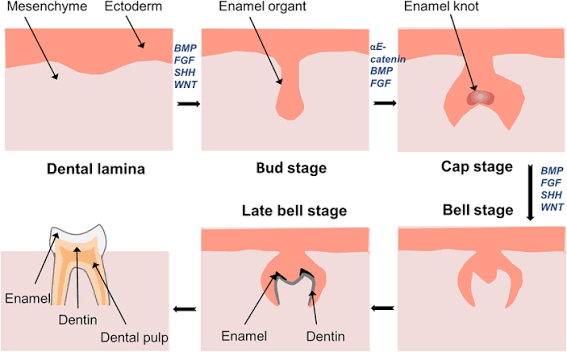
Tooth buds begin to appear on dental lamina in the approximate location of the twenty _______ teeth.
primary teeth
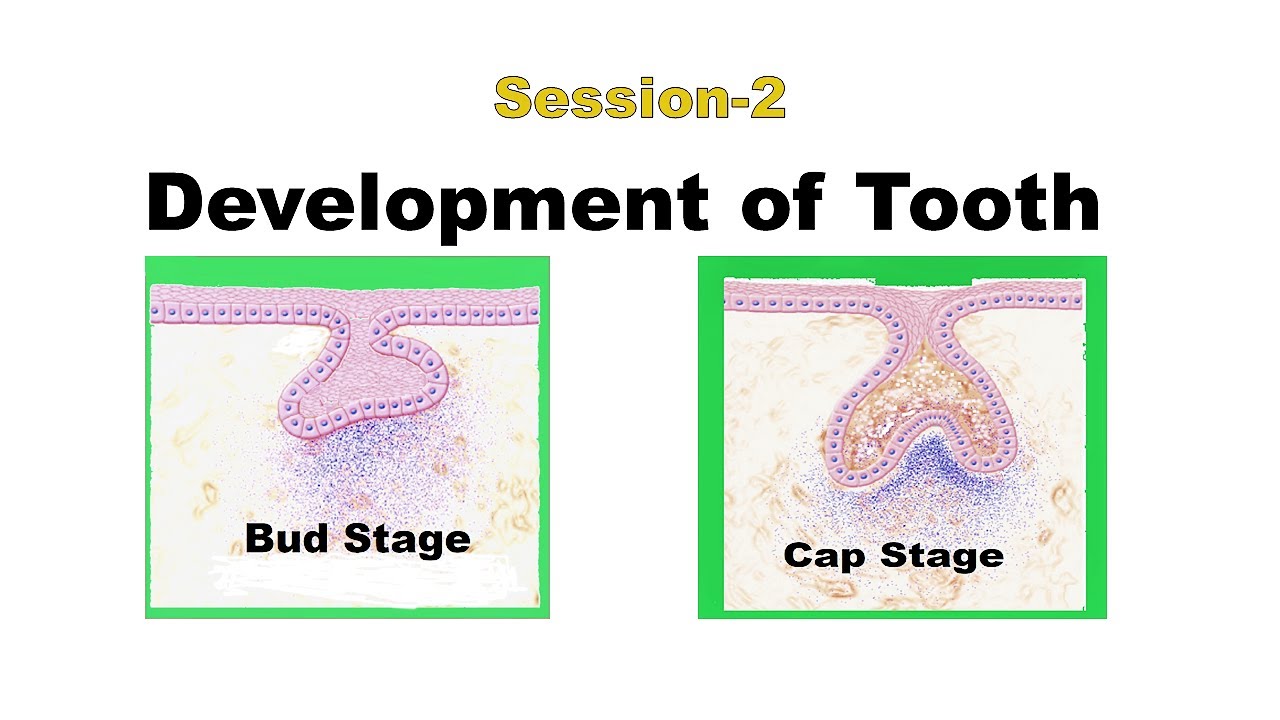
In the BUD STAGE, the individual tooth buds are somewhat ___[shape]___
round, or ovoid
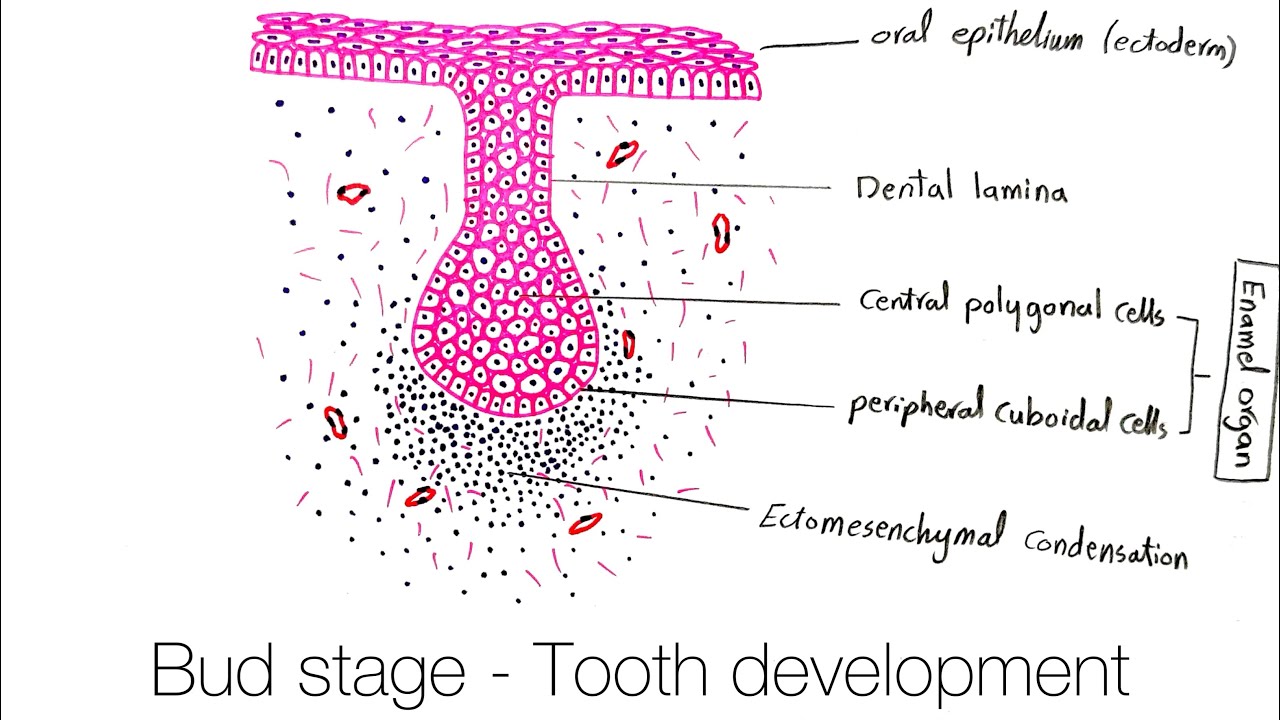
As further development takes place, the round form of the bud is altered in the _____ stage
cap stage;
it invaginates
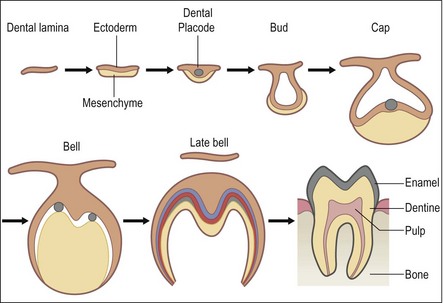
In the cap stage, the _______ portion invaginates, and the structure looks like a cap.
basal portion
What layer of dental laminate forms the bud, cap, and bell?
ectoderm (top layer)
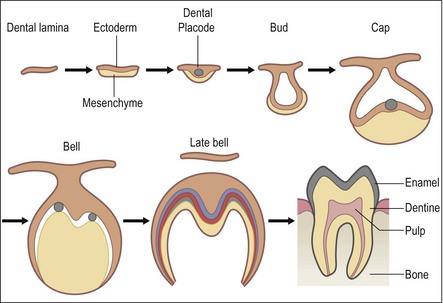
In the bell stage, the ___________ of the cap continues to deepen.
concavity on the basal area
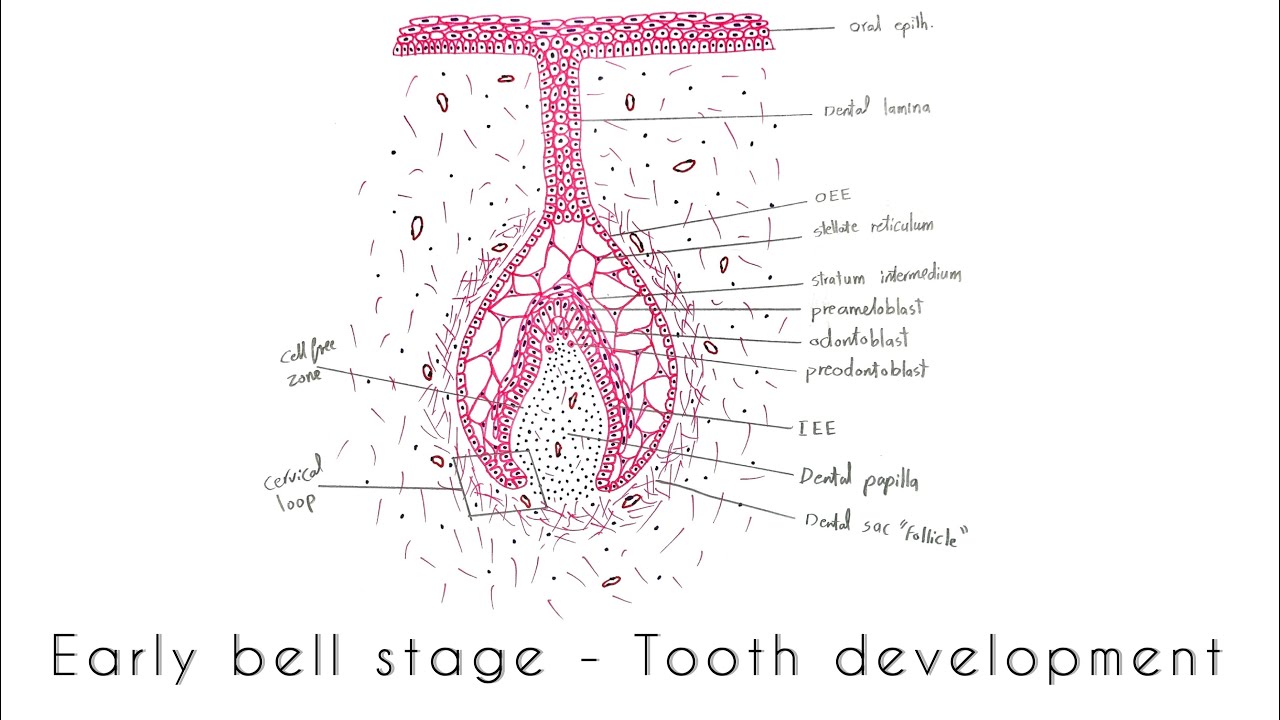
As the bell stage nears completion, the _____________ can be recognized.
form of the tooth’s crown;
as well as the dentinoenamel junction
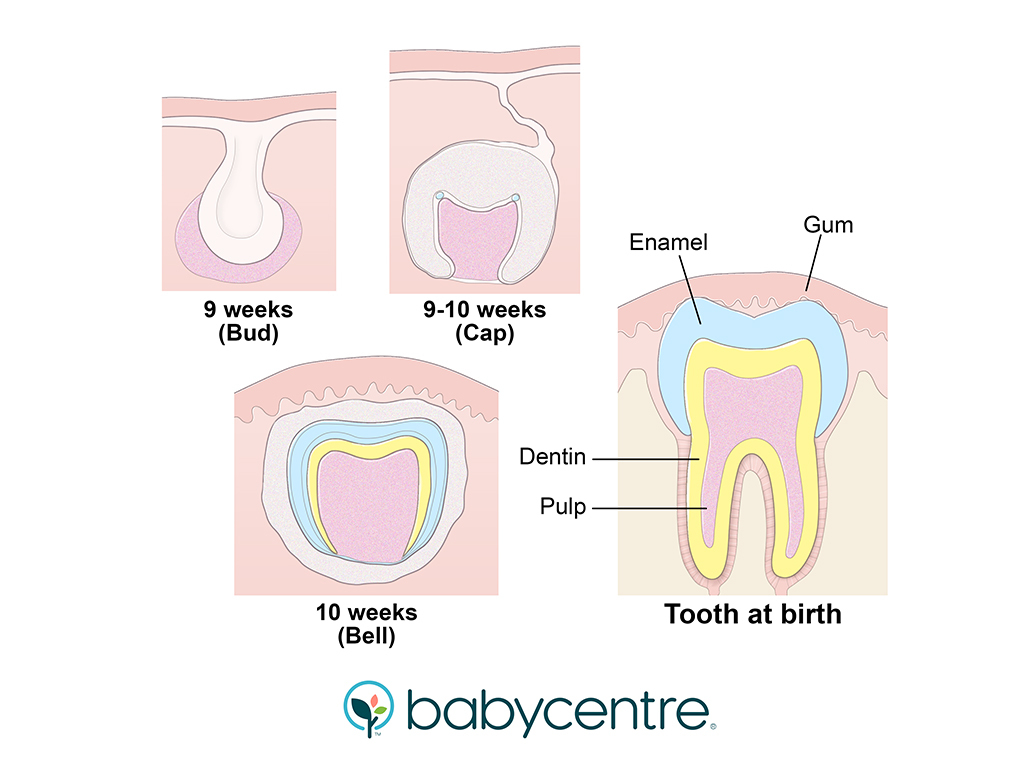
As the bell stage nears completion, the form of the tooth’s crown can be recognized, and the ___________ is identifiable.
dentinoenamel junction
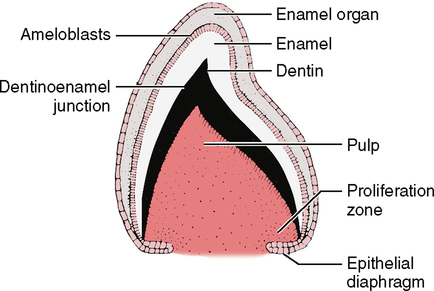
During the bell stage, most of the crown’s _______ & ______ is laid down
dentin & enamel
During the latter portion of the bell stage (late bell), the dental laminate connection with the ___________ begins to break down, and eventually disintegrates.
deciduous tooth
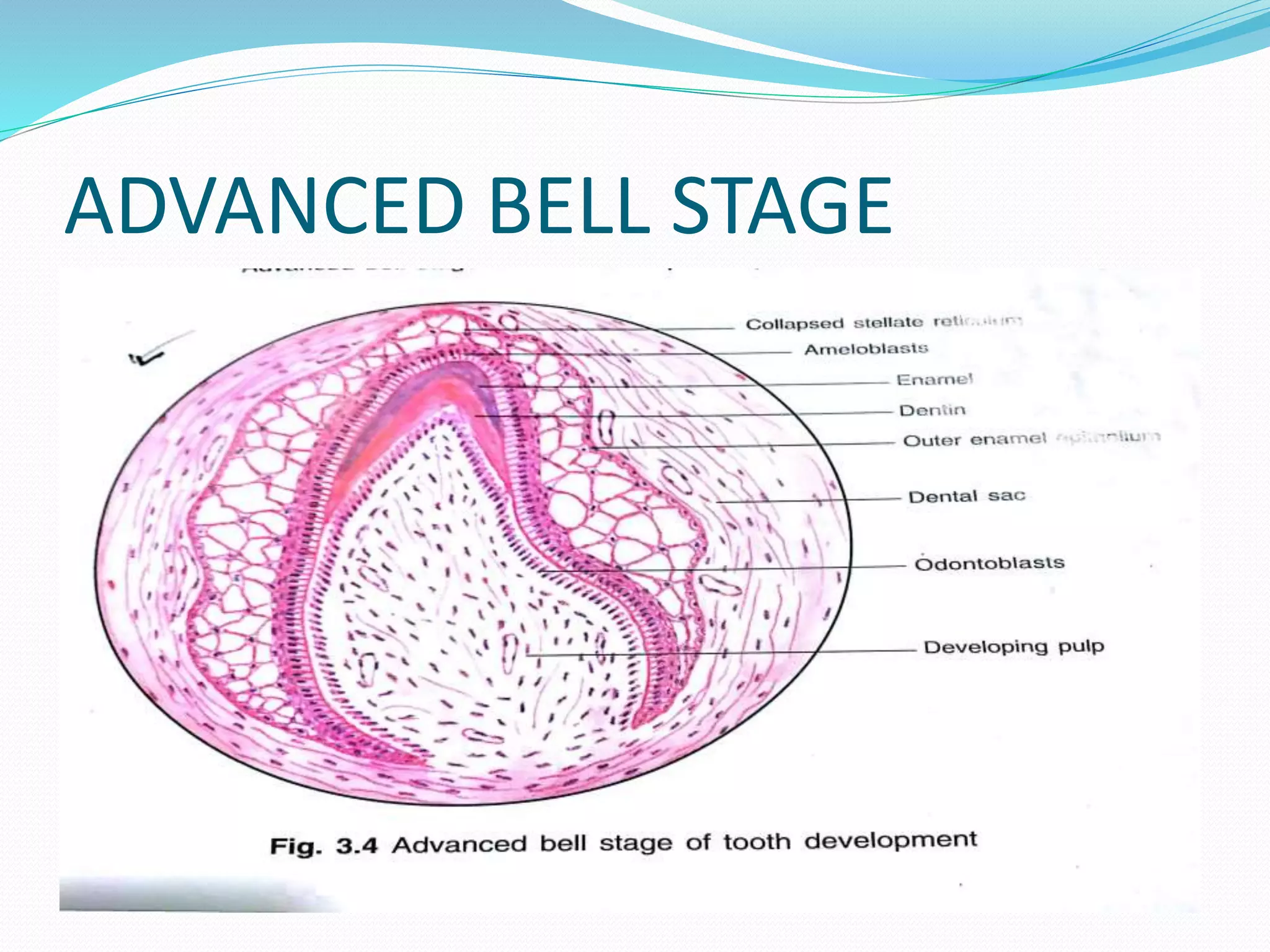
In bell state, as dental lamina disappears, the _________________ is forming from it.
bud of the succedaneous tooth
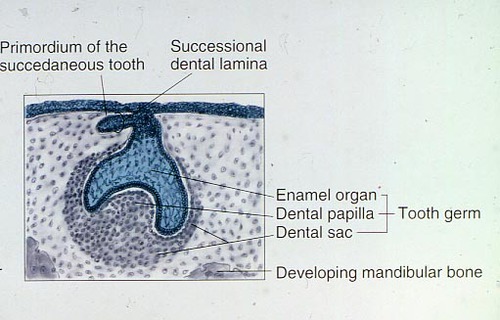
In what stage does the DEJ become visible?
Bell stage
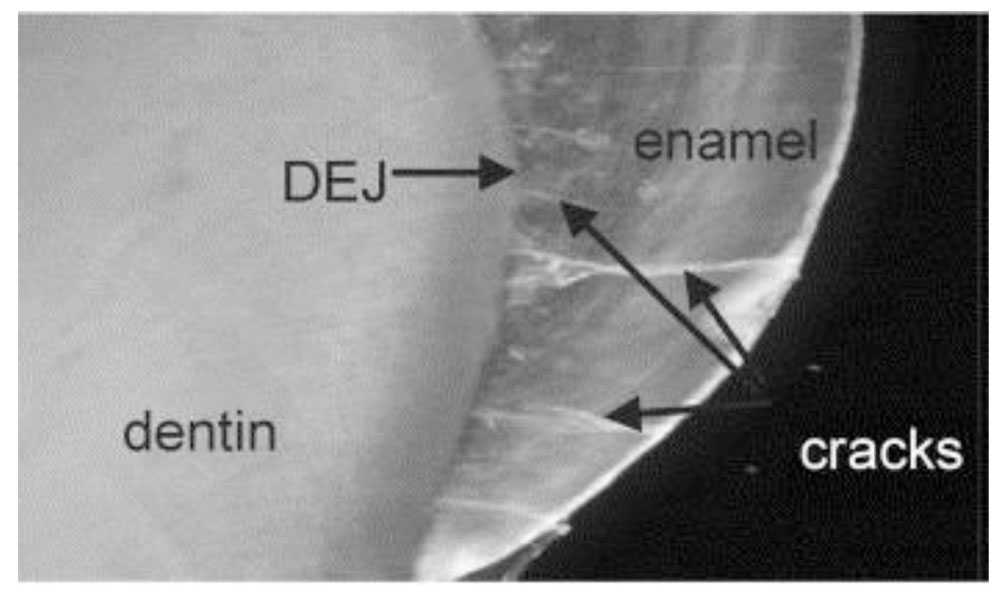
When is the bell stage regarded as ending?
when enamel and dentin deposition have formed the area of the cementoenamel junction
What stage occurs after the enamel and dentin deposition form the CEJ?
Root development
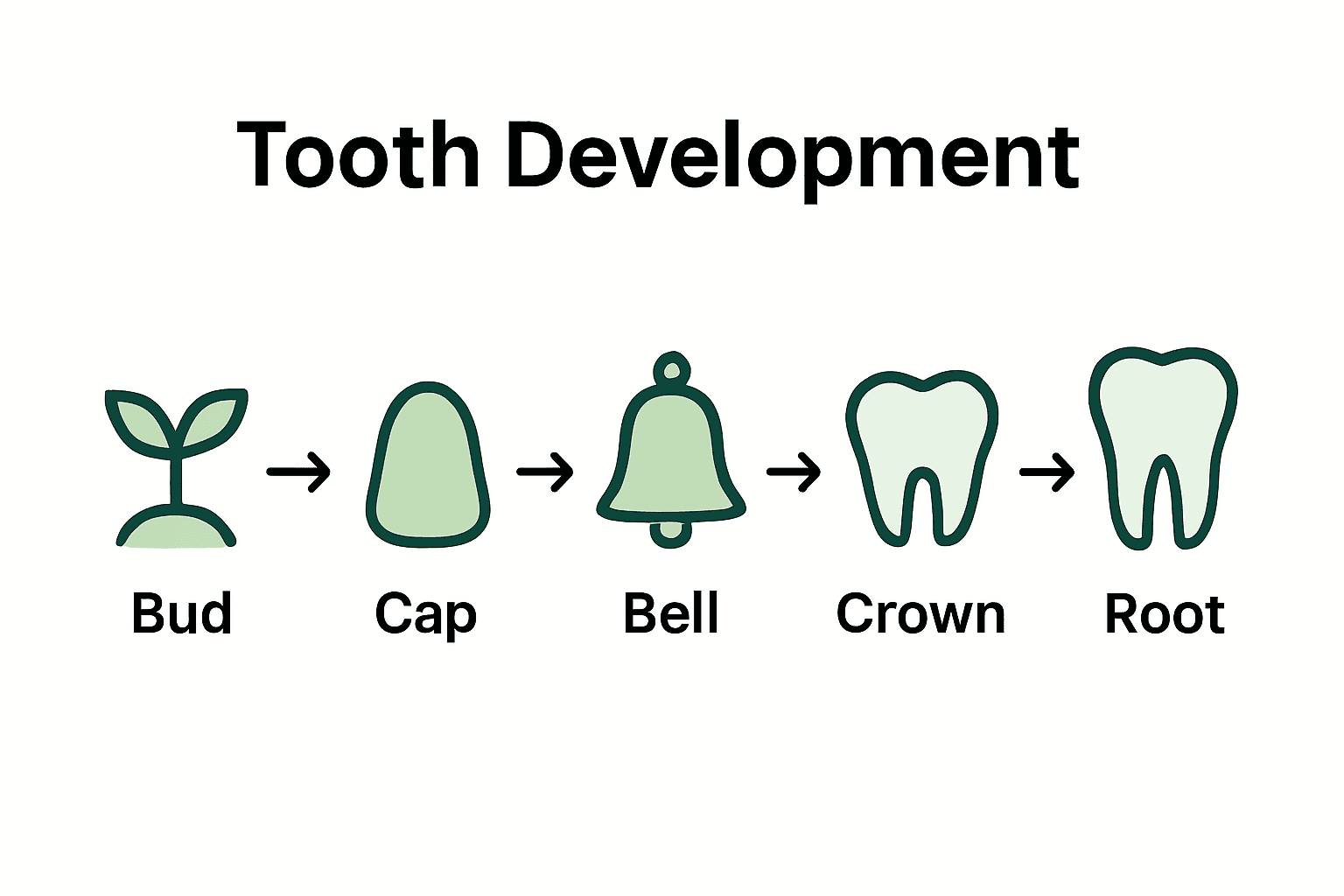
In root development, the enamel organ then proliferates a structure known as ___________, from which the root structure is formed.
Hertwig’s Sheath (Epithelial tooth sheath)
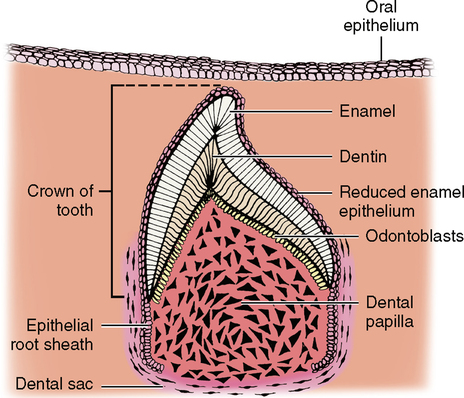
In root development, what is deposited?
the dentin and the cementum of the root
What is enamel knot?
a reservoir of signaling pathway-related genes and signaling molecules
What does the enamel knot allow?
allows tooth morphogenesis to progress toward the bell stage and regulate the tooth’s shape
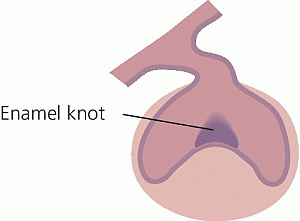
The enamel knot allows tooth to progress toward the _____ stage.
bell
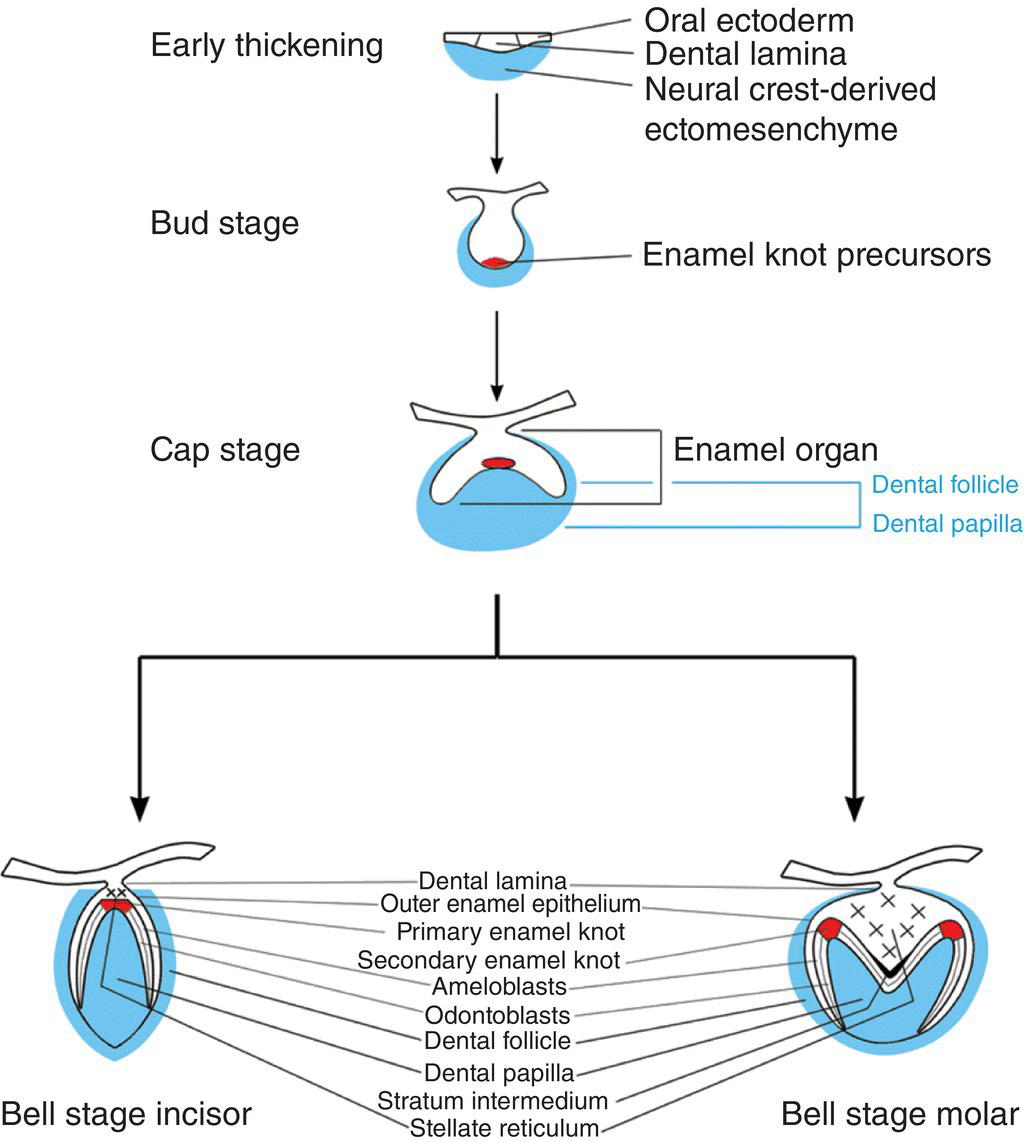
Where is the enamel knot located?
in the center of the bud and cap stage tooth germs
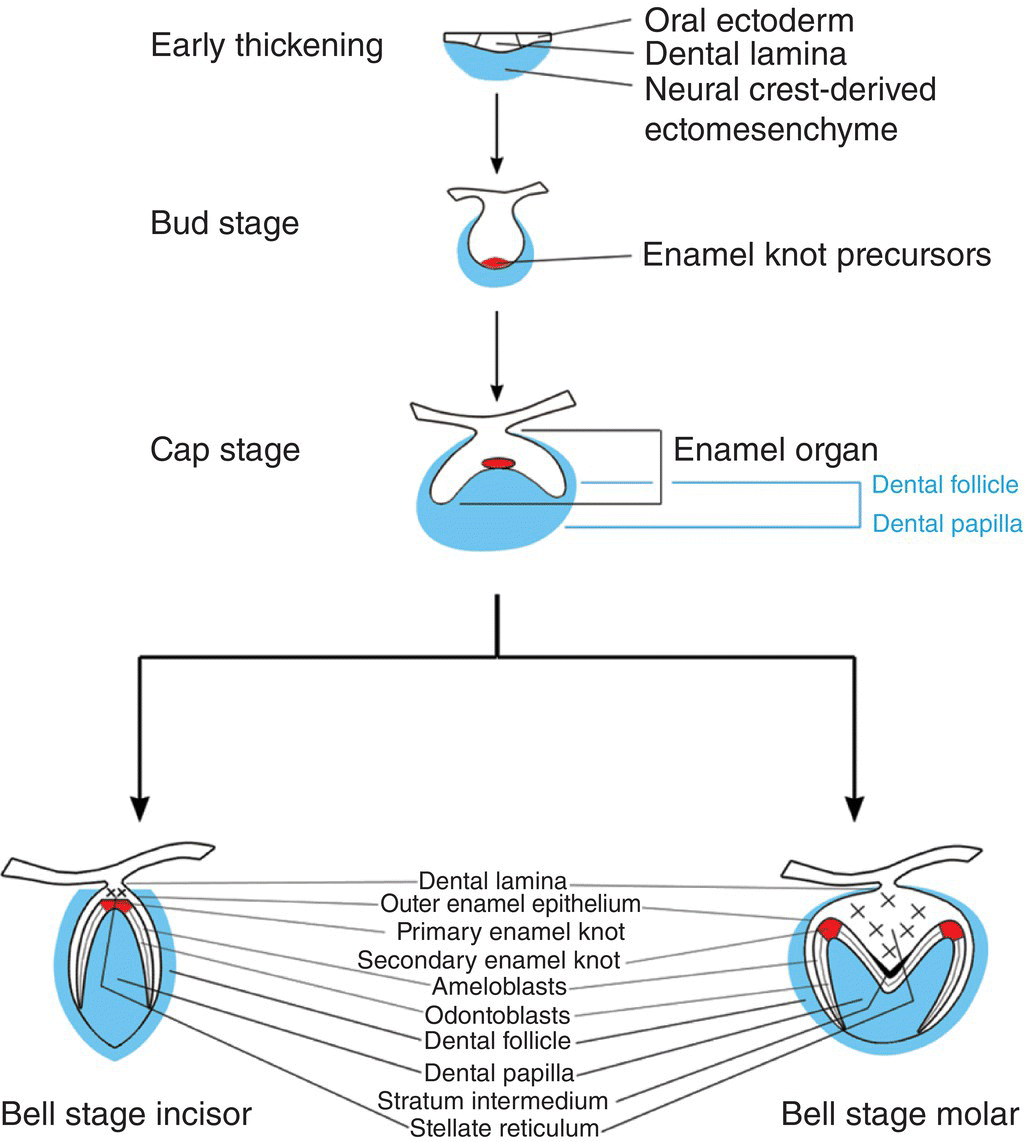
A transitory cluster of non-dividing epithelial cells, which acts as as signaling center that provides positional information (like shape of tooth and where cusps will develop) for tooth morphogenesis and regulates the growth of tooth cusps by inducing secondary EKs
Enamel Knot
How does the enamel knot regulate the growth of tooth cusps?
by inducing secondary EKs
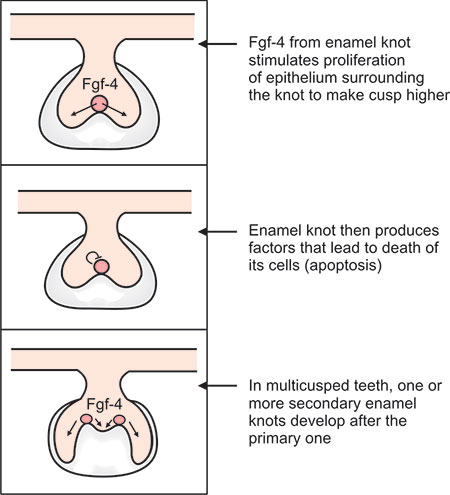
The primary enamel knot (PEK) forms in both _______ & ______ tooth germs at the cap stage of tooth development.
incisors and molar
Secondary and tertiary enamel knots only develop in ______ tooth germs.
molar
Secondary and tertiary enamel knots sit at the sites of _____________ from the early bell stage of tooth development.
future cusp tips
When does tooth eruption normally occur?
prior to the complete calcification of its root
(tooth usually erupts before root is finished)
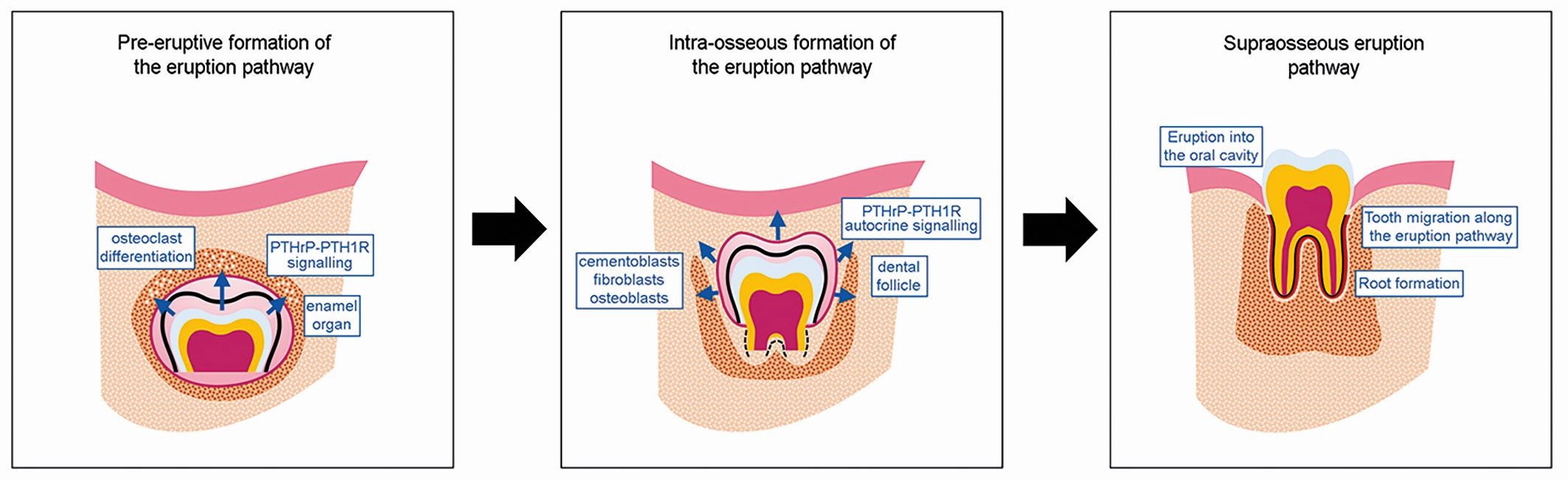
The tooth normally originates eruption by pushing through the ___________ of the __________ and into the _________.
The tooth normally originates eruption by pushing through the mucous membrane cover of the alveolar process, and into the oral cavity.
When is the eruption process considered complete?
when the tooth contacts its opponent(s) in the opposite jaw member
Two types of tooth eruption:
-active eruption
-passive eruption
_________ is the tooth’s entry pushing through mucous membrane cover of alveolar process into oral cavity, to its contact with an antagonist in the opposing arch
Active eruption
________ is the continuing process of adaptation of the tooth to changing incisal and occlusal relationships, after active eruption has ended
Passive eruption
When does passive eruption occur?
after active eruption has ended
What does passive eruption alter?
incisal and occlusal relationships
Passive eruption continues throughout the life of the tooth, and is the adjustment to __________ and changing locations of _______________.
attritional wear and changing locations of adjacent and opposing teeth
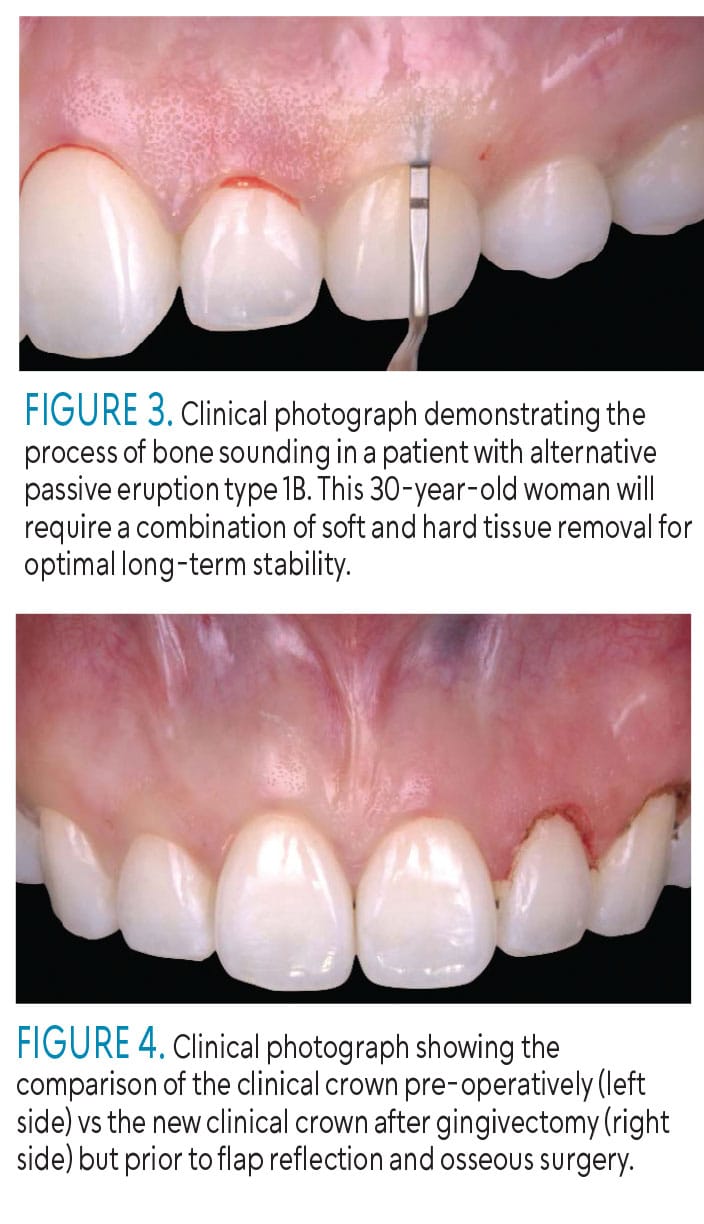
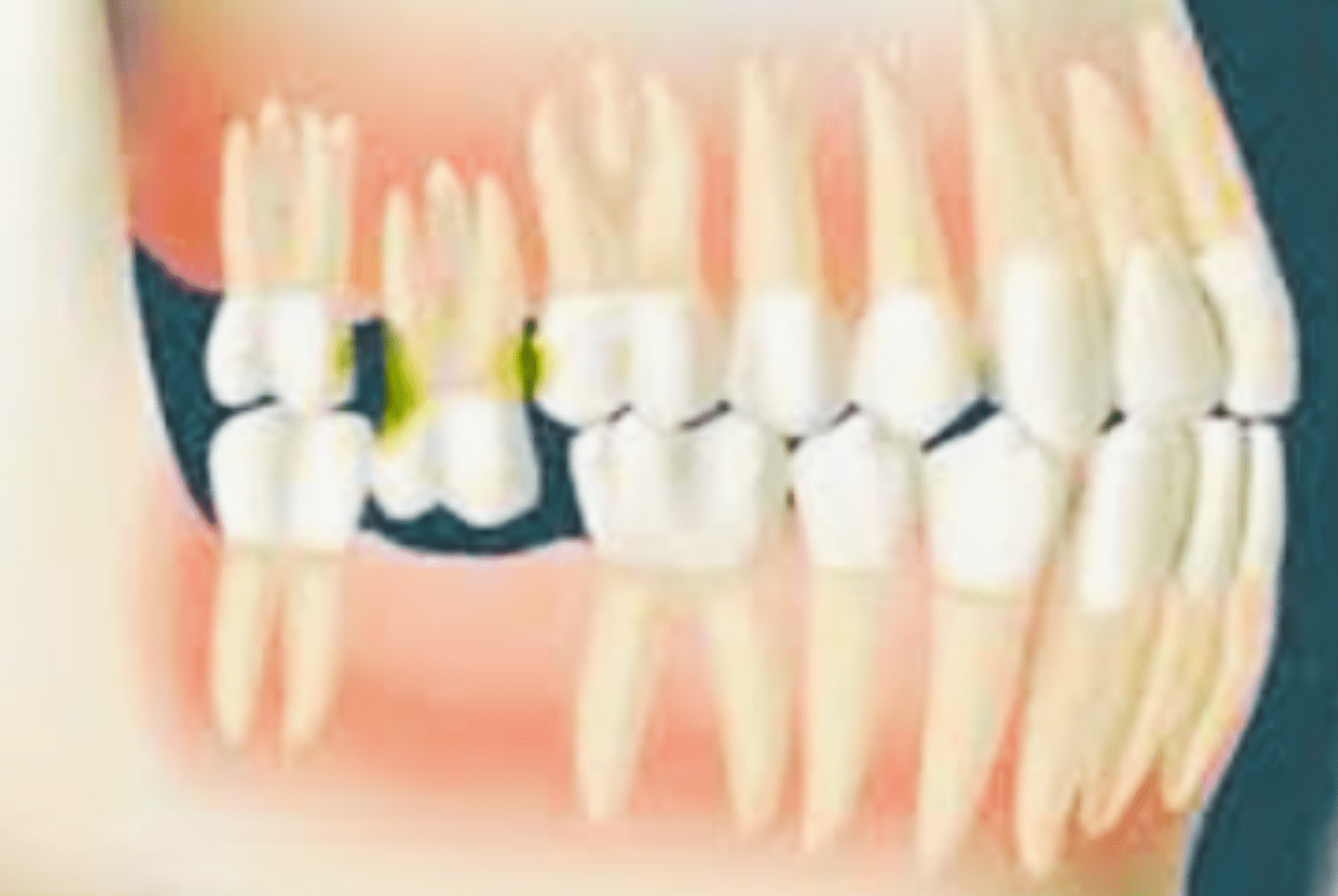
What is supraeruption?
When a tooth erupts past the normal occlusal plane, usually due to the loss of its antagonist tooth or teeth from the opposing arch
Forms when the tooth erupts and is soon abraded away over most of its extent
Nasmyth’s membrane
A keratinous, membrane-like enamel cuticle that envelopes the anatomical crown
Nasmyth’s membrane
The root apex is ______ shaped shortly after eruption
funnel
Root formation is not complete until additional dental deposition reduces the funnel shaped opening to a _________
constricted foramen
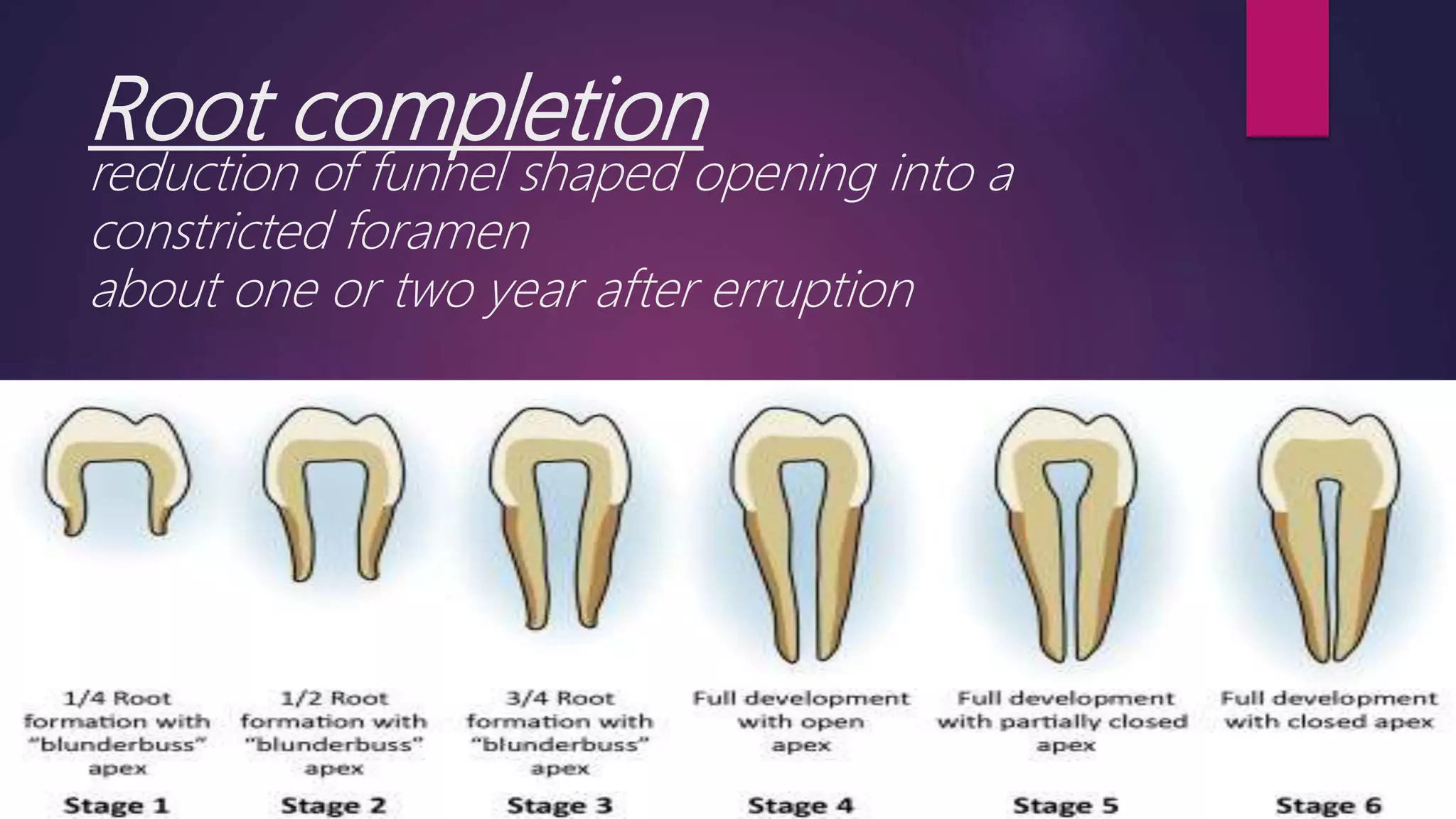
At age __, root formation has ended for all deciduous teeth.
3
How long is the time lag between eruption and root completion for the deciduous teeth?
about one year
While the child is in deciduous dentition stage, the permanent teeth are …….
beginning and continuing their growth process
Remember that the time when the tooth bud first differentiates from the dental lamina is always prior to the _________.
initiation of calcification
Normally the succedaneous tooth buds exhibit a consistent relationship to the
roots of the deciduous teeth they are to replace
The permanent incisors and canine buds are found in a position just ____ to the roots of their deciduous predecessors
lingual
The ______ buds are located in the root furcation of the deciduous molars
premolar
The ______ are not succedaneous teeth, and their buds develop from the dental lamina in the alveolar process distal to the deciduous dentition
permanent molars
In late deciduous stage, by approx. 5 years of age, growth of _______ has created more space for the permanent teeth which are soon to erupt.
mandible and maxillaT
The extra space from growth of mandible and maxilla often results in the creation of ________, or spaces between adjacent teeth
diastemas
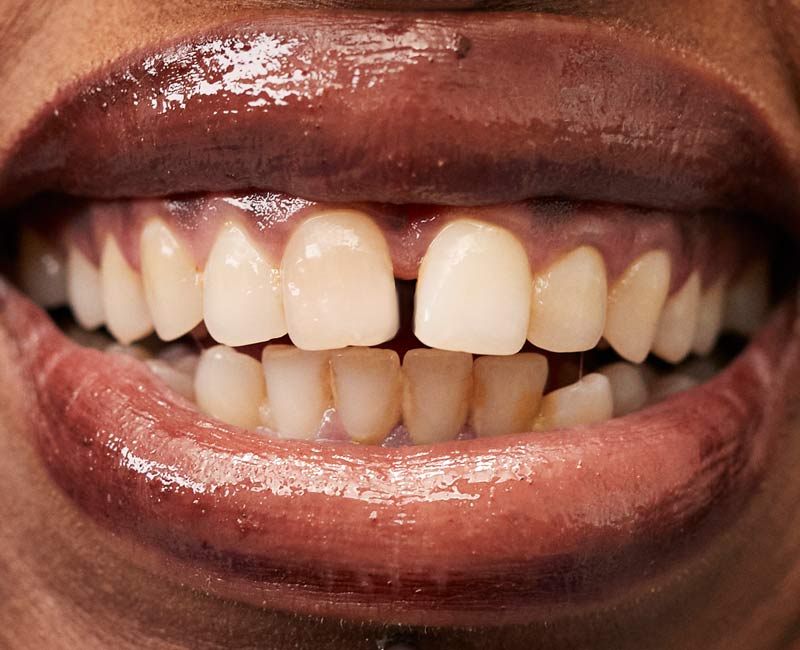
Where do diastemas usually form during mouth growth?
in the anterior segments of the arches
Another suggested cause for the diastemas at the late deciduous stage is …..
the pressure exerted from the lingual by the developing permanent anterior teeth
The greater space in the arches also allows room for the entry of the _________
first molars distal to the deciduous dentition
What is normally the first permanent tooth to emerge?
the mandibular first molar
When does the mandibular first molar emerge?
at about age 6
(first permanent molar)
The eruption of the _______ at about age 6, ends deciduous dentition stage, and initiated the mixed dentiton stage
mandibular first molar
The _________ follow shortly thereafter the eruption of the mandibular first molar
maxillary first molars
The ______ are considered to be the cornerstones in the development of occlusion of the permanent dentition
FIRST 4 molars
Shortly after the permanent first molars appear, the _____________ are scheduled to erupt.
permanent mandibular central incisors
Before permanent mandibular central incisors are scheduled to erupt, the deciduous predecessors must be ________
shed, or exfoliated
Generally, resorption begins at the ______ and moves toward the ______.
apex and moves toward the cervical line
The REASON for the initiation and progression of resorption is ascribed to the pressure from the _____________ against the ____________.
permanent tooth crown against the deciduous root
The actual process of resorption is due to ________
osteoclastic activity
The resorption phase normally begins at least ______ prior to exfoliation
a year
The period between the completion of the root for the second deciduous molars (~3 years), and the initiation of resoprtion for some deciduous incisors (before age 5) is ____________.
less than 2 years
Exfoliation usually occurs …
symmetrically, with the same teeth of right and left sides lost at about the same time
Mandibular teeth generally _____ the same maxillary teeth in exfoliation, with the exception of the second molars, where all 4 are usually lost simultaneously.
precede
The same series of events occurs for all the deciduous teeth over a range of approx. _____ years, when the mixed dentition period ends with the exfoliation of deciduous second molars at about age ____.
6 years; age 12
Occasionally, root resorption is only _______, and the deciduous tooth does not exfoliate.
partial
With incomplete resorption, the permanent tooth must _____________________________. If this aberrant feature is present, the practitioner must diagnose and treat/extract the offending deciduous tooth.
erupt in an abnormal position, or be entirely blocked from entry
When the root surface of deciduous tooth becomes “fused” to the surrounding alveolar bone
ankylosis
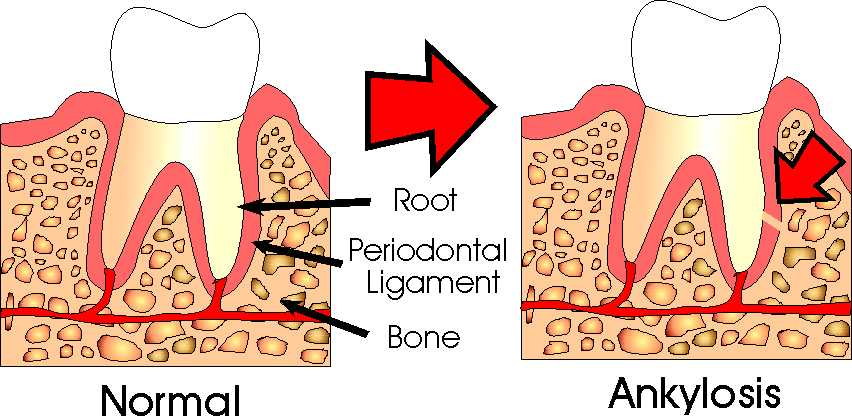
When ankylosis occurs, any further eruption _____, and the tooth becomes “fixed” in position, and resorption cannot progress naturally.
ceases
The condition ankylosis (tooth fusing to bone), occurs most often with the ______
deciduous molars
The presence of an ankylosed tooth precludes the proper eruption of the succedaneous tooth, and so the ankylosed tooth must be ___________
surgically removed as soon as it is diagnosed