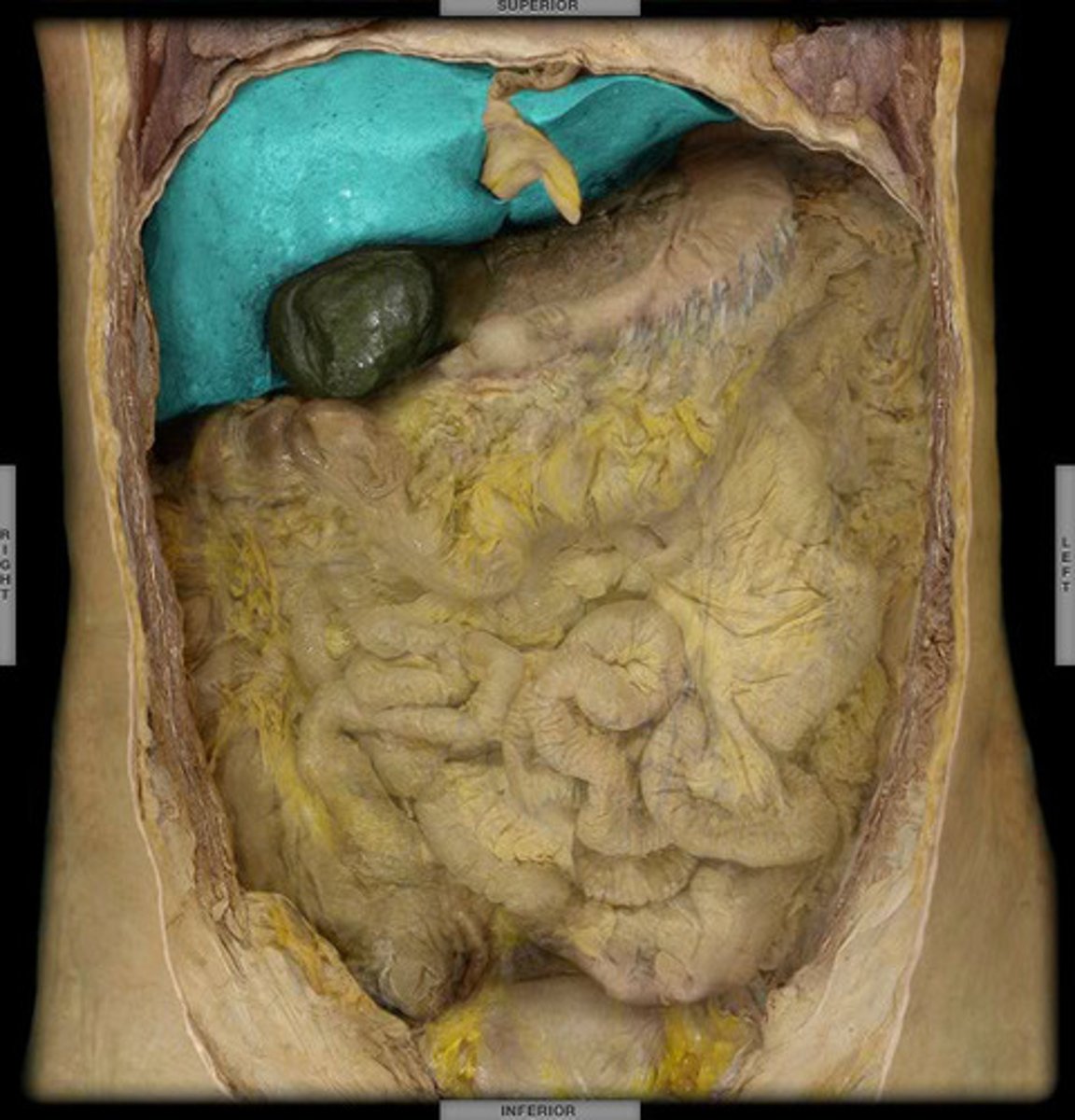
Cadaver Images
 Call Kai
 Learn
Learn Practice Test
 Spaced Repetition
 Match
Match Flashcards
 Knowt Play
1/101

There's no tags or description
Looks like no tags are added yet.
Name | Mastery | Learn | Test | Matching | Spaced | Call with Kai | Chat |
|---|
No analytics yet
Send a link to your students to track their progress
102 Terms
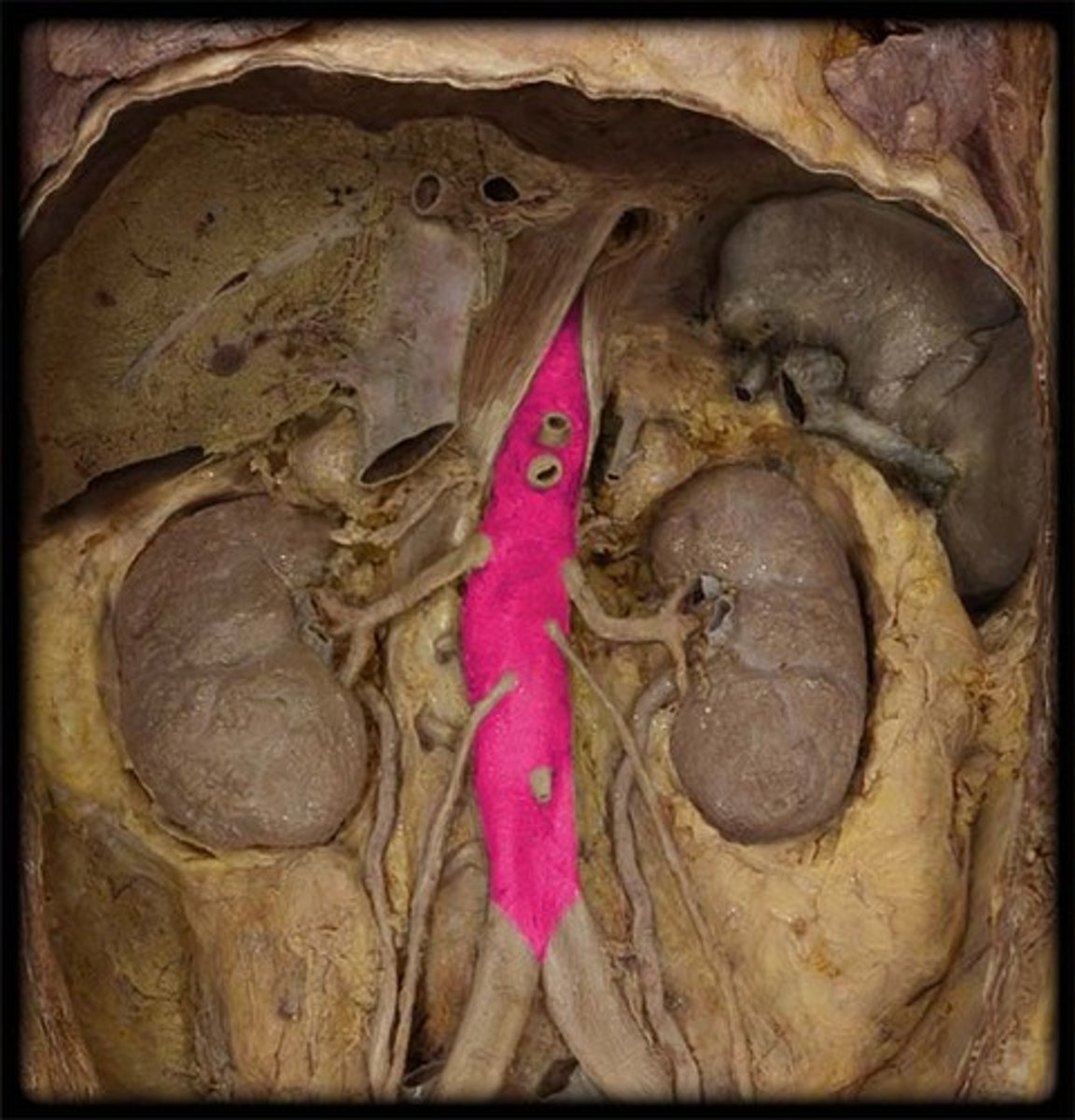
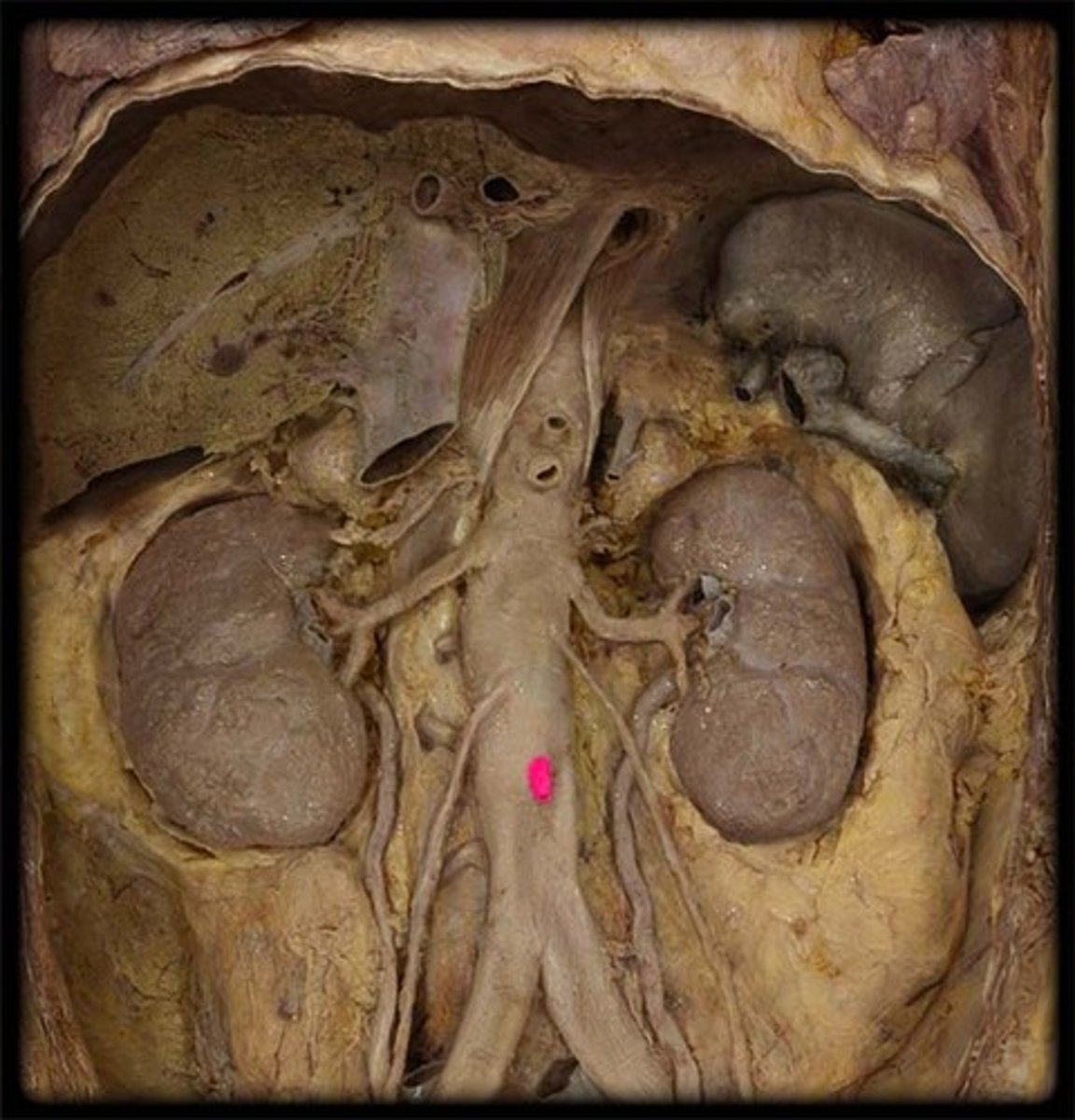
Abdominal Aorta
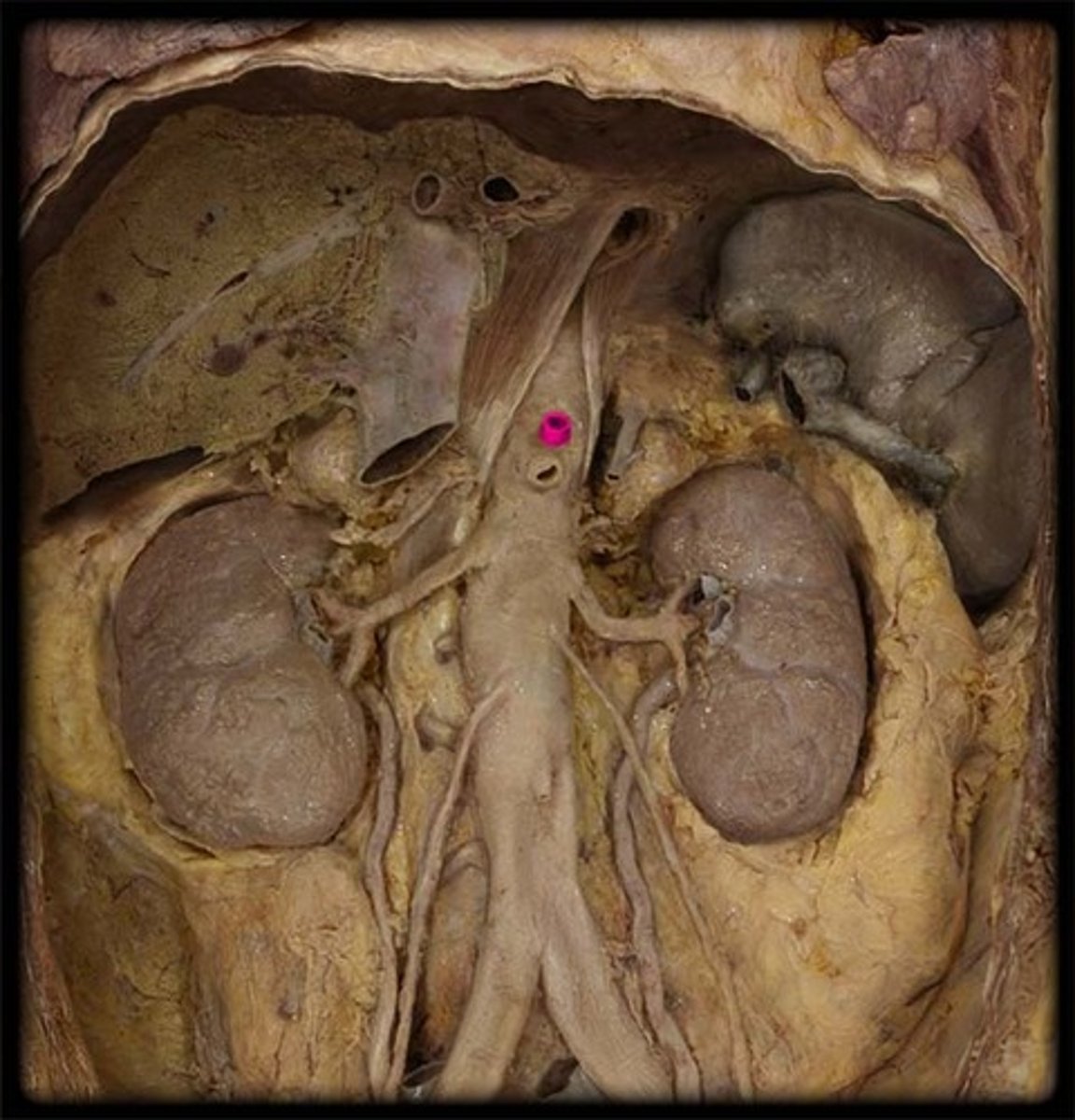
Celiac Trunk
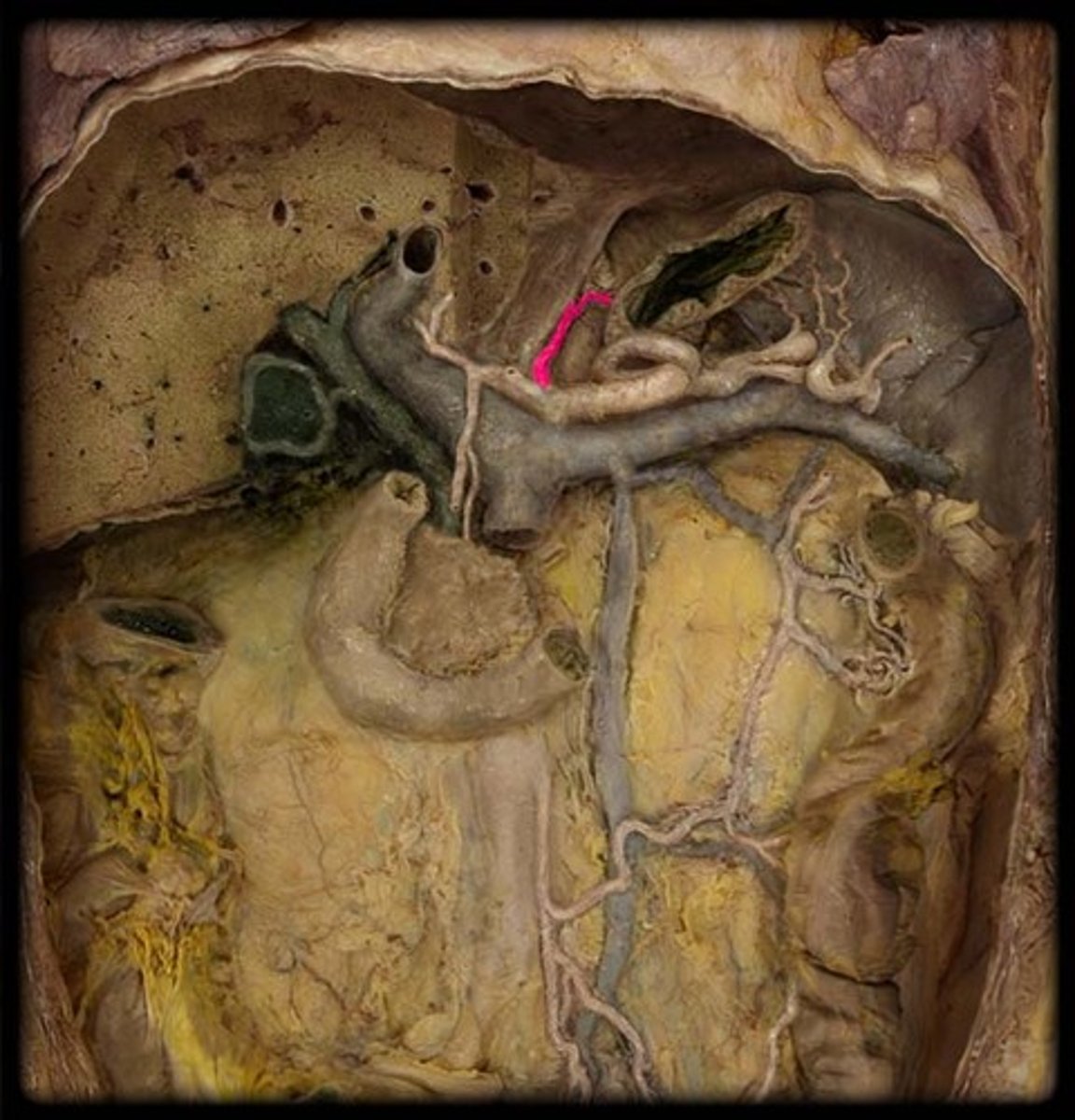
Left Gastric Artery
Splenic Artery
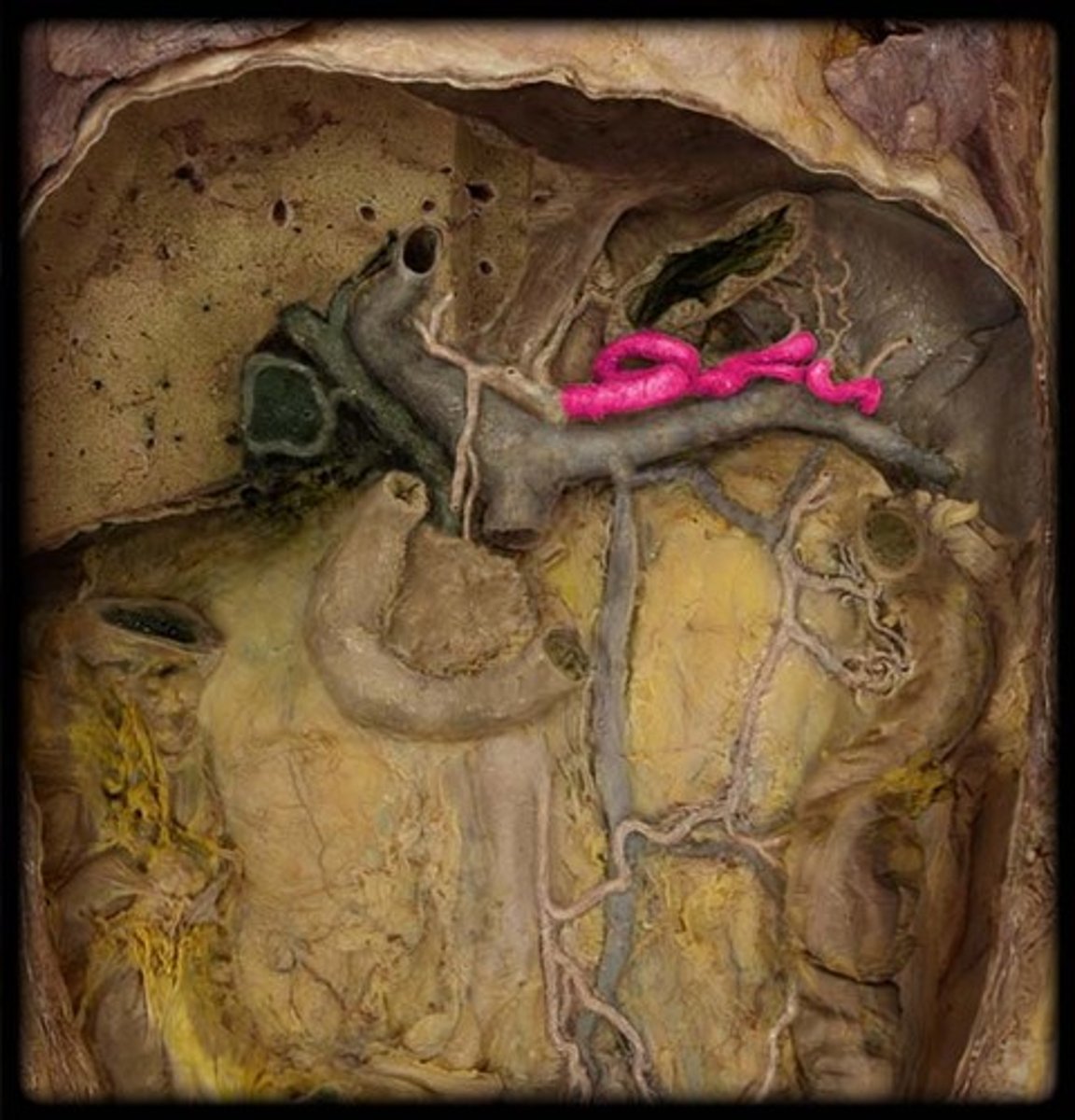
Left Gastroepiploic artery
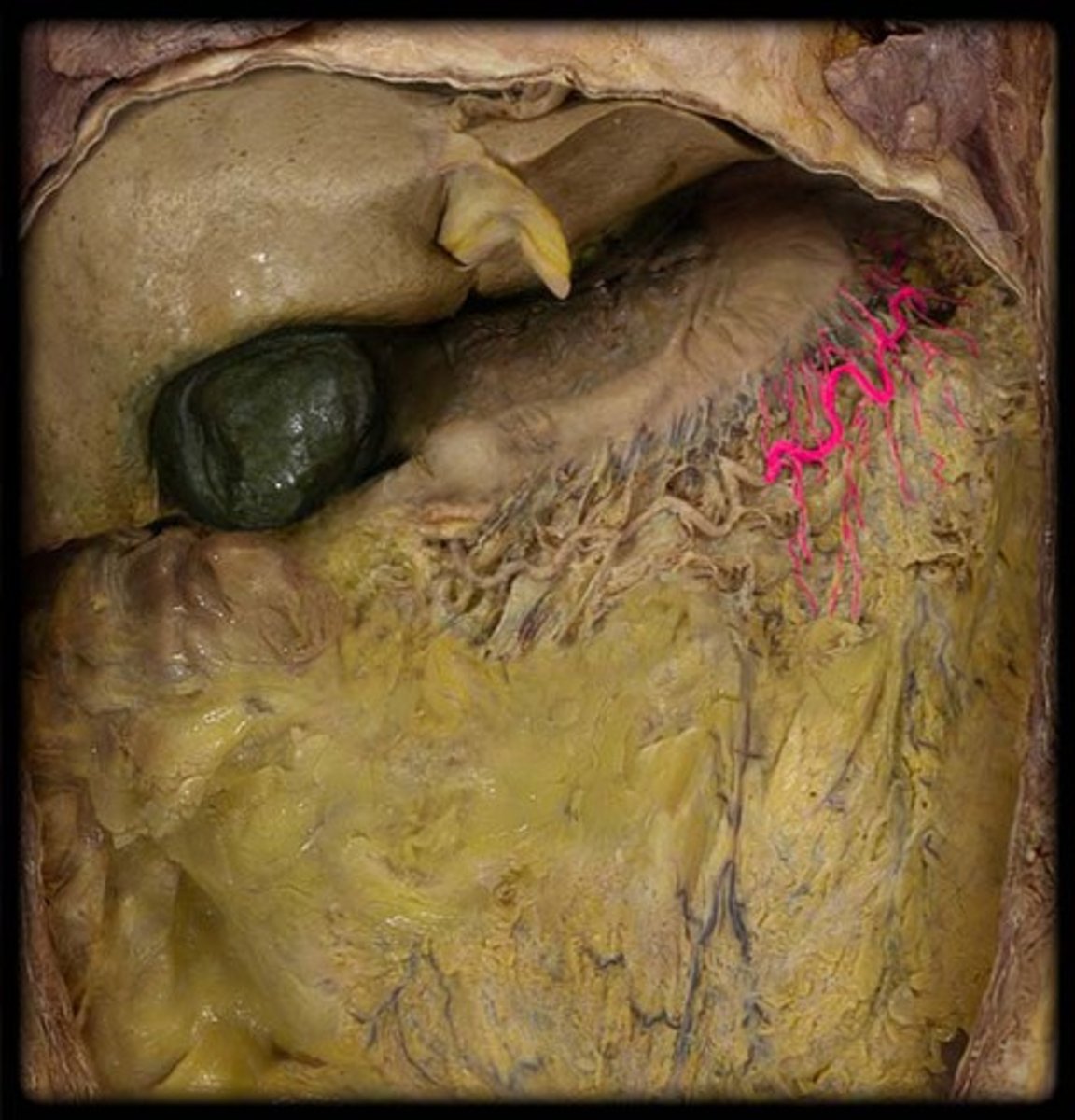
Common Hepatic Artery
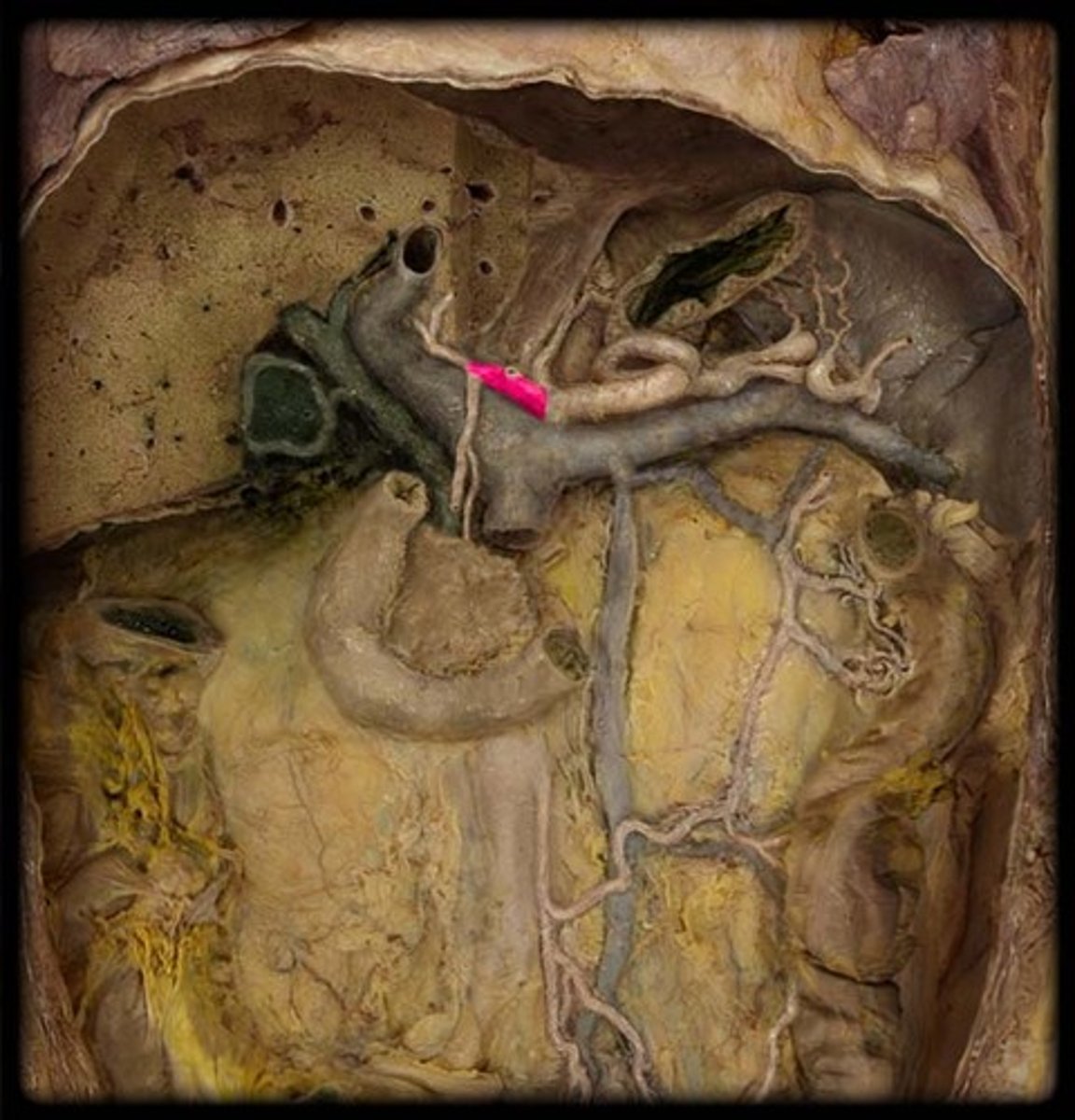
Gastroduodenal Artery
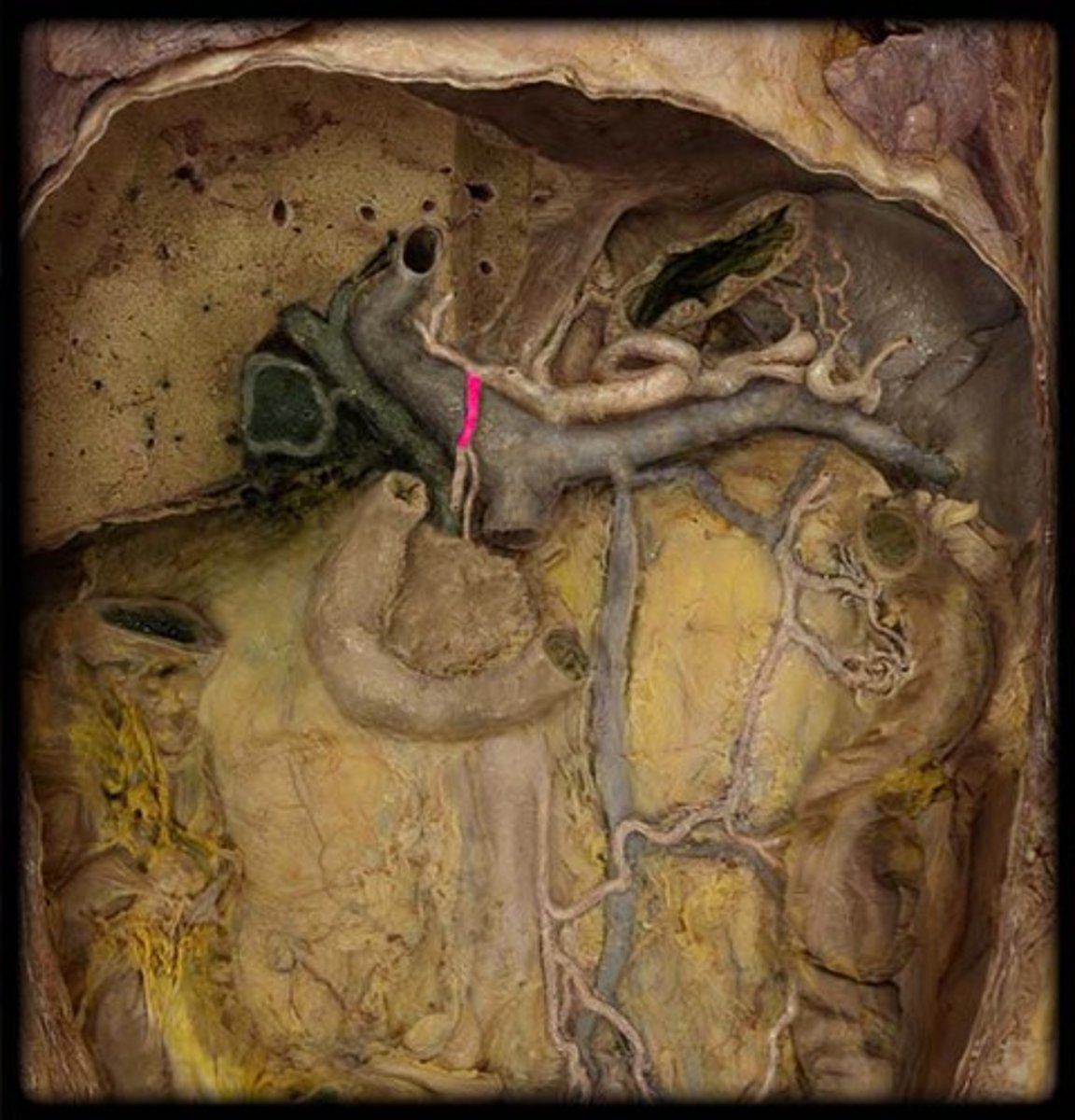
Right Gastroepiploic Artery
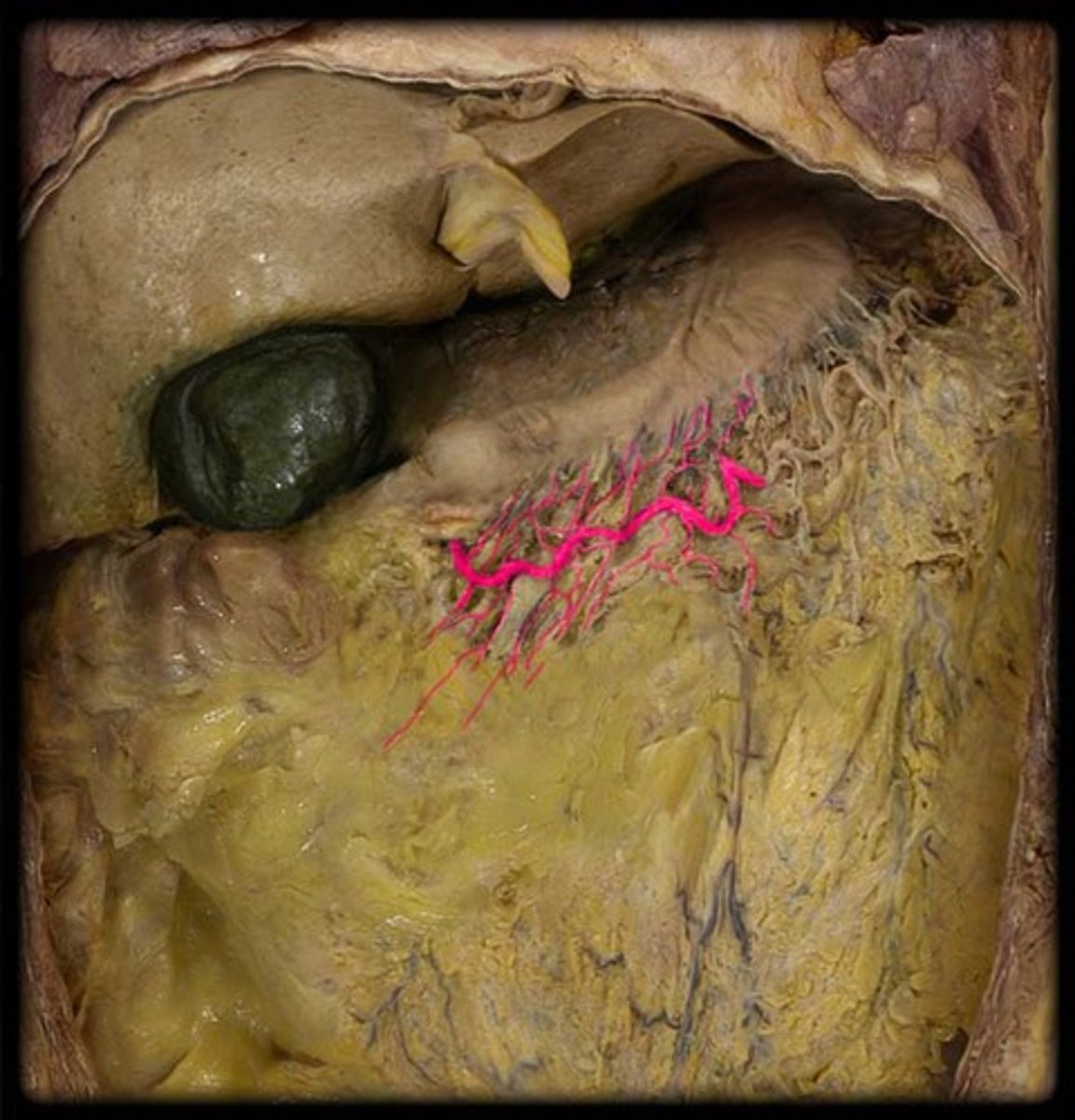
Pancreaticoduodenal Artery
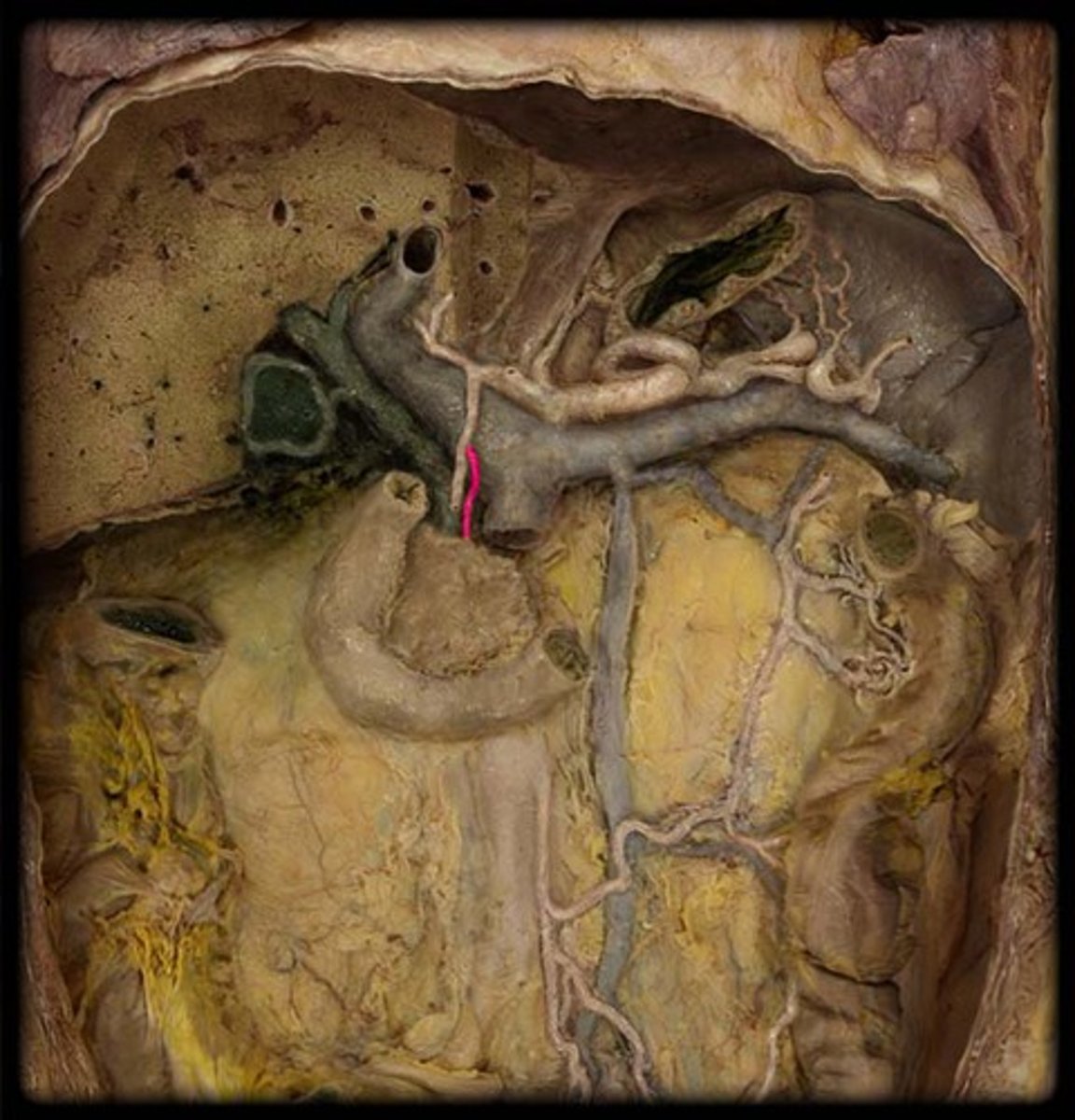
Proper Hepatic Artery
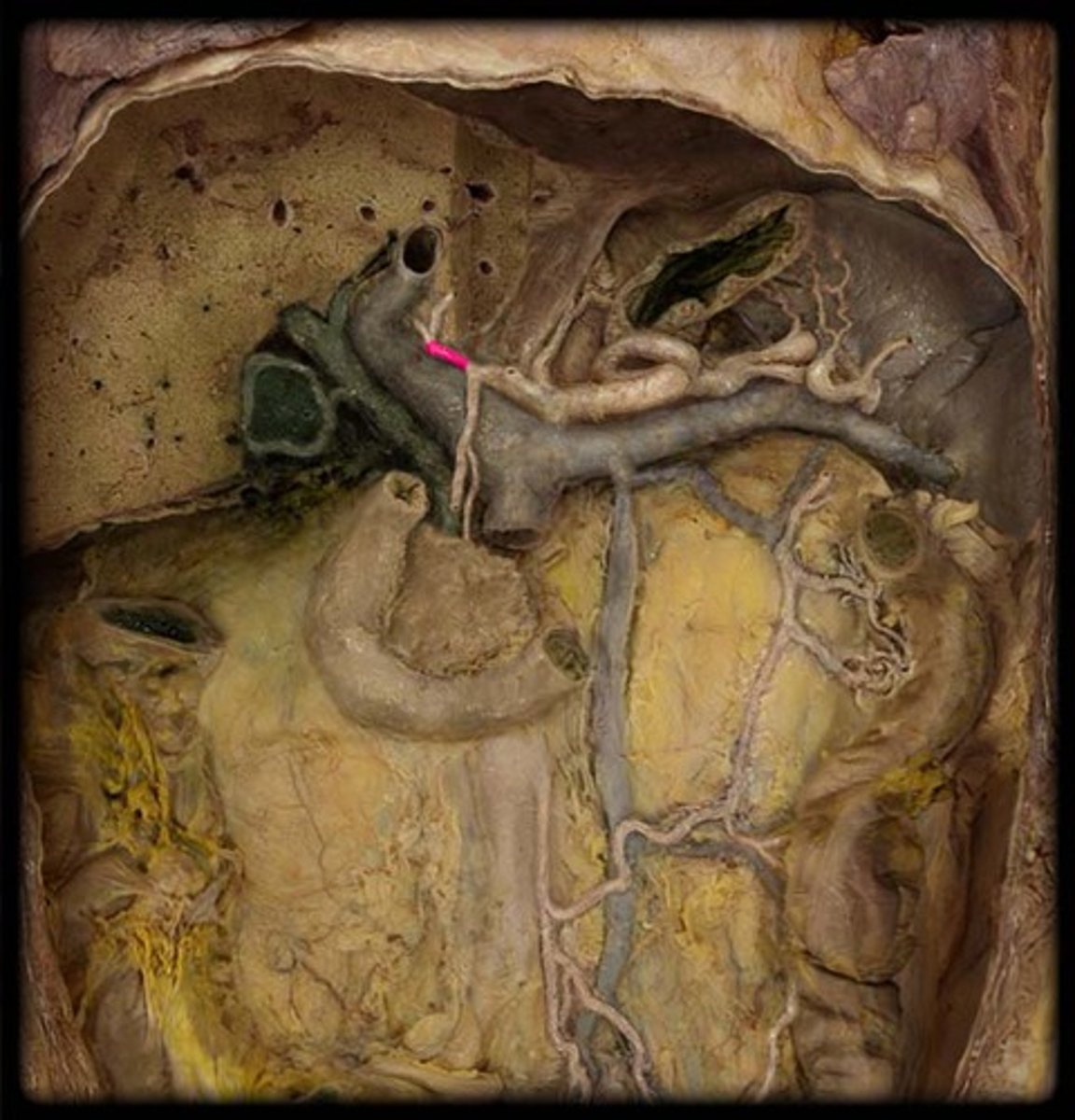
Superior Mesenteric Artery
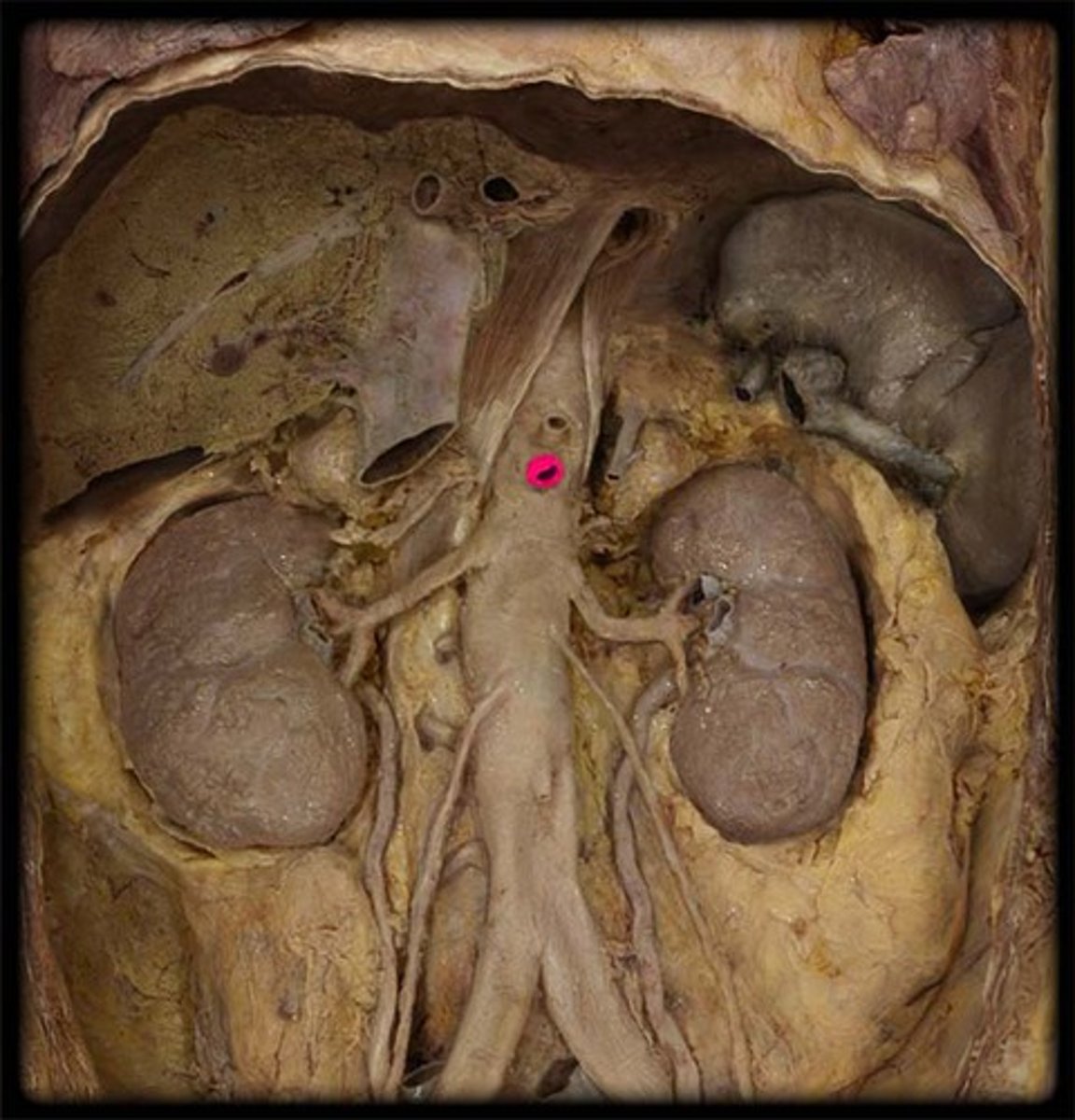
Intestinal Branches of Superior Mesenteric Artery
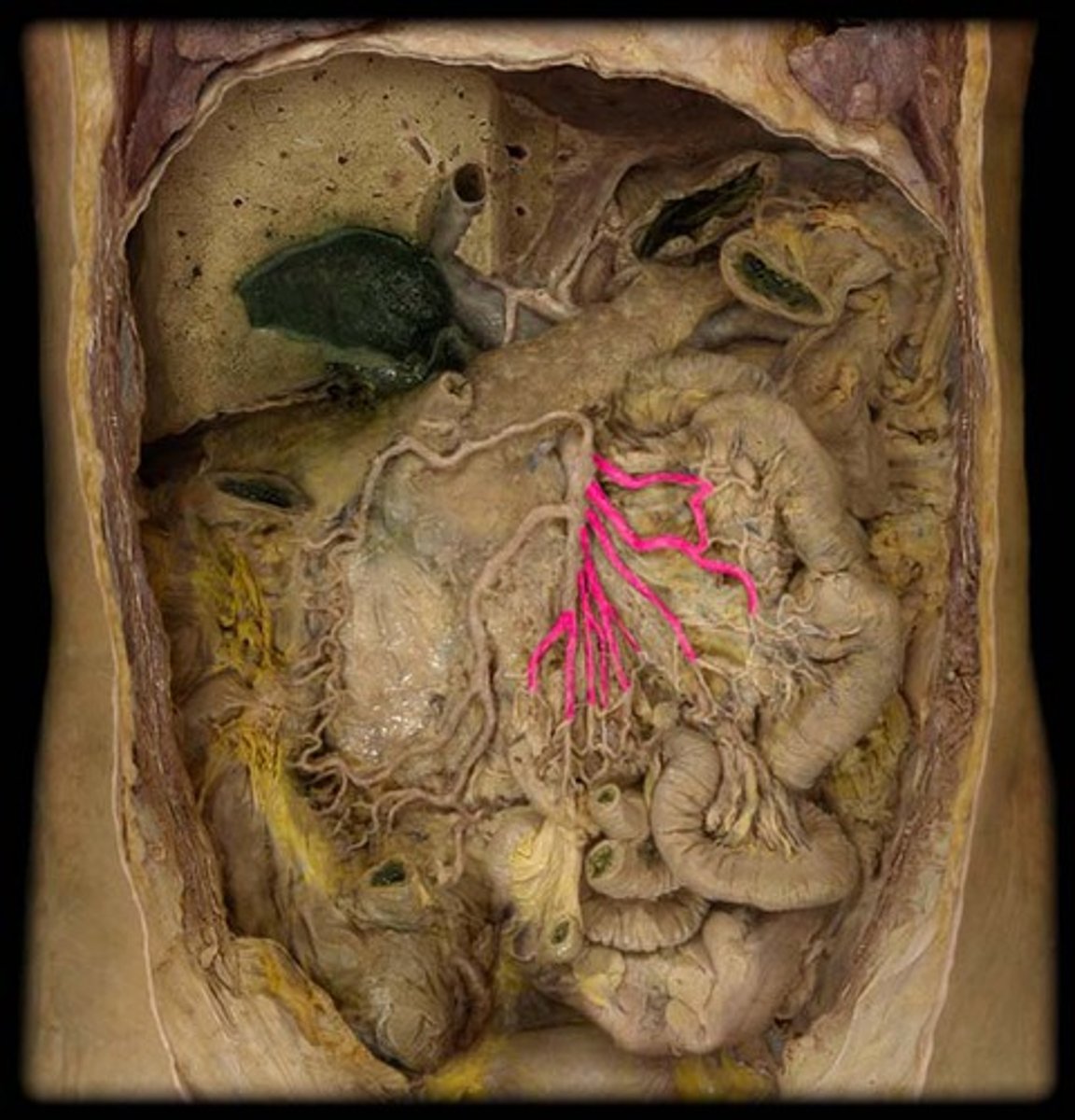
Ileocolic Artery
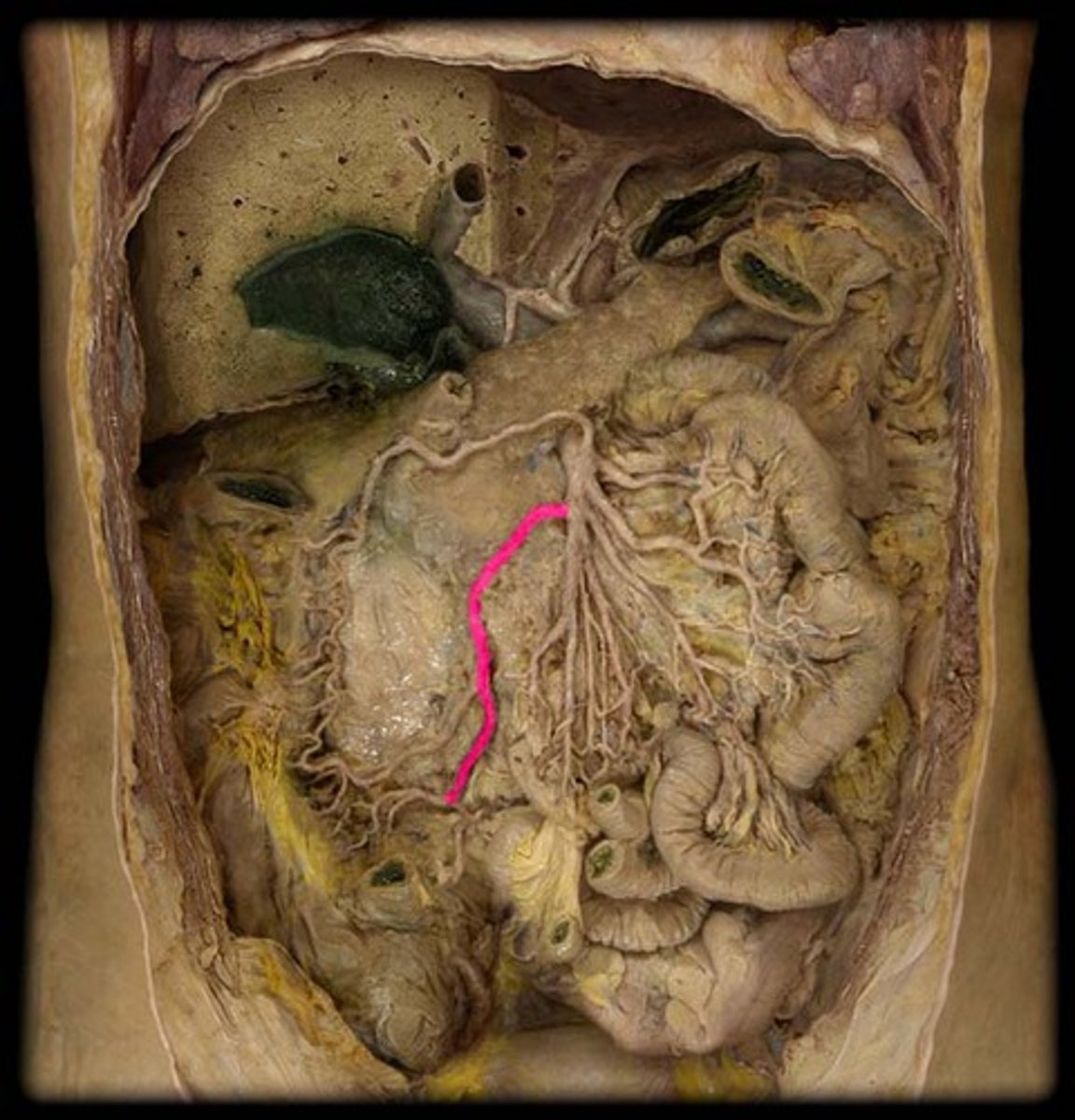
Right Colic Artery
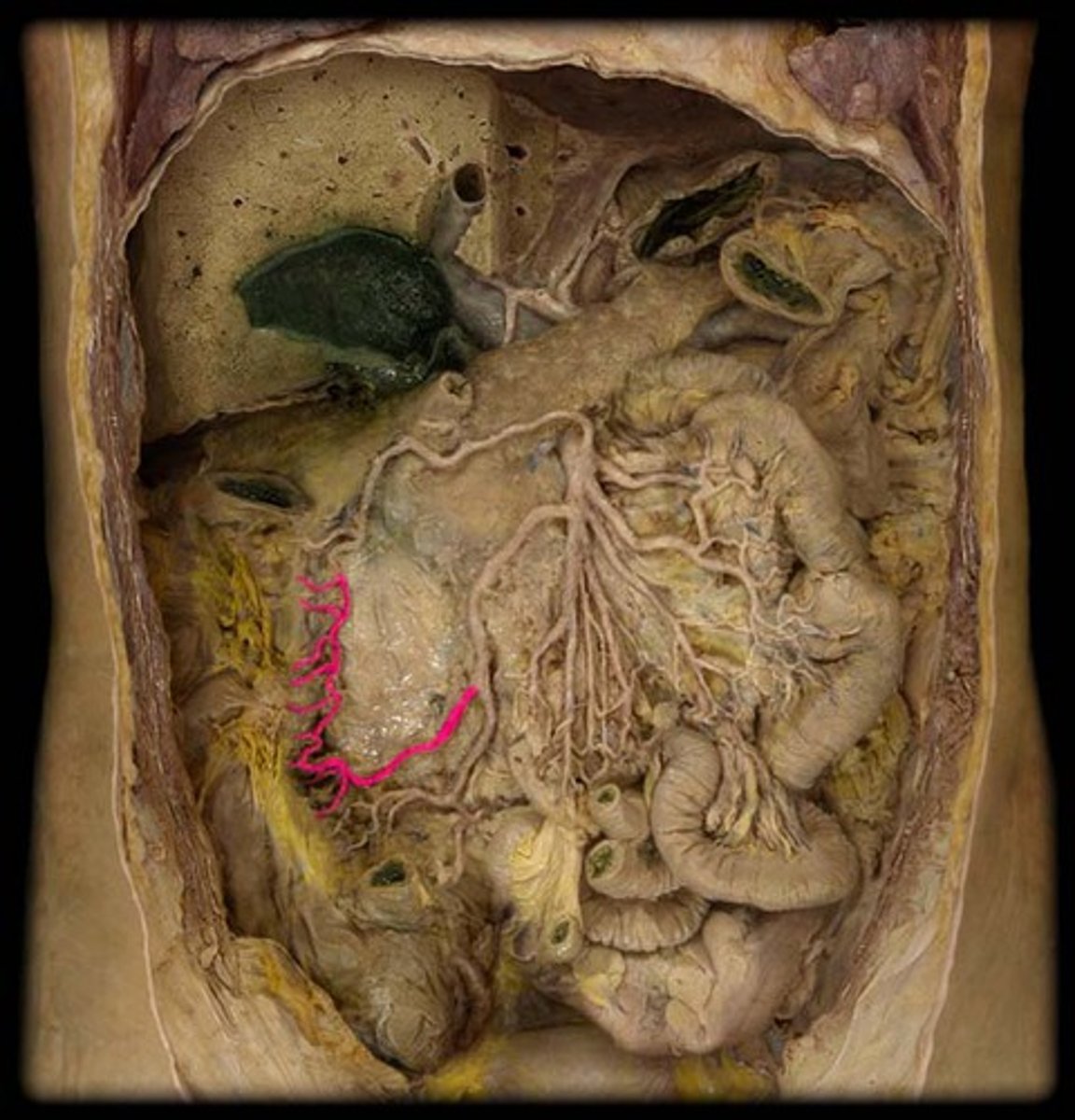
Middle Colic Artery
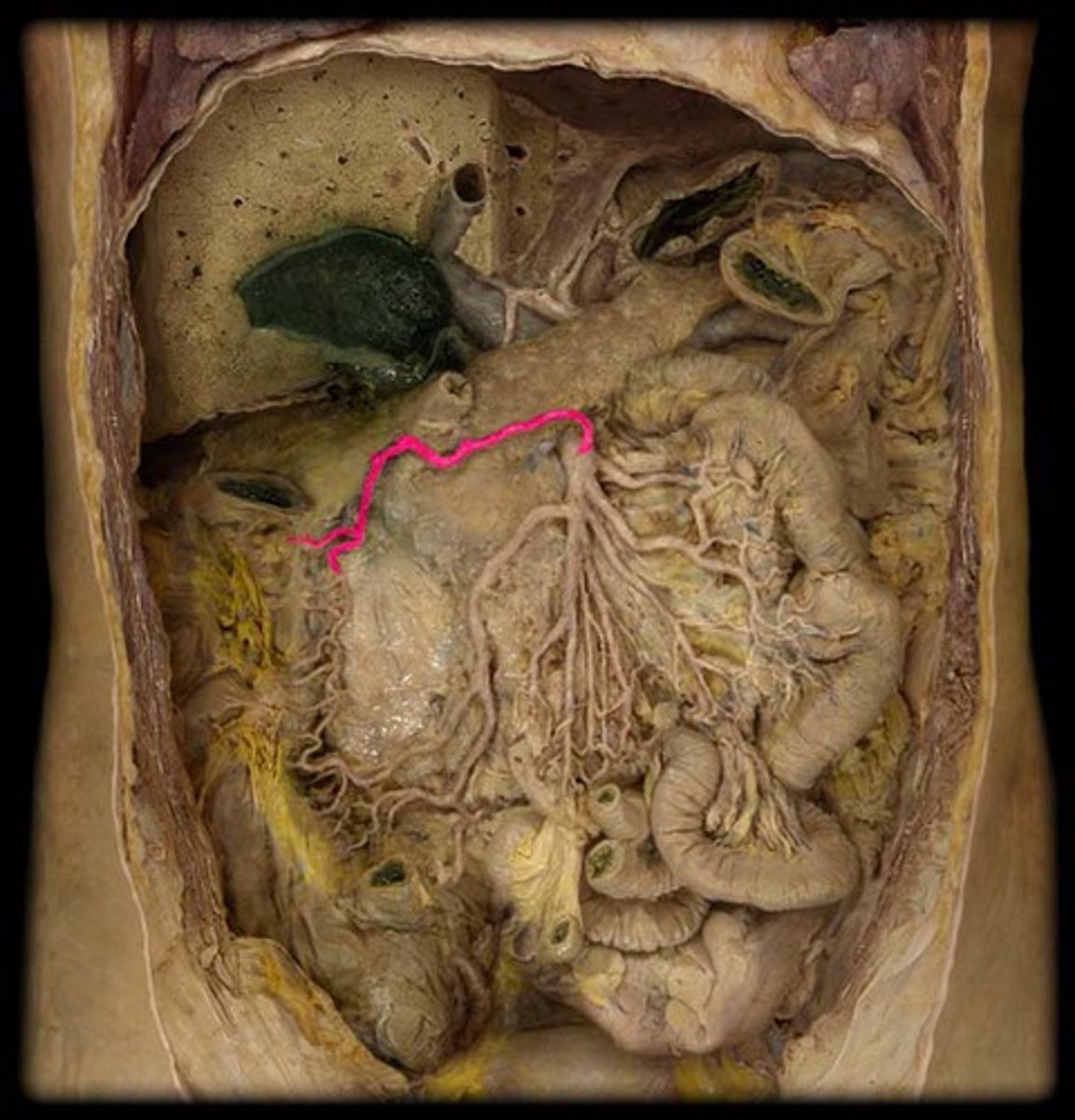
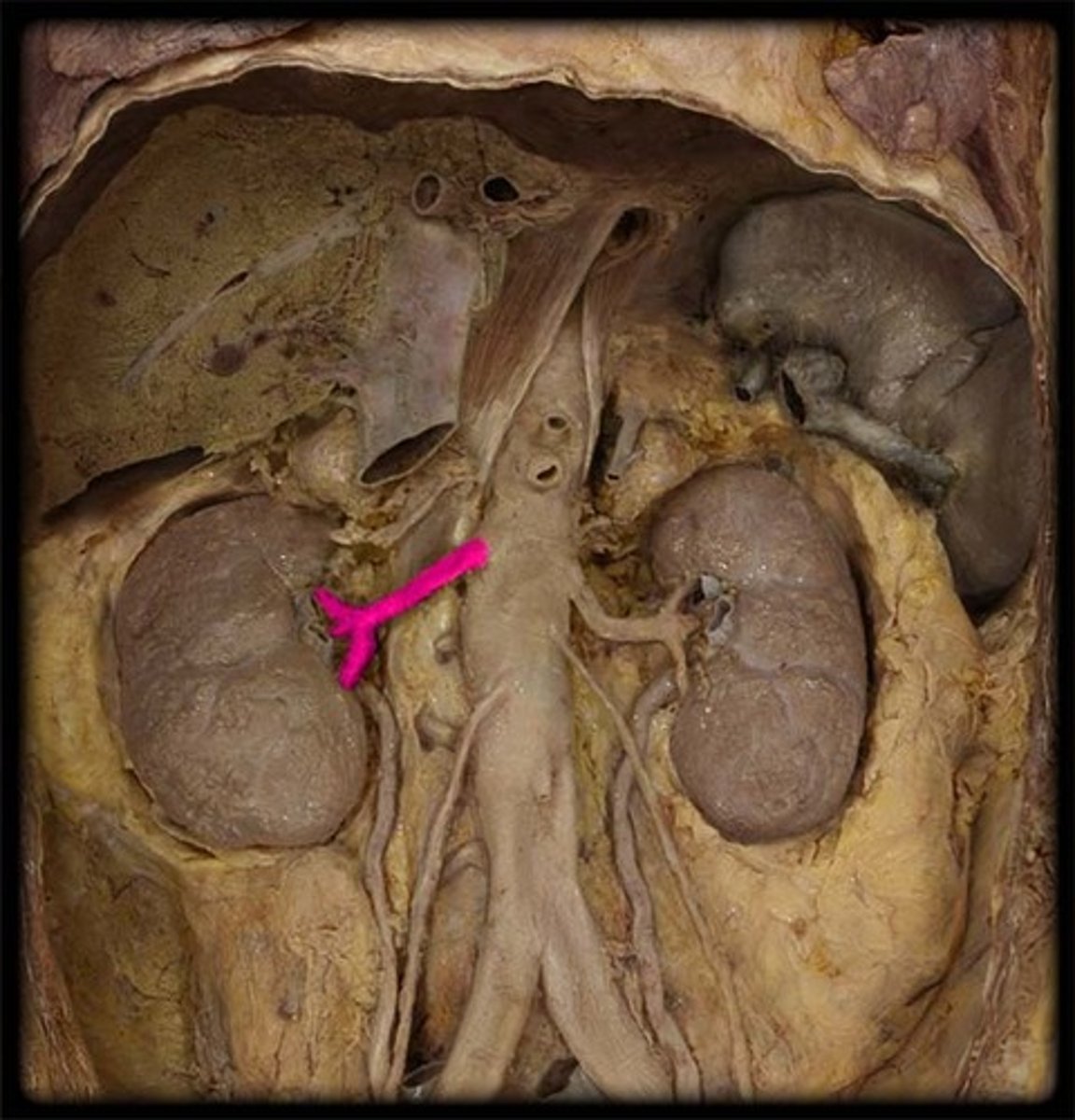
Right Renal Artery
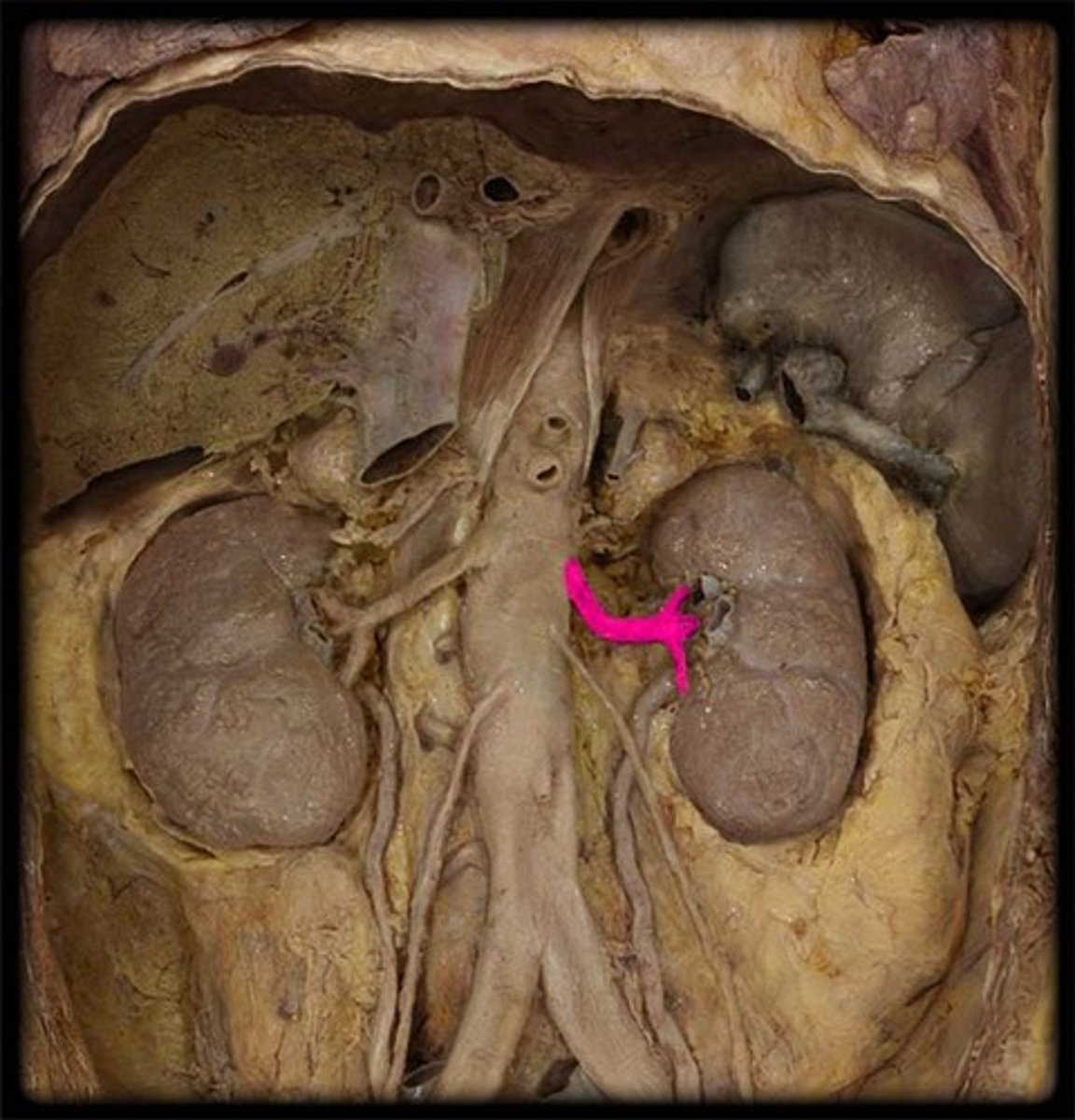
Left Renal Artery
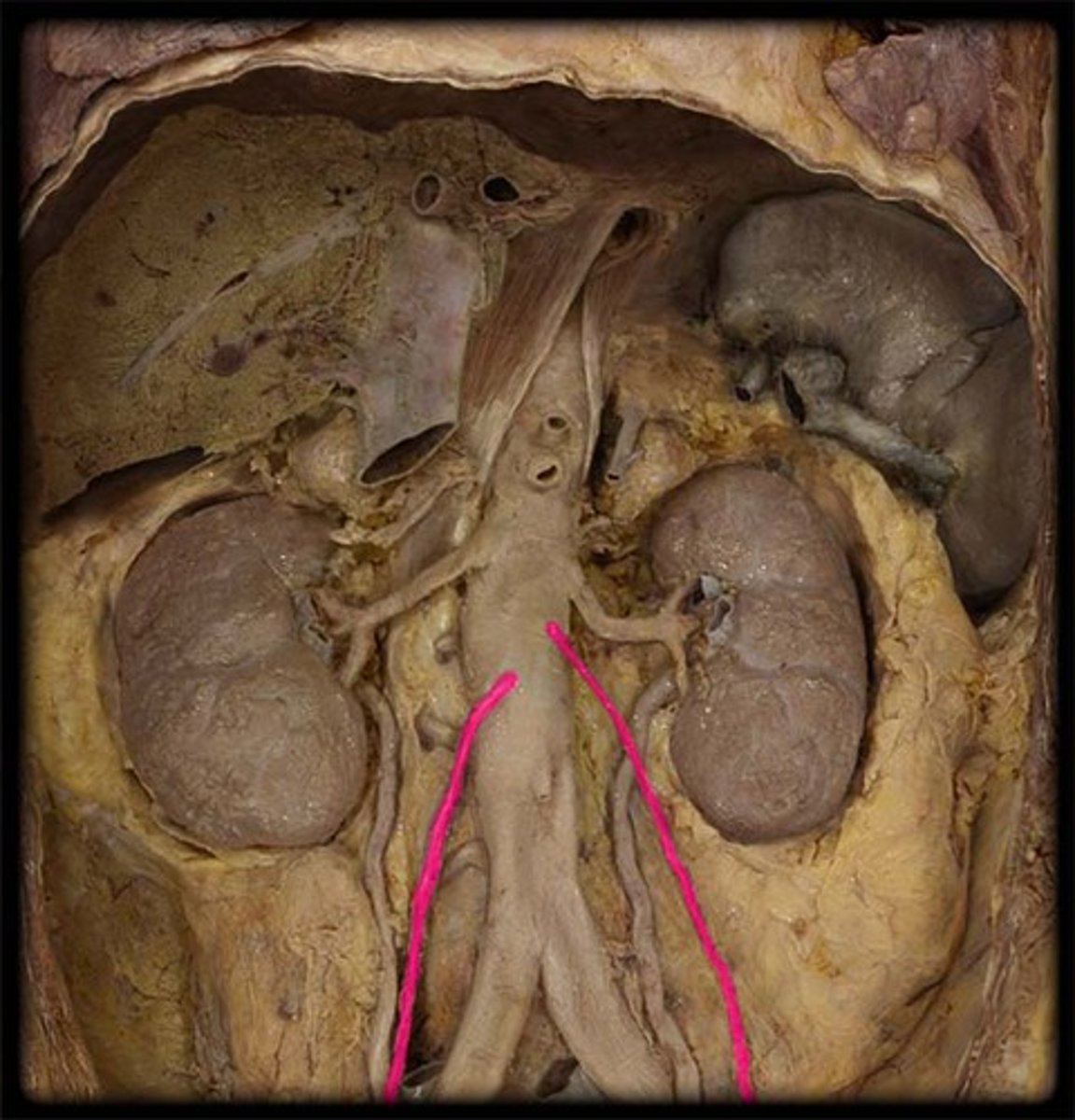
Gonadal Arteries
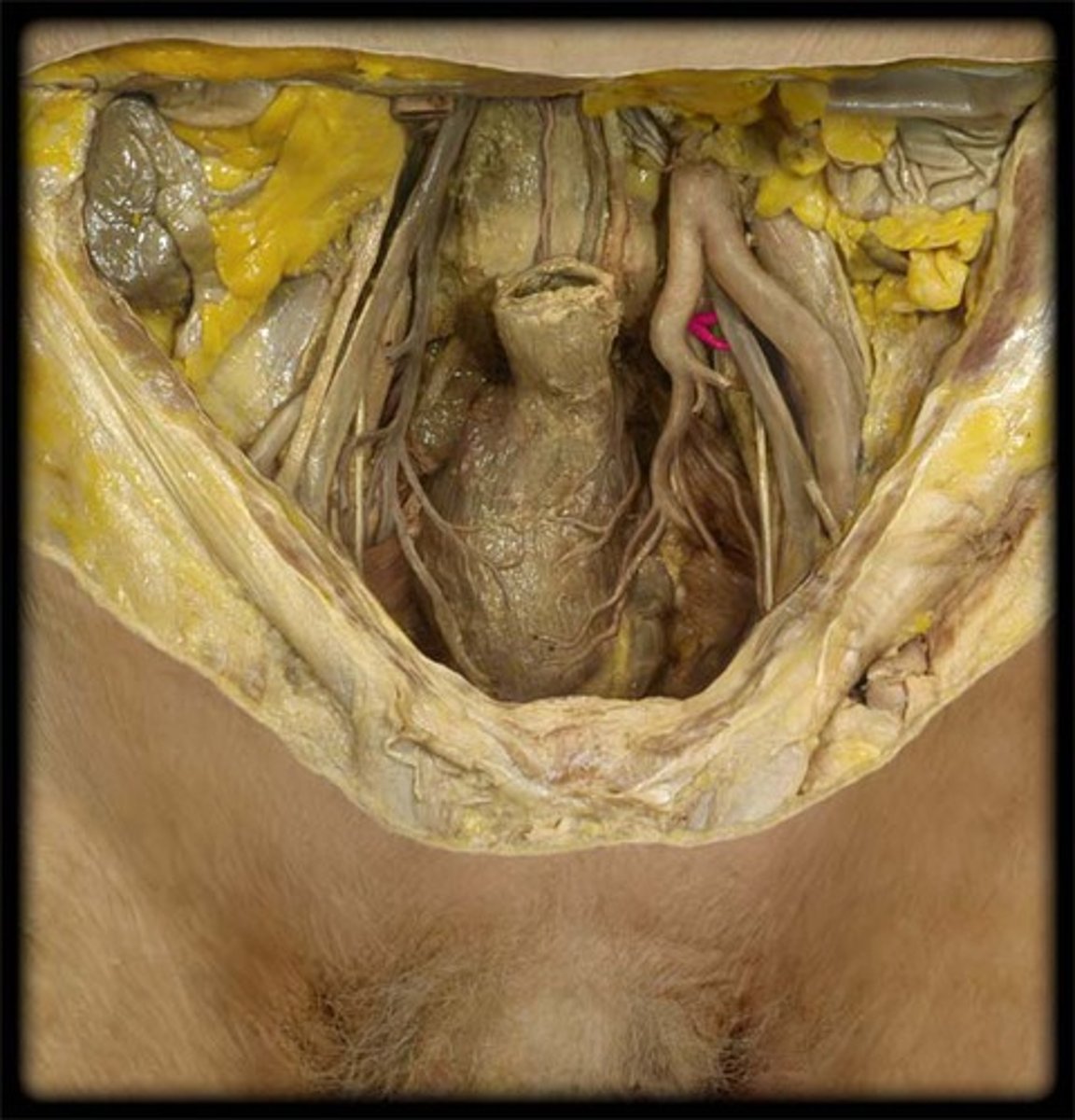
Illiolumbar Artery
Inferior Mesenteric Artery
Inferior Mesenteric Artery and Branches
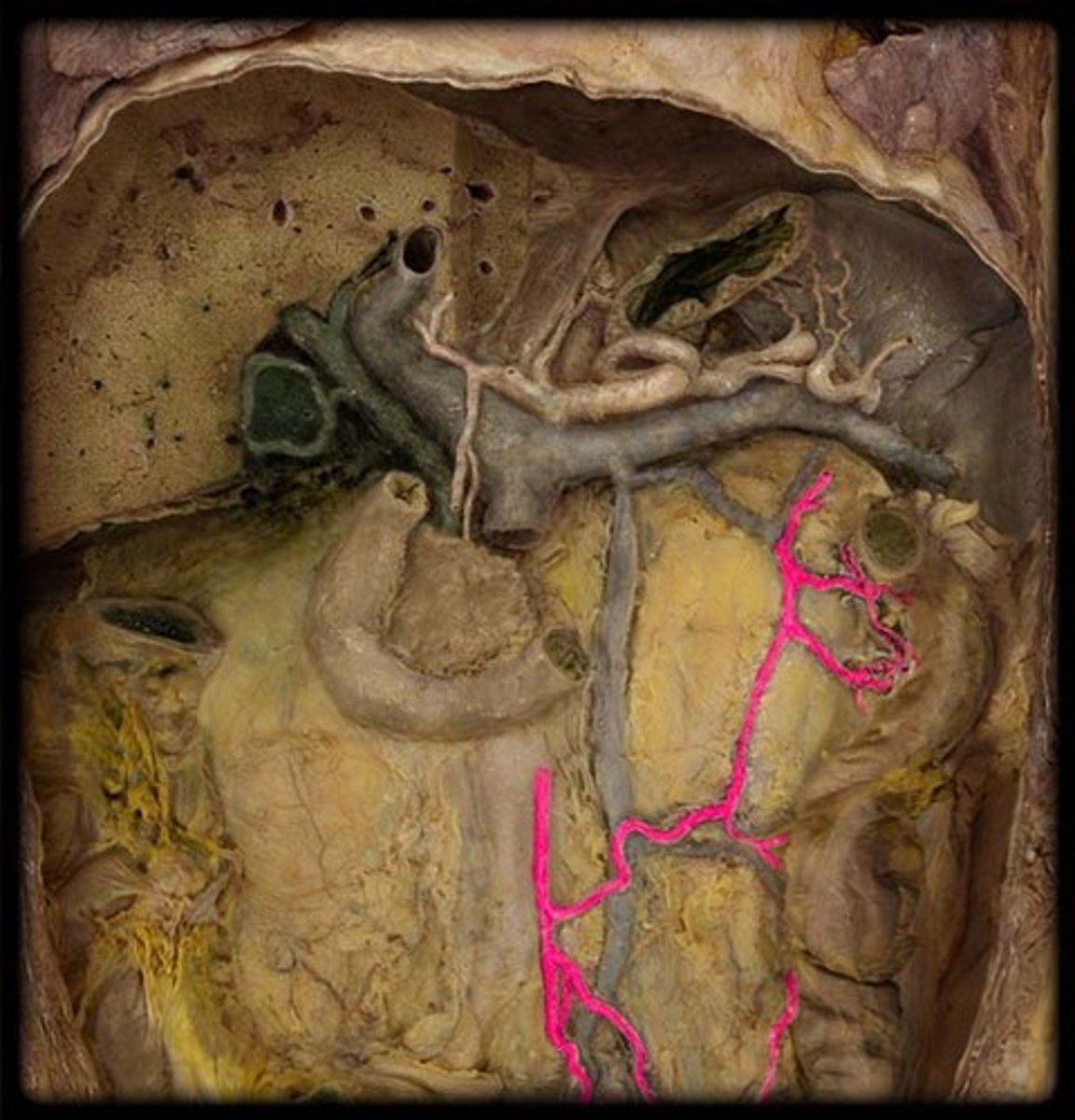
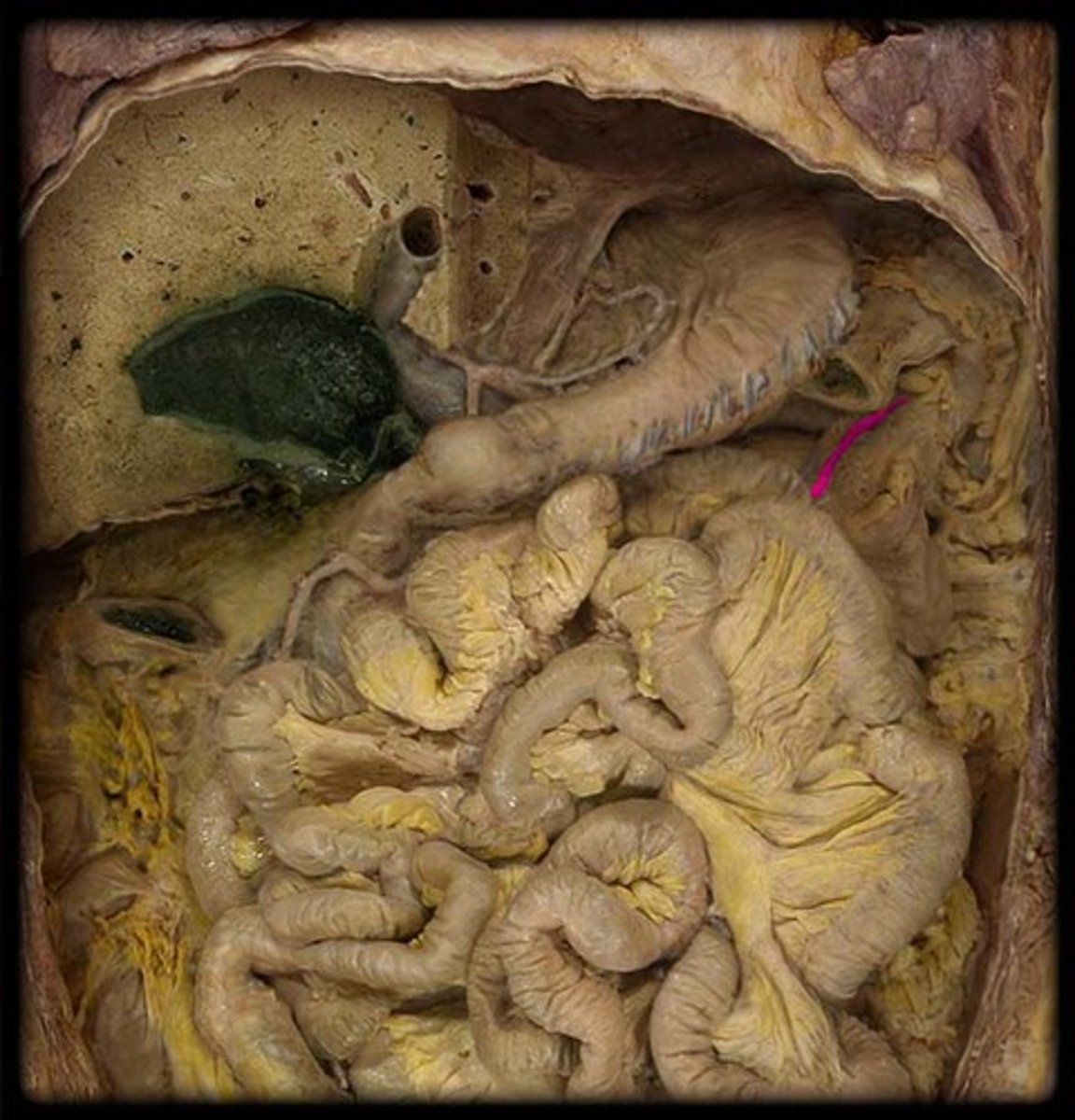
Left Colic Artery
Sigmoid Artery
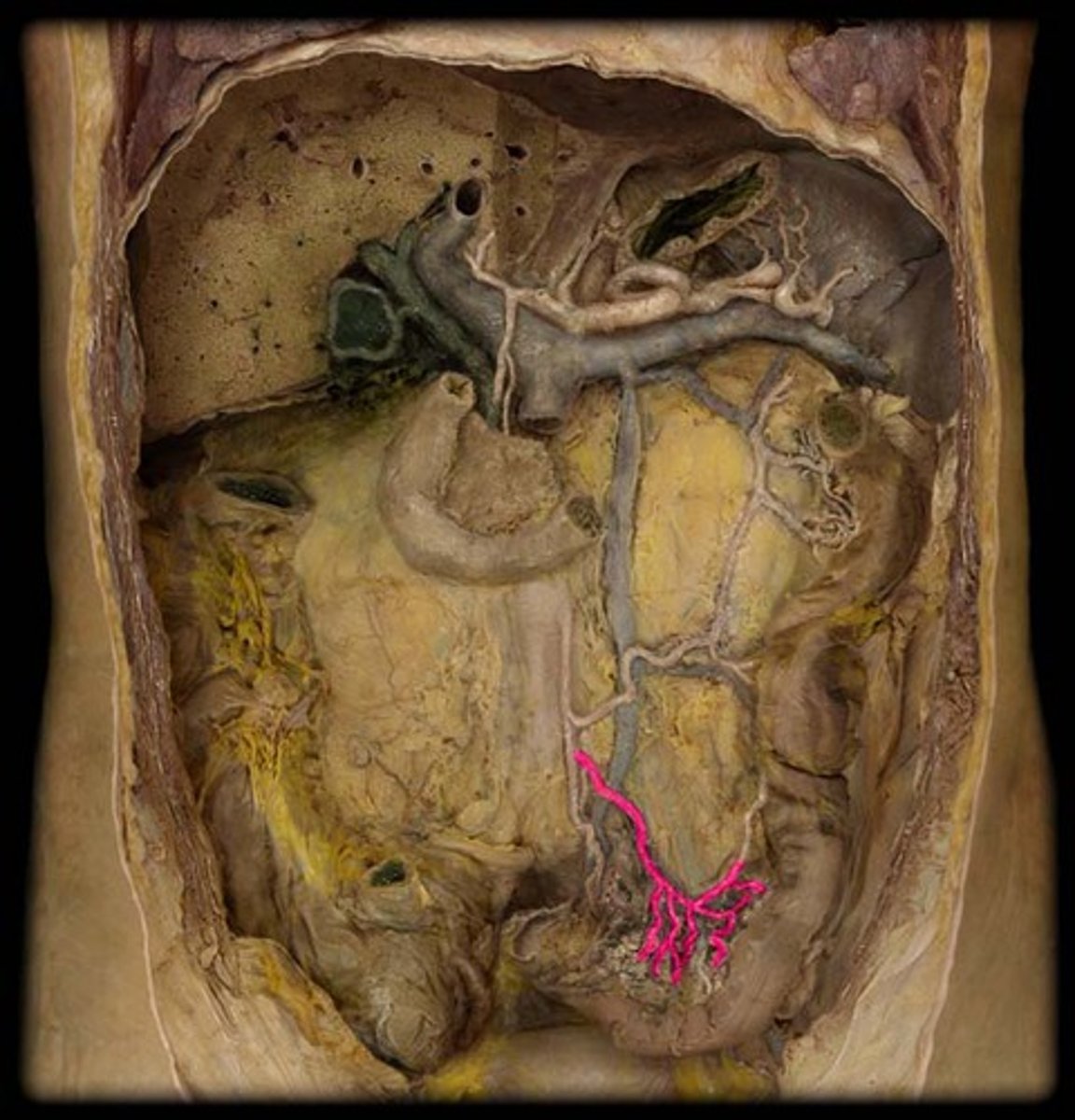
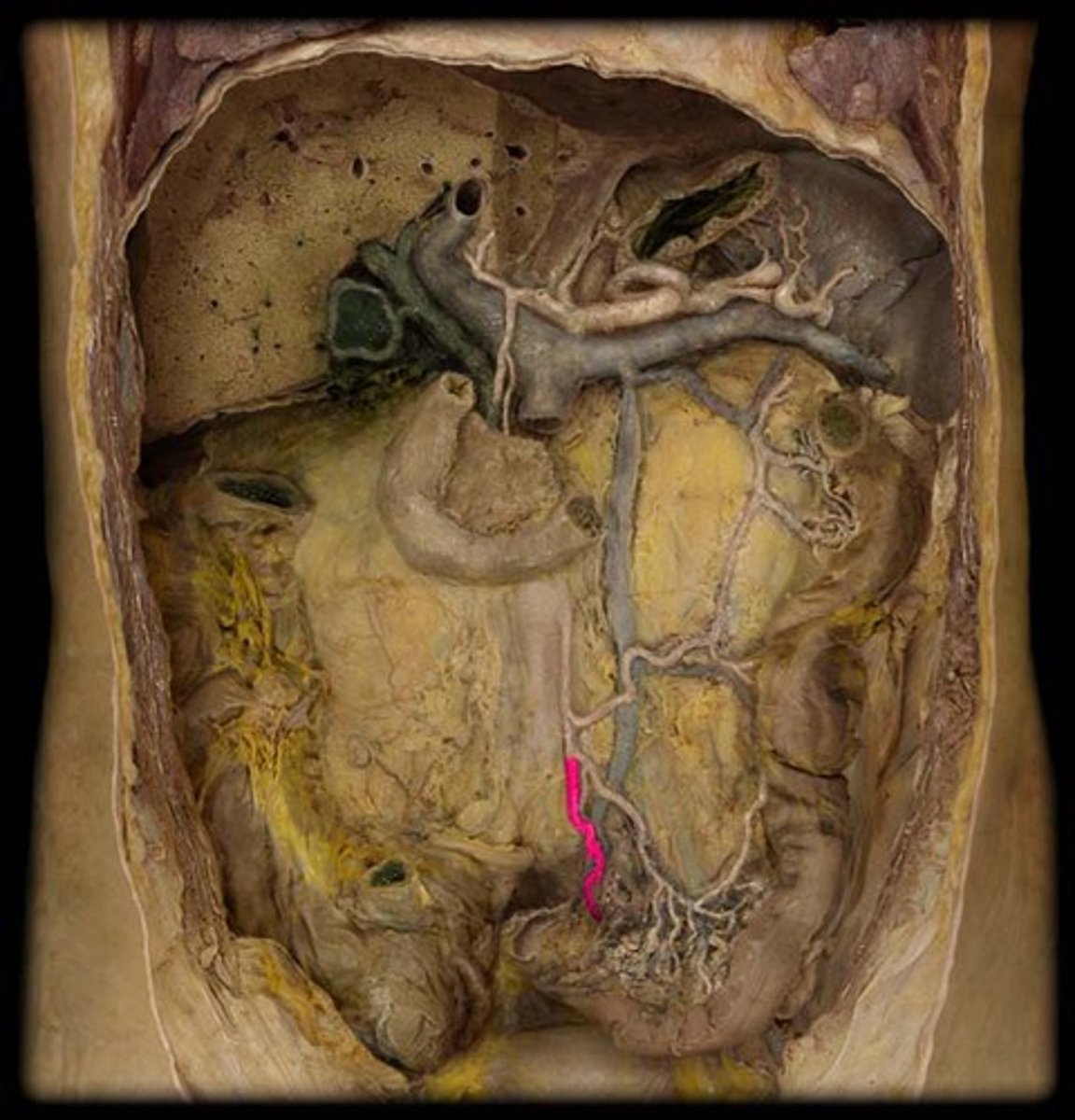
Superior Rectal Artery
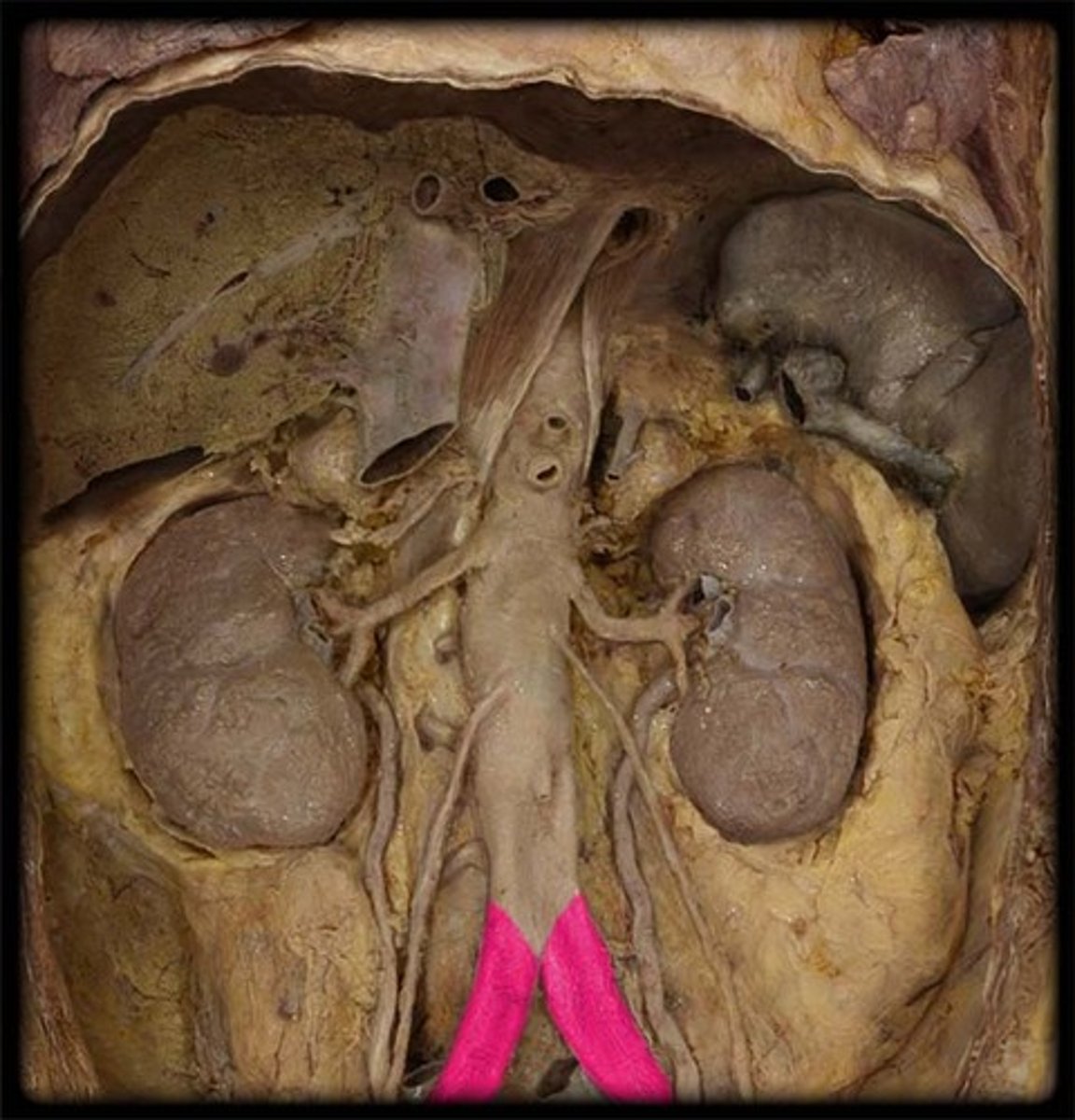
Common Iliac Arteries
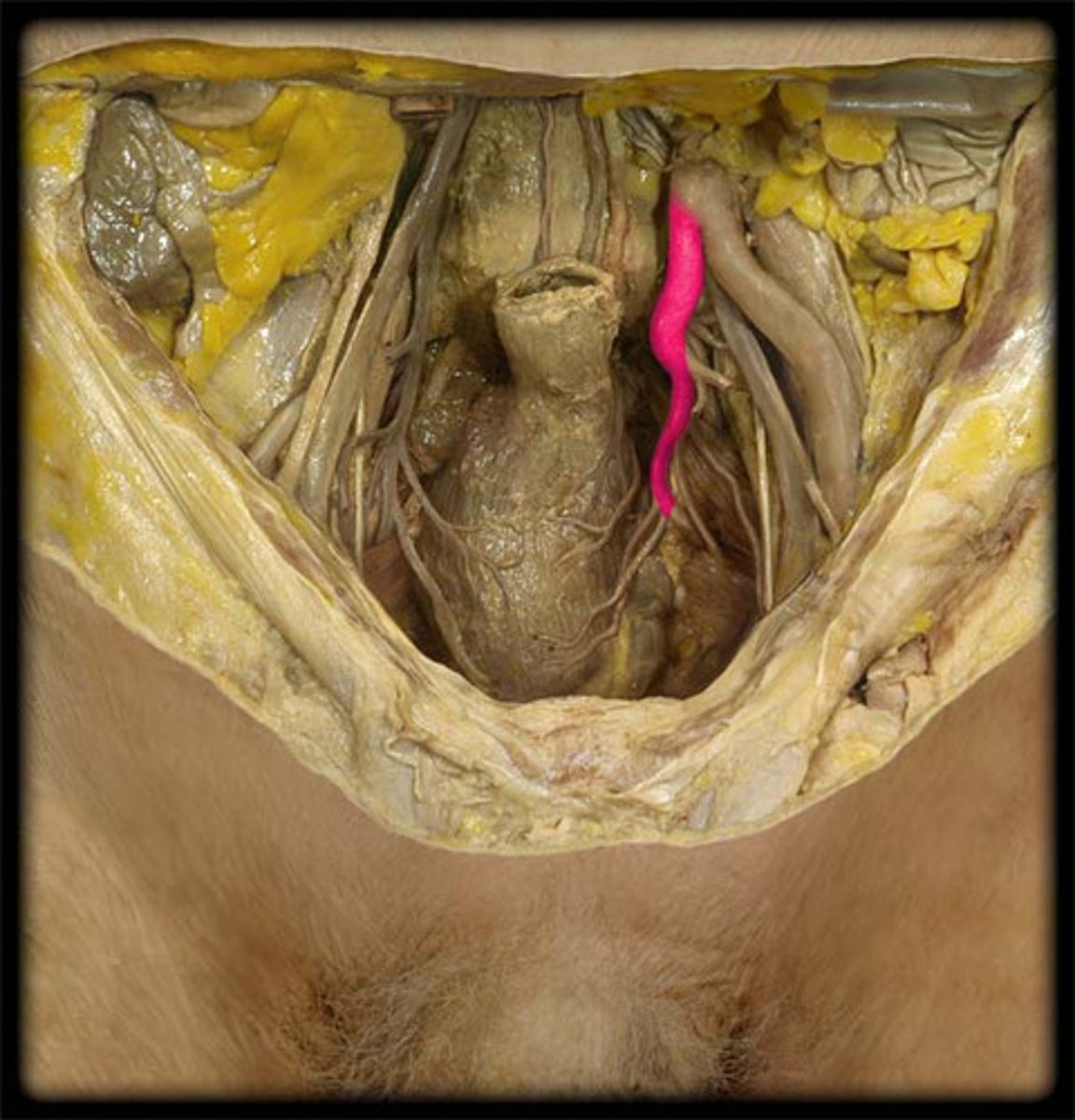
Internal Iliac Artery
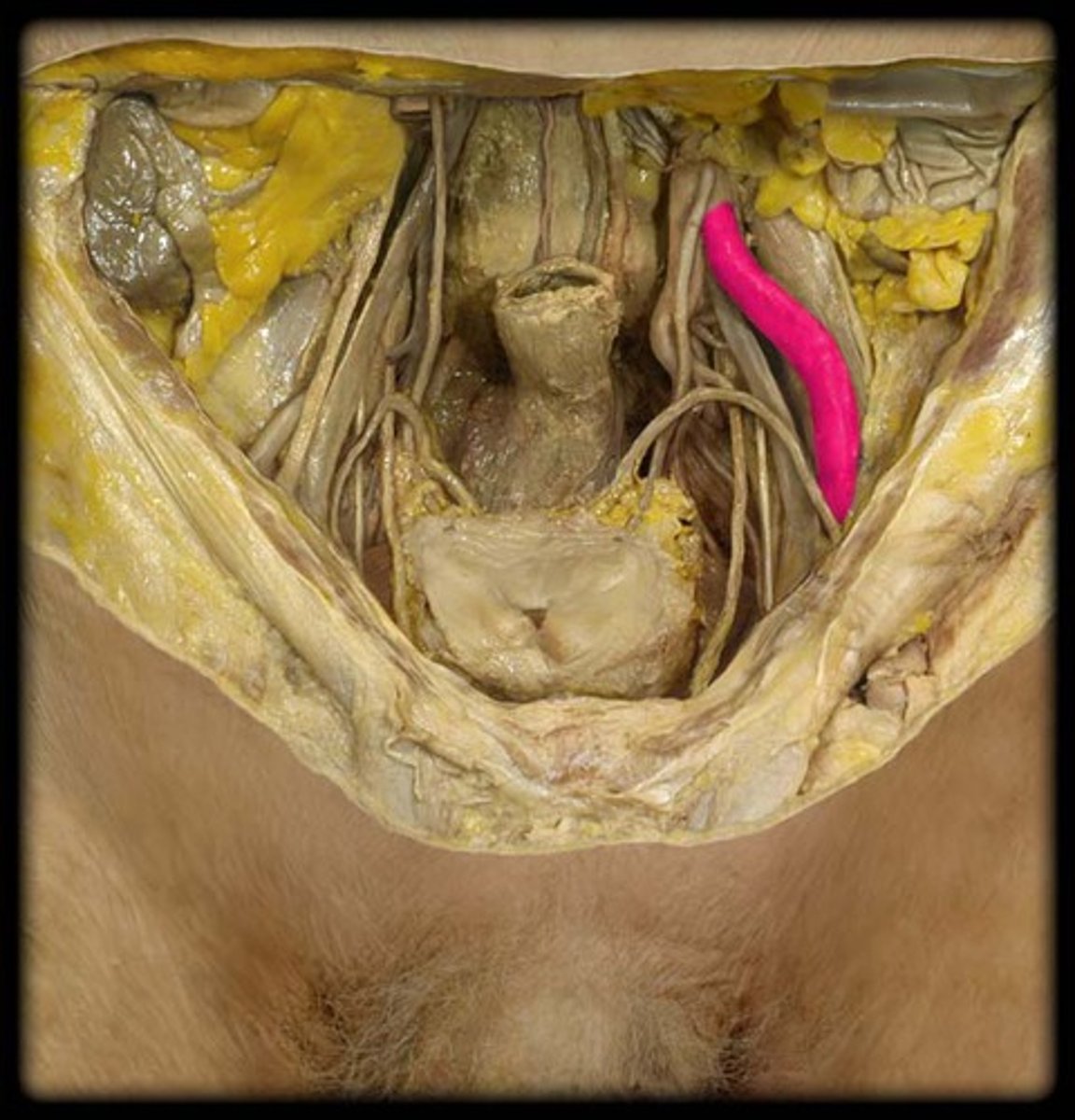
External Iliac Artery
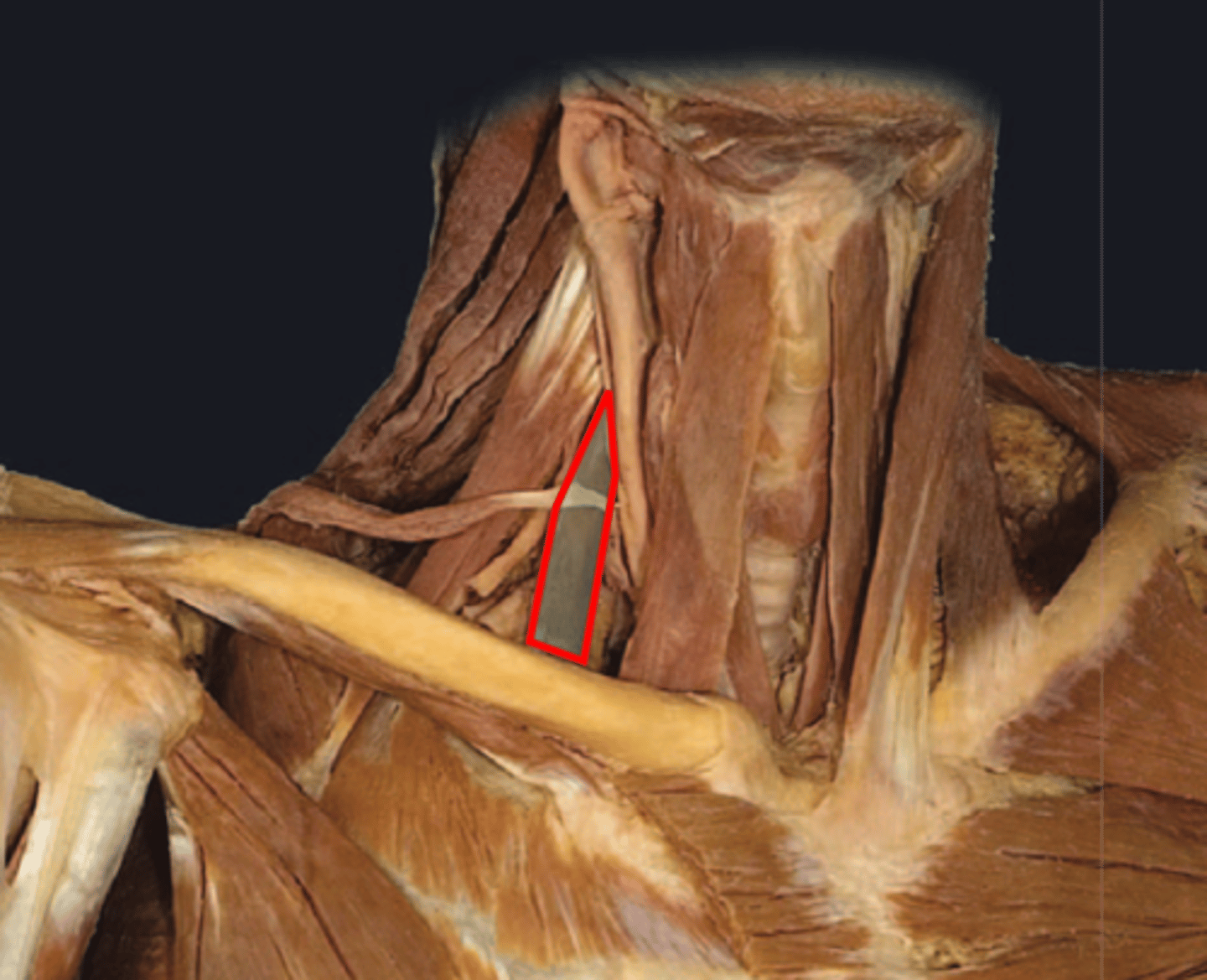
Anterior Scalene (muscle)
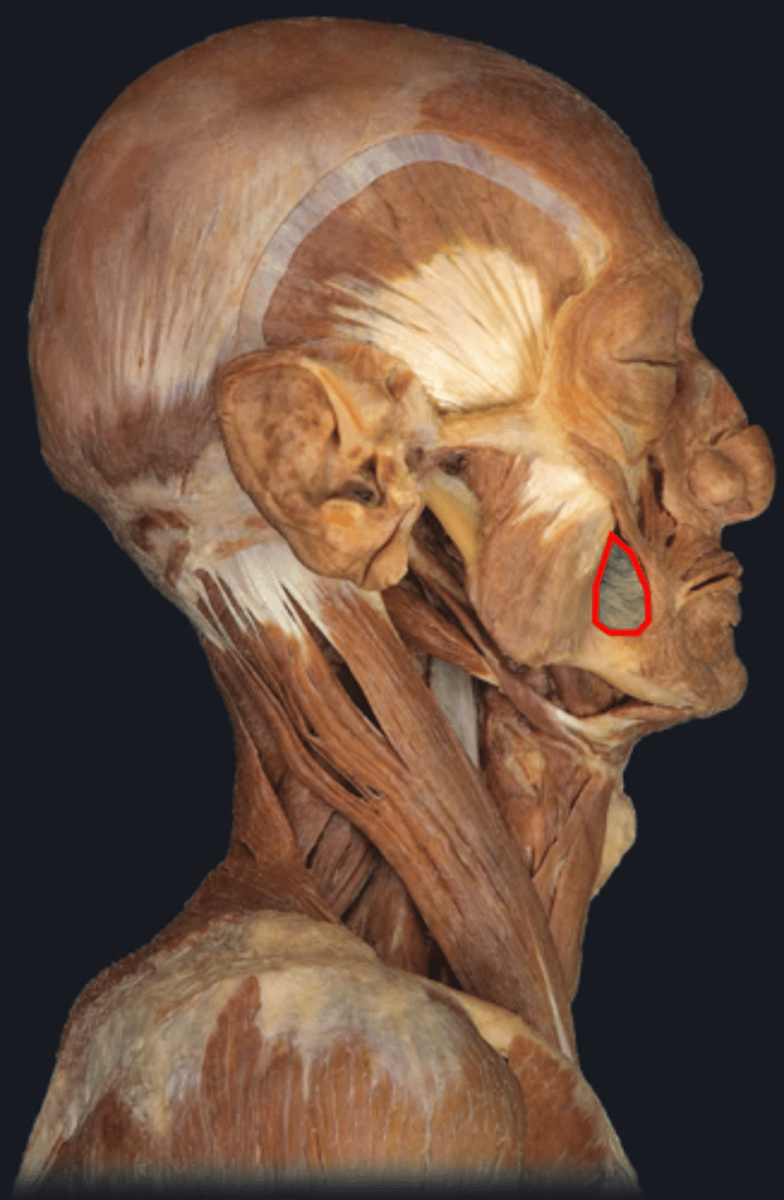
Buccinator (muscle)
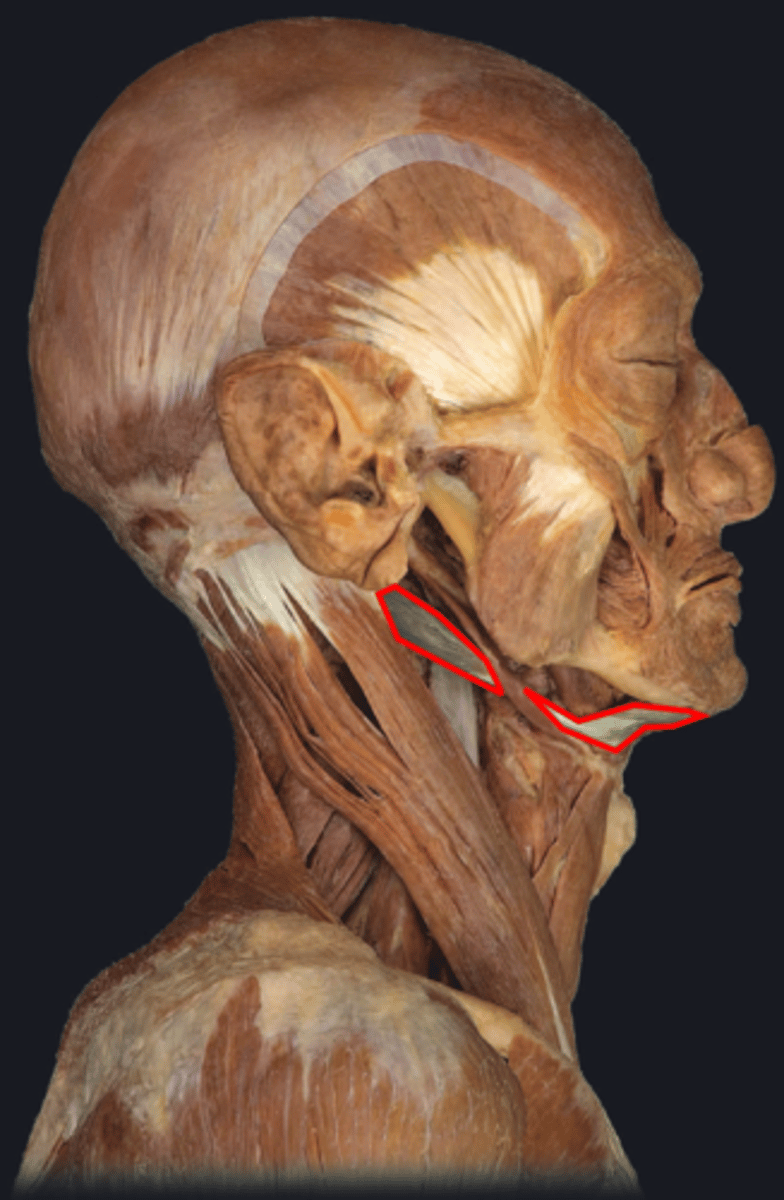
Digastric (muscle)
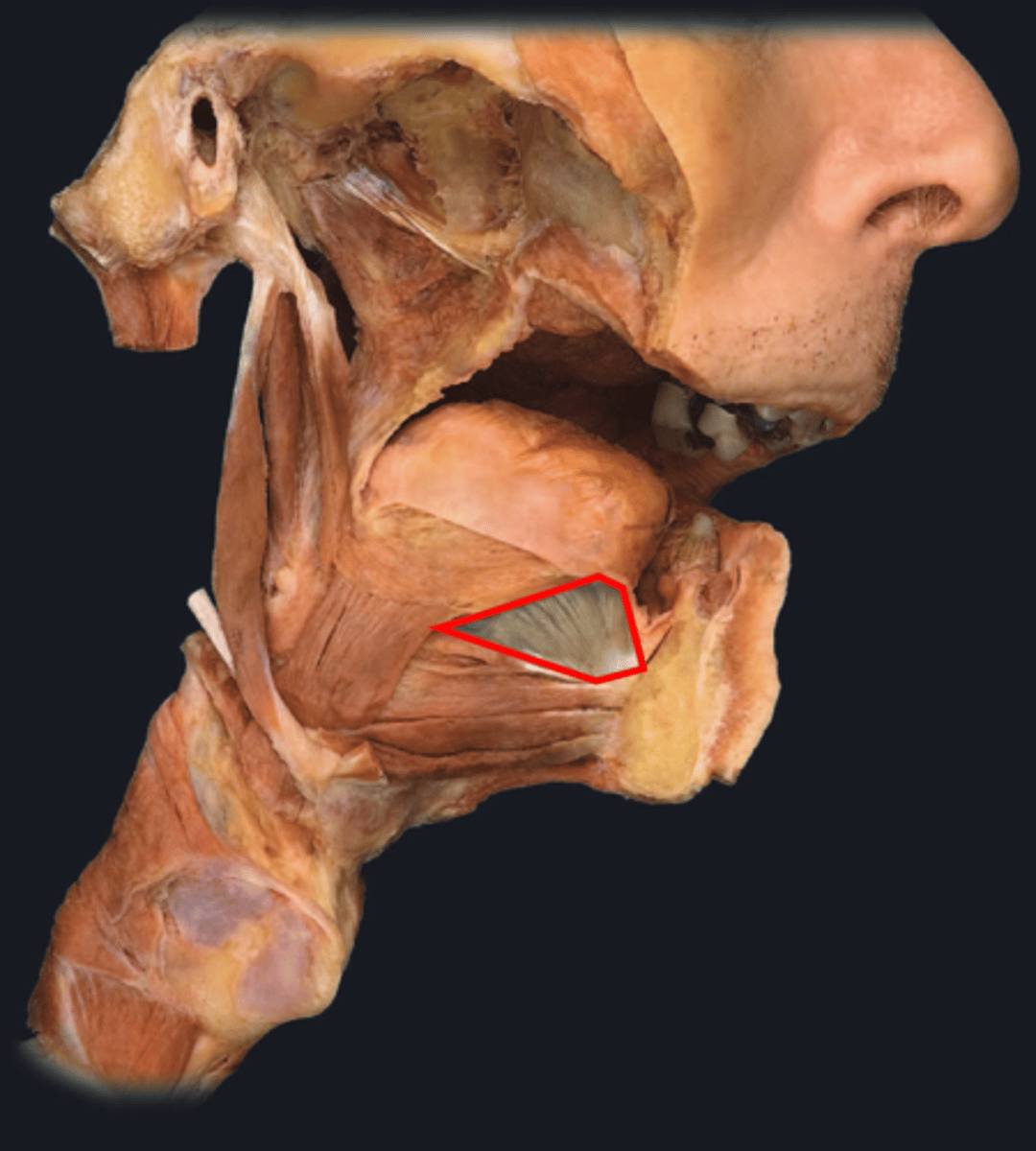
Genioglossus (muscle)
Geniohyoid (muscle)
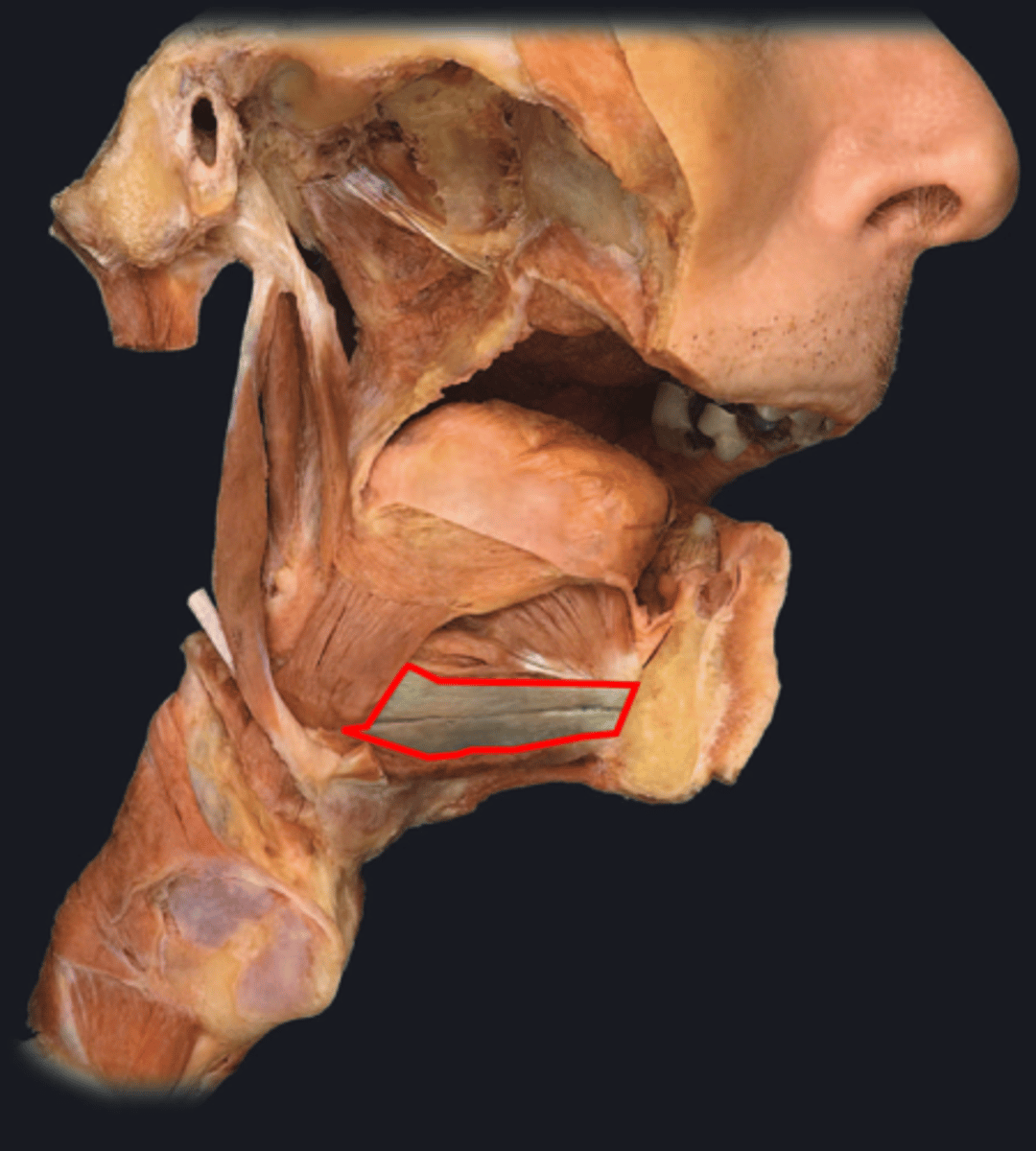
Hyoglossus (muscle)
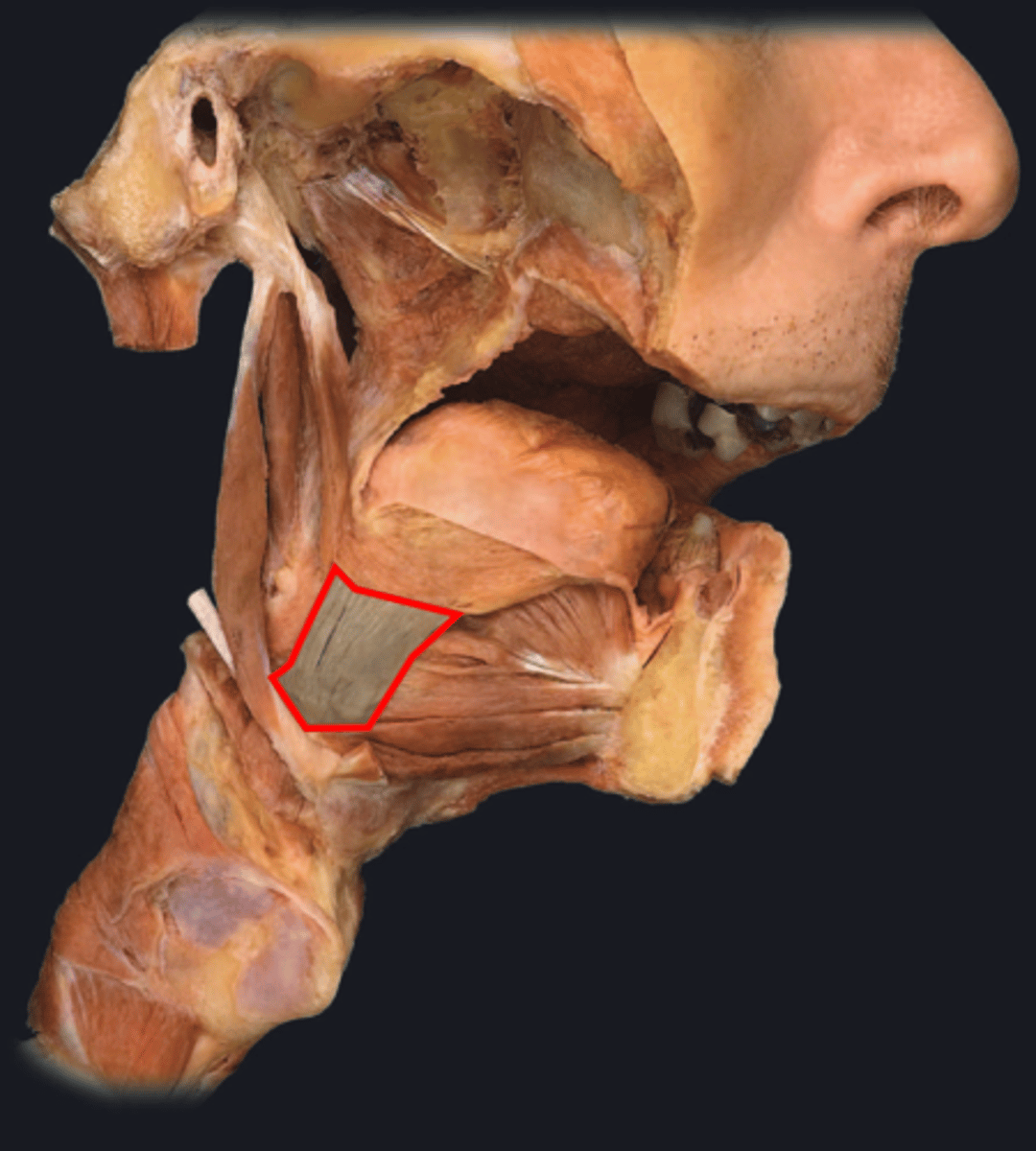
Masseter (muscle)
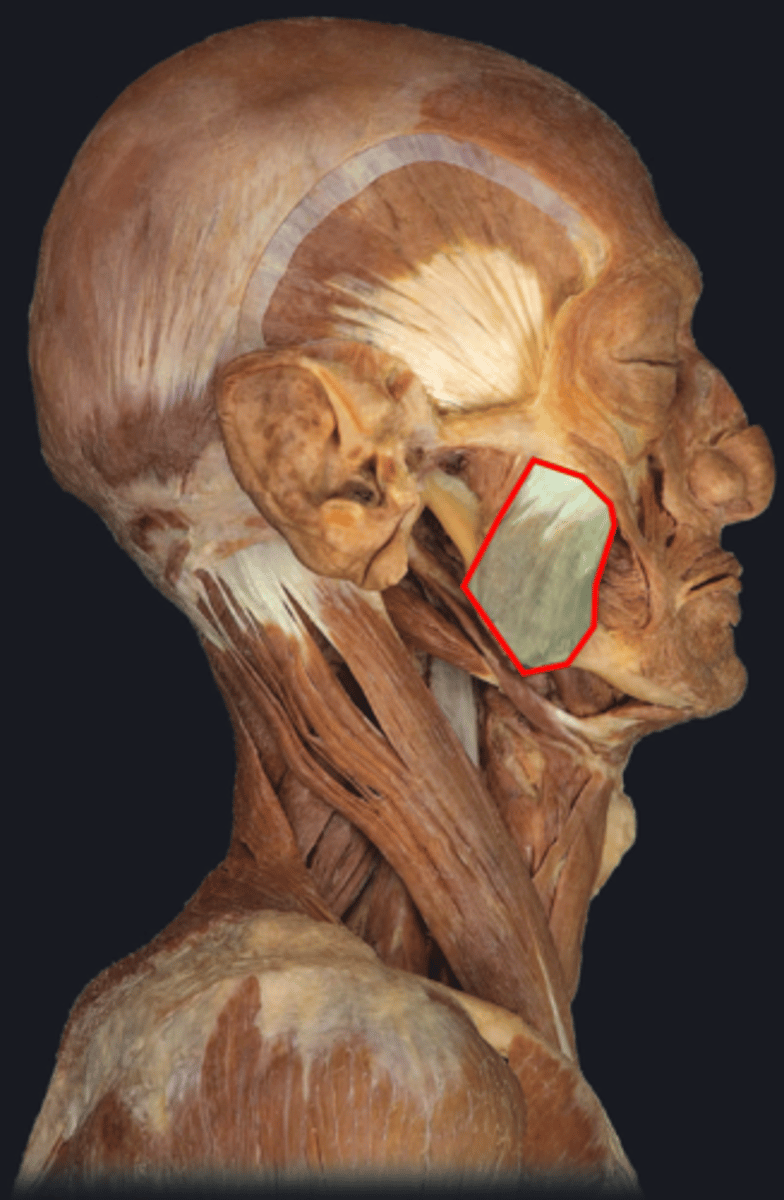
Middle Scalene (muscle)
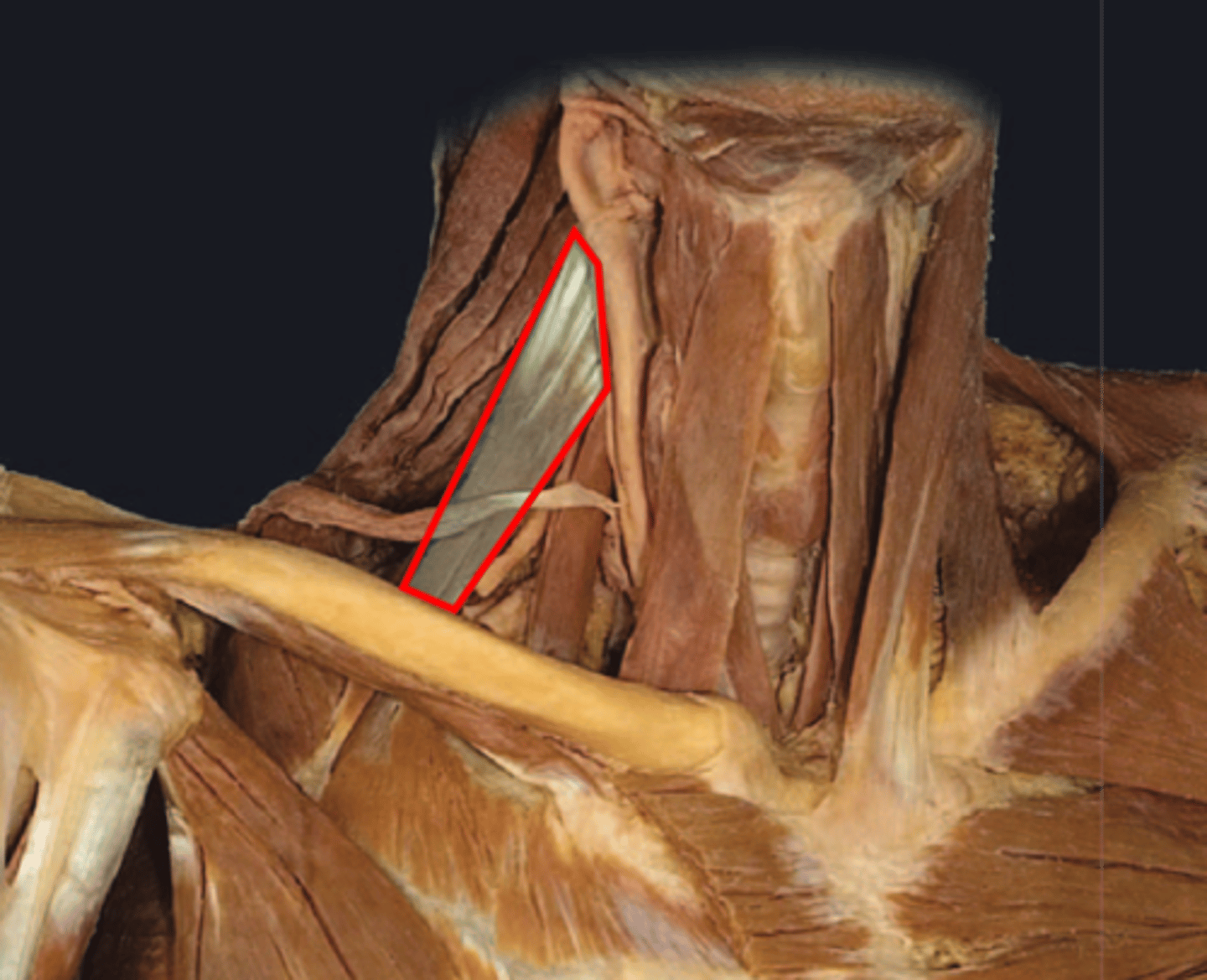
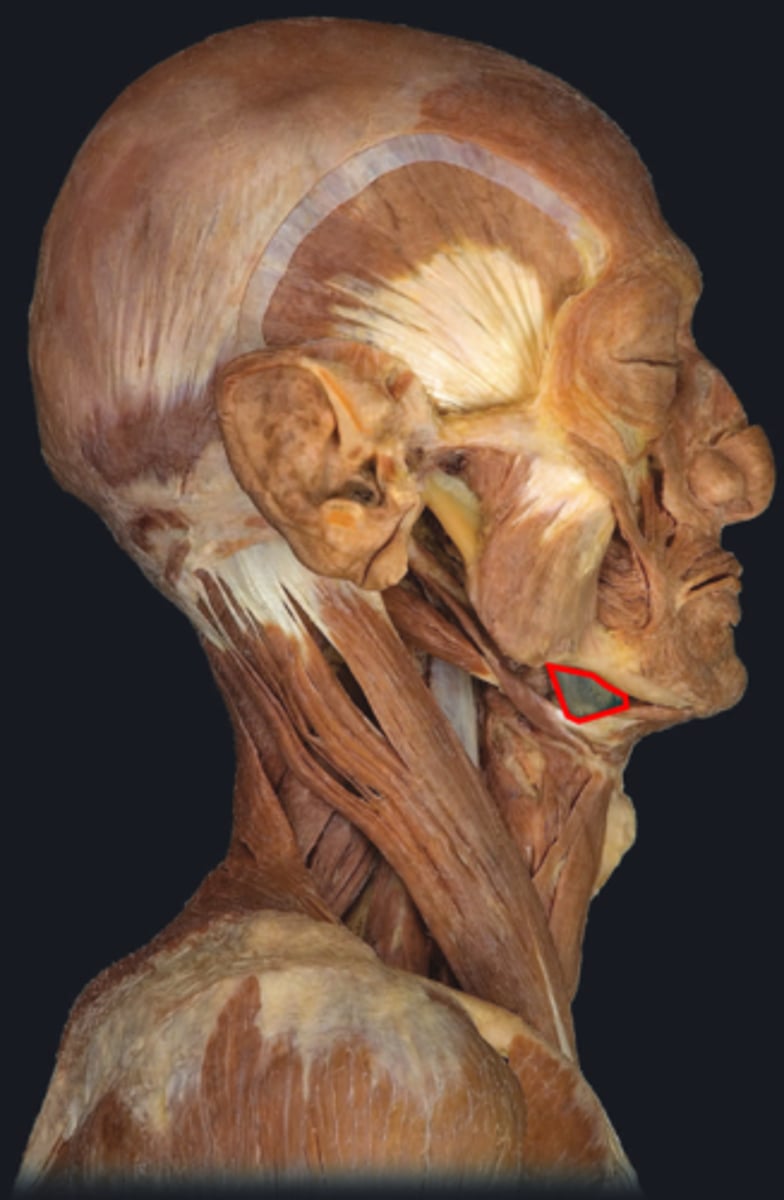
Mylohyoid (muscle)
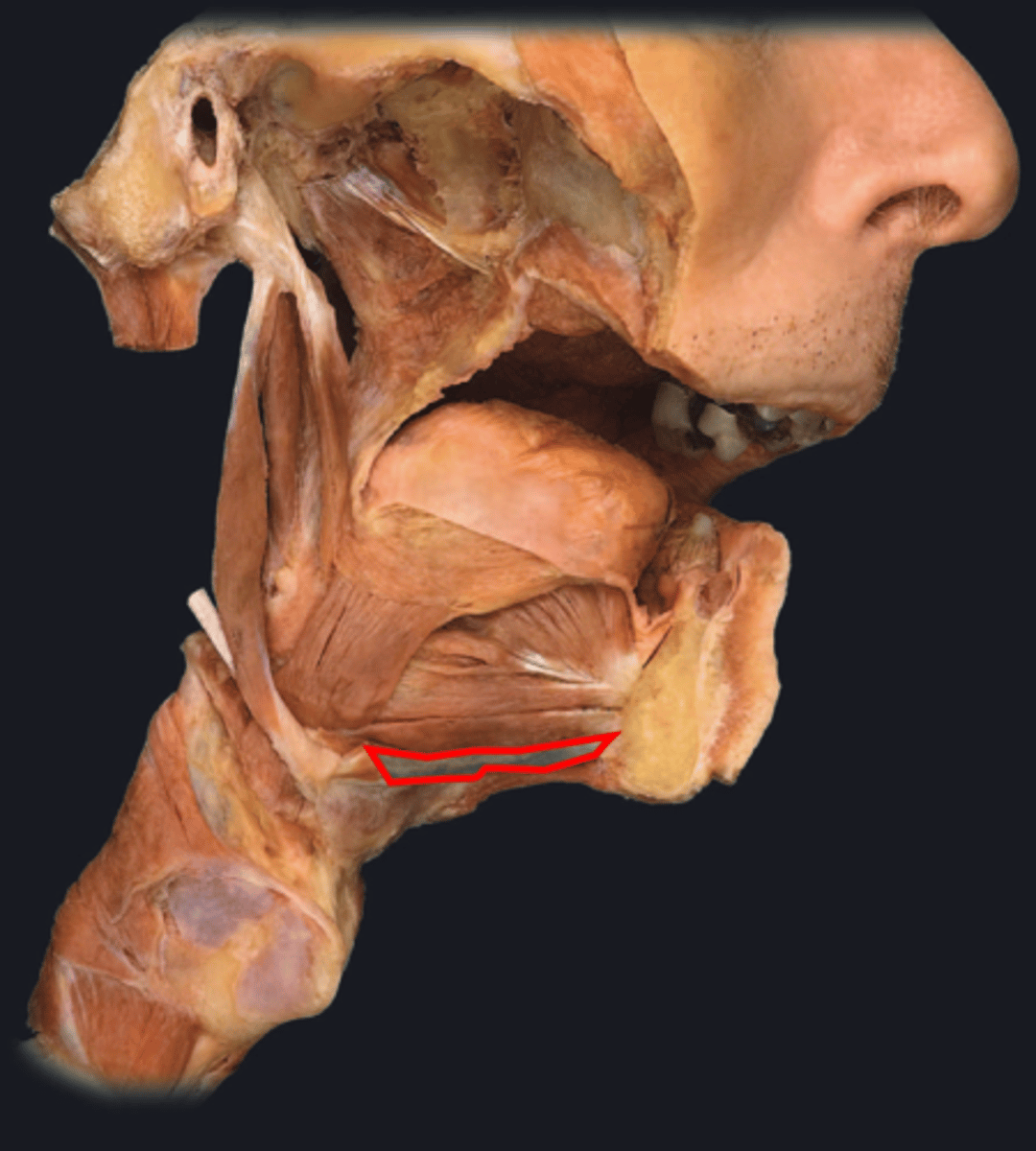
Mylohyoid (muscle)
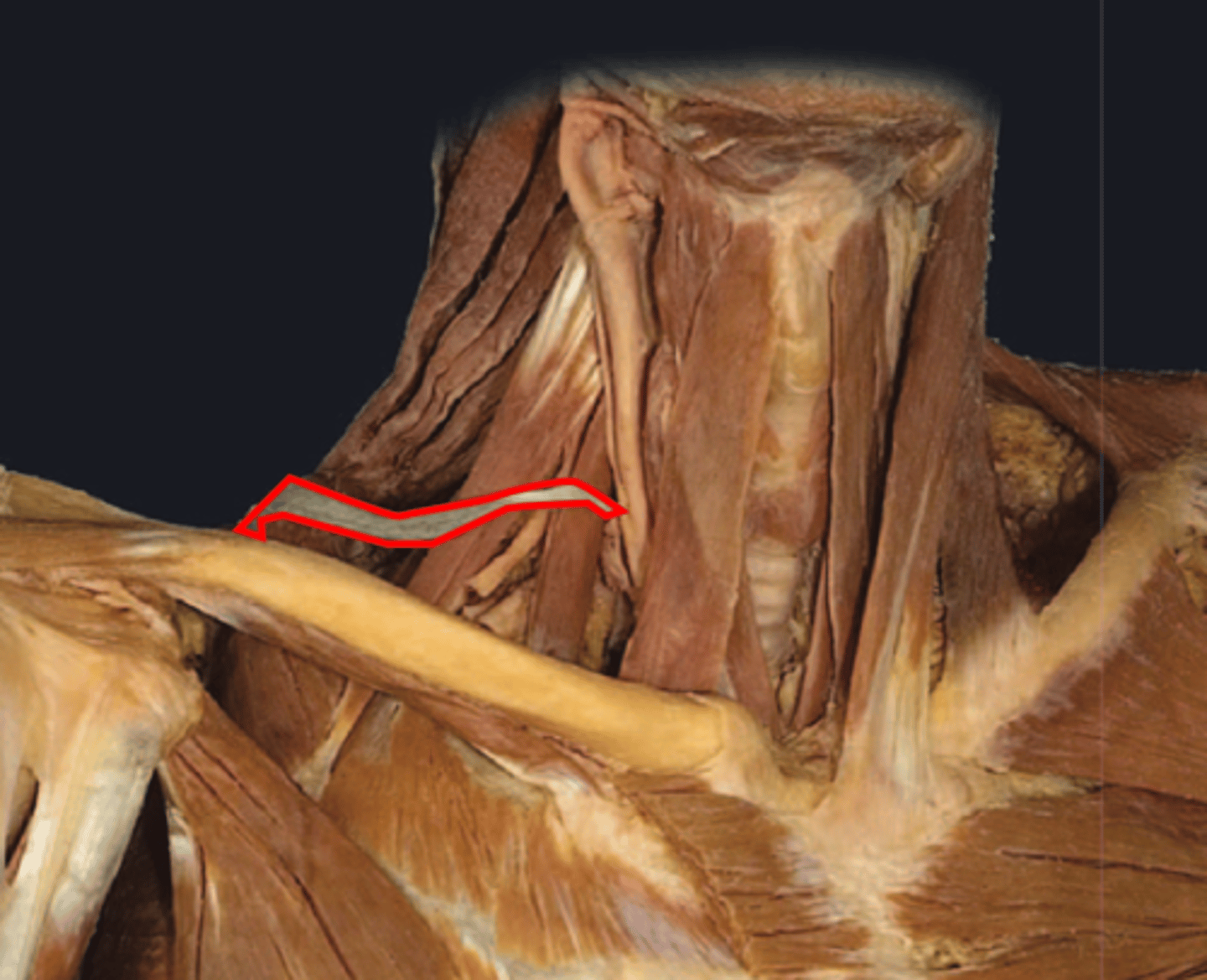
Omohyoid (muscle)
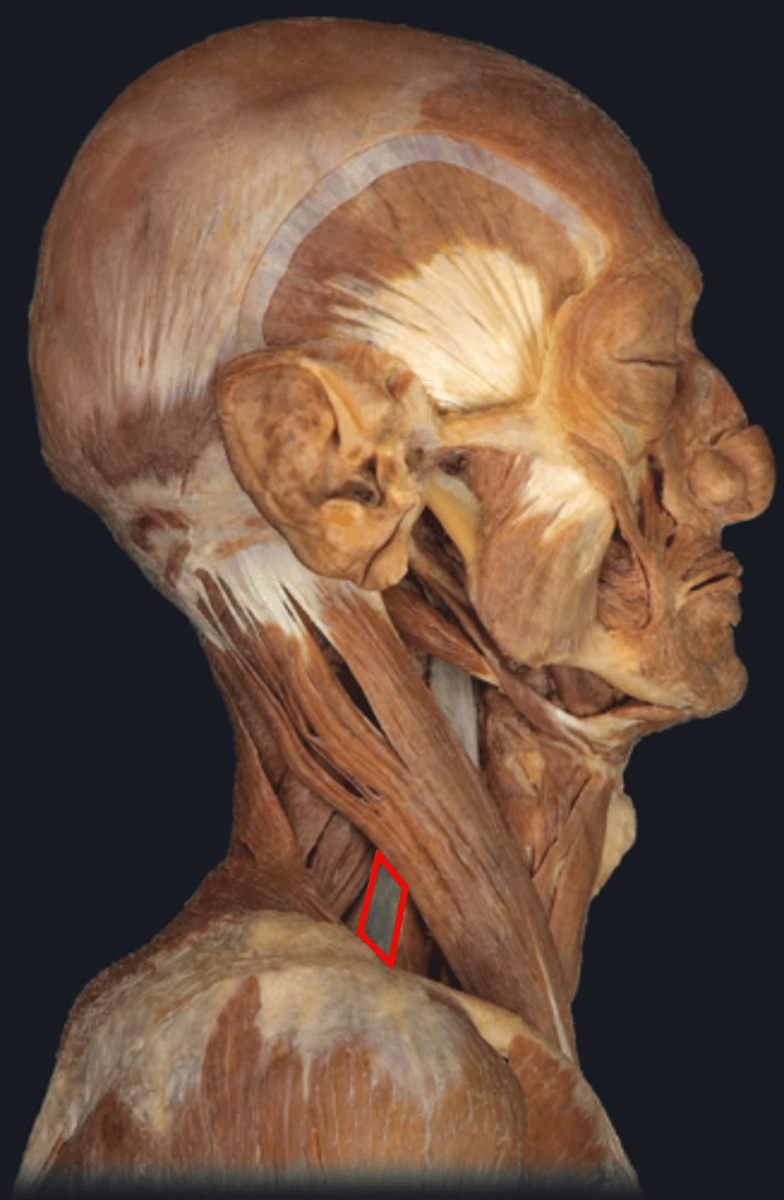
Posterior Scalene (muscle)
Sternocleidomastoid (muscle)
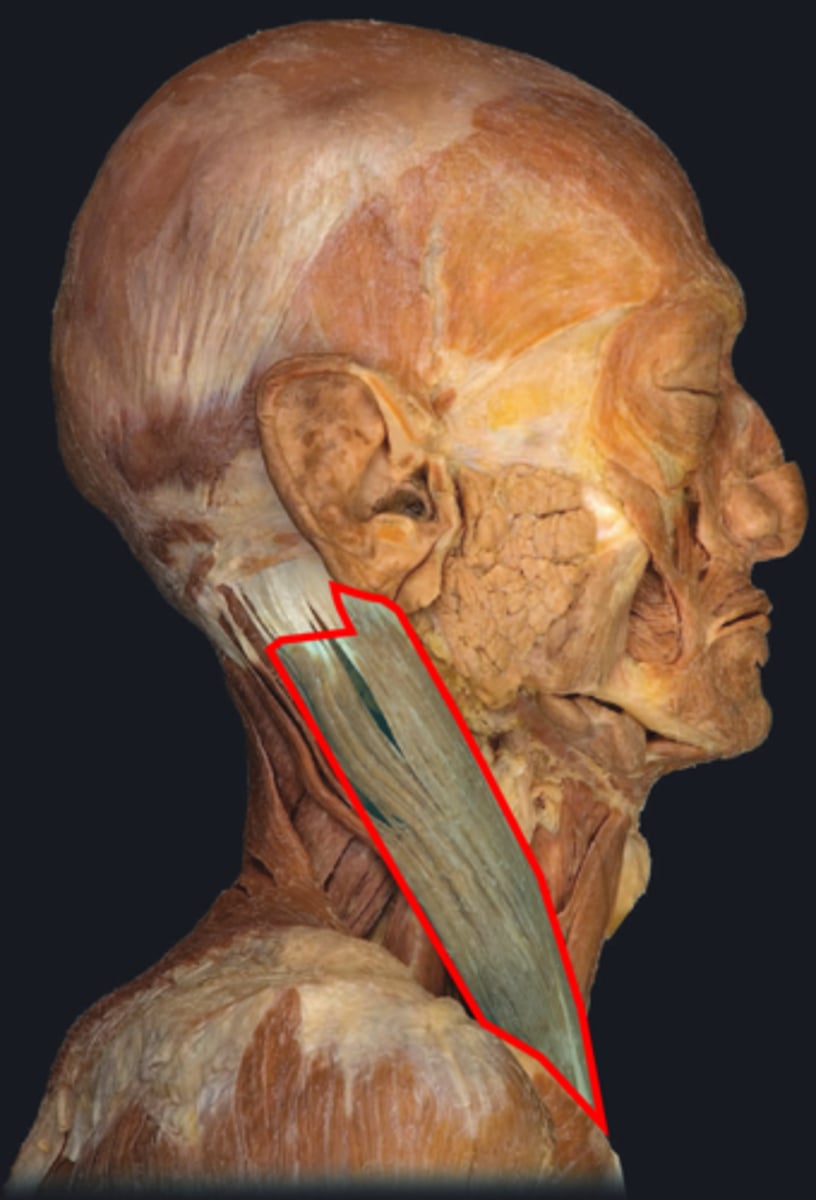
Sternohyoid (muscle)
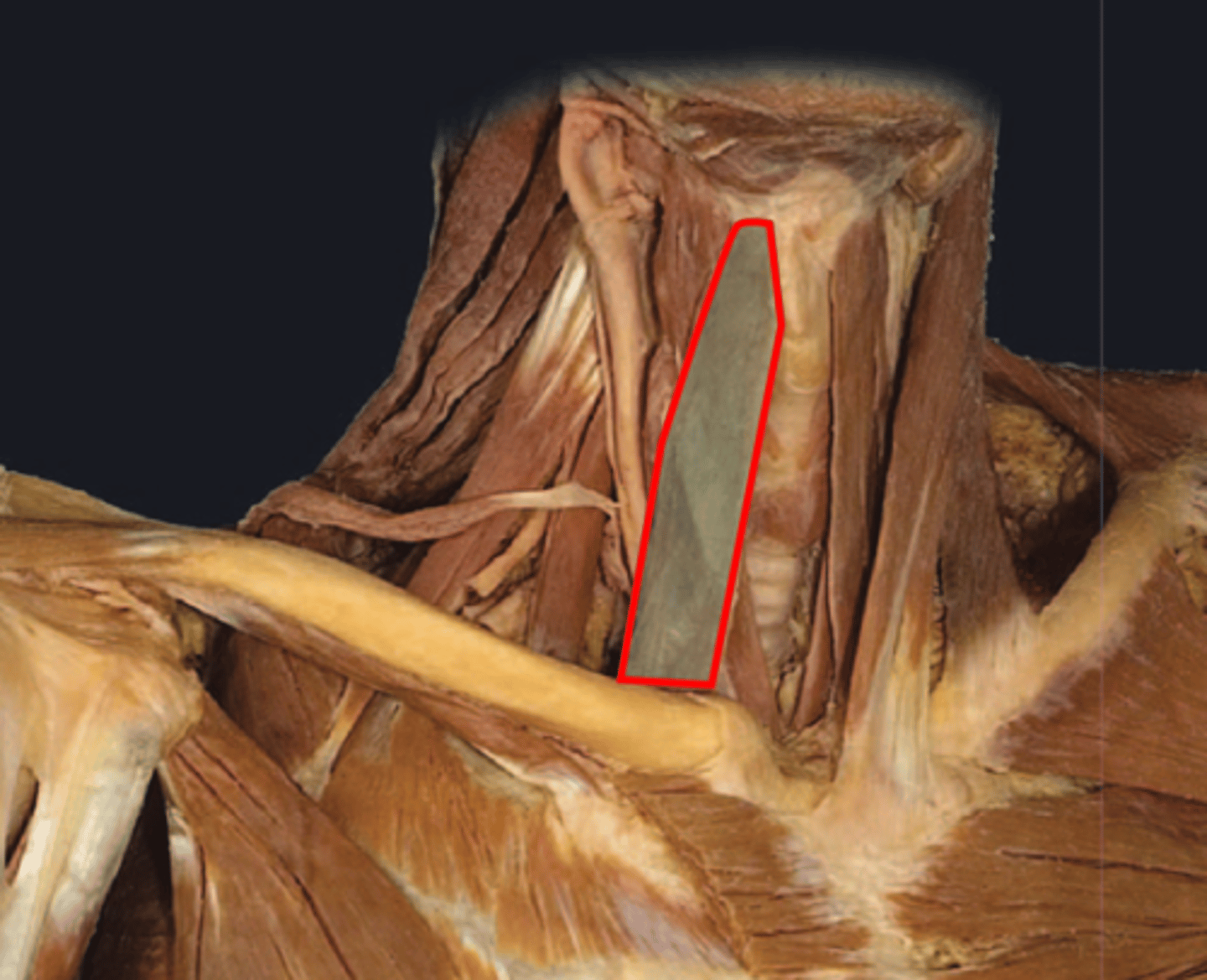
Sternothyroid (muscle)
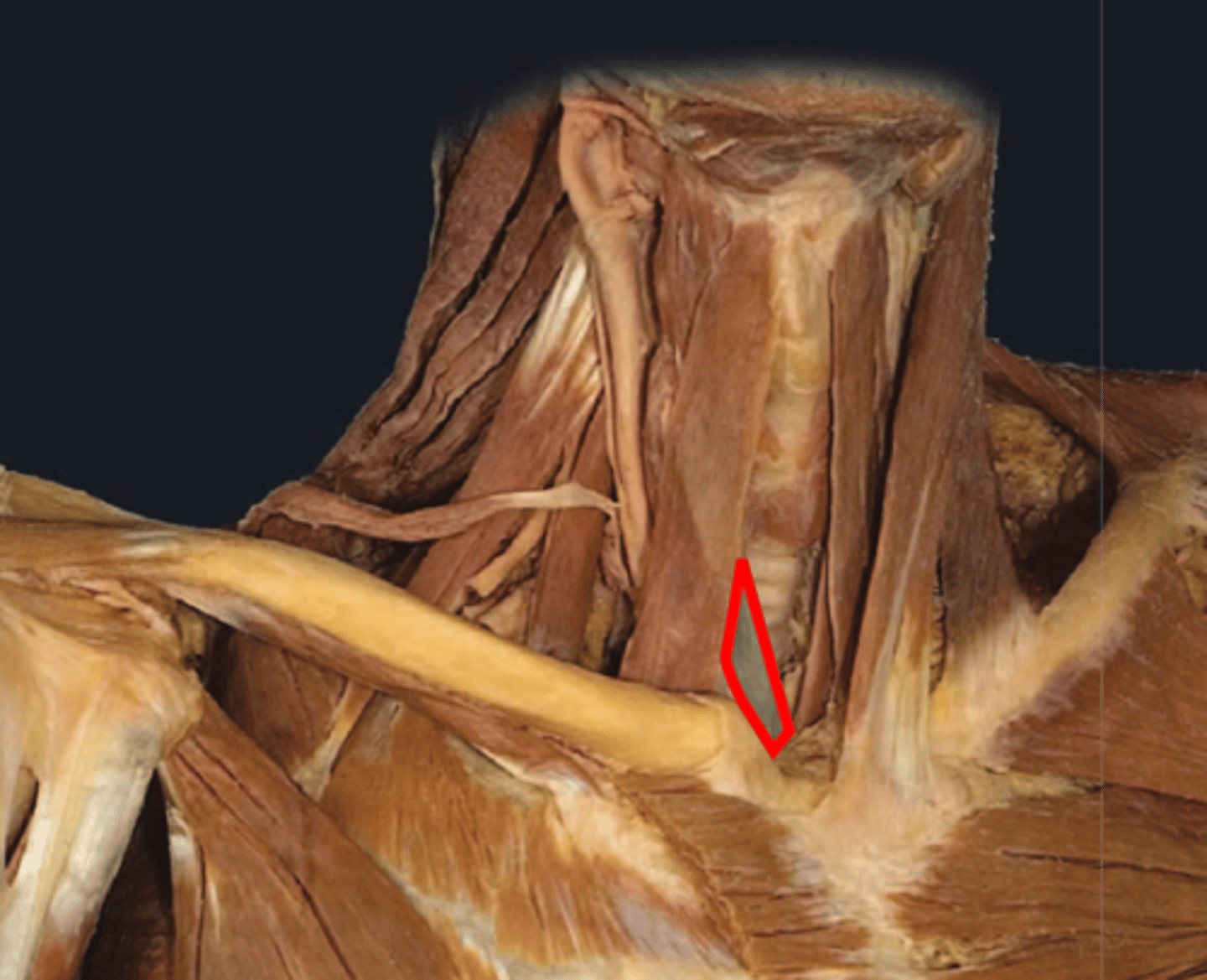
Stylohyoid (muscle)
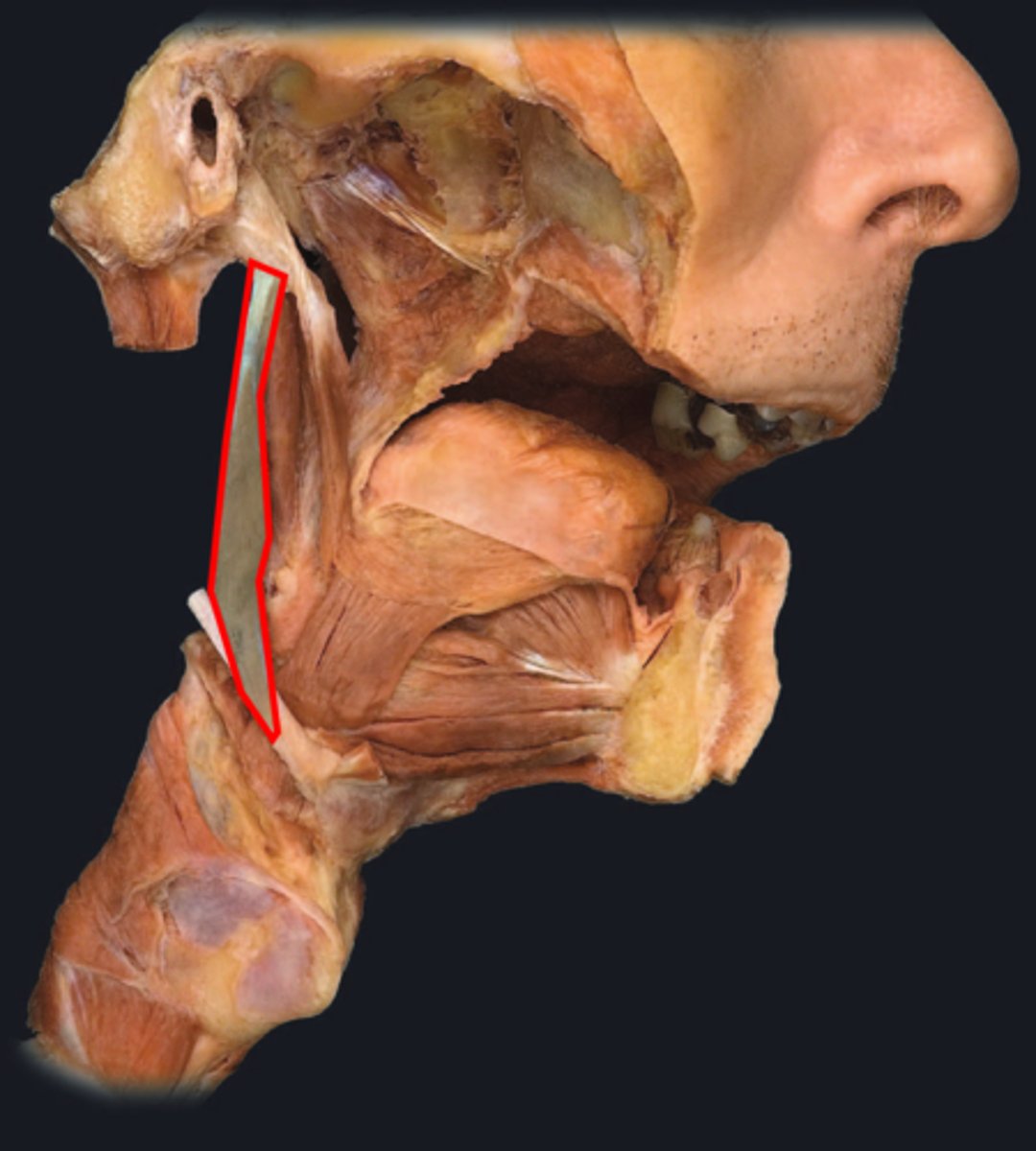
Stylohyoid (muscle)
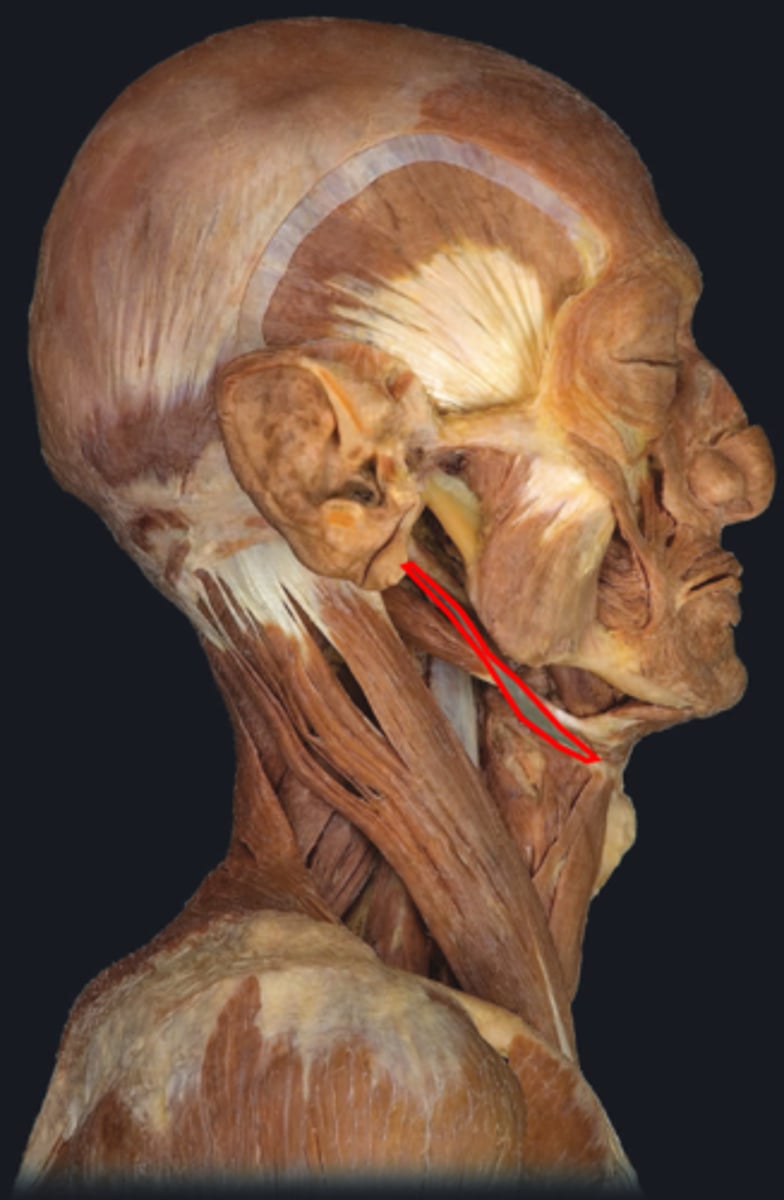
Temporalis (muscle)
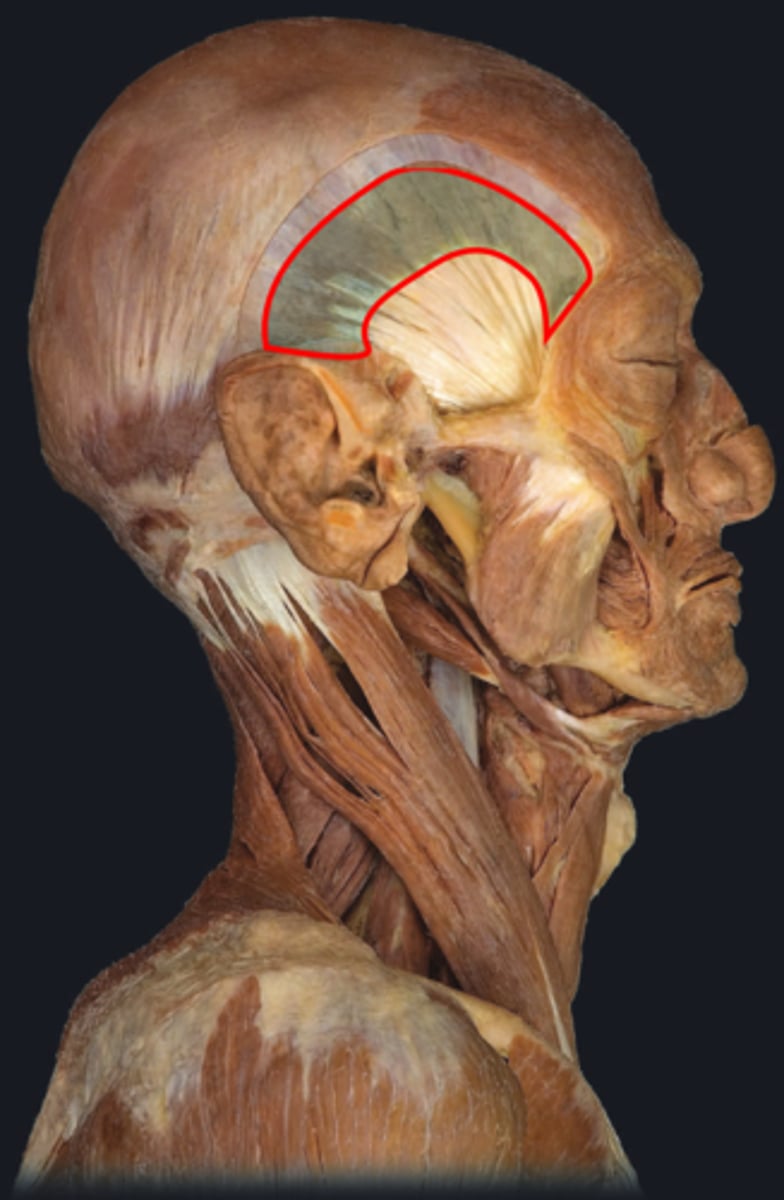
Thyrohyoid (muscle)
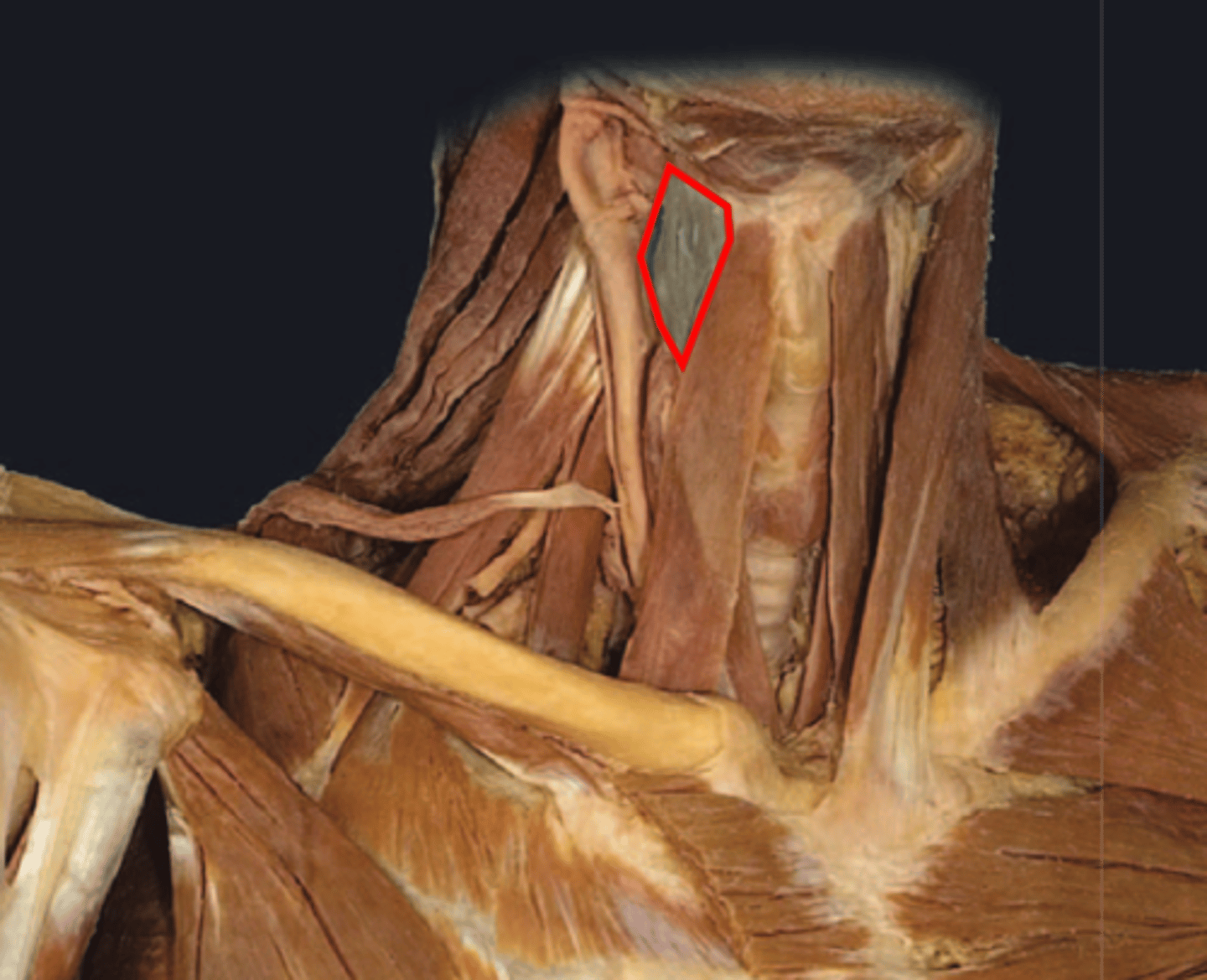
Common Carotid Artery
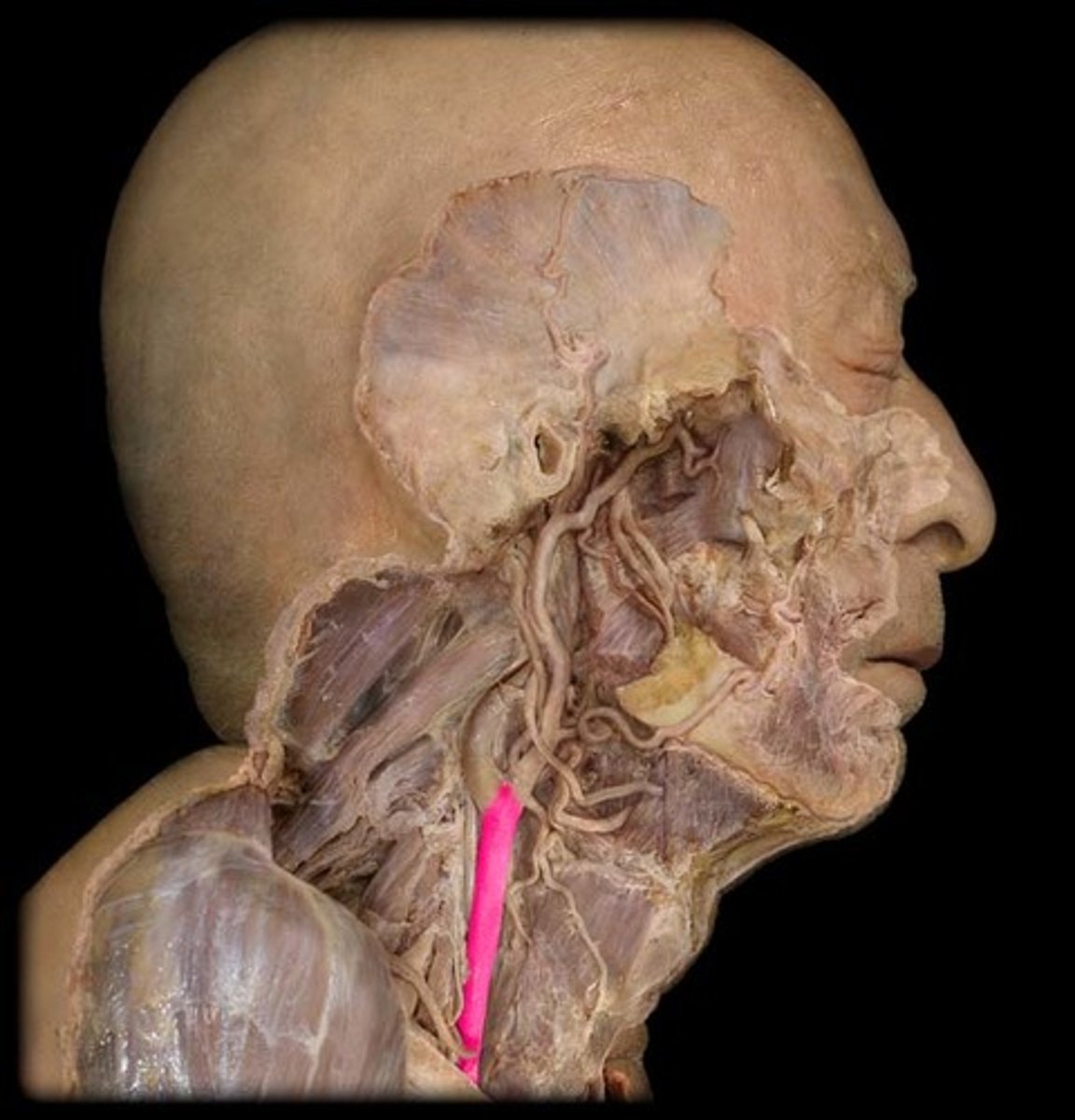
External Carotid Artery
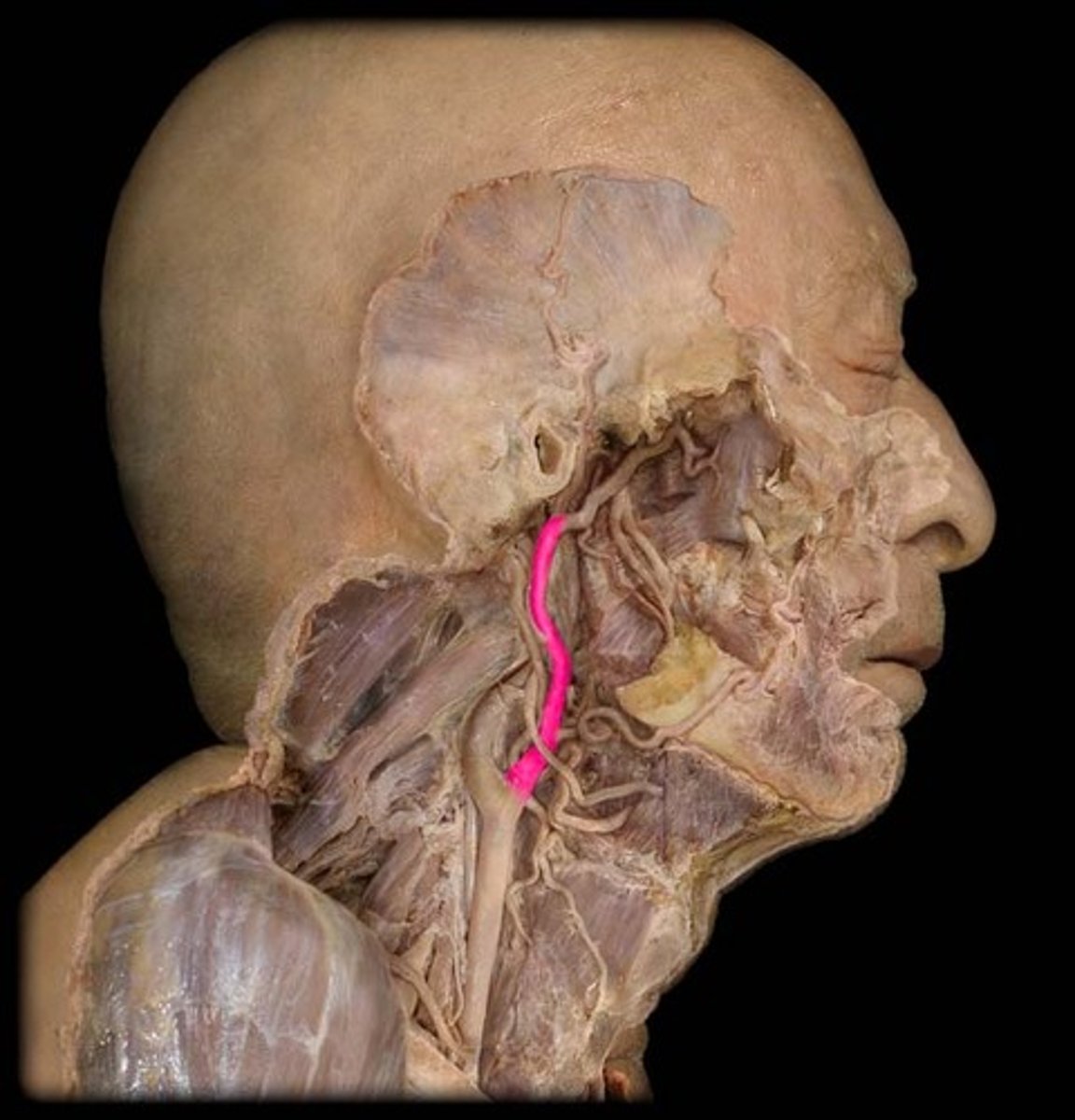
Superior Thyroid Artery
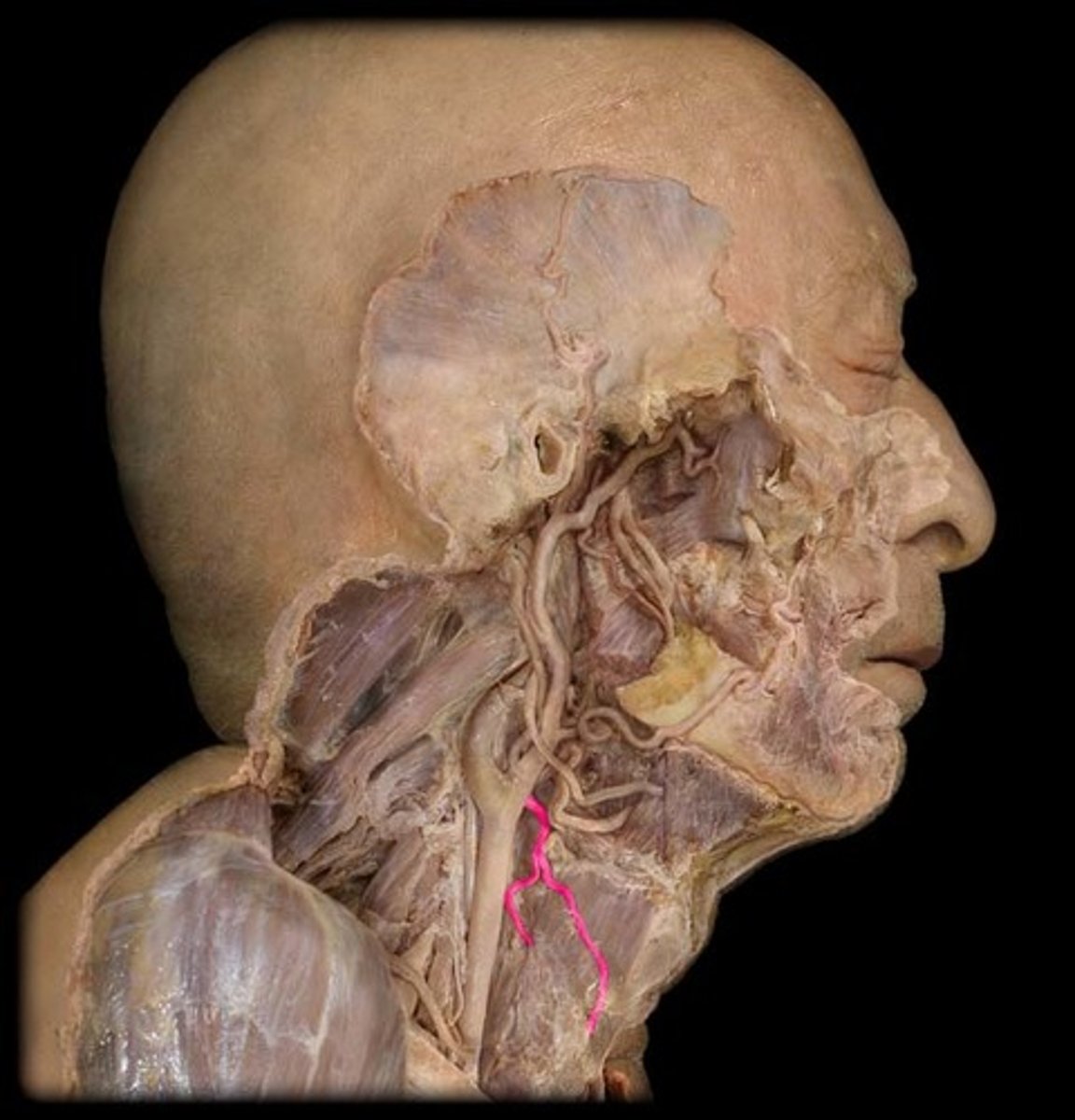
Lingual Artery
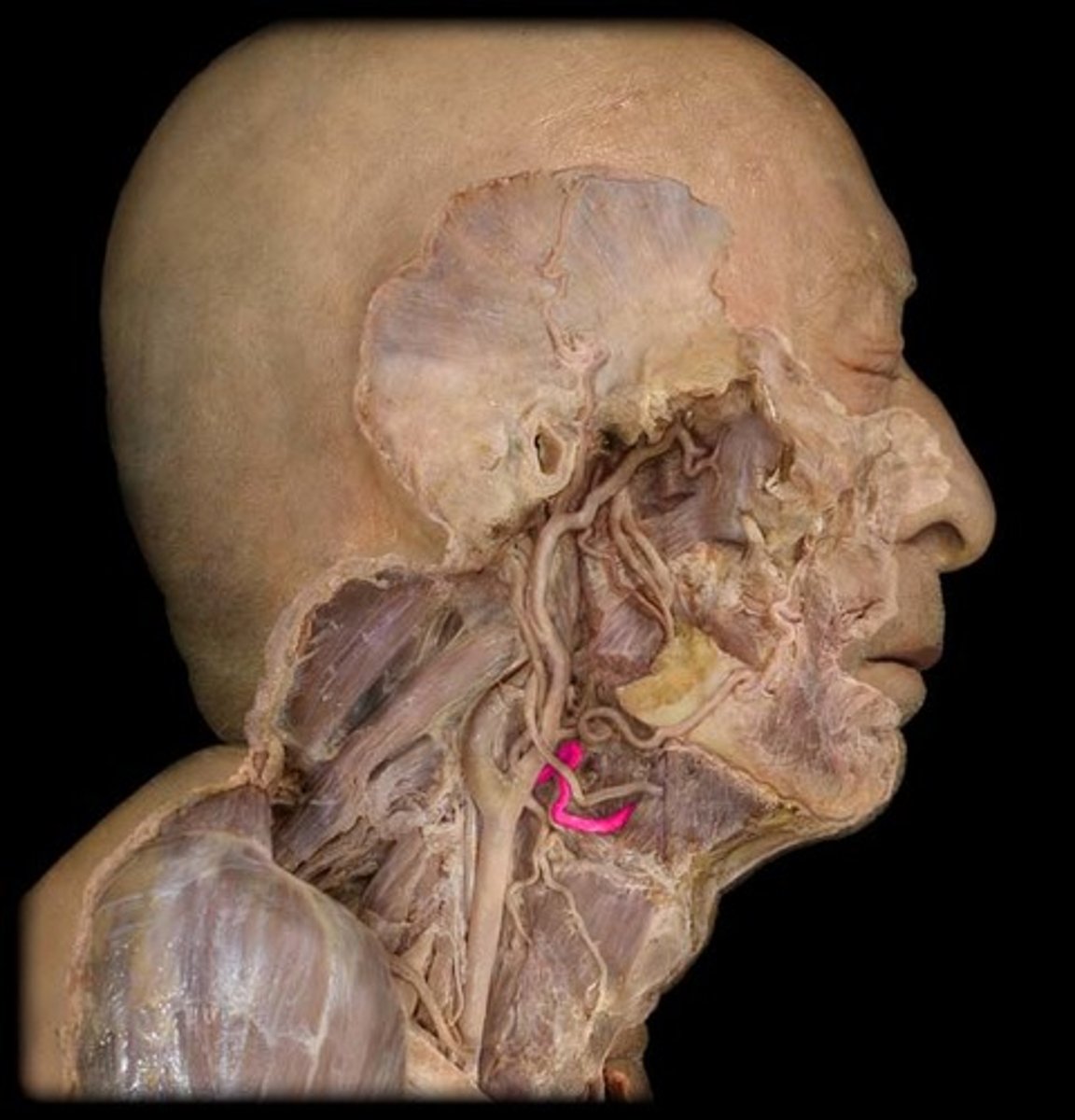
Facial Artery
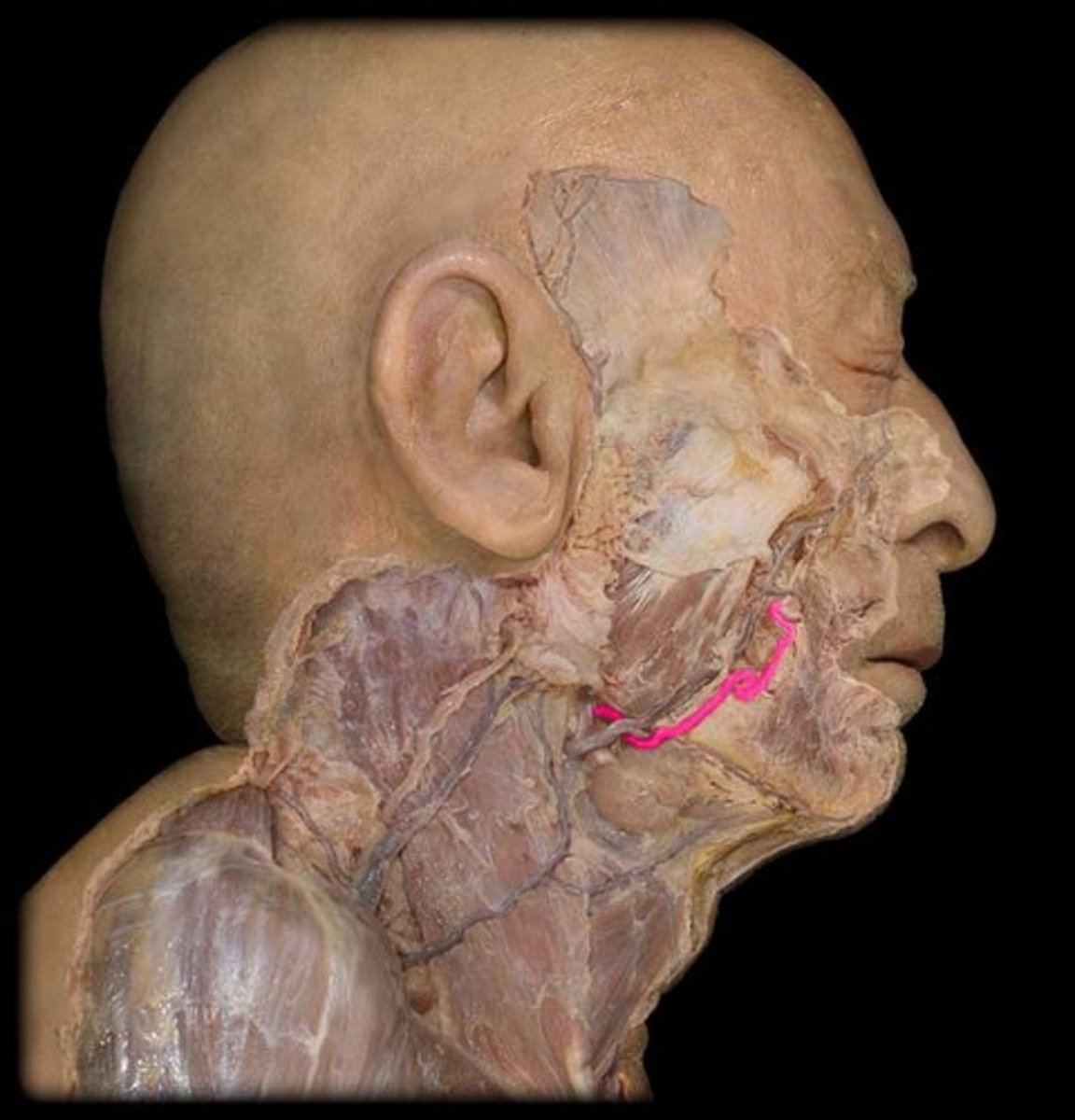
Occipital Artery
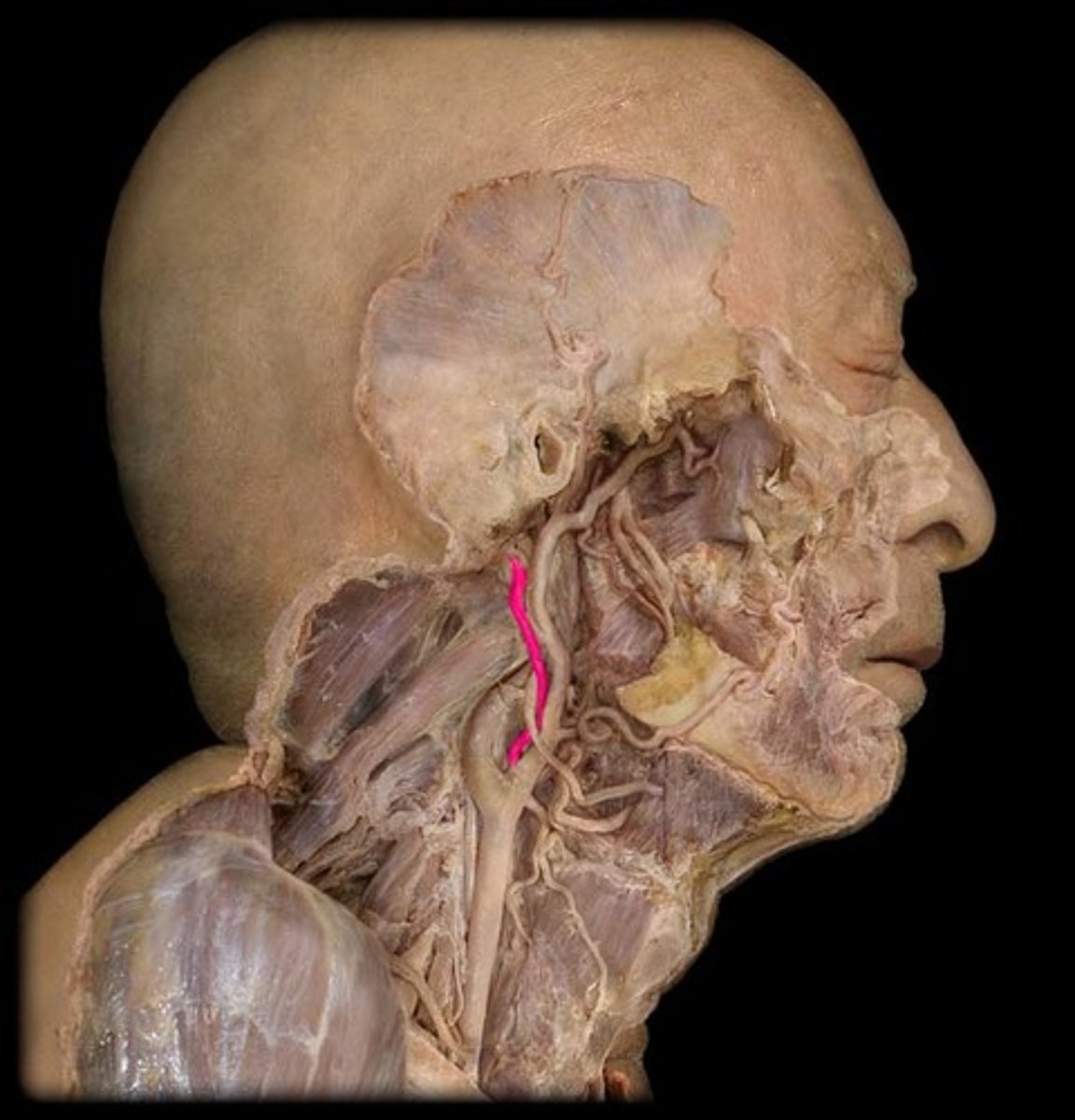
Maxillary Artery
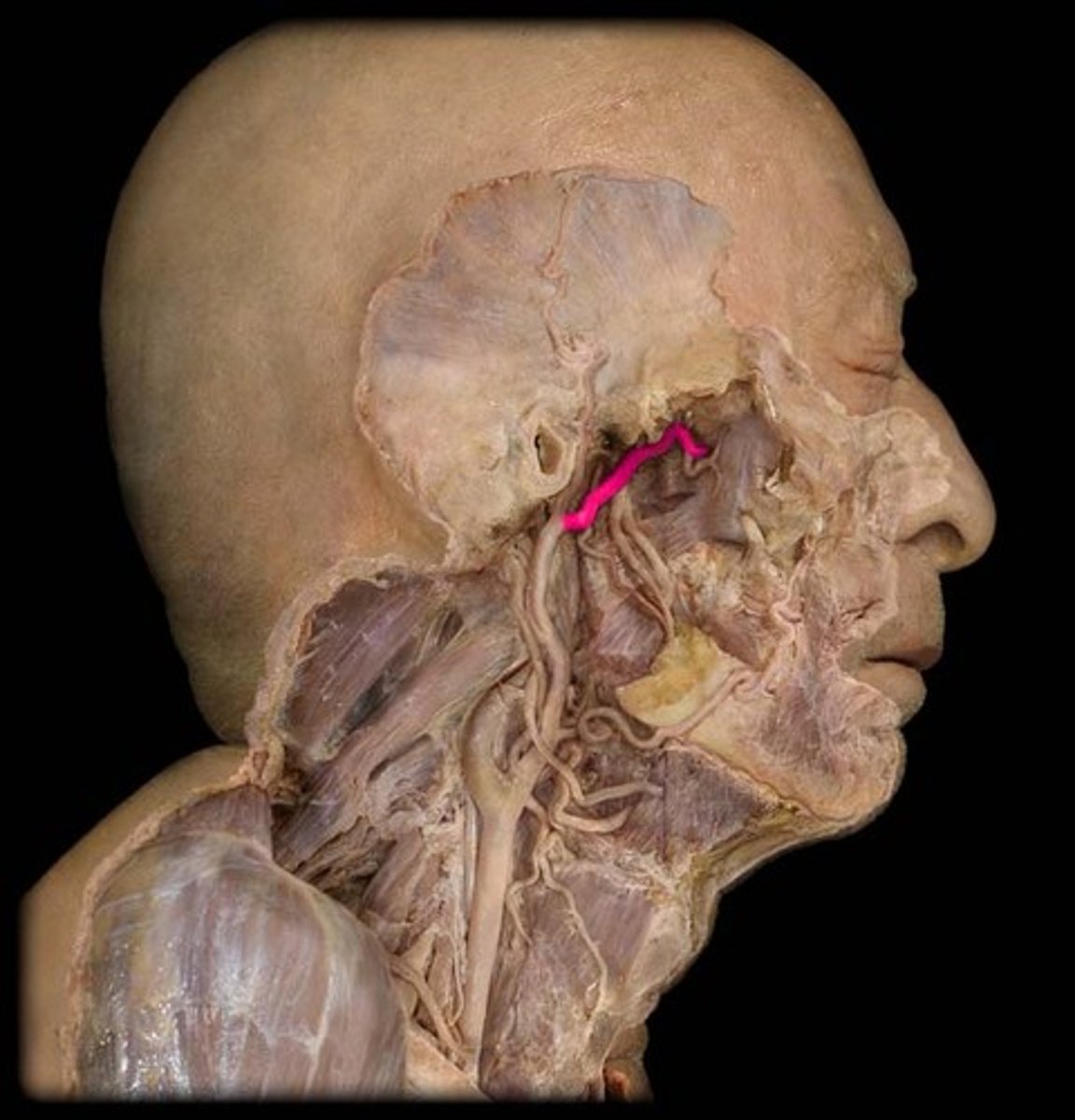
Superficial Temporal Artery
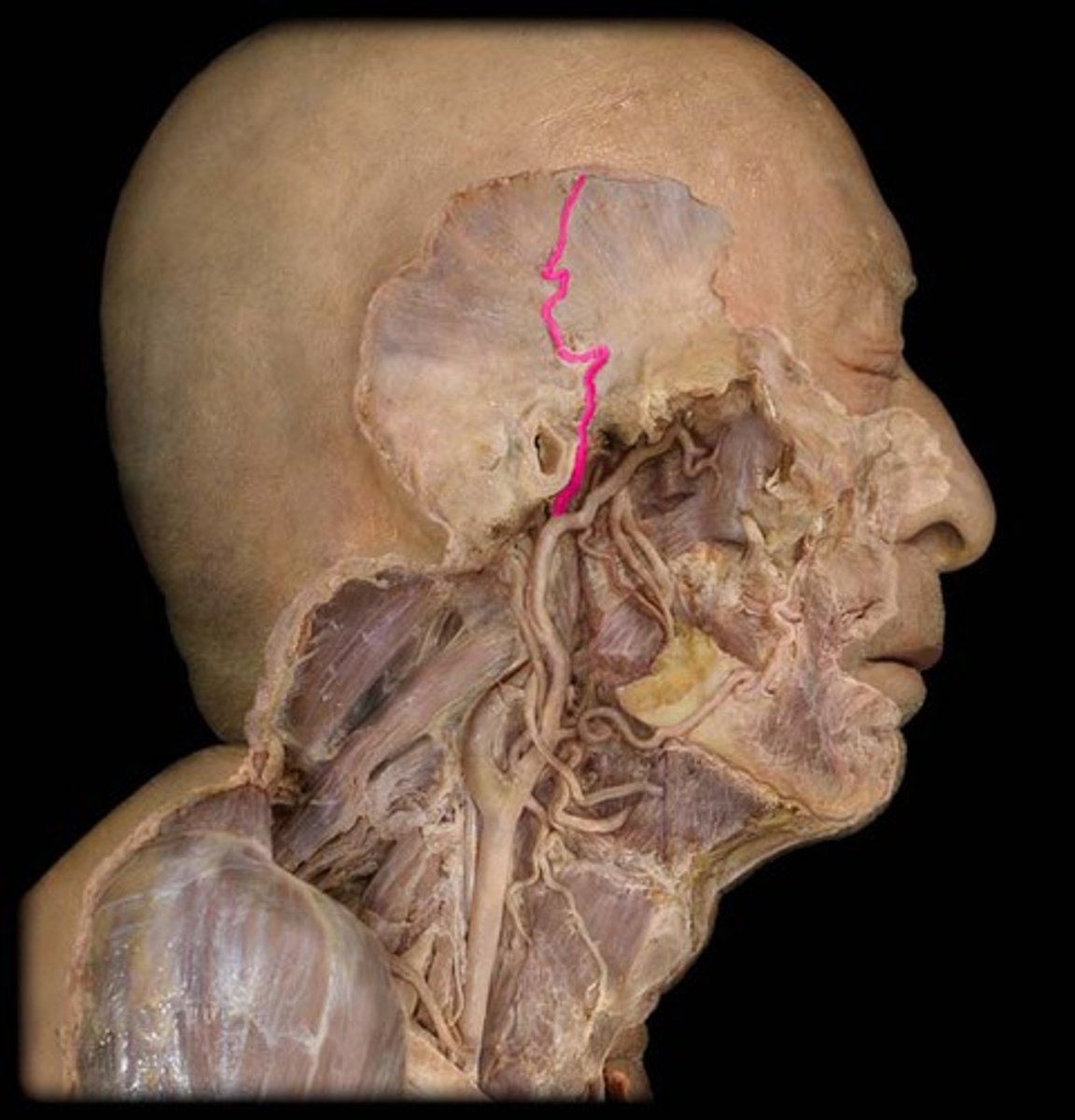
Auriculotemporal (nerve)
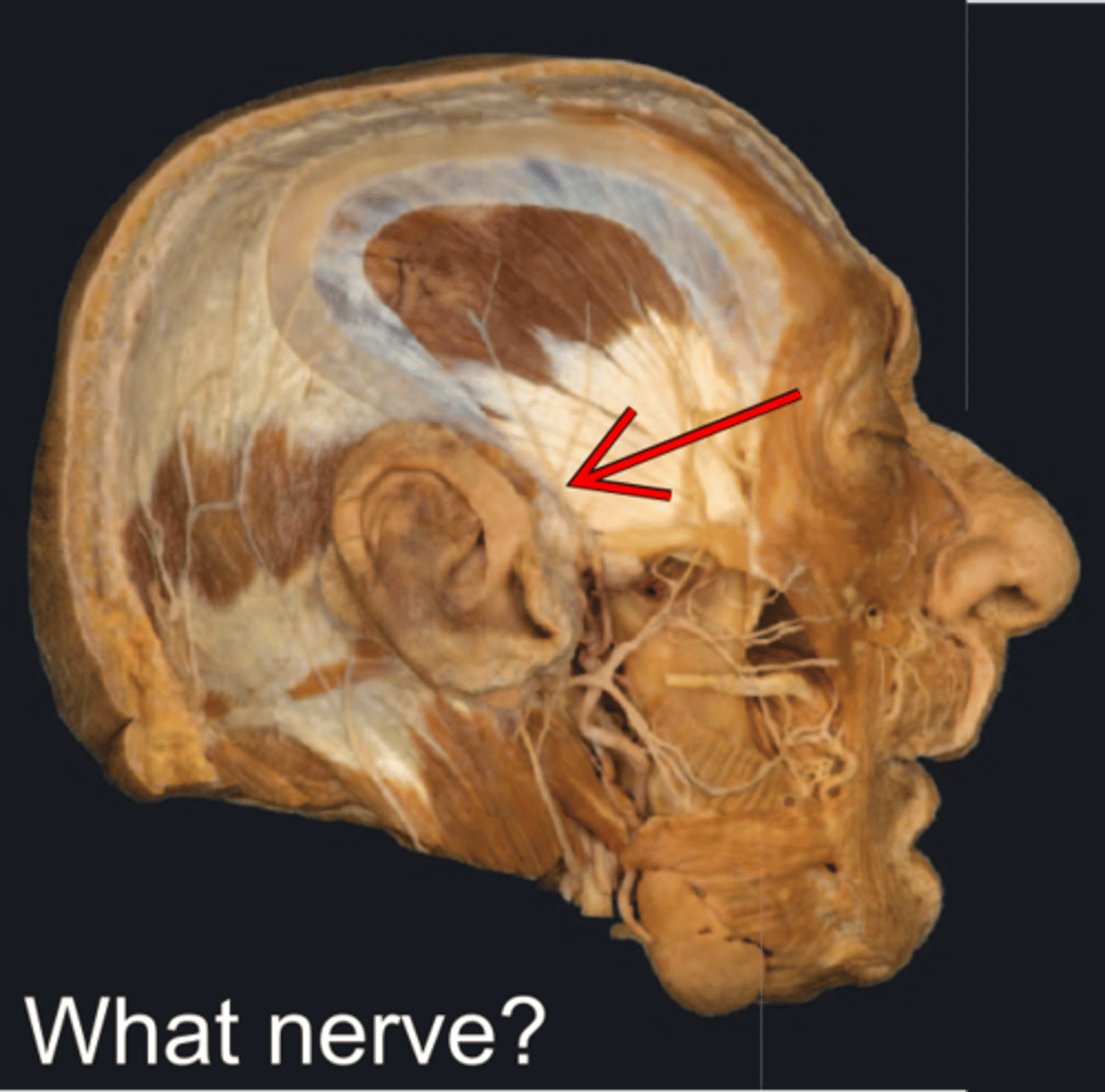
Buccal (branch of facial nerve)
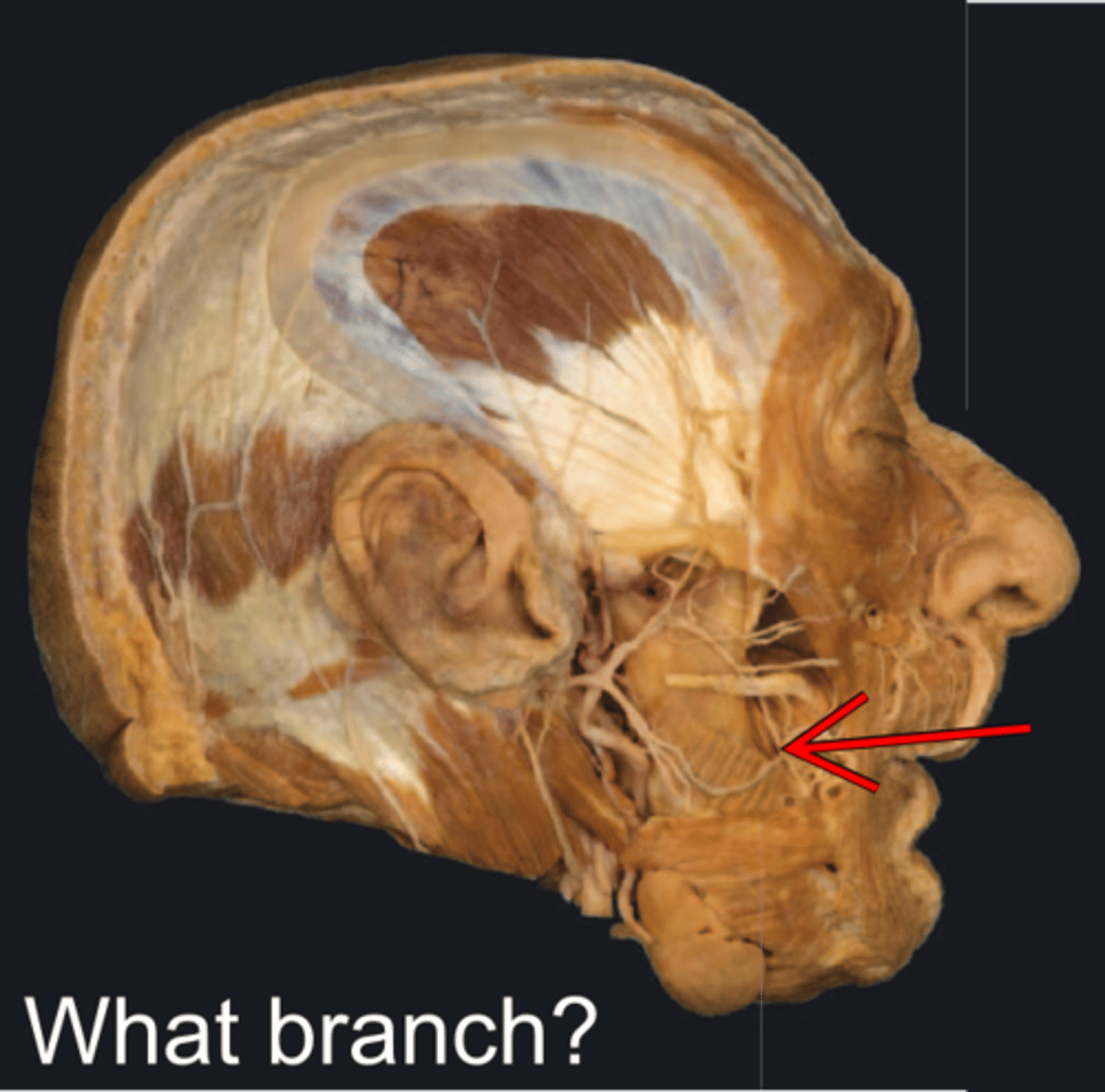
Cervical (branch of facial nerve)
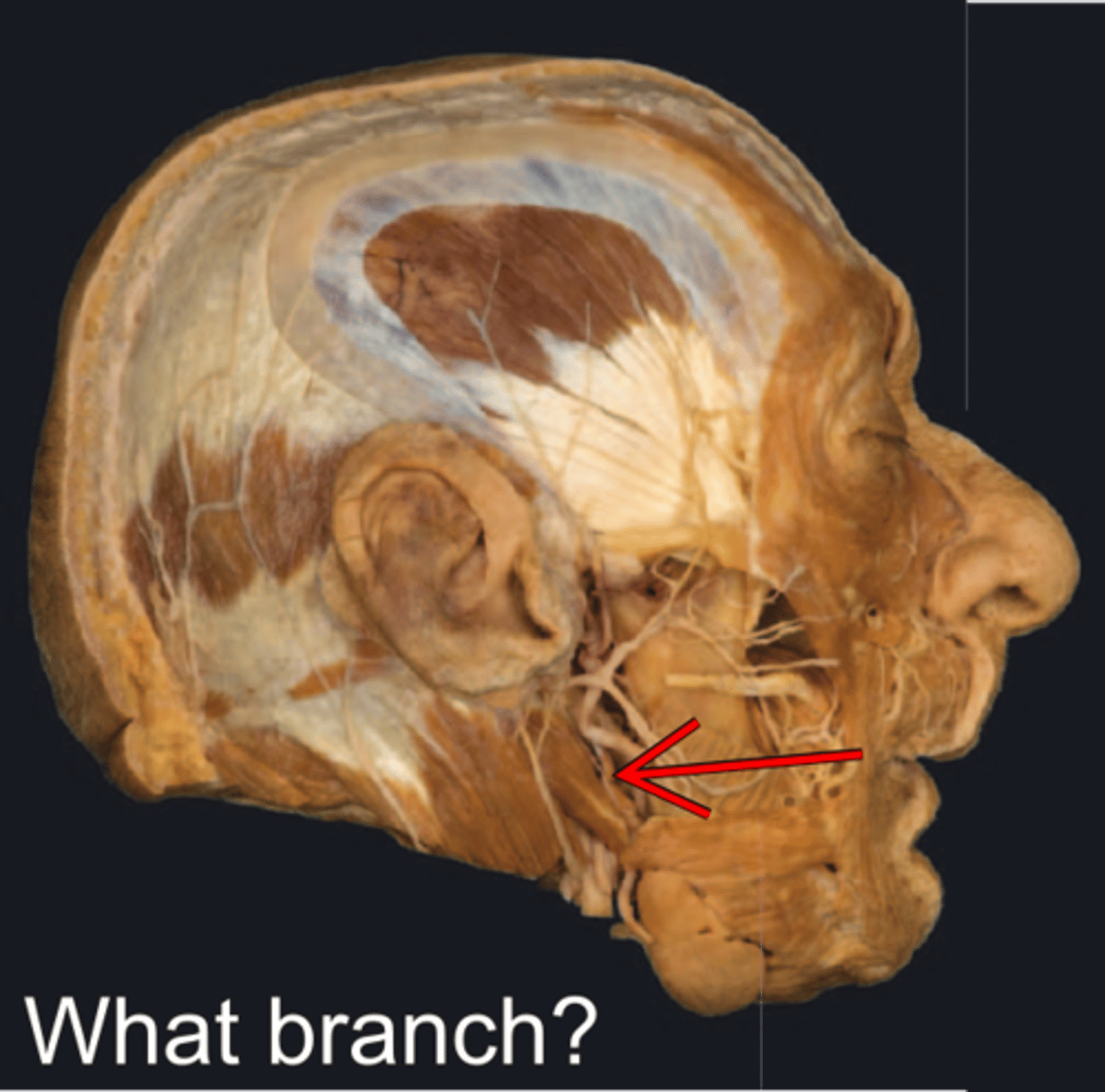
Facial (nerve)
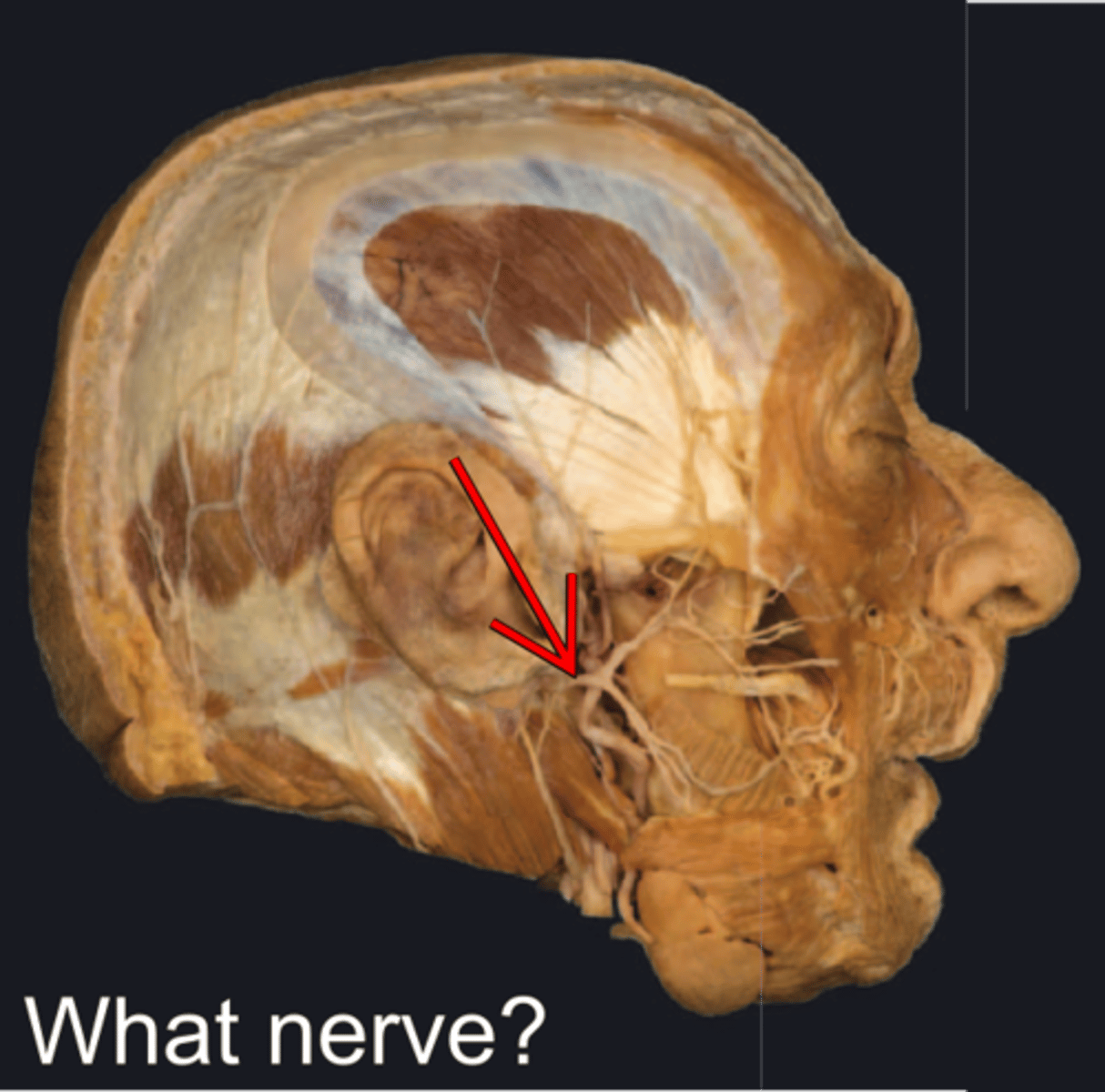
Greater auricular (nerve)
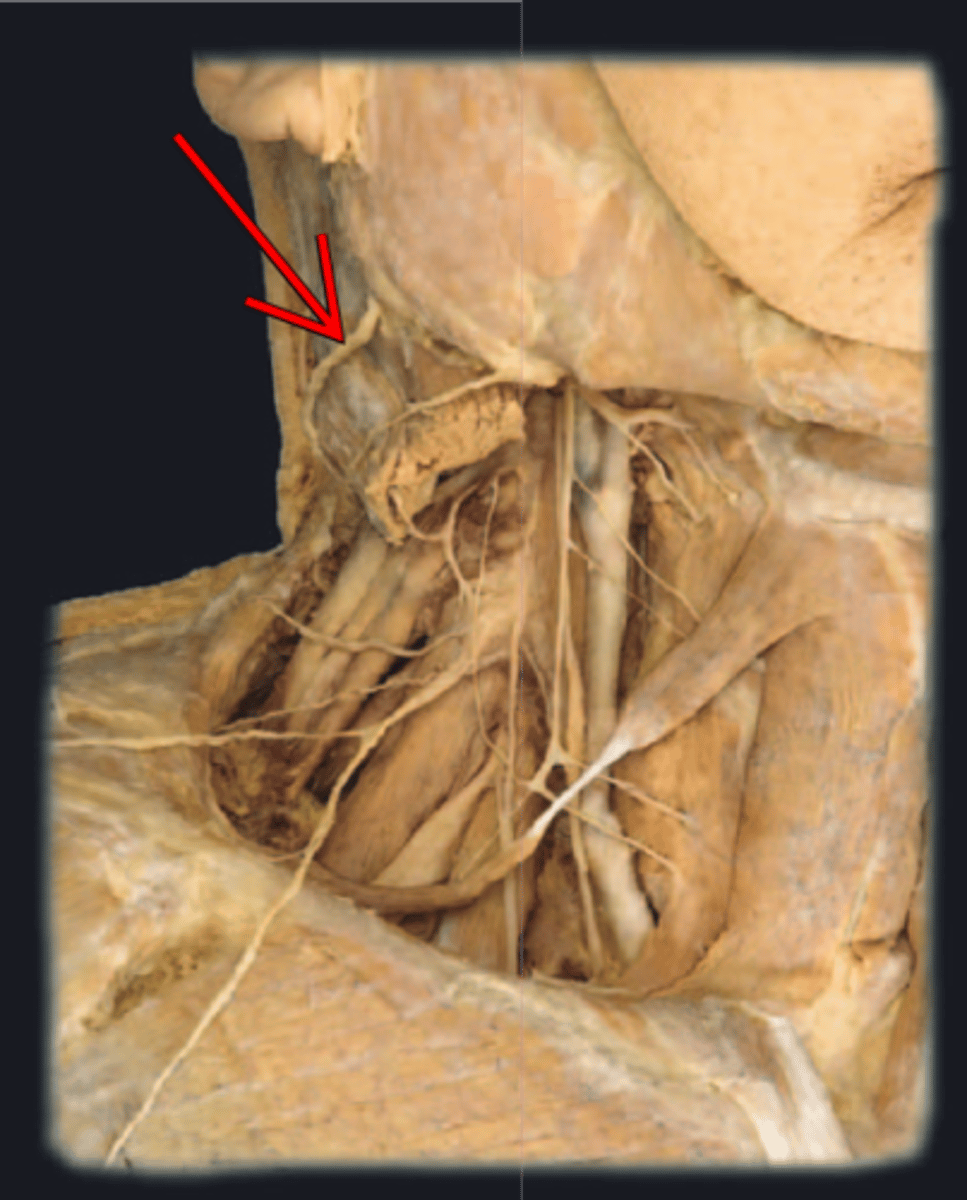
Greater occipital (nerve)
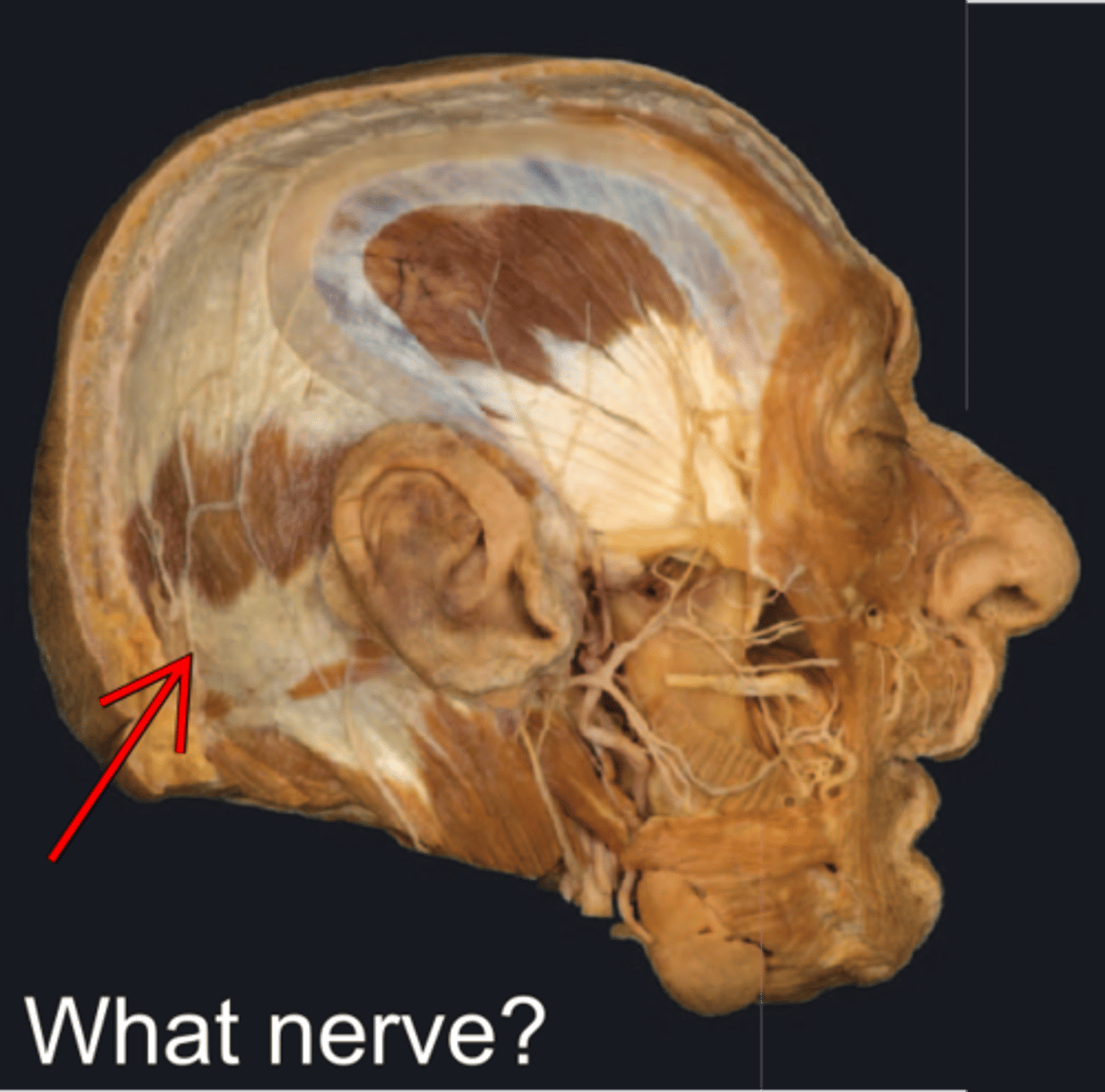
Hypoglossal (nerve)
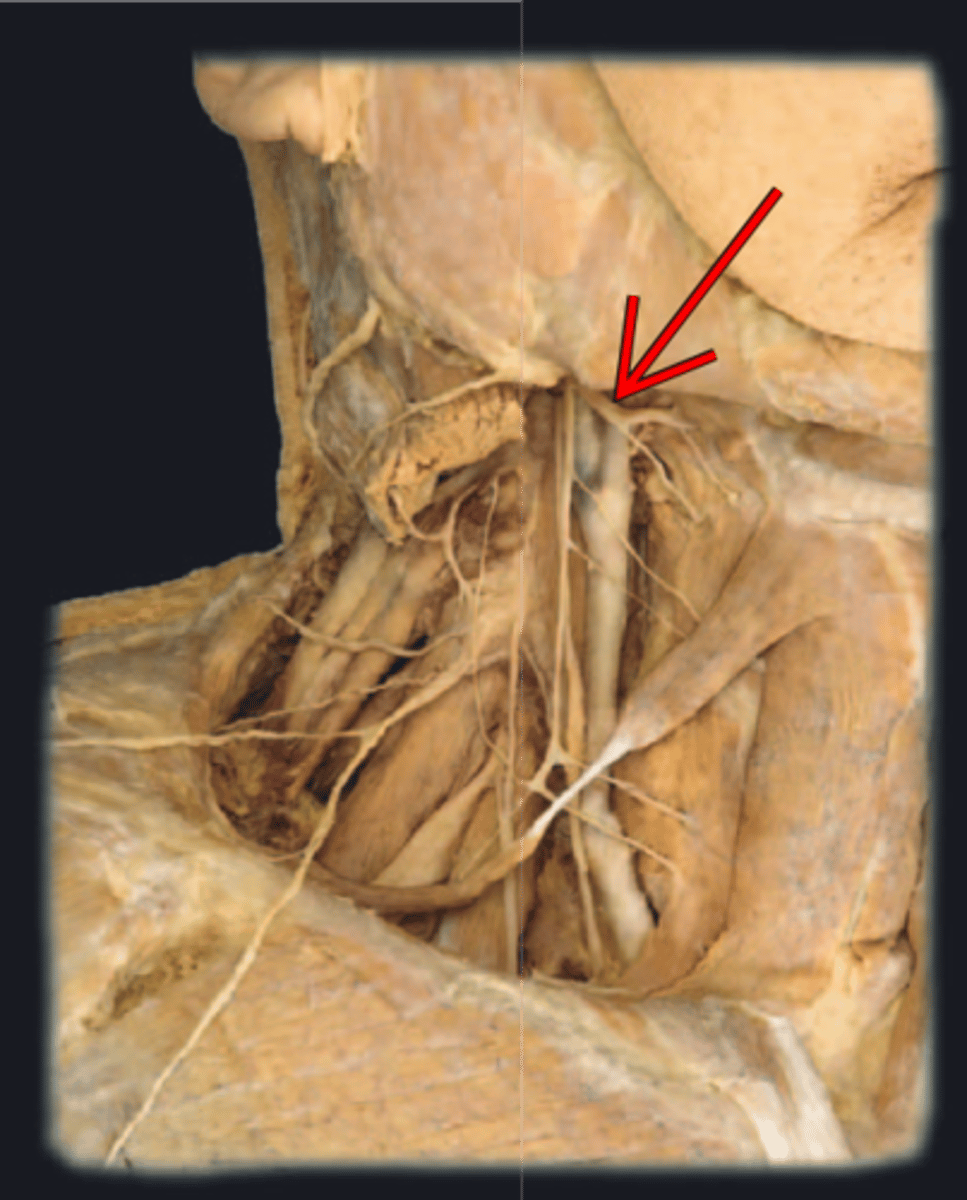
Infraorbital (nerve)
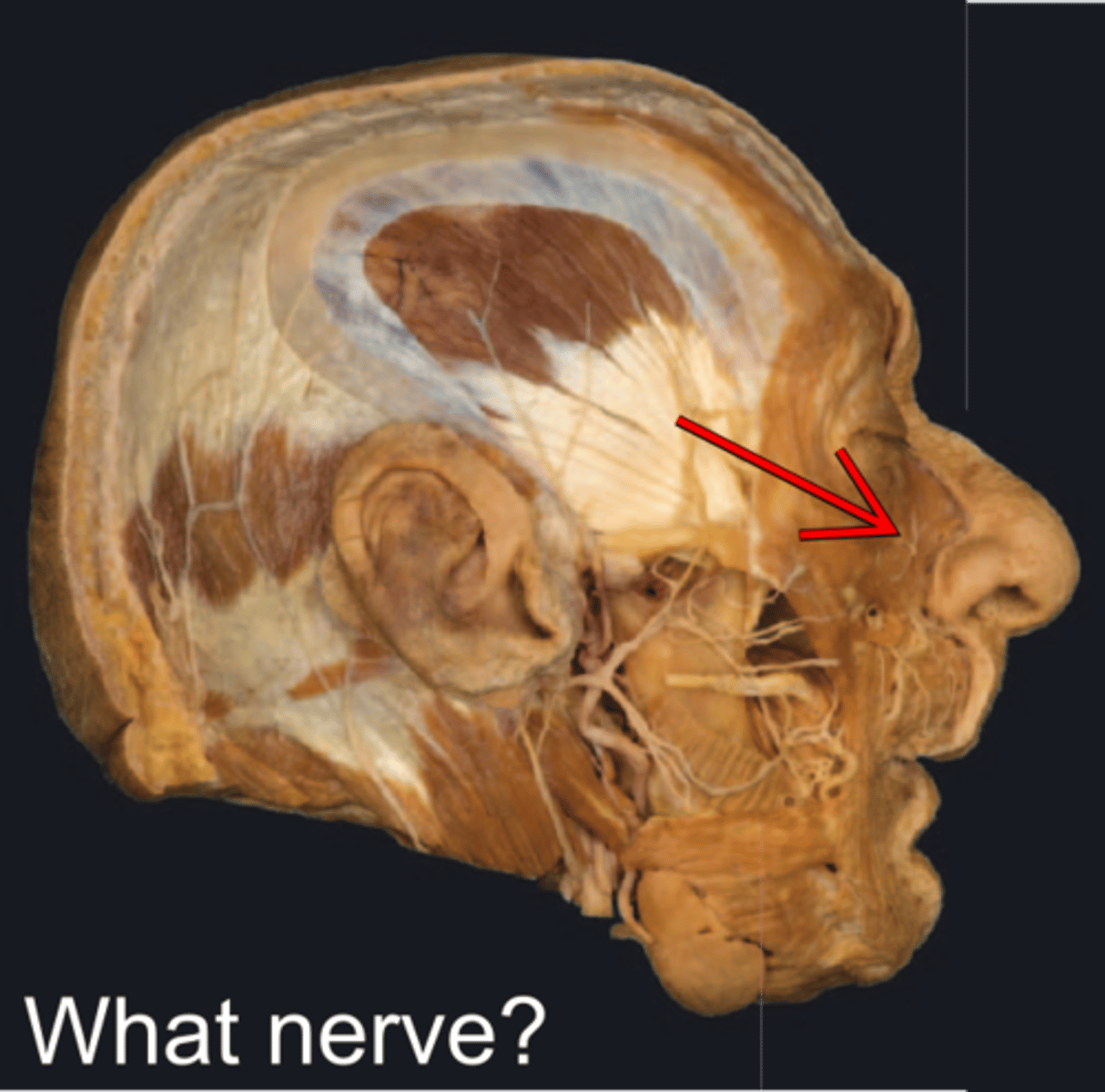
Mandibular (branch of facial nerve)
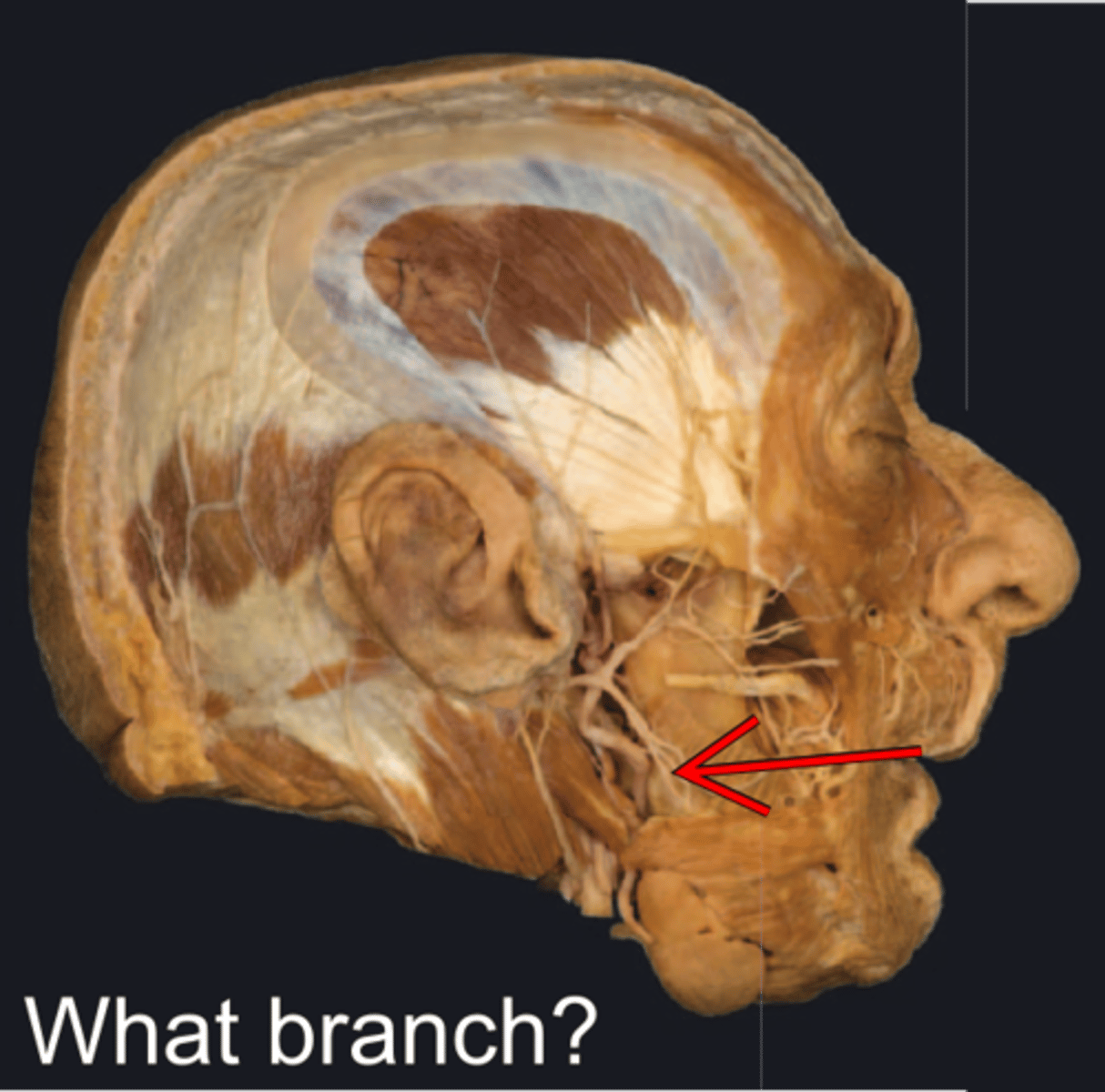
Mental (nerve)
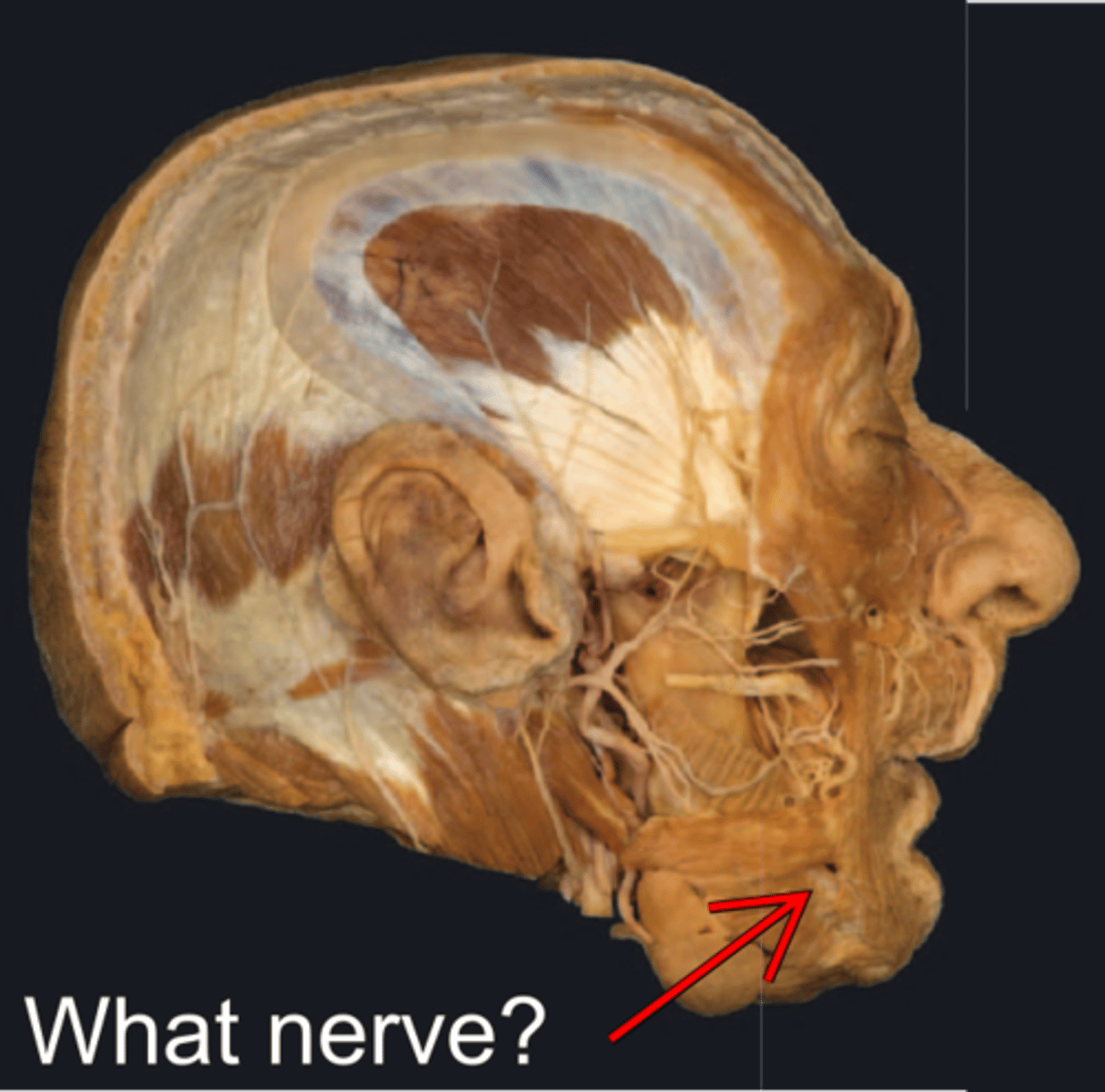
Phrenic (nerve)
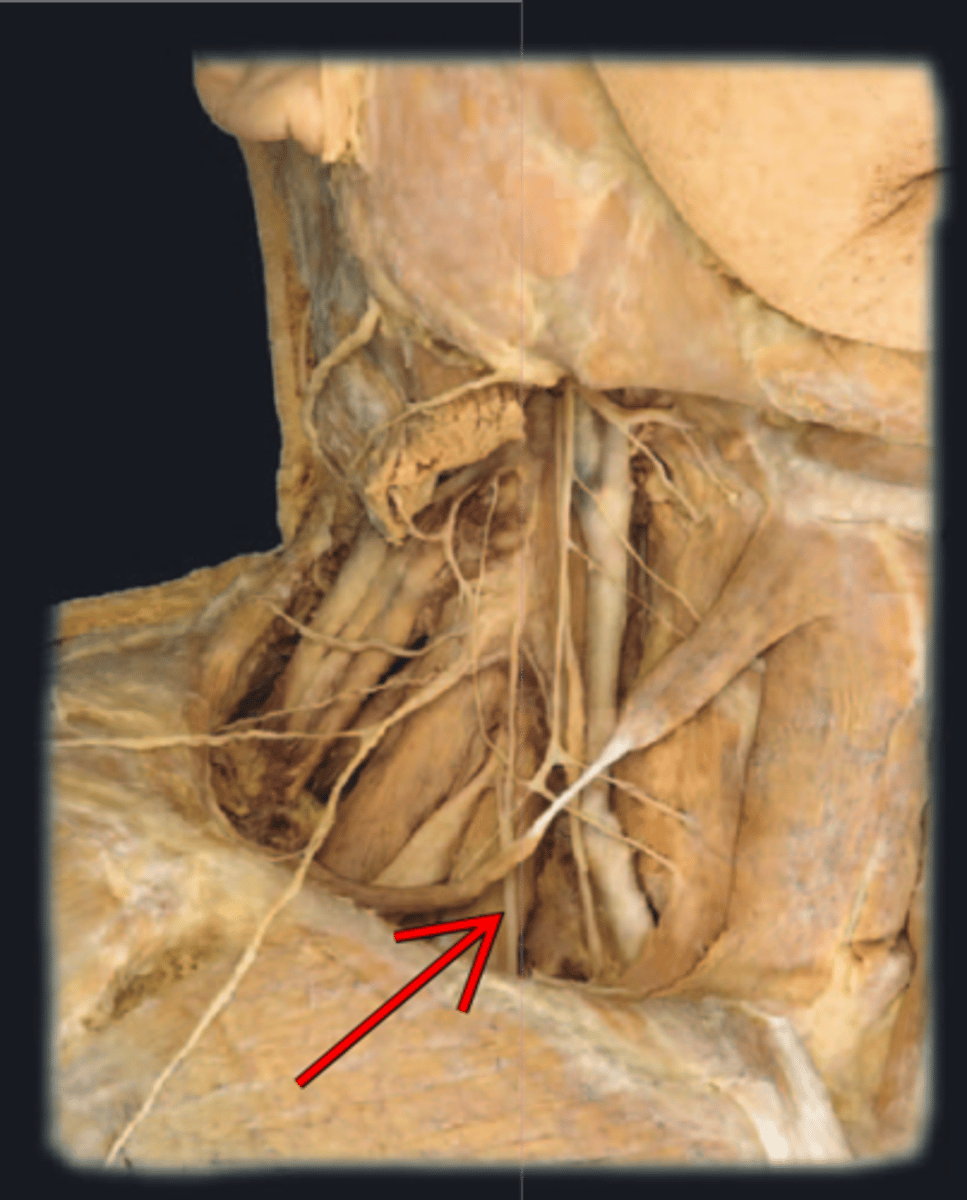
Temporal (branch of facial nerve)
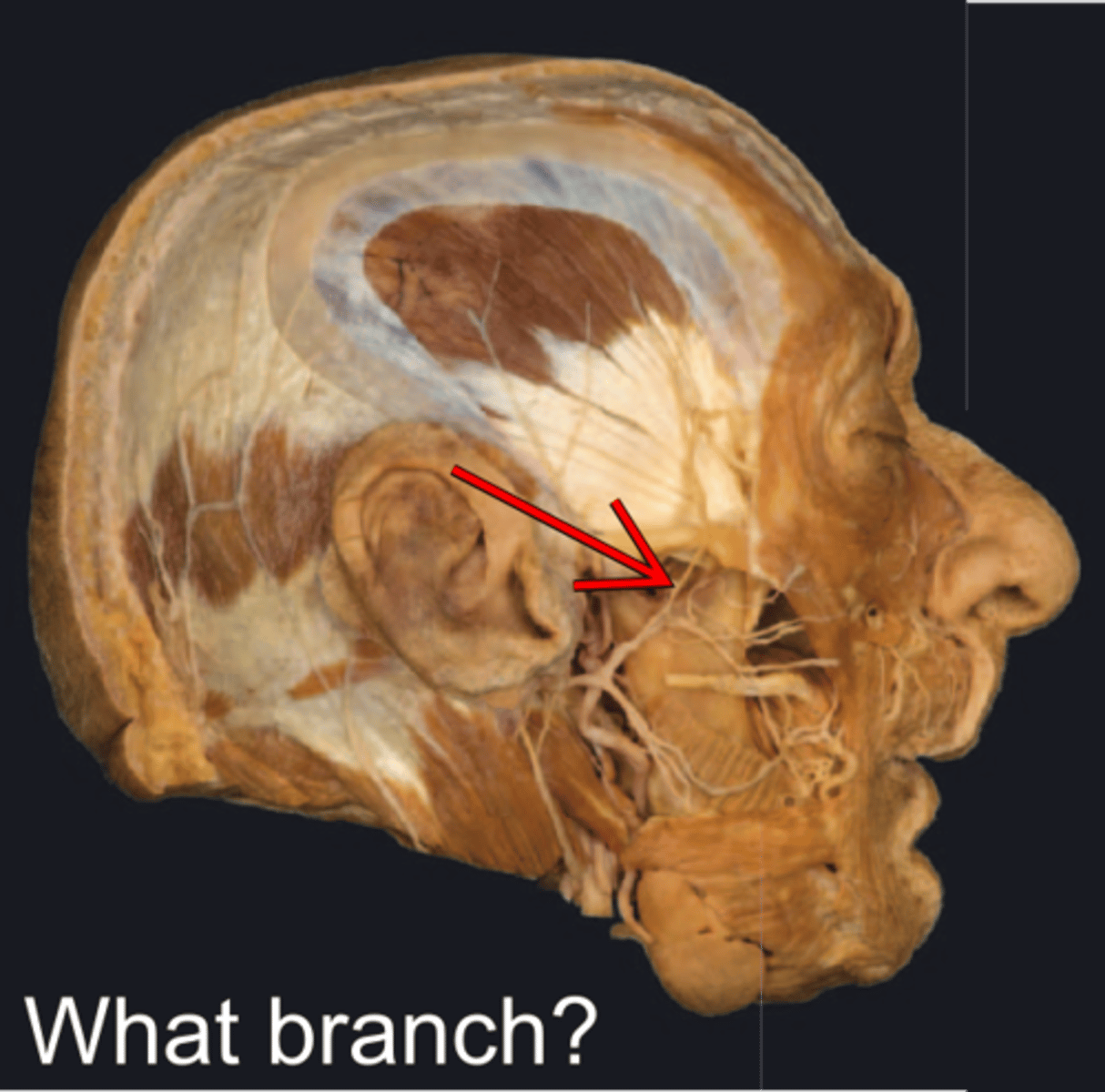
Vagus (nerve)
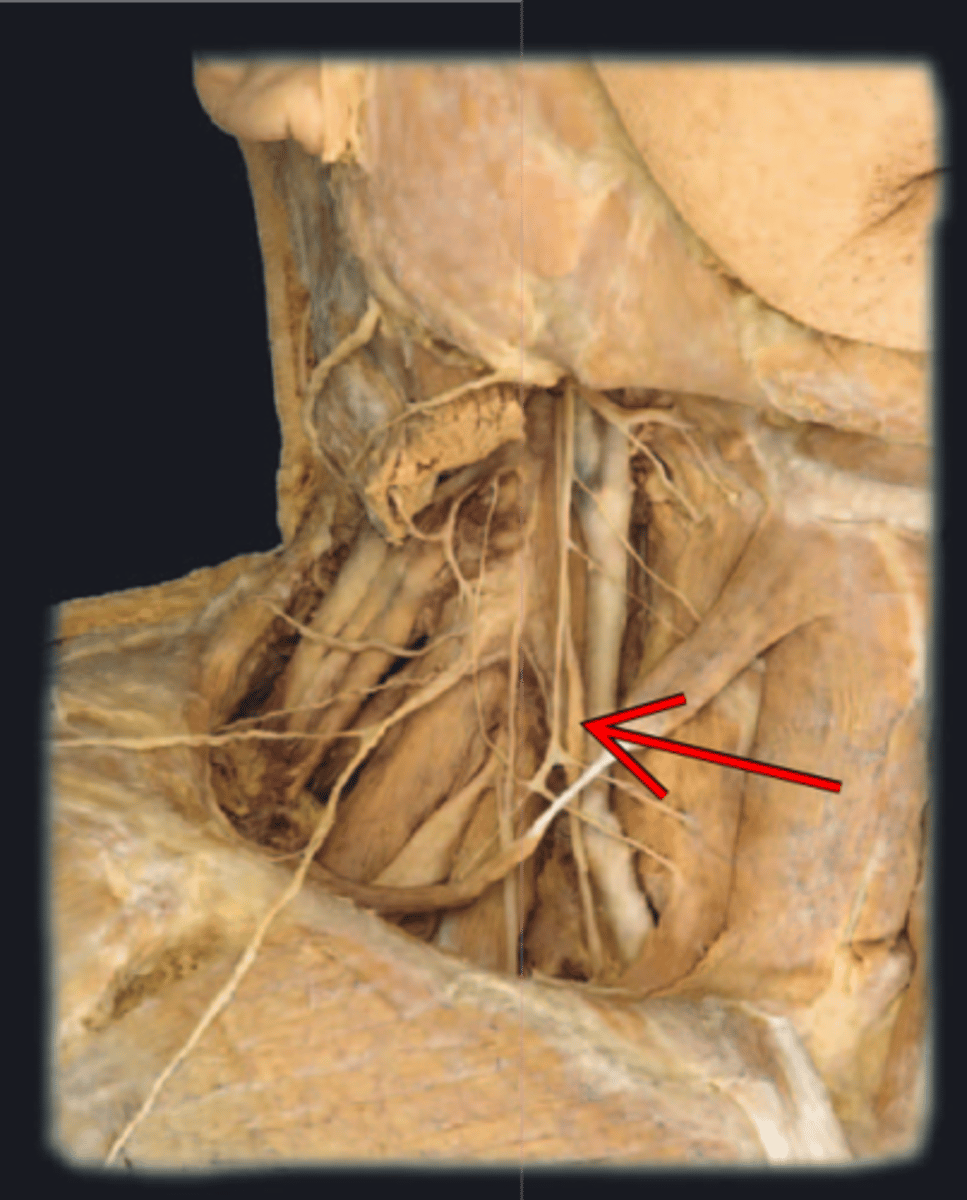
Zygomatic (branch of facial nerve)
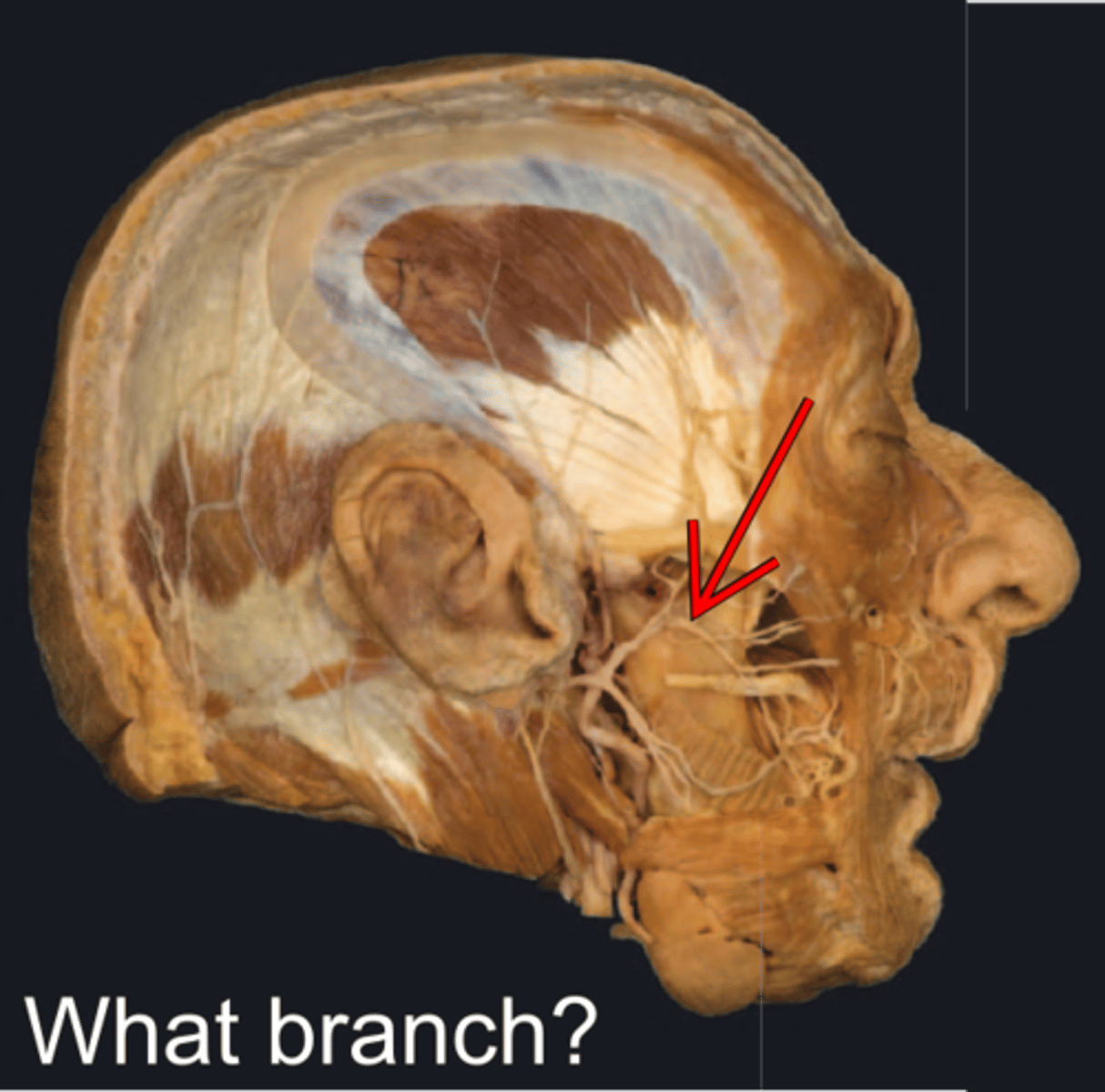
orbicularis oculi
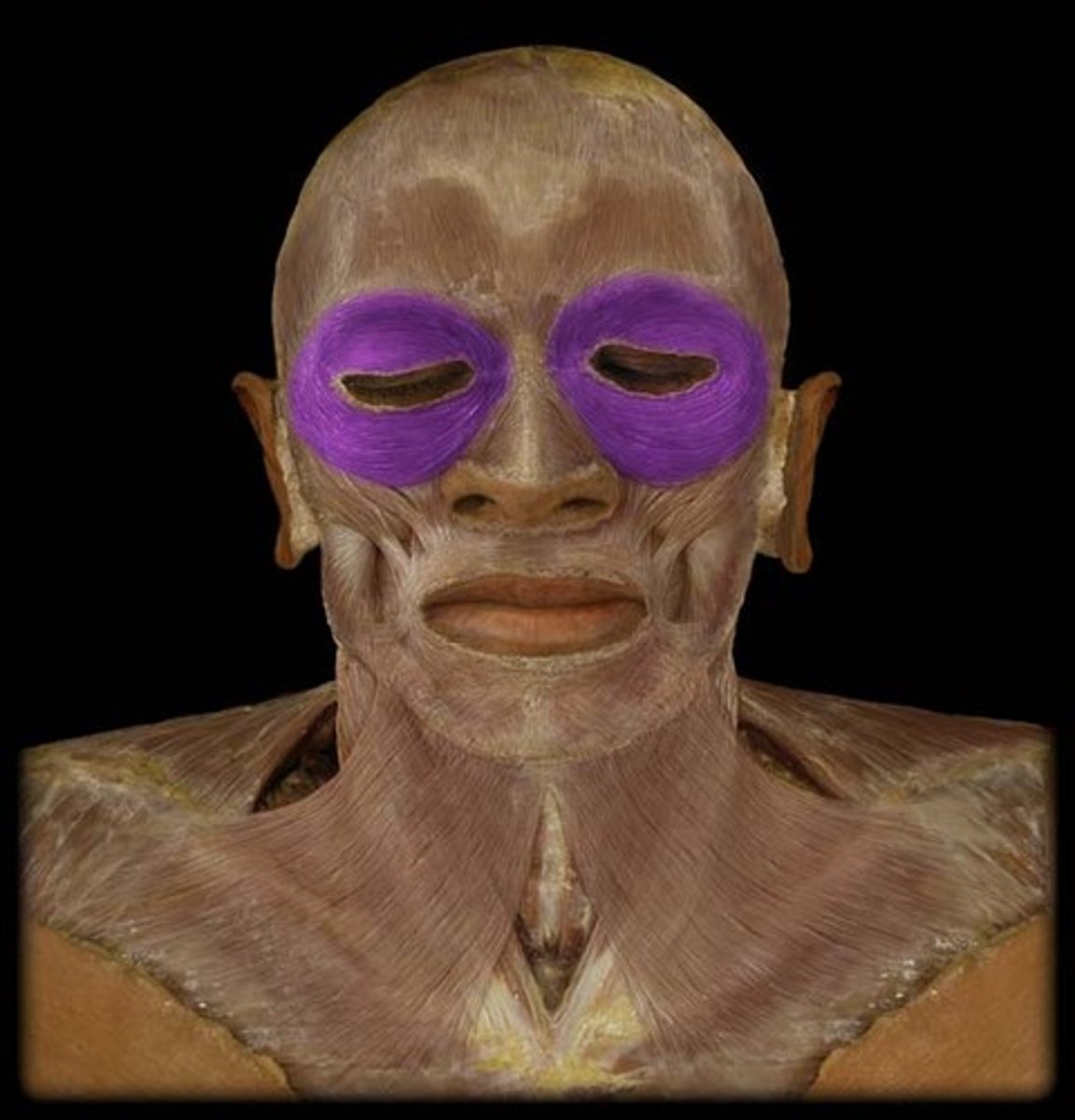
orbicularis oris
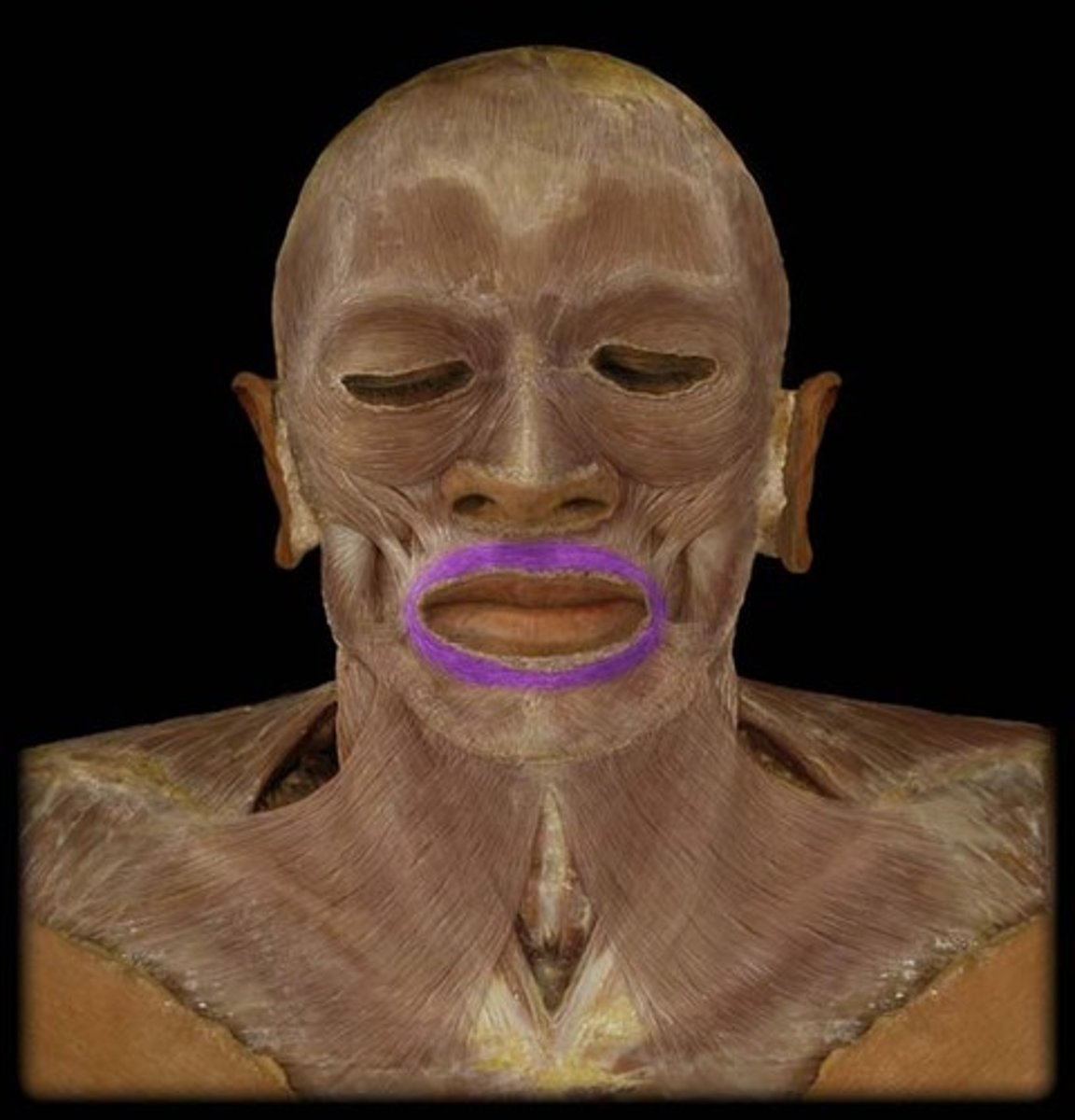
temporalis
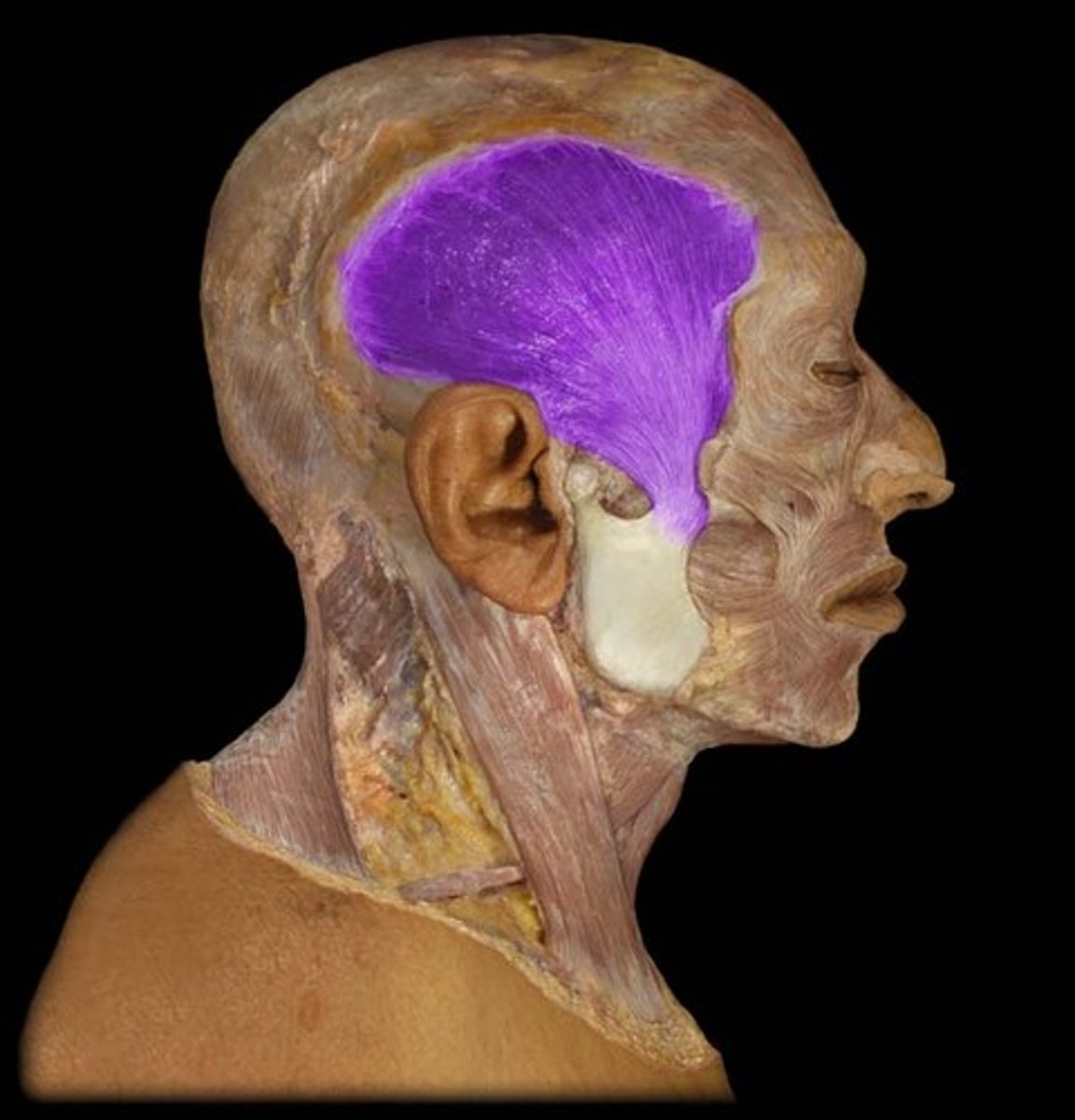
masseter
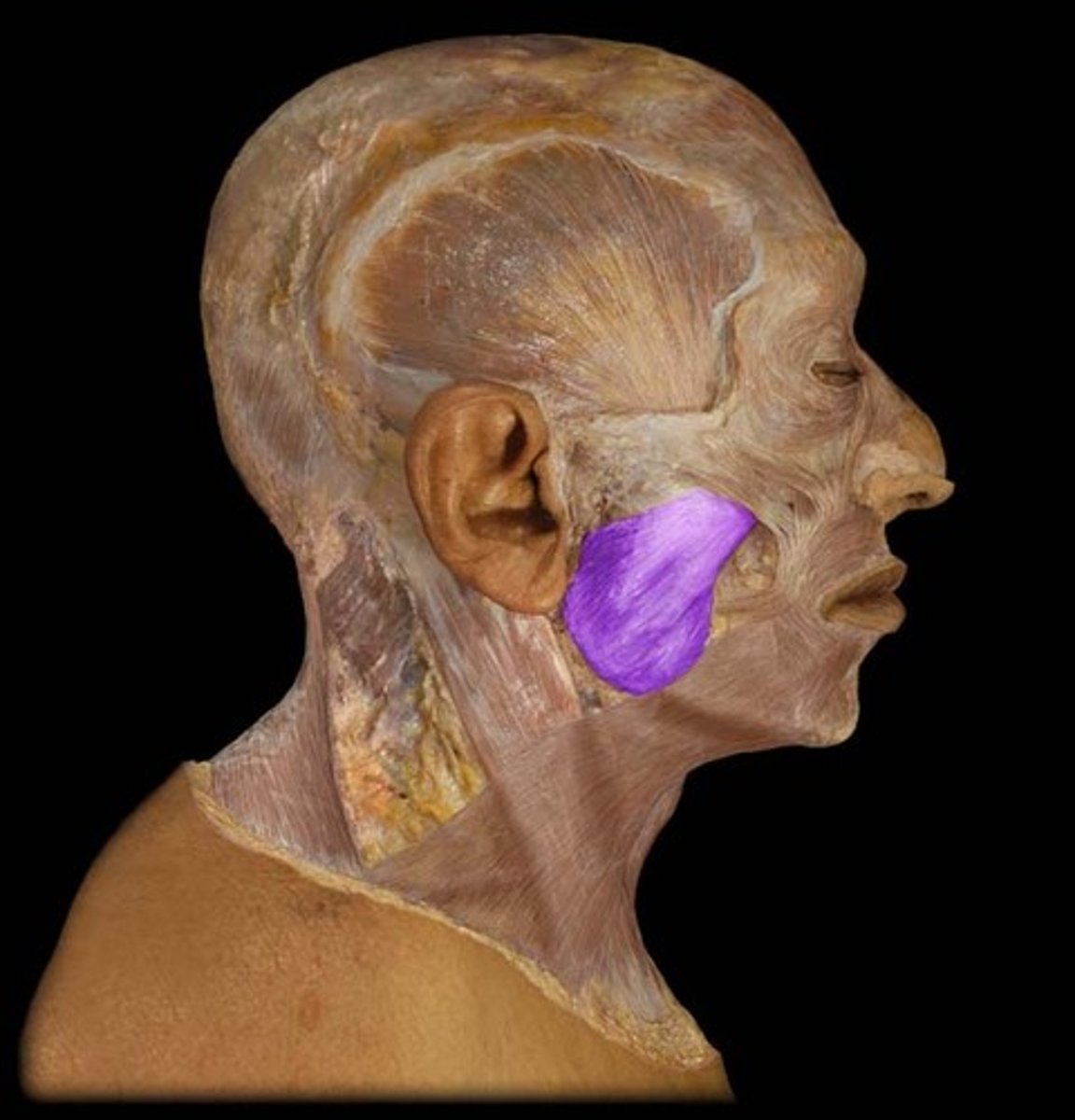
digastric
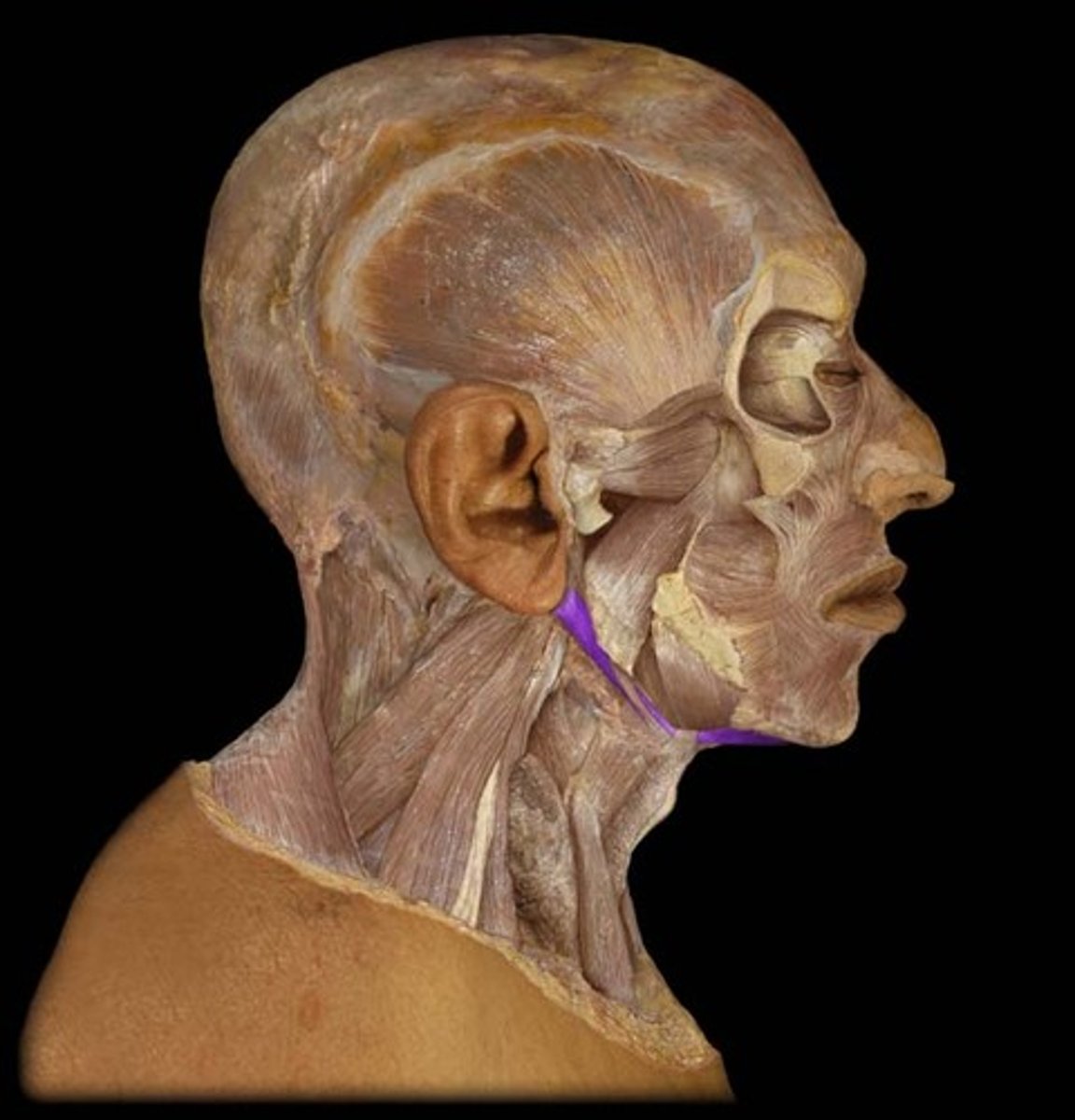
sternocleidomastoid
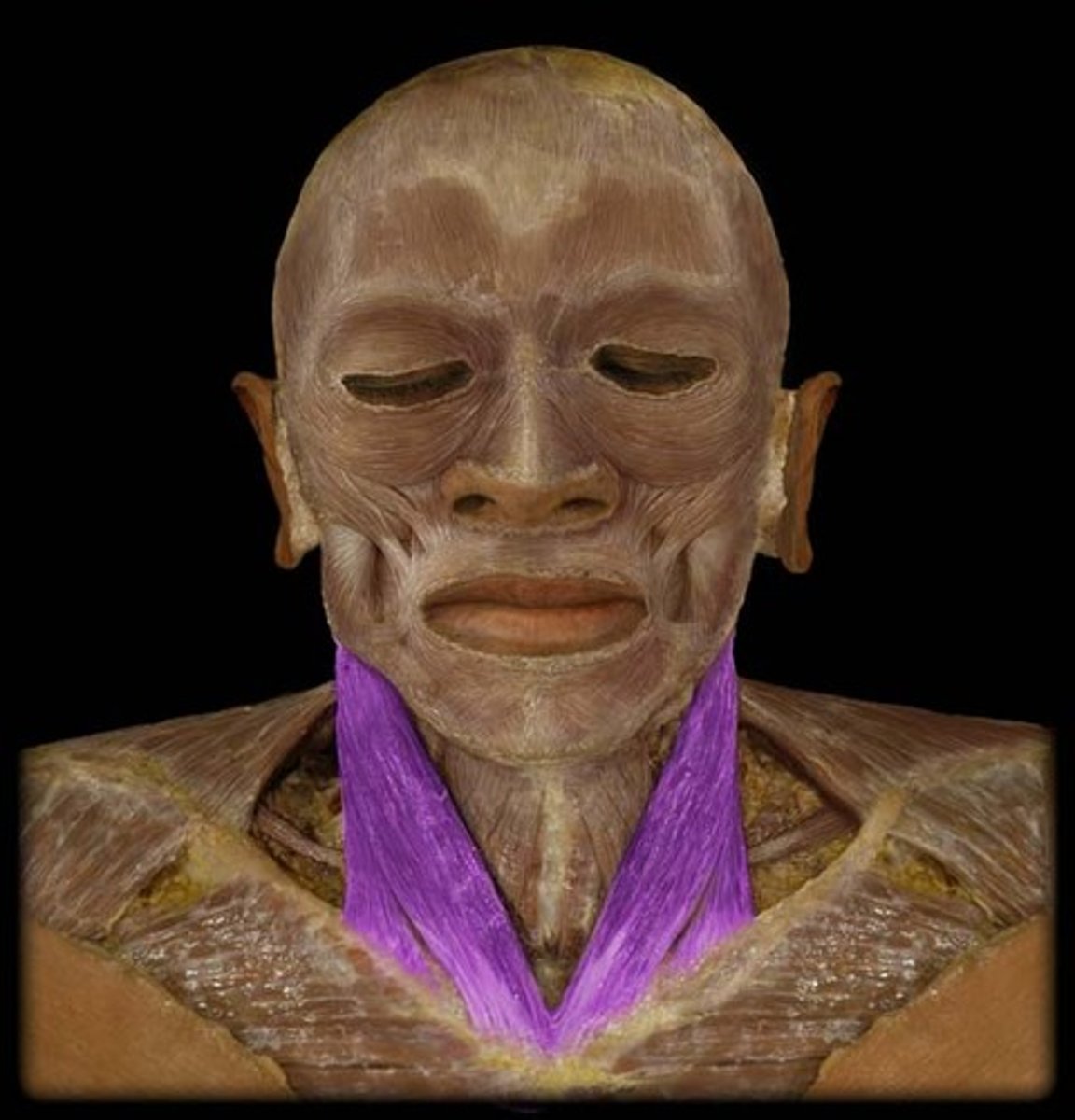
scalenes
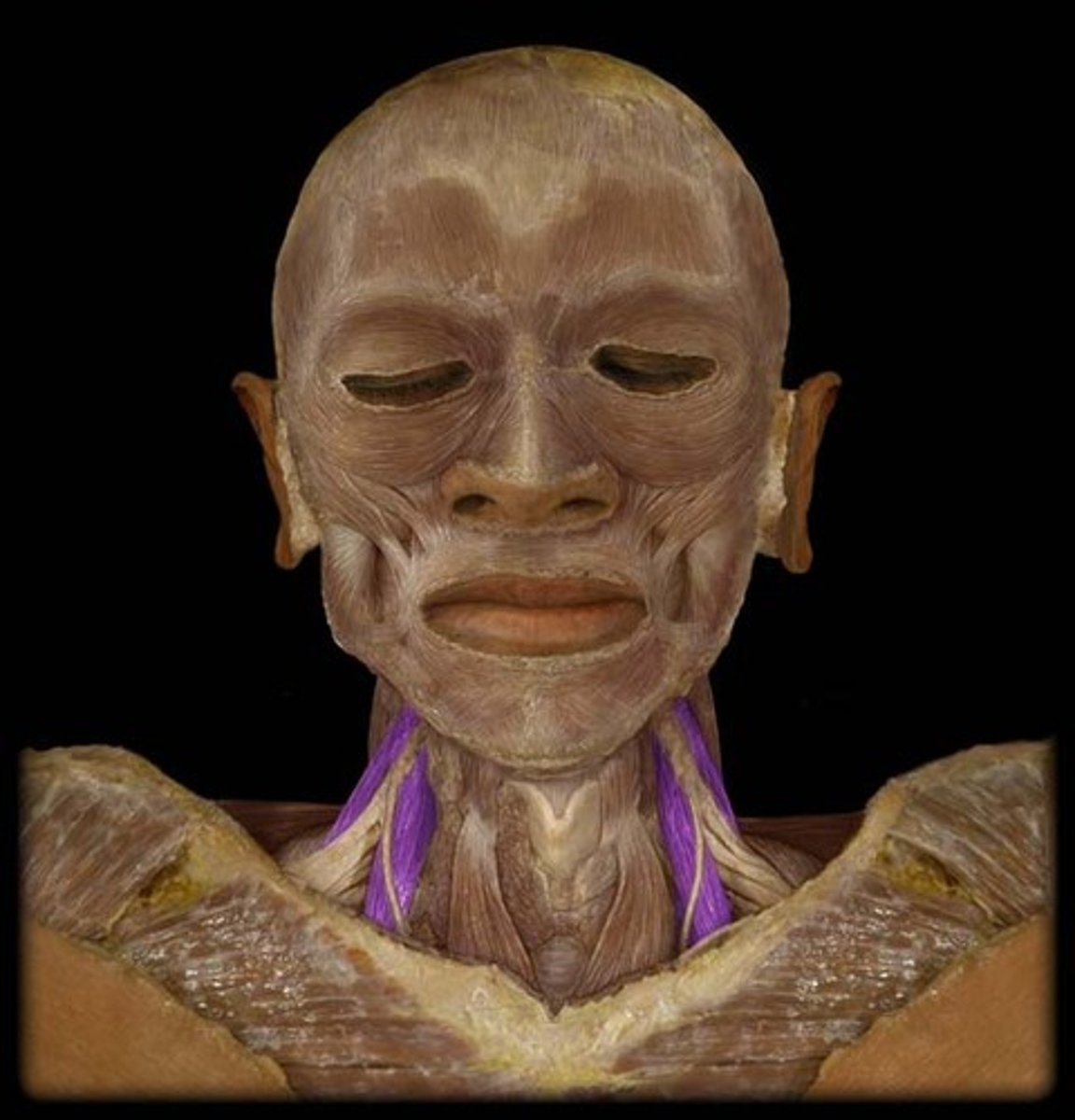
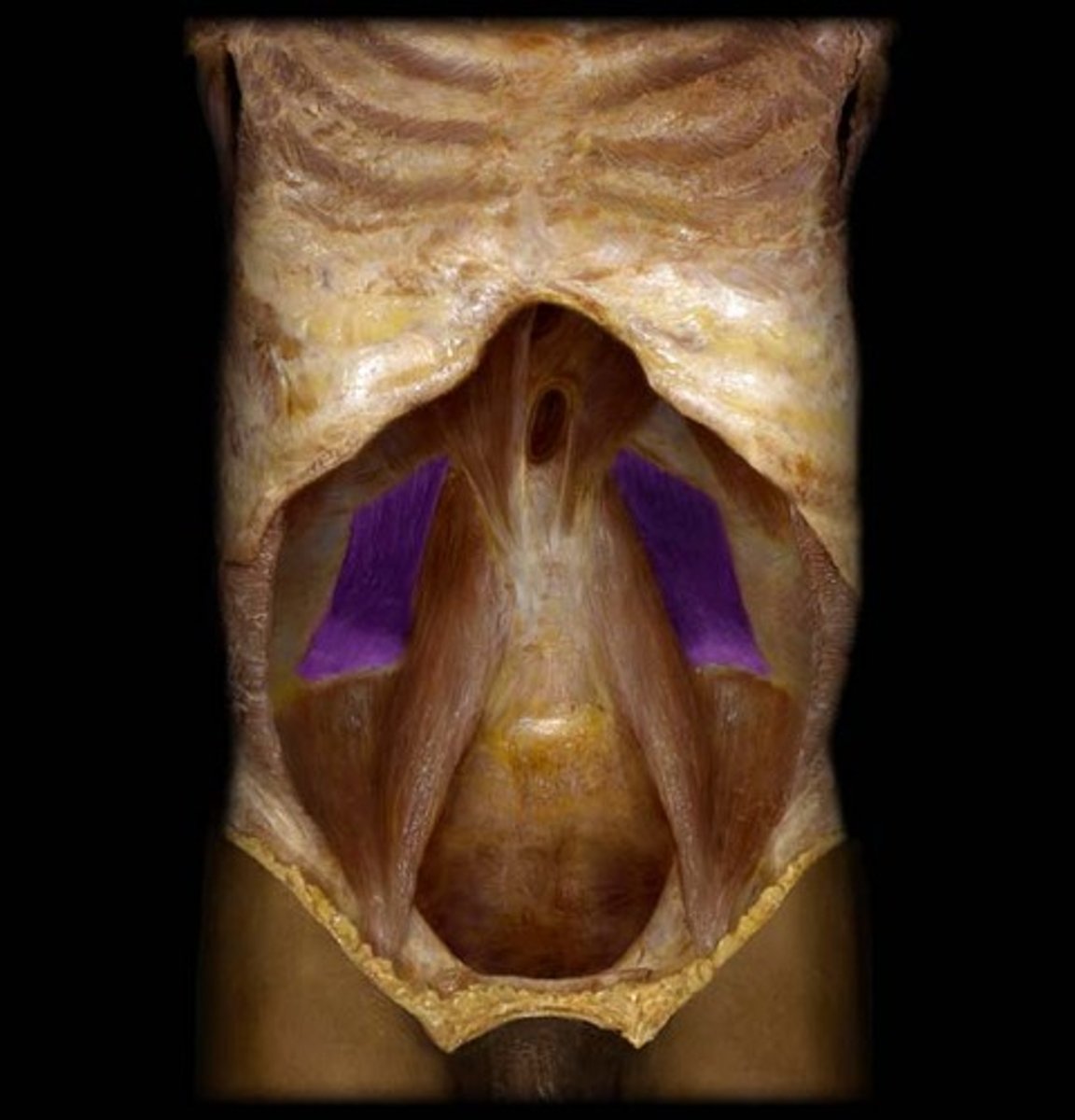
quadratus lumborum
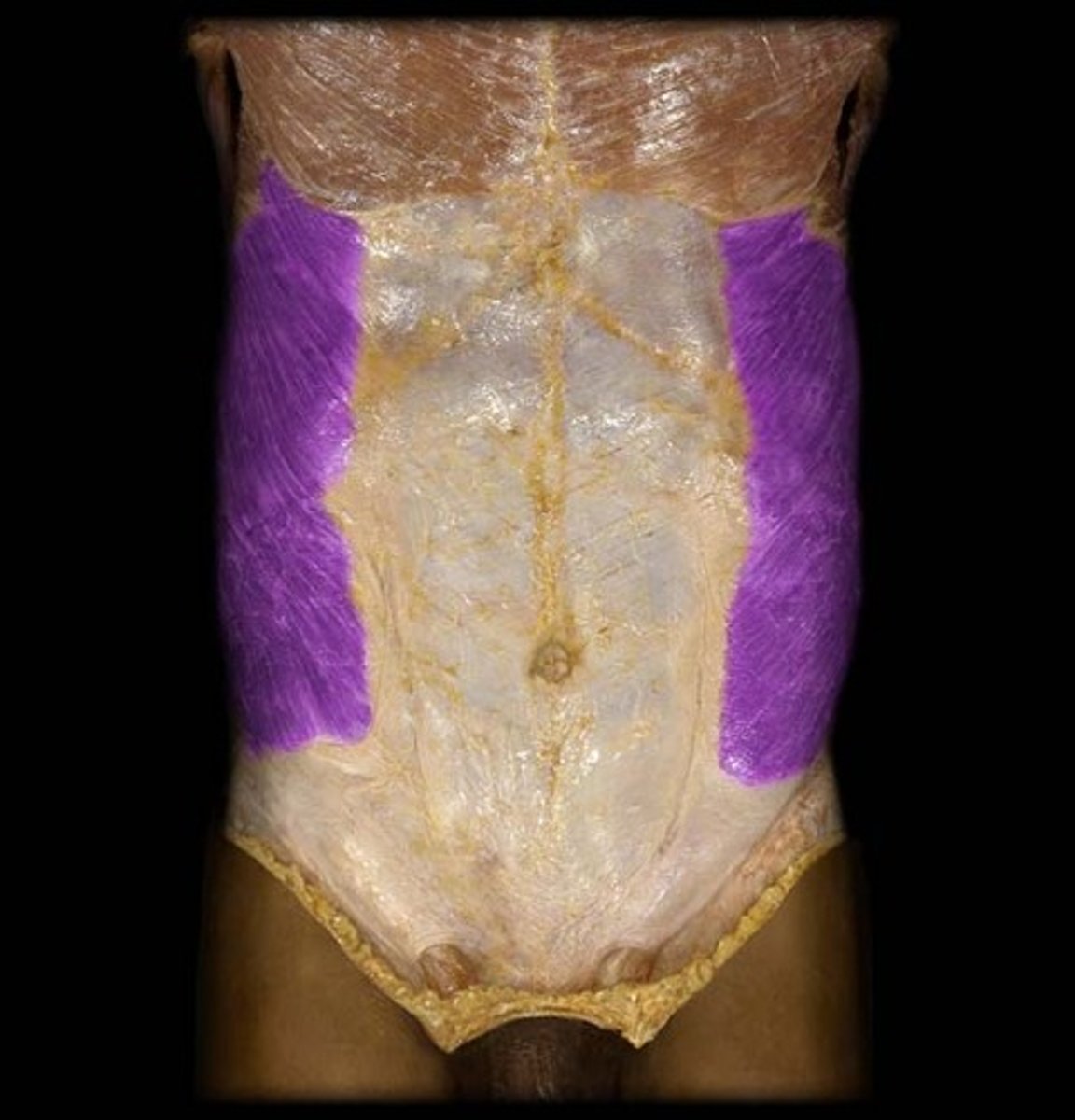
external abdominal obliques
internal abdominal obliques
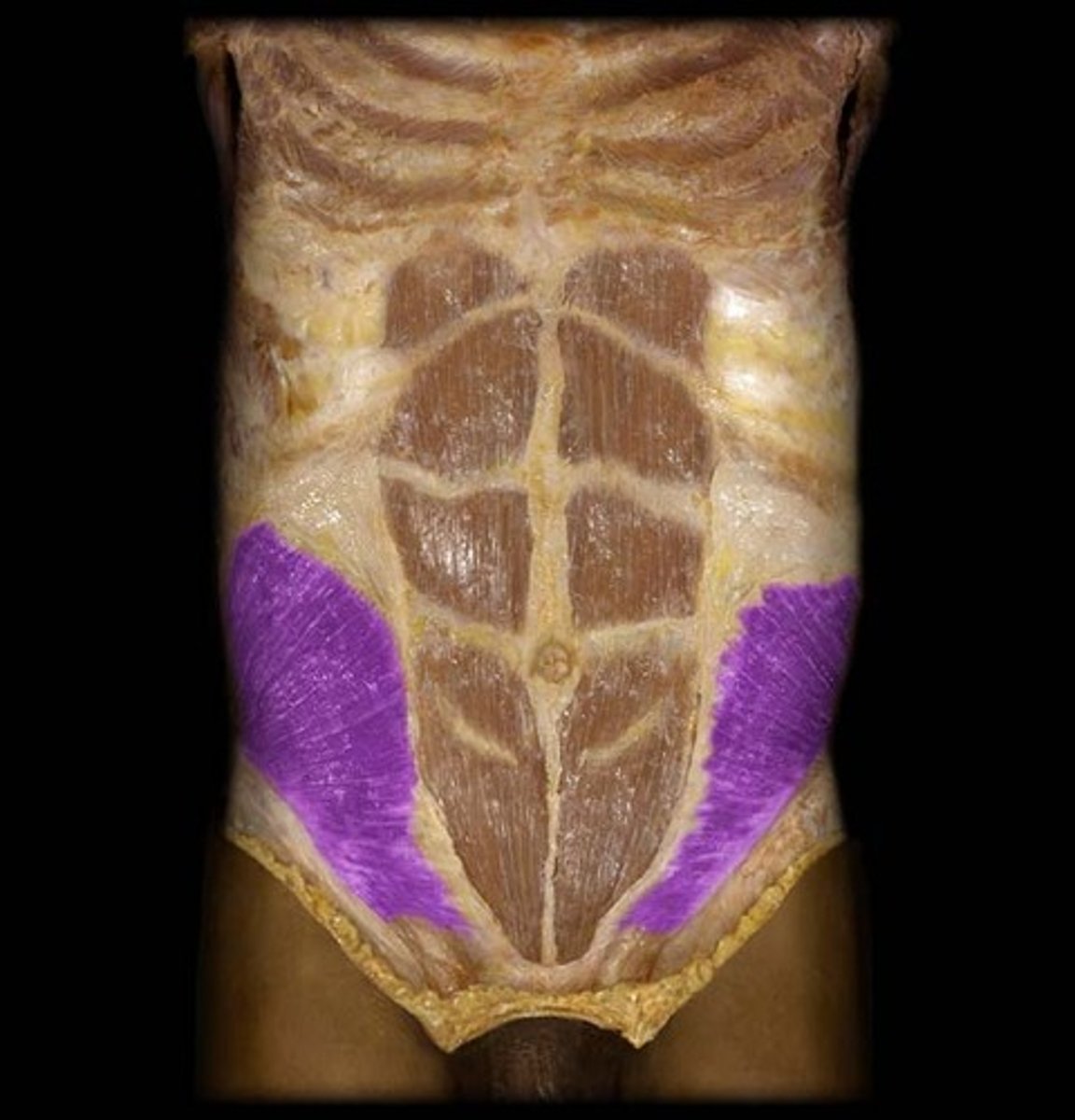
transversus abdominis
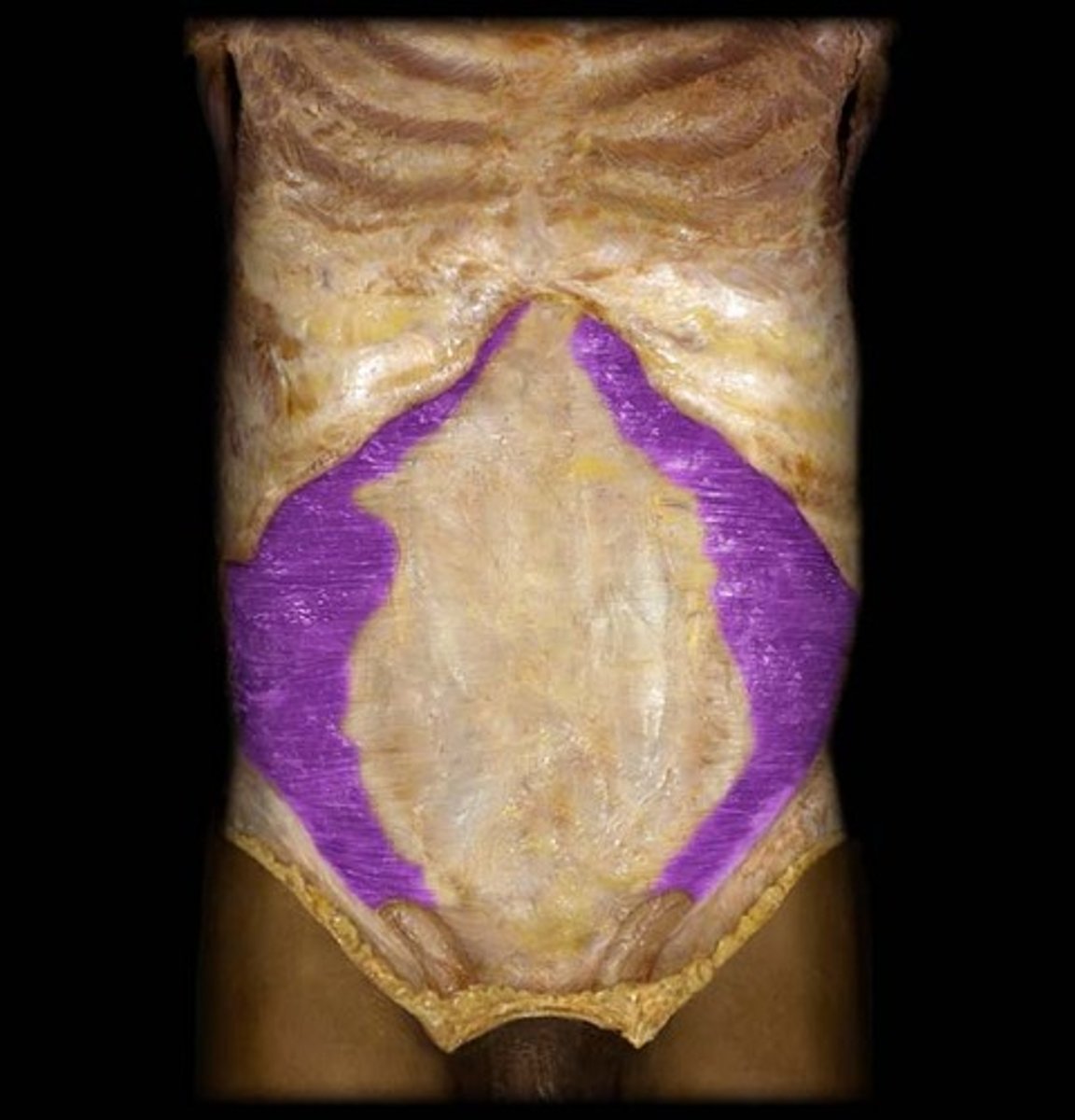
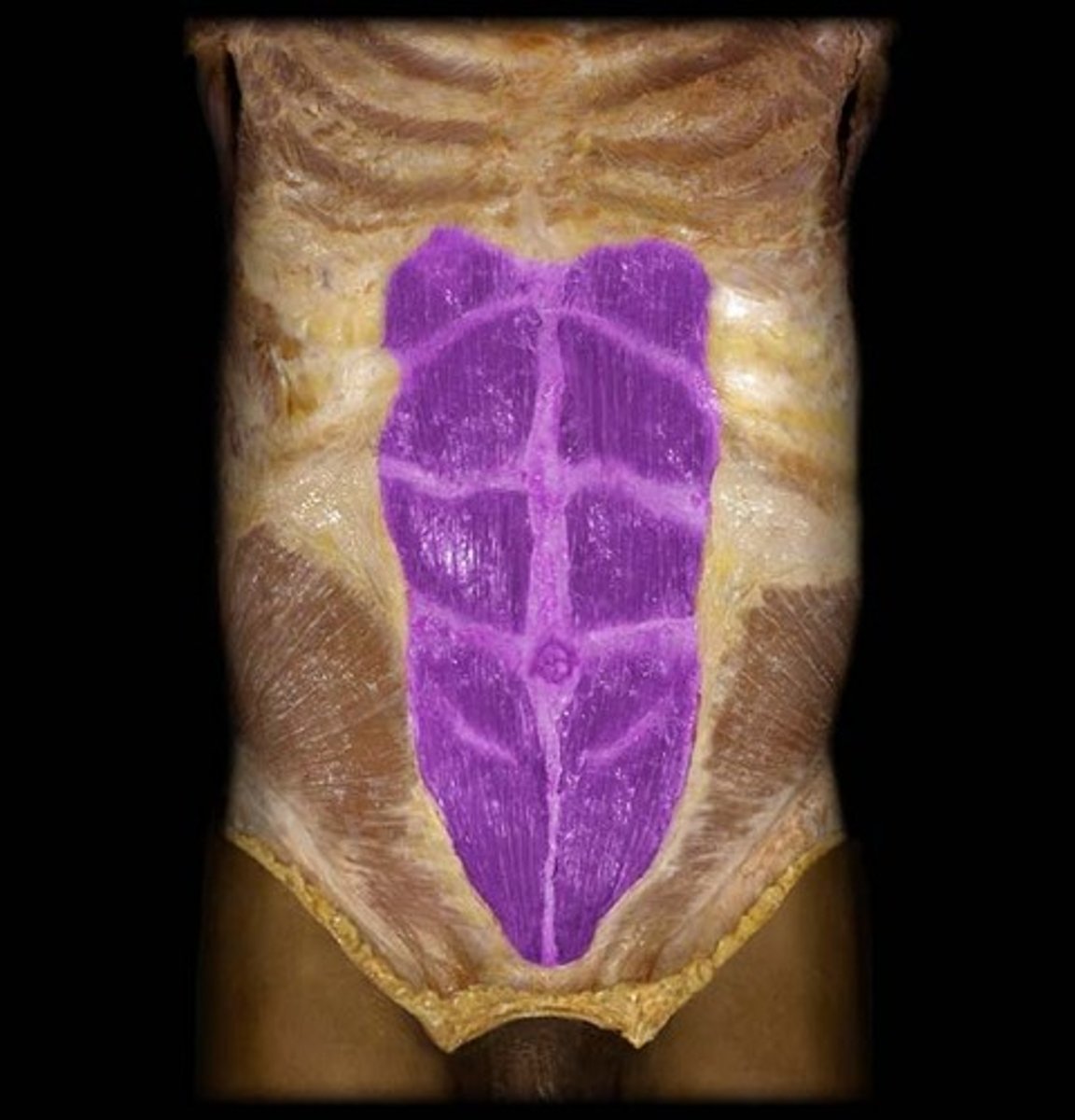
rectus abdominis
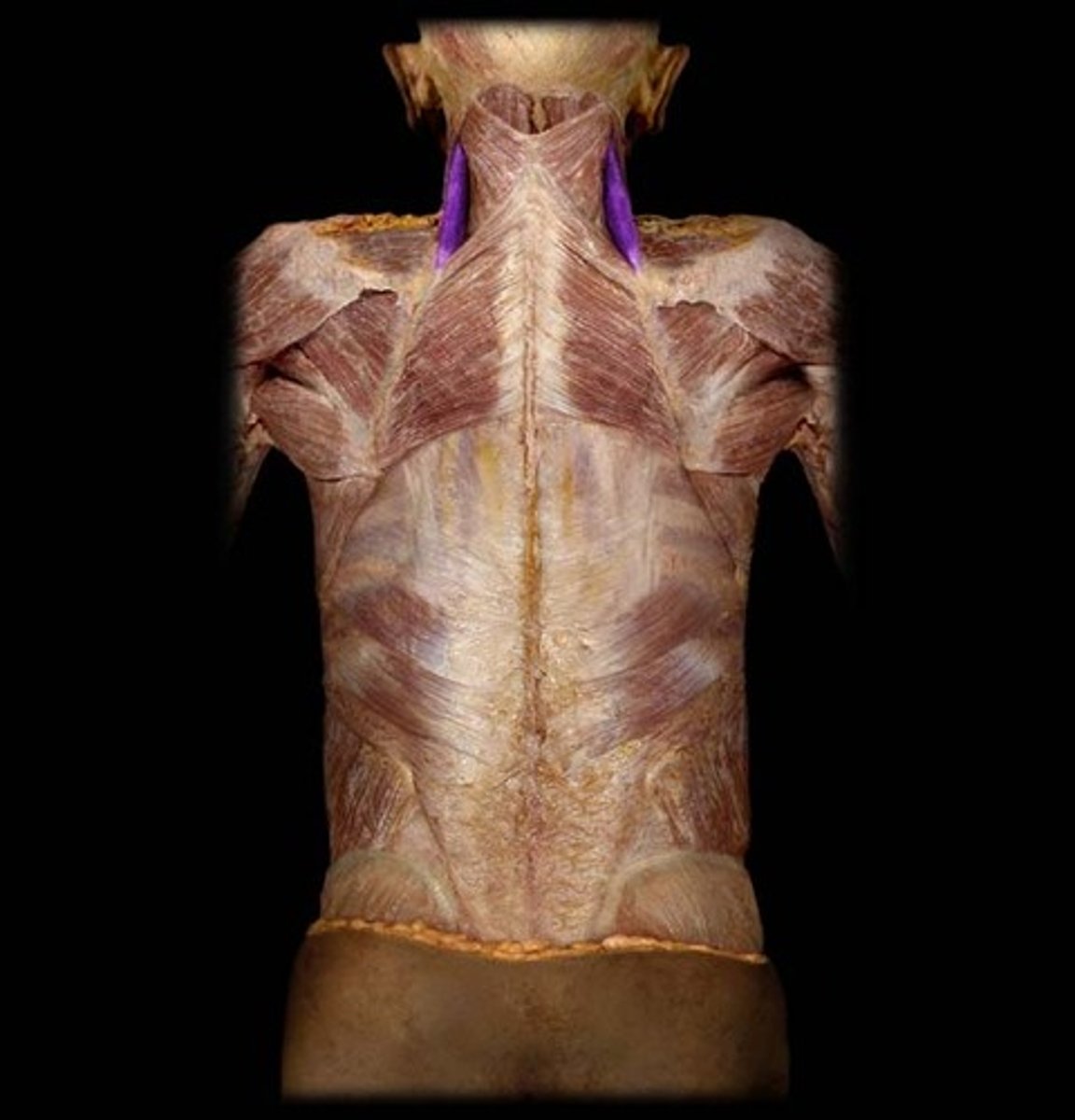
levator scapulae
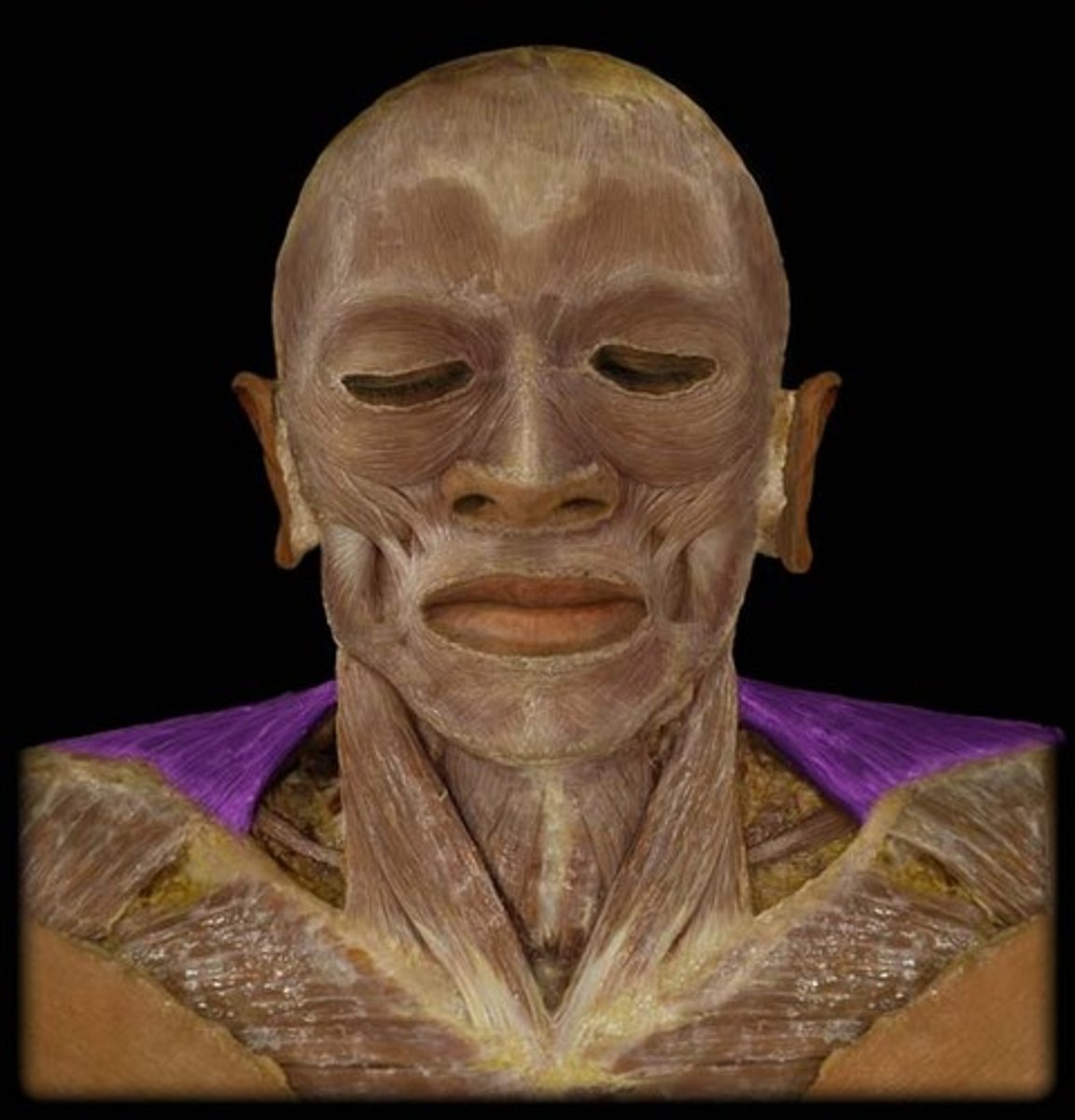
trapezius (anterior)
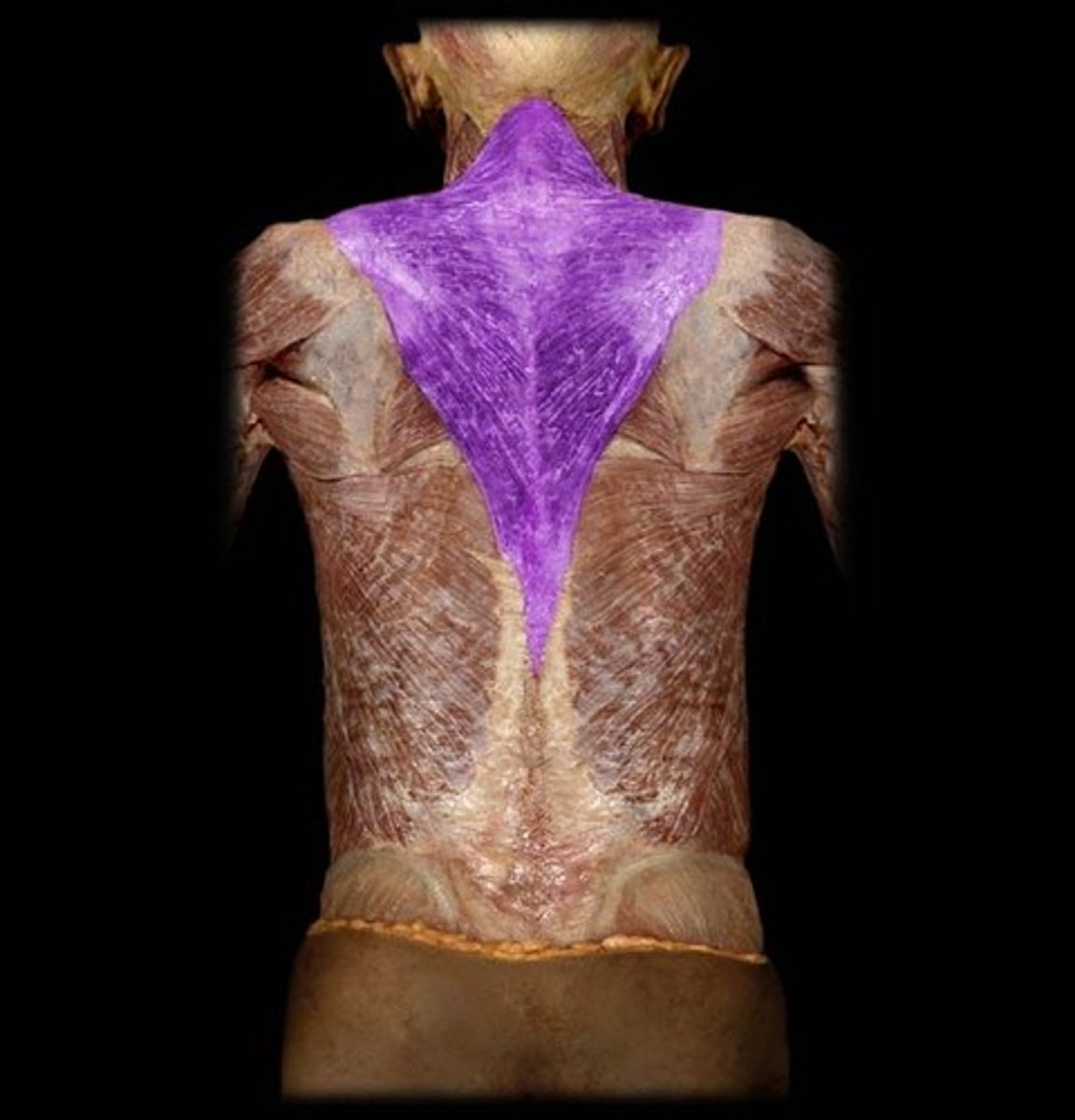
trapezius (posterior)
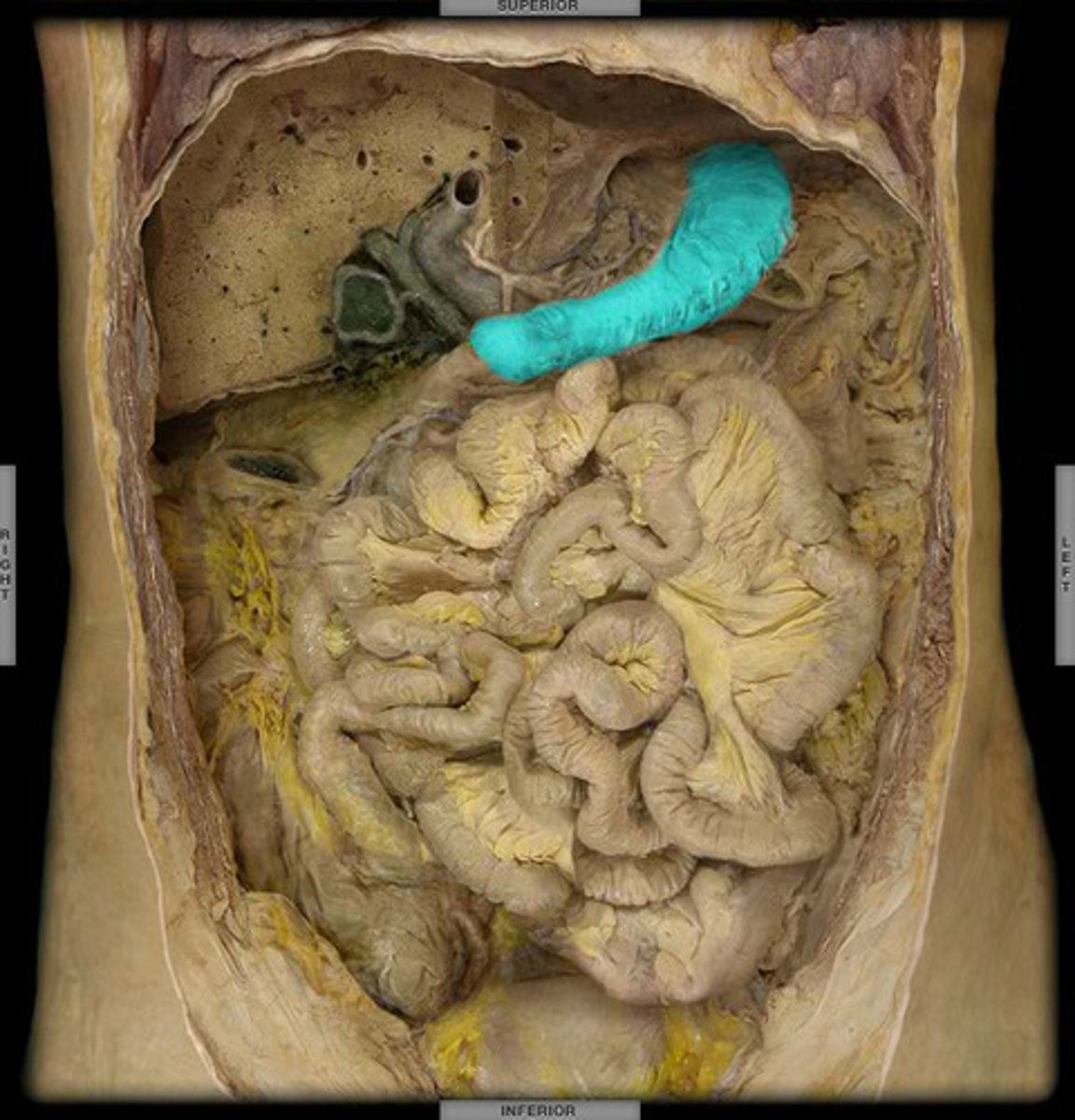
Stomach
A J-shaped, muscular pouch located in the abdomen.
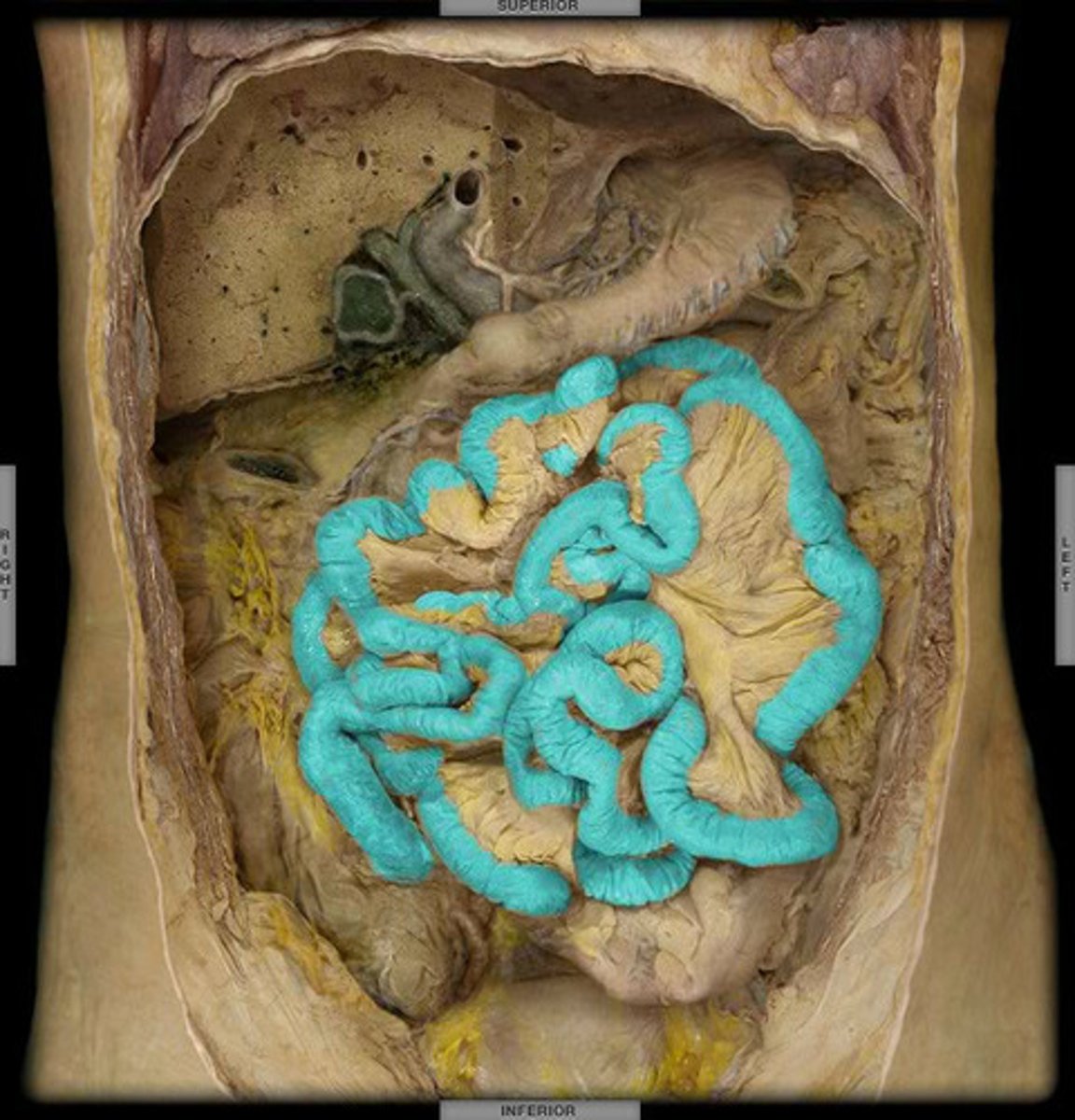
Small intestine
The last section of the digestive system, where water is absorbed from food and the remaining material is eliminated from the body, Digestive organ where most chemical digestion and absorption of food takes place
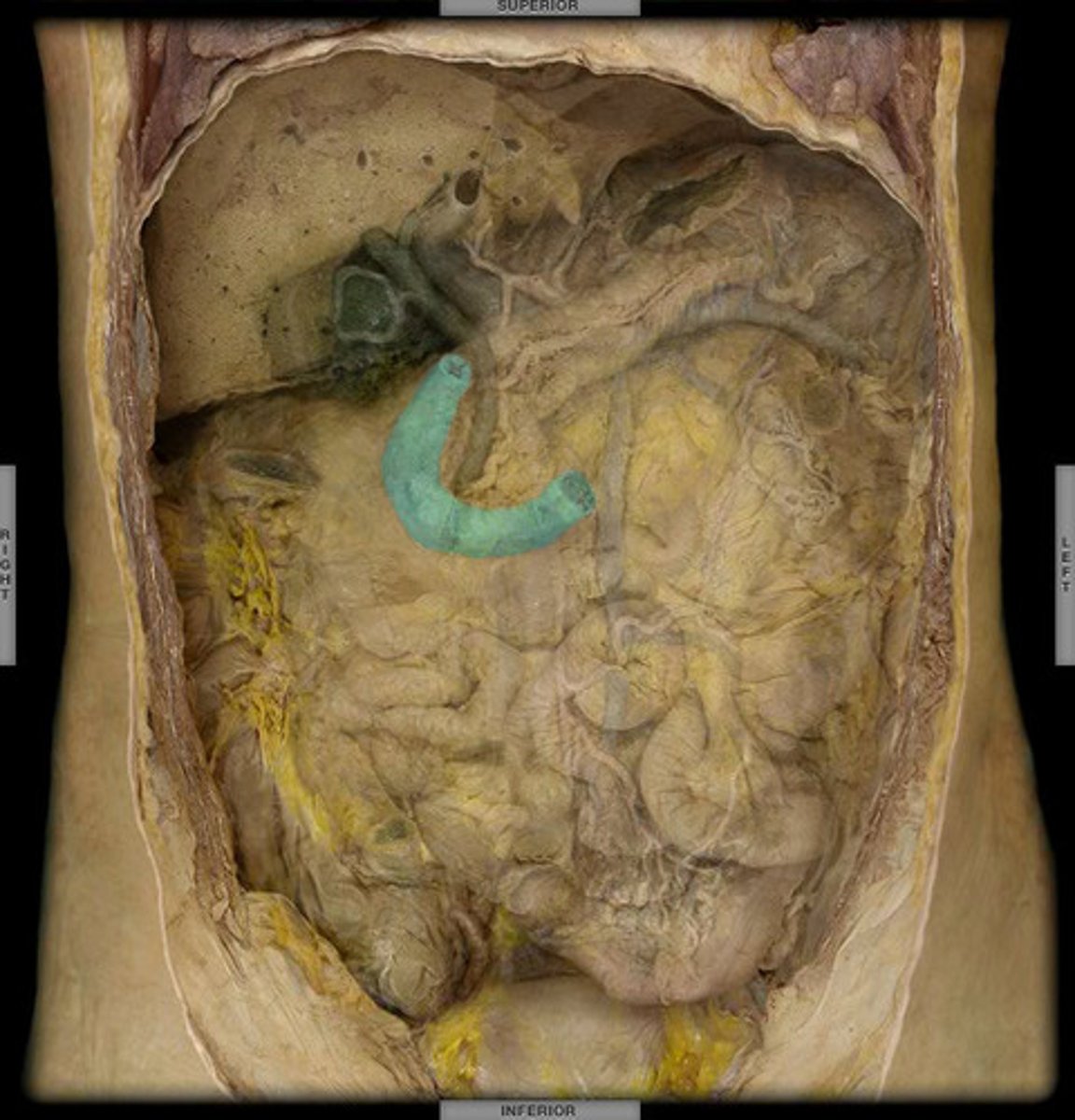
Duodenum
First 10 to 12 inches of the small intestine
Ileum
Final segment of the small intestine; fine tune organic absorption (B12,iron,etc) picks up/absorbs any nutrients not already absorbed
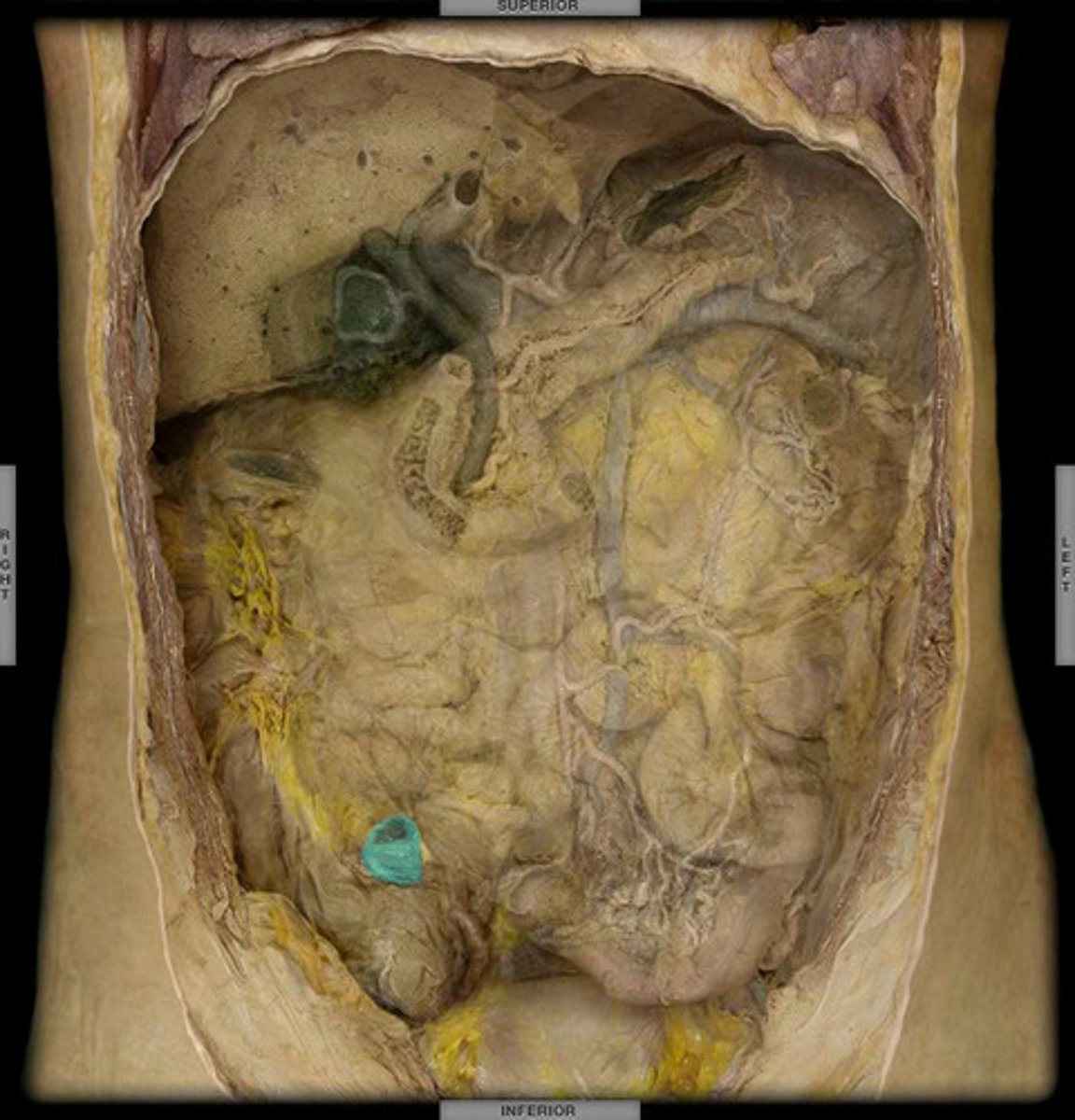
Cecum
the cavity in which the large intestine begins and into which the ileum opens
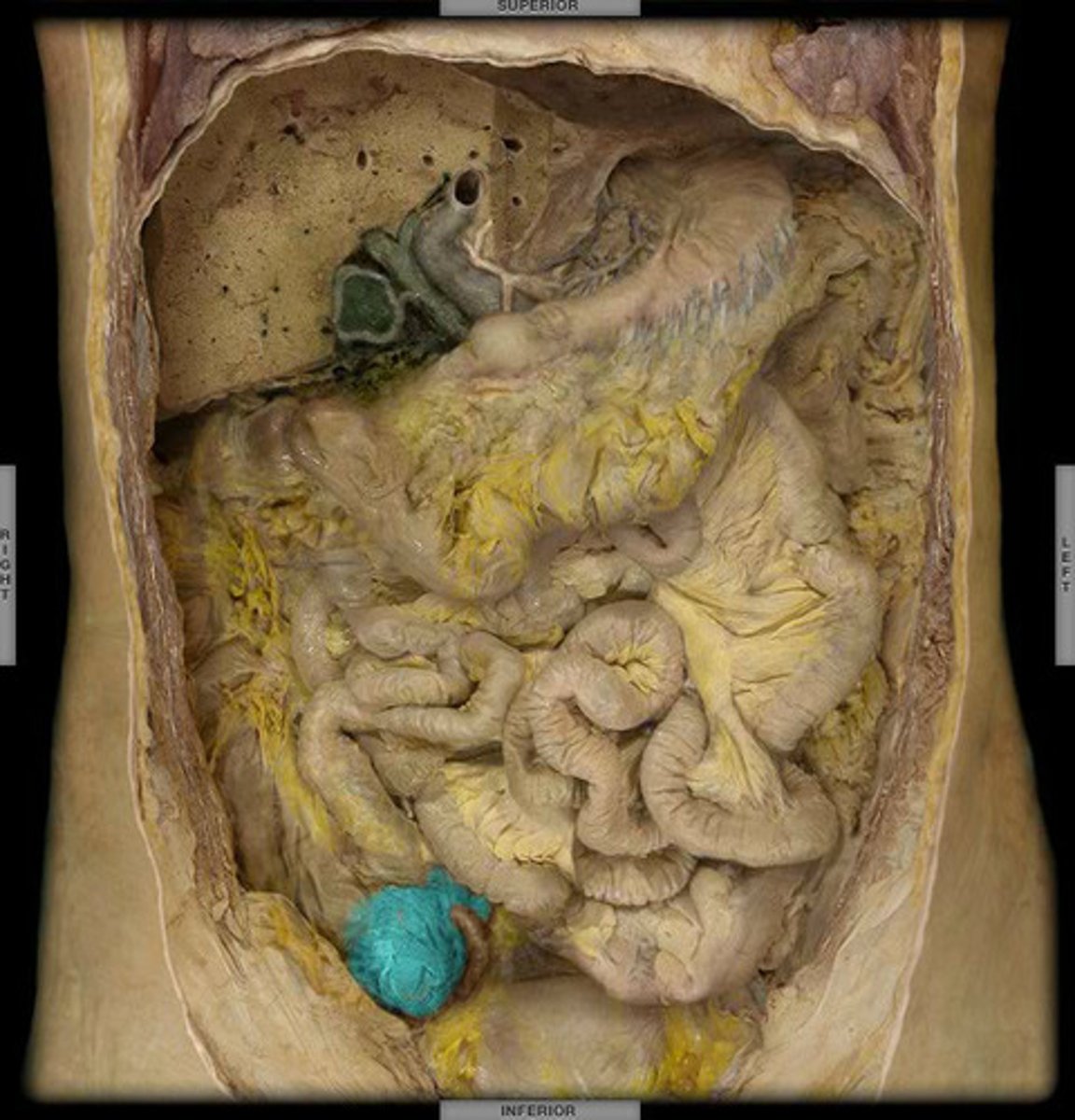
Vermiform Appendix
A small, fingerlike extension of the vertebrate cecum; contains a mass of white blood cells that contribute to immunity.1
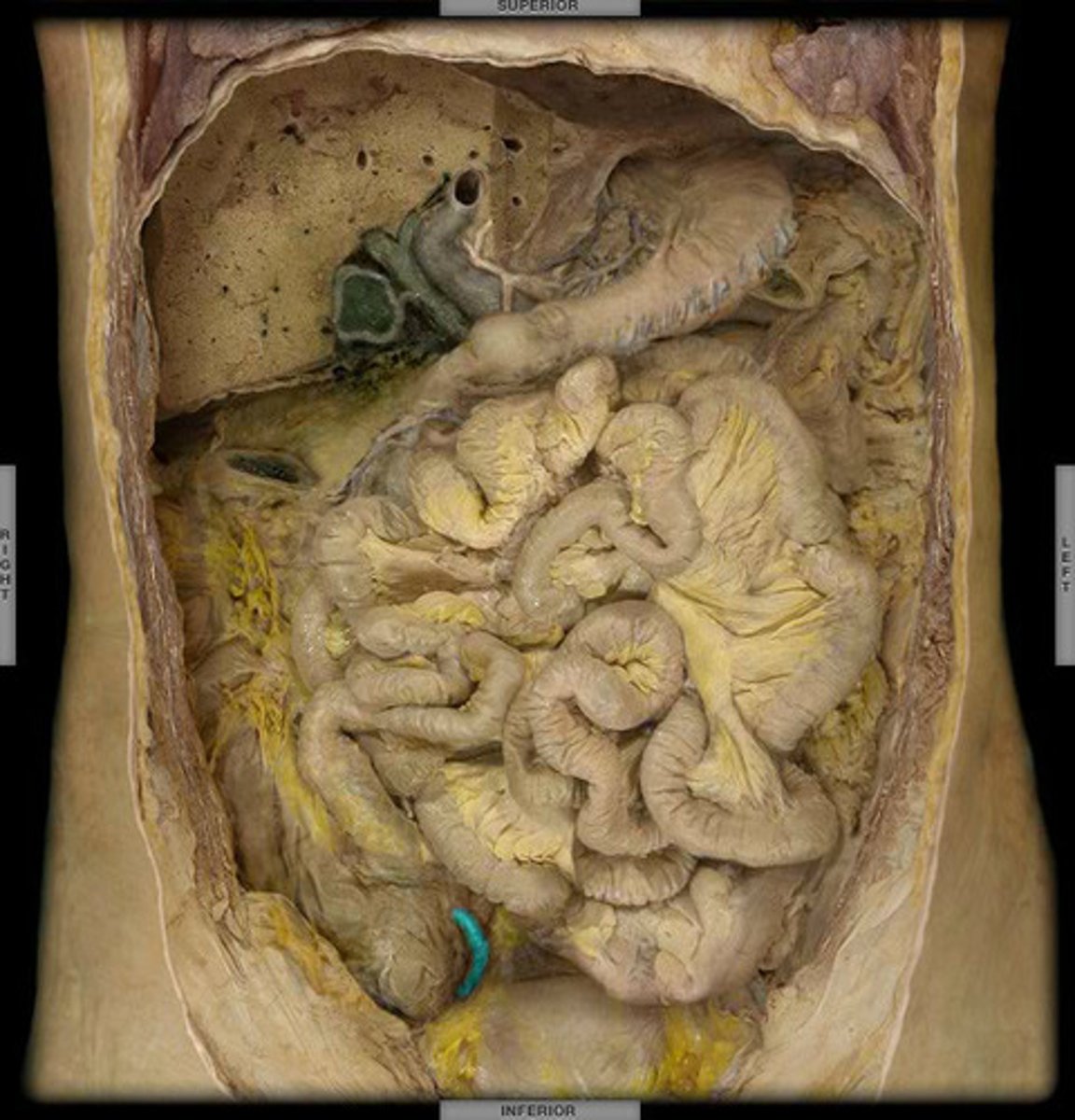
Sigmoid colon
the S-shaped portion of the colon between the descending colon and the rectum
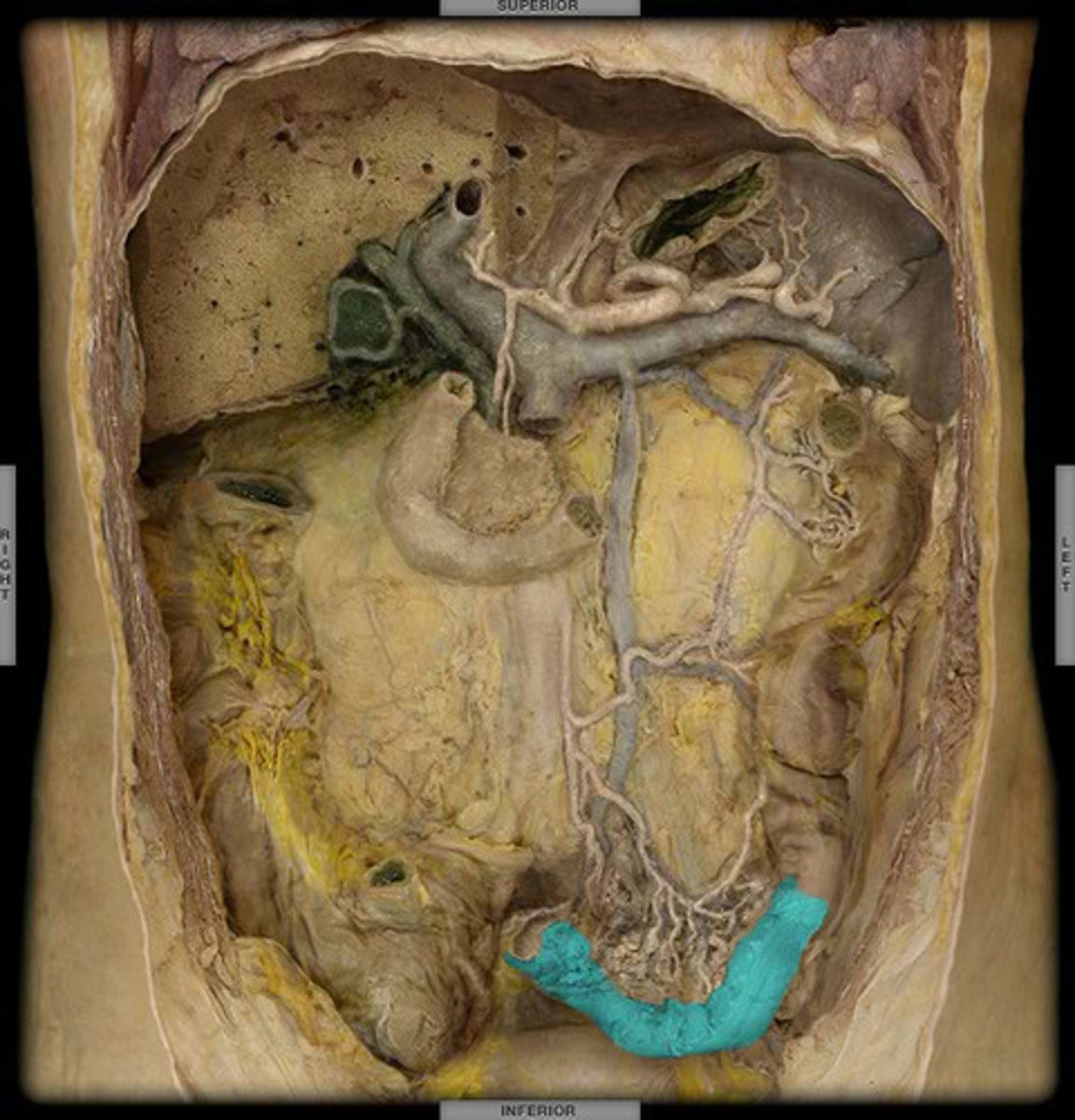
Gallbladder
A muscular sac attached to the liver that secretes bile and stores it until needed for digestion
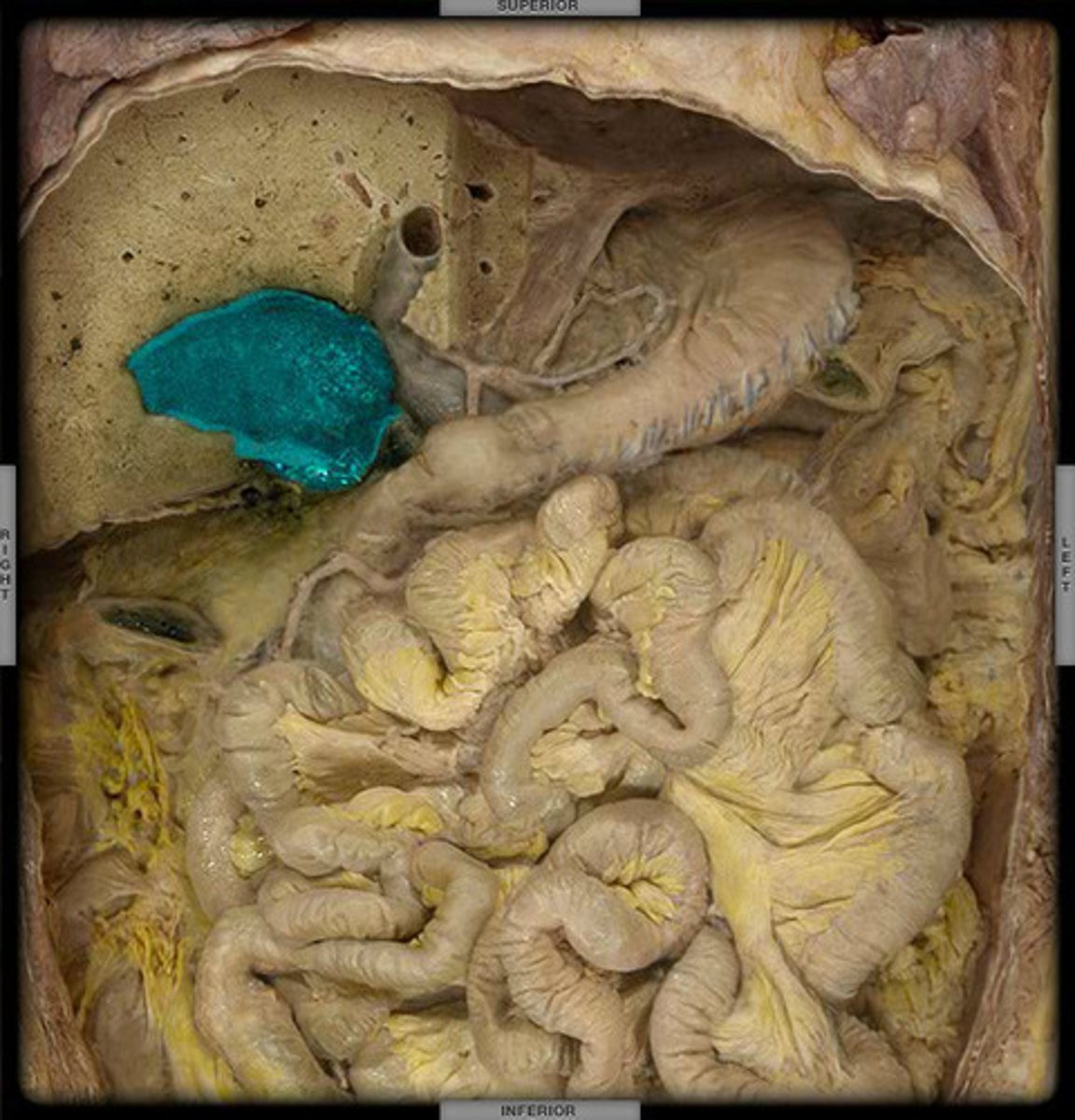
Right hepatic duct
The duct that leads from the liver to the common bile duct; transports bile.
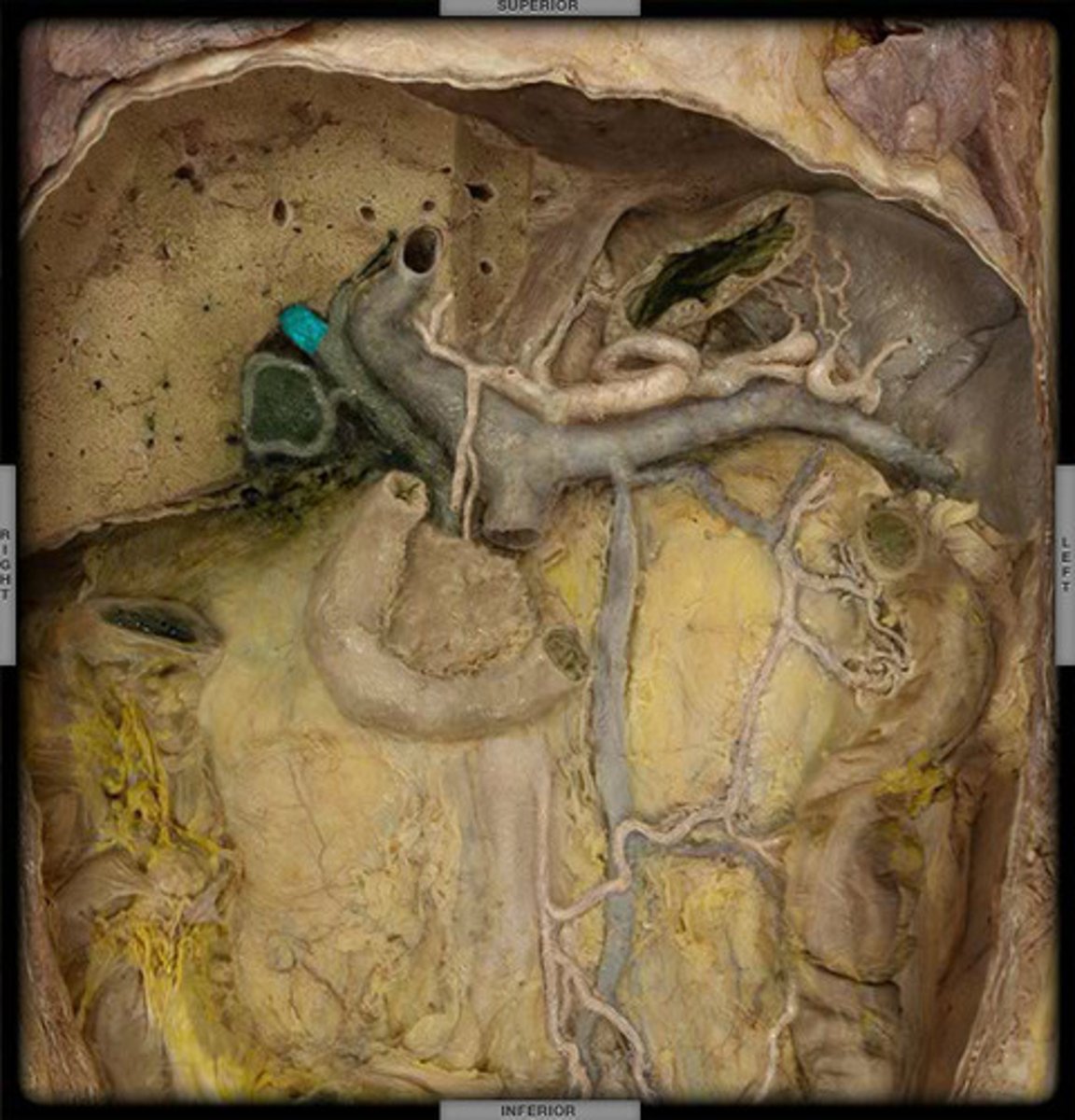
Left hepatic duct
collects bile from left lobe of liver
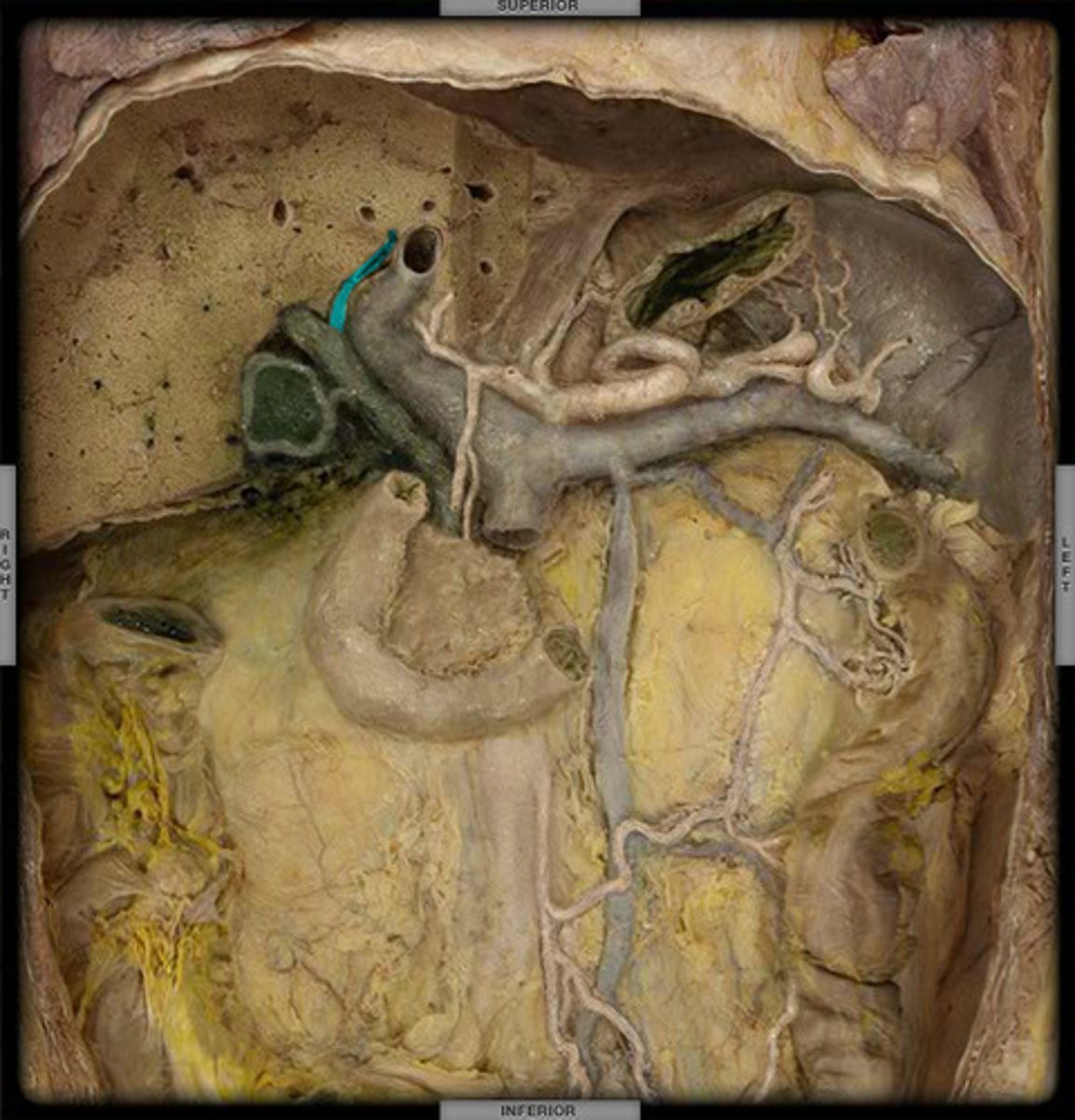
Common hepatic duct
large bile duct leading from liver; joins with the cystic duct to form the common bile duct, formed by the union of the right and left hepatic ducts; the duct through which bile from the liver moves to the cystic and common bile ducts
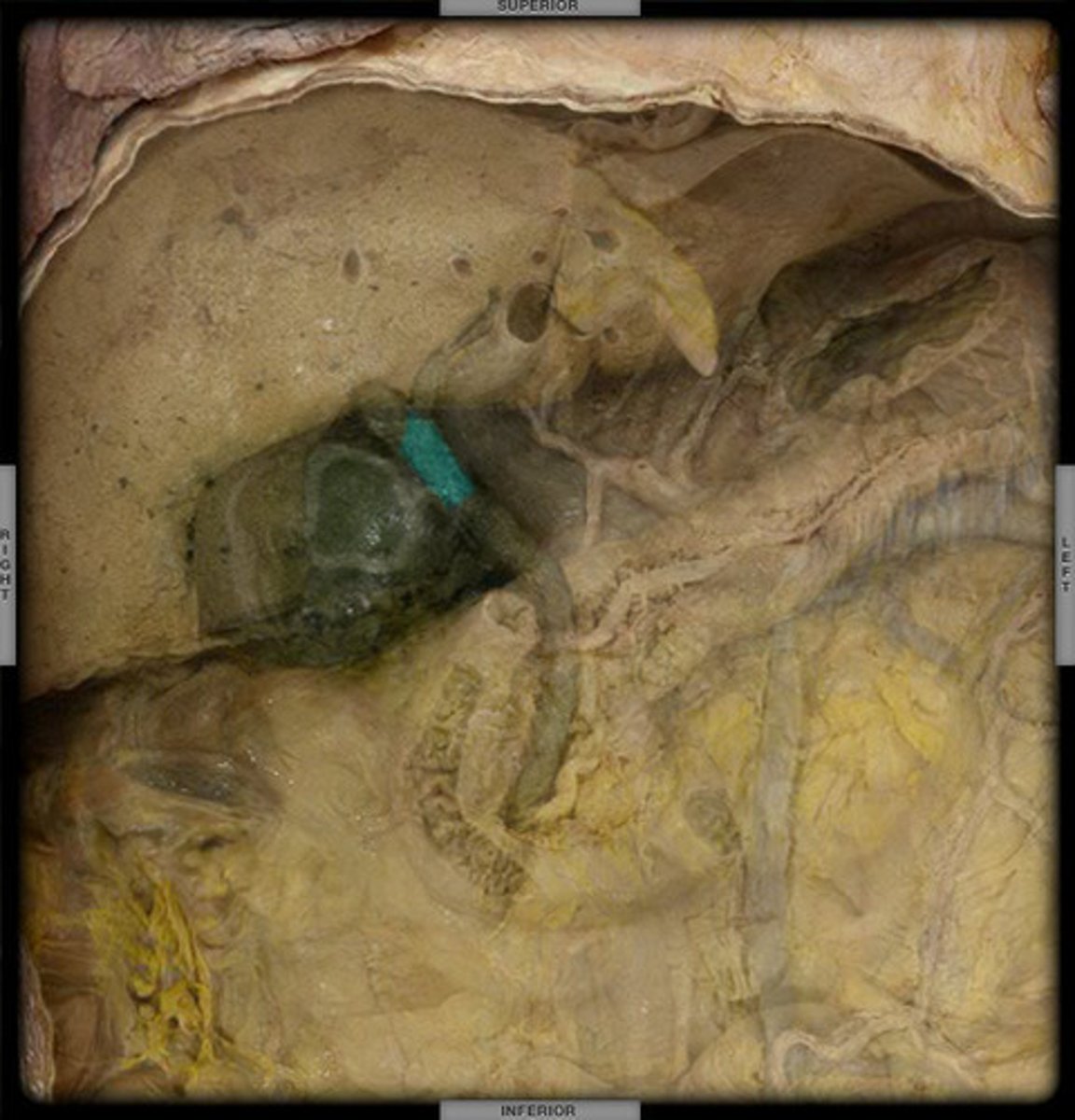
Cystic duct
a duct draining bile from the gallbladder; merges with the common hepatic duct to form the common bile duct
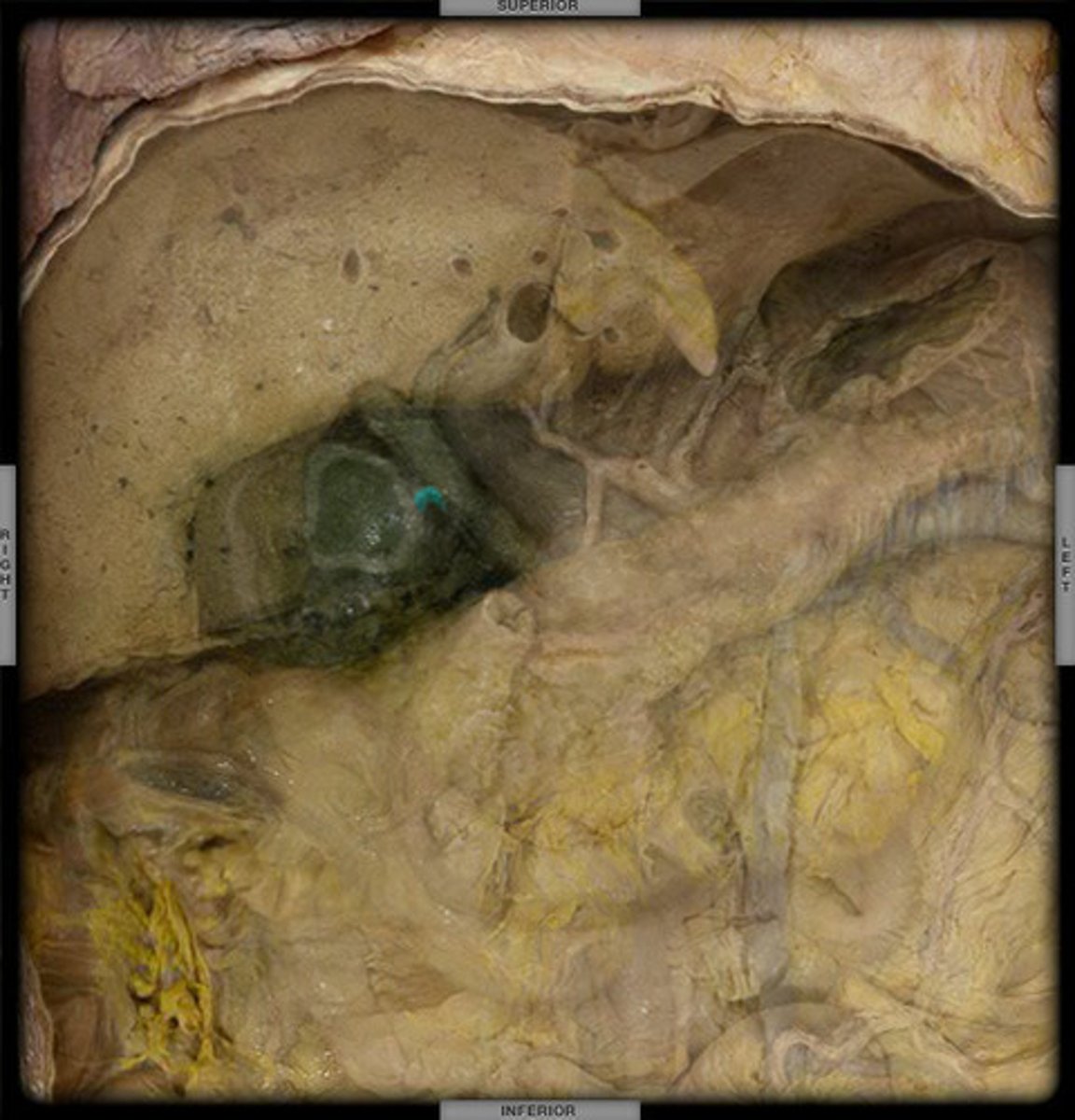
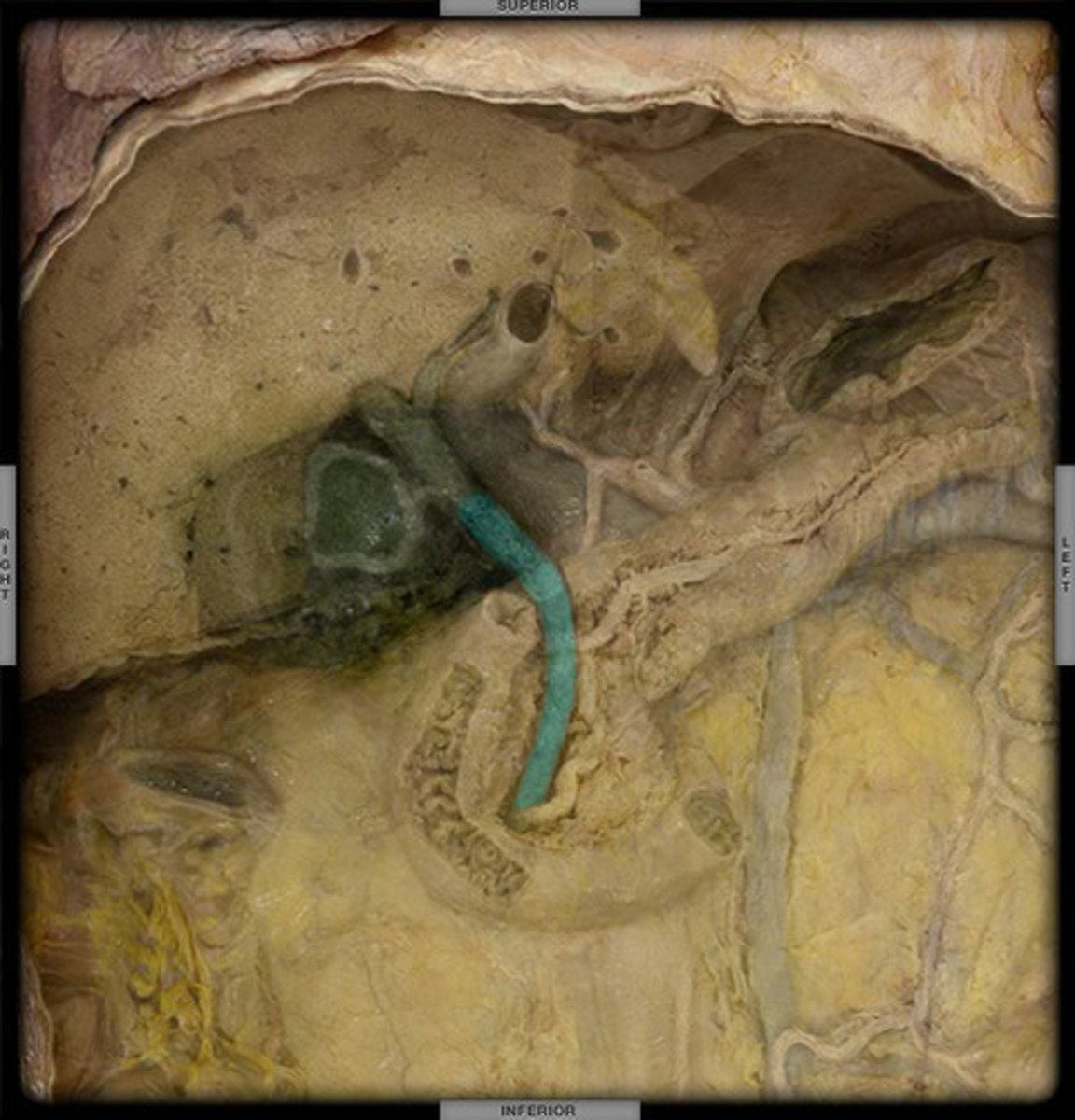
Common bile duct
A duct formed by the hepatic and cystic ducts, , The duct that carries bile from the gallbladder and liver to the small intestine (duodenum).
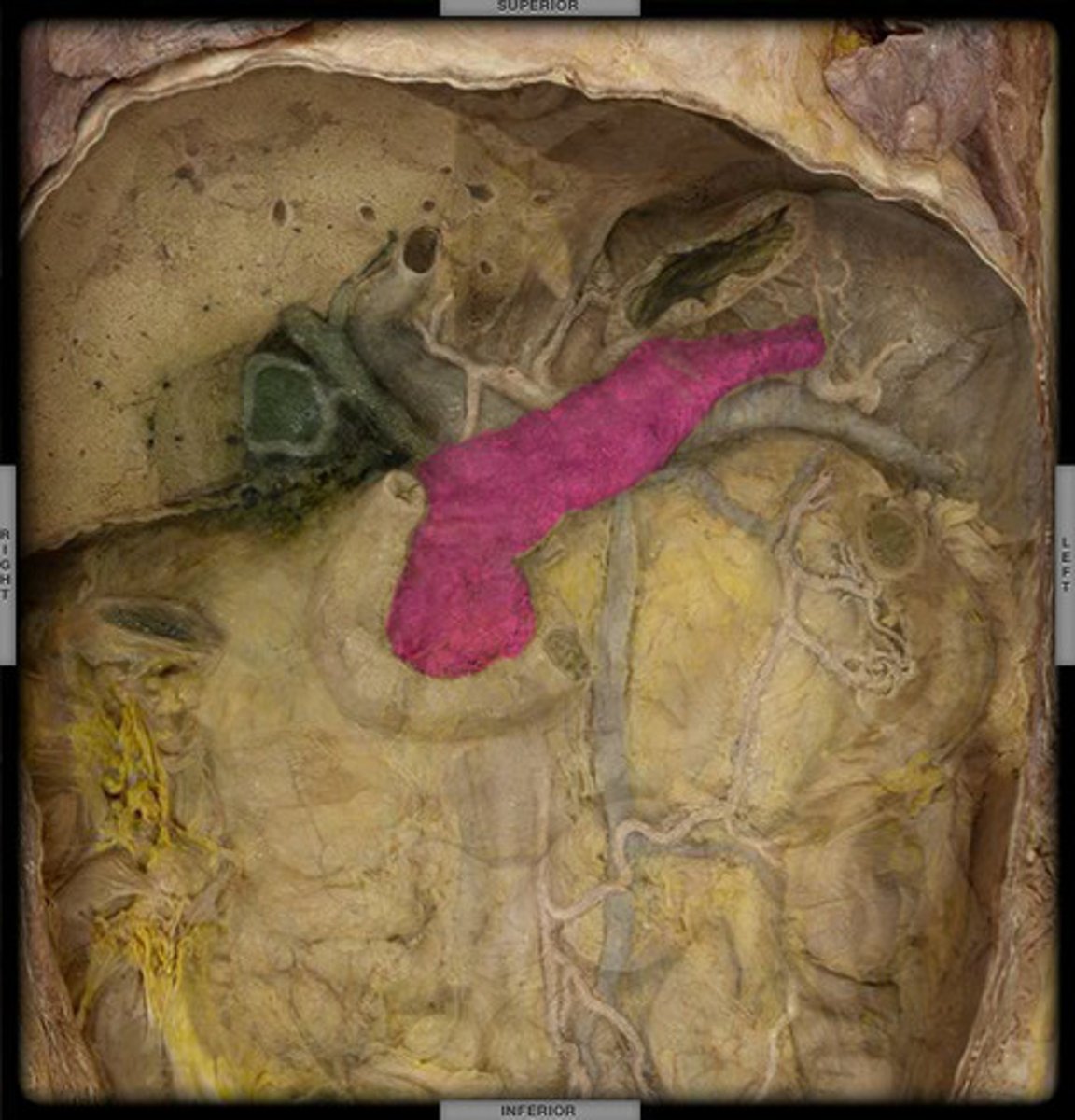
Pancreas
A triangular organ that lies between the stomach and first part of the small intestine.
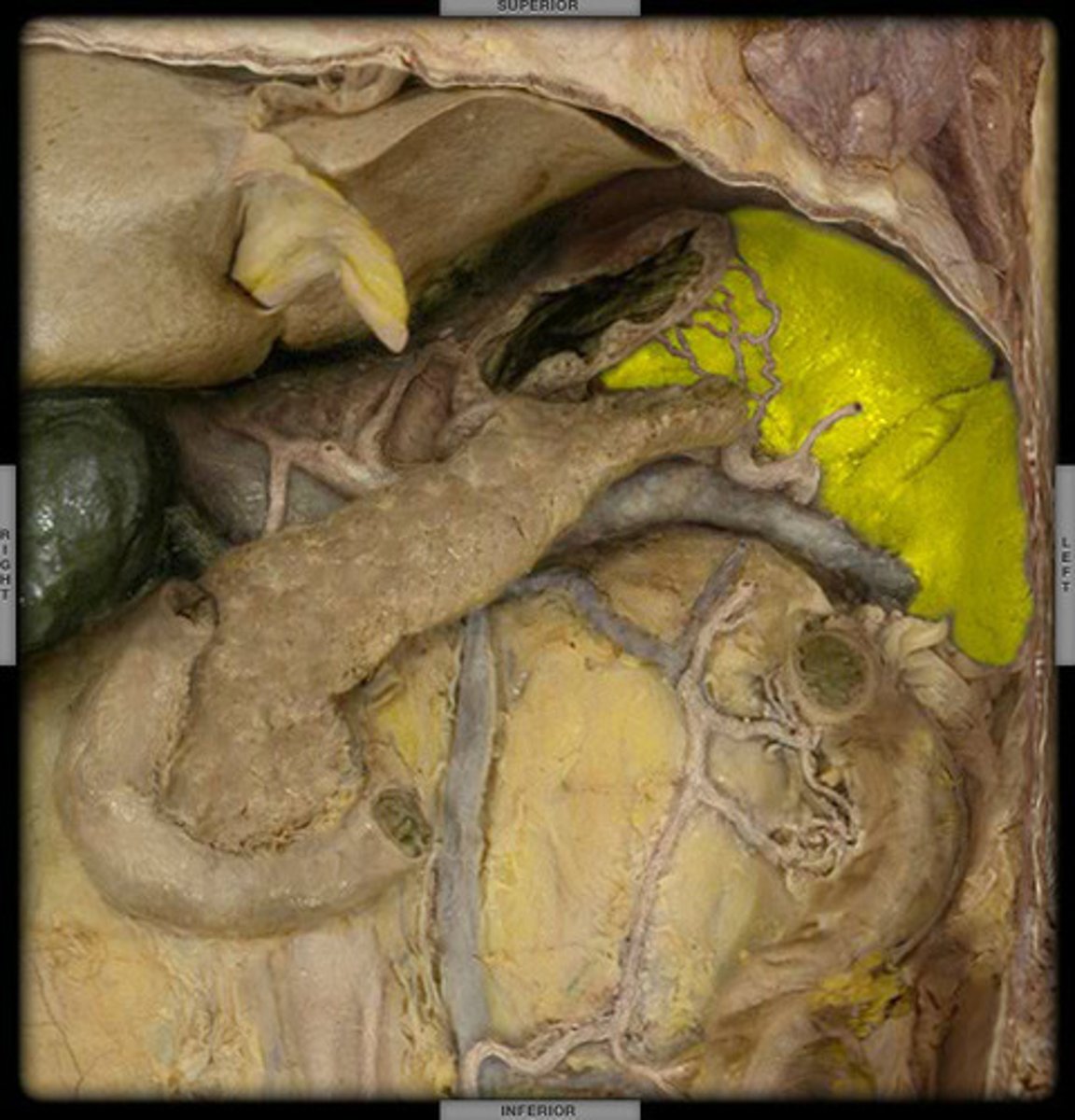
Spleen
Found in the left hypochondriac region between the fundus of the stomach and the diaphragm
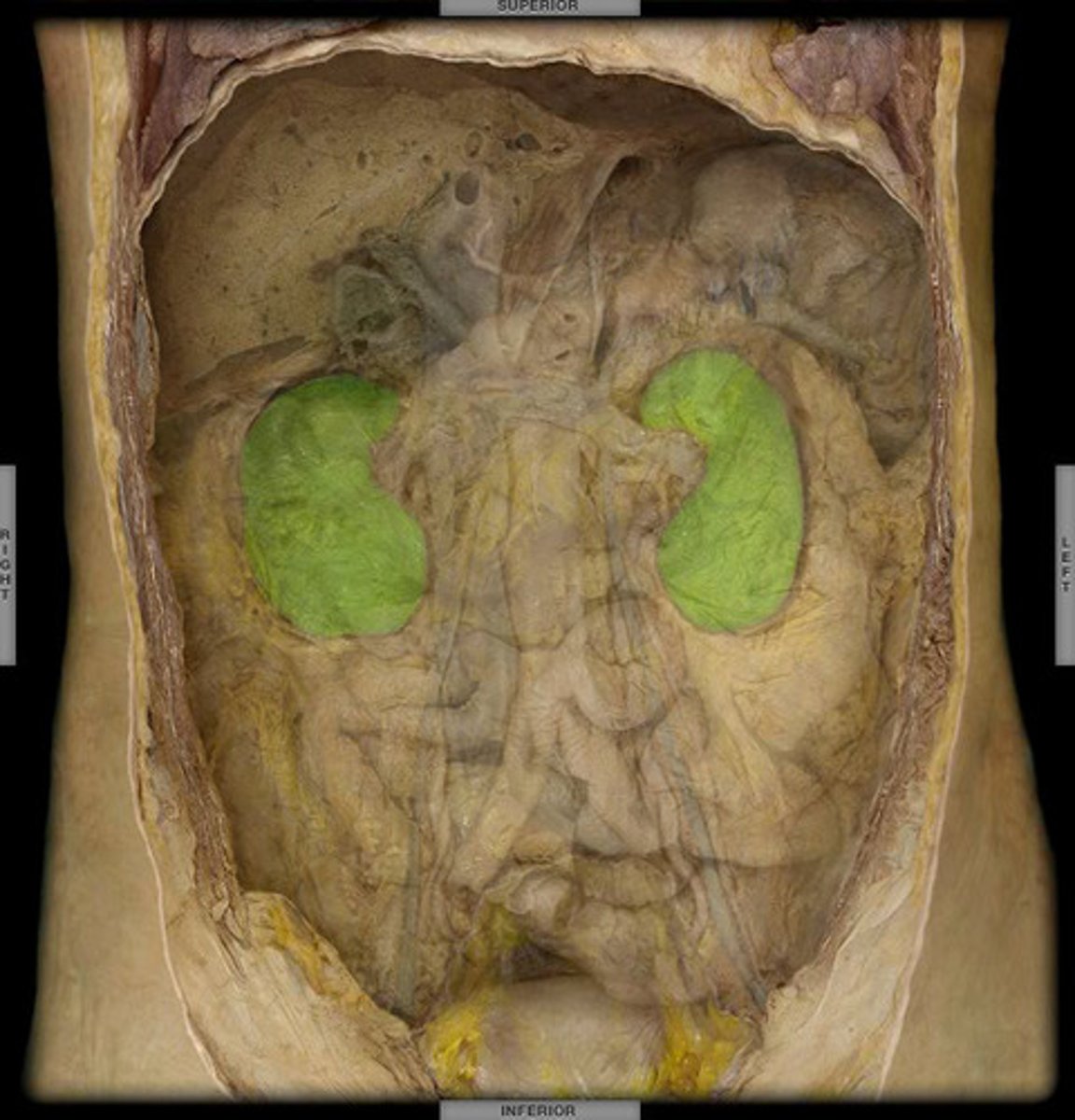
kidney
Filters waste from the blood like urea, water, salt and proteins.`
liver
A large solid organ that lies in the right upper quadrant immediately below the diaphragm; it produces bile, stores glucose for immediate use by the body, and produces many substances that help regulate immune responses.