Week 9: Cancer Pharm (Part 3)
 Call Kai
 Learn
Learn Practice Test
 Spaced Repetition
 Match
Match Flashcards
 Knowt Play
1/31

There's no tags or description
Looks like no tags are added yet.
Name | Mastery | Learn | Test | Matching | Spaced | Call with Kai | Chat |
|---|
No analytics yet
Send a link to your students to track their progress
32 Terms
Prednisone:
Corticosteroid modifier
Tamoxifen/raloxifene:
Estrogen antagonists used for adenocarcinoma of the breast
Exemestane/anastrozole:
Aromatase inhibitors that inhibit estrogen synthesis
Flutamide/bicalutamide:
Anti-androgens used for prostate cancer
Cytokine therapy:
Extension of normal cytokine function to stimulate immune effects against cancer
IL-2 (Proleukin):
T-cell and NK cell activator used for melanoma and renal cell cancer
IFN-alpha (Roferon A/Intron A):
Inhibits tumor cell growth and activates NK cells and APCs; used for melanoma, Kaposi's sarcoma, and hematologic cancers
Monoclonal antibodies:
target cancer cell receptors or ligands
Rituximab:
Monoclonal antibody that blocks CD20 receptor
Trastuzumab:
Monoclonal antibody that blocks Her-neu receptor
Bevacizumab:
Monoclonal antibody that binds VEGF ligand and inhibits angiogenesis
Small molecule inhibitors:
target intracellular cancer pathways such as proteasomes and tyrosine kinases
Bortezomib:
Proteasome inhibitor
Imatinib:
First discovered tyrosine kinase inhibitor
Sunitinib/sorafenib:
Small molecule inhibitors that also inhibit angiogenesis
Tumor vasculature:
poorly organized, abnormal perivascular cells, hyperpermeable, increased interstitial pressure, and decreased drug diffusion into tumor
What is the goal of anti-VEGF therapy like bevacizumab?
Normalize/inhibit tumor vasculature to improve tumor treatment effects
MTD pulsatile chemotherapy:
Maximum tolerated dose given intermittently, classically every 3 weeks

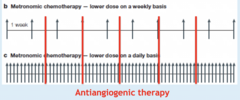
Metronomic chemotherapy:
lower-dose chemotherapy given more frequently, such as weekly or daily

How is antiangiogenic therapy shown in dosing schedules?
Added between metronomic chemotherapy doses to target tumor vasculature
What are adverse effects of cytokines?
Acute inflammatory disease, autoimmune responses, depression, nausea, emesis
What are adverse effects of antibody therapies?
Acute inflammatory disease and anaphylaxis
Bevacizumab adverse effects:
Impaired wound healing, arterial thromboembolic events, neutropenia
Sunitinib/sorafenib adverse effects:
Hypertension, GI disturbances, rash, abdominal pain, hemorrhage/bleeding, xerostomia, stomatitis/mucositis, altered taste, dysphagia
Unexpected effect of antiangiogenic drugs:
Therapeutic doses can be antiangiogenic, but subtherapeutic doses may be proangiogenic
*experimental data idk if he would test this but fun fact?
Imatinib adverse effects:
Skin reaction/erythema multiforme, excessive edema, anemia, hepatotoxicity, GI symptoms including nausea
Imatinib dental implications:
Mouth ulceration, taste disturbance, high bleeding risk, cytopenias including thrombocytopenia, medical consult advised
Preventive/prophylactic cancer vaccines:
Vaccines against causative infectious agents (ex: HPV and Hepatitis B virus)
Therapeutic cancer vaccine:
Vaccine against tumor (ex: prostate cancer vaccine Provenge)
Provenge:
First therapeutic cancer vaccine, FDA approved in 2010, used for prostate cancer
Direct oral toxicities of cancer chemotherapy:
Oral mucositis, salivary gland dysfunction, neurotoxicity, trigeminal nerve neuropathies, taste dysfunction, dentinal hypersensitivity, TMJ dysfunction, myofascial pain
Indirect oral toxicities of cancer chemotherapy:
Myelosuppression, neutropenia/immunosuppression, anemia, thrombocytopenia, infection, GI mucositis, nutritional disturbances, nausea/vomiting, acidic damage, heightened gag reflexes