AIS Chapter 17
 Call Kai
 Learn
Learn Practice Test
 Spaced Repetition
 Match
Match Flashcards
 Knowt Play
1/25

There's no tags or description
Looks like no tags are added yet.
Name | Mastery | Learn | Test | Matching | Spaced | Call with Kai |
|---|
No analytics yet
Send a link to your students to track their progress
26 Terms
Business Case for IT Initiatives
Why are we doing this project?
How does it address key business issues?
How much will it cost, and how long will it take?
What is the return on investment and the payback period?
What are the risks of doing the project?
What are the risks of not doing the project?
What are the alternatives?
How will success be measured?
Economic Justification Process
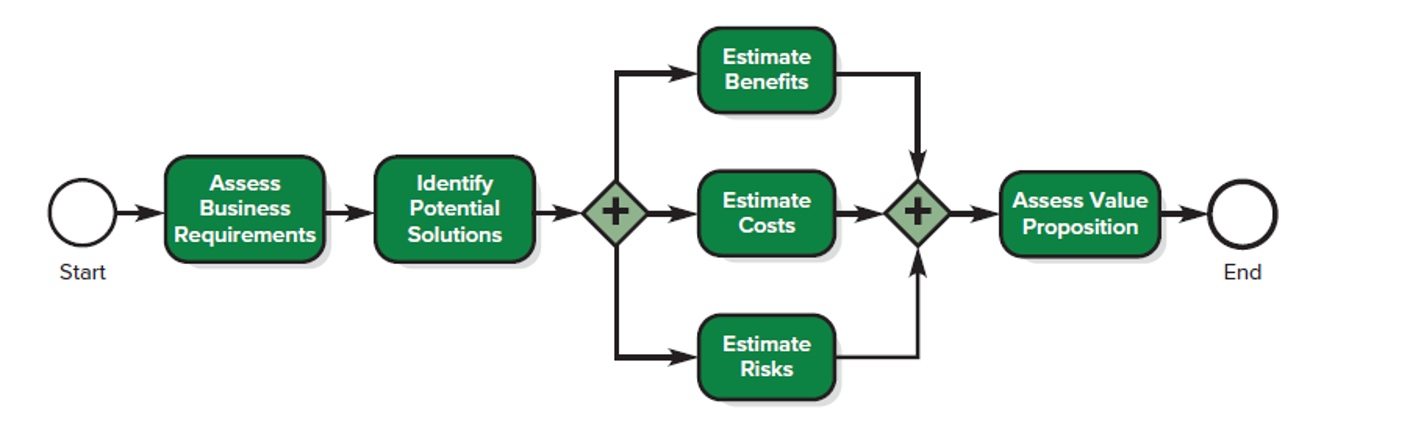
Assessing Business Requirements
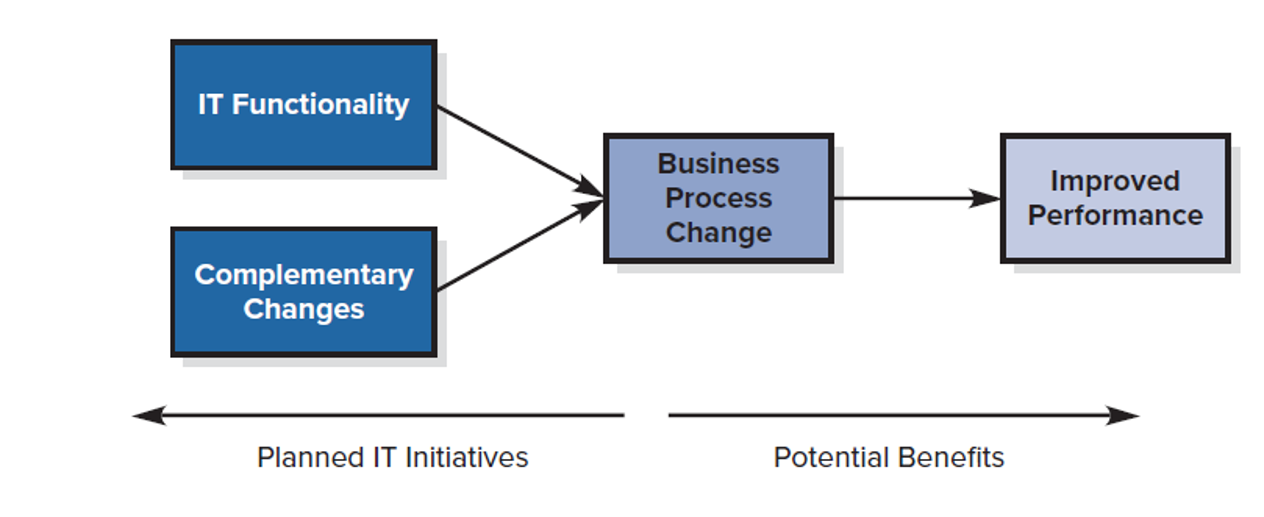
IT initiatives should reduce one or more gaps between the firm’s current and desired performance
Consider other enabling changes
Estimating Benefits
Revenue enhancement, Revenue protection, Cost savings, Cost avoidance
Acquisition Costs
Direct Cost (hardware, software, networking, development, training)
Indirect costs of the disruption to current operations
Operating Cost
Direct Cost (Hardware replacement, software upgrades, maintenance contract)
Indirect Cost (user downtime and lost productivity, such as time spent on self-training, peer support, end user data management)
Assessing Risks
Alignment risk—the solution is not aligned with the strategy of the firm.
Solution risk—the solution will not generate projected benefits.
Financial risk—the solution will not deliver expected financial performance.
Project risk—the project will not be completed on time within budget.
Change risk—the firm or part of the firm will not be able to change.
Technological risk—the technology will not deliver expected benefits.
Payback period
= Initial Investment/Increased cash flow per period
The breakeven point is where the total value of benefits equals that of total costs. The payback is the number of periods needed to recover the project’s initial investment
Net present value
Sum of the present value of all cash inflows minus the sum of the present value of all cash outflows. Each cash outflow/inflow is discounted to its present value
Internal rate of return
Discount rate that makes the project’s net present value equal to zero
Accounting rate of return
The average annual income from the IT initiative divided by the initial investment cost
Prepare the Value Proposition
The change and technology proposed.
The anticipated benefits (related to the firm’s critical success factors).
The group(s) within the firm that will benefit.
The timing of the benefits.
The likelihood of achieving those benefits as planned.
Phases of the Systems Development Life Cycle
Planning Phase.
Analysis Phase.
Design Phase.
Implementation Phase.
Maintenance Phase.
Planning Phase
involves summarizing the business needs with a high-level view of the intended project
feasibility study is often used to evaluate economic, operational and technical practicability
Analysis Phase
further refines the goals of the project into carefully specified functions and operations of the intended system
Design Phase
describing in detail the desired features of the system that it uncovered in the analysis phase
Implementation Phase
development, testing and implementation of the new proposed system
Maintenance Phase
making changes, corrections, additions, and upgrades (generally smaller in scope) to ensure the system continues to meet the business requirements that have been set out for it
Project management
planning, organizing, supervising and directing of an IT project
project manager
the lead member of the project team that is responsible for the project
project sponsor
often be a senior executive in the company who takes responsibility for the success of the project
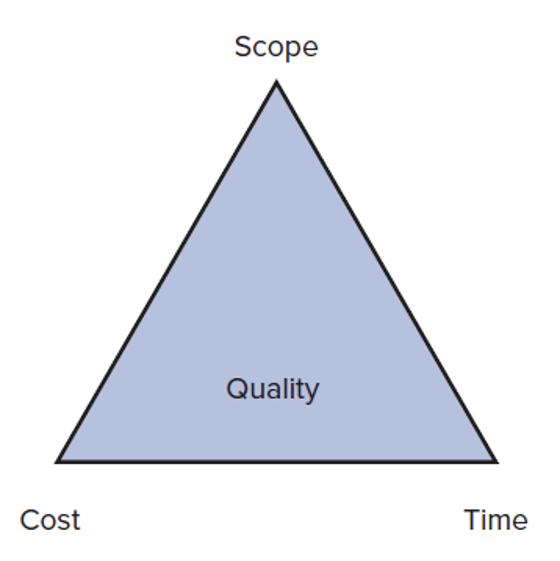
Constraints of IT projects
100% Rule
rule requiring 100% planning of all tasks, including all the internal, external, and interim tasks
15-15 Rule
rule suggesting that if a project is more than 15 percent over budget or 15 percent off the planned schedule, it will likely never recoup the time or cost necessary to be considered successful
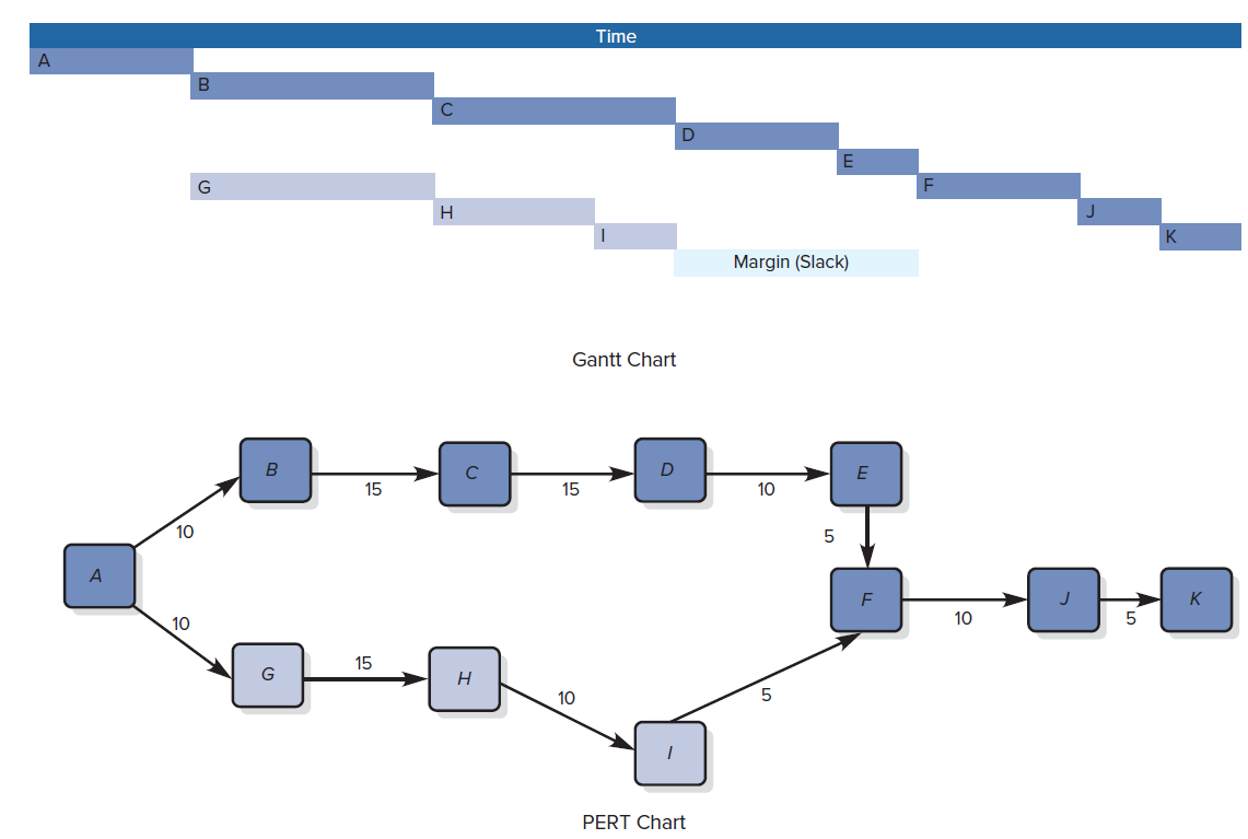
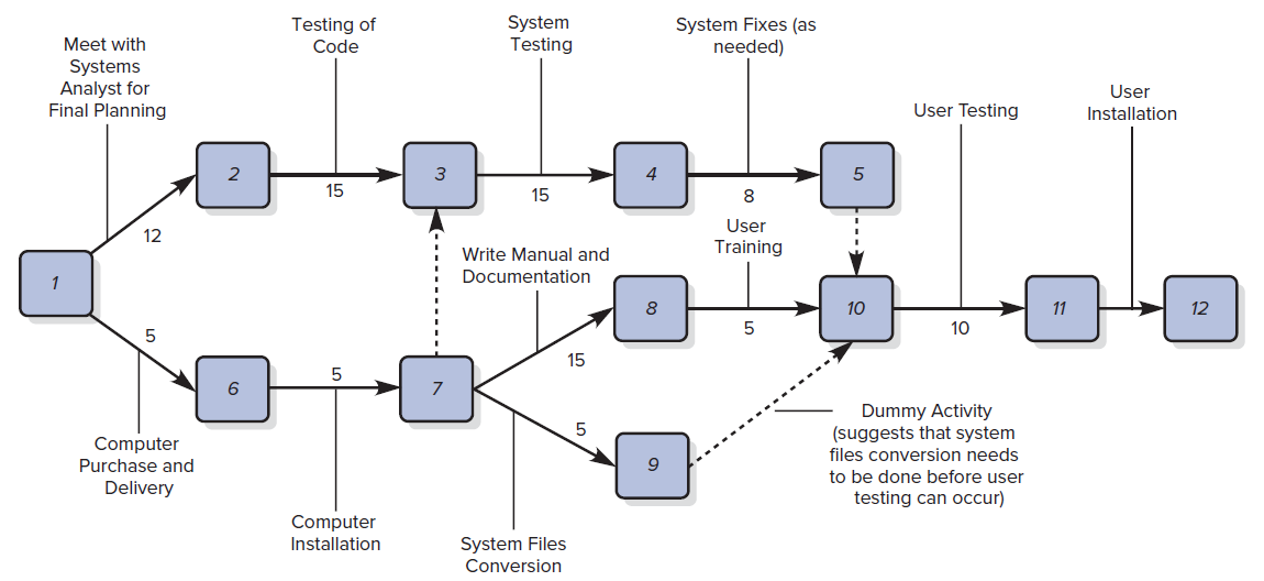
PERT Chart
works to identify all tasks of a project
Gantt chart
a graphical representation of the project schedule by mapping the tasks to a project calendar