Week 5 MECH 223
 Call Kai
 Learn
Learn Practice Test
 Spaced Repetition
 Match
Match Flashcards
 Knowt Play
1/21

Earn XP
Name | Mastery | Learn | Test | Matching | Spaced | Call with Kai | Chat |
|---|
No analytics yet
Send a link to your students to track their progress
22 Terms
Design Guidelines
Guidelines for geometry and orientation as principles of good practice. Opting for shapes that make stress distributions uniform and dimensions that produce an operating stress as close as possible to the max stress the material can withstand.
Direct Load Path
Transmits force in paths with straight and short shapes — reduce internal and bending stresses, simplicity makes it less expensive.
Triangulation
Using triangular elements like truss structure will make load-carrying more efficient.
Hollow Cylinders and I-Beams
To increase the strength and resistance of a beam — put the material furthest away from neutral.
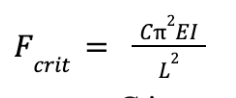
Avoid Buckling
Failure mode when a member is loaded in axial compression — it is an unstable phenomenon that must be carefully looked at.
Conforming Surfaces
Maximizing contact area when putting surface together and avoid LARGE contact forces — maximizing area will lead to decrease in stress.
Merging Shapes
Avoid sudden changes in geometry to reduce stress concentration. Create smooth transitions or add additional supports to distribute the load.
Threaded Fasteners
A reasonably strong and non-permanent connection that is cheap (standardized items) and allows for mismatch alignment (has tolerances). The finer the threads, the more precise adjustment and the higher strength joints are created.
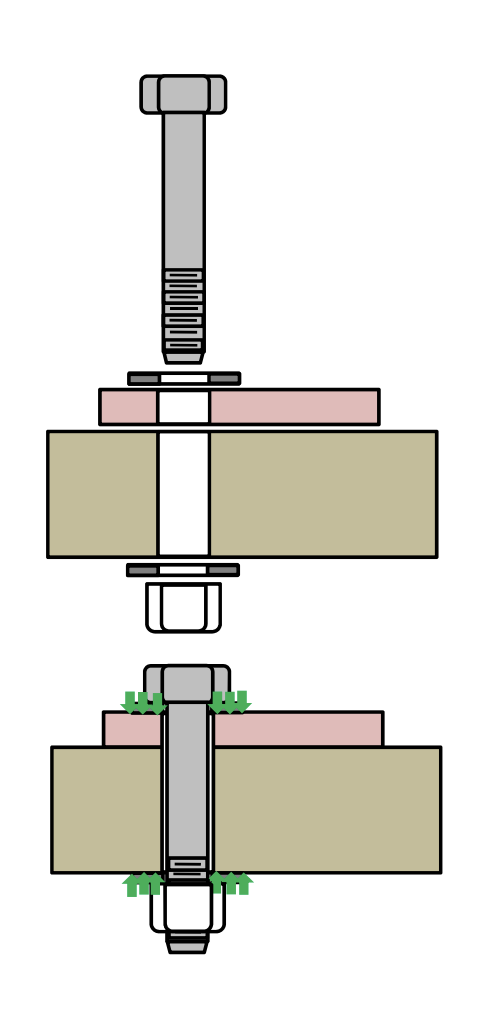
Bolt
A threaded fastener used with a nut to clamp material together. It is held together through elastic deformation (stretching it while tightening).
Screw
A threaded fastener that is screwed into another component. The diameter of the hole being screwed into should be 1.5xD of the fastener.
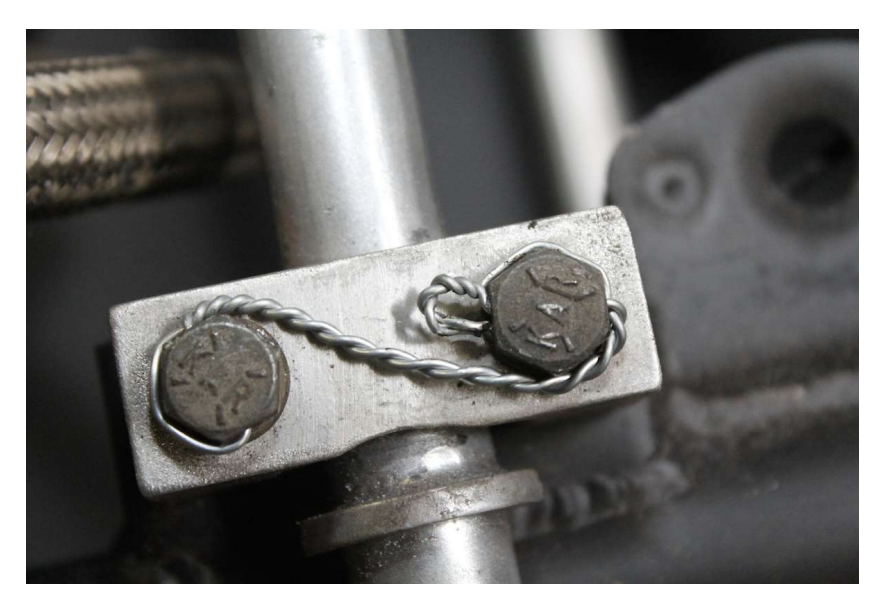
Safety Wiring of Bolts
Prevent fasteners from falling in extreme vibrations (expensive but worth the safety)
Rivets
Permanent joints between cheap materials (it is a shaft with a rounded top). The clamping pressure is developed to hold materials together.
Backing Washers
When the punches do not match the rivet, use the washers on both sides to pop rivet in the holes.
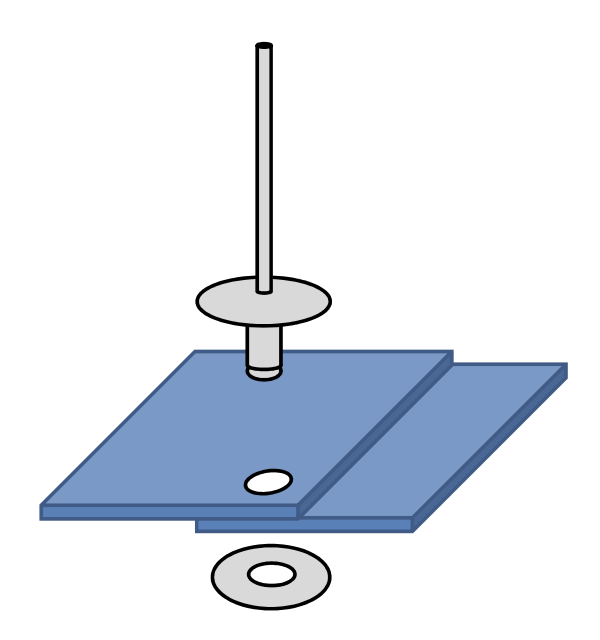
Blind Rivet
A fast and easy permanent joining method for projects (what we have available)
Solid Rivet
Uses impact on the other end to join material together.
Welding
Fusing two materials together with or without filler material (ie. spot _____ doesn’t require it)
Adhesives
A thin spread of viscous material over a large contact area — best works in shear but poor in tension or peel. It has good load distribution characteristics and does not introduce stress concentrations!
Degrees of Freedom
The number of independent motions of an object including translation and rotation.
Constraint
A mechanical connection that prevents motion in a particular degree of freedom.
Under Constrained
When there are more degrees of freedom than intended — the object will move in ways we do not want it to.
Over Constrained
Fewer degrees of freedom than intended — prevents the object from moving in the intended ways and can cause internal stresses within the components. Sometimes it is okay to have this.
Seating Forces
Forces that keep constraints active by keeping the objects in contact, such as gravity, springs, air pressure and electromagnetic forces.