A&PII Practical 1 - Blood
 Call Kai
 Learn
Learn Practice Test
 Spaced Repetition
 Match
Match Flashcards
 Knowt Play
1/40

There's no tags or description
Looks like no tags are added yet.
Name | Mastery | Learn | Test | Matching | Spaced | Call with Kai | Chat |
|---|
No analytics yet
Send a link to your students to track their progress
41 Terms
components of blood
erythrocyte (RBC)
leukocyte (WBC)
plasma
thrombocyte (platelet)
Erythrocyte (red blood cell)
Biconcave, anucleated disk containing hemoglobin; transports oxygen from the lungs to body tissues and assists in carbon dioxide transport.
Leukocyte (white blood cell)
Nucleated cell involved in immune defense; protects the body against pathogens, foreign invaders, and infectious diseases.
Plasma
Pale yellow liquid portion of blood composed primarily of water, proteins, nutrients, electrolytes, and waste products; acts as a transport medium for blood cells and dissolved solutes.
Thrombocyte (platelet)
Small, cell fragments lacking a nucleus; crucial for hemostasis by adhering to damaged blood vessels and initiating blood clotting.
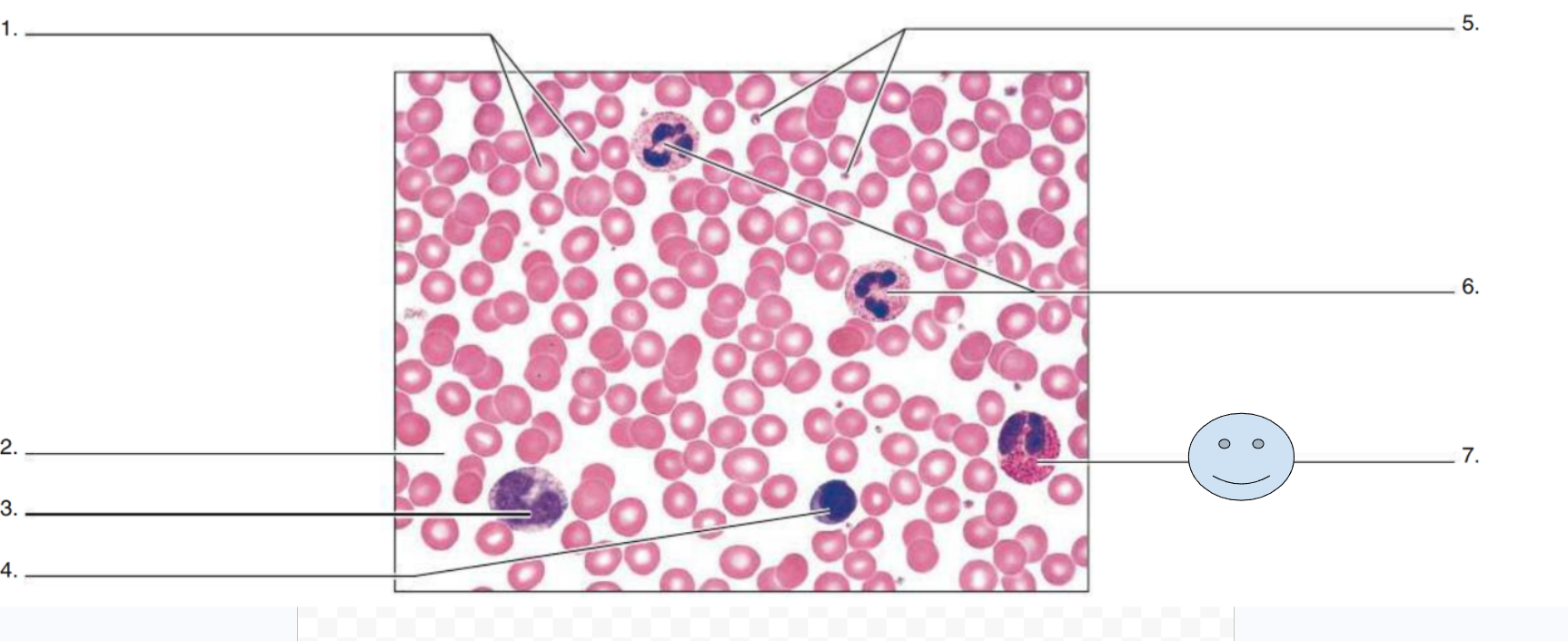
erythrocytes

plasma

monocyte

lymphocyte

platelets

neutrophils
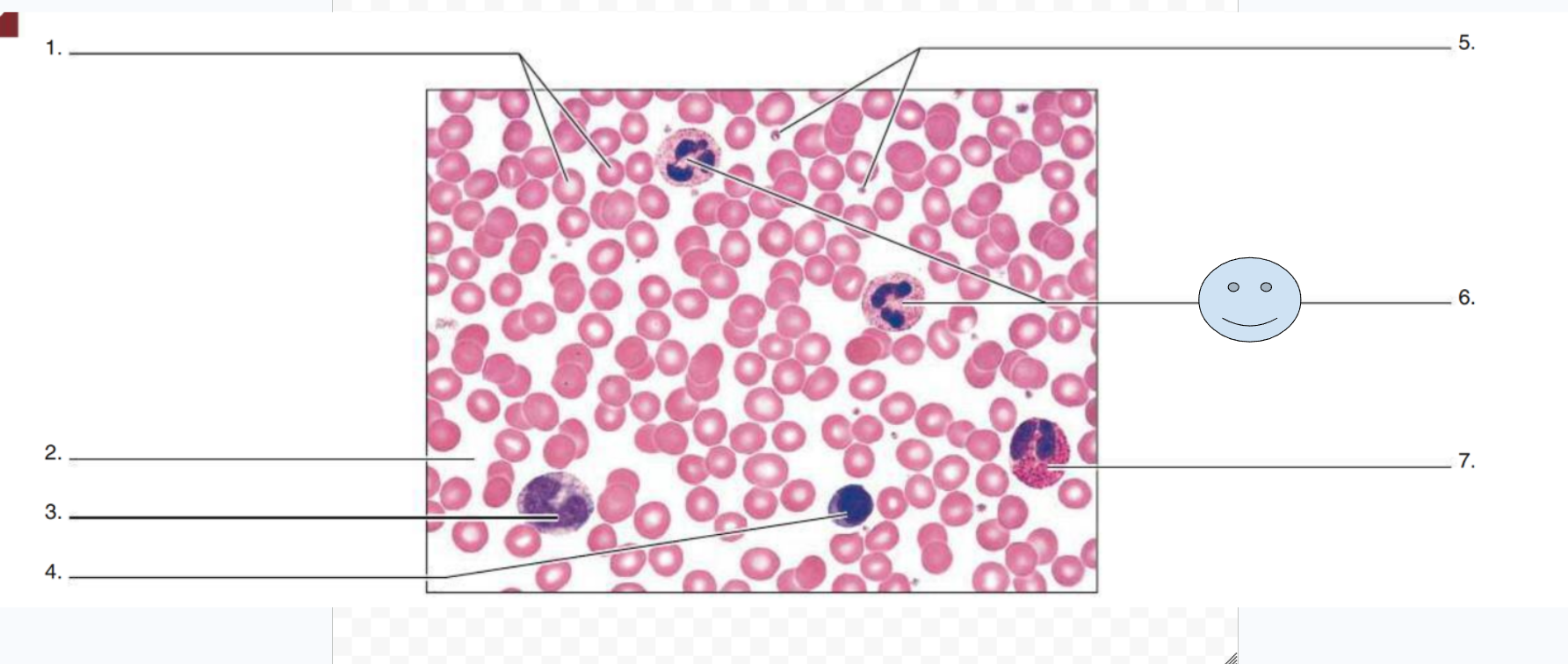
eosinophil
Anemia
A condition characterized by a reduced oxygen-carrying capacity of the blood, resulting from a low erythrocyte (red blood cell) count or decreased hemoglobin concentration.
Embolus
A unattached mass (such as a blood clot, air bubble, or fat droplet) that travels through the bloodstream until it lodges in a vessel and blocks blood flow.
Leukemia
A type of cancer affecting blood-forming tissues, characterized by the uncontrolled, rapid proliferation of abnormal, nonfunctional white blood cells.
Leukocytosis
An abnormally high white blood cell count in the blood, typically occurring as a normal immune response to an infection, inflammation, or stress.
Malaria
mosquito-borne infectious disease caused by Plasmodium parasites that infect and destroy erythrocytes, leading to fever, chills, and anemia.
Mononucleosis
A contagious viral infection (most commonly caused by the Epstein-Barr virus) that leads to an increased number of atypical lymphocytes, fever, fatigue, and swollen lymph nodes.
Polycythemia
An abnormal elevation in the concentration of erythrocytes (red blood cells) or hemoglobin in the blood, increasing blood viscosity.
Thrombocytopenia
A condition characterized by an abnormally low platelet (thrombocyte) count, leading to impaired blood clotting and an increased risk of bleeding.
Thrombus
An immobile blood clot formed locally inside an intact or damaged blood vessel that obstructs blood flow.
Trypanosomes
Parasitic protozoans (such as Trypanosoma brucei) that live and multiply in the blood plasma, causing diseases like African sleeping sickness.
antibodies
____________ bind to specific cell surface antigens, causing blood cells to clump together or agglutinate.)
Rh-negative
An individual whose red blood cells lack the Rh factor/antigen is designated as ________________
erythrocyte

platelet

neutrophil

eosinophil

plasma

leukocyte

erythrocyte
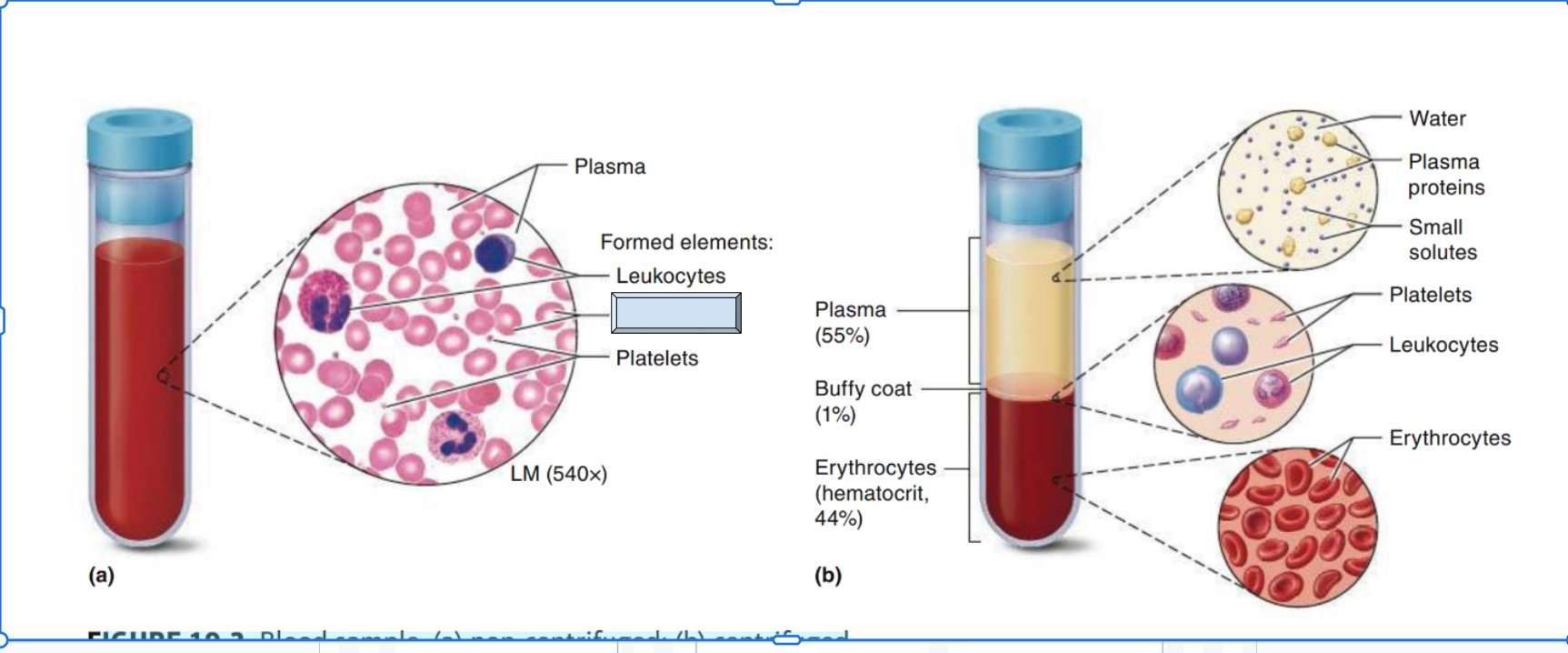
platelet

plasma
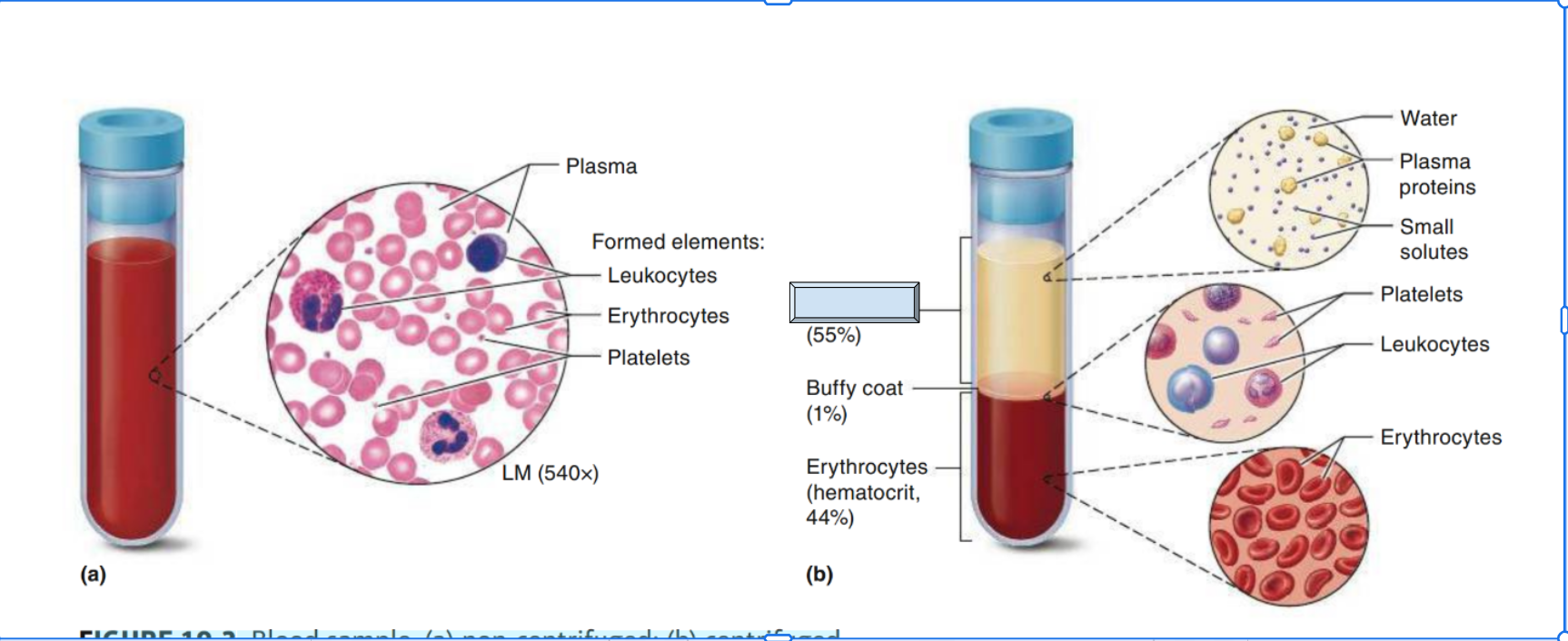
water, plasma proteins, small solutes
components of plasma
buffy coat
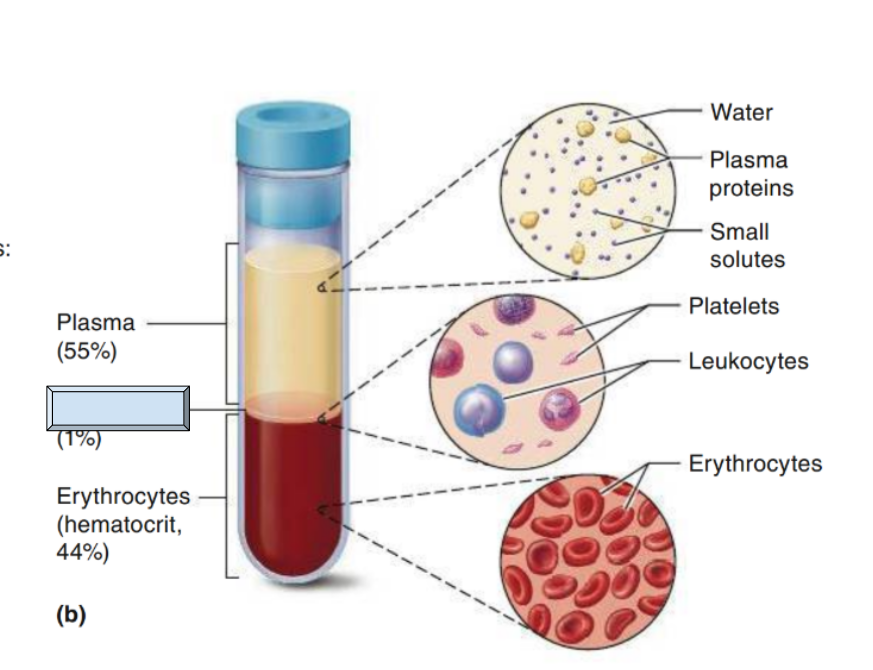
erythrocytes

platelets and leukocytes
components of buffy coat
erythrocyte
What is in the hematocrit?
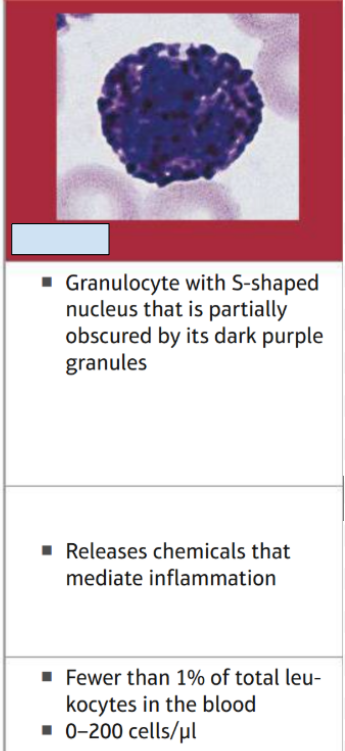
basophil
monocyte

lymphocyte
