APES Unit 0 Intro, Scientific method
 Call Kai
 Learn
Learn Practice Test
 Spaced Repetition
 Match
Match Flashcards
 Knowt Play
1/17

There's no tags or description
Looks like no tags are added yet.
Name | Mastery | Learn | Test | Matching | Spaced | Call with Kai | Chat |
|---|
No analytics yet
Send a link to your students to track their progress
18 Terms
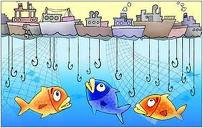
Tragedy of the Commons
the tendency of a shared, limited resource to become depleted because people act from self-interest for short-term gain leading to degradation or depletion of that resource.
Shared resources or commons may be a forest that is not regulated, air, fish in the high seas, groundwater, minerals. They are either free access to all or difficult to regulate.
Solutions full cost pricing, laws to use resources below sustainable yield, fines. Increase pricing of virgin resources
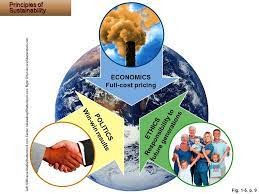
Full-cost pricing
products that include external costs, especially negative externalities
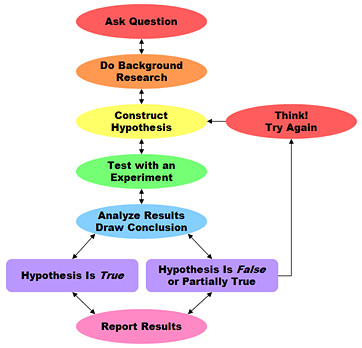
Scientific Method
A series of steps followed to solve problems including collecting data, formulating a hypothesis, testing the hypothesis, and stating conclusions.
Must have a control, hypothesis, and multiple trials. Needs to be measurable (dependent variable) and a controlled experiment with all variables are the same except for the one variable you are changing (independent variable) Greater the number of trials the greater the accuracy.
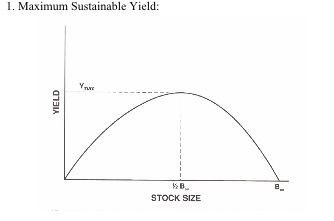
sustainable yield (sustained yield)
Highest rate at which a potentially renewable resource can be used without reducing its available supply throughout the world or in a particular area.
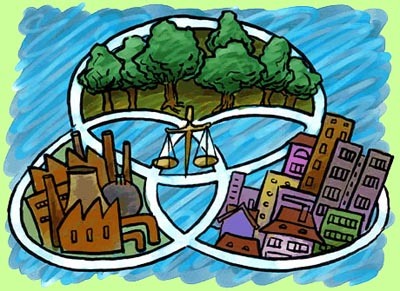
Sustainability
The use of Earth's renewable and nonrenewable natural resources in ways that do not constrain resource use in the future.
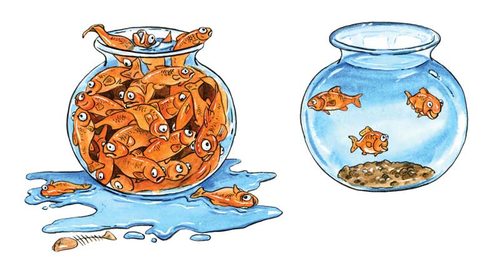
carrying capacity
the largest population that an environment can support at any given time (enough resources).
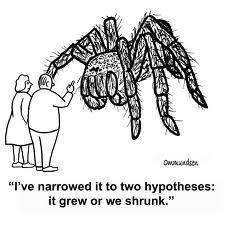
Hypothesis
an inference or proposed explanation made on the basis of limited evidence as a starting point for further investigation. Must state a change and can be tested.
"An increase/decrease in X will lead to an increase/decrease in y."
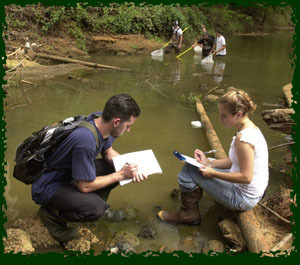
Environmental Science
The field of study that looks at the interactions among human systems and those found in nature.
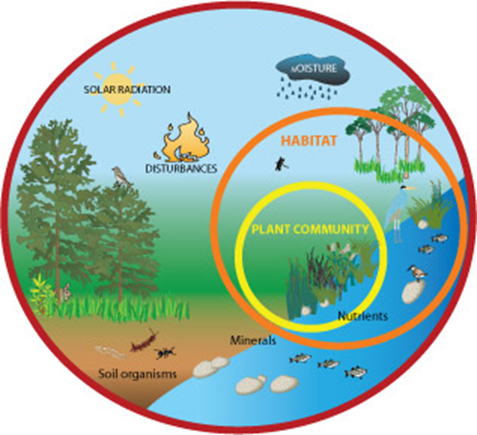
Ecosystem
A biological community of interacting organisms and their physical environment. Living organisms plus abiotic factors.
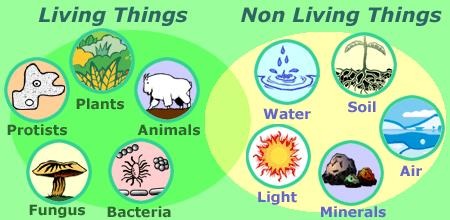
Biotic
living things in an environment
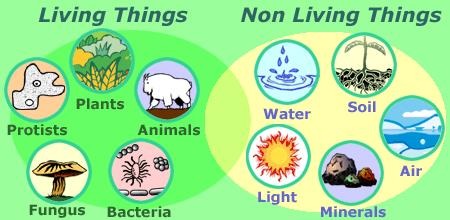
abiotic factors
Nonliving components of environment.
Environmentalism
A social movement dedicated to protecting the earth's life support systems for us and other species. Uses lobbying, activism and education.
control group
the group in an experiment that experiences exactly the same conditions as the experimental group, except for the single condition under study.
dependent variable
The outcome factor; the variable that may change in response to manipulations of the independent variable. usually is measured (the data you are collecting).
null hypothesis
the hypothesis that there is no significant difference between specified populations, any observed difference being due to sampling or experimental error.
Accuracy
A description of how close a measurement is to the true value of the quantity measured.
Precision
how close the repeated measurements of a sample are to one another
uncertainty
an estimate of how much a measured or calculated value differs from a true value