APHY 102 Final Ivy Tech
 Call Kai
 Learn
Learn Practice Test
 Spaced Repetition
 Match
Match Flashcards
 Knowt Play
1/63

There's no tags or description
Looks like no tags are added yet.
Name | Mastery | Learn | Test | Matching | Spaced | Call with Kai | Chat |
|---|
No analytics yet
Send a link to your students to track their progress
64 Terms
Which of the following is not a function of the mucus-lined nasal passages?
Cooling exhaled air
Which of the following has an effect on the pH of blood?
Carbon dioxide
What causes air to move into the lungs during inspiration?
Pressure gradient between atomosphere and alveoli
Another word for breathing is ventilation.
True
Oxygen is carried in the blood in the form of bicarbonate ions and is bound to hemoglobin.
False
The layer of serous membrane that is firmly attached to the surface of a lung is called the __________.
visceral pleura
The __________ is the tube that conveys urine outside the body.
urethra
Which of the following chemicals might athletes abuse because of its potential ability to improve performance by increasing red blood cell production?
Erythropoietin (EPO)
The hormone ADH promotes water reabsorption through the wall(s) of the __________.
distal tubule and collecting duct
The efferent arteriole supplies blood to the capillaries of the glomerulus.
False
The kidneys play an important role in the regulation of red blood cell production.
True
The tuft of capillaries located between the afferent and efferent arterioles is the __________.
glomerulus
What is edema?
Abnormal accumulation of extracellular fluid
What is meant by the phrase acid-base balance?
Maintenance of the correct amount of hydrogen ion in the blood
Which of the following will cause the respiratory center to increase the breathing rate?
Decrease in plasma pH
In a healthy body, the volume of water remains relatively stable at all times.
True
Factors that alter water balance will also alter electrolyte balance.
True
Water produced as a byproduct of the oxidation of nutrients is called __________ water.
metabolic
Identify the correct sequence for the steps of meiosis I.
Prophase I → metaphase I → anaphase I → telophase I
Ovulation is triggered by a surge of _________ from the anterior pituitary gland.
LH
What structure does the sperm enter upon exiting the ductus deferens?
Ejaculatory duct
Chromosomes align down the center of a cell undergoing meiosis in metaphase.
True
The secretions of the prostate gland neutralize the acid in semen.
True
Following ovulation, the remaining follicular cells in the ovary enlarge to form an endocrine structure called the __________.
corpus luteum
What is the function of the placenta?
Allows oxygen and nutrients to diffuse from maternal blood to the embryo.
The fetus is protected from certain infections, to which the mother is immune, by __________.
antibodies from the mother's immune system
Implantation usually begins at about the end of the first ________ of development
week
The fetal stage of development begins at the end of the eighth week.
True
Aging-related changes include shrinking of the prostate in men and enlargement of the breasts in women.
False
The structure that surrounds the cell membrane of the secondary oocyte is the __________.
zona pellucida
Jonathan has straight hair. Caroline has curly hair. Their son, Carson, has wavy hair. The inheritance pattern illustrated here is an example of __________.
incomplete dominance
An individual who carries two identical alleles for a gene is said to be __________ for that gene.
Trisomy
The characteristics or health conditions associated with a particular set of alleles is called the __________.
phenotype
A human cell that has 69 chromosomes classified as a(n) ___________ cell.
triploid
What are the events of respiration?
Ventilation• External respiration• Transport of gases between lungs and body cells• Internal respiration• Cellular respiration
What are the organs of the upper respiratory tract?
Nose• Nasal cavity• Sinuses• Pharynx
What are the organs of the lower respiratory tract?
Larynx• Trachea• Bronchial tree• Lungs
visceral pleura
covers the lungs, blood vessels, nerves, and bronchi (Covers the organs) (inner layer)
parietal pleura
lines the thoracic wall and superior surface of the diaphragm (covers the cavity) (outer layer)
epiglottis
A flap of tissue that seals off the windpipe and prevents food from entering.
Partial Pressure
the contribution each gas in a mixture makes to the total pressure
Pharynx
Nasopharynx• Oropharynx• Laryngopharynx
Tidal volume
500mL, volume of air moved in and out of the lungs during respiratory cycle
Inspiratory reserve volume
3,000mL, Max volume of air that can be inhaled
Expiratory reserve volume
1,100mL, Mac volume of air the can be exhaled
Boyle's Law .
Boyle's Law is a basic law in chemistry describing the behavior of a gas held at a constant temperature., p1v1=p2v2
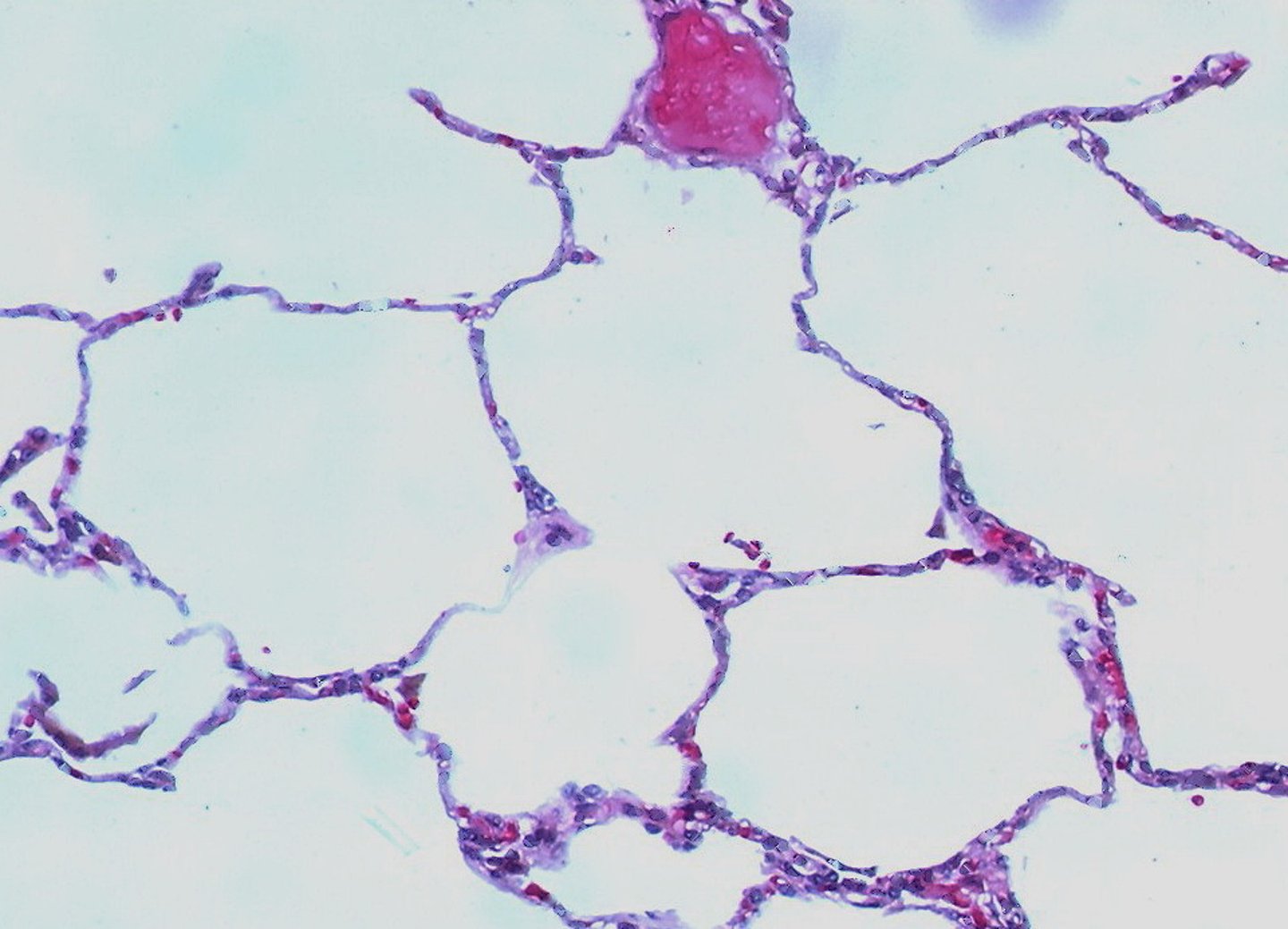
alveoli
large, simple squamous epithelial cells, air sacs
What protein can carry carbon dioxide
Hemoglobin
ADH
distal convoluted tubules and collecting ducts increase water reabsorption by osmosis, urine becomes more concentrated, and urine volume decreases.
EPO
(Hormone used by athletes) erythropoietin; promotes growth of red blood cells
Reabsorption
process whereby renal tubules return materials necessary to the body back into the bloodstream
Secretion
getting pushed back into the tubules
Ureters
The tubes that carry urine from the kidneys to the bladder.
urinary bladder
stores urine
Uerthra
carries urine from the bladder to the outside of the body
chemical buffering systems
are in all body fluids, are based on chemicals that combine excess acids and bases
bicarbonate buffer system
weak base, converts strong acid to weak acid
phosphate buffer system
found in intracellular and extracellular fluids, reacts with acids & bases to form compounds that alter pH; especially effective in renal tubules
protein buffer system
amino acids accept or release H+ to maintain pH
intracellular fluid
fluid within cells
extracellular fluid
fluid outside the cell
water metabolism
water created inside a living organism through their metabolism, by oxidizing energy-containing substances in their food. ATP in the mitochondria
Crossover
a form of genetic material that occurs during prophase I of meiosis, Why? genetic variability
what is the difference between sperm and oocytes in meiosis
Sperm proceed through meiosis uninterrupted, but oocytes arrest during multiple stages following premeiotic DNA replication and meiotic recombination. (occurs in ovaries and testis) 1 egg, 4 sperm.