Dental Anatomy - Mandibular Second Premolars
 Call Kai
 Learn
Learn Practice Test
 Spaced Repetition
 Match
Match Flashcards
 Knowt Play
1/46

There's no tags or description
Looks like no tags are added yet.
Name | Mastery | Learn | Test | Matching | Spaced | Call with Kai | Chat |
|---|
No analytics yet
Send a link to your students to track their progress
47 Terms
evidence of calcification of mandibular second premolars
2.5 years
enamel completion of mandibular second premolars
6-7 years
eruption of mandibular second premolars
11-12 years
root completion of mandibular second premolars
13-14 years
General Characteristics of mandibular second premolars
- larger of the mandibular premolars
- more molar like than canine like
- more functional occlusion
from the buccal aspect, mandibular second premolars
- have shape and features similar to first premolar
- buccal cusp is shorter and more blunted than first premolar
- buccal cusp is centered
- M and D cusp ridges are equal lengths
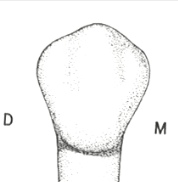
from the lingual aspect, mandibular second premolars have a lingual cusp that is (larger/smaller) than first premolars
larger
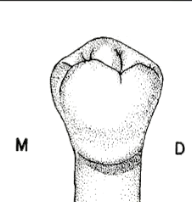
from the lingual aspect of mandibular second premolars, there is either _______ or _____ lingual cusps
one, two
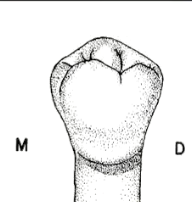
the lingual cusp is (shorter/longer) than the buccal cusp on the lingual aspect of mandibular second premolars
shorter
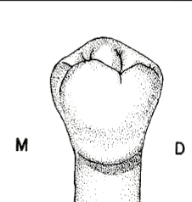
there is (more/less) lingual convergence on the lingual aspect of mandibular second premolars
less
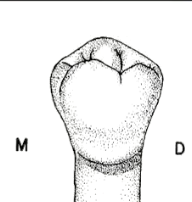
on the lingual aspect of mandibular second premolars, if there are 3 cusps, they are the
buccal cusp, mesiolingual cusp, and distolingual cusp
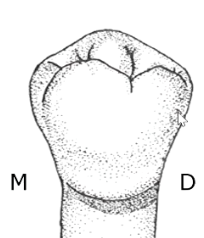
on the lingual aspect of mandibular second premolars, the lingual groove is ______ to the distal
offset (helps with R vs L)
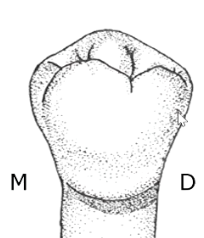
from the mesial aspect of mandibular second premolars, there is (more/less) lingual inclination of the crown
less
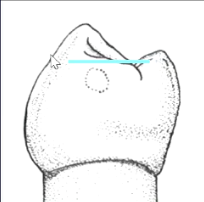
from the mesial aspect of mandibular second premolars it is (wider/narrower) buccal-lingual
wider
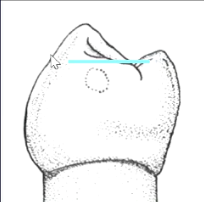
from the mesial aspect of mandibular second premolars, it is (longer/shorter) occlusocervically
shorter
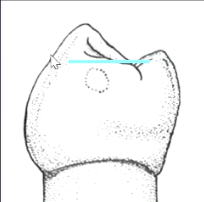
from the mesial aspect, the marginal ridge on mandibular second premolars is
horizontal
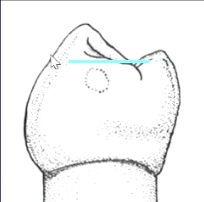
there (is/is not) a mesiolingual developmental groove
is not
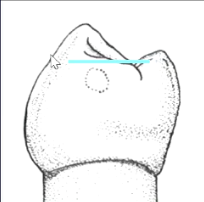
from the mesial aspect of mandibular second premolars, the proximal contact area is at the junction of the _______ and _______ 1/3
occlusal, middle
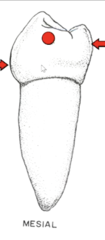
on the mesial aspect of mandibular second premolars, the contact area is
- circular
- towards the buccal
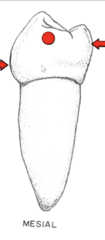
on the mesial aspect of mandibular second premolars, the lingual HOC is in the
occlusal 1/3
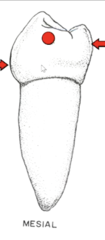
on the mesial aspect of mandibular second premolars, the buccal HOC is in the
cervical 1/3
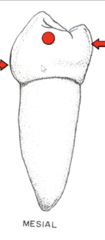
from the distal aspect of mandibular second premolars, the distal marginal ridge is located (more/less) cervical (good identifying feature)
more
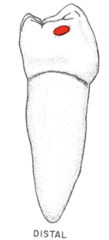
on mandibular second premolars, if you can see more of the occlusal plane or the ridge is closer to the cervical when viewing proximally, it will point you to the
distal aspect
all 3 cusps (can/can not be) visible from the distal aspect
can
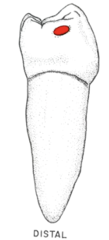
from the distal aspect of mandibular second premolars, the proximal contact area is
- located in the same place as the mesial
- slightly larger B-L
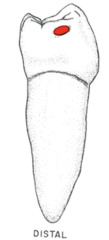
on the occlusal aspect of mandibular second premolars it has a _______ outline shape
square
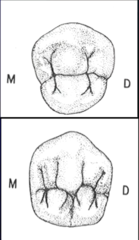
there are __ and __ cusp types in mandibular second premolars
2, 3
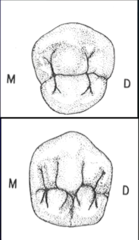
the _____ cusp pattern is most common in mandibular second premolars (55%)
three
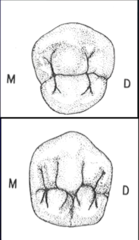
3 cusp mandibular second premolars
- Y pattern
- central and lingual grooves
- cusp size is largest to smallest B, ML, DL
- all cusps have 4 cusp ridges
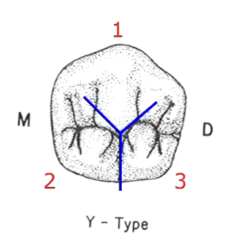
on the occlusal aspect of mandibular second premolars of the "Y" type, there are mesial and distal triangular ____ and no transverse ridge
fossae
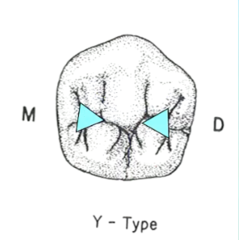
on the occlusal aspect of mandibular second premolars of the "Y" type, there are 4 occlusal grooves:
- central
- triangular
- marginal
- lingual
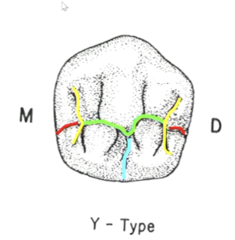
there are 3 occlusal pits on the occlusal aspect of mandibular second premolars of the "Y" type:
- mesial
- distal
- central
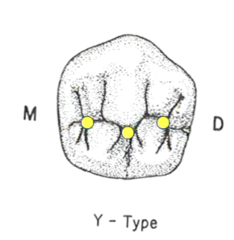
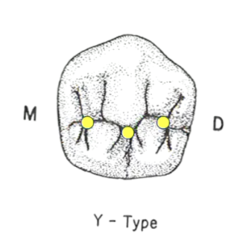
on mandibular second premolars of the "Y" type, the central pit is
- deepest
- central and lingual groove meet
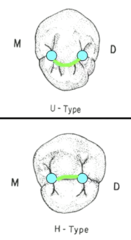
the two cusp types on mandibular second premolars are
U or H
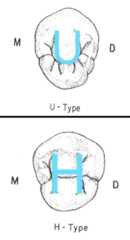
the H is (more/less) common than the U type
more
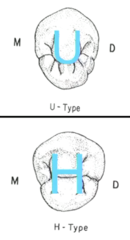
on two cusp types, the occlusal outline is (more/less) rounded and there is no central pit or lingual groove
more
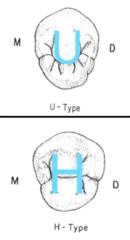
of two cusp types, there (is/is not) convergence of the lingual cusp
is
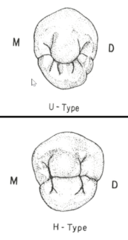
of two cusp types, triangular ridges (do/do not form) a transverse ridge
do
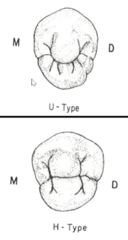
on two cusp types, the buccal cusp is (larger/smaller) and (lower/higher) than the lingual cusp
larger, higher
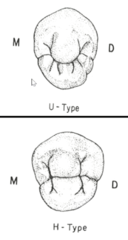
the H type has (more/less) distinct triangular grooves
more
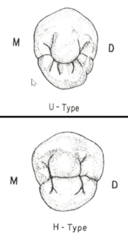
on U and H type mandibular second premolars, the mesial and distal fossae are
round in shape
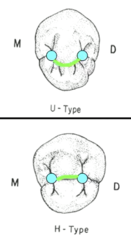
the U type mandibular second premolars have a ______ central groove
curved
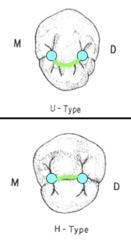
the H type mandibular second premolars have a ______ central groove
straight
the root is _____ and ______ on mandibular second premolars than the first premolars, and bifurcation is _____
longer, wider, rare
there are ___ or ___ pulp horns depending on the number of cusps on mandibular second premolars
2, 3
the cross section on mandibular second premolars is
ovoid
there is distal inclination of the ______ 1/3 on the root and pulp aspect of mandibular second premolars
apical