3.2 Decision Making/ Management Styles
 Call Kai
 Learn
Learn Practice Test
 Spaced Repetition
 Match
Match Flashcards
 Knowt Play
1/22

There's no tags or description
Looks like no tags are added yet.
Name | Mastery | Learn | Test | Matching | Spaced | Call with Kai |
|---|
No analytics yet
Send a link to your students to track their progress
23 Terms
A leader
someone who sets the vision, guides and motivates people towards it
A manager
sets objectives and targets for the business for which they are responsible for
Authoritarian
Holds control, makes decisions independently and makes employees do exactly what they want.
Paternalistic
A leadership style that acts like a parental figure. Makes decisions for employees' best interest
Democratic
Takes views of employees. Collaborative decision making.
Laissez Faire
Leaders step back and allow their teams to work with minimal guidance.
Theory X
portrays workers as lazy, unmotivated, needing control.
Theory Y
portrays motivated, self directed, seeking responsibility.
hunch based decisions (Intuition)
It is trusting your gut and what you think without using data.
Scientific decision making
Using data to make decisions
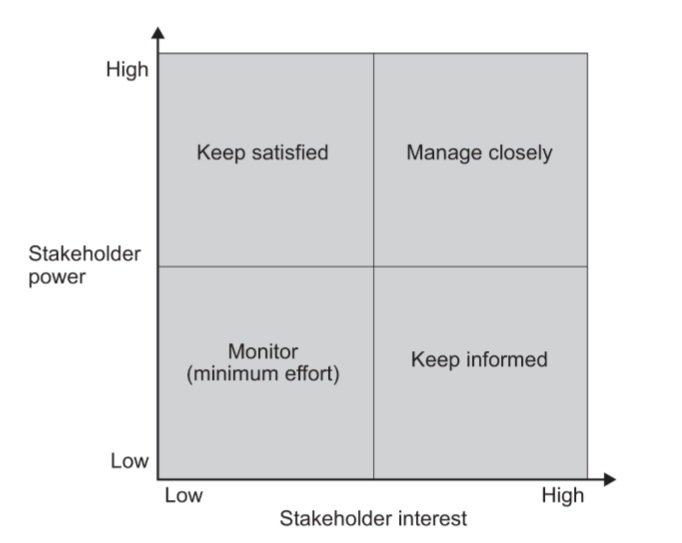
Stakeholders
an individual or a group that has an effect on activities in a business
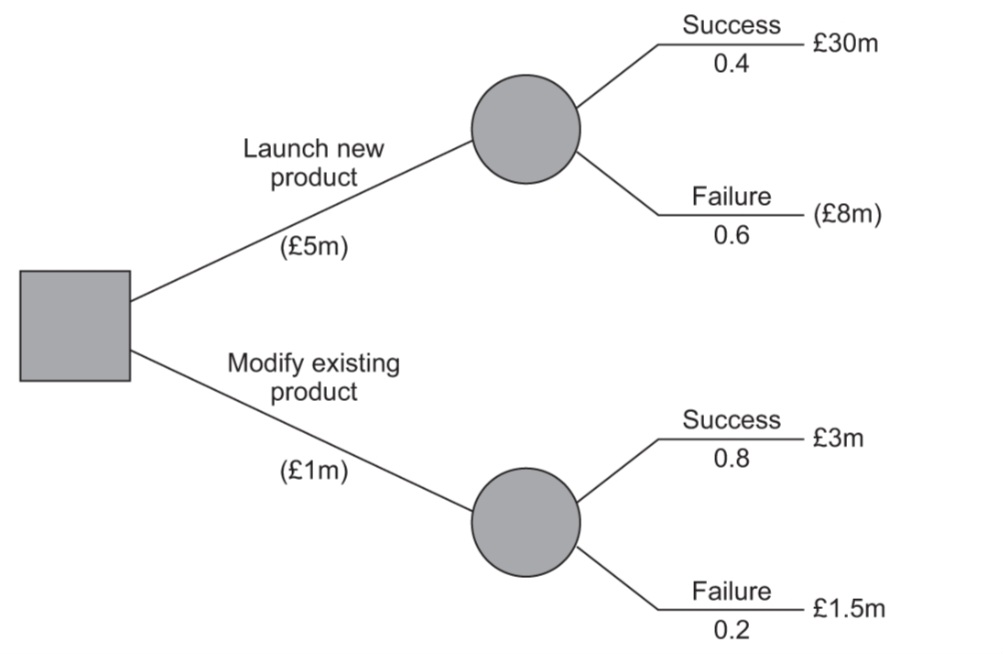
Decision Trees
Stakeholder Mapping
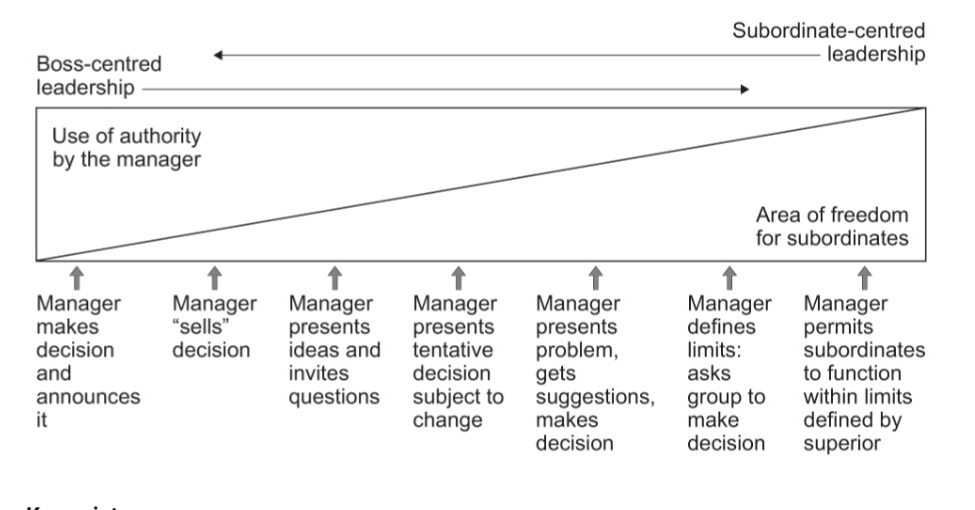
Tannenbaum Schmidt Continuum
Advantages of Authortarian
Quick decision making
Clear direction/vision
Individuals understand and have clear roles
Advantages of Paternalistic
Improved decision making
Employee morale goes up
Motivations/Productivity increases
Advantages of Democratic
Team members are engaged
Encourages creativity/diverse ideas
Team members take ownership
Advantages of Lassiez-faire
Job satisfaction
Creativity/Innovation
Allow experts to specialise in their area
Decision Tree - Square
Decision
Decision Tree - Circle
Chance
Expected Value
(probability x monetary outcome) for each possible outcome
Net Gain
Expected value - Cost investments