Week 1 Tissues and Term
 Call Kai
 Learn
Learn Practice Test
 Spaced Repetition
 Match
Match Flashcards
 Knowt Play
1/26

There's no tags or description
Looks like no tags are added yet.
Name | Mastery | Learn | Test | Matching | Spaced | Call with Kai | Chat |
|---|
No analytics yet
Send a link to your students to track their progress
27 Terms
Four Types of Tissues
Epithelial tissue, Connective tissues, muscle tissue, nervous tissue
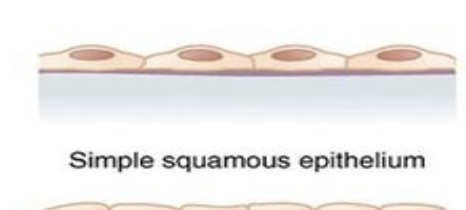
squamous
lattened and thin
cuboidal
boxy, as wide as it is tall

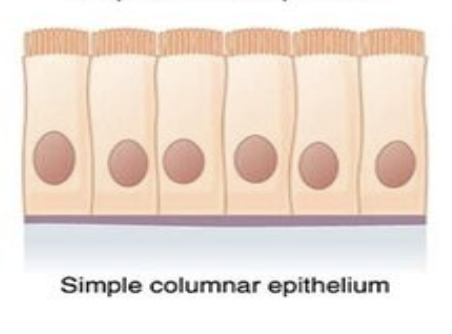
columnar
rectangular, taller than it is wide
Superior
towards the head
Inderior
away from the head; lower; below
Proximal
nearer trunk or point of origin
Distal
Away from trunk or point of origin
Medial
towards midline of the body
Lateral
away from midline of the body
Anterior / Ventral
Towards front of body
Posterior / Dorsal
towards back of body
Sagittal Cut (midsagittal / parasagittal)
sparating left and right
Transverse cut
separating superior and inferior
frontal cut
separating anterior and posterior
negative feedback
body reverse and negate a process
posirive feedback
amplifying cycle and lead to even greater changes in the same direction, child birth, blood clotting
Epithelium Tissue
sheet of cells, covers interior and exterior surfaces
Functions of Muscle
Locomotion / Stability / Communication / Control of body openings / Heat production / store glucose
Striated Muscle
Skeletal Muscle / Cardiac Muscle
Unstriated Muscle
Smooth muscle
Voluntary Muscle
Skeletal Muscle
Incoluntary Muscle
Cardiac Muscle / Smooth Muscle
Skeletal Muscle
Long, Cylindrical, Striated, Mulinucleated
Smooth Muscle
Short, spindle-shaped, nonstriated, one central nucleus
Cardiac Muscle
short, branched, striated, one nuclues
Three types of Connective Tissue
Connective Tissue Proper, Fluid Connective Tissue, Supporting Connective tissue