CMPP: Hypercalcemia
 Call Kai
 Learn
Learn Practice Test
 Spaced Repetition
 Match
Match Flashcards
 Knowt Play
1/49

There's no tags or description
Looks like no tags are added yet.
Name | Mastery | Learn | Test | Matching | Spaced | Call with Kai | Chat |
|---|
No analytics yet
Send a link to your students to track their progress
50 Terms
primary hyperparathyroidism
familial hypocalciuric hypercalcemia (FHH)
what are some parathyroid mediated causes of hypercalcemia
malignancy
elevated vitamin D
granulomatous disease
medication
milk-alkali syndrome
immobilization
parenteral nutrition
hyperthyroidism
what are some non-parathyroid mediated causes of hypercalcemia
stones, bones, abdominal groans, and psychiatric overtones
what is the memory trick associated with knowing the symptoms of hypercalcemia?
bone pain secondary to increased osteoclastic activity, osteoporosis, osteomalacia, fractures, arthritis
what are the bone symptoms associated with hypercalcemia?
anorexia, nausea, constipation, pancreatitis, PUD, polyuria, polydipsia
what are the abdominal symptoms associated with hypercalcemia?
varies from anxiety and depression to lethargy and coma
what are the psychiatric symptoms associated with hypercalcemia?
PTH, ionized calcium, phosphorus, renal functions, Vitamin D (25-Oh vs 1,25OH depending on GFR)
first line lab evaluation for hypercalcemia
24 hour urine for calcium excretion
DEXA scan
second line lab tests for hypercalcemia
adenoma of the parathyroid gland - most common
hyperplasia of the parathyroid glands
parathyroid carcinoma
causes of primary hyperparathyroidism
PTH: elevated or upper normal
Calcium: total and ionized are elevated
Phosphorus: low or low normal
Urinary excretion of calcium: typically elevated
lab values associated with primary hyperparathyroidism
localize hyper functioning parathyroid tissue -- less valuable with coexisting thyroid disease
purpose of a SPECT scan in primary hyperparathyroidism
different isotopes taken up by parathyroid/thyroid
purpose of a dual isotope scintigraphy in primary hyperparathyroidism
can try to visualize glands -- operator dependent and difficult with coexisting thyroid disease
purpose of a neck ultrasound in primary hyperparathyroidism
thyroid nodule
if one with primary hyperparathyroidism has a palpable node on exam, it is most likely a...
Osteitis fibrosa cystica
chronic PTH excess alters bone; increased osteoclastic activity secondary to increased PTH; creates and increase in calcium and alkaline phosphatase
bone pain, fractures, swelling, deformities
symptoms of Osteitis fibrosa cystica
brown tumors, subperiosteal reabsorption, skill with salt and pepper appearance, loss of enamel on the teeth
imaging findings associated with Osteitis fibrosa cystica
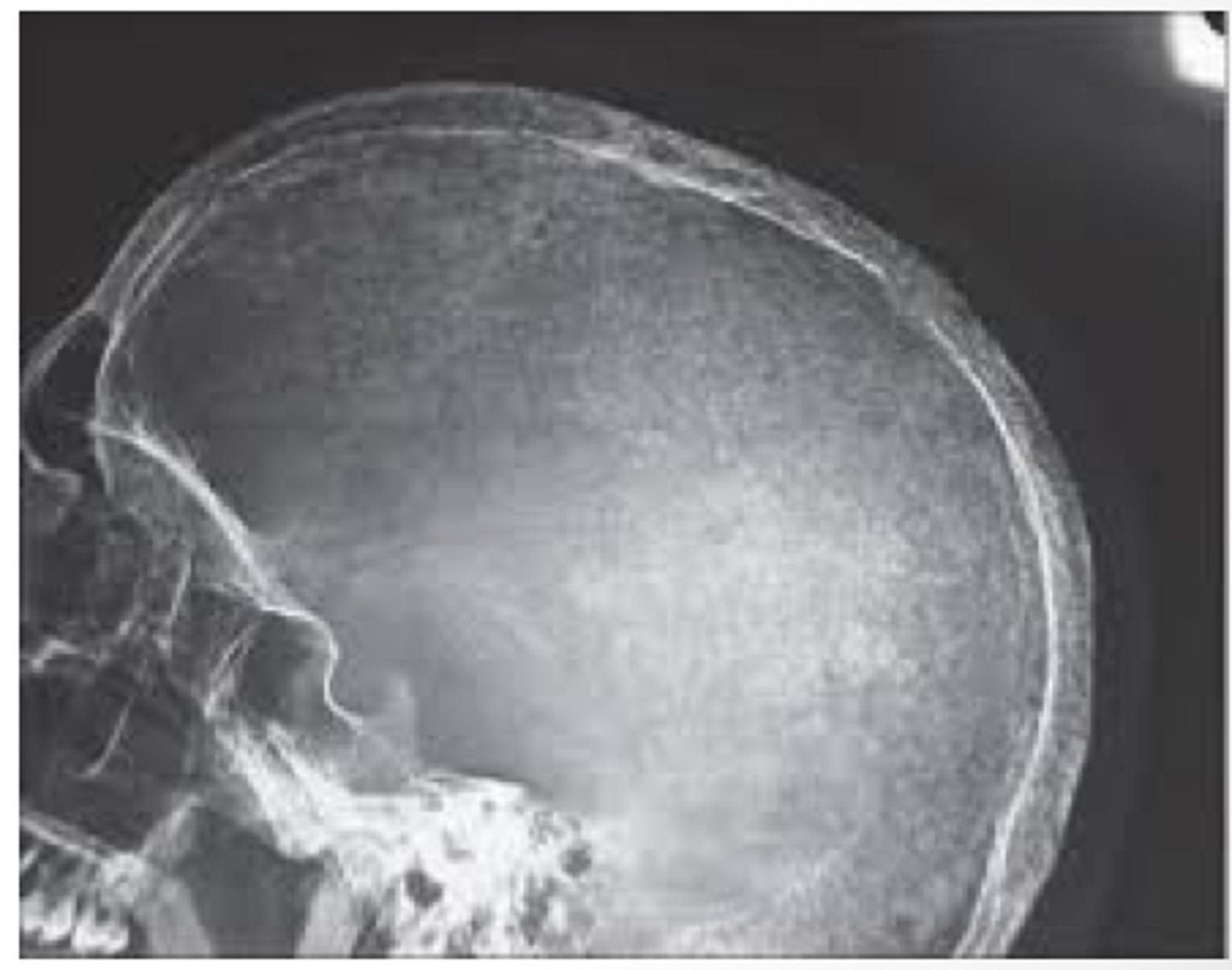
Brown tumors
areas of demineralization; bone cysts
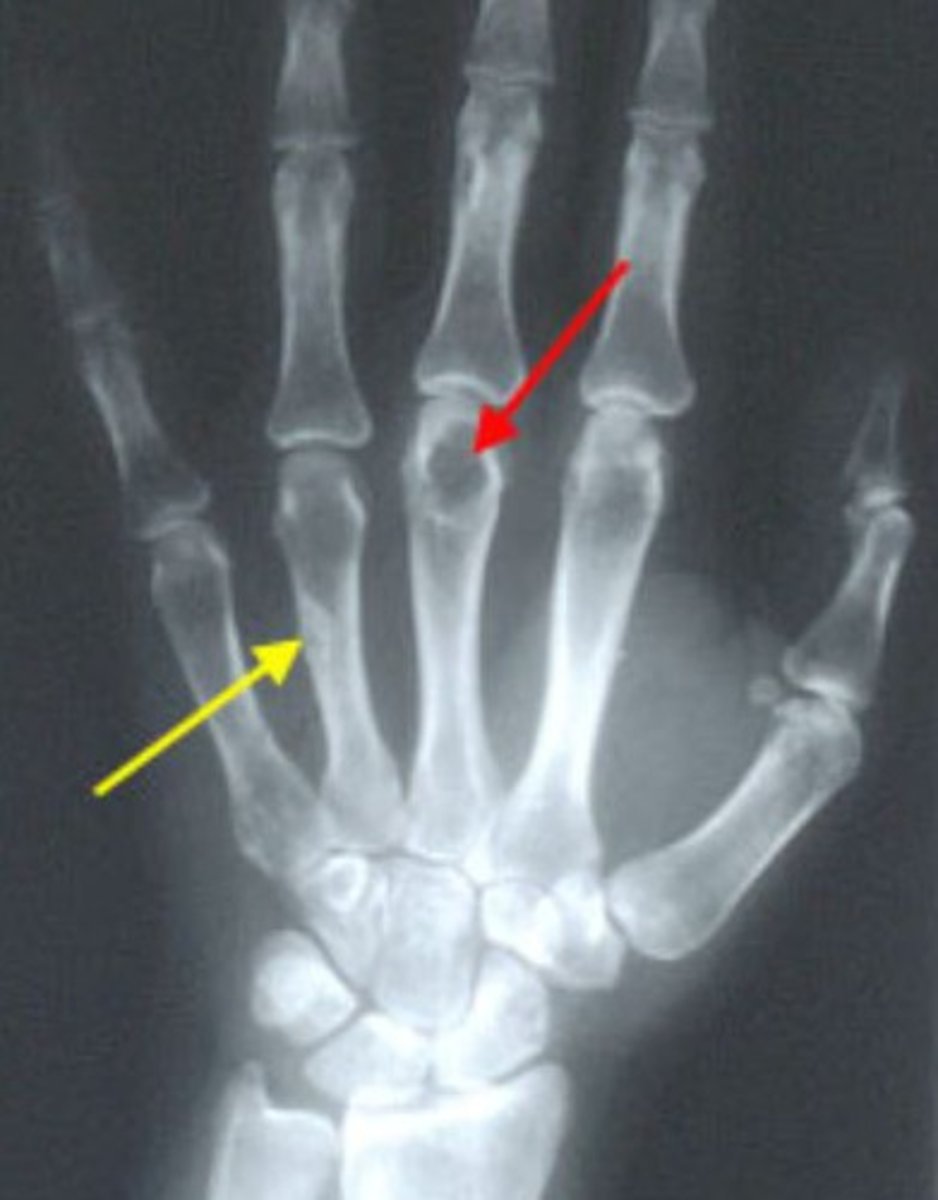
distal phalanges; tapering of clavicles
in Osteitis fibrosa cystica, subperiosteal reabsorption occurs at the...
limite dietary calcium to 800-1000 mg daily
encourage physical activity to encourage bone formation
increase fluid to reduce kidney stones
maintain vitamin D 25-OH level 20-30
avoid meds that increase calcium
follow ionized calcium PTH, and Cr
bone density screening every 1-2 years
how to monitor primary hyperparathyroidism (older than 50 with serum calcium <12 mg/dL)
thiazide diuretics, lithium
what meds that increase calcium
bisphosphonates (inhibitor of bone resorption)
Cinacalcet (Sensipar)
medical tx for primary hyperparathyroidism
activates calcium sensor on parathyroid glands, leading to inhibitor and blocking PTH release
must monitor calcium closely
Cinacalcet (Sensipar) MOA
symptomatic
age <50
serum calcium >12 mg/dL, 24 hr urine excretion >400 mg/dL
T score -2.5
Pancreatitis, PUD, GERD
indications for surgical tx of hyperparathyroidism
Parathyroidectomy
surgical removal of 3.5 glands that involves intraoperative PTH monitoring; hopefully leaving enough to prevent hypocalcemia
ionized calcium and PTH -- esp POD 1-2 --> hungry bone syndrome
what must be monitored after parathyroidectomies?
Familial hypocalciuric hypercalcemia (FHH)
autosomal dominant defect in CaSR gene that is responsible for urinary calcium excretion
elevated calcium and magnesium, normal/mildly elevated PTH, HYPOCALCIURIA
fractional excretion of Ca is often <1%
what are some lab values associated with FHH?
malignancy (metastatic lesions to bone cause release of skeletal Ca)
what is the second most common cause of hypercalcemia?
PTH related protein (PTHrP)
some malignancies secrete...
PTH level
malignancies are characterized by a normal...
primary bone, squamous cell cancer (lung/esophageal), multiple myeloma, less likely with lymphoma, leukemia
what are some malignancies associated with hypercalcemia?
Prostate, thyroid, breast, lung, kidney
what solid tumors metastasize to the bone?
too much vitamin D cause increase in intestinal absorption of calcium
how does vitamin D toxicity cause hypercalcemia?
hypercalcemia/kidney stones
weakness, headache, polyuria, metallic taste
presentation of one with vitamin D toxicity
stop all supplementation
may use glucocorticoids in severe toxicity
treatment for vitamin D toxicity
blocks sodium resorption at the expense of retaining calcium (mild)
how can thiazide diuretics cause hypercalcemia?
decreases parathyroid gland sensitivity to calcium
reduces renal excretion of calcium
how can lithium cause hypercalcemia?
sarcoidosis and tuberculosis
what granulomatous diseases cause hypercalcemia?
they synthesize vitamin D 1,25-OH
how do granulomas cause hypercalcemia?
low PTH levels, high calcium, high vitamin D 1,25 OH
what are the lab findings seen with granulomatous diseases?
thyroid hormone has some direct bone reabsorbing property (osteoclastic like activity)
how does hyperthyroidism cause hypercalcemia?
PTH levels are low but phosphorus levels are elevated
calcium levels associated with hyperthyroidism
high rate of bone resorption -- leads to hypercalcemia/hypercalciuria
how does immobilization cause hypercalcemia?
with pre-existing high turn over rate
--> teens, paget's disease of bone, thyrotoxicosis
hypercalcemia due to immobilization is usually sene in patients...
Milk-alkali syndrome
triad of hypercalcemia, metabolic alkalosis, and renal insufficiency; ingestion of >2g elemental calcium daily with ab absorbable alkali
triad of hypercalcemia, metabolic alkalosis, and renal insufficiency
triad associated with milk-alkali syndrome
elevated serum calcium, may have slight decreased PTH, decreased phosphorus
--> leads to increased bicarb reabsorption and alkalosis --> enhances calcium reabsorption and makes hypercalcemia worse
lab values associated with milk-alkali syndrome
the elderly with underlying kidney disease
milk-alkali syndrome is typically seen in...
restore renal perfusion (saline diuresis)
Increase calcium excretion (loop diuretics)
decrease skeletal resorption (bisphosphonates)
treatment for hypercalcemia if one's calcium is 13-15 with altered mental status