Unit 6.1: Physical Methods of Microbial Control
 Call Kai
 Learn
Learn Practice Test
 Spaced Repetition
 Match
Match Flashcards
 Knowt Play
1/12

There's no tags or description
Looks like no tags are added yet.
Name | Mastery | Learn | Test | Matching | Spaced | Call with Kai | Chat |
|---|
No analytics yet
Send a link to your students to track their progress
13 Terms
What are the six Physical Methods of Microbial Control?
Heat
Cold
Dessication
Pressure
Filtration
Radiation
What are moist heat examples?
Moist heat includes:
Boiling: kills bacteria, fungi and most viruses (not endospores)
Autoclave: most effective form of sterilization
Uses steam under pressure
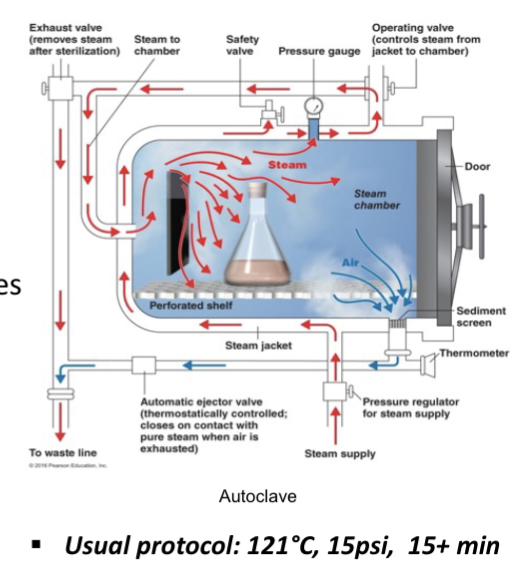
What is the standard protocol of the autoclave?
Usual protocol: 121°C, 15psi, 15+ min
What are dry heat examples?
Dry heat includes:
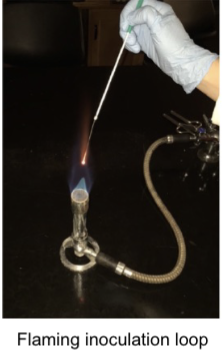
Direct flaming
Hot-air sterilization
What is Pasteurization?
Pasteurization is mild heating of a liquid or food to kill pathogens to extend shelf life
What are Cold examples?
Cold examples:
Refrigeration (0-7°C) slows bacterial growth (bacteriostatic)
Slow freezing <-2°C lead to the growth of ice crystals, which damage proteins and cell structures causing rupturing in cells
What is Dessication?
Dessication is lyophilization, which is the rapid removal of water and is used for preservation

What does Dessication do to bacterial growth?
Dessication stops the bacteria from reproducing (bacteriostatic)
What is Pressure?
Pressure is the use of osmotic pressure by using high concentrations of salt or sugar to remove water from microbes
What is Filtration?
Filtration is the passage of a liquid or gas through a material with pores small enough to retain microbes
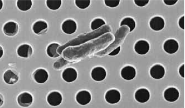
What is an example of Filtration?
An example of filtration is HEPA filters for air
What is Ionizing Radiation?
Ionizing radiation is a high energy radiation that reacts with water, making toxic compounds that can destroy DNA
What is Non-ionizing Radiation?
Non-ionizing radiation uses UV rays that damage DNA