Intro to Music Exam 1
 Call Kai
 Learn
Learn Practice Test
 Spaced Repetition
 Match
Match Flashcards
 Knowt Play
1/92

There's no tags or description
Looks like no tags are added yet.
Name | Mastery | Learn | Test | Matching | Spaced | Call with Kai | Chat |
|---|
No analytics yet
Send a link to your students to track their progress
93 Terms
Each performance of a musical work is unique.
True or False
True
Scientifically, pitch is determined by its:
amplitude.
frequency.
duration.
frequency.
Melody:
is a vertical aspect in music.
occurs only in Western music.
is a musical line, or the tune.
is a musical line, or the tune.
A second melody played against the first is called a countermelody.
True or False
True
The element that propels music forward in time is
melody.
rhythm.
harmony.
range.
rhythm.
The basic unit of rhythm is the
measure.
beat.
tempo.
note.
beat
The number of beats in a measure determines the
meter.
tempo.
rhythm.
tempo
meter
Music that moves without a strong sense of beat is
nonmetric.
syncopated.
disjunct.
nonmetric
Harmony describes the _____ aspects of music.
tangential
horizontal
vertical
temporal
vertical
Three or more tones sounded together produce a(n)
scale.
chord.
interval.
syncopation.
scale
_______ is the principle of organization around a central tone.
Harmony
Tonality
Meter
Polyphony
Tonality
A chord that sounds stable or restful is called
consonant.
dissonant.
ambulatory.
a drone.
consonant.
A combination of tones that sounds discordant or in need of resolution is called
disjunct.
diatonic.
dissonant.
diluted.
dissonant.
Shifting an entire work so that it begins on a different pitch but retains the same pattern of intervals is called
modulation.
transposition.
transfiguration.
tonicization.
transposition.
Moving from one key center to another within a composition is called
transposition.
transformation.
modulation.
syncopation.
modulation
The interweaving of melody and harmony produces ________ in music.
rhythm
harmony
texture
ostinato
texture
A single-line texture is known as
monophony.
homophony.
heterophony.
homorhythmic.
monophony.
A texture in which two or more different melodic lines are combined is called
homophonic.
monophonic
polyphonic.
homorhythmic.
polyphonic.
The word for when a melodic idea is presented in one voice and then restated in another is:
augmentation.
imitation.
inversion.
imitation.
Imitation is a type of:
polyphony.
monophony.
homophony.
polyphony.
A type of homophony in which all voices move together in the same rhythm is called:
homorhythm.
polyphony.
heterophony.
monophony.
homorhythm.
The basic elements of form are:
sequence and improvisation.
improvisation and repetition.
repetition, contrast, and variation.
variation and thematic development.
repetition, contrast, and variation.
In musical form, ________ fixes the material in the listener’s mind and satisfies the need for the familiar.
repetition
sequencing
variation
contrast
repetition
In musical form, ________ stimulates our interest and feeds our desire for change.
repetition
sequencing
contrast
vocalization
contrast
Which is true of strophic form?
It is a form found only in popular music.
No main section of music or text is repeated.
It is a form created spontaneously in performance.
The same melody is repeated with each stanza of text.
The same melody is repeated with each stanza of text.
A principle of form that is based on repeated alterations of a given melody (which is still recognizable) is called
repetition.
contrast.
variation.
variation.
Which form features a statement of an idea, a contrasting idea, then a repetition of the first idea?
binary
ternary
improvisation
strophic
ternary
Which form features a statement and a departure, without a return to the opening section?
binary
ternary
improvisation
strophic
binary
A _____ can be a building block in the construction of a musical work.
theme
sequence
variation
variation
When a melodic idea is immediately restated at a lower or higher pitch level, this is known as
an ostinato.
a sequence.
binary form.
ternary form.
a sequence.
A fragment of a theme that forms a melodic-rhythmic unit is called a(n)
countermelody.
movement.
motive.
ostinato.
motive
A short, repeated musical pattern used as a structural device is known as a(n)
drone.
ostinato.
contour.
ostinato.
Independent parts of a large-scale work (a symphony, for example) are called:
movements
motives.
sequences.
ostinatos.
movements.
Music that is made up spontaneously in performance is called improvised.
True
False
True
Tempo and dynamic markings are usually given in
French.
Italian
Latin.
German.
Italian.
Tempo refers to the
time signature
rate of speed.
volume level.
meter.
rate of speed.
If the music is gradually speeding up, the term used to describe this is
accelerando
diminuendo.
a tempo.
ritardando.
accelerando
Which of the following terms means “getting slower”?
accelerando
crescendo
ritardando
decrescendo
ritardando
Dynamics determine the ________ at which music is played.
volume
rate of speed
venue
tempo
volume
Which term indicates that a work should be performed very loudly?
mezzo forte
fortissimo
presto
piano
fortissimo
Which dynamic marking indicates to the performer to play gradually louder?
sforzando
diminuendo
crescendo
accelerando
crescendo
The word “song” refers to
any piece of music.
instrumental and/or vocal music.
a piece of music that is sung.
a piece of music that is sung.
Scat-singing is usually found in what style of music?
country
classical
jazz
heavy metal
jazz
Much of Western sacred music is in Latin, while ________ music is often in the vernacular.
instrumental
secular
liturgical
religious
secular
Which of the following terms describes religious or spiritual music?
vernacular
strophic
secular
sacred
sacred
Which of the following describes the setting of many notes to a syllable?
syllabic
neumatic
melismatic
melismatic
When a melody pictorializes a word or words it is called
melisma.
word-painting.
scat-singing.
secular.
word-painting.
A song in which each syllable receives one note is called
strophic.
syllabic.
neumatic.
melismatic.
syllabic.
Which is true of strophic form?
The same melody is repeated with each stanza of text.
No main section of music or text is repeated.
It is a form created spontaneously in performance.
It is a form found only in popular music.
The same melody is repeated with each stanza of text.
Which is true of strophic form?
The same melody is repeated with each stanza of text.
No main section of music or text is repeated.
It is a form created spontaneously in performance.
It is a form found only in popular music.
The same melody is repeated with each stanza of text.
The word ________ means the language of the people.
vernacular
vocalize
syllabic
neumatic
vernacular
The property of sound that gives instruments and voices their unique tone color is
duration.
pitch.
timbre.
register.
timbre.
Which of the following factors influence timbre?
instrument shape.
the material from which the instrument is made
instrument size.
All possible answers.
All possible answers.
Which of the following shows the correct order of vocal ranges from highest to lowest?
bass, tenor, alto, soprano
alto, soprano, bass, tenor
soprano, alto, tenor, bass
alto, bass, tenor, soprano
soprano, alto, tenor, bass
The instruments of the Western orchestra are categorized into which groups?
woodwinds, brass, and percussion
strings, brass, and percussion
strings, woodwinds, brass, and percussion
voice, strings, woodwinds, and brass
strings, woodwinds, brass, and percussion
The bowed string instrument with the highest range is the
violin.
viola.
cello.
double bass.
violin.
Which instruments are members of the woodwind family?
oboe, piccolo, contrabassoon, guitar
clarinet, piano, saxophone
flute, oboe, bassoon, English horn, saxophone
bass clarinet, English horn, trumpet
flute, oboe, bassoon, English horn, saxophone
Which of the following is a double-reed instrument?
saxophone
flute
clarinet
oboe
oboe
Which brass instrument dates back to ancient times and was used for religious ceremonies and military signals?
trumpet
trombone
fluegelhorn
tuba
trumpet
Which brass instrument descended from the ancient hunting horn?
trumpet
trombone
fluegelhorn
French horn
French horn
The sousaphone is the marching-band adaptation of which instrument?
trombone
tuba
French horn
trumpet
tuba
Which is an example of pitched percussion?
xylophone
cymbal
snare drum
bass drum
xylophone
Which keyboard instrument produces sound with quills that pluck metal strings?
harpsichord
synthesize
piano
organ
harpsichord
Which is the correct order of bowed string instruments from highest to lowest in range?
violin, viola, cello, double bass
violin, cello, viola, double bass
viola, violin, cello, double bass
double bass, cello, viola, violin
violin, viola, cello, double bass
Which of the following is a single-reed instrument?
clarinet
English horn
bassoon
oboe
clarinet
Timpani are members of the ________ family of instruments.
string
brass
percussion
woodwind
percussion
The piano got its name, originally pianoforte, from:
the name of its inventor.
the fact that it could not sustain tones.
its wide dynamic range.
its large size.
its wide dynamic range.
How many instrumentalists would you expect to find in a chamber group?
between two and twelve
only three
about twenty
between twenty and thirty
between two and twelve
A woodwind quintet is unusual in that
it has only four players.
it includes a string instrument.
it includes a brass instrument.
it includes a piano.
it includes a brass instrument.
The makeup of a string quartet is:
two violins, a viola, and a cello.
three violins and a viola
a violin, viola, cello, and double bass.
any combination of four string instruments.
two violins, a viola, and a cello.
In the West, an ensemble of strings coupled with an assortment of woodwinds, brass, and percussion instruments is known as a:
gamelan orchestra.
band.
chorus.
symphony orchestra.
symphony orchestra.
The largest section of the Western orchestra is the _______ section.
string
woodwind
brass
percussion
string
Which of the following ensembles relies mainly on winds and percussion?
band
gamelan
orchestra
choi
band
Jazz bands usually include:
only a brass section.
only a reed section
a reed section, a brass section, and a rhythm section.
a reed section and a string section
a reed section, a brass section, and a rhythm section.
The conductor:
rehearses the ensemble.
interprets the music
beats time in metrical patterns.
All answers are correct.
All answers are correct.
The concertmaster is the:
first-chair violinist.
first-chair violist.
conductor.
first-chair cellist.
first-chair violinist.
Which term refers to a category of music?
medium
genre
style
form
genre
Music composed for religious purposes is called
sacred.
secular.
nonspecific.
vernacular.
sacred
Considering the title of Symphony No. 94 in G Major by Joseph Haydn, which of the following is a true statement?
The title does not indicate the genre.
The title indicates only the genre.
The title indicates the opus number.
The title indicates the genre and key.
The title indicates the genre and key.
Musical compositions are often identified through a cataloguing system described by
opus numbers.
aesthetic judgments.
oral transmission.
descriptive titles.
opus numbers.
Opus is Latin for
“genre.”
“work.”
“medium.”
“song.”
“work.”
Most cultures employ sacred music for religious functions.
True
False
True
The lines that distinguish art music from other kinds of music are clearly delineated.
True
False
False
Which statement is true regarding the Western music canon?
It centers on music of “dead white men.”
Categories are continually broadening.
It preserves music of the past.
All possible answers.
All possible answers.
Canons are controversial because of
what they include.
what they exclude.
both what they exclude and include
They aren’t known to be controversial.
both what they exclude and include
Only classical music has an established canon.
True
False
False
Materials of music concepts::
apply only to popular styles.
apply only to classical music styles.
apply to all styles, popular and classical alike.
apply to all styles, popular and classical alike.
Which of the following is not one of the materials of music?
rhythm
harmony
texture
mood
mood

bassoon
oboe
saxophone
trombone
clarinet
bassoon
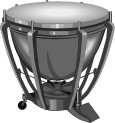
cello
tuba
timpani (timpanum)
bassoon
snare drum
timpani (timpanum)

tuba
(French) horn
trombone
saxophone
English horn
(French) horn
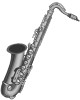
clarinet
flute
French horn
saxophone
oboe
saxophone

cello
viola
tuba
bassoon
xylophone
cello