The Fungi
 Studied by 0 people
 Call Kai
 Learn
Learn Practice Test
 Spaced Repetition
 Match
Match Flashcards
 Knowt Play
1/28

There's no tags or description
Looks like no tags are added yet.
Name | Mastery | Learn | Test | Matching | Spaced |
|---|
No study sessions yet.
29 Terms
why do we care about fungi?
decomposers
producers of antibiotics
microbiome (mycobiome)
fermented foods
pathogens
fungi basics
the fungal body made of cytoplasmic filaments called hyphae
a mass hyphae is called mycelium
cell walls are made of chitin
cells are haploid most of the time
they use spores for reproduction
how do fungi consume their food?
fungal body is adapted to feed by absorption
fungi digest their food externally by secreting digestive enzymes, then absorb that resulting organic molecules
mycelium (mass of hyphae) is the feeding structure of the fungus
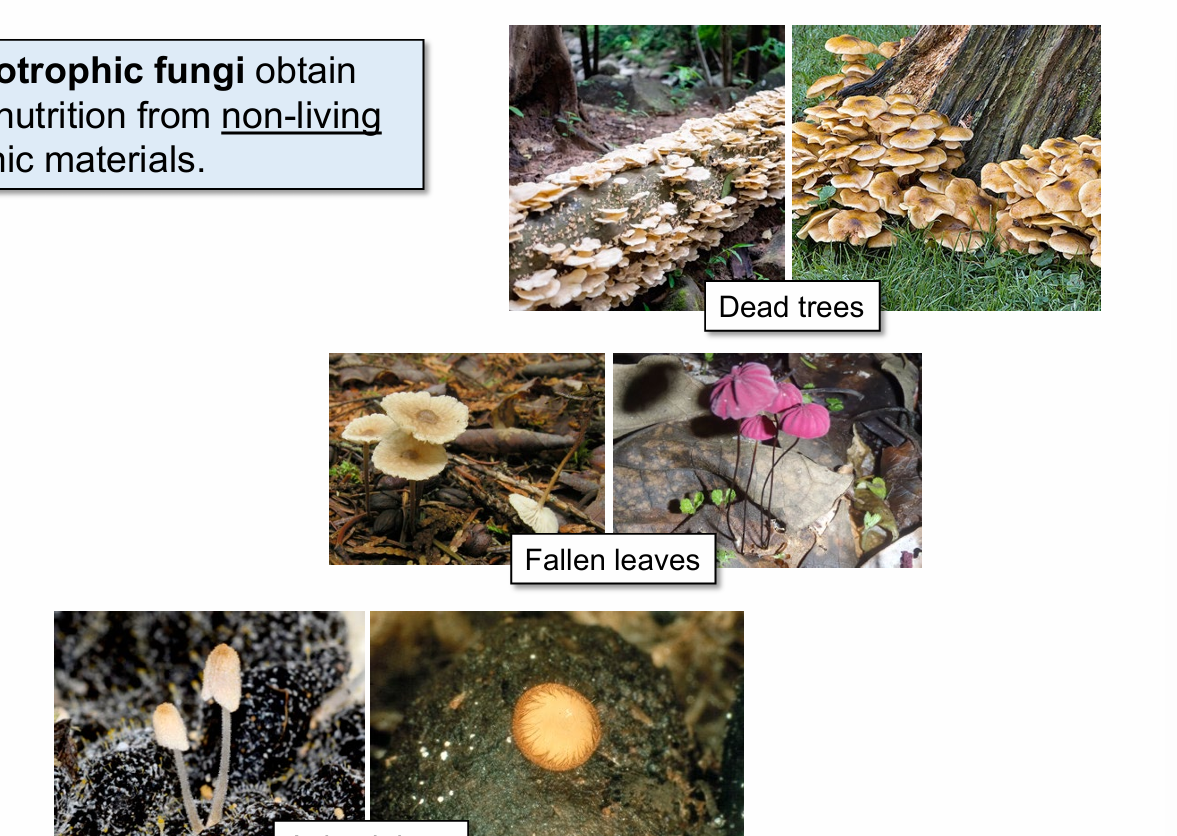
most fungi are saprotrophs: they feed on dead or dying organic matter
saprotrophic fungi
decomposers. absorb their nutrients from dead sources (e.g. fallen logs or animal corpses). This allows for recycling of nutrients.
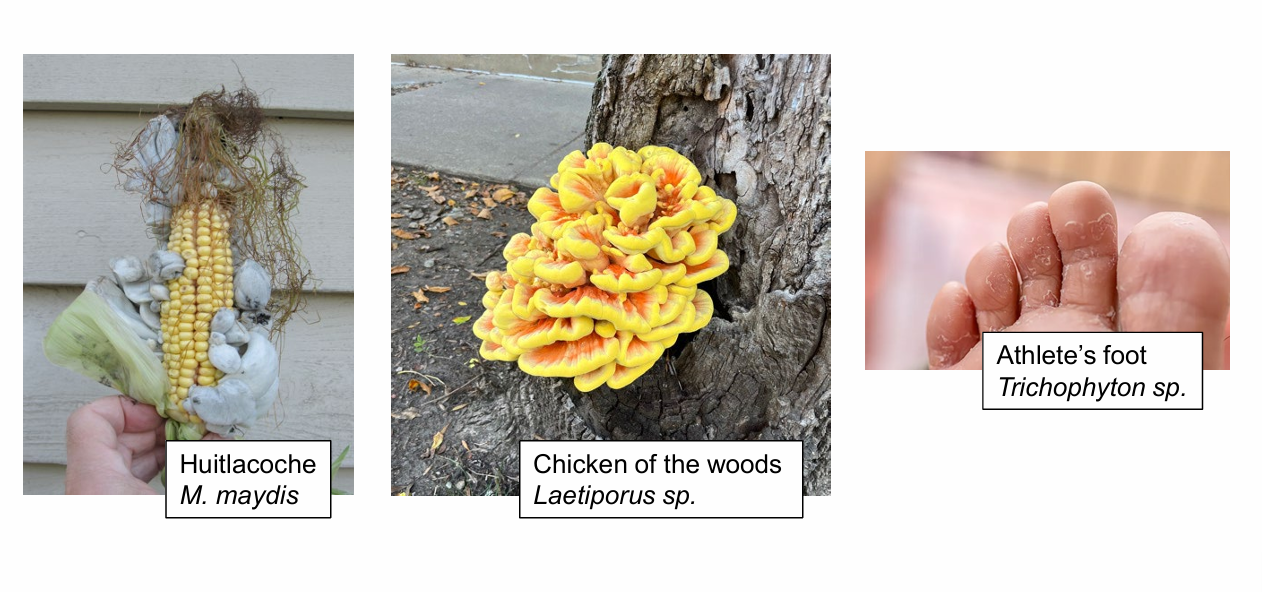
parasitic fungi
absorb their nutrients from living sources while providing nothing in return
mutualistic fungi
exchange benefits with another living organism in a mutually beneficial or symbiotic association
life cycle
the fungus life cycle has both asexual and sexual parts
haploid structures are dominant in fungi
in sexual reproduction, the gametes are haploid hyphae (no female/male or eggs/sperm)
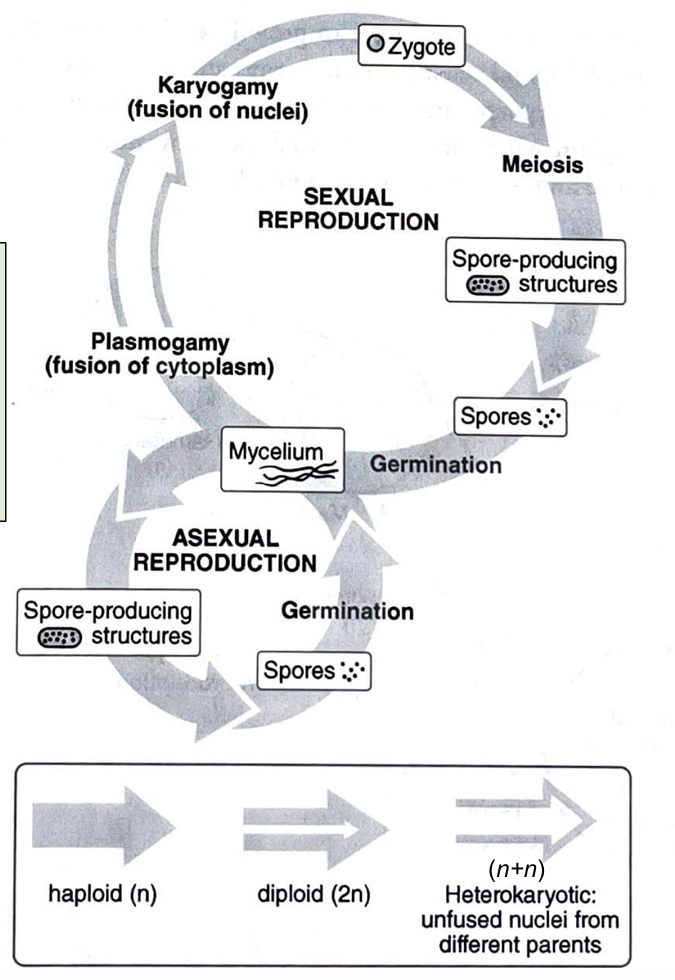
heterokaryotic
two un-fused nuclei from different parents in one cell
fungal sexual reproduction
fertilization in fungi involves two steps: plasmogamy followed by karyogamy
plasmogamy is the union of two haploid parent cells without fusing the nuclei
in most fungi, the haploid nuclei from each parent do not fuse right away. instead, the two separate nuclei coexist in the cell’s cytoplasm. This stage is called heterokaryotic (n+n)
karyogamy is the fusion of the two haploid nuclei in the heterokaryotic cell. this produces a diploid (2n) zygote
the diploid phase is short-lived: the zygote soon undergoes meiosis to produce haploid spores (n)
Mucoromycota
diverse group of fungi that includes many types of fungal molds
includes the common bread mold rhizopus
mostly saprotrophic, but some may be parasitic or form symbiotic associations
mucoromycota: rhizopus asexual structures
sporangiophore and sporangia are specialized hyphae
the sporangiophore bears a sporangium, which produces asexual spores by mitosis
the spores disperse and germinate into hyphae

mucoromycota: rhizopus sexual reproduction
rhizopus sexual reproduction is characterized by a diploid zygosporangium with a thick protective coat to survive adverse conditions
plasmogamy (fusion of hyphae cells without fusing the nuclei) produces heterokaryotic (n+n) zygosporangium
later, the young zygosporangium undergoes karyogamy (fusion of nuclei) to become a diploid (2n) zygosporangium
when conditions improve, the 2n zygosporangium undergoes meiosis to form a sporangiophore (n) and sporangium (n)
the sporangium produces many haploid spores (n) by mitosis
these spores are released and germinate into new hyphae

ascomycota
ascomycota are considered the sac fungi
includes yeasts (single celled fungi), cup fungi, truffles, morels, ergot, penicillium
includes saprotrophs, parasites, and mutualistic fungi
ascomycota: asexual reproduction
penicillium
penicillium has specialized hyphae called condiophores
mitotic division on the tips results in chains of asexual spores called conidiphores
yeast
yeast reproduce asexually by budding
ascomycota: penicillium asexual reproduction
conidiophores: specialized hyphae for asexual reproduction
conidia: chains of asexual spores

ascomycota life cycle
sexual reproductive structures
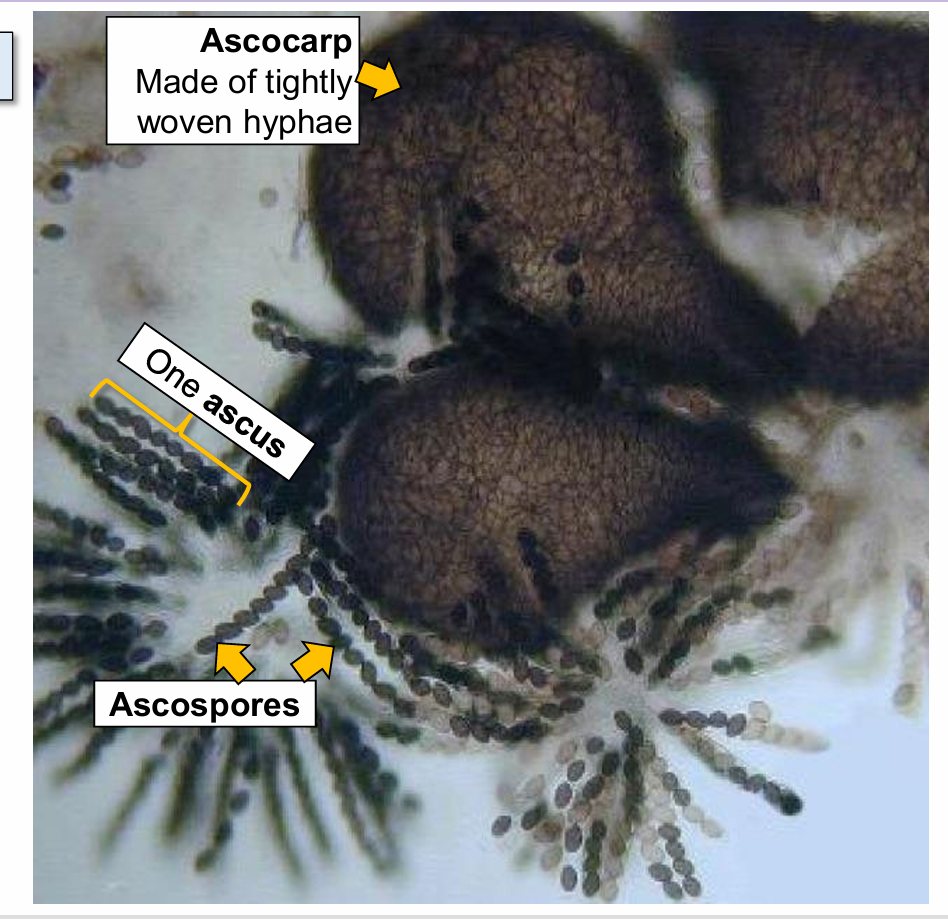
ascocarp: fruiting body
ascospores: sexual spores
asci: spore-bearing cells
each ascocarp contains millions of asci
basidiomycota
basidiomycota are considered the club fungi
include mushrooms, puffballs, shelf fungi, and smuts
includes saprotrophs, parasites, and mutualistic fungi
have club shaped sexual structures called basidia that produce sexual basidiospores
they do not produce asexual spores
basidiomycota (parts)
basidiocarp: fruiting body
basidia: spore-producing cells
gills or pores: site of basidia

some mushrooms have pores
bracket fungi lack gills
the lower surface is composed of numerous tiny pores (instead of gills) through which large numbers of spores are released
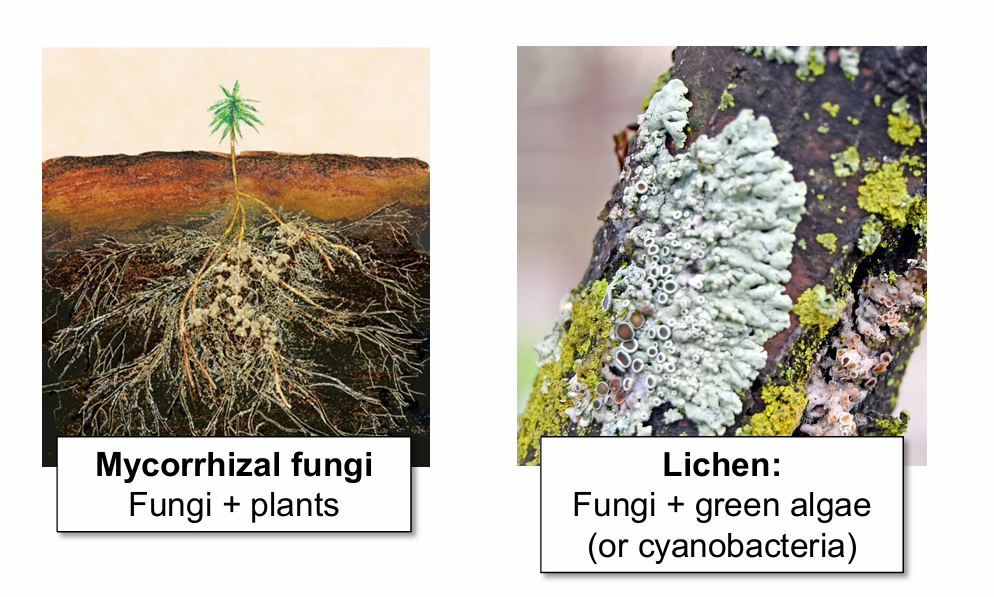
symbiotic relationships with fungi
fungi have formed mutually beneficial symbiotic relationships with photosynthetic organisms for at least 600 million years!
mycorrhizal associations:
mutually beneficial relationships between fungi and plants
lichens
mutually beneficial relationships between fungi and cyanobacteria or green algae
mycorrhizal fungi
underground hyphae enmesh with plant roots in a mutually beneficial association
90% of all plant species form mycorrhizal association
mycorrhizae = “fungus root”
fungus helps plant by improving water & nutrient uptake; also protects plant against pathogenic organisms
plant provides fungus with carbohydrates from photosynthesis
one mycelium can attach to multiple plants, transferring carbon from plant to plant (mycorrhizal network)
ectomycorrhizae
enmesh around root cortex but do not penetrate inside cells
ascomycota or basidiomycota
endomycorrhizae
penetrate inside the root cells
mycoromycota
lichens
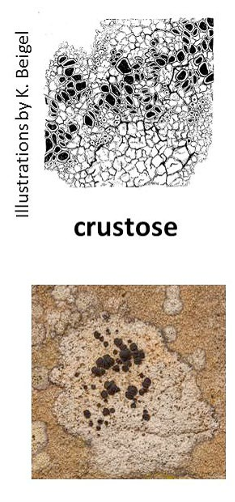
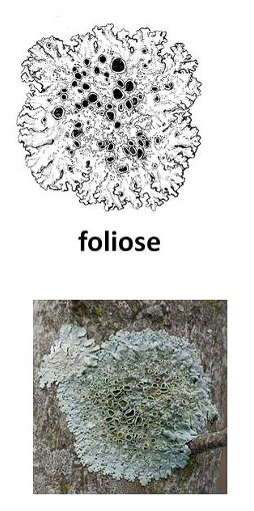
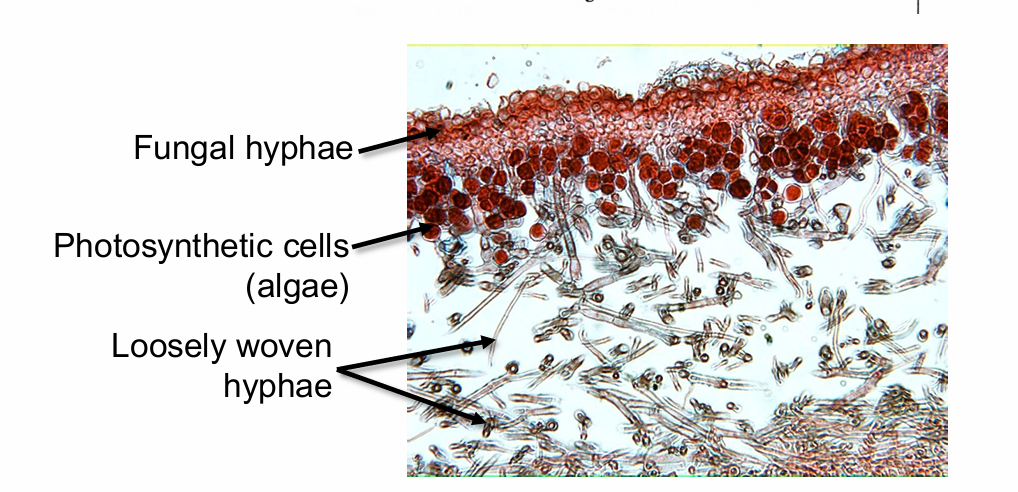
lichens are a symbiotic association between fungi (mostly ascomycota or basidiomycota) and green algae or cyanobacteria
fungi provide: physical structure, protection, and enzymes that aid in mineral absorption
green algae or cyanobacteria provide: photosynthesis, produces carbohydrates to support fungal growth

crustose lichens
foliose lichens
fruticose lichens

lichen cross section
asomycota: sordaria sexual reproduction