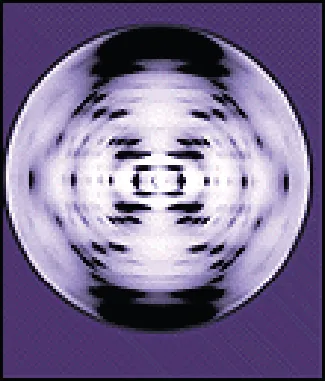
X-Ray Diffraction
 Call Kai
 Learn
Learn Practice Test
 Spaced Repetition
 Match
Match Flashcards
 Knowt Play
1/37

There's no tags or description
Looks like no tags are added yet.
Name | Mastery | Learn | Test | Matching | Spaced | Call with Kai | Chat |
|---|
No analytics yet
Send a link to your students to track their progress
38 Terms
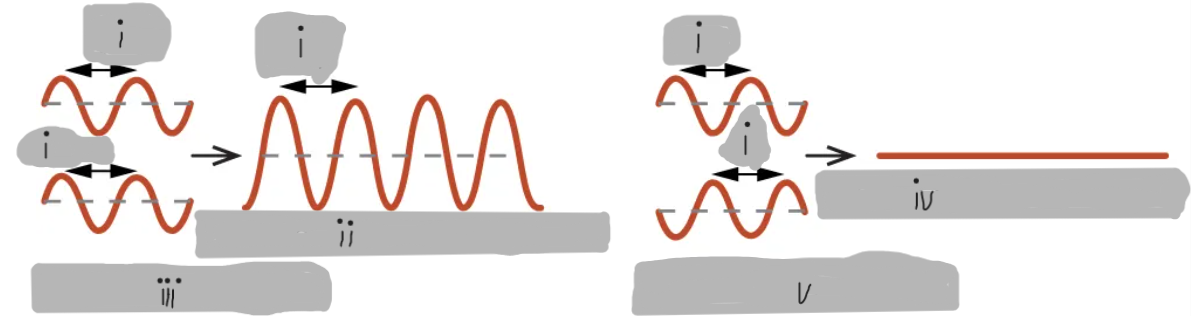
λ
(i)
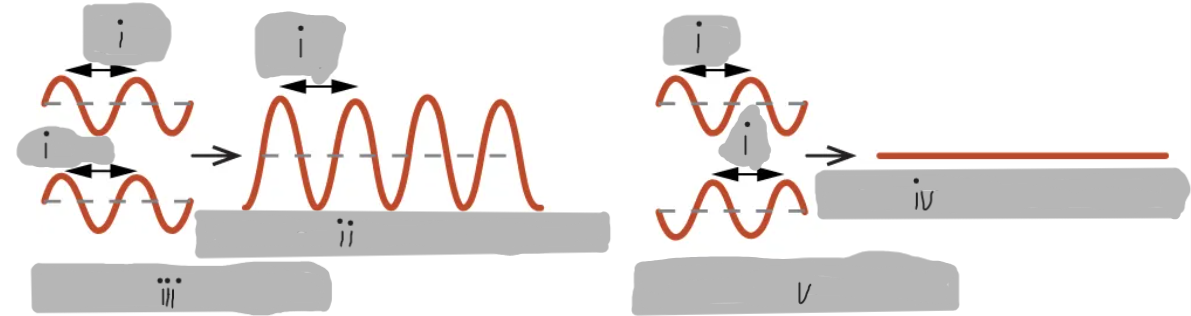
Maxima and minima reinforce
(ii)
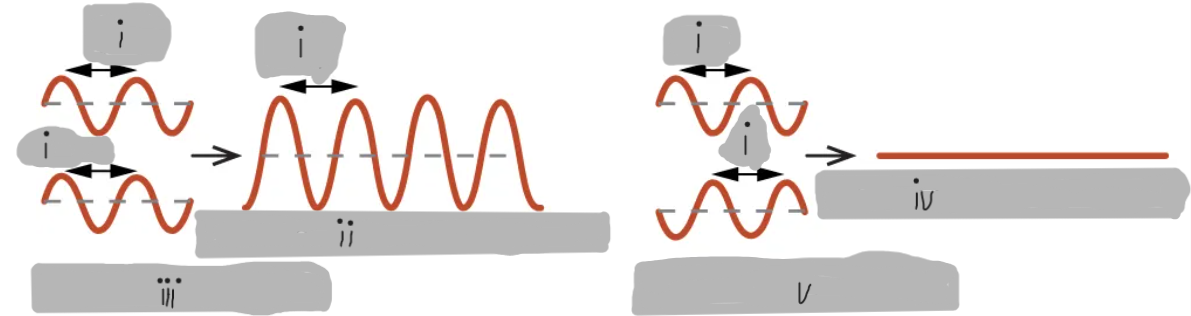
Constructive interference
(iii)
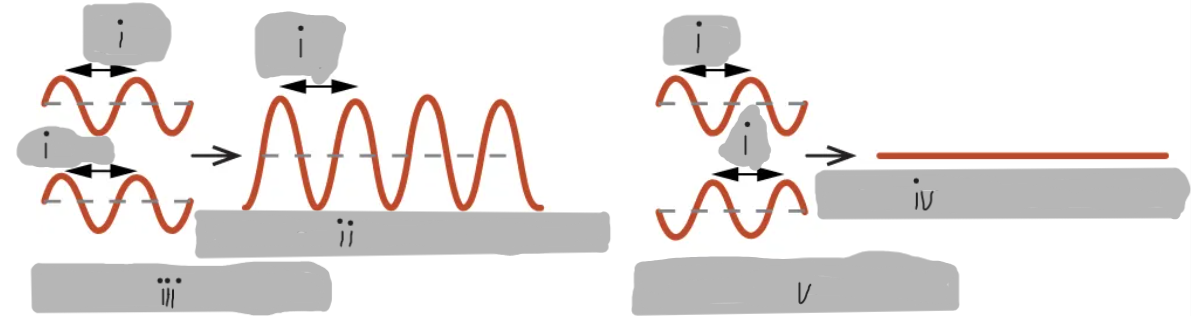
Maxima and minima cancel
(iv)
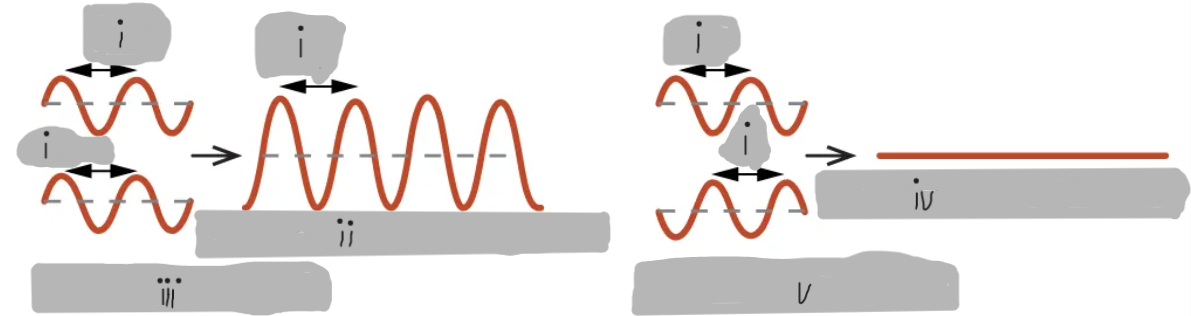
Destructive interference
(v)
X-Ray Diffraction (XRD)
An experimental technique used to determine the arrangement of atoms in a crystalline solid
X-rays are scattered by atoms in the crystal, producing a diffraction pattern
The diffraction pattern reveals the crystal's structure and lattice spacing
Diffraction
The bending and spreading of waves when they encounter an obstacle or pass through a narrow opening
In crystallography, X-rays do this thing when they interact with regularly spaced atomic planes
Crystal Plane
An imaginary flat surface passing through repeating rows of atoms in a crystal
They act like reflecting surfaces for X-rays
Interplanar Spacing (d)
The perpendicular distance between two adjacent parallel crystal planes
Represented by d in Bragg's Law
Determines the angles at which diffraction occurs
Incident X-Ray
The incoming X-ray beam that strikes the crystal surface before diffraction occurs
Diffracted X-Ray
The X-ray beam that leaves the crystal after interacting with its atomic planes
Constructive Interference
Occurs when two X-ray waves combine in phase
Their amplitudes add together, producing a strong diffraction peak
This is the condition required for Bragg diffraction
Destructive Interference
Occurs when two X-ray waves combine out of phase
Their amplitudes cancel each other
Produces little or no detected intensity
Path Difference
The difference in distance traveled by two reflected X-ray beams
Determines whether interference is constructive or destructive
Incident Beam
(1)
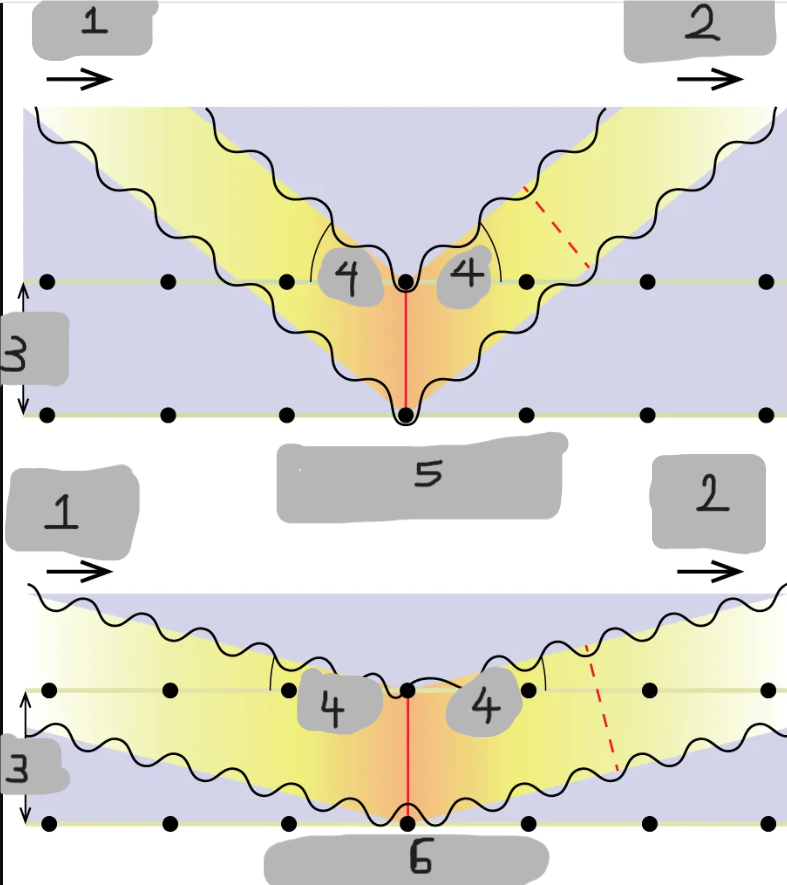
Diffracted Beam
(2)
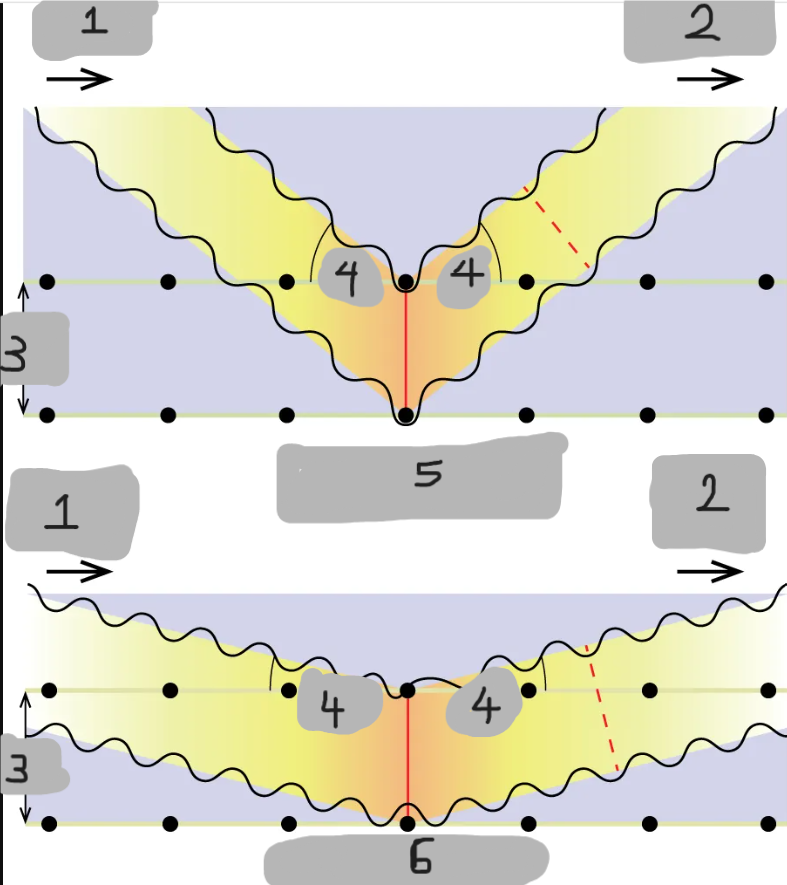
d
(3)
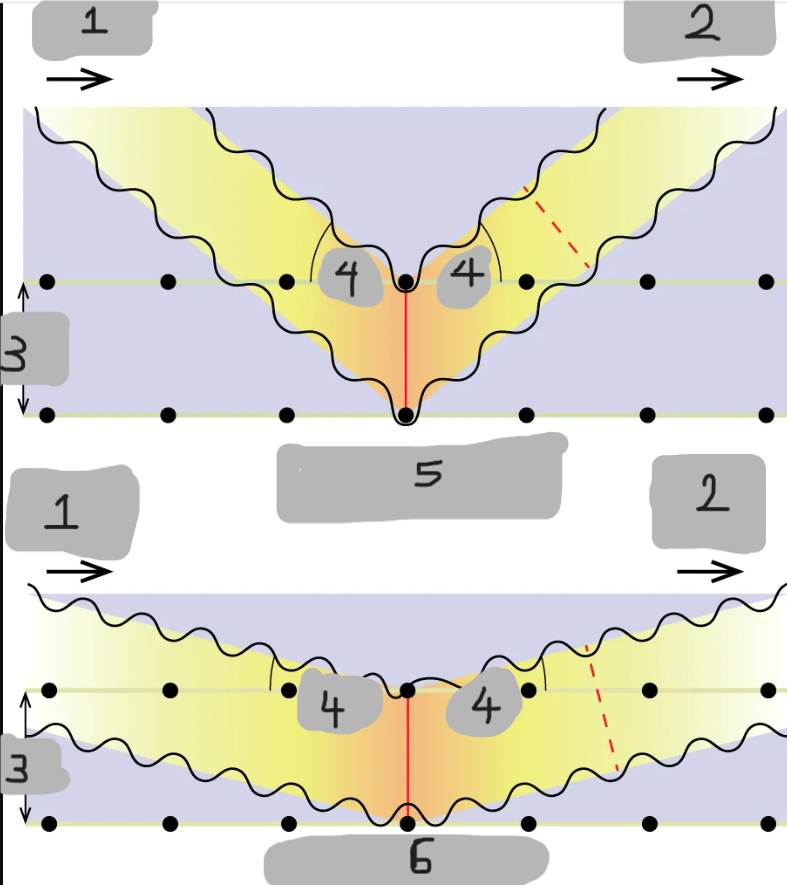
θ
(4)
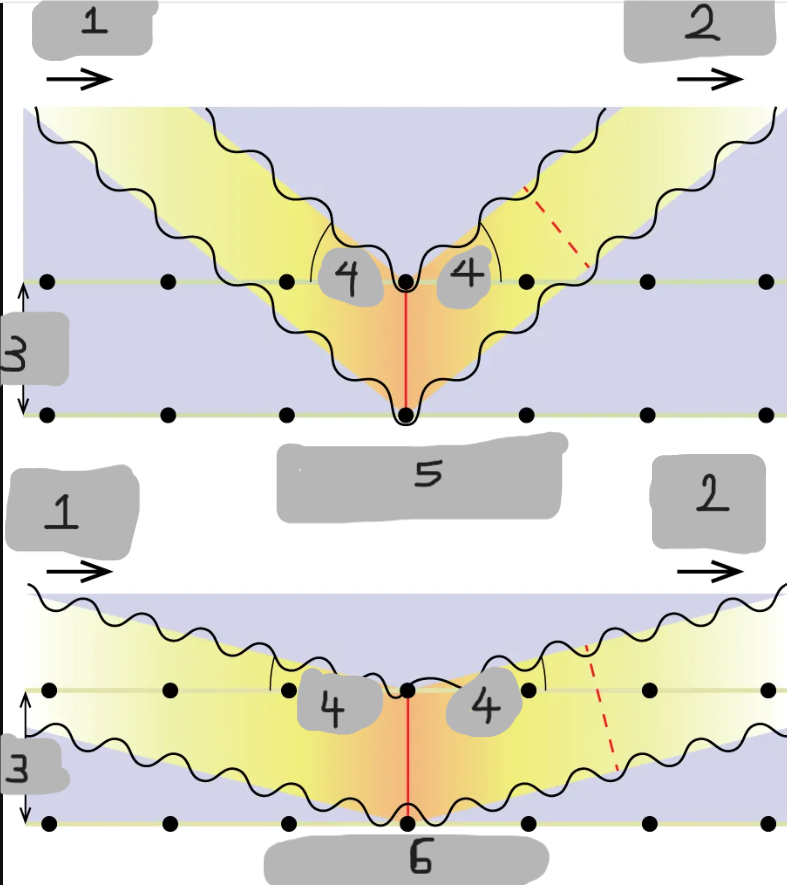
Constructive Interference
(5)
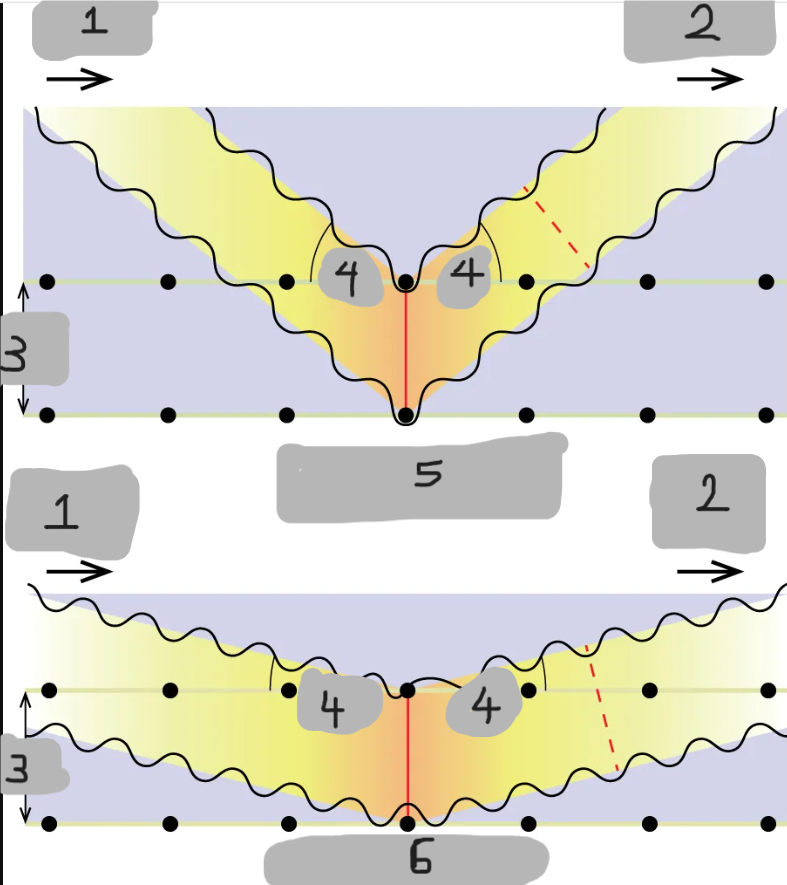
Destructive Interference
(6)
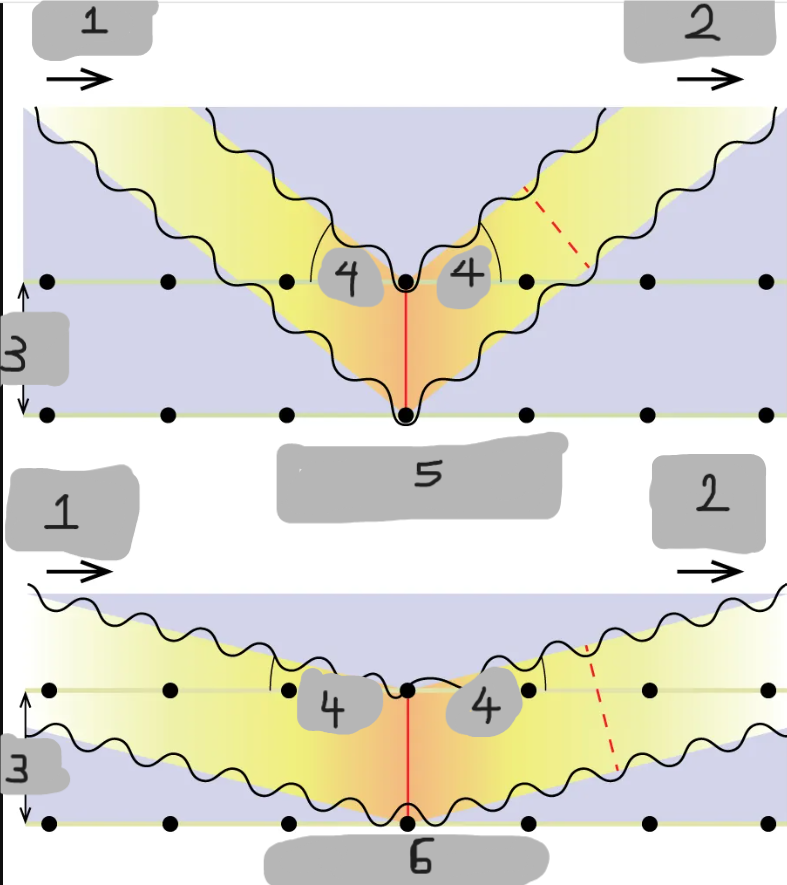
Bragg's Law
The mathematical condition for constructive X-ray diffraction
Relates wavelength, crystal-plane spacing, and diffraction angle
nλ = 2d(sin(θ))
Provide the Bragg’s Law formula
Bragg Angle (θ)
The angle between the incident X-ray beam and the crystal plane
Determines whether constructive interference occurs
Order of Diffraction (n)
A positive integer representing the diffraction order
Usually:
n = 1
n = 2
n = 3
X-Ray Wavelength (λ)
The wavelength of the incident X-rays used in diffraction experiments
Typically comparable to atomic spacing
X-Ray Diffractometer
An instrument used to collect X-ray diffraction data from crystalline materials
Measures diffraction angles and intensities
Detector
Measures the intensity of diffracted X-rays
Produces the diffraction pattern used for analysis
X-Ray Source
Produces monochromatic X-rays directed at the crystal
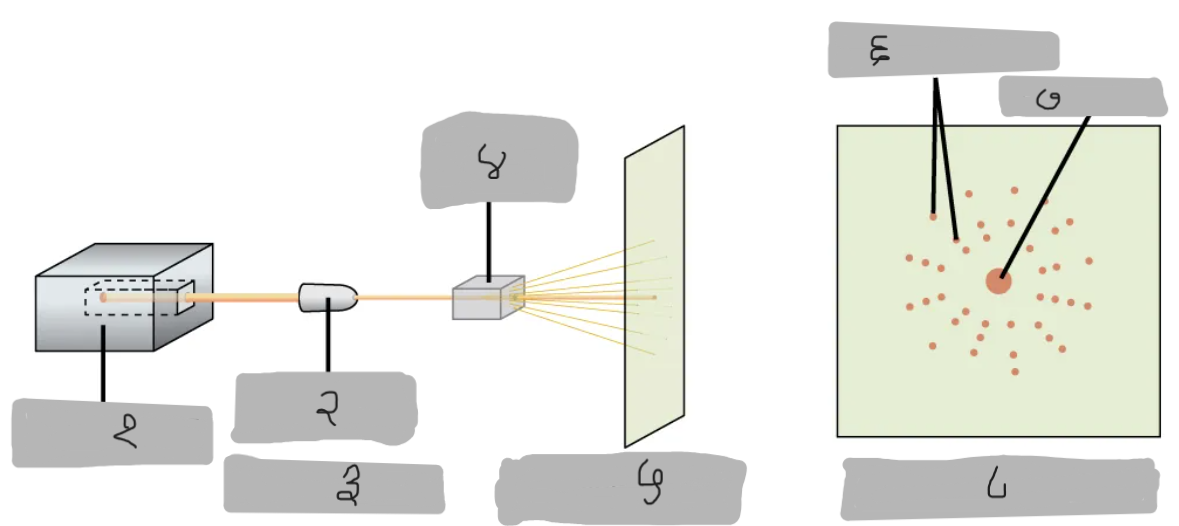
X-ray Source
(१)
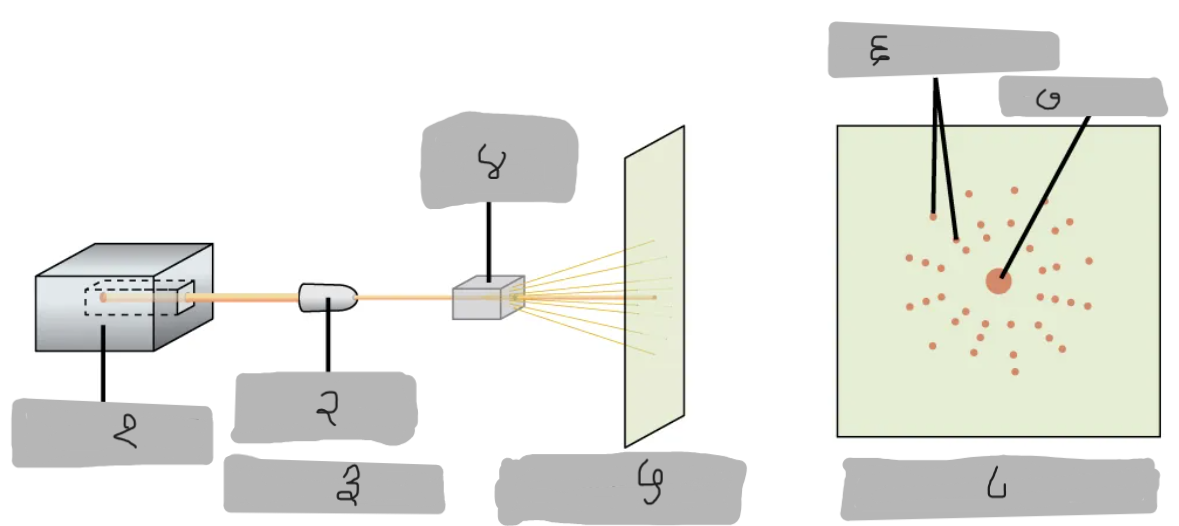
Collimator to focus beam
(२)
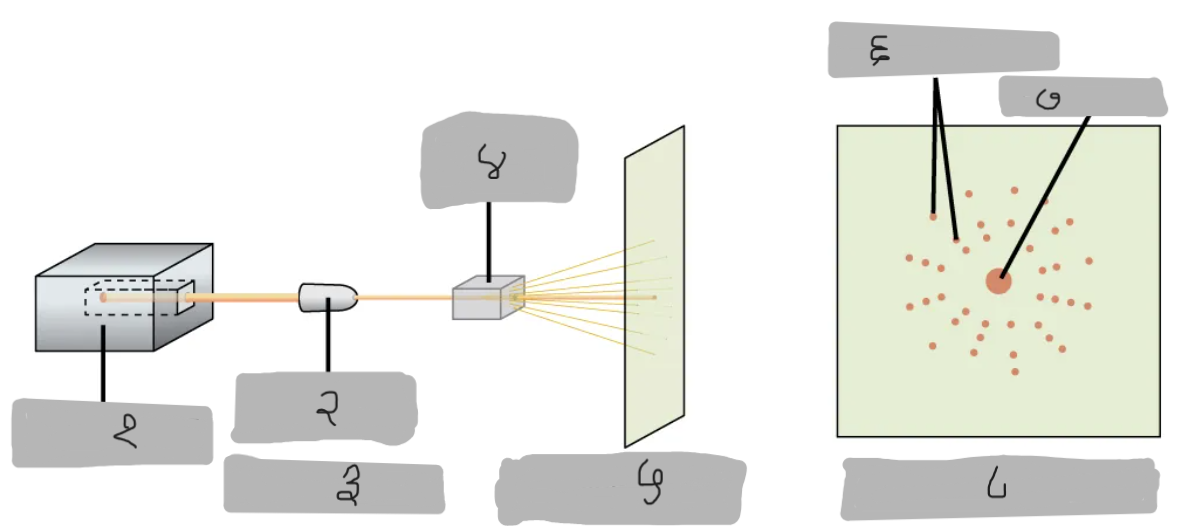
X-ray diffraction
(३)
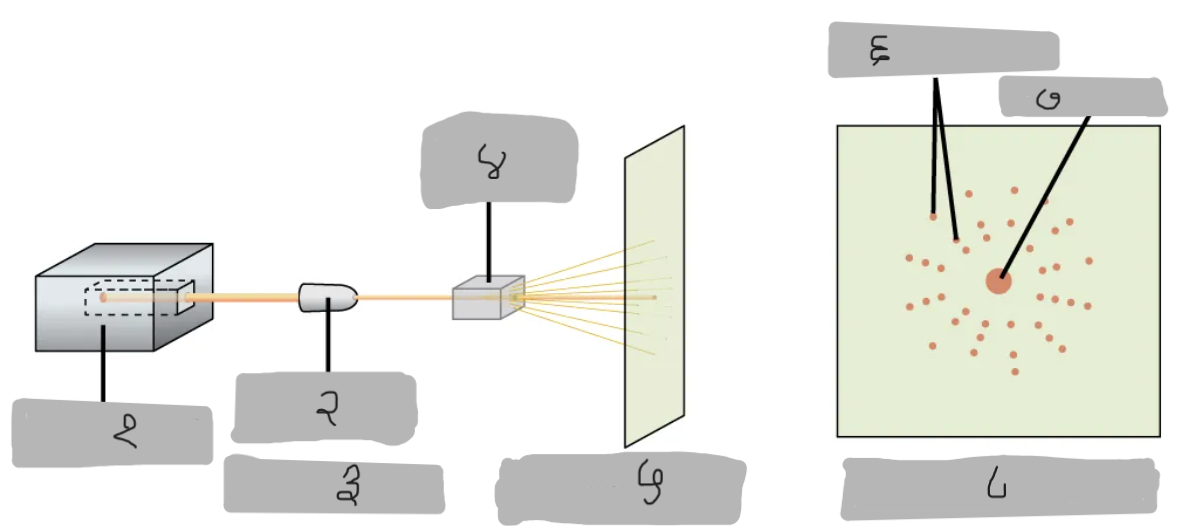
Crystalline material
(४)
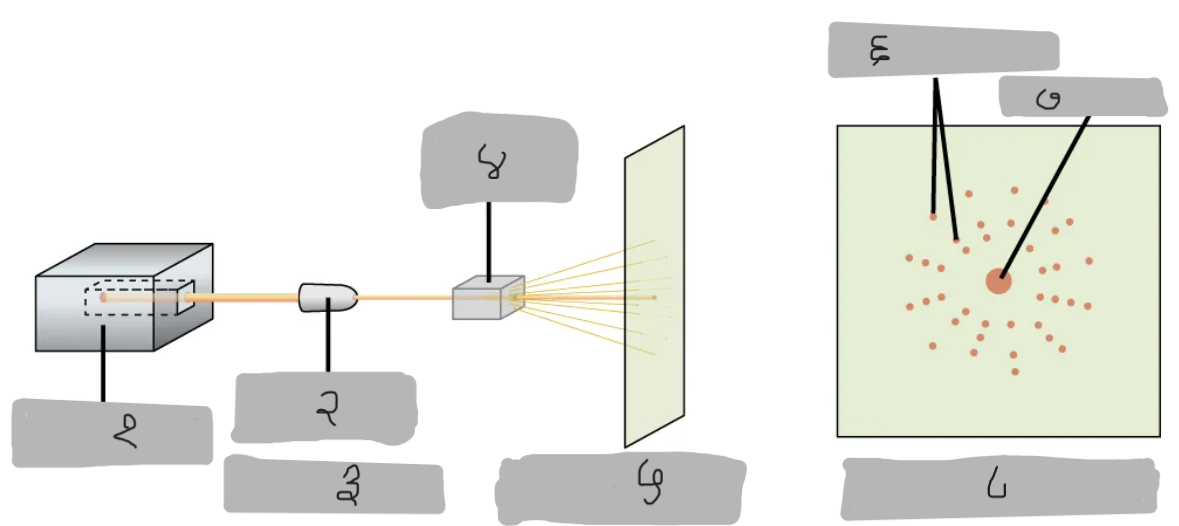
Imaging surface
(५)
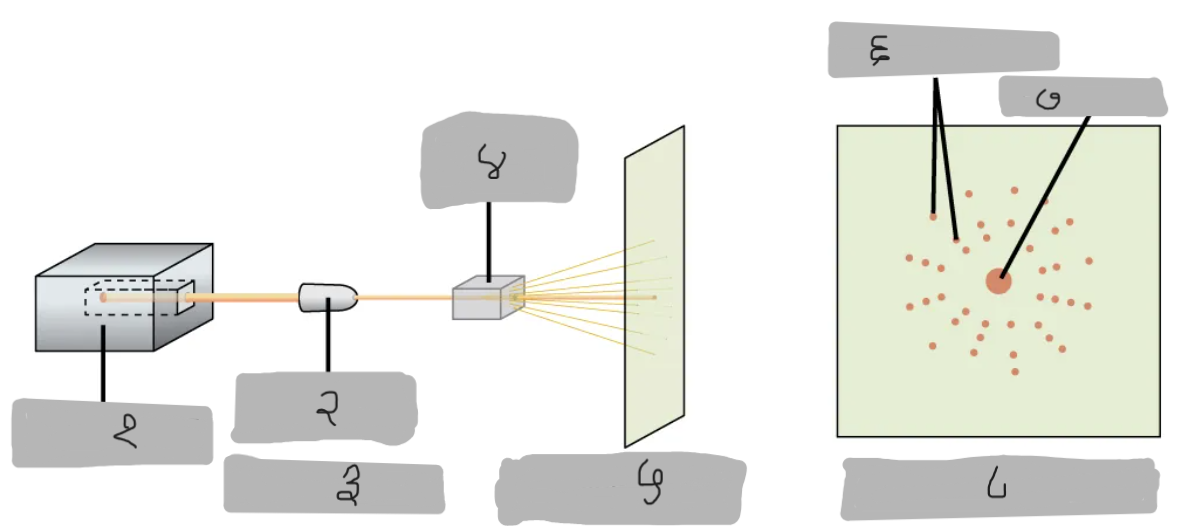
Diffracted x-rays
(६)
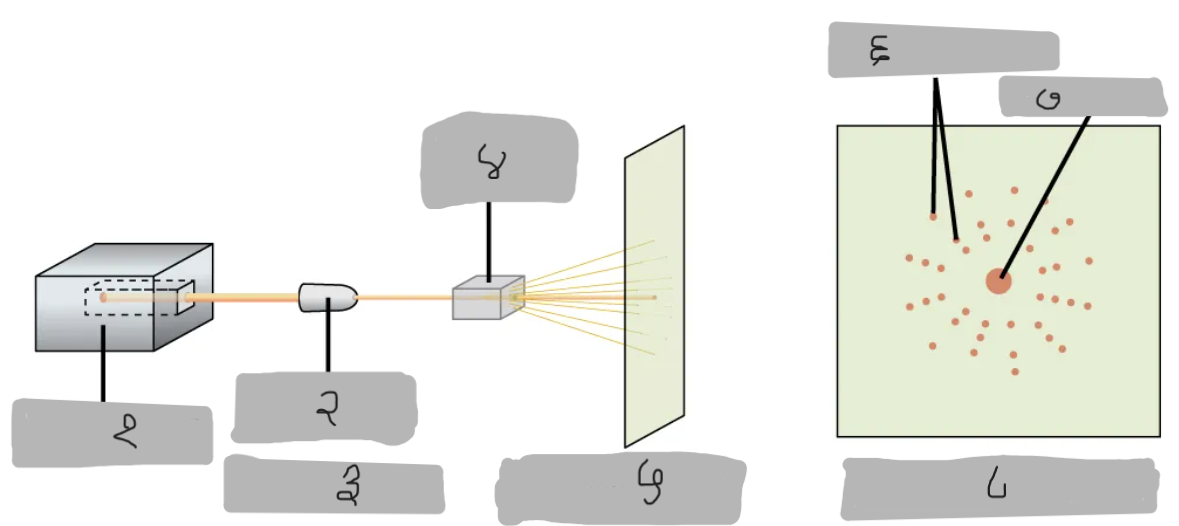
X-ray beam
(७)
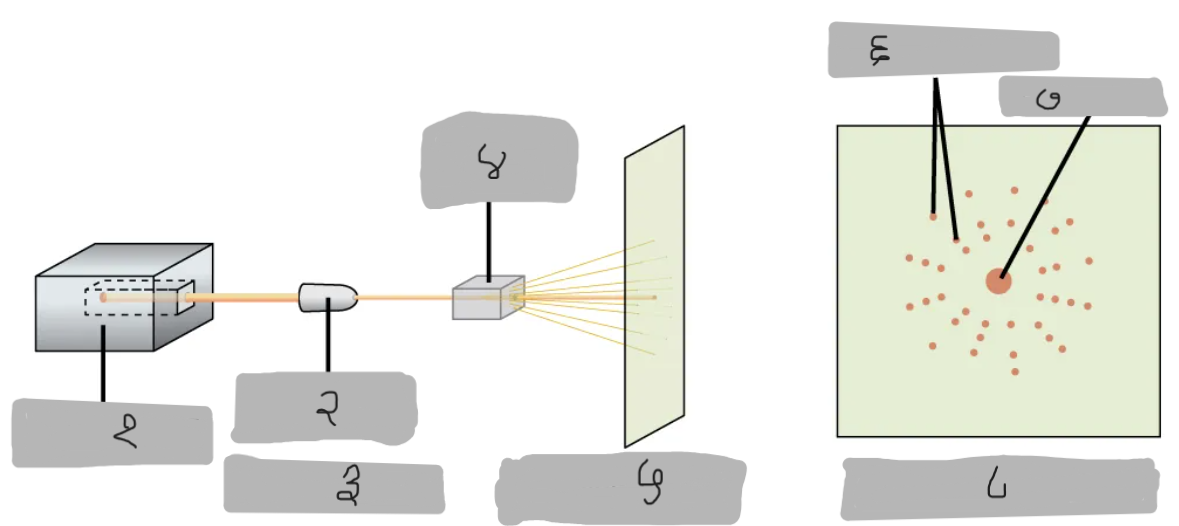
X-ray diffraction pattern
(८)
Rosalind Franklin
British chemist and X-ray crystallographer
Produced high-quality X-ray diffraction images of DNA
Her work played a crucial role in discovering DNA's double-helix structure
DNA X-ray diffraction image