macro chapter 10
 Studied by 0 people
 Call Kai
 Learn
Learn Practice Test
 Spaced Repetition
 Match
Match Flashcards
 Knowt Play
1/17

Earn XP
Description and Tags
intro to the problem of macroeconomic fluctuations
Name | Mastery | Learn | Test | Matching | Spaced |
|---|
No study sessions yet.
18 Terms
long-term equilibrium vs short-term fluctuations
graph
long-term models
long-term models could not explain any fluctuations in production
production was predetermined by input factors & technology determine fixed output
Solow model explains long-term growth, but no short-term fluctuations
Principle: every supply creates its own demand (classical economy)
Demand has not yet played a central role in production
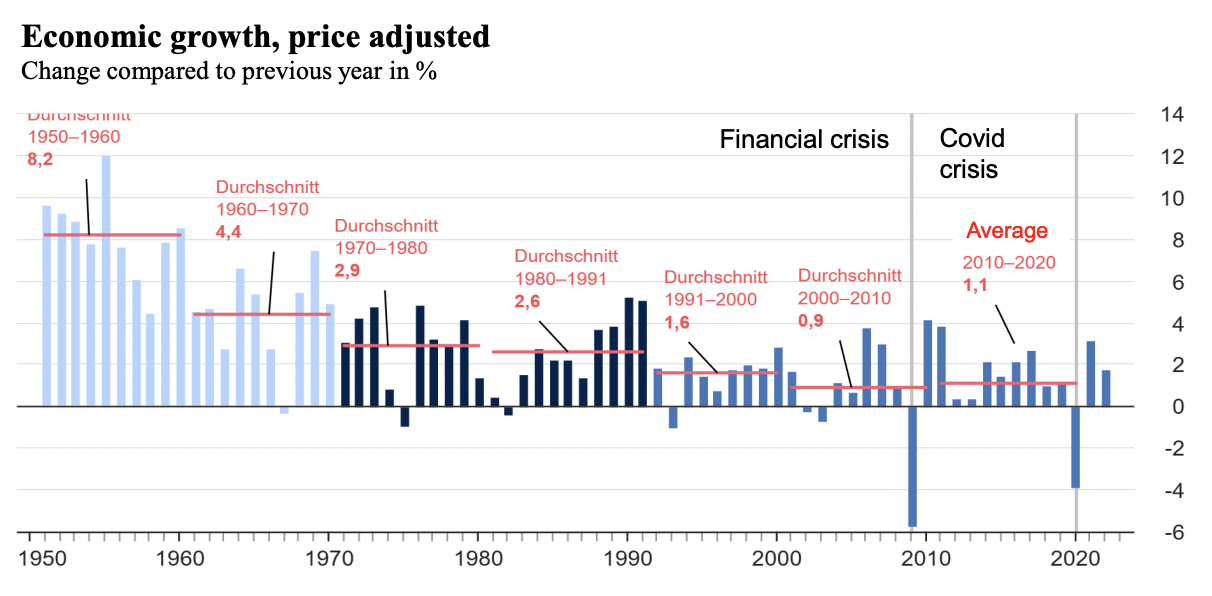
long-run equilibrium
GDP development fluctuates around the long-term equilibrium
economic cycles with periods of recession
economic cycles have different and unpredictable lengths
recession: usually 2 successive quarters of -ve GDP growth
unemployment, consumption and investment also fluctuate with GDP
okun's law: -ve relationship between unemployment & GDP
short vs long term view
assumption: difference lies in the price adjustment
long-term: prices are flexible & adapt to changes
short-term: prices are fixed at given level
consequence
economic policy measures have different effects in both
intuition of content
if prices fail to adjust to changes, real variables of production must take over part of adjustment in short-term
price rigidity is common → companies only adjust prices 1-2 times per year
aggregated demand (AD)
relationship between demand & the macroeconomic price level
determines shape of AD cuve
3 ways to drive the AD curve
from the quantity theory
from the IS-LM model
ad-hoc or intuitive
AD according to quantity theory
quantity equation: M x V = P x Y
M = money supply
V = volume of money
demand for money: M/P = kY
is proportional to production volume
there is -ve relationship between price level P and output Y
intuition: if price level rises, a higher euro amount must be spent on each transaction, so production must fall
change in money supply or interest rate, shifts AD curve
ad hoc derivation of aggregated demand
as prices rise, consumption is postponed in favour of savings
when prices fall, consumption pays off, & aggregate demand increases
investments resulting from savings also increase total demand with Y = C + I + G → unclear if banks always pass on savings directly to investors
if total demand changes irrespective of price, AD curve shifts
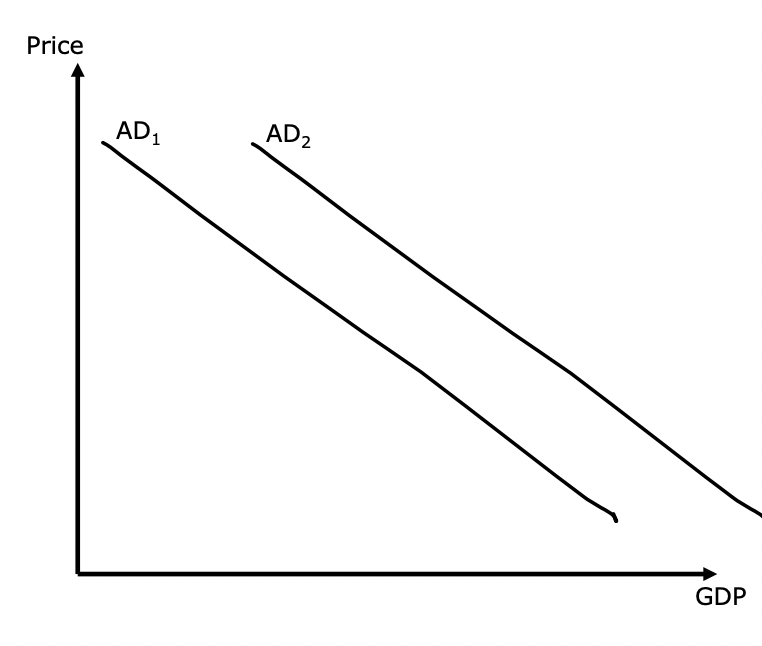
aggregated demand graph
AD curve: -ve relationship between GDP + price
right shift due to additional shift spending (G) and expansion of money supply (M)
total supply in long-term
quantity of goods produced depends on given quantity of input factors & production technology → fixed
formula corresponds to long-term offer that is independent of price
graph: vertical curve or line
line above K,L,Y = fixed amount of that variable

total offer in the short-term
assumption of fixed prices defined the short-term
great simplification: all prices are fixed in the short term
if price level is fixed → horizontal curve or line
consequence → in short-term, only changes in supply can influence output level
supply shocks are cost shocks that lift the curve
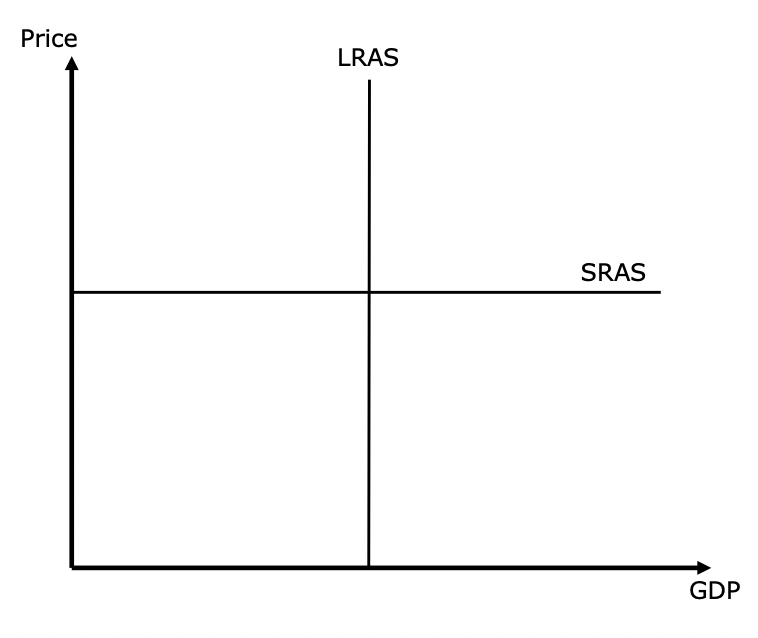
aggregated supply: 2 curves
aggregated supply in long-term: LRAS
long-run aggregated supply
vertical curve
aggregated offer in short-term: SRAS
short-run aggregated supply
horizontal curve
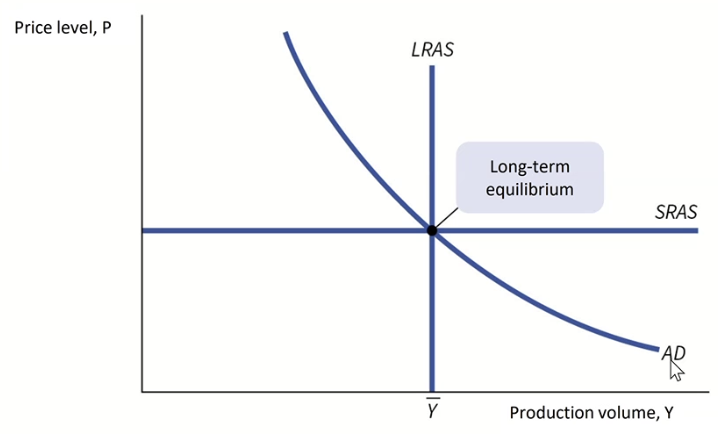
long-term equilibrium in AD-AS model
in long-term, economy is at the intersection of long-term AS and AD curves
as prices have adjusted to this level, the short-term aggregate supply curve also runs through this point
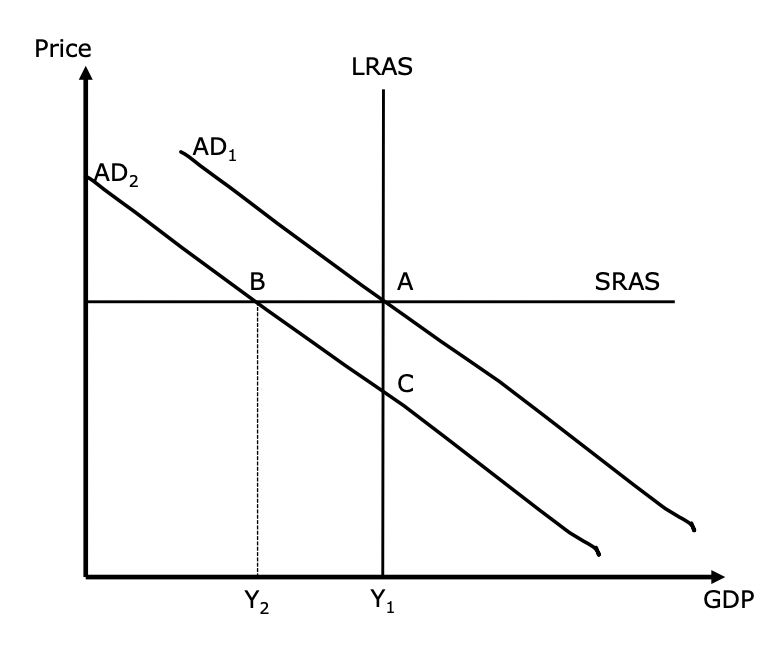
recession in AD-AS model
demand shock shifts AD curve to the left
in short term, the economy moves from equilibrium at point A to the new intersection point B of AD2 and SRAS
if shock is permanent, economy will move from point B to long-term equilibrium at point C in long term
if demand recovers in long-term, economy would move from point B back to the long-term equilibrium at point A
fiscal policy
increase in government spending allows a rightward shift of the AD curve
states can pay out ‘windfall money’ to the population to boost private consumption → AD curve shifts to the right
has a stabilising effect because population suffering from a drop in income is directly benefited
monetary policy
by expanding the money supply, the central bank stimulates economy → right shift in AD curve
reduction in money supply by central bank → left shift in AD curve
counteracts a +ve demand shock, but at the expense of the upswing
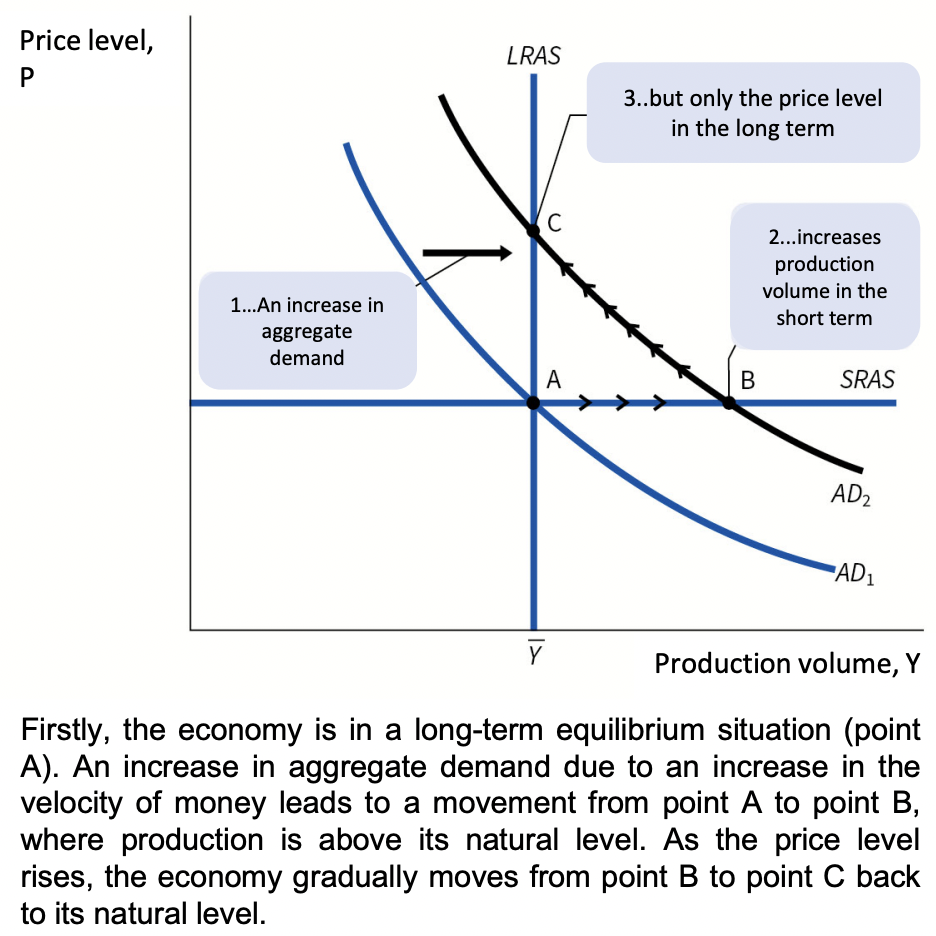
reaction of +ve demand shock
+ve demand shock → AD curve shift right
short-term upswing → slow down in long → prices rise
if price stability is primary goal, the central bank should intervene and put brakes on the upswing
central bank could reduce money supply & try to bring the AD curve back to the initial situation
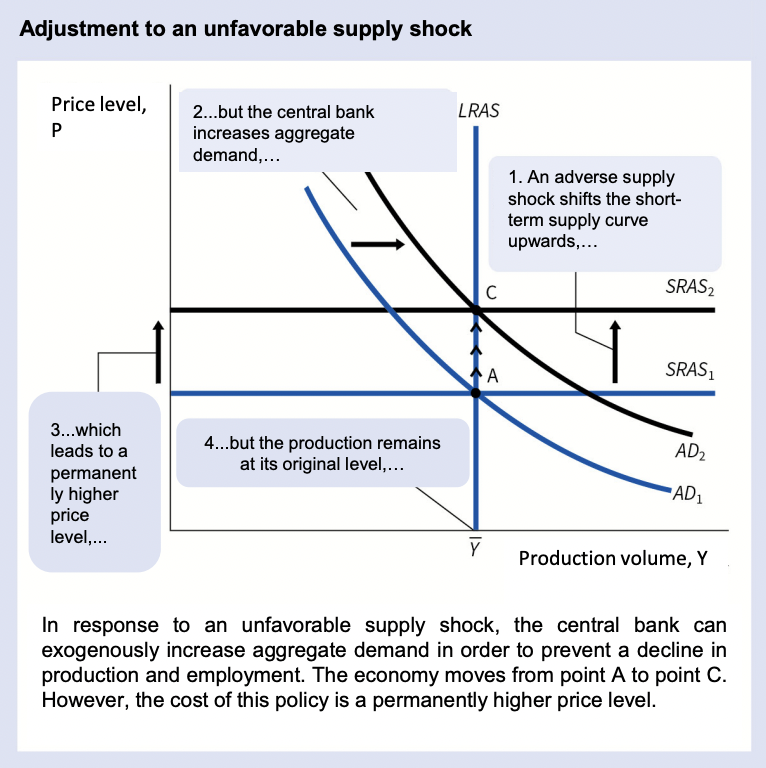
reaction to adverse supply shock
cost shock increases production costs
oil price, delivery failures, gas crisis
SRAS curve shifts upwards
to prevent a recession with a simultaneous rise in prices (stagflation), AD curve can be shifted to right through monetary or fiscal policy
decline in income can be prevented at the expense of a long-term rise in prices