BIO-110 Chapter 6
 Call Kai
 Learn
Learn Practice Test
 Spaced Repetition
 Match
Match Flashcards
 Knowt Play
1/70

There's no tags or description
Looks like no tags are added yet.
Name | Mastery | Learn | Test | Matching | Spaced | Call with Kai |
|---|
No analytics yet
Send a link to your students to track their progress
71 Terms
DNA and RNA are the…..
two types of nucleic acids that store information
DNA is a ______ which is a large molecule made of repeating smaller units which are ______
polymer, nucleotides
DNA polymers can be _____ ______ or tightly wrapped ______
long fibers, chromosomes
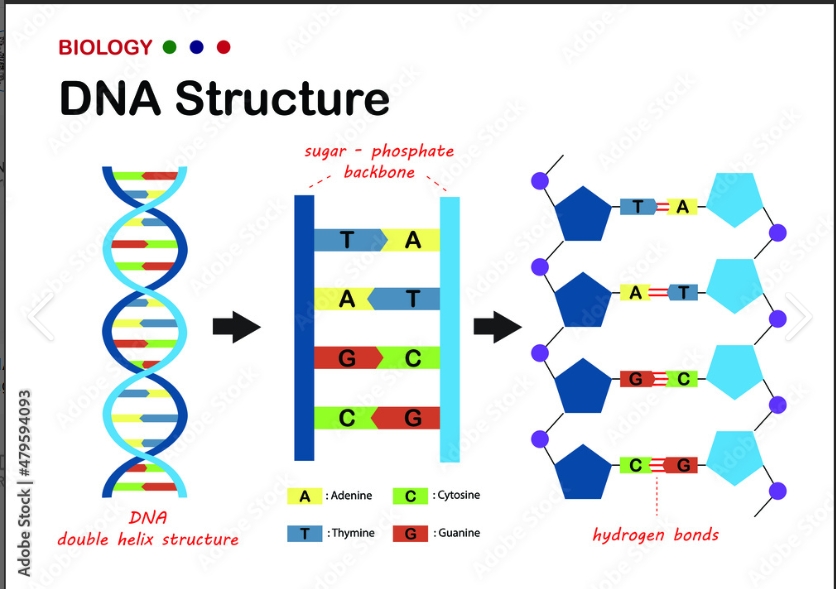
The structure of DNA has a ____ _____, ______ bonds holding the base pairs and ______ bonds holding the backbone. The chemical structure of the ______ is common to all life on earth.
double helix, hydrogen, covalent, backbone
Every molecule of DNA is made from subunits called
nucleotides
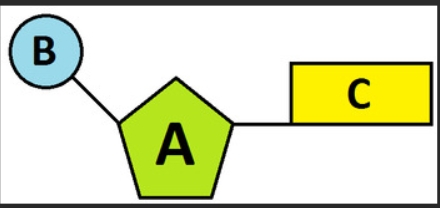
A
deoxyribose sugar
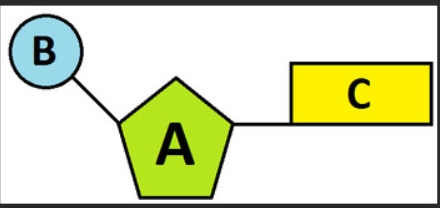
B
phosphate
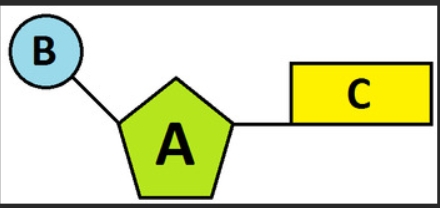
C
base made from one or two rings of nitrogen/carbon
the sugar and phosphate of DNA is ______ amongst all DNA nucleotides
identical
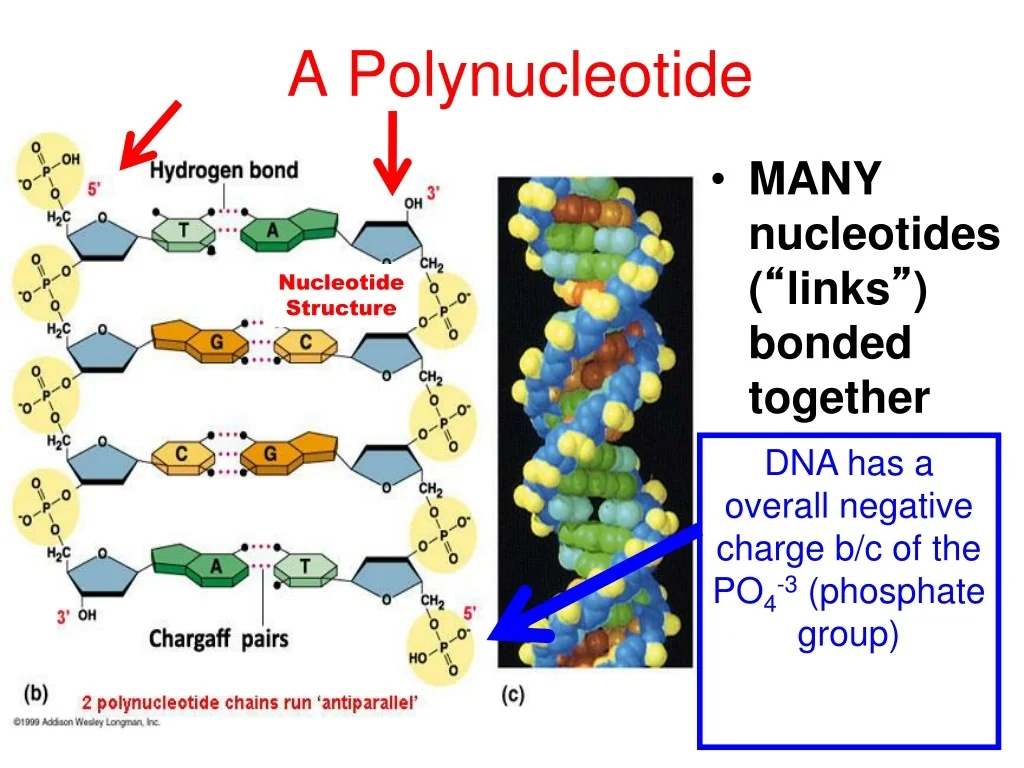
One molecule of DNA contains _____ polynucleotides
two
DNA has an overall ______ charge
negative
What is DNA replication?
the process by which a cell makes exact copies of its DNA
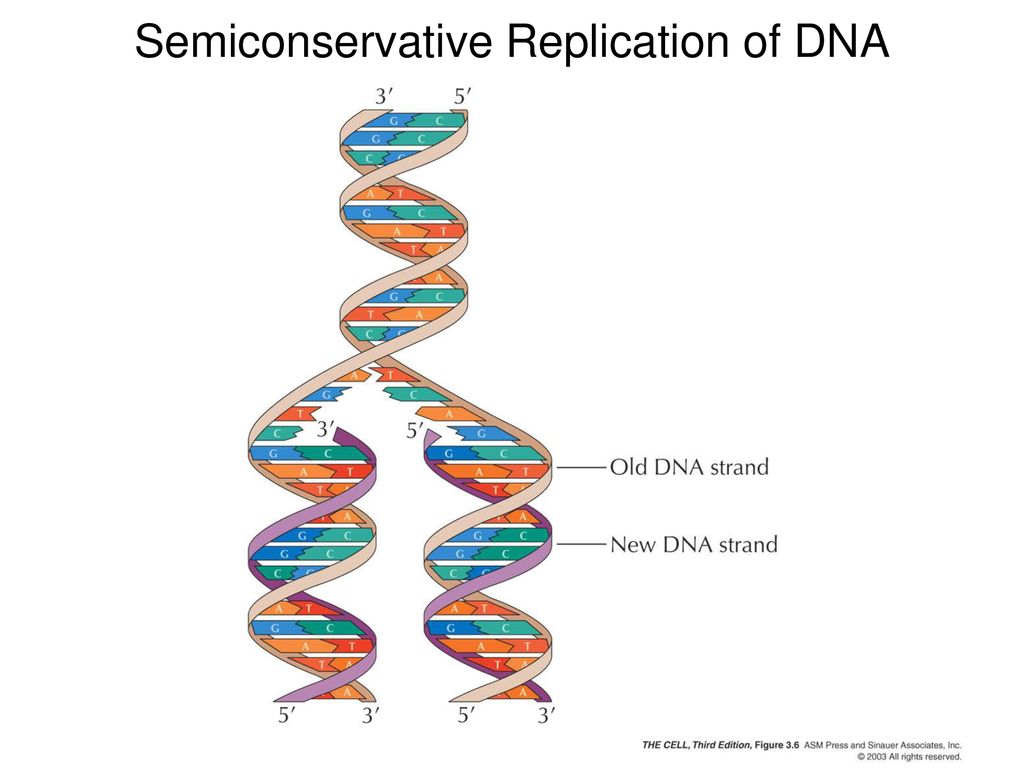
DNA is semi conservative meaning…
each strand has one that is newly created and one that is original
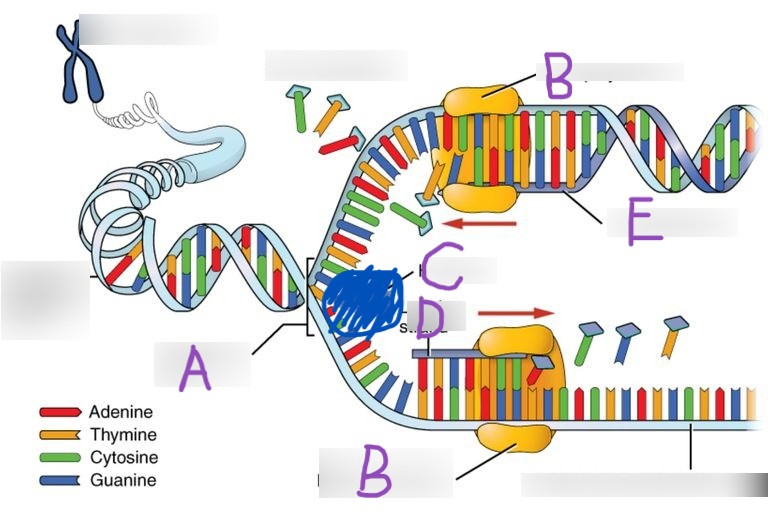
A
replication fork
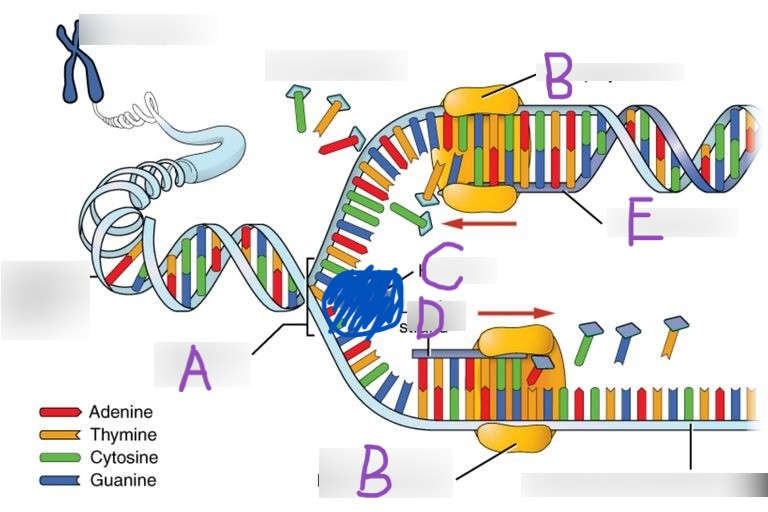
B
DNA polymerase
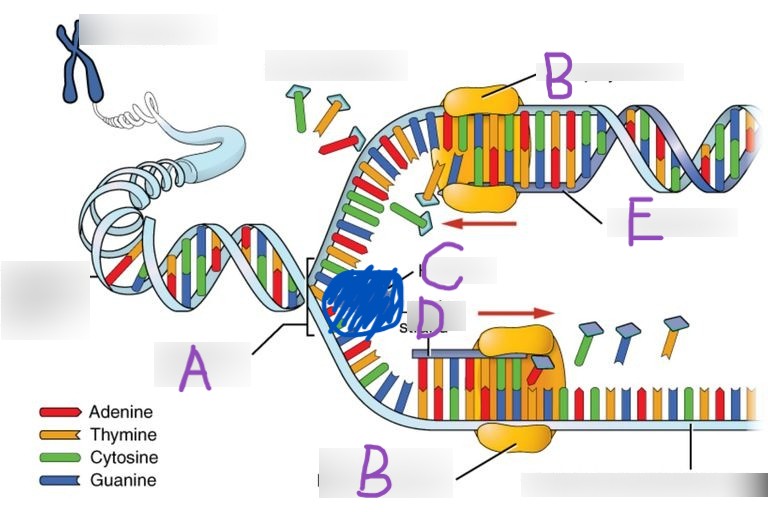
C
helicase
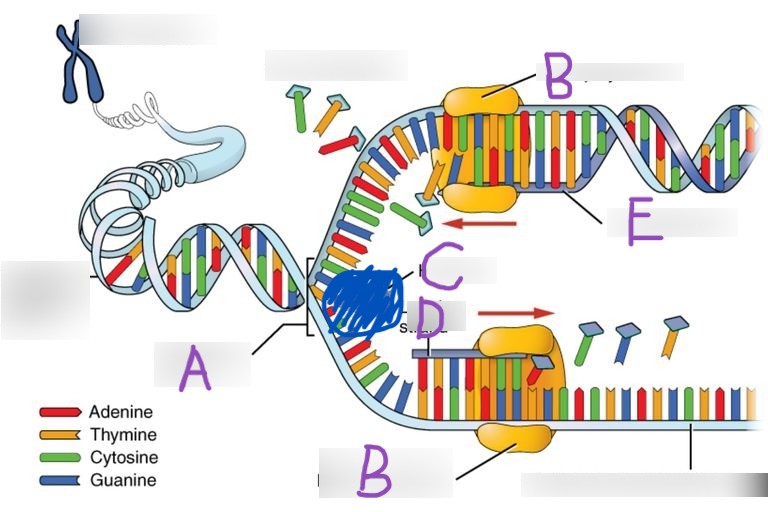
D
lagging strand
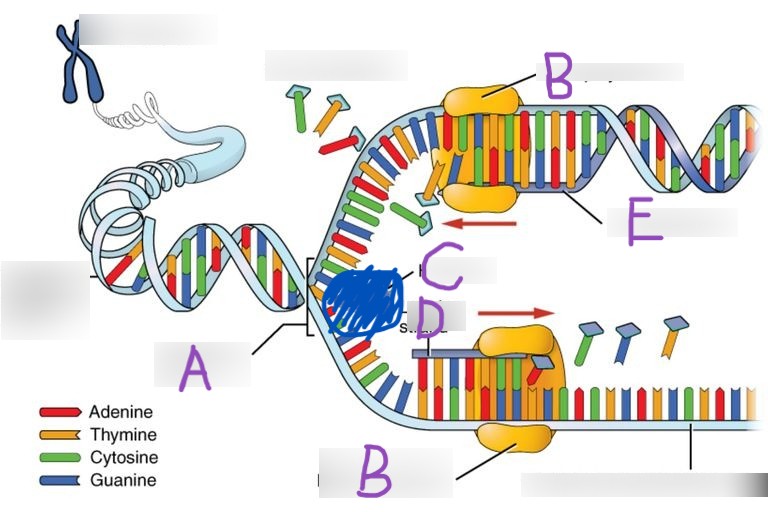
E
leading strand
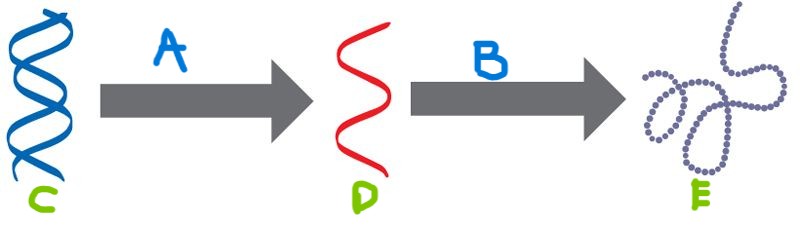
A
transcription
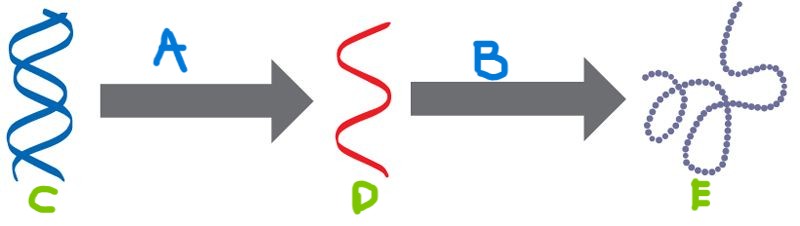
B
translation
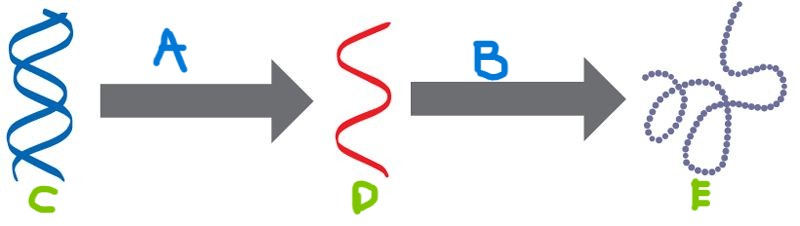
C
DNA
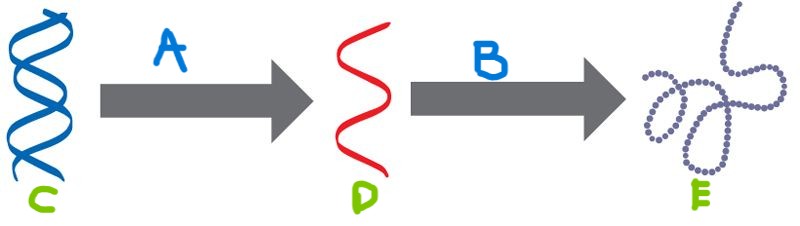
D
RNA
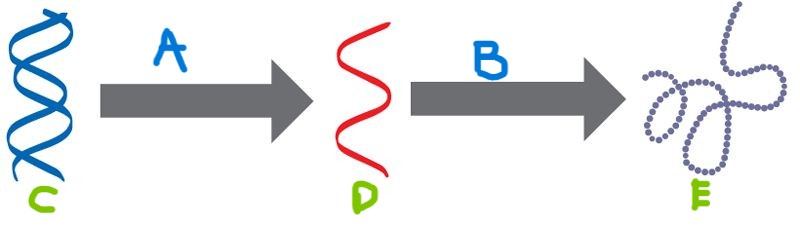
E
protein
Under the direction of DNA, _____ carries instructions that result in the production of proteins
RNA
Structural difference between DNA and RNA
double helix vs single strand
sugars in DNA are deoxyribose vs ribose in RNA
DNA has base thymine, while RNA has base uracil
DNA produces and _____, RNA controls the ______, Proteins perform the ______ of cellular functions
directs, manufacture, majority
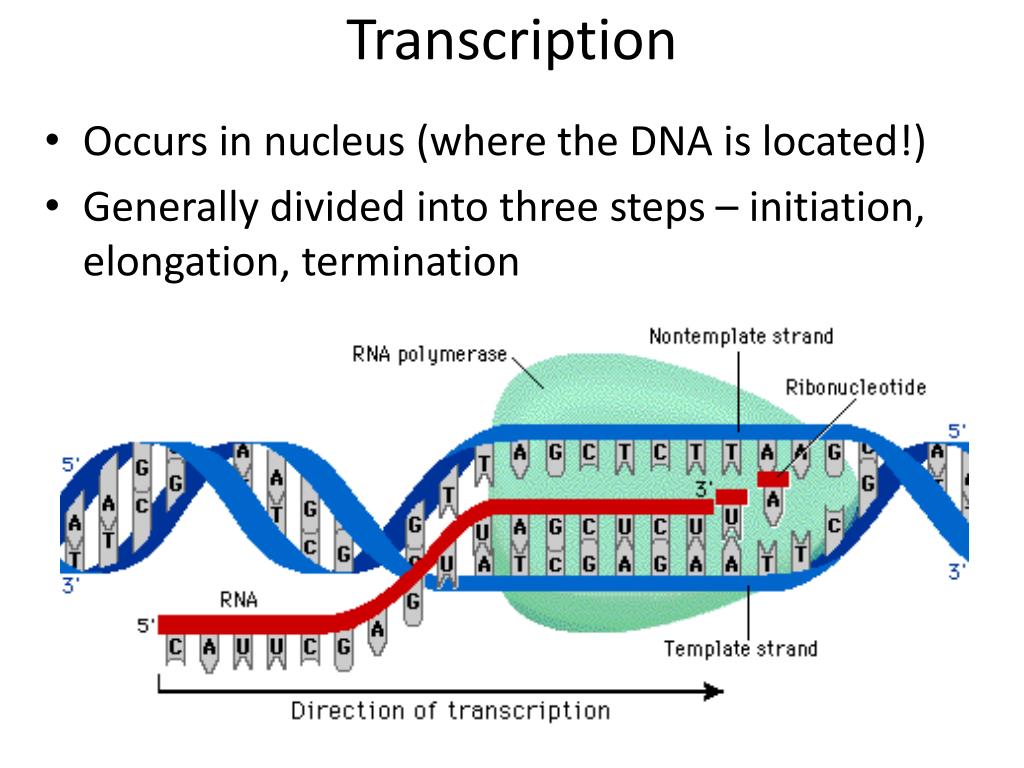
Transcription begins when the _____ in a nucleus directs the _______ of RNA, specifically ______ which is _______ RNA
DNA, production, mRNA, messenger
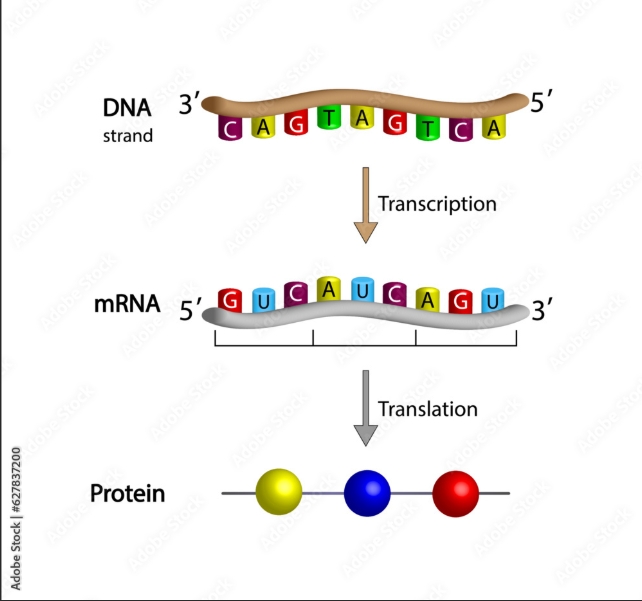
DNA base pair Thiamine pairs to mRNA Adenine, while DNA base pair ______ pairs to _____ in mRNA
adenine, uracil
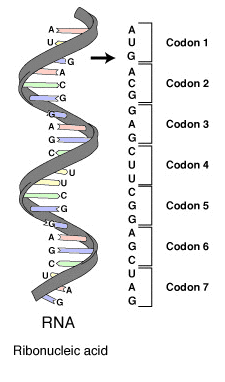
Codons do what?
specifies a particular amino acid or peptide
A long chain of amino acids is called _______
polypeptide
Molecular chain of command is…
DNA makes RNA, which makes proteins, they control your physical traits
What does RNA polymerase do in transcription?
it binds to a DNA sequence and signals to the gene to “start here”
By controlling whether or not RNA polymerase can bind the promoter, a cell can turn a gene…..
on or off
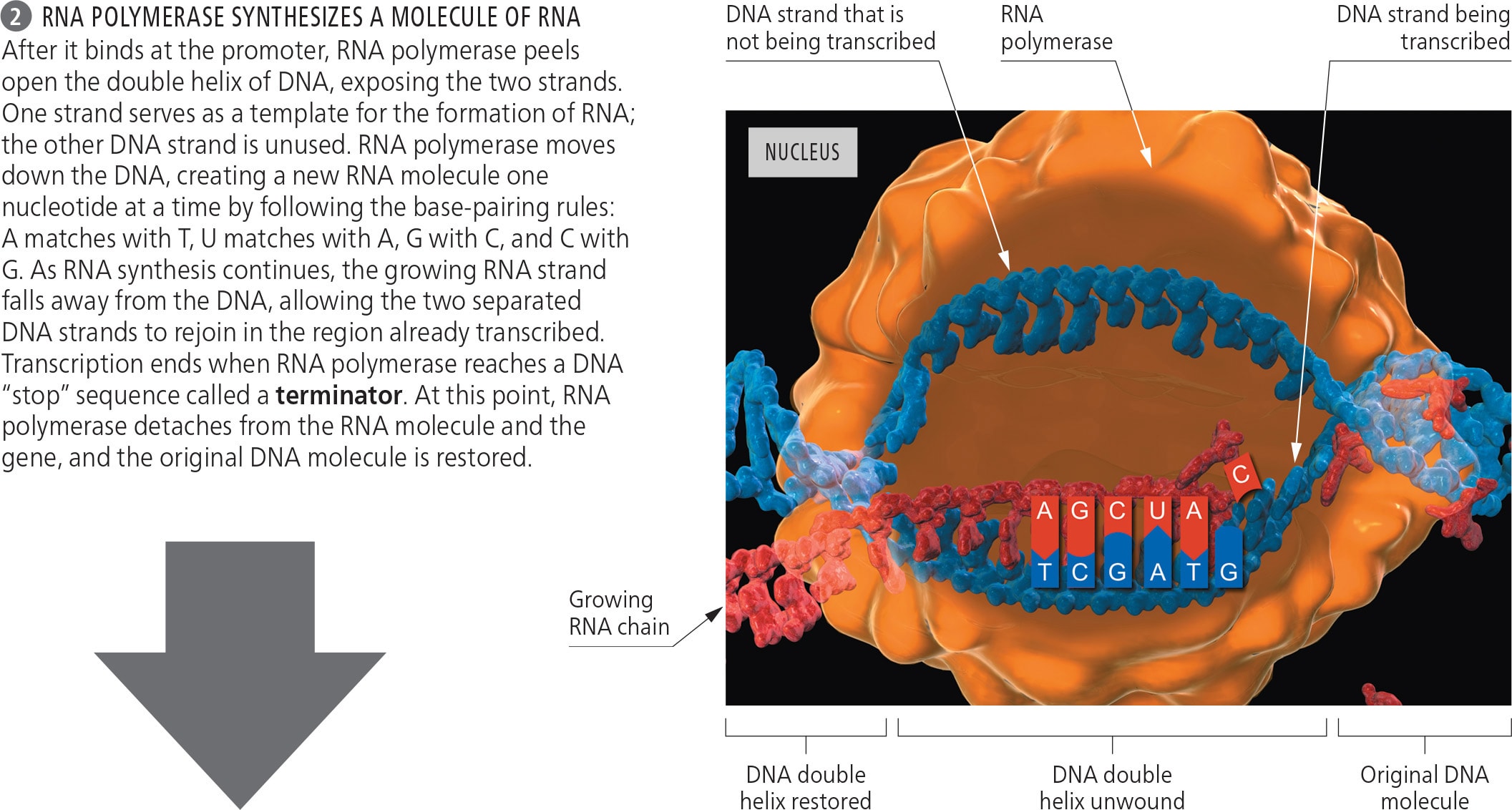
After RNA polymerase binds at the promoter, it ____ open the double helix of ____. One strand serves as a template for the formation of ____; the other is unused.
peels, DNA, RNA
Transcription ends when RNA polymerase reaches a DNA _____ sequence which is called a _____
stop, terminator
Introns
regions that do not encode for amino acids
Exons
regions that do code for amino acids
This occurs when a growing RNA molecule has its introns removed by an enzyme so that way, only the exons remain
RNA splicing
What is a gene?
a unit of hereditary information consisting of a specific nucleotide sequence in DNA
Why might a molecule of mRNA be shorter than the gene from which it is derived?
its introns are removed and the molecule is shorter
________ takes place within the cytoplasm in cellular structures called _____
translation, ribosomes
Ribosomes themselves are made from proteins combined with a special type of RNA called…
rRNA
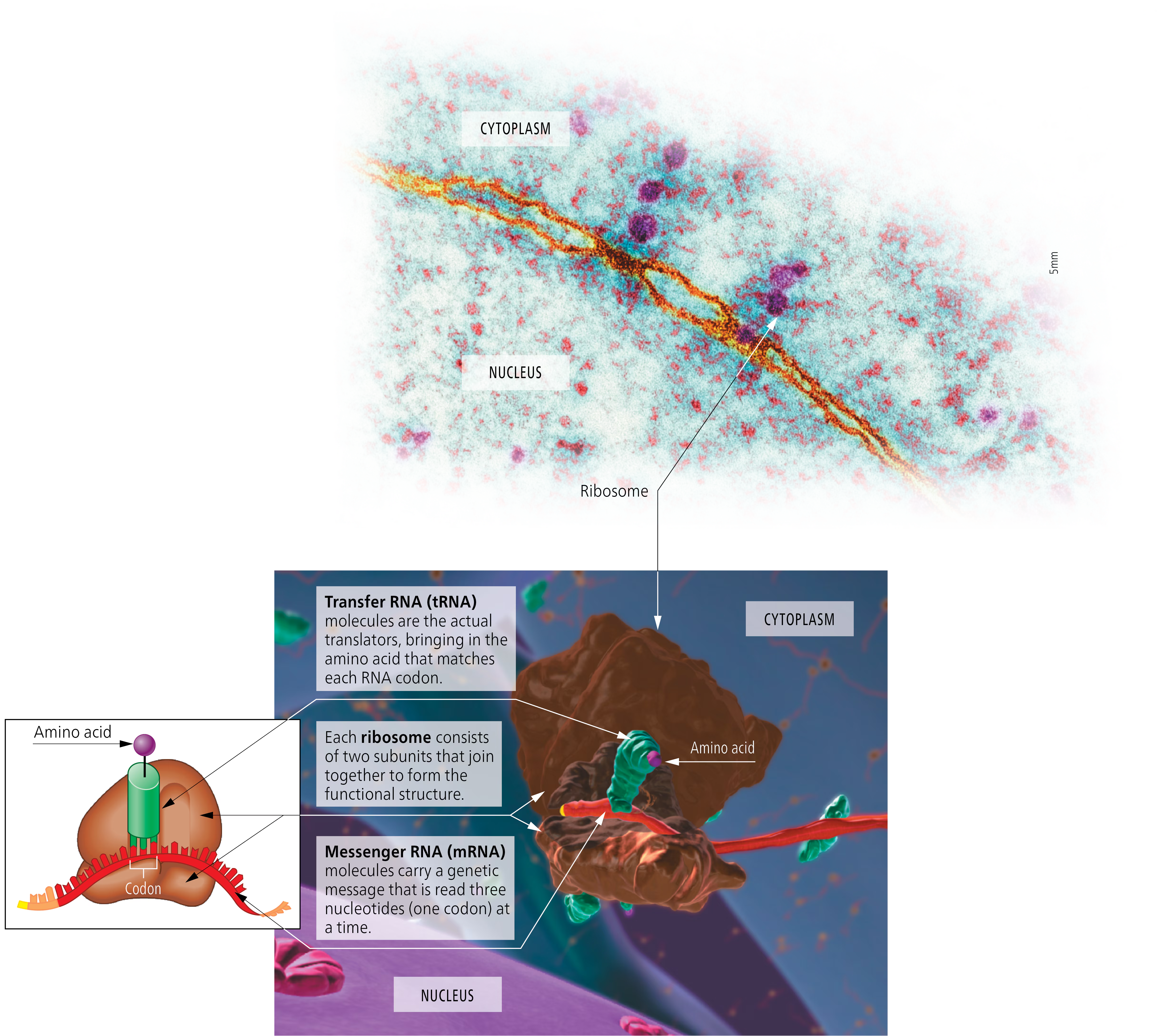
These molecules are the actual translators, bringing in the amino acid that matches each RNA codon
transfer RNA tRNA
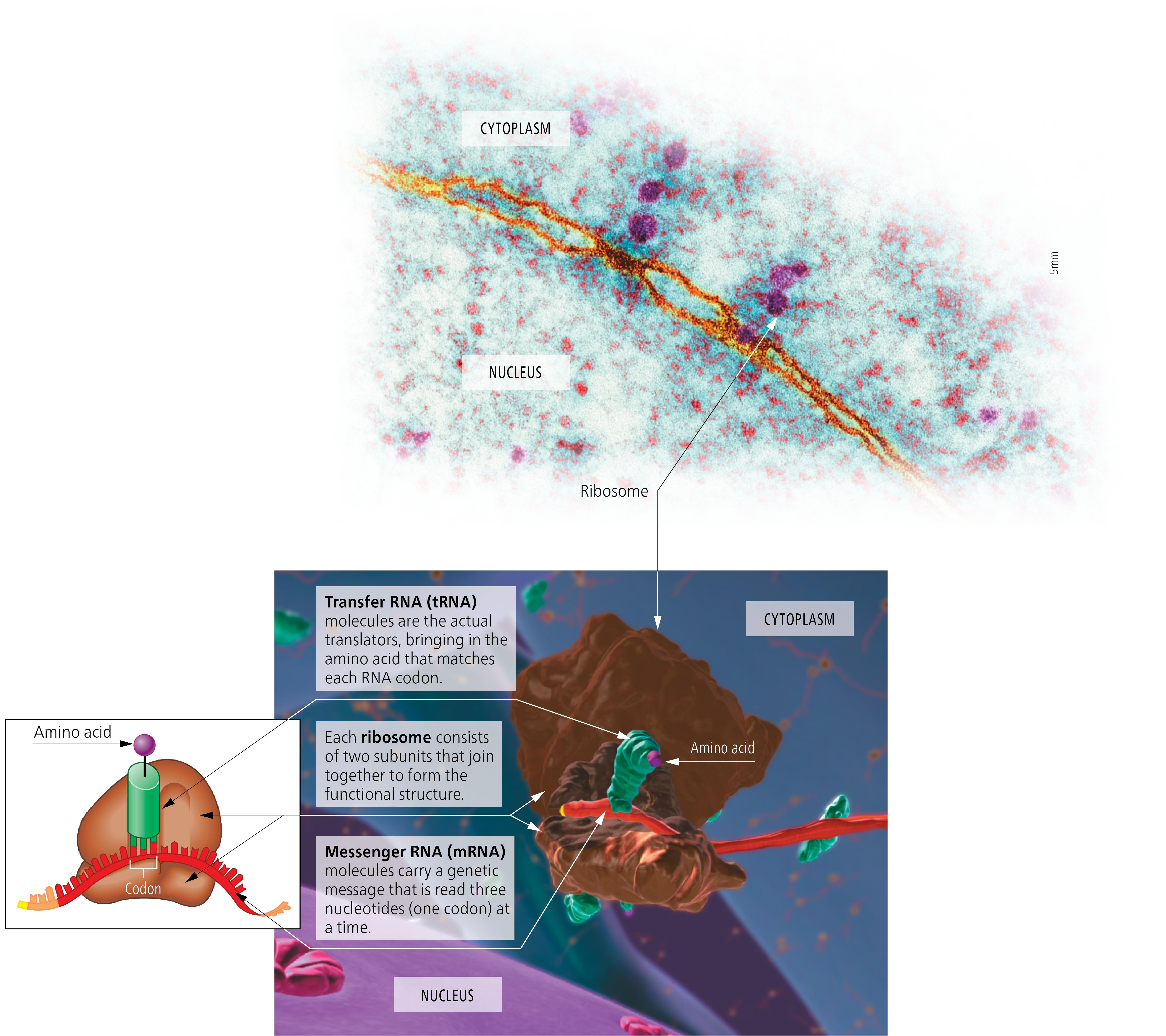
These molecules carry a genetic message that is read three nucleotides (one codon) at a time
mRNA
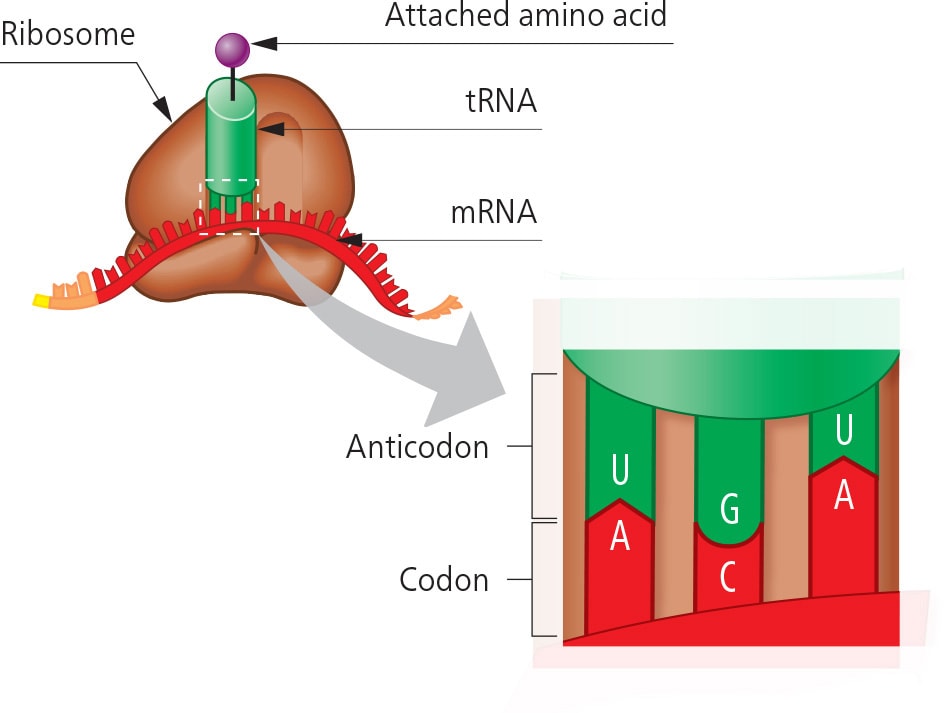
Within the cell, translation depends on molecules called _____. They can speak the language through a structure at one end called the _____. These bind to the codon of a messenger RNA via the RNA base pairing rules.
tRNA, anticodon
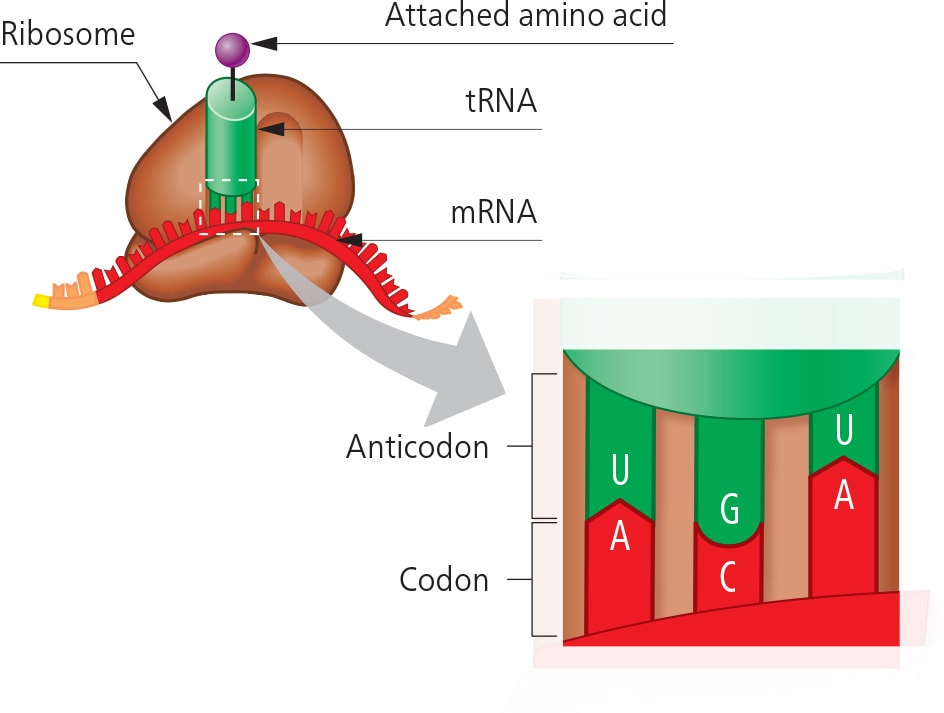
The transfer RNA comes preloaded with the amino acid that matches the RNA sequence in the ____
codon
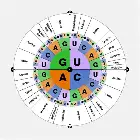
Genetic code
instructions contained in a gene that tell a cell to make a specific protein
AUG is a _____ codon. UAA, UAG, and UGA are ____ codons
start, stop
A set of three nucleotide long “words” that specify the amino acids for polypeptide chains is the ____ ____.
triplet code
The ribosome exists as two separate components, tRNA binds to mRNA and translation begins. A polypeptide bond grows as a result. This process is called?
initiation
The polypeptide grows longer and tRNA is replaced after every amino acid is created using the ribosome. This process is called?
elongation
Elongation continues until the ribosome reaches a stop codon on the mRNA. The completed polypeptide typically made from several hundreds of amino acids, and the mRNA is released. What is this process called?
termination
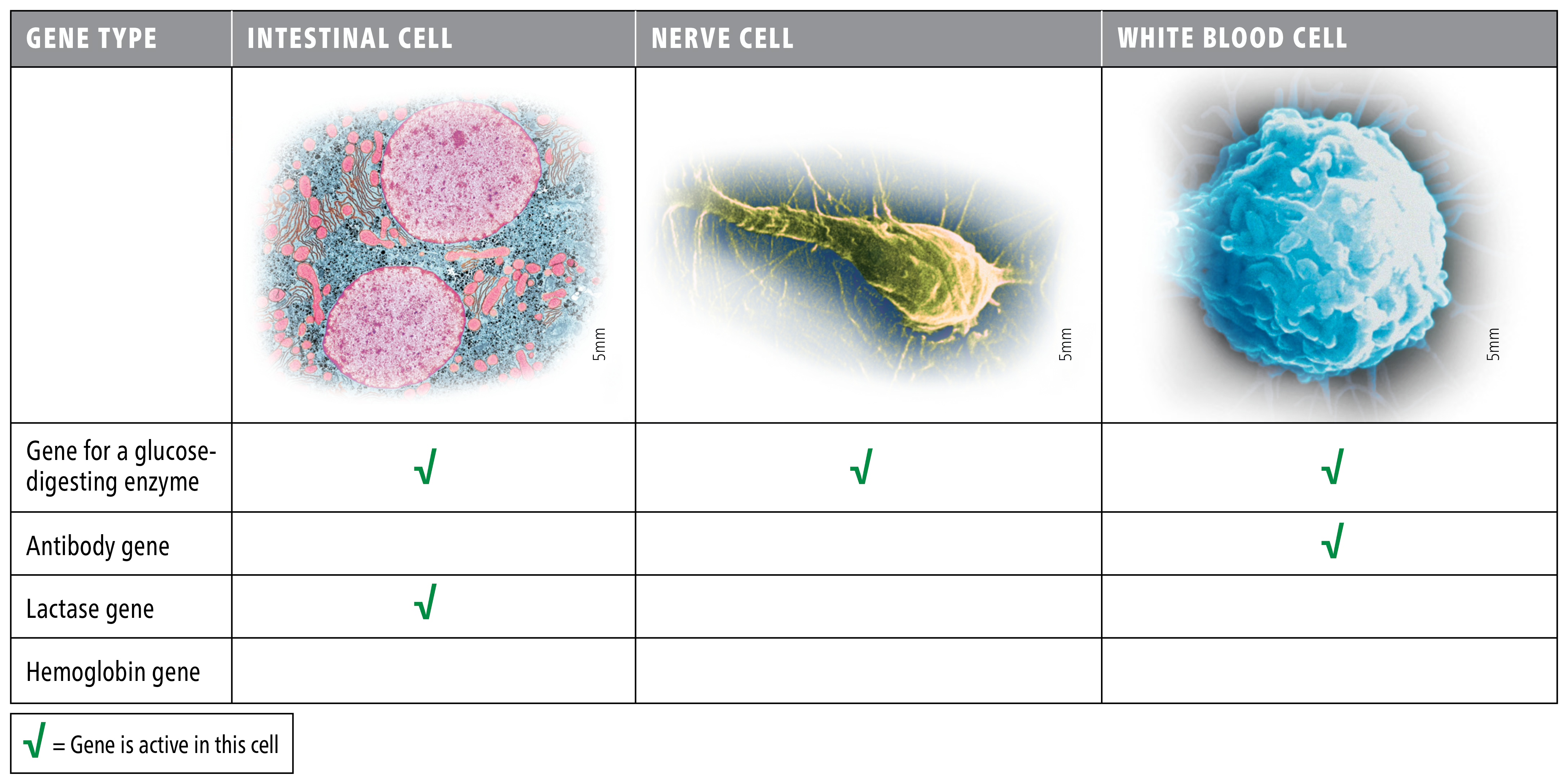
Gene regulation
mechanisms that turn on certain genes while keeping other genes turned off in a particular cell
Gene expression
the process whereby genetic information flows from genes to proteins; the flow from the genotype to the phenotype
Why does X chromosome inactivation happen?
it ensures that males (who only have one X chromosome) and females who have two, have the same number of active X genes.
The inactive X in each cell condenses into a compact object called a ____ ____.
barr body
What is a a small RNA molecule that binds to mRNA molecules and prevents them from producing protein called?
microRNAs
Transcription factors
a protein that binds to DNA and functions in initiating or regulating transcription
A series of relay molecules that convey the message from outside of the cell into the cell’s interior cytoplasm and eventually to the nucleus.
signal transduction pathway
This process called _______ involves frequent ____ to ____ signaling that helps the developing organism to properly form the correct organs/body
development, cell, cell
Induction
The mechanism of induction occurs when one group of cells influences the development of an adjacent group of cells.
For example, _______ signals can cause cells to change shape, to migrate, or even to destroy other cells, as in the removal of webbing in the developing ____
inductive, hand
In a developing embryo, ______ genes produce protein signals that turn groups of other genes on and off. They help establish the overall _____ of an organism.
homeotic, structure
Mutagens
physical or chemical factors in the environment that can damage DNA
Carcinogens
cancer-causing agents
Point mutation
the substitution of one DNA nucleotide for another, silent, missense, nonsense
Does not change the amino acid produced, because some amino acids are encoded by more than one RNA sequence, so the protein is unchanged
Cysteine - Cysteine
silent mutation
Substitutes one amino acid for another. This produces a mutant protein, which may be nearly identical or substantially different from the original.
Cysteine - Serine
missense mutation
Changes an amino acid codon to a stop codon. This will produce a shortened protein that is almost always defective.
ACT - UGA - STOP
nonsense mutation
Mutations that add nucleotides (called insertions) or remove nucleotides (called deletions) throw off the reading frame it is called a _____ _____
frameshift mutation

