Foundations of Neuroanatomy: Brain Structures, Imaging, and Functions
 Call Kai
 Learn
Learn Practice Test
 Spaced Repetition
 Match
Match Flashcards
 Knowt Play
1/81

There's no tags or description
Looks like no tags are added yet.
Name | Mastery | Learn | Test | Matching | Spaced | Call with Kai | Chat |
|---|
No analytics yet
Send a link to your students to track their progress
82 Terms
What is the primary function of the nervous system?
To serve as the communication system for the whole body
What are the three primary functions of the nervous system?
Receives sensory input from the external world and bodily sensation
Produces motor output (ex. the ability to walk, talk, scratch an itch)
Serves integrative function which occur in the association areas of the brain
What does the nervous system receive from the external world?
Sensory input
What type of output does the nervous system produce?
Motor output
Give an example of a motor output produced by the nervous system
The ability to walk, talk, or scratch an itch
What is the integrative function of the association areas of the brain?
They serve to integrate and process information from different sensory modalities
Who discovered the two hemispheres of the brain?
Paul Broca
What is the role of Wernicke’s area
It is responsible for language comprehension and is located in the left temporal lobe
What imaging modality uses x-ray beams to create a 3D image of the brain?
Computerized Tomography (CT)

What is a limitation of CT scans?
They cannot detect cellular and subcellular pathology
What imaging technique provides better resolution than CT?
Magnetic Resonance Imaging (MRI)

What does fMRI stand for and what is its advantage?
Functional Magnetic Resonance Imaging; it has a quicker scanning time for recording cognitive events
What is the primary purpose of Positron Emission Tomography (PET)?
To measure glucose metabolism in metabolically active brain tissue

What is the difference between SPECT and PET scans?
SPECT uses CT reconstruction to measure single photons and has lesser picture quality than PET
What does angiography highlight?
It highlights blood flow around the brain and can detect aneurysms

What are gyri and sulci?
Gyri are the bumps on the brain’s surface, while sulci are the grooves
What is the function of the central sulcus?
It separates the frontal and parietal lobes

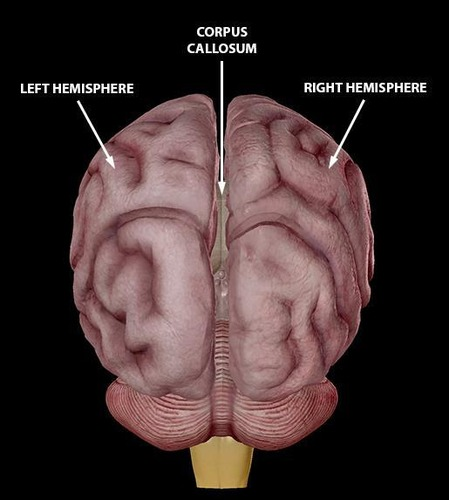
What is the role of the corpus callosum?
It connects the left and right hemispheres of the brain
What is the primary motor cortex also known as?
Pre-Central Gyrus
What does the post-central gyrus contain?
The primary sensory cortex
What is grey matter composed of?
Groups of cell bodies of neurons (somas)
What does white matter consist of?
Axons that send information away from the cell and are myelinated
What is Broca’s area responsible for?
Speech production
What is the primary function of the temporal lobe?
Auditory analysis
What is prosopagnosia?
A disorder of facial recognition resulting from temporal lobe damage
What is the arcuate fasciculus?
A bundle of fibers connecting Wernicke’s area to Broca’s area
What is the function of the parietal lobe?
It is important for sensation and integrates sensory information
What are the angular and supramarginal gyri responsible for?
Integrating sensory information including touch, pain, and temperature
What is the primary function of the occipital lobe?
Visual analysis
What are the secondary lobes of the brain?
Limbic lobe and insular lobe
What is the basal ganglia composed of?
Three parts; caudate nucleus, putamen, and globus pallidus
What role does the caudate nucleus play?
It aids in the storage of muscle memory sequences and provides feedback for accurate skilled movements
What is the function of the putamen?
It works with the caudate nucleus for motor planning, learning, preparation, and execution
What is the primary function of the association areas of the brain?
They serve an integrative function
What imaging modality uses x-ray beams to create 3D images?
Computerized Tomography (CT)
What is a key limitation of CT scans?
They cannot detect cellular and subcellular pathology
Which imaging technique provides better resolution than CT?
Magnetic Resonance Imaging (MRI)
What does PET stand for in brain imaging?
Positron Emission Tomography
What is the primary purpose of fMRI?
To record quick cognitive events with better resolution than PET
What does angiography highlight in the brain?
Blood flow around the brain
What separates the two cerebral hemispheres?
The longitudinal fissure
What is the function of the corpus callosum?
It connects the left and right hemispheres for communication
What is the function of white matter?
It consists of axons that send information away from the cell
Where is Broca’s area located?
In the inferior-posterior part of the frontal lobe
What connects Wernicke’s area to Broca’s area?
The arculate fasciculus
What is the primary sensory cortex located in?
The post-central gyrus of the parietal lobe
What is the primary role of the occipital lobe?
Visual analysis
What are the three parts of the basal ganglia?
Caudate nucleus, putamen, and globus pallidus
What is the function of the caudate nucleus?
Aids in the storage of the muscle memory sequences
What clinical condition is associated with the failure of the putamen?
Parkinson’s disease