CM12002 Boolean Logic
 Call Kai
 Learn
Learn Practice Test
 Spaced Repetition
 Match
Match Flashcards
 Knowt Play
1/53

There's no tags or description
Looks like no tags are added yet.
Name | Mastery | Learn | Test | Matching | Spaced | Call with Kai | Chat |
|---|
No analytics yet
Send a link to your students to track their progress
54 Terms
What are combinational logic circuits? [2]
Inputs are static (don’t change over time)
And deterministic (single output for each combination of inputs)
What are sequential logic circuits? [3]
Incorporate feedback from their outputs
Dynamic (changing over time)
Can be non-deterministic (several possible outputs for a given input)
What are the properties of AND? [5]
Associativity - (A.B).C = A.(B.C)
Commutativity - A.B = B.A
Identity - A.1 = A
Absorption - A.A = A
Annihilator - A.0 = 0
What are the properties of OR? [5]
Associativity - (A+B)+C = A+(B+C)
Commutativity - A+B = B+A
Identity - A+0 = A
Absorption - A+A = A
Annihilator - A+1 = 1
What is distributivity? [1]
A.(B+C) = A.B + A.C
What are the properties of NOT? [1]
Involutivity - A’’ = A
What are de Morgan’s Laws? [2]
(A.B)’ = A’+B’
(A+B)’ = A’.B’
What are the 2 basic techniques to determine if two formulas are equivalent? [2]
Equational reasoning
Semantic reasoning
What is equational reasoning? [1]
Using a series of known laws or axioms to go from one formula to the other by algebraic manipulation
What is semantic reasoning? [1]
Verifying that two formulas have the same output for each possible input combination (tabulated in a truth table)
What is the standard sum of products? [3]
Every Boolean expression is equivalent to a standard sum of products
A series of terms joined by OR operations
Each term contains a combination of ALL variables joined by AND operations
What are the 2 stages of simplification? [2]
Convert to standard sum of products
Find simplest form of formula (one with fewest logic gates)
What are Karnaugh maps? [2]
Method to simplify Boolean algebra expressions
Works well for up to 4 variables
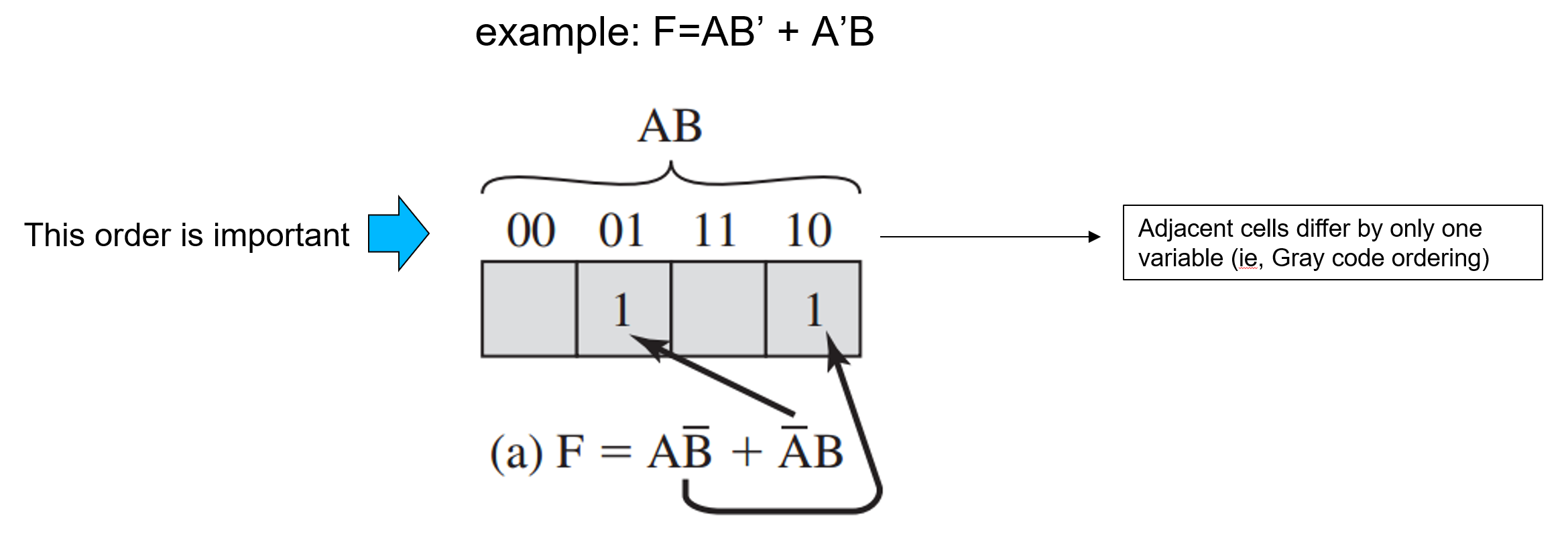
Uses Gray codes (adjacent cells differ by only one variable)
What does the Karnaugh map for 2 variables look like? [1]
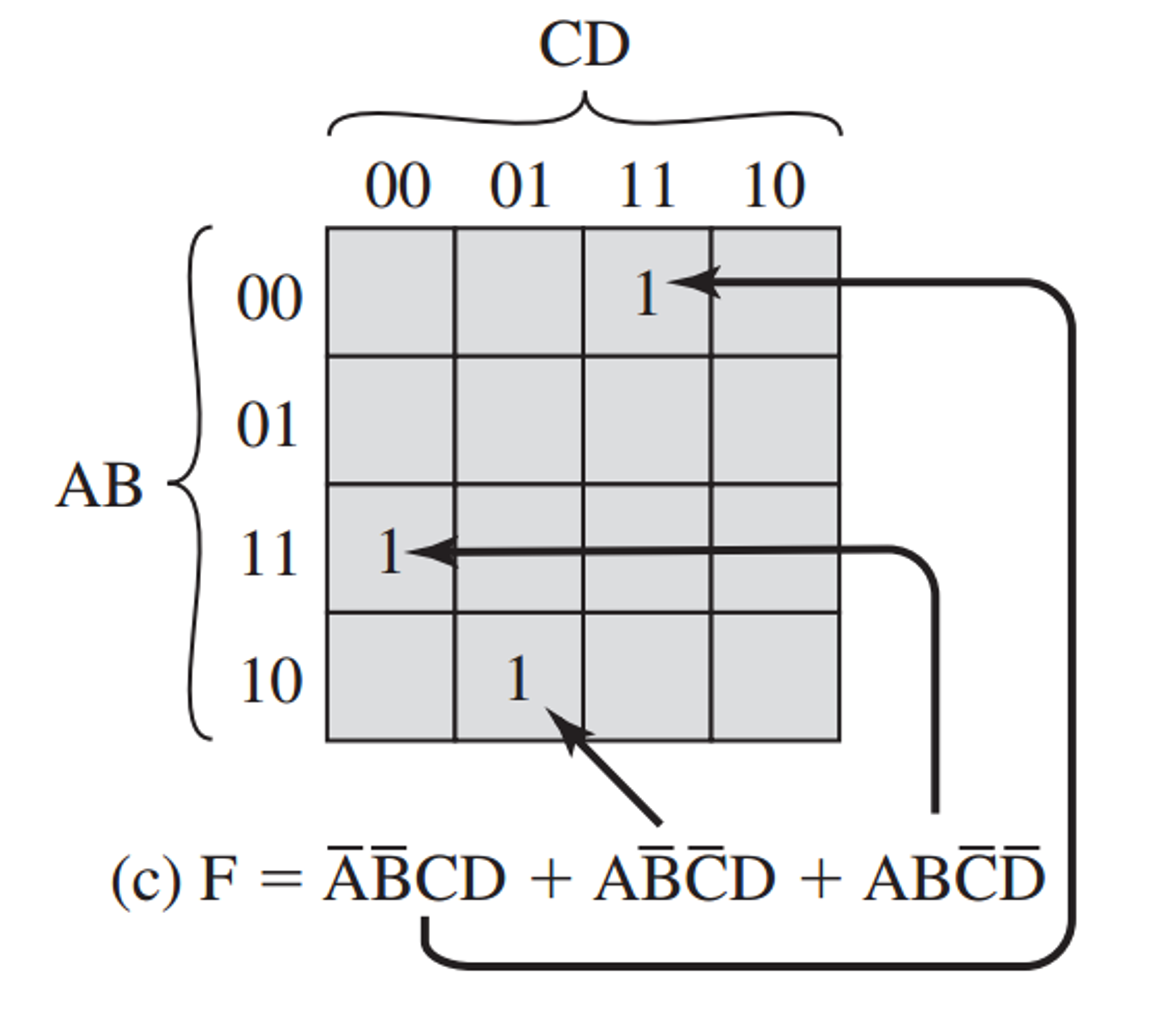
What does the Karnaugh map for 4 variables look like? [1]
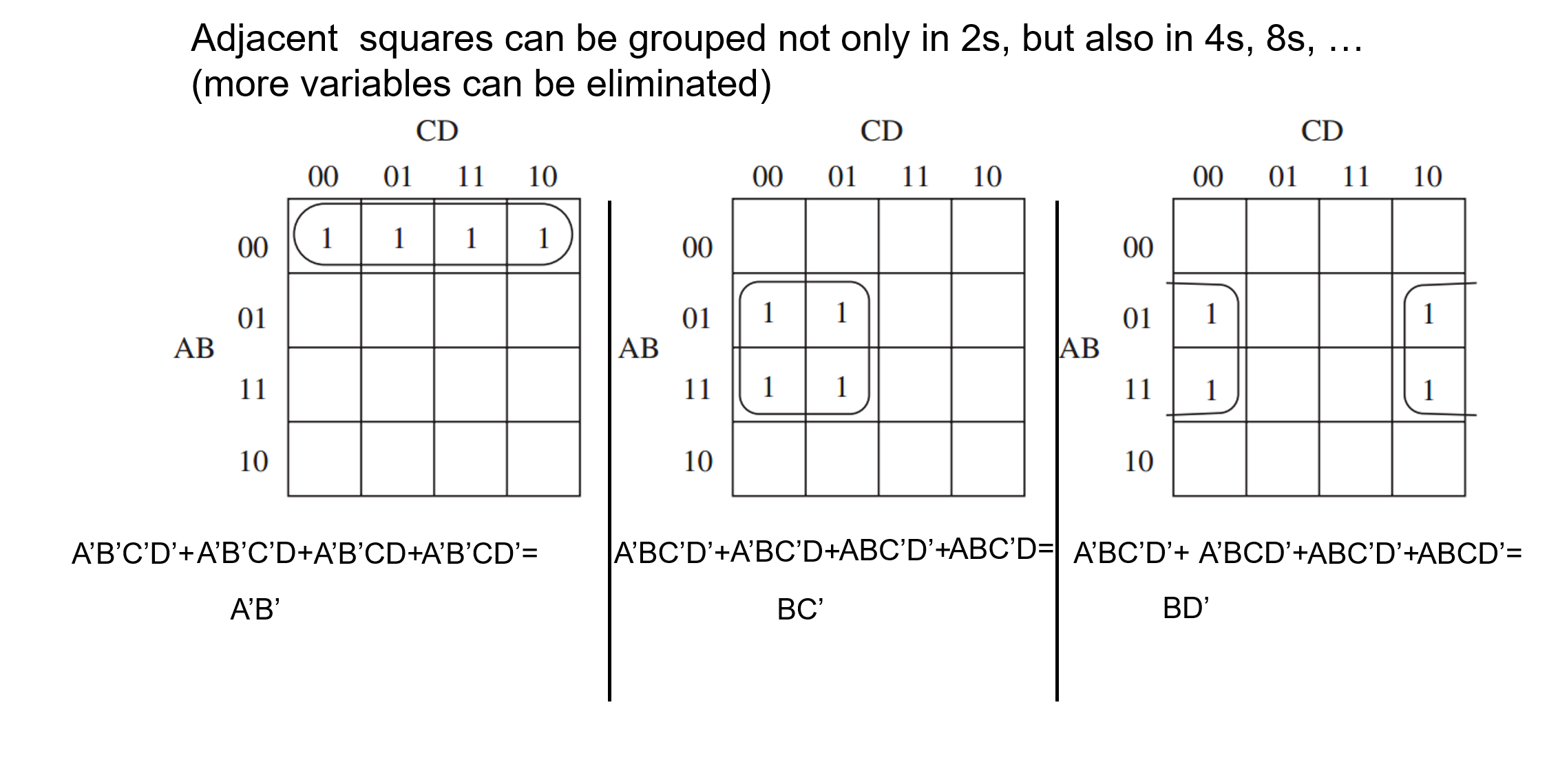
How are Karnaugh maps used for simplification? [2]
Adjacent squares grouped in even numbers
How do you simplify Boolean expressions? [4]
Standard sum of products
Plot on to Karnaugh maps
Find smallest number of biggest valid groupings
Read off the resulting function
What is Binary Coded Decimal (BCD)? [1]
Uses 4 bits to represent one decimal digit
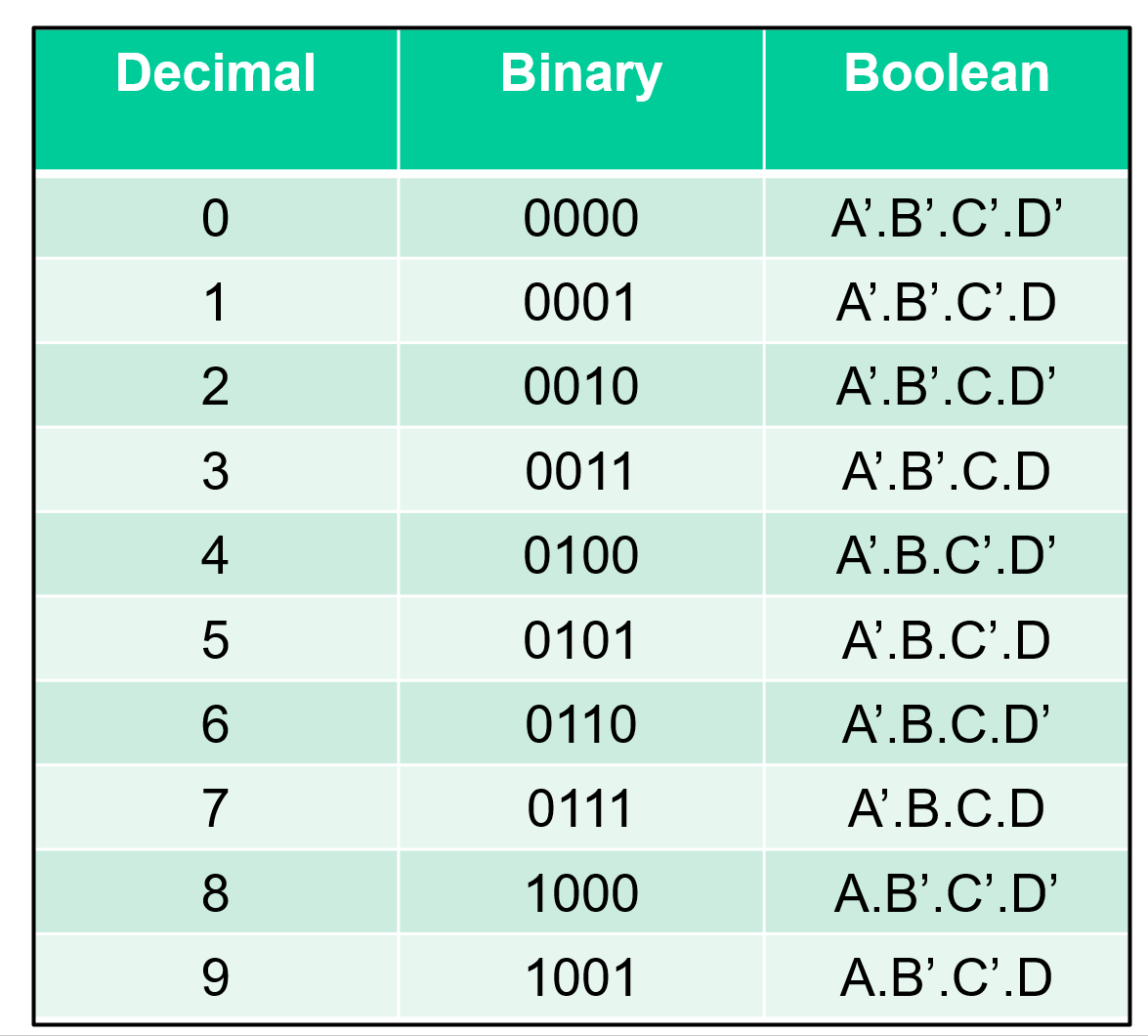
What are ‘don’t cares’? [2]
Inputs which cannot arise
Or we don’t need the outputs corresponding to them
e.g. 1010, 1111
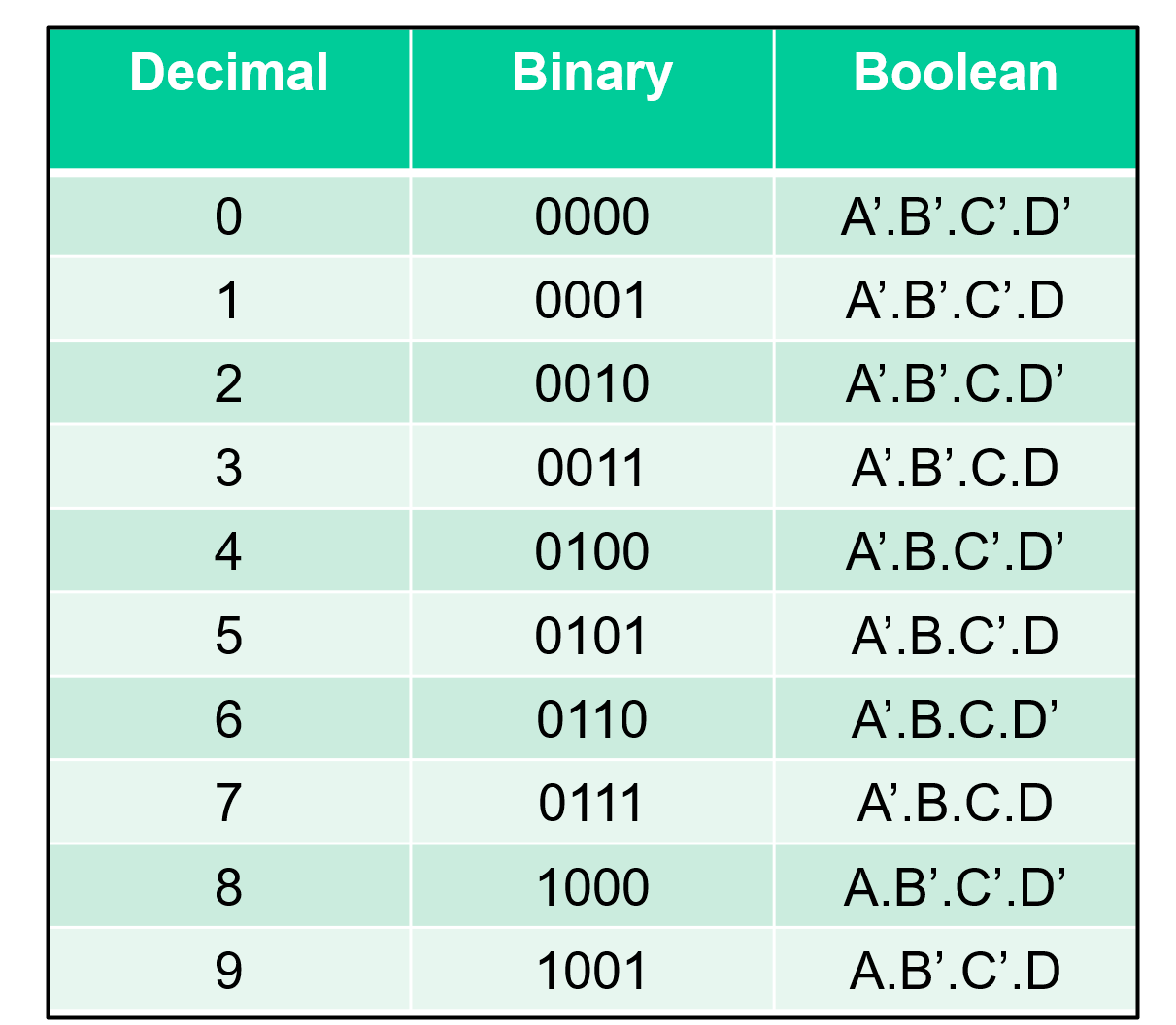
What are ‘don’t cares’ represented by? [1]
x
What would the truth table for BCD on a seven segment display look like? [2]
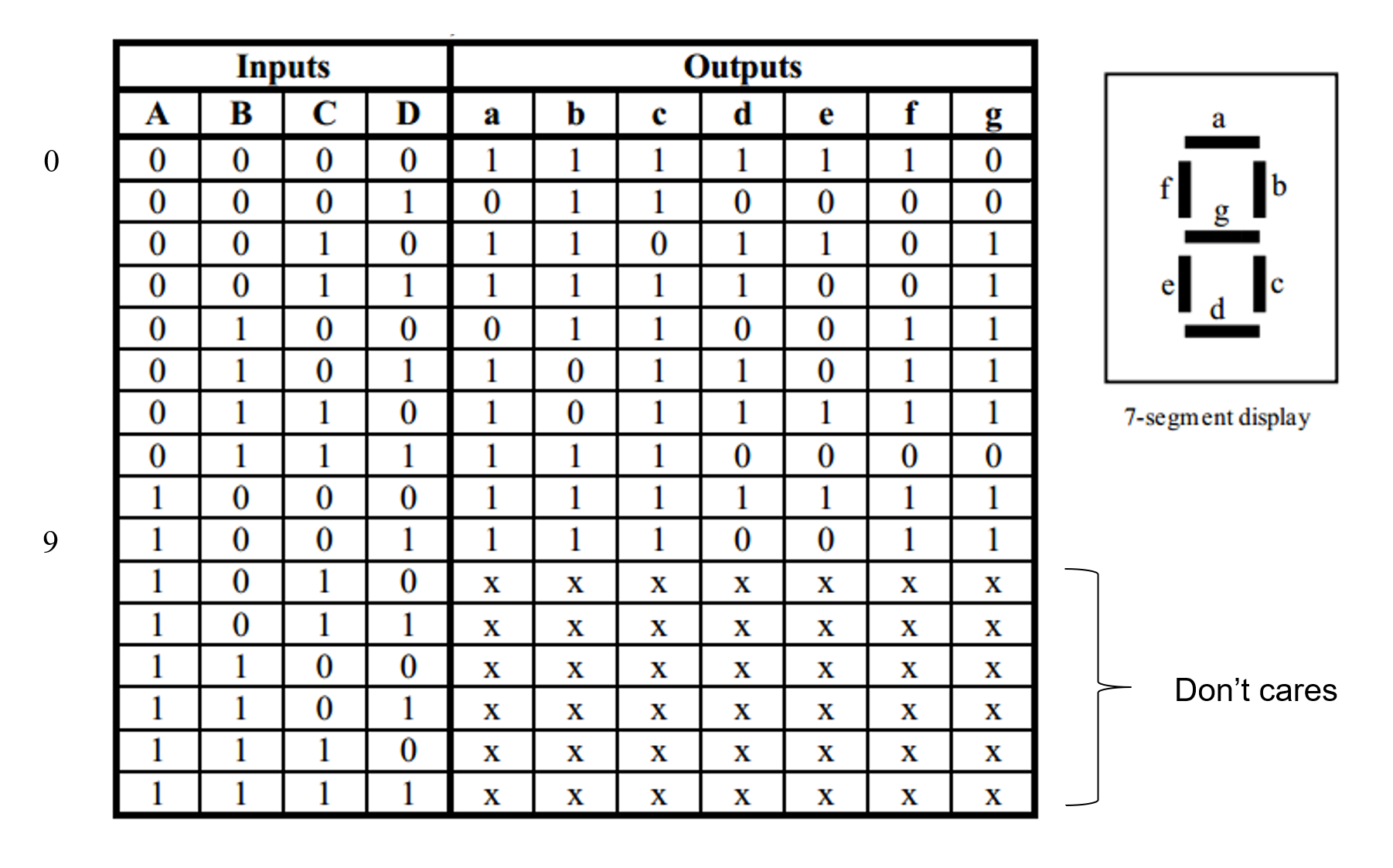
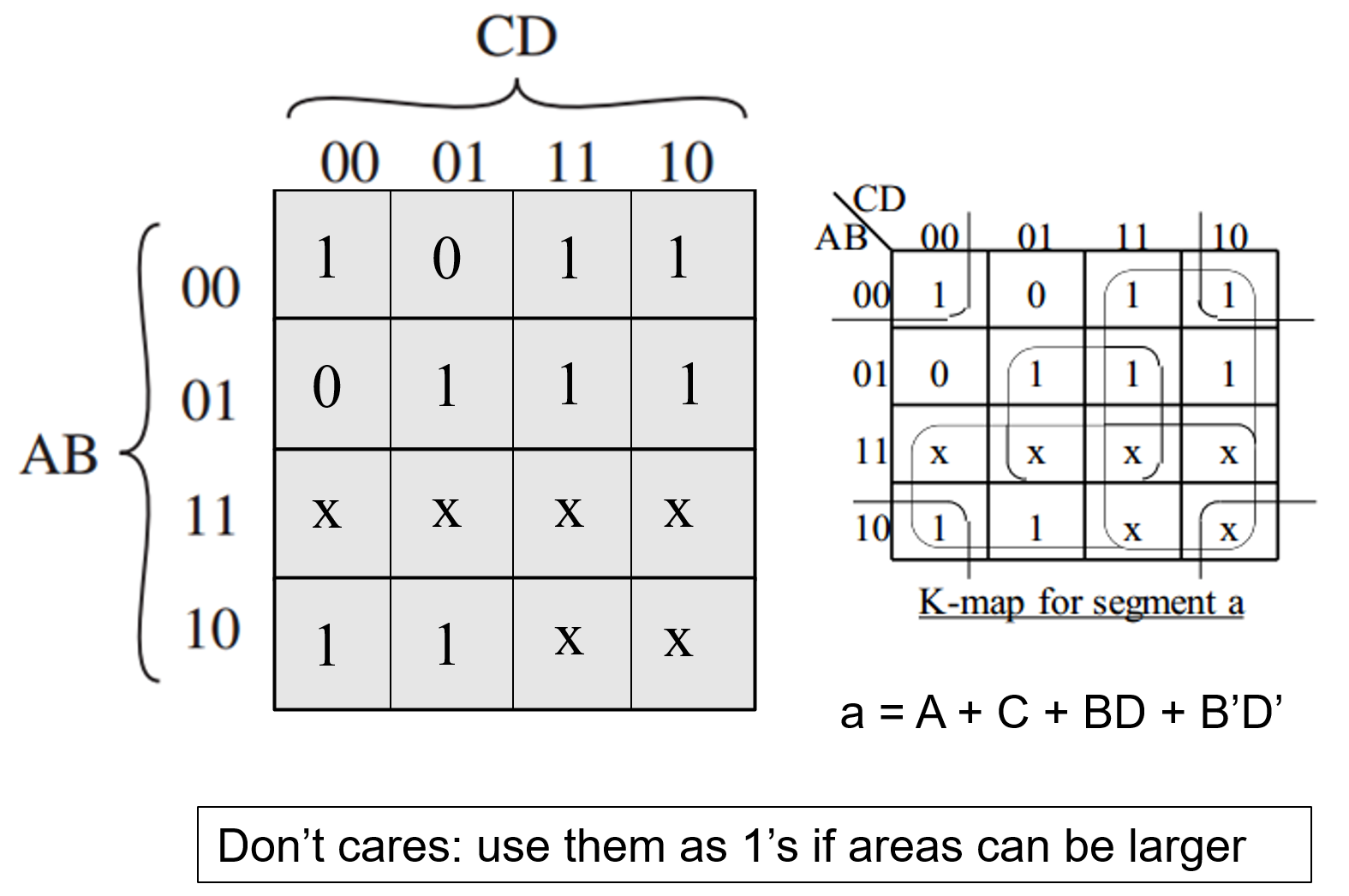
What would the Karnaugh map for the segment ‘a’ look like? [2]
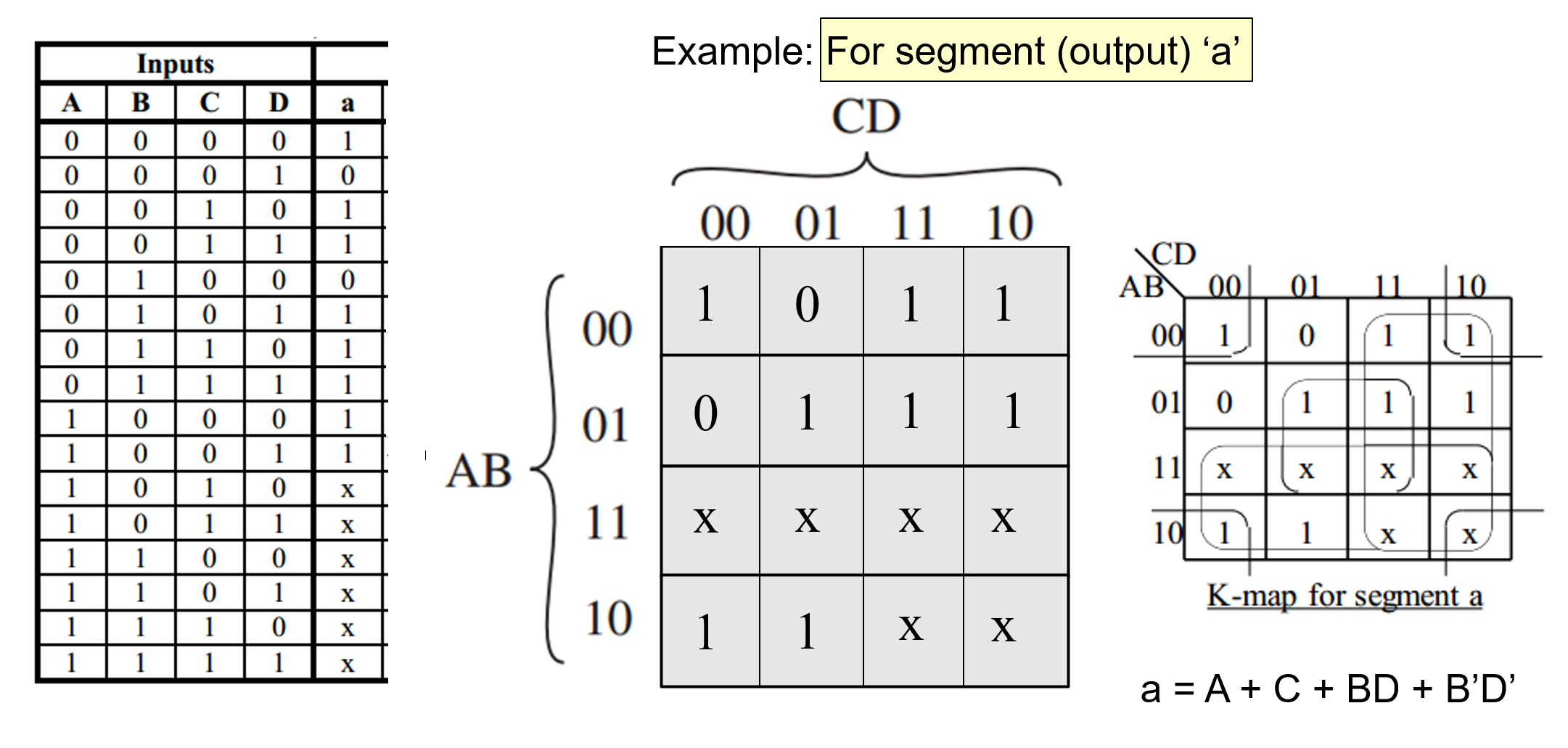
How do we use ‘don’t cares’ in simplification? [1]
Can be included in areas
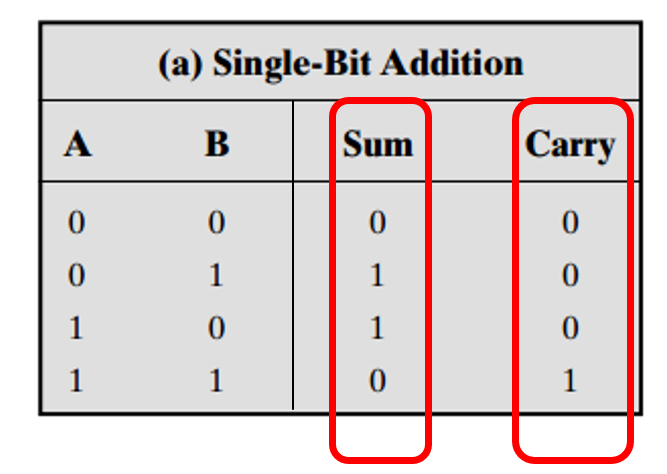
![<p>What is the truth table for a 1-bit half-adder? [2]</p>](https://assets.knowt.com/user-attachments/315e610b-7091-45c6-9b47-911ee358dd44.png)
What is the truth table for a 1-bit half-adder? [2]
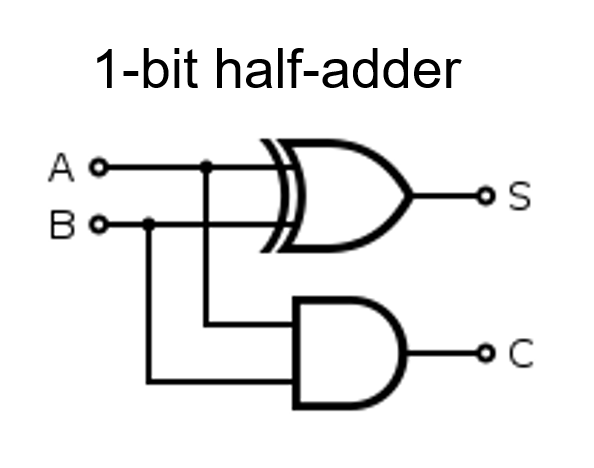
What is the circuit for a 1-bit half-adder? [2]
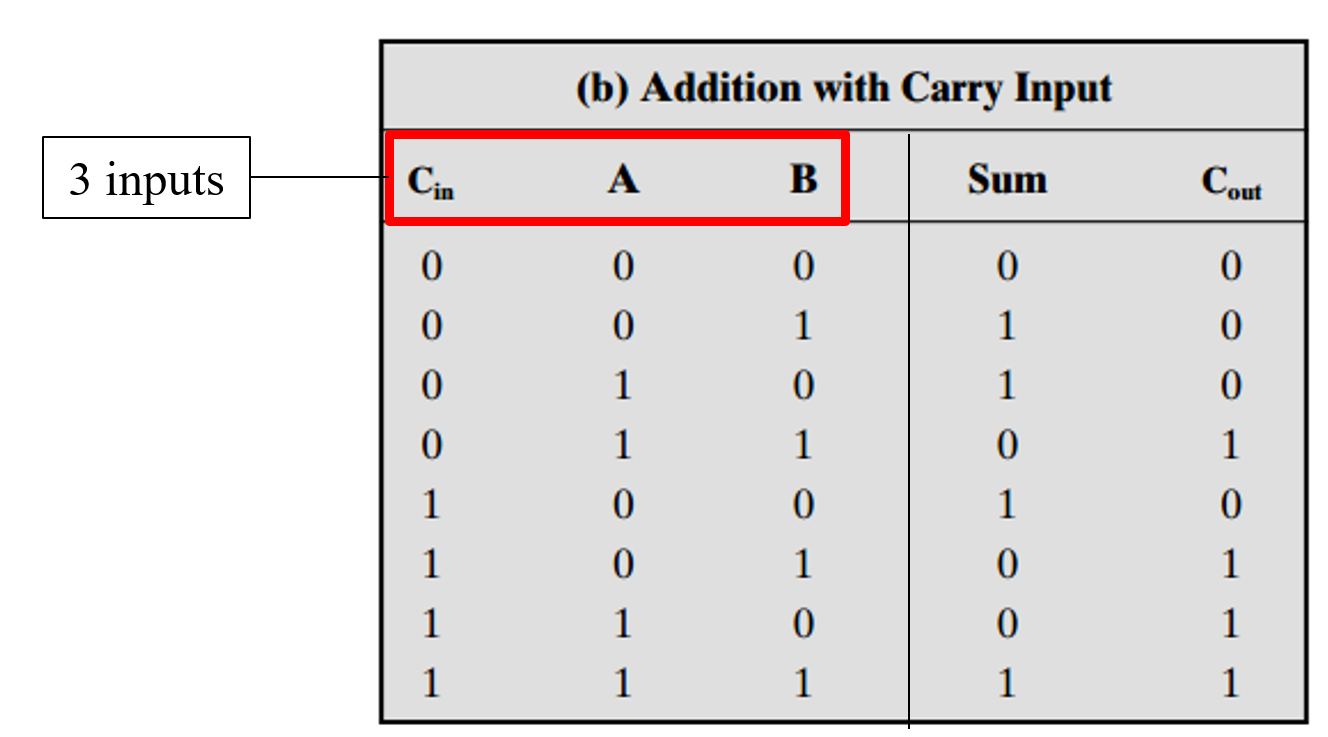
![<p>What is the truth table for a full-adder? [2]</p>](https://assets.knowt.com/user-attachments/7342ab05-4641-451f-9cf9-92062eaef16d.png)
What is the truth table for a full-adder? [2]
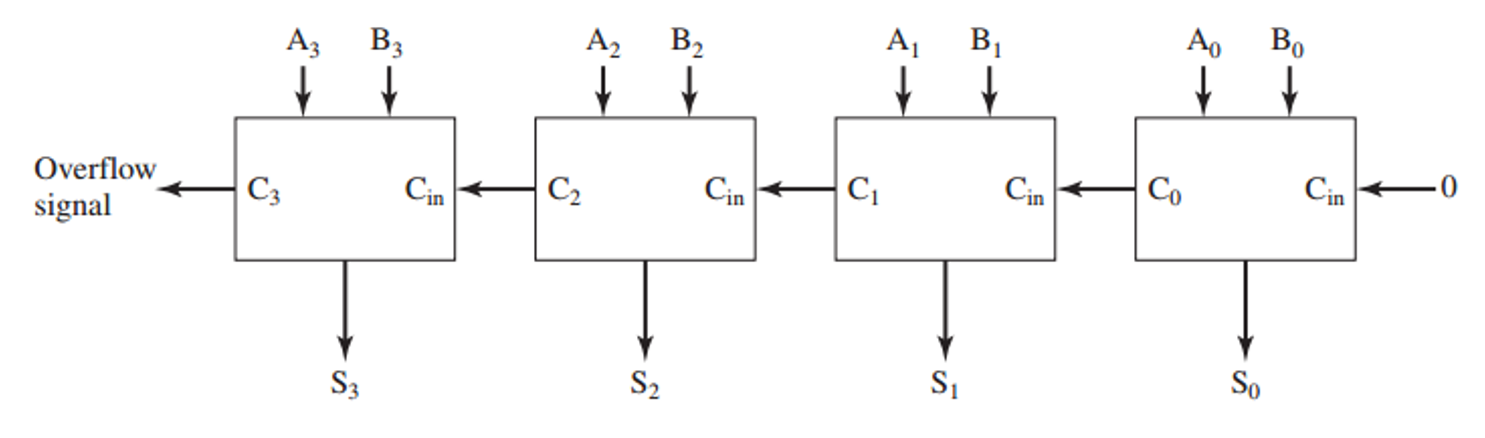
How are full-adders combined? [2]
Cout becomes Cin of the next adder
Joined in series
What is a guard bit? [2]
Hidden bit added to most significant end of integer
Detects overflow
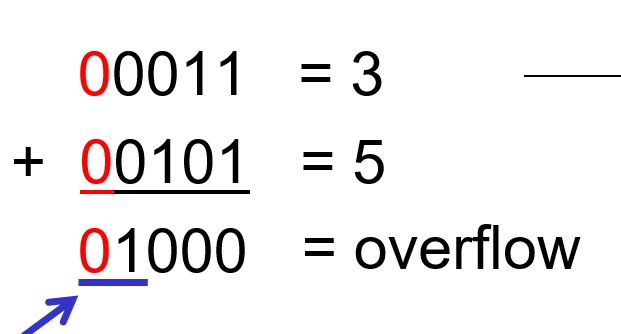
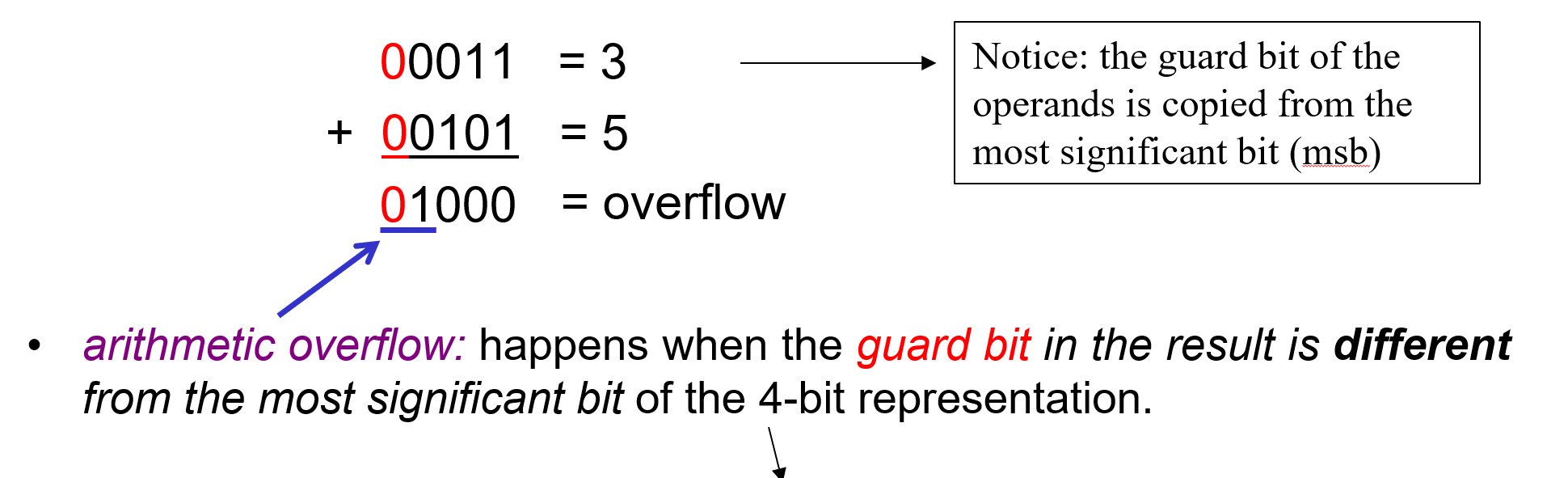
What is the value of the guard bit set to initially? [2]
The value of the most significant bit

What is arithmetic overflow? [1]
When the guard bit is different from the most significant bit in the result
How is a subtractor created? [3]
1’s complement using inverters
The 1 to be added becomes the first carry
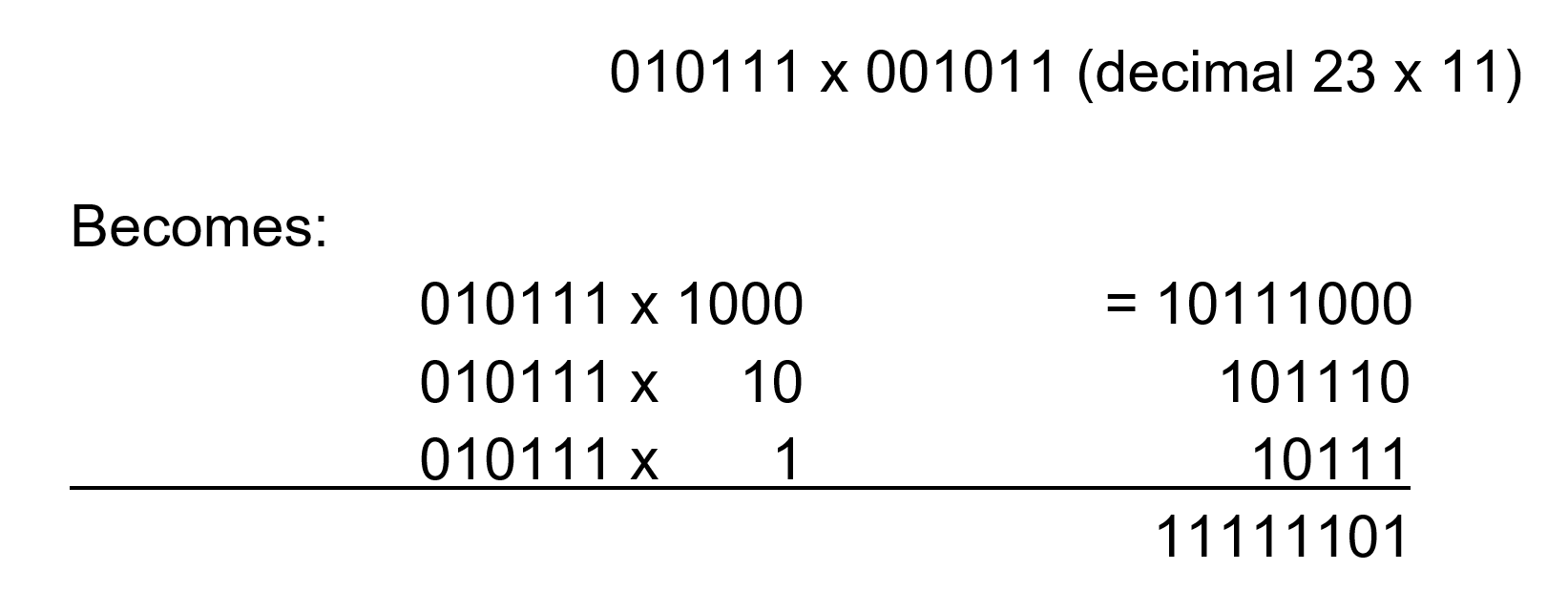
How do you multiply in binary? [1]
Use long multiplication then add
Multiplying shifts bits to the left
What is a logical shift? [2]
Bits moved out are lost
0s fill vacated positions
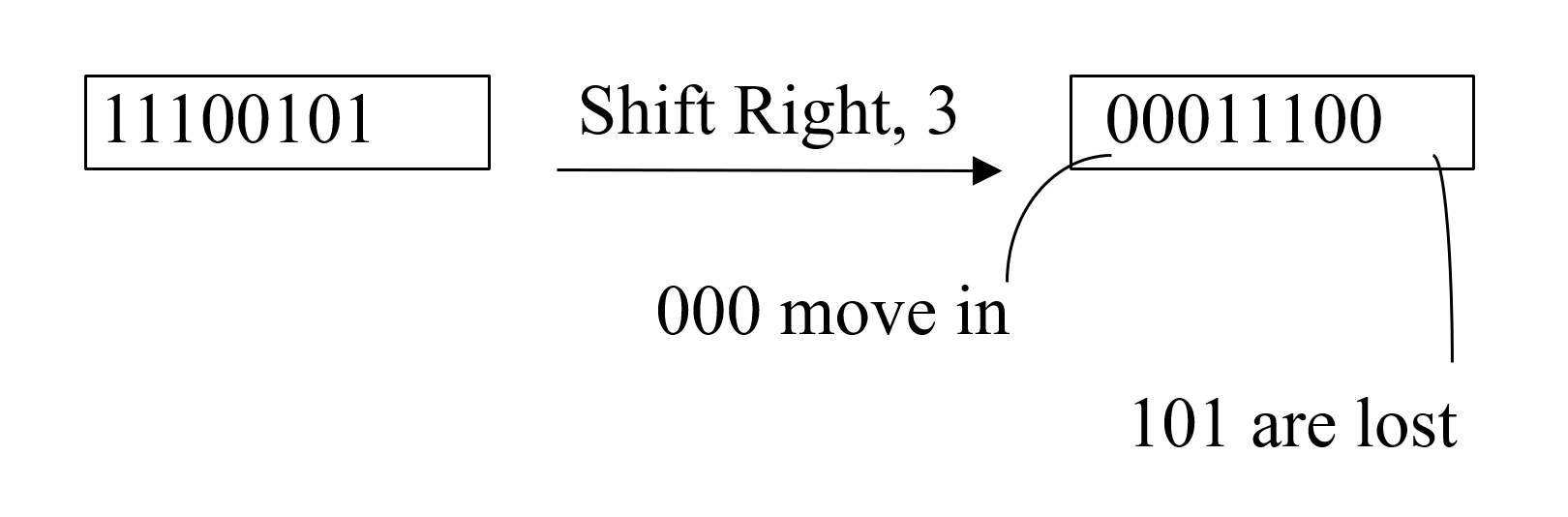
What does an n-place logical left shift represent? [2]
Multiplication by 2n on unsigned binary
Subject to overflow
What does an n-place logical right shift represent? [2]
Division by 2n on unsigned binary
With rounding (down)
What is an arithmetic right shift? [2]
Shift bits to the right
Copies of sign bit are copied into vacated positions

What does an n-place arithmetic right shift represent? [1]
Division by 2n on signed 2’s complement value
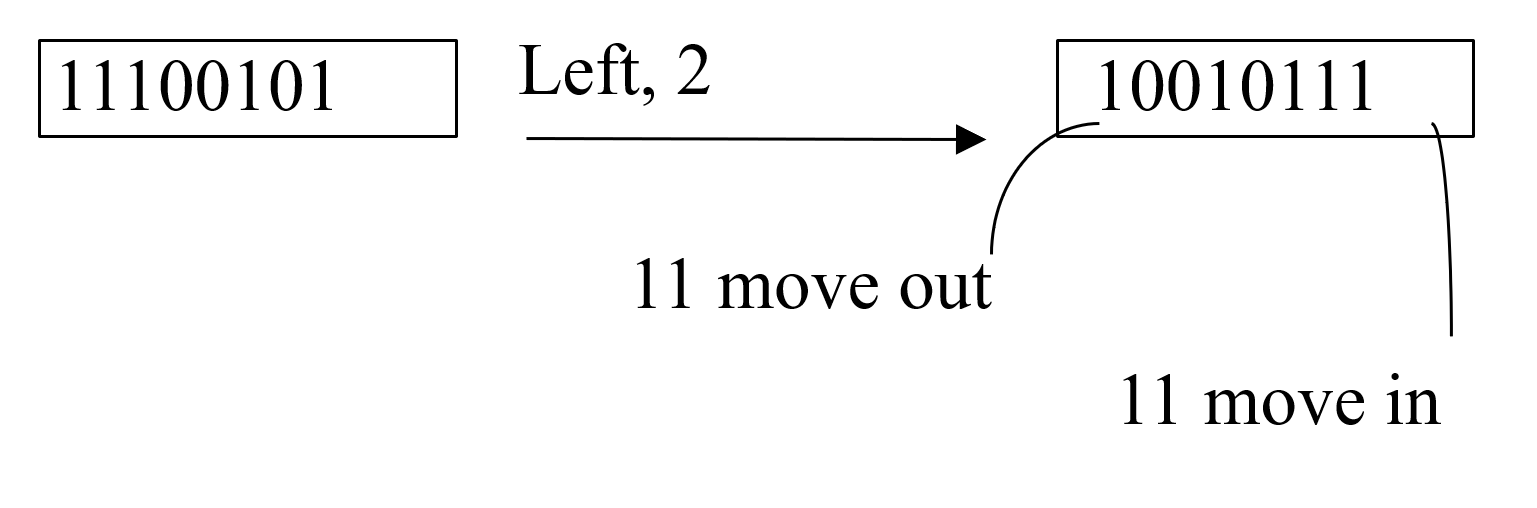
What is a circular shift? [1]
Bits moved out one end and moved in the other end
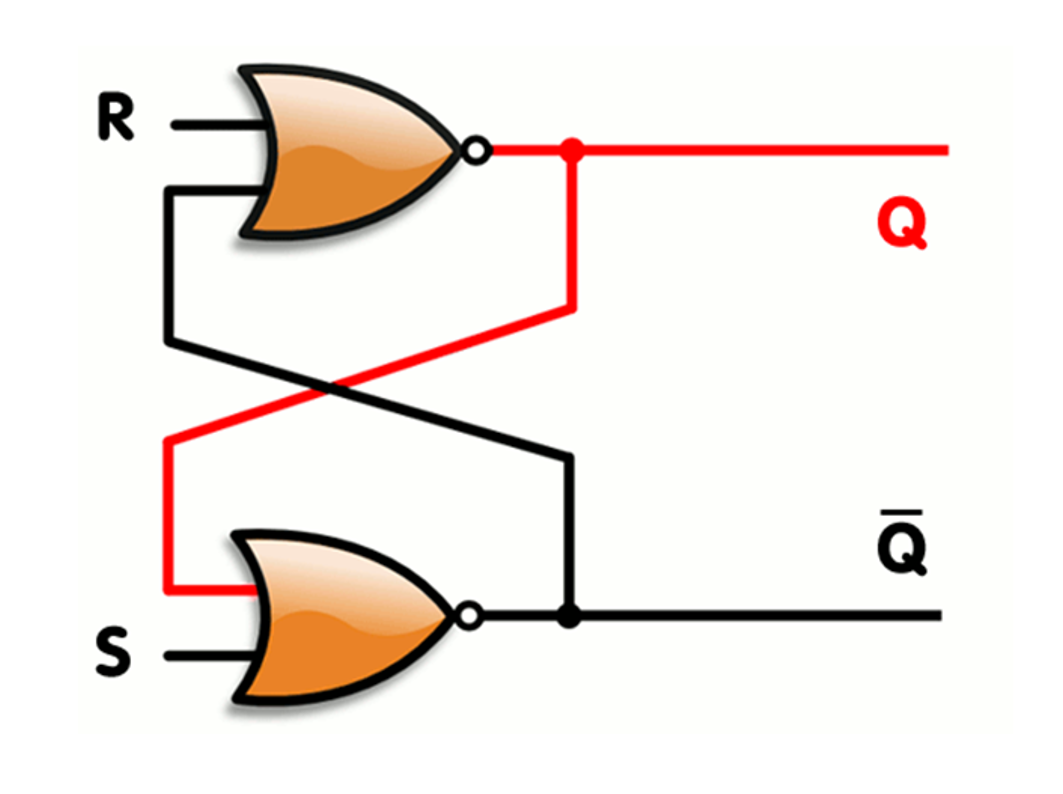
What is a SR latch? [2]
Set-reset latch
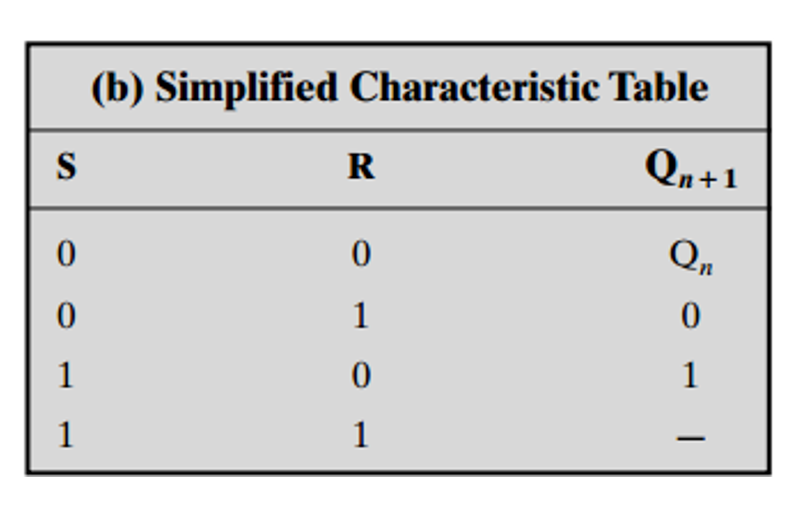
What is the simplified characteristic table for an SR latch? [1]
Why are SR latches asynchronous? [2]
There is delay before logic gate responds to input
Two separate gates cannot switch simultaneously
What is an inverted SR latch? [2]
Sets when S=0, resets when R=0
Can’t have S=R=0
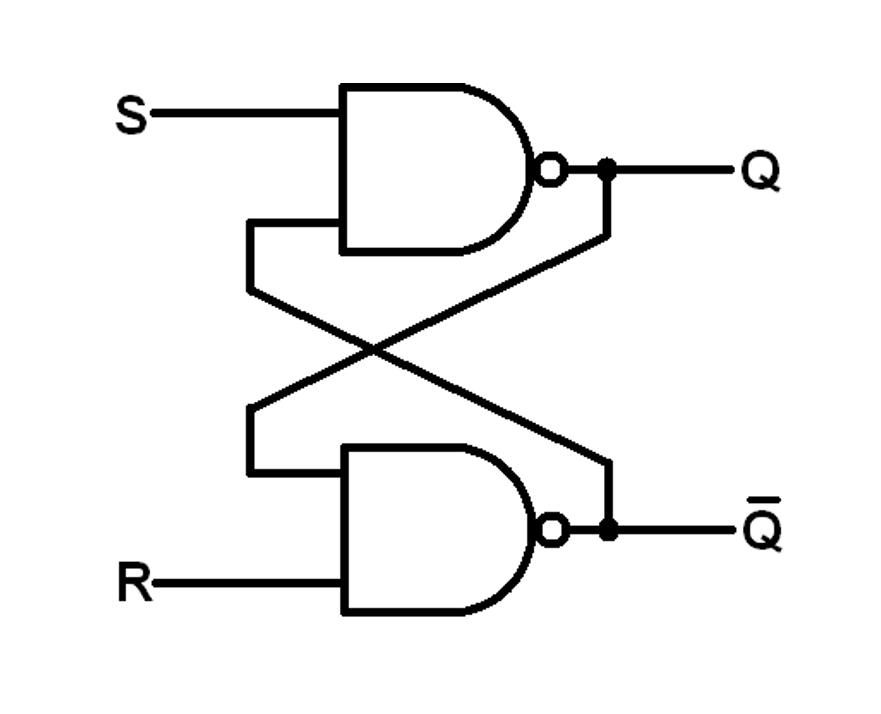
What is a solution to asynchronous transition? [2]
Use a clock input to enable / disable transitions
e.g. gated latch or flip-flop
What is a solution to non-deterministic transitions (e.g. S=R=1 on SR latch)? [1]
Avoid states by adding gates to control inputs
What is a SR flip-flop? [2]
Simple latch which responds only when clock signal is present
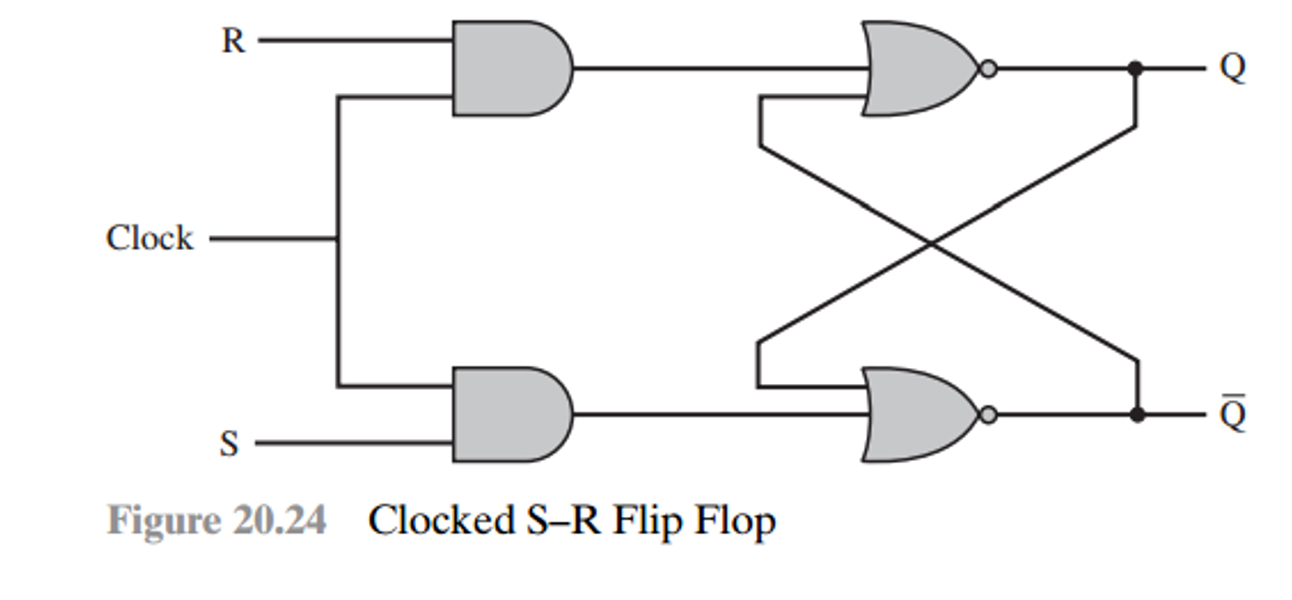
What is the truth table for a SR flip-flop? [1]
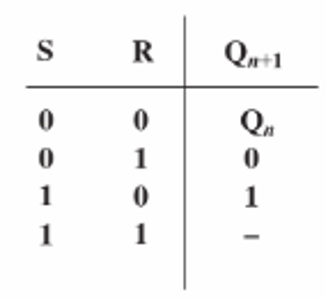
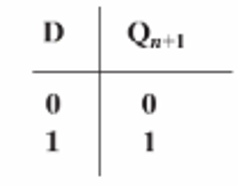
What is a D-type flip-flop? [2]
Ensures inputs are always different by using one input and an inverter
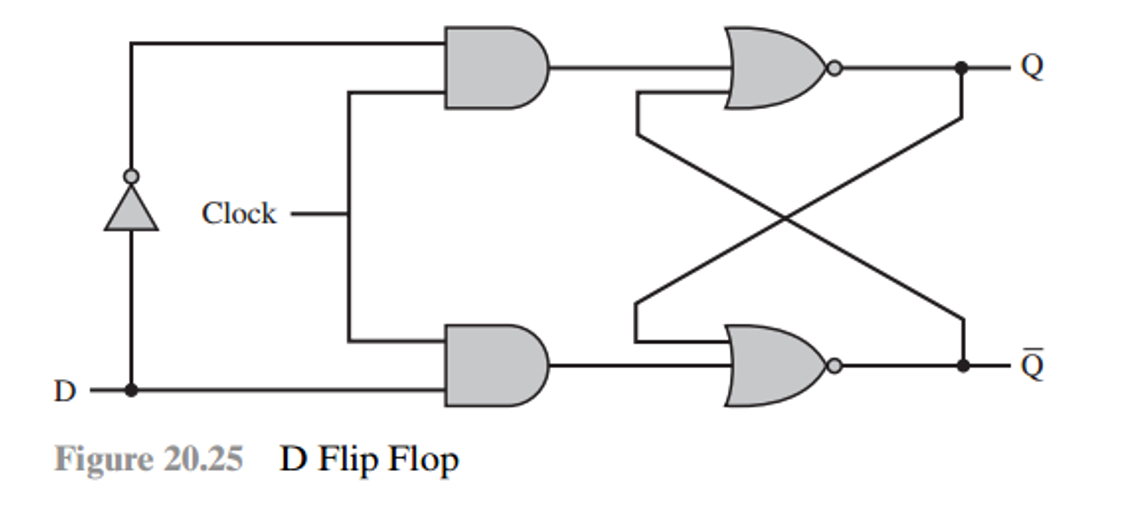
What does a D-type flip-flop act like? [1]
Storage of a bit
What is the truth table for a D-type flip-flop? [1]
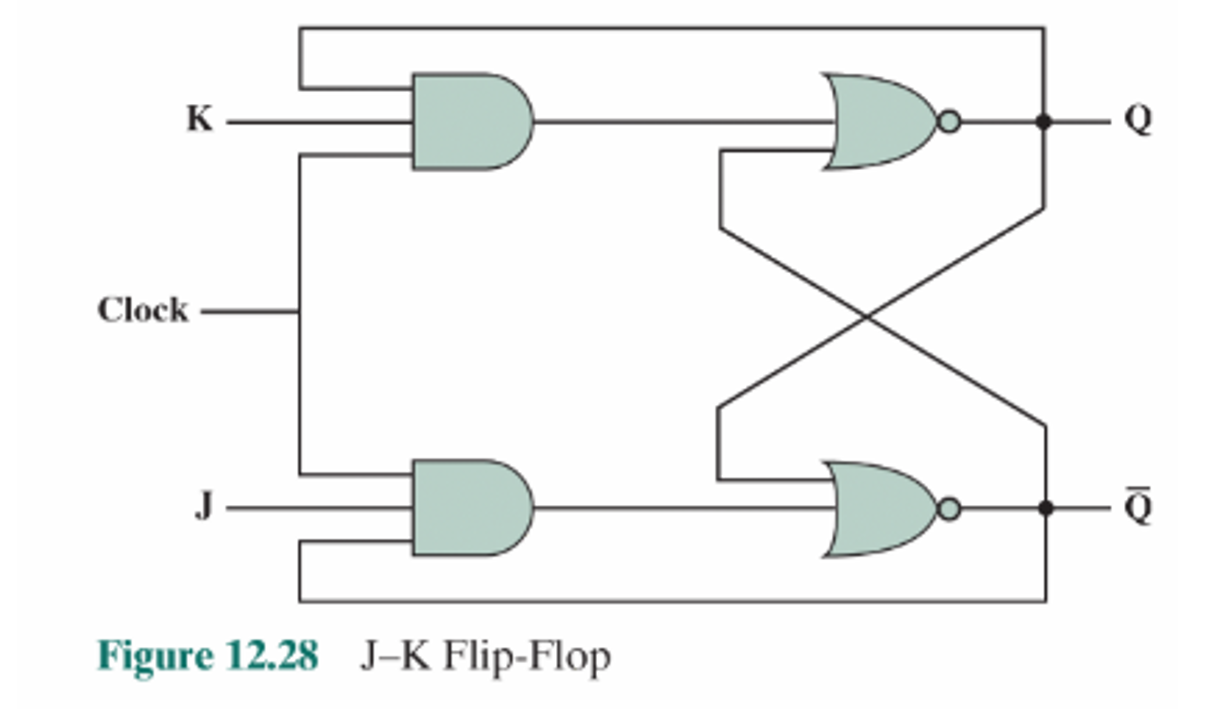
What is a J-K flip-flop? [1]
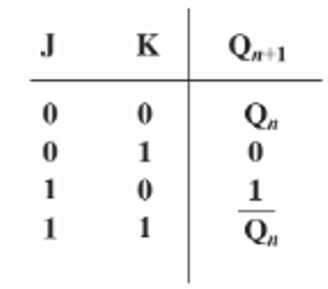
Makes use of the combination S=R=1
Used as a toggle (changes output state of flip-flop)
What is the truth table for a J-K flip-flop? [1]
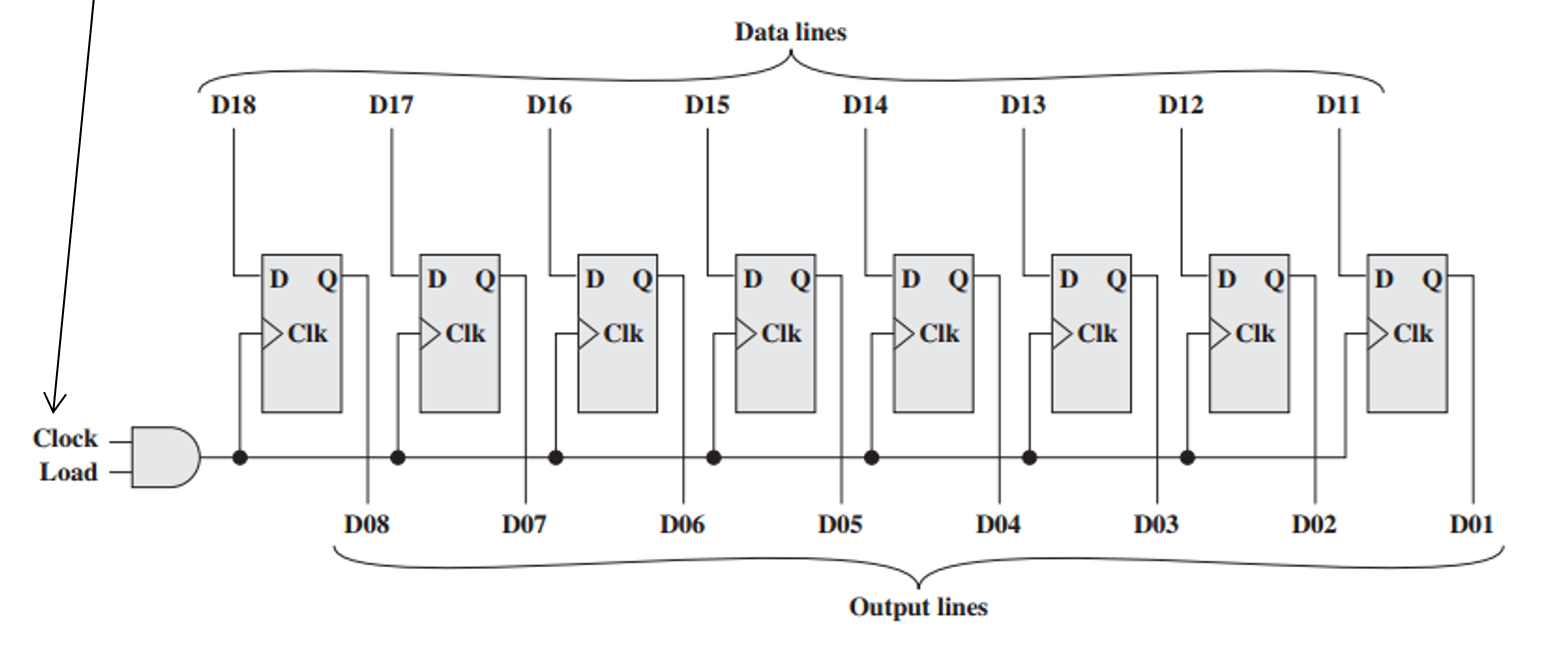
What is a parallel register? [3]
Lots of D-type flip-flops
Can be read or written from simultaneously using clock
Load is control signal
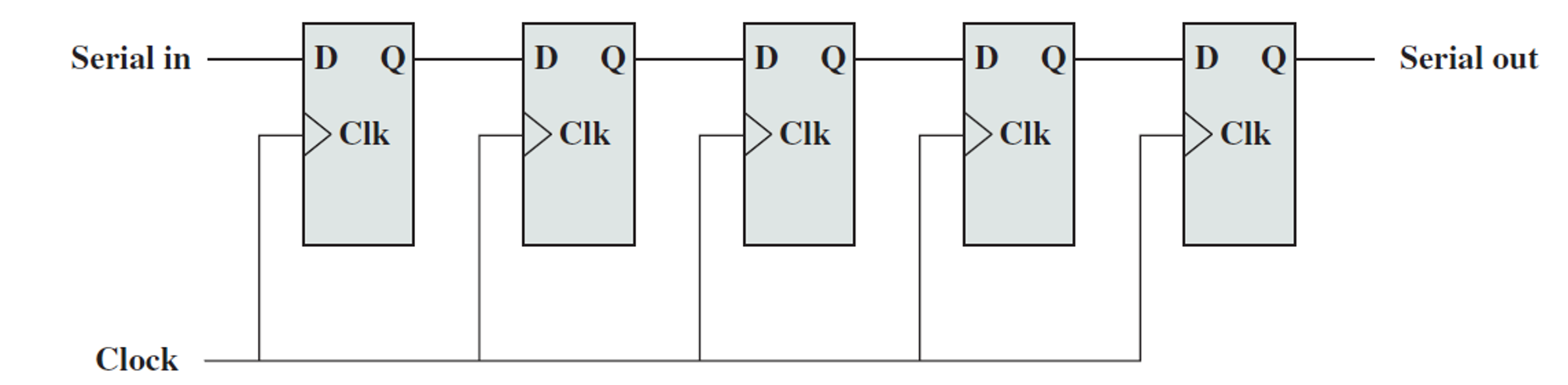
What is a shift register? [3]
Shifts bits
Transfers information serially
Output of one D-type flip-flop is input of another
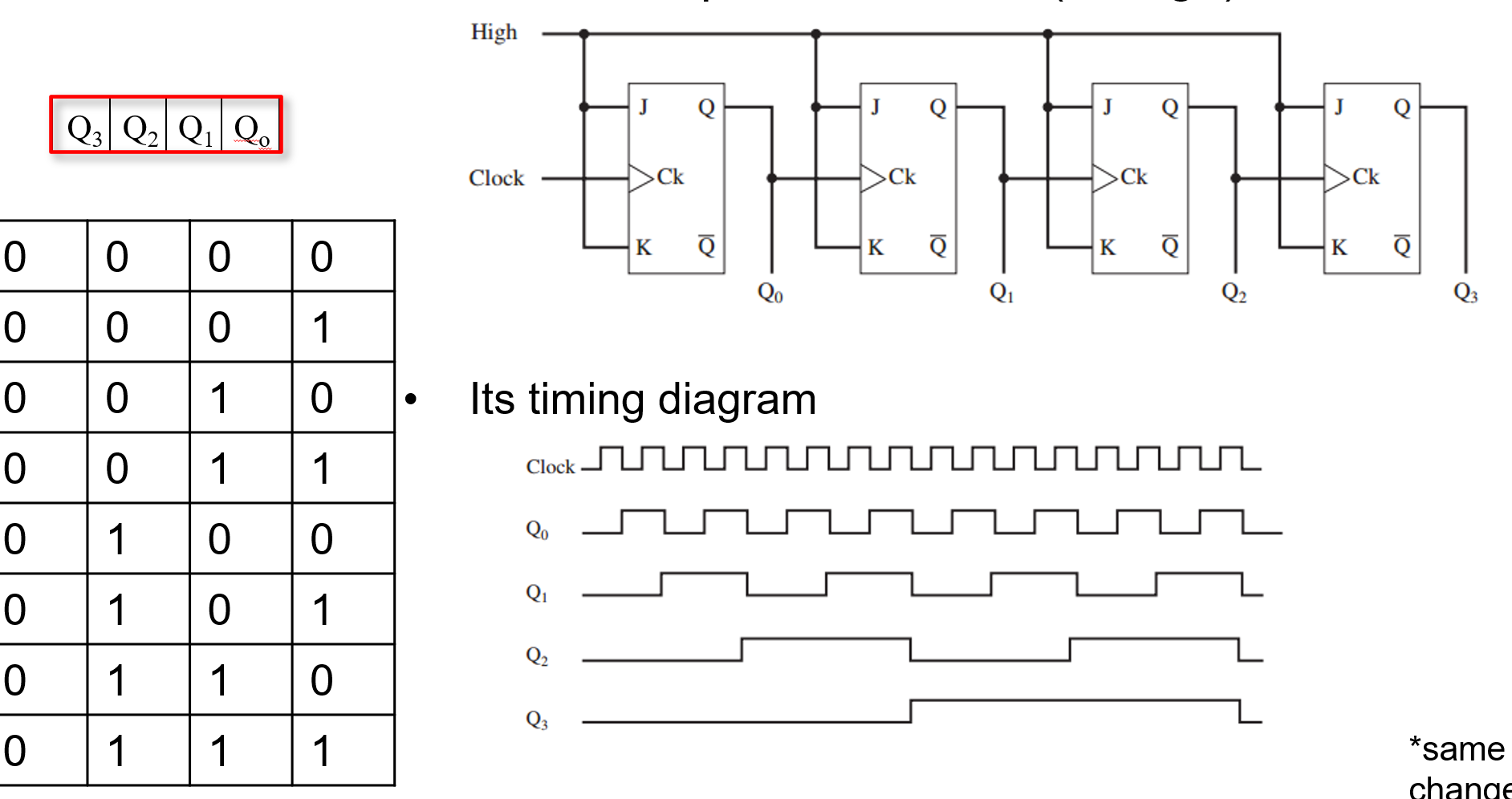
What is a ripple counter? [3]
Asynchronous
JK kept at constant high