Comprehensive Cell Biology: Structure, Function, and Types of Cells
 Call Kai
 Learn
Learn Practice Test
 Spaced Repetition
 Match
Match Flashcards
 Knowt Play
1/317

There's no tags or description
Looks like no tags are added yet.
Name | Mastery | Learn | Test | Matching | Spaced | Call with Kai | Chat |
|---|
No analytics yet
Send a link to your students to track their progress
318 Terms
What is the fundamental unit of life?
The cell
What are all living organisms made of?
Cells
What ability do cells have that allows them to produce identical copies?
The ability to grow and divide
What does cell biology examine?
Cell structure, function, and behavior
What are the two types of organisms based on cell number?
Unicellular and multicellular
What is a unicellular organism?
An organism made of a single cell
What is a multicellular organism?
An organism made of many cells organized into cooperative groups
What discovery was essential for the study of cells?
Advancements in microscopy
What did Robert Hooke observe in 1665?
Cork cells, which he named cellulae
Who is known as the father of microscopy and microbiology?
Anton van Leeuwenhoek
What did Leeuwenhoek discover using his microscopes?
Living microorganisms, which he referred to as 'animalcules'
What is the central dogma of molecular biology?
The flow of information from DNA to RNA to protein

What similarities do all living cells share?
They have similar basic chemistry and are composed of the same types of molecules
What is the significance of the 1830s in cell biology?
It marks the formal beginnings of cell biology
What did improvements in microscopy during the 19th and 20th centuries reveal?
Increasing levels of internal cellular detail
What type of cells are prokaryotes?
Cells without a nucleus, such as bacteria
What type of cells are eukaryotes?
Cells with a nucleus, such as plant and animal cells
What role do genes play in cells?
They provide instructions for cell form, function, and behavior
What did Hooke's book Micrographia contribute to science?
It initiated the field of microscopy

What is a colony of bacteria?
A group of bacteria living together, often functioning cooperatively
What is the significance of the zygote in multicellular organisms?
It is the single founder cell from which multicellular organisms develop
What is the basic chemistry shared by all living cells?
Cells are composed of the same sorts of molecules and participate in the same types of chemical reactions
What did early cell biologists do before modern tools?
They looked at tissues and cells, attempting to view their contents
What is the importance of studying cells?
It provides a deeper understanding of tissues and whole organisms
What did Leeuwenhoek describe in his report to the Royal Society?
His observations of moving living 'animalcules' and other microorganisms
What are the three generalizations of cell theory established by the mid-19th century?
1. All organisms are composed of one or more cells. 2. The cell is the basic structural and functional unit of all living organisms. 3. All cells arise only from pre-existing cells.
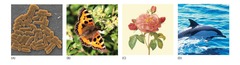
Who are credited with developing the original cell theory?
Theodor Schwann and Matthias Jakob Schleiden.
What significant addition to cell theory did Rudolf Virchow make in 1855?
He stated that 'Omnis cellula e cellula', meaning all cells arise only from pre-existing cells.
What is the modern cell theory's first addition?
DNA is passed between cells during cell division.
What does the second addition to modern cell theory state?
The cells of all organisms within a similar species are mostly the same, both structurally and chemically.
What is the third addition to modern cell theory?
Energy flow (metabolism and biochemistry) occurs within cells.
What does the fourth addition to modern cell theory indicate?
The activity of an organism depends on the total activity of independent cells.
What are the shared characteristics of all cells?
Cells carry out essential processes of life, contain organized systems of molecules, and respond to changes in their environment.
What are the four main types of biomolecules found in all cells?
1. Proteins 2. Nucleic acids 3. Carbohydrates 4. Plasma membrane.
What distinguishes unicellular organisms from multicellular organisms?
Unicellular organisms perform all life functions with one cell, while multicellular organisms have specialized cells that divide tasks.
What are the two fundamental types of cells based on morphology?
Eukaryotes (with membrane-bound nucleus) and Prokaryotes (without membrane-bound nucleus).
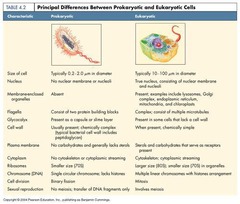
What domains do prokaryotic organisms belong to?
Bacteria and Archaea.
What domain do eukaryotic organisms belong to?
Eukarya.
What is the role of the nucleoid region in prokaryotic cells?
It contains the genetic material but has no boundary membrane.
What is a key feature of eukaryotic cells?
They have a true nucleus separated from the cytoplasm by membranes.
What techniques enabled the study of cell structure and physiology?
Optical and electron microscopy, cell fractionation, and biochemical analyses.
How did early microscopes contribute to cell biology?
They allowed for the discovery and early study of cells using visible light.
What advancements in microscopy improved cell imaging?
Phase contrast, fluorescence, and electron microscopy.
What is cell fractionation?
A technique that separates cell components and organelles using differential centrifugation.
What is the purpose of biochemical analyses in cell biology?
To study biochemical pathways, enzyme functions, and specific cellular components.
What is cell culture?
The process of growing cells and cell lines outside of a living organism for controlled experimentation.
What is the typical size range of cells?
From about 0.3μm (bacteria) to a few hundred micrometers (plant cells).
What are the three important parameters in microscopy?
Magnification, resolution, and contrast.
What is magnification?
The process of enlarging something only in appearance, not in physical size.
What does optical magnification measure?
The ratio between the apparent size of an object and its true size.
What is resolution in microscopy?
The ability of a microscope to distinguish details of a specimen, defined by the minimum distance that two points can be separated and still be seen as distinct.
What primarily affects the resolution of a microscope?
The wavelength of light or electrons used to illuminate the specimen.
What is the maximum resolution of a standard light microscope?
About 0.2 micrometers (μm) or 200 nanometers (nm).
How does the resolution of modern electron microscopes compare to light microscopes?
Electron microscopes can theoretically achieve a resolution of about 0.1 nm, significantly better than light microscopes.
What is the size range of most cells?
Between 1 and 100 micrometers (μm) in diameter.
What is the relationship between cell size and surface area-to-volume ratio?
As cell size increases, the surface area-to-volume ratio decreases, making exchanges of materials less efficient.
What limits cell size?
The surface area-to-volume ratio limits the efficiency of material exchange between a cell and its environment.
How do prokaryotic cells manage efficient exchange of materials?
Their small size allows for quick diffusion of ions and organic molecules throughout the cell.
What adaptations do eukaryotic cells have for transport?
Eukaryotic cells have developed structural adaptations like organelles and increased surface area to enhance intracellular transport.
What is the plasma membrane?
A bilayer made of phospholipids that separates the interior of the cell from the outside environment.

What is the function of transport protein channels in the plasma membrane?
They allow selected substances to penetrate the cell membrane, maintaining specialized internal environments.
What happens to the surface area-to-volume ratio as a cell grows?
The ratio decreases, making it harder for the cell to efficiently exchange materials.
What is one way cells circumvent the limitations of size?
By folding their surface into projections like microvilli to increase surface area without significantly increasing volume.
What is the significance of the plasma membrane being selectively permeable?
It allows for the selective transport of ions and water-soluble molecules, essential for maintaining cellular life.
Why do larger organisms not have larger cells than smaller organisms?
Larger organisms have more cells rather than larger cells.
What is the relationship between cell shape and function?
Cell shape can be adapted to enhance function, such as neurons having elongated shapes for efficient signaling.
What is the role of differential staining techniques in microscopy?
They enhance contrast in images, allowing for better visualization of cellular components.
What is the impact of cell growth on metabolic activities?
As cells grow larger, their volume increases faster than surface area, making it difficult to support metabolic activities efficiently.
What is the significance of the hydrophobic barrier of the phospholipid bilayer?
It prevents water-soluble substances from freely passing through the membrane.
What is the minimum distance that two points in a specimen can be separated and still be seen as two points?
This is defined by the resolution of the microscope.
What adaptations do cells have to increase surface area?
Cells may develop extensions or folds, such as intestinal villi, to enhance surface area for absorption.
How do cells manage waste disposal?
Cells must release wastes across the membrane, which can become challenging as cell volume increases.
What is the effect of increased cell radius on surface area and volume?
As radius increases, surface area increases as the square of the radius, while volume increases as the cube, leading to a decreased surface area-to-volume ratio.
What is the importance of maintaining a specialized internal environment in cells?
It is crucial for cellular functions and overall cellular life.
What is the structure of the plasma membrane?
It consists of a lipid bilayer that is semipermeable.
What functions does the plasma membrane serve?
It regulates the transport of materials, provides protection, and maintains a fixed internal environment.
What is the cytoplasm?
The region between the plasma membrane and the nucleus, containing cytosol and cytoskeleton.
What is cytosol?
An aqueous solution containing ions, organic molecules, and organelles.
What role does the cytoskeleton play?
It maintains cell shape and is involved in cell division and chromosome segregation.
What are the two major taxonomic groups of prokaryotes?
Archaea and Bacteria.
What are extremophiles?
Organisms that thrive in extreme environments, such as halophiles, acidophiles, thermophiles, and methanogens.
What defines prokaryotic cells?
They lack a membrane-bound nucleus and contain one chromosome, ribosomes, and a plasma membrane.
How do bacterial and archaeal membranes differ?
Bacteria have fatty acids attached to glycerol, while Archaea have branched isoprenoid chains.
What shapes can prokaryotic cells take?
Spherical (cocci), rodlike (bacilli), and spiral (spirilla).
What is the function of the prokaryotic cell wall?
It provides structural support and protection, often coated with polysaccharides.

What is the glycocalyx?
A layer surrounding the plasma membrane that can be a slime layer (loose) or a capsule (firmly attached).
What is the nucleoid?
The region in prokaryotic cells where the circular chromosome is located, lacking a membrane boundary.

What are plasmids?
Circular, supercoiled DNA molecules that can replicate independently of the chromosomal DNA.
What is the role of plasmids in bacteria?
They provide a selective advantage, such as antibiotic resistance, but are not essential for survival.
What are ribosomes?
Macromolecular machines found in all prokaryotic cells that synthesize proteins.
How do ribosomes function in protein synthesis?
They use mRNA to assemble amino acids into proteins, following the information from DNA.
What is the role of extracellular appendages in prokaryotes?
They help prokaryotes interact with their environment, including movement via flagella.
What is the significance of the plasma membrane's selective permeability?
It maintains a distinct internal environment by regulating what enters and exits the cell.
How does the high concentration of solutes in the cytoplasm affect prokaryotic cells?
It makes the cytoplasm hypertonic relative to the surrounding environment, leading to water influx.
What is the function of the capsule in prokaryotic cells?
It helps cells cling to surfaces, prevents drying out, protects from phagocytosis, and retains water.
What is the typical DNA content range in prokaryotic cells?
From about 600,000 to nearly 8 million base pairs.
What is supercoiling in prokaryotic DNA?
A process that compacts DNA to fit inside the cell.
What is the primary function of the prokaryotic cell wall?
To provide structural integrity and protection against environmental stress.
What are the common features shared by Bacteria and Archaea?
Many biochemical and molecular traits, despite their differences.

What is the role of the plasma membrane in energy metabolism?
It contains systems that metabolize food molecules into ATP.